 18th BRICS Summit













- Military exercises, engine facilities, defence production and strategic coordination
- India-France relationship : Far beyond aircraft deals
By Theertha Panachoor
 Hyderabad. 14 June 2026. Some strategic partnerships are defined by scale. Others are defined by dependence. The India-France relationship is increasingly defined by consistency. While New Delhi’s focus often remains fixed on Washington, Beijing and Moscow, Paris has slowly grown to become one of India’s most steady defence partners. What began as a relationship built around aircraft and summit statements has expanded into military exercises, industrial cooperation, maritime coordination and a deeper institutional rhythm.
Over the past eighteen months, India and France have built an unusually dense pattern of engagement. Strategic dialogues, military exercises, maritime cooperation mechanisms and senior-level visits have followed one another with unusual regularity. The Rafale-Marine agreement, discussions around the AMCA engine, and the Special Global Strategic Partnership announced during President Emmanuel Macron’s February 2026 visit are the most visible markers of that shift. The more consequential change lies beneath them: a growing web of institutions, military contacts and industrial linkages that now binds the two countries more tightly than any single deal. That matters because defence partnerships are rarely sustained by contracts alone. This shift didn’t happen overnight; it emerged from a partnership whose foundations were laid nearly three decades ago.
The Partnership That Outlasted Politics
The durability of the India-France relationship owes little to sentiment. Its modern form began on 26 January 1998, when India and France launched a Strategic Partnership, the first of its kind for India with a Western nation and the foundation of much of the relationship that followed. The timing mattered. India had tested nuclear weapons that year and much of the world responded with sanctions and suspicion. France chose engagement instead. From the outset, the partnership was framed as a way for both countries to advance their strategic autonomy, a shared outlook that has outlasted governments in New Delhi and presidents in Paris alike.
This was never a relationship built on civilisational affinity, diaspora politics or expectations of political alignment. It was an arrangement between two states that valued room to manoeuvre and found in each other a partner unlikely to constrain that freedom. Defence and security, civil nuclear energy and space were identified as the three pillars from the beginning. Twenty-eight years later, they remain the areas where cooperation has gone furthest, precisely because they were anchored in mutual interest rather than sentiment.
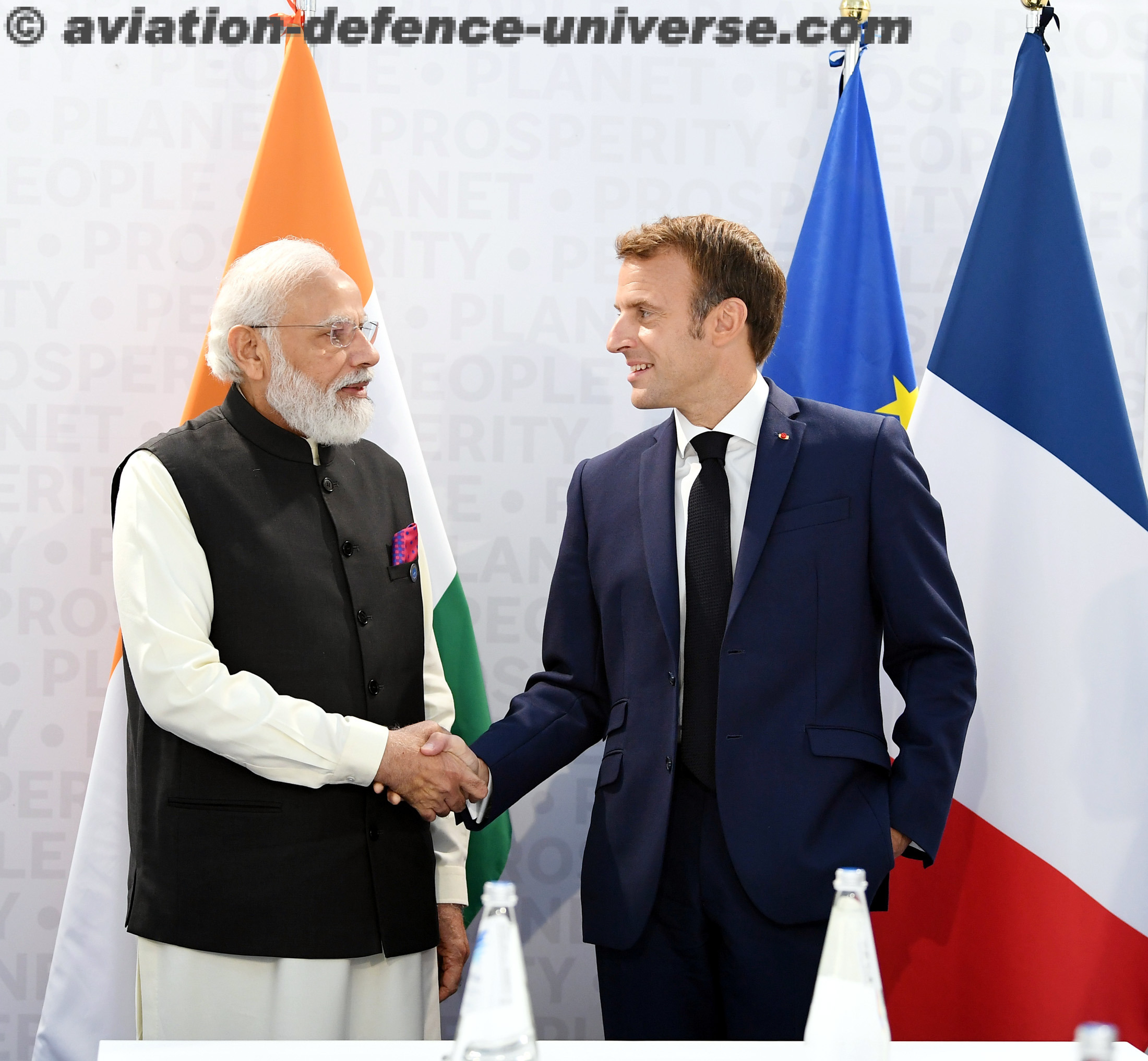
 The 25th anniversary of the partnership in 2023 produced the Horizon 2047 Roadmap, a framework meant to carry cooperation through the centenary of India’s independence and bilateral diplomatic relations. What followed was a remarkable sequence of reciprocal symbolism: Macron as chief guest at India’s Republic Day celebrations in January 2024, Modi in Marseille and Paris in February 2025, and Macron’s return to India in February 2026, when the two sides elevated ties to a “Special Global Strategic Partnership.”
For two leaders to serve as each other’s guests of honour at successive national celebrations was, by France’s own account, unprecedented. But the symbolism mattered less than what it revealed: a partnership whose strategic foundations had already been in place for nearly three decades.
The Partnership In Motion
In the past year, India and France have engaged across almost every level of defence cooperation, from ministerial dialogues and military exercises to maritime coordination and officer exchanges. The result is a relationship that now functions across multiple channels simultaneously rather than relying on occasional headline moments.
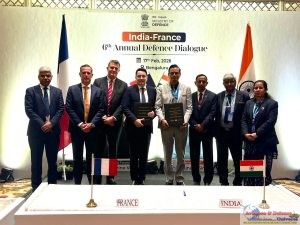
At the sixth Annual Defence Dialogue in Bengaluru on 17 February 2026, co-chaired by Rajnath Singh and Catherine Vautrin, both sides renewed their defence cooperation agreement for another decade and announced reciprocal officer deployments between Indian Army and French Land Forces establishments. The announcement received far less attention than the Rafale-Marine and AMCA discussions taking place around it, yet it reflected a broader trend: cooperation is expanding beyond platforms and procurement into military-to-military integration.
The exercise calendar reinforces that picture. SHAKTI took place in France during the summer of 2025. Garuda followed at Mont-de-Marsan in November, bringing together Indian Air Force Su-30MKIs and French Rafales. The navies conducted Varuna in March 2025, while a French maritime patrol aircraft participated in MILAN 2026 off Visakhapatnam. What stands out is less the exercises themselves than their spread across all three services within a relatively short period.
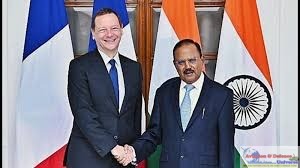 The diplomatic track has been equally active. NSA Ajit Doval and Emmanuel Bonne co-chaired the 38th India-France Strategic Dialogue in January 2026. Foreign Office Consultations followed in Paris in April, alongside a Maritime Cooperation Dialogue and a Military Sub-Committee meeting. Together, these engagements covered defence, maritime security, technology, space and civil nuclear cooperation.
Viewed individually, each meeting addresses a specific area of cooperation. Viewed together, they reveal the breadth of a relationship that now operates across multiple strategic domains at the same time.
Where The Partnership Becomes Physical
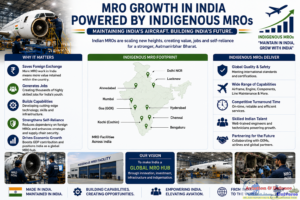
For years, Indo-French defence cooperation was easiest to measure in contracts. Today, it is easier to see on the ground. Hyderabad is the clearest example: in November 2025, Prime Minister Narendra Modi virtually inaugurated Safran Aircraft Engine Services India’s LEAP engine MRO facility at the GMR Aerospace and Industrial Park near Rajiv Gandhi International Airport. Built as a long-term maintenance hub, it is designed to service up to 300 LEAP engines a year and eventually support more than 1,000 technicians and engineers by 2035. Just next to it, Safran also broke ground on an M88 engine MRO facility for the Rafale fleet, bringing military engine support into the same industrial footprint. That matters because the M88 powers India’s Rafales and engine maintenance is where dependence starts to give way to capability. A country that once sent such work overseas is now beginning to anchor it at home, with the engineers, facilities, and supply chains that make that shift durable.
 The pattern is visible elsewhere too. In February 2026, Bharat Electronics and Safran signed a joint venture to manufacture HAMMER precision-guided munitions in India, extending the relationship from maintenance into weapons production. Around the same time, Tata Advanced Systems and Airbus inaugurated India’s first private-sector helicopter final assembly line for the H125 in Karnataka. Looking at the larger picture, together, these are more than isolated milestones, they are signs of a partnership moving from procurement to production, and from transaction to industrial presence.
From Observer To Participant
Space cooperation between India and France is old enough to predate most of the modern architecture of the relationship. ISRO and CNES have worked together for decades, across earth observation, space geodesy, human spaceflight, and launch vehicle technology. What has changed in recent years is the arrival of a defence dimension on top of that civilian foundation, and with it a quiet but important shift in India’s role.
A Letter of Intent on defence space cooperation, signed in January 2024, gave that shift formal shape. India had earlier joined France’s AsterX exercises as a military observer; by the March 2025 edition, it had moved up to participant. That may sound like a procedural detail, but in strategic space cooperation, such details matter. The difference between watching an exercise and being inside it is the difference between proximity and access and access is what turns symbolism into capability.
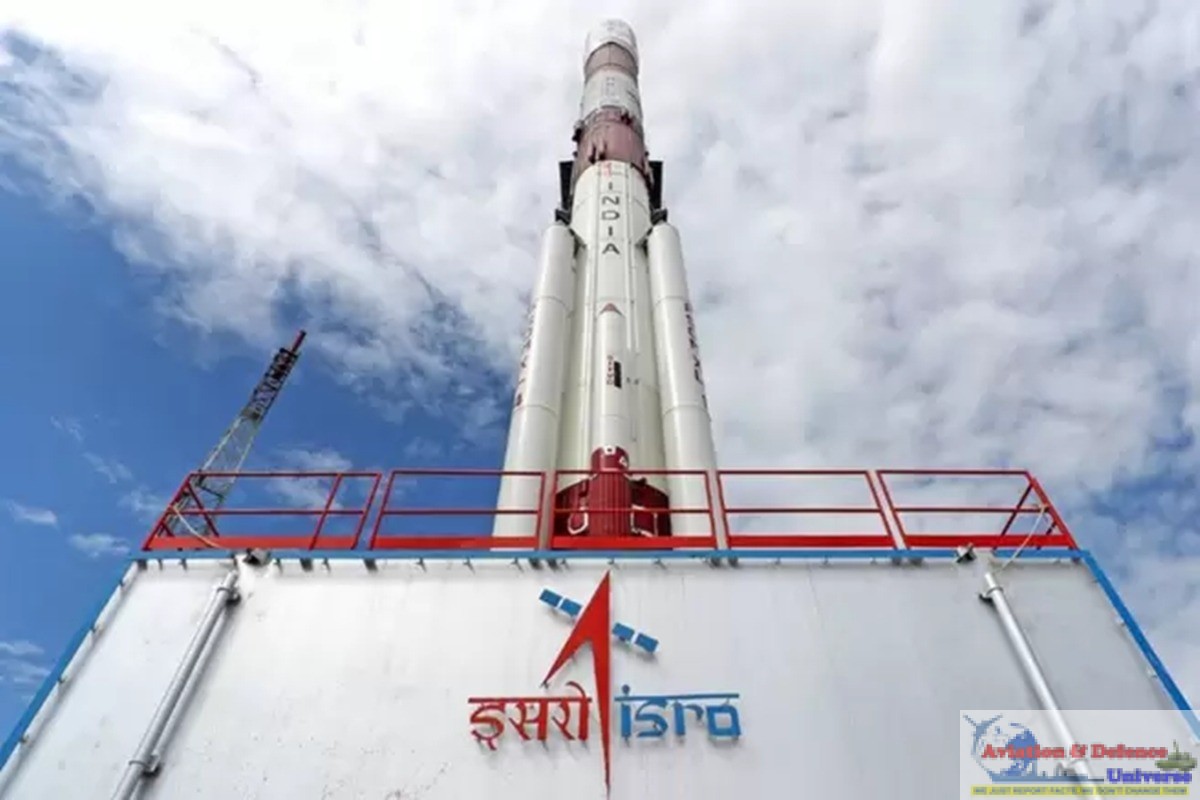 The same slow-burn logic applies to the institutional side. The first India-France Strategic Space Dialogue was held in 2023, followed by a second in early 2024. The April 2026 Foreign Office Consultations then agreed to convene another dialogue later this year, extending a cadence that has now held for three years. In a field where announcements are easy and continuity is harder, that rhythm itself is a sign of seriousness.
Beyond The Bilateral Frame
But institutional depth isn’t just about bilateral ties. The partnership is also widening beyond the bilateral script. The trilateral tracks with Australia and the UAE continued through the period covered here, including a Foreign Secretary-level India-France-UAE meeting in Abu Dhabi on 7 May 2026. That meeting is a reminder that France’s Indo-Pacific posture, shaped in part by its territories in Réunion, Mayotte, New Caledonia and French Polynesia, gives both countries an interest in frameworks that extend the relationship outward rather than keeping it strictly bilateral. In the same period, the India-EU Free Trade Agreement was signed on 27 January 2026, and the April Foreign Office Consultations folded trade into a broader review of bilateral cooperation. Trade has more than doubled over the past decade to €13.59 billion in 2025-26, but the more important point is that economics is now being discussed alongside defence, space and strategy rather than apart from them.
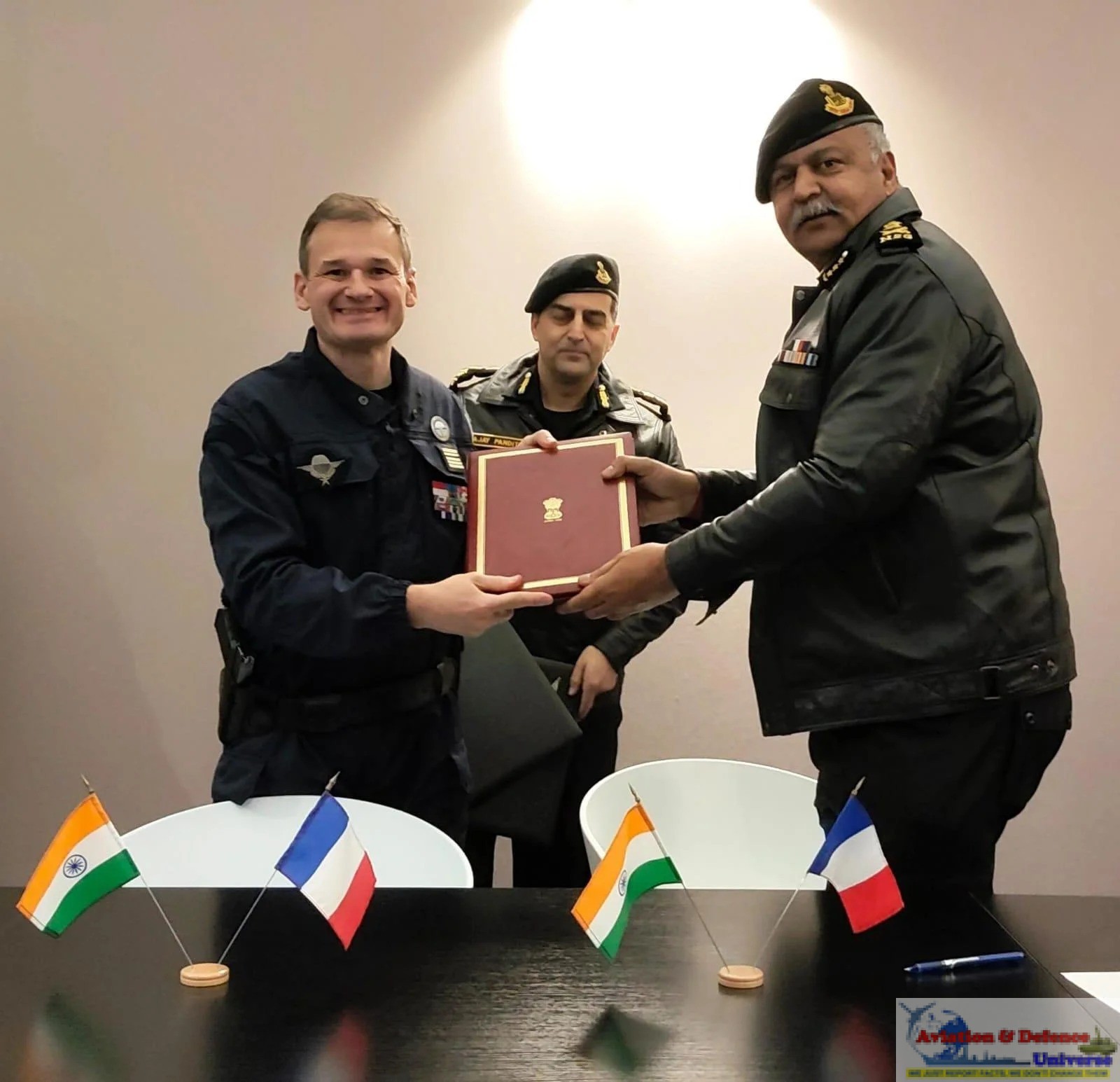 Counter-terrorism cooperation added an equally telling marker in November 2025, when a delegation led by the Director General of India’s National Security Guard attended MILIPOL Paris and signed a Letter of Intent with France’s GIGN on operational cooperation in counter-terrorism. It was the second such milestone in roughly the past year and a half, following the April 2025 visit of France’s Minister of State for the Interior to India to jointly inaugurate MILIPOL India with Minister of State for Home Affairs Nityanand Rai. Internal security cooperation rarely gets the billing that fighter jets do, but it is often the more durable form of strategic trust: less visible, more technical and activated only when it is needed most.
The Reactor Conversation
Civil nuclear cooperation has always moved more slowly than the rest of the partnership, but it has not stood still. The India-France Special Task Force on Nuclear Energy met twice in 2025 to review the Jaitapur project in Maharashtra and to explore Small Modular Reactors and Advanced Modular Reactors. During Modi’s February 2025 visit to France, both sides also signed a letter of intent on SMRs and AMRs, alongside an implementing agreement between India’s Global Centre for Nuclear Energy Partnership, the Department of Atomic Energy, France’s INSTN and the CEA for training nuclear professionals.
That is not yet a contract and it is not meant to be, rather, it is something that makes contracts possible later. In nuclear cooperation, the institutional groundwork often matters more than the announcement itself, because it determines whether a project can move from political agreement to technical reality. Jaitapur, first anchored in a 2008 bilateral framework, remains the project against which this entire nuclear conversation will ultimately be judged. That is why the slow pace of progress matters: it signals not abandonment, but persistence.
What the Partnership Now Means
This pattern of technical cooperation becoming the foundation of strategic trust defines the partnership now. The India-France relationship is no longer defined only by what the two sides sign, but by what they have started to build together. The real story is not the occasional summit photograph or the headline defence contract; it is the accumulation of routines, institutions, facilities and working-level habits that make cooperation harder to unwind and easier to deepen. That is what distinguishes this partnership from many others in India’s strategic orbit: it is becoming physical, durable and increasingly self-sustaining.
 For India, that matters because it shifts France from being a supplier of platforms to a partner in capability. For France, it confirms that strategic autonomy is not just a doctrine but a practice, one that finds its clearest expression in a relationship built on trust, industrial embeddedness and a shared refusal to let geopolitics be reduced to alignment. The test ahead is whether the ambition now embedded in the partnership can survive political cycles and deliver on its most difficult promises. But if the past is any guide, the India-France relationship is no longer waiting for that future to begin; it is already living in it.







































































-A4-Size-(2)_page-0001.jpg)