

















- AI, Satellites and Global Cooperation : The New Face of Search and Rescue
- Search and Rescue Without Borders: Global SAR Is Entering a New Era
- Technology, Training and Trust : The Three Pillars of Future Search and Rescue
- The Next Frontier in Search and Rescue. Integration Across Air, Sea, Land and Space
By Sangeeta Saxena
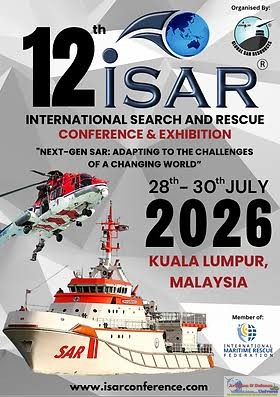
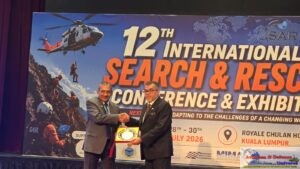
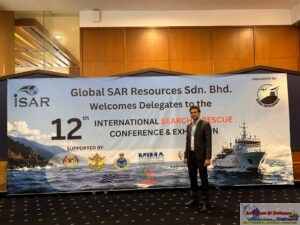
Kuala Lumpur. 27 July 2026. As climate change intensifies natural disasters, global aviation and maritime traffic continues to grow, and emerging technologies reshape emergency response, Search and Rescue (SAR) is undergoing one of the most significant transformations in its history. Artificial intelligence, satellites, unmanned aerial systems, real-time data sharing and multinational cooperation are rapidly becoming the  cornerstones of next-generation SAR operations. Against this backdrop, iSAR 2026, to be held at the Royale Chulan Hotel, Kuala Lumpur, Malaysia, will bring together SAR professionals, policymakers, military leaders, emergency responders, technology providers and researchers from around the world to discuss the future of integrated search and rescue operations.
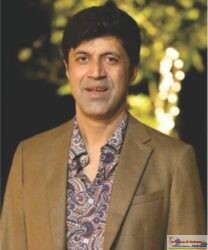
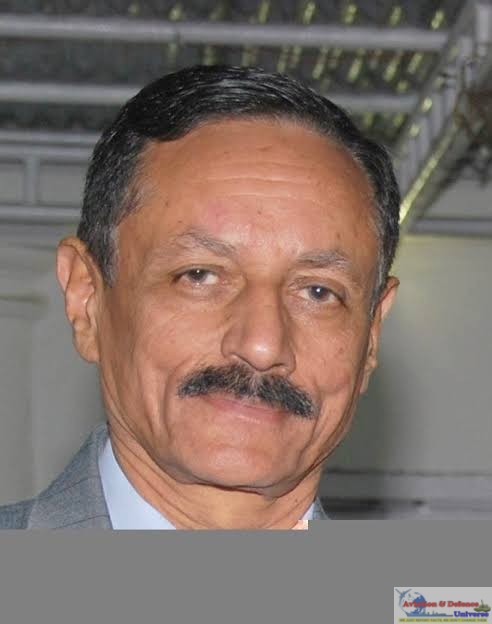
In this exclusive interview with Aviation & Defence Universe (ADU), Major Murali Bhaskaran RMAF (Retd.), Founder & Director of Global SAR Resources and organiser of iSAR 2026, shares his insights on the evolving global SAR landscape, emerging technologies, interoperability, cross-border cooperation and the roadmap for building a more resilient, technology-driven and internationally connected SAR ecosystem.
ADU. How do you see the global Search and Rescue landscape evolving over the next decade?
Major Murali Bhaskaran RMAF (Retd.). The global SAR landscape is evolving into an integrated, technology-driven, multi-domain system. We are witnessing greater use of AI, satellites and UAVs, increased cross-border collaboration, faster data-driven decision-making and a growing demand for SAR capabilities driven by climate change and increasing aviation and maritime traffic.
ADU. What are the biggest capability gaps currently facing SAR agencies worldwide?
Major Murali Bhaskaran RMAF (Retd.). The major capability gaps include the lack of interoperability between agencies, limited real-time data integration, uneven training standards, funding constraints and the absence of standardised global SAR frameworks.
ADU. What practical steps can countries take to improve interoperability?
Major Murali Bhaskaran RMAF (Retd.). Countries should adopt internationally accepted frameworks such as IAMSAR, conduct regular joint exercises, establish regional coordination centres, develop common communication protocols and promote greater information sharing among agencies.
ADU. How can developing nations adopt advanced SAR technologies?
Major Murali Bhaskaran RMAF (Retd.). Developing nations can accelerate adoption through cost-effective satellite solutions, regional partnerships, scalable and modular technologies, capacity building, specialised training and international funding support.
ADU. How can real-time data improve aviation Search and Rescue efficiency?
Major Murali Bhaskaran RMAF (Retd.). Real-time data significantly improves SAR efficiency by identifying the last known position much faster, reducing search areas, enhancing mission planning and improving the chances of survival.
ADU. What role will UAVs and drones play in future SAR operations?
Major Murali Bhaskaran RMAF (Retd.). UAVs serve as force multipliers by accessing remote and hazardous locations, enabling night operations through thermal imaging, providing rapid situational awareness and complementing conventional SAR assets.
ADU. What are the major challenges associated with night and all-weather SAR operations?
Major Murali Bhaskaran RMAF (Retd.). Night and adverse-weather operations continue to be challenging because of limited visibility, spatial disorientation, the need for advanced avionics, highly specialised pilot training and complex mission planning.
ADU. What are the principal challenges in cross-border maritime Search and Rescue?
Major Murali Bhaskaran RMAF (Retd.). Cross-border SAR operations are often constrained by jurisdictional limitations, political sensitivities, communication gaps and delays in information sharing between countries.
ADU. Urban Search and Rescue is becoming increasingly important. What challenges does it face?
Major Murali Bhaskaran RMAF (Retd.). Urban Search and Rescue operations frequently involve collapsed and unstable structures, difficult access conditions, high casualty density and complex coordination among multiple responding agencies.
ADU. What role do satellite-based damage assessment and Geographic Information Systems (GIS) play in disaster response?
Major Murali Bhaskaran RMAF (Retd.). Satellite-based damage assessment and GIS provide rapid situational awareness, help prioritise rescue zones, improve resource allocation and support faster, more informed decision-making.
ADU. How can logistics bottlenecks during major disasters be overcome?
Major Murali Bhaskaran RMAF (Retd.). Countries should establish logistics frameworks in advance, develop forward staging bases, utilise military and civil aviation assets effectively and adopt digital logistics tracking systems.
ADU. How can MEDEVAC protocols be integrated more effectively into SAR operations?
Major Murali Bhaskaran RMAF (Retd.). Effective integration requires standardised triage systems, early involvement of medical teams, dedicated evacuation pathways and regular joint SAR-medical exercises.
ADU. Why are unified SAR command-and-control platforms becoming increasingly important?
Major Murali Bhaskaran RMAF (Retd.). Unified command-and-control platforms enable real-time coordination, data fusion from multiple sources, a common operational picture and faster decision-making.
ADU. What cybersecurity challenges do modern SAR systems face?
Major Murali Bhaskaran RMAF (Retd.). The principal risks include cyber-attacks on communication systems, data manipulation, system disruptions and the need to build strong cyber resilience into SAR networks.
ADU. What kind of simulation-based training should future SAR professionals undergo?
Major Murali Bhaskaran RMAF (Retd.). Training should include multi-agency simulations, realistic scenario-based exercises, multinational drills and AI-enabled virtual simulation environments.
ADU. What is required to standardise SAR procedures globally?
Major Murali Bhaskaran RMAF (Retd.). Global standardisation requires widespread adoption of international doctrines, harmonised Standard Operating Procedures, continuous training and audits, and stronger regional cooperation frameworks.
ADU. Finally, what is your vision for the future of multi-domain Search and Rescue operations?
Major Murali Bhaskaran RMAF (Retd.). The future of SAR will be fully integrated across air, sea, land and space. It will be supported by satellites and artificial intelligence, driven by international collaboration and powered by advanced technologies and data-centric decision-making.
Major Murali Bhaskaran’s vision for Search and Rescue extends well beyond technological advancement. He sees SAR evolving into a globally connected ecosystem where interoperability, shared standards, artificial intelligence, real-time information sharing and multinational cooperation become as important as aircraft, ships or rescue teams. As disasters become more frequent and complex, no single nation can respond alone.
The discussions at iSAR 2026, scheduled to be held at the Royale Chulan Hotel, Kuala Lumpur, are expected to reflect this changing reality. Bringing together experts from government agencies, armed forces, emergency responders, academia and industry, the conference aims to shape practical solutions for the next generation of SAR operations. By promoting collaboration across borders and domains, iSAR 2026 seeks to help build a more resilient, technology-enabled and globally integrated Search and Rescue community capable of meeting the humanitarian and operational challenges of the future.















































































-A4-Size-(2)_page-0001.jpg)