






















- Taking India’s Seamless Airport Experience to International Skies
- One Digital Credential, a World of Seamless Travel: DigiYatra’s Borderless Vision
- Your Face, Your Passport, Your Journey: Prepares for the International Traveller’s India Experience
By Sangeeta Saxena
New Delhi. 20 July 2026. India’s airport journey has undergone a quiet but remarkable transformation. What was once a routine of repeatedly producing identity documents and boarding passes at multiple checkpoints has, for millions of domestic passengers, become almost effortless. DigiYatra has made facial recognition-powered, paperless movement from terminal entry towards the boarding gate a reality, and now the platform is preparing for its most ambitious leap yet — international travel.
The vision is compelling: a passenger could enrol using an e-passport, securely create a digital travel credential and use facial recognition for airport entry, check-in, security processing and boarding. Immigration integration remains a more complex challenge requiring cooperation with authorities in India and overseas, but the technological foundation for a far more seamless international journey is already being explored.
India’s Seamless Airport Experience — A Model for the World
For a frequent traveller, DigiYatra is actually one of the finest airport-entry and passenger-processing systems seen anywhere in the world. The simplicity of walking towards an airport gate and gaining entry through facial authentication, followed by a largely seamless journey through subsequent touchpoints, has dramatically reduced the friction traditionally associated with air travel. From entry and check-in to security and boarding, the system has turned what was once a repetitive process of showing documents into an increasingly unhindered passenger journey.
The prospect of bringing this experience to international travel could be transformative. International passengers continue to face multiple document checks, long queues and fragmented processes, particularly around check-in and border formalities. If DigiYatra’s e-passport-based credential is successfully integrated across the international journey — initially for airport entry, check-in, security and boarding, and eventually, subject to regulatory approvals, immigration — passengers departing from Indian airports could experience one of the world’s most seamless end-to-end airport journeys. Even more significantly, interoperability with overseas digital identity ecosystems could eventually allow credentials to travel securely with passengers across borders, bringing DigiYatra’s vision of a truly connected and potentially “borderless” travel experience closer to reality.
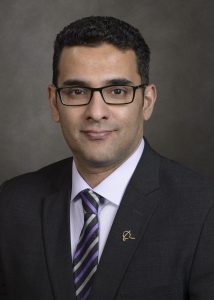
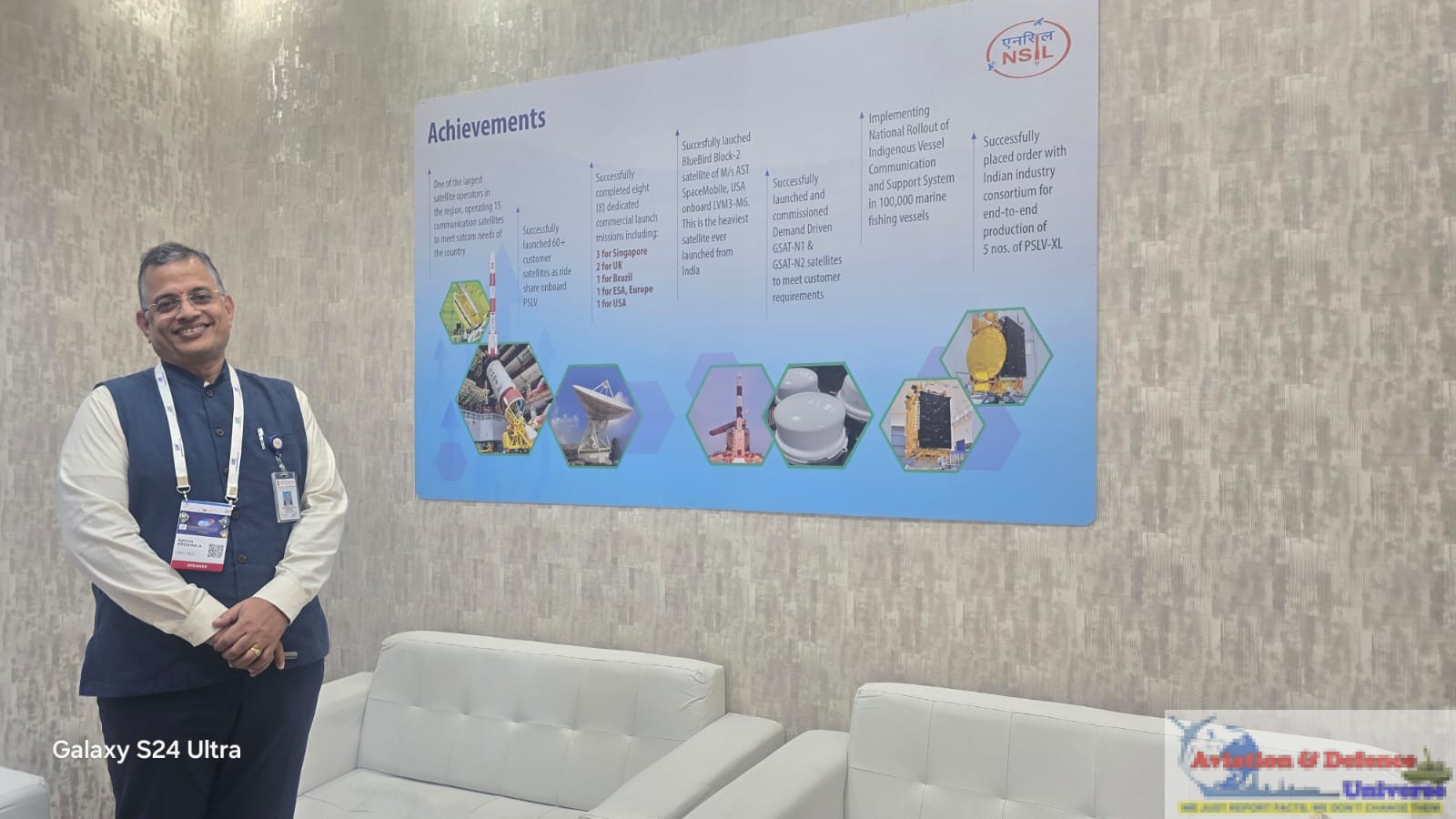
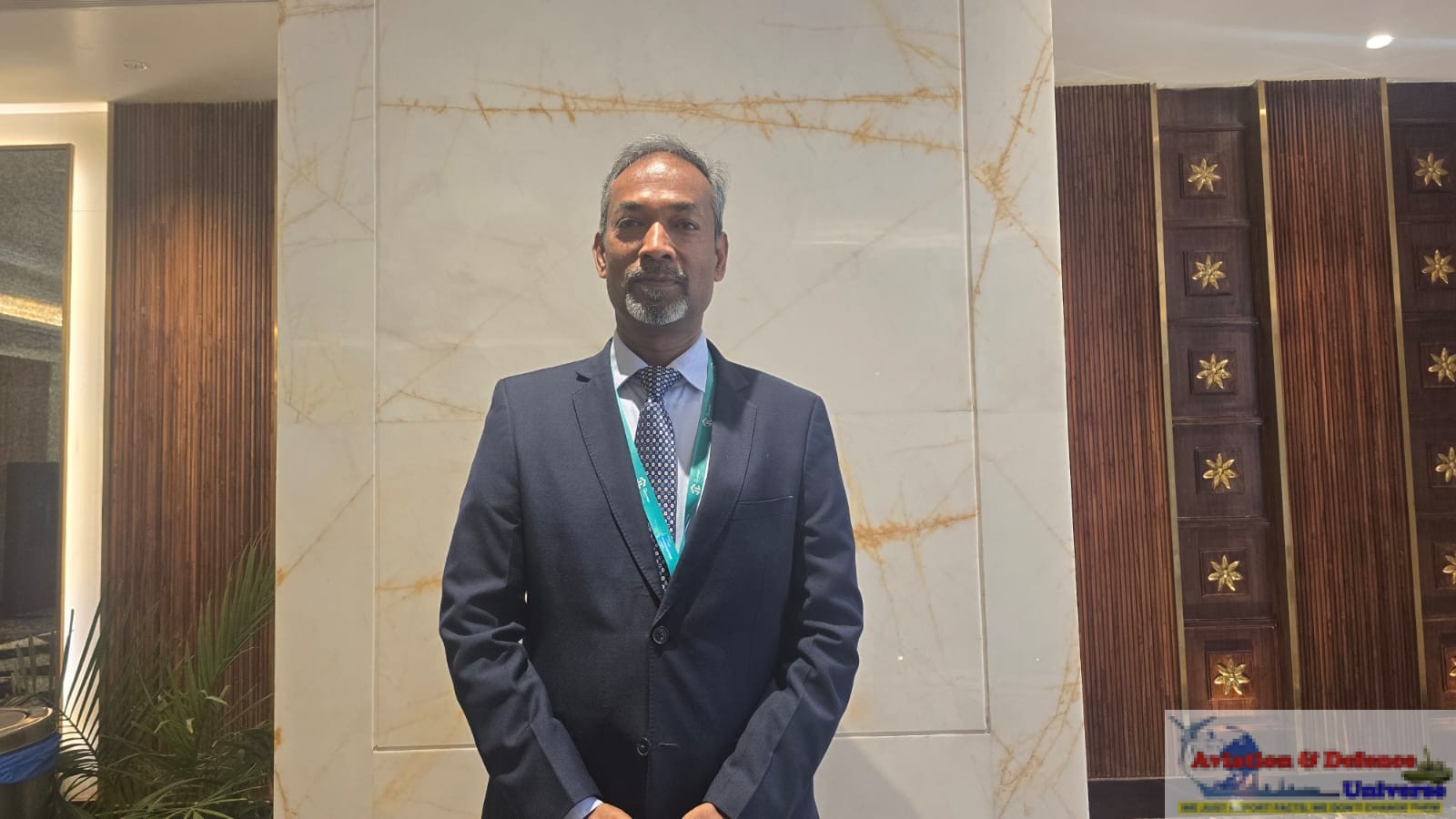
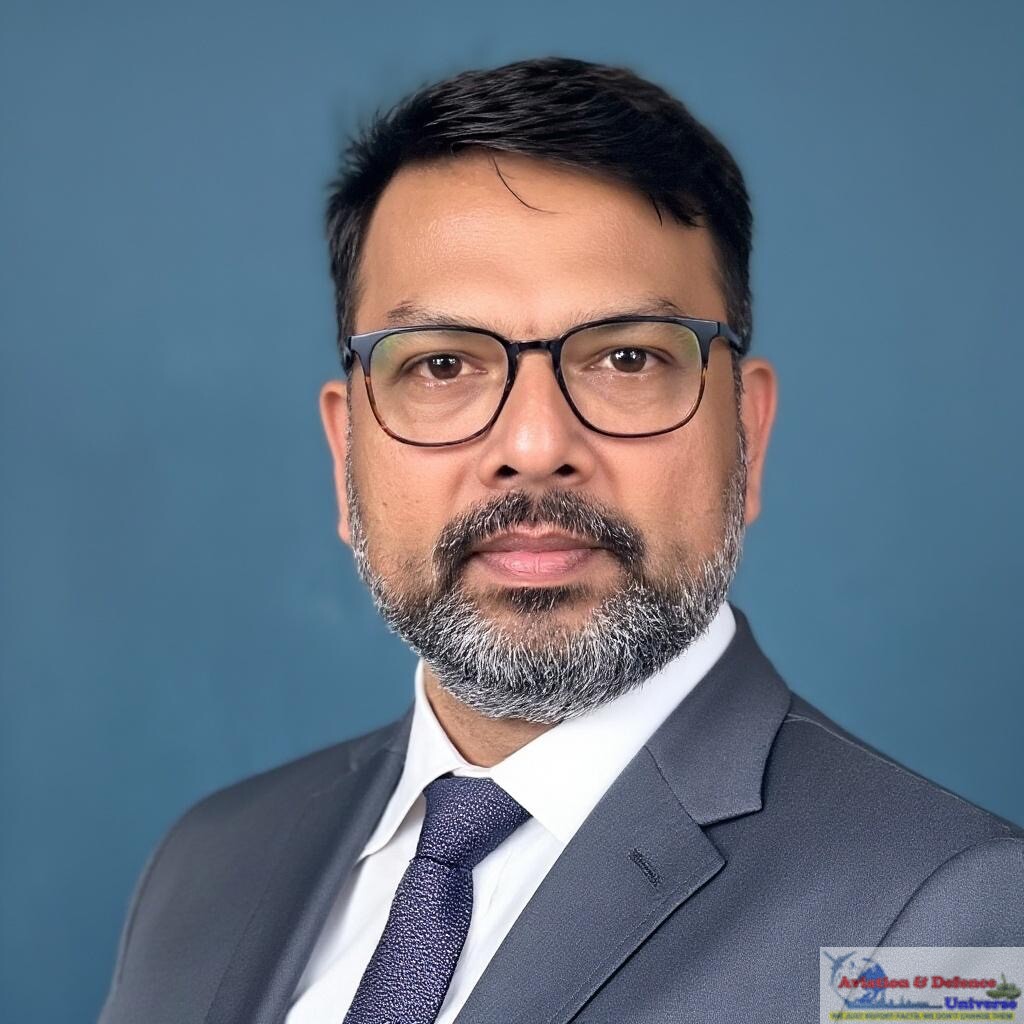
Suresh M. Khadakbhavi, Chief Executive Officer, DigiYatra Foundation, India, spoke exclusively to Aviation & Defence Universe (ADU) about pilot trials for electronic passport-based enrolment, the possibility of extending the DigiYatra experience to international passengers, interoperability with digital identity wallets across borders, expansion to more Indian airports and the longer-term potential of using the DigiYatra credential beyond conventional commercial air travel.
ADU. DigiYatra has been a real boon for domestic passengers. You can simply walk in and the experience is almost like a breeze. For frequent international travellers, however, long queues and multiple checkpoints remain a reality. What is the announcement you have made regarding taking DigiYatra towards international travel?
Suresh M. Khadakbhavi. Basically, what we have done is that we have conducted certain pilot trials, and during these trials we tested electronic passport-based enrolment. If you have an electronic passport, the app will have a feature where you can scan the first page. Once you scan the first page, we read the Machine Readable Zone or MRZ. You then place your phone on the passport, and through Near Field Communication, or NFC, we are able to read the electronic chip. The chip contains your face and MRZ data. We then take a selfie and match it with the face stored on the passport chip to ensure that nobody is misusing the passport and that the same person who owns the passport is enrolling. Once that match is successful, we create a credential containing the relevant passport information, including the passport data, face, expiry date and issue date.
ADU. Will this require a separate app, or will it be part of the same DigiYatra app that passengers are already using?
Suresh M. Khadakbhavi. It will be the same app. Today, you have options such as Aadhaar and DigiLocker. There will be one more option for electronic passport-based enrolment. You enrol through that and create the credential. The process of sharing that credential with the origin airport can then begin. You will be able to get a boarding pass, upload the boarding pass along with your passport credential and send it to the origin airport. Once that is done, the same process that we currently have for domestic travel can kick in. You will cross the airport entry gate using your face, go through check-in, security and then boarding.
The immigration checkpoint is something we will tackle later because it requires considerable deliberation with the immigration authorities. Although it is part of our policy, implementation may take some time because we need to be completely sure about the process and also convince the immigration authorities that it is reliable. Once that happens, immigration can also potentially be covered. But before that, we will certainly be able to bring the same DigiYatra flow to airport entry, check-in, security and boarding for international passengers.
ADU. Another interesting possibility is what happens at the destination. If a passenger is travelling from India to, say, London, could the same credential eventually help make arrival and immigration more seamless there as well?
Suresh M. Khadakbhavi. One of the big aspects of this ecosystem is that when you share your credential, you are not limited to sharing it only with the origin airport. You can also share the same credential with the destination airport. There, potentially, you could use an e-gate. You would, of course, have to scan your passport and then pass through the e-gate for immigration. However, for this to happen, we would need to work with the immigration authorities in the destination country, so that is going to take some time. But the potential to do this is already built into the app.
ADU. Is DigiYatra also looking at interoperability with digital identity systems and wallets being developed in other parts of the world?
Suresh M. Khadakbhavi. Yes. This is another aspect that we are going to trial. Similar to us, where we have a universal wallet in which the credential is stored, other countries and regions are also developing universal digital identity wallets with similar credentials. The idea is that they should be able to share their credentials with us. People coming from those countries could then enjoy the same seamless experience in India, and vice versa. This is something we are going to try in pilot mode. We have already tested interoperability with five universal wallet providers and there is one more. We want to ensure that the system is interoperable everywhere. That is where the whole idea of creating a borderless world comes in — where you can cross borders without unnecessary hassles. We may initially start with countries that have less stringent visa protocols so that visa requirements do not impede the journey, and then gradually move towards countries where the visa protocols are stronger.
ADU. What happens to passengers who have recently received conventional paper passports? Since passports are generally valid for ten years, will they also be able to benefit from this system?
Suresh M. Khadakbhavi. That is a very good point. For people with paper passports, it will be difficult for us at present. We have had conversations with the Passport Seva Programme, and they have enabled the Passport Verification Record on DigiLocker. However, it does not contain the face, and that is a limitation for us because we need the face to create the credential. We are still in discussions. If the face can also be enabled as part of the DigiLocker Passport Verification Record, then potentially even paper passport holders could use that credential.
However, we cannot commit to it at this stage because there are two aspects involved. First is enabling a face-based Passport Verification Record on DigiLocker, and the second is acceptance of that credential. That will take some time. Globally, however, many countries have been issuing electronic passports for a long time. We will therefore also be able to enrol foreign citizens into DigiYatra. For example, expatriates working in India who do not have Aadhaar could use their passport-based credential to enrol into DigiYatra and use it seamlessly for domestic travel. That is a simple and easy win.
ADU. Has the Government of India already begun issuing e-passports?
Suresh M. Khadakbhavi. The Government of India has already been issuing electronic passports for about the past year. New passports are electronic passports.
ADU. Does that mean that once passengers have an e-passport, they will automatically be able to bypass long immigration queues at airports?
Suresh M. Khadakbhavi. Immigration, as I mentioned, will require a lot of deliberation. We want to start with the processes before and after immigration. Immigration itself is also something that we will look into subsequently.
ADU. DigiYatra is now available at many of India’s major airports, but several medium-sized cities and important industrial centres still do not have it. What is the expansion plan?
Suresh M. Khadakbhavi. We currently cover 39 airports, with another six in the pipeline and waiting for operations to begin. We also plan to add another 25 airports by the end of this financial year, which is March 2027. With that, I would say we should be able to cover at least 90 per cent of the country’s flying population, including Tier-I, Tier-II and, to a large extent, Tier-III cities.
ADU. What about airports in the Northeast, including places such as Guwahati and Dimapur?
Suresh M. Khadakbhavi. There are another 25 airports planned. I do not have every individual airport in mind at the moment, but the expansion will continue. There is a long-term plan and a short-term plan. We began scaling DigiYatra by starting with the bigger airports, then moving to medium-sized airports and now to smaller airports.The Honourable Minister has a vision of extending DigiYatra to all airports across India — big or small. That is something we will eventually achieve. seamless journeys everywhere.
ADU. Internation al expansion is clearly one of DigiYatra’s immediate priorities. Beyond that, what are the other possible areas where DigiYatra could expand? Does its role end with conventional air travel?
Suresh M. Khadakbhavi. Our mandate, because we are under civil aviation, is currently focused on air travel. However, having done the heavy lifting of creating the credential, we feel that the same credential could potentially be used to extend the seamless journey to multiple other areas. For example, suppose you complete your air journey, land at Delhi Airport and then check into one of the Aerocity hotels. Why can’t we extend the same benefit to DigiYatra users so that they can enter or check into hotels seamlessly? That would be a logical horizontal scaling of DigiYatra. Of course, there would be several regulatory approvals that we would need to obtain, and that is currently a work in progress.
ADU. Could DigiYatra also potentially be used for helicopter services, particularly as heliports are increasingly being used for religious tourism, where passengers often face long queues for boarding formalities?
Suresh M. Khadakbhavi. For air travel, it is already a proven solution and it could be used. However, we have not yet started working specifically with the helicopter industry on this.
ADU. What about business and general aviation?
Suresh M. Khadakbhavi. For general aviation too, the technology can be used. The broader expansion of DigiYatra across airports is something being taken forward progressively. We started with large airports, moved to medium-sized airports and are now reaching smaller airports. Ultimately, the vision is to extend DigiYatra to airports across India, irrespective of their size.
ADU. Once passengers experience DigiYatra, they tend to look for it at every airport because of the convenience it provides. Is there anything else you would like to add about the road ahead?
Suresh M. Khadakbhavi. We are here to make everything seamless for passengers and ensure that they get a hassle-free experience from airport entry all the way to the boarding gate. We will continue doing that while also looking at other avenues and use cases where the same credential can potentially be used for identity validation.
ADU. And will the two new airports — Noida International Airport at Jewar and Navi Mumbai International Airport — have DigiYatra?
Suresh M. Khadakbhavi. Yes, they will have DigiYatra. DigiYatra’s evolution from a domestic airport facilitation platform into a potentially interoperable global digital travel ecosystem could mark the next major chapter in India’s aviation transformation. With 39 airports already covered, six more in the pipeline and another 25 targeted by March 2027, the ambition is to bring the convenience of facial authentication to nearly 90 per cent of India’s flying population.
The bigger story, however, lies beyond numbers. E-passport-based enrolment, international airport processing, interoperability with overseas digital wallets and, eventually, integration with border-control systems could fundamentally change how passengers move across airports and countries. The journey towards fully seamless international travel will inevitably require regulatory coordination and the confidence of immigration authorities across jurisdictions, but DigiYatra is already building the technological foundations.
And its horizon may stretch still further. From hotels to helicopter operations and general aviation, the same trusted digital credential could potentially become a key to a much wider ecosystem of seamless mobility and identity verification. As Khadakbhavi summed up, the mission remains simple but ambitious: to deliver a hassle-free passenger experience “from the airport entry to the boarding gate” — and eventually, perhaps, far beyond it.
As Told To Sangeeta Saxena






















































































-A4-Size-(2)_page-0001.jpg)