 18th BRICS Summit














- From Vega to the ISS: ASI’s Remarkable Journey in Space Exploration
- From Rome to the Stars: How ASI Made Italy a Cellestial Power
- Italian Space Agency: Three Decades of Innovation, Exploration and Global Leadership
By Sangeeta Saxena
New Delhi. 04 August 2026. From unveiling the mysteries of the universe to safeguarding life on Earth, the Italian Space Agency, Agenzia Spaziale Italiana (ASI) has become one of the world’s most respected space organisations. Established in 1988, ASI has transformed Italy into a major force in global space exploration, satellite technology, Earth observation and international scientific collaboration. Through pioneering missions, cutting-edge technologies and partnerships with agencies such as NASA and the European Space Agency (ESA), ASI continues to demonstrate that space is not merely about exploration—it is an investment in humanity’s future.
Created as Italy’s national authority for space activities, ASI is responsible for formulating and implementing the country’s space policy in accordance with government priorities. Beyond coordinating national aerospace programmes, the agency represents Italy within the European Space Agency and oversees collaborations with leading international partners, ensuring that Italian expertise remains at the forefront of global space initiatives.
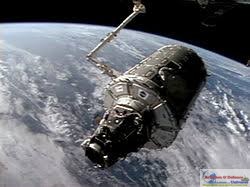
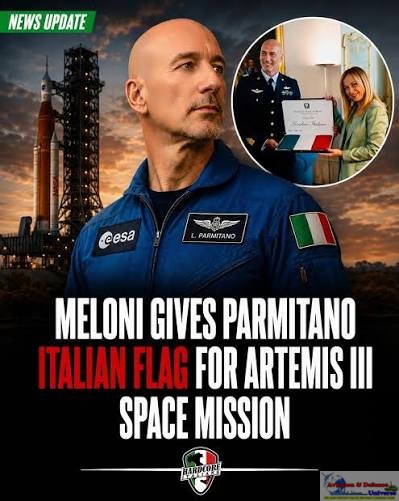 Over the past three decades, ASI has earned worldwide recognition for its contributions to astrophysics, cosmology and planetary exploration. Working closely with NASA and ESA, the agency has participated in some of the most significant scientific missions of modern times, including the International Space Station, where several Italian astronauts have lived and worked.
Italian-built technologies have flown aboard landmark missions such as Cassini-Huygens, Mars Express, Rosetta, Juno, Venus Express, DART, Swift, Mars Reconnaissance Orbiter, and numerous other international programmes, highlighting the country’s growing technological prowess in deep-space exploration.
While ASI continues to push the boundaries of scientific discovery, its work also delivers tangible benefits on Earth. Advanced Earth observation satellites such as COSMO-SkyMed and PRISMA enable environmental monitoring, disaster management, climate change assessment, agricultural planning and emergency response. These capabilities have positioned Italy among the world’s leaders in dual-use satellite systems supporting both civilian and defence applications.
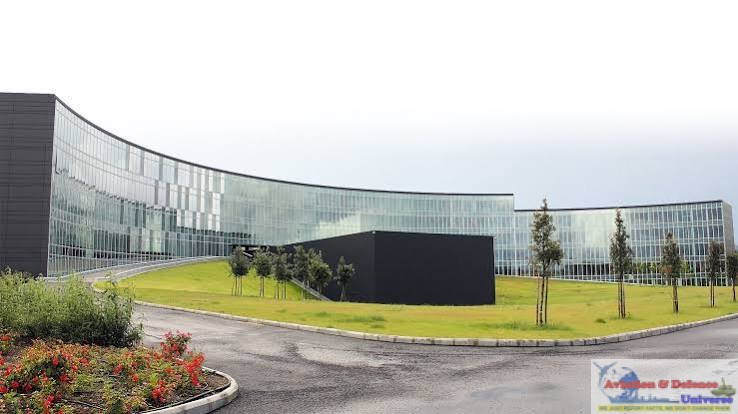
ASI’s headquarters in Rome are supported by an extensive operational network that strengthens Italy’s space capabilities.The Centre for Space Geodesy in Matera specialises in satellite geodesy, remote sensing and advanced space technologies. The Space Science Data Centre (SSDC) serves as a hub for scientific operations and data processing, supporting numerous international missions. Beyond Italy’s borders, the historic Luigi Broglio Space Centre in Malindi, Kenya, now functions as a satellite communications and control station, while the Sardinia Deep Space Antenna supports lunar and interplanetary missions as part of NASA’s Deep Space Network.
 Italy has also emerged as a leader in launch vehicle technology. Through ASI and Italian industry, the country leads the development of the Vega launcher programme, Europe’s small satellite launch vehicle designed to provide independent access to space. Italy also plays a major role in the Ariane launcher programme, reinforcing its strategic importance within Europe’s space ecosystem.
For ASI, space extends well beyond scientific discovery. Rapid growth in satellite communications, navigation, Earth observation and commercial space services has created new economic opportunities. By investing in advanced satellite platforms, propulsion technologies and industrial partnerships, ASI is helping position Italy as a competitive player in the rapidly expanding global space economy.
Responding to the rapidly growing global demand for space launch and suborbital flight capabilities, Italy began developing its first dedicated spaceport at Grottaglie in the Apulia region in 2018. Strategically located in the heel of Italy’s famous boot, the facility represents an important step in the country’s ambition to strengthen its position in the emerging commercial space economy. Envisioned as a centre of excellence for research, experimentation and suborbital operations, the Grottaglie Spaceport is being developed to support suborbital flight experiments as well as the training of astronauts and pilots. It is also expected to provide infrastructure for future commercial human spaceflight and space-tourism activities.
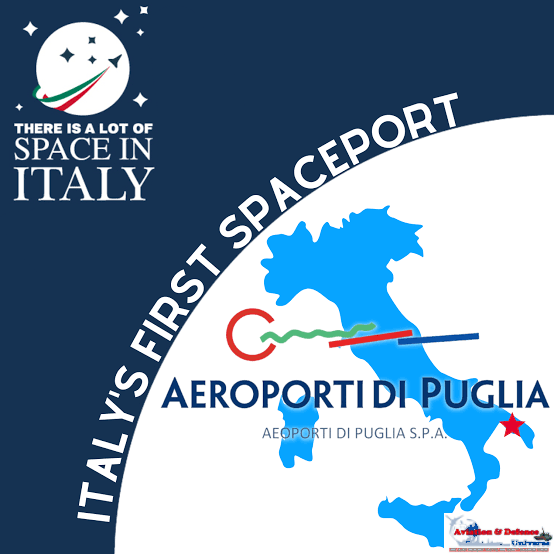 The initiative has involved collaboration between Virgin Galactic and Italian partners including Altec S.p.A., which is partly owned by the Italian Space Agency (ASI), and SITAEL, a major Italian privately owned space company. Their cooperation reflects Italy’s broader effort to bring together public institutions, industry and international space companies to develop technologies and capabilities for the next generation of spaceflight. Designated by the Italian government as the country’s first spaceport, Grottaglie offers an important infrastructural advantage: its approximately 3.6-kilometre runway, among the longest in Europe. This makes the facility particularly suited to horizontal take-off and landing operations involving specialised aerospace and suborbital vehicles. More than simply an airport adapted for space operations, Grottaglie represents Italy’s determination to establish itself in the evolving commercial space ecosystem. By combining research, astronaut training, experimental suborbital missions and potentially commercial human spaceflight, the spaceport could become an important bridge between Italy’s established aerospace capabilities and the rapidly developing global New Space economy.
From uncovering the origins of the universe to protecting life on Earth through advanced satellite technologies, the Italian Space Agency has evolved into a symbol of scientific excellence, technological innovation and international cooperation. With its expanding portfolio of exploration missions, launch capabilities, Earth observation systems and commercial initiatives, ASI continues to strengthen Italy’s position among the world’s leading space nations. As humanity enters a new era of lunar exploration, deep-space missions and commercial spaceflight, ASI stands ready to help shape the next chapter of global space exploration.














































































-A4-Size-(2)_page-0001.jpg)