


 18th BRICS Summit














- From MQ-9B to FQ-42A: He Maps General Atomics’ Next Frontier
- We Are Working with the Indian Industrial Ecosystem : Dr. Vivek Lall at Farnborough 2026
- General Atomics Sees Major Opportunities in India Across Unmanned Systems and Advanced Technologies
- From MRO to Make in India: General Atomics Charts Its Expanding India Partnership
By Sangeeta Saxena
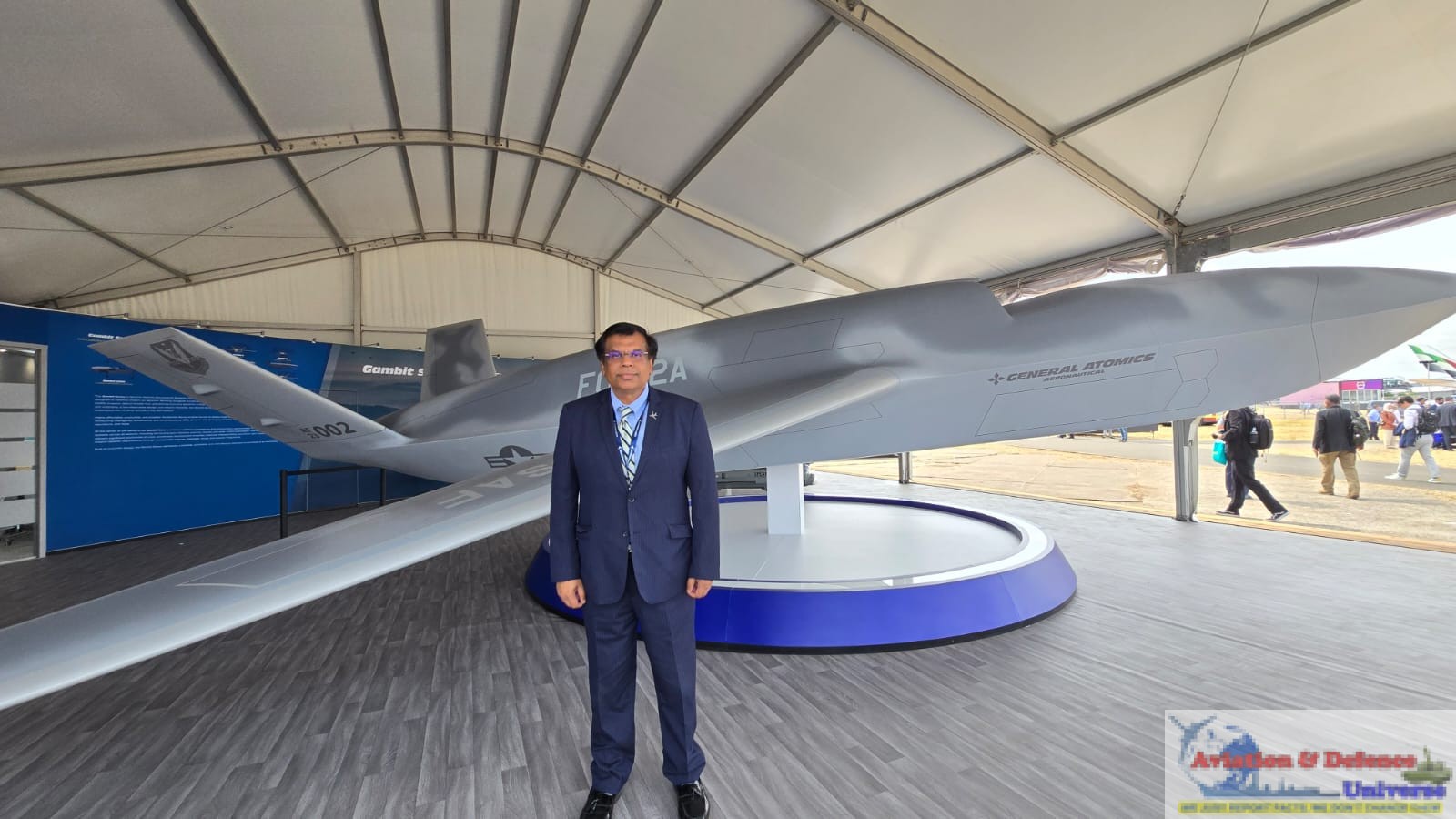
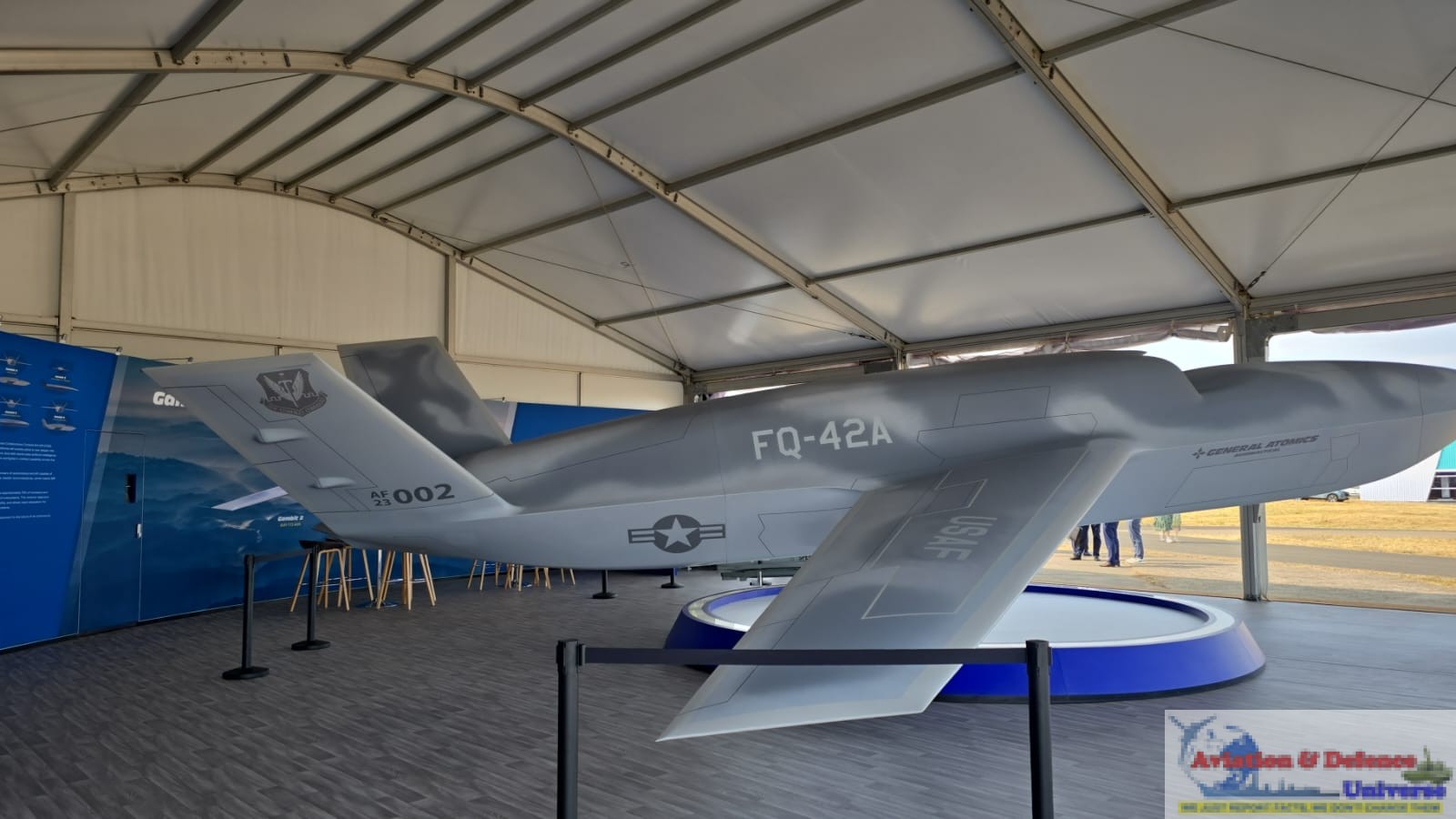
Farnborough, UK. 21 July 2026. Against the backdrop of the full-scale FQ-42A Collaborative Combat Aircraft display at Farnborough International Airshow 2026, the conversation naturally turns to the future of airpower — unmanned, collaborative, connected and increasingly shaped by artificial intelligence and autonomous capabilities.
For India, however, General Atomics’ story is not merely about technologies of the future. The company is already at the heart of one of the most consequential unmanned aircraft programmes in the country through the MQ-9B acquisition, while simultaneously exploring deeper engagement with Indian industry, building an indigenous maintenance ecosystem and pursuing opportunities across a much broader technology portfolio.
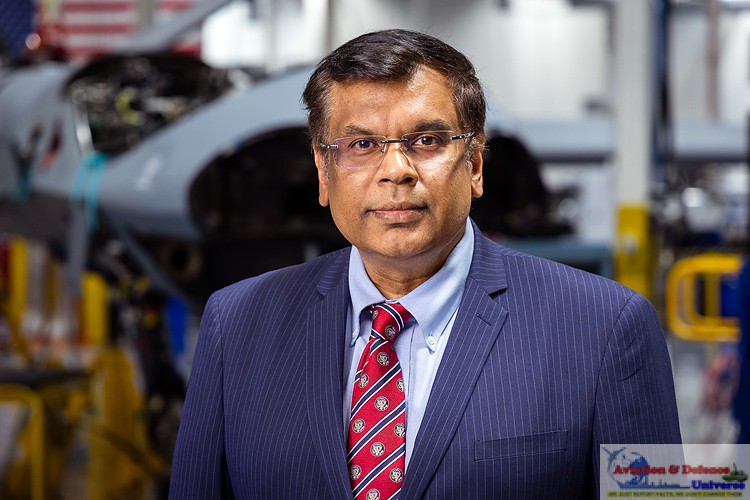
In an exclusive interaction with Editor Aviation & Defence Universe (ADU) at Farnborough International Airshow 2026, Dr. Vivek Lall, Chief Executive, General Atomics Global Corporation, spoke about the FQ-42A, progress on India’s MQ-9B programme, plans to establish collaborative capabilities in India, engagement with dozens of Indian companies, the potential of an unmanned airborne early warning variant, the 87 MALE programme with Larsen & Toubro, and the wider possibilities for General Atomics technologies in India.
ADU. We are meeting here at Farnborough Airshow, inside the full-scale display, and this is the “future of air”, as General Atomics says. So, what is it?
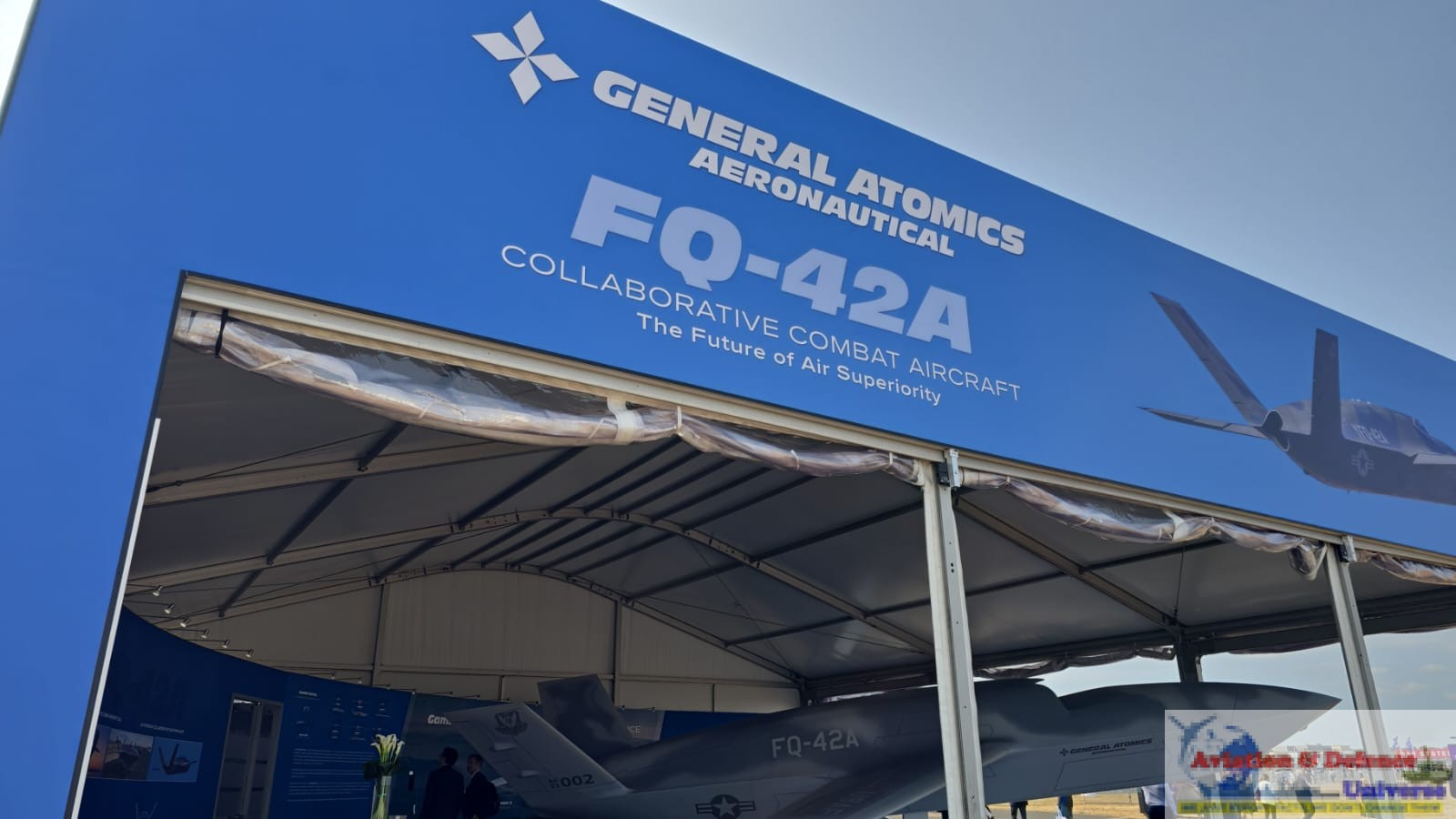 Dr. Vivek Lall. This is the Collaborative Combat Aircraft, the FQ-42A, and we are very proud to have our static display here. Of course, we are also very proud of our aircraft, the MQ-9B, which is part of the government-to-government deal between both countries, India and the US.
ADU. Where is India progressing with General Atomics at the moment?
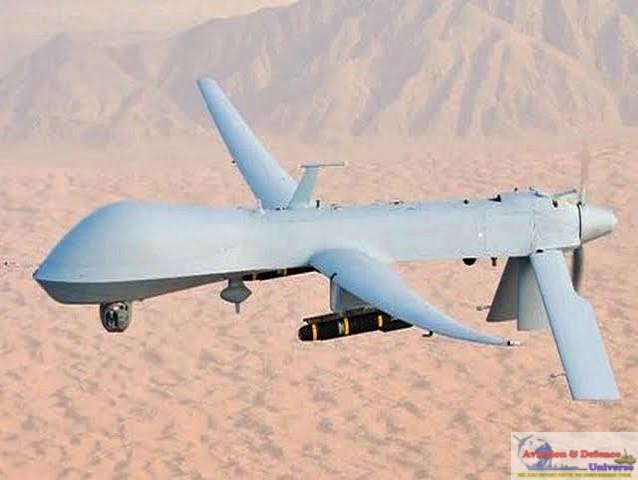
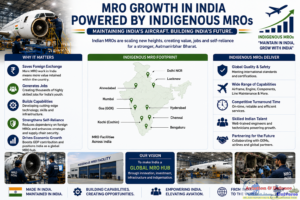
Dr. Vivek Lall. That programme is progressing very well. We are working with the Indian industrial ecosystem, and we will be setting up all the maintenance, repair and overhaul capabilities that are required in India for the MQ-9B. That is a programme we are really looking forward to.
ADU. Will this be in collaboration with Indian MROs, or will it be a separate setup?
Dr. Vivek Lall. We have been talking to several Indian companies that have capabilities in various niche areas, whether it is structures, payloads, avionics and so forth. We have talked to at least 30 to 50 companies now in India, and those discussions will lead to the ecosystem that we build there.
ADU. At the end of the day, are we seeing the possibility of a follow-on order? You recently publicly mentioned the MQ-9B with an AEW capability.
Dr. Vivek Lall. I think that is a great advance — an early warning-capable unmanned aircraft. As you know, with unmanned aircraft, it is also about operating costs. I think that AEW capability has great demand all over the world, and I think it would be very well suited for India as well in terms of the mission sets required.
 ADU. But would this requirement be apart from the Navy? Do you expect demand from the other Services as well?
Dr. Vivek Lall. The MQ-9B, as you know, is going to the Navy, Air Force and Army. The AEW capability, I think, is also a multi-service requirement that we can see in the future.
ADU. How is the 87 MALE programme progressing?
Dr. Vivek Lall. The bids were submitted, and now we wait for the next steps. Of course, we have also partnered with L&T for the 87 MALE programme.
ADU. What about the FQ-42A? Do you have plans to offer it to India?
Dr. Vivek Lall. As you saw, we got into a production contract with the US. I am not so sure what India’s plans are in the Collaborative Combat Aircraft space. However, we have seen great demand from the international market for this aircraft, and the conversations will continue.
 ADU. Apart from the US Air Force, are there confirmed orders from elsewhere?
Dr. Vivek Lall. There is a lot of interest from many countries. We are in discussions with several countries through the government.
ADU. What are the other technologies that General Atomics could potentially offer India?
Dr. Vivek Lall. As you know, at General Atomics we have various products and services, whether it is nuclear fusion, nuclear fission, or satellites that we design and build. We also have electromagnetic launch and recovery systems. There is a plethora of products and services, and I think there are a lot of applications for India. We have something called the LRMP — Long Range Manoeuvring Projectile — which I also think would have great possibilities in India.
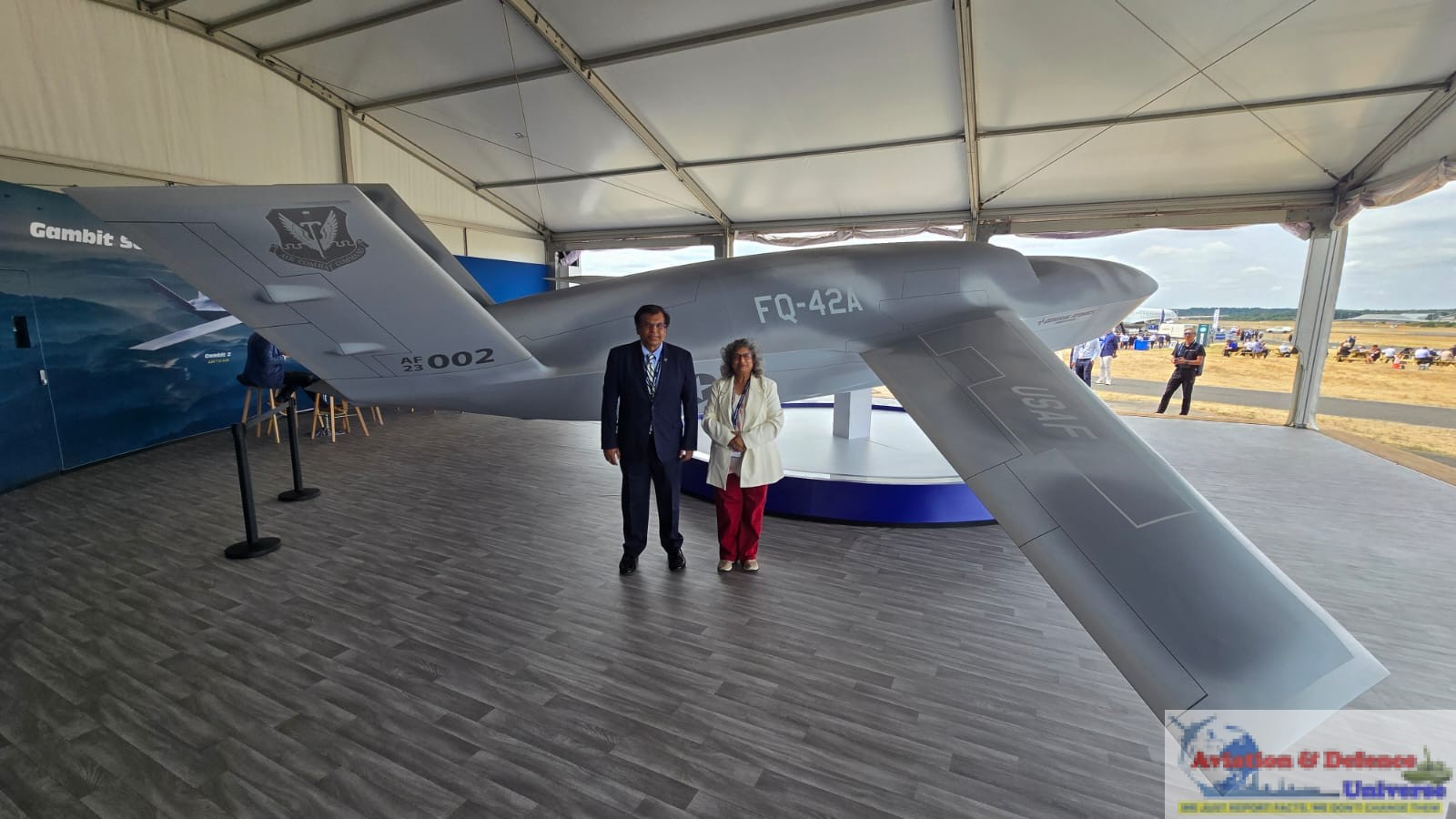 ADU. As we stand next to what General Atomics calls the future of aviation, what are your impressions of Farnborough Airshow 2026?
Dr. Vivek Lall. I think it is a great air show. There is a lot of interest in advancing unmanned technologies, and we are sitting next to the future of aviation.
ADU. Are the manufacturing facilities for the FQ-42A currently all in the US? If you receive an order from another country and the numbers are significant, could manufacturing be established there?
Dr. Vivek Lall. I think those would be government-to-government decisions. Certainly, these days, as we see in India, Make in India is strong. It would really depend on the government-to-government conversations and also on the numbers. As unmanned technologies assume an increasingly central role in future warfare, the evolving India–General Atomics partnership could potentially span surveillance, airborne early warning, collaborative combat aviation, advanced weapons and other strategic technologies — with the scale of future cooperation ultimately shaped by operational requirements, government-to-government decisions and the strength of India’s Make in India ambitions.
ADU. How do you assess India’s rapidly evolving defence innovation ecosystem and the emergence of a large number of defence startups?
Dr. Vivek Lall. India’s defence innovation ecosystem is undergoing a genuine structural shift. Like I have said earlier , initiatives such as iDEX and the rapidly growing defence startup landscape have created significant momentum. “The talent exists, the ambition exists. The system needs to close the distance between a promising prototype and a fielded capability.
 ADU. As India pursues greater self-reliance in defence, can indigenisation and international collaboration successfully move forward together keeping Make in India and Atmanirbhar Bharat in focus?
Dr. Vivek Lall. Self-reliance and international collaboration should not be viewed as contradictory objectives. “The right model is self-reliance through trusted partnerships. India collaborates where collaboration accelerates sovereign capability and develops independently where national control is essential.
ADU. What, in your view, will determine India’s emergence as a leading strategic and defence power over the coming decade?
Dr. Vivek Lall. It is a question which has only one answer. India already possesses the ingredients required to emerge as a leading strategic power in the coming decade. The nations which shape the security landscape of the next decade will not necessarily be the ones with the largest budgets. They will be the ones that move from concept to capability fastest, sustain that capability under pressure and adapt before the threat does.
The wars and conflicts of recent years have fundamentally reshaped the modern battlefield, accelerating the emergence of unmanned systems as indispensable instruments of warfare. From Ukraine and the Middle East to other contested theatres, drones have demonstrated their value across intelligence, surveillance and reconnaissance, precision strikes, electronic warfare, logistics and even collaborative combat operations. Relatively inexpensive unmanned platforms are increasingly capable of threatening high-value assets, while sophisticated long-endurance systems are extending the reach and persistence of armed forces without placing aircrew directly in harm’s way. At the same time, counter-drone capabilities have become an equally urgent operational requirement. The lessons emerging from contemporary conflicts are clear: future military advantage will increasingly depend on the ability to integrate autonomous and remotely operated platforms with traditional forces, rapidly adapt technologies to battlefield realities and achieve the right balance between affordable mass, advanced capability and human-machine teaming.
PM From the MQ-9B programme and a prospective Indian MRO ecosystem to the possibilities offered by unmanned AEW, MALE platforms and Collaborative Combat Aircraft, General Atomics is clearly looking at India through a much wider strategic lens. Dr. Vivek Lall’s emphasis on engagement with as many as 30 to 50 Indian companies also points towards an approach in which future programmes could increasingly involve the country’s growing aerospace and defence industrial base. The FQ-42A standing prominently at Farnborough may represent General Atomics’ vision of the future of air combat, but for India, the company’s engagement is already moving from platform acquisition towards ecosystem building.Dr. Vivek Lall has played a significant role in strengthening the industrial and technological dimensions of the India–US defence relationship, serving as an influential bridge between American aerospace and defence innovation and India’s evolving strategic requirements. Over the years, his engagement with India has been associated with several major US-origin defence platforms and programmes, while his leadership at General Atomics has helped advance cooperation in the strategically important field of unmanned aerial systems. The landmark MQ-9B acquisition represents another major step in this trajectory, bringing India and the United States closer in advanced defence technology while opening opportunities for deeper participation by Indian industry. Dr. Lall’s sustained advocacy for technology partnerships, industrial collaboration and engagement with India’s defence ecosystem has complemented the broader transformation of Indo-US defence ties from a traditional buyer-seller relationship into an increasingly strategic partnership centred on interoperability, innovation, capability development and long-term technological cooperation.



































































-A4-Size-(2)_page-0001.jpg)