


 18th BRICS Summit














- MH370 Was the Beginning : The Future Is Strategic Cooperation
- From Andaman Sea to Indo-Pacific: India and Malaysia Strengthen Maritime Defence Cooperation
- More Than Search and Rescue: The Strategic Evolution of India-Malaysia Defence Relations
By Theertha Panachoor
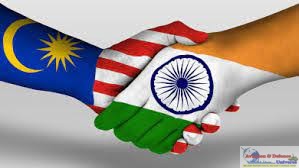
Hyderabad. 27 July 2026. India’s search for Malaysia Airlines Flight MH370 in March 2014 remains one of the largest multinational aviation search operations in recent history. Over nine days, India deployed multiple naval ships and aircraft across the Andaman Sea, working alongside Malaysian authorities during a search that quickly became as much a test of coordination as of capability. The operation showed that the two countries could work together under pressure. It also revealed how much depended on political trust and military initiative rather than formal arrangements.
That balance has shifted over the past decade. Defence ties have deepened through military exercises, naval engagement, strategic dialogue and, more recently, humanitarian assistance and disaster management. Maritime search and rescue has progressed alongside them, though not at the same pace. Political trust has outpaced operational coordination. That makes search and rescue a useful lens through which to examine a defence partnership that has become more regular and increasingly consequential.
The relationship also sits within a wider regional context. India’s engagement with Southeast Asia has expanded under the Act East Policy and its Indo-Pacific vision, with greater emphasis on maritime security, naval diplomacy and humanitarian cooperation. Malaysia occupies a pivotal position in that approach, sitting astride the Strait of Malacca, one of the world’s busiest maritime corridors linking the Indian and Pacific Oceans. Search and rescue, therefore, is not simply a bilateral concern. It reflects the wider maritime priorities that increasingly shape India’s engagement with Southeast Asia and the Indo-Pacific.
Where the Paperwork Now Stands
Signed during Prime Minister Narendra Modi’s February 2026 visit to Kuala Lumpur, the Memorandum of Understanding on Disaster Management is the clearest sign that humanitarian assistance has become an established element of India-Malaysia security ties. Both governments identified disaster management, including cooperation in search and rescue, through joint training, capacity building, knowledge exchange, and exercises. India’s National Disaster Management Authority lists Malaysia among its international disaster-management partners, while the joint statement placed the agreement alongside commitments on 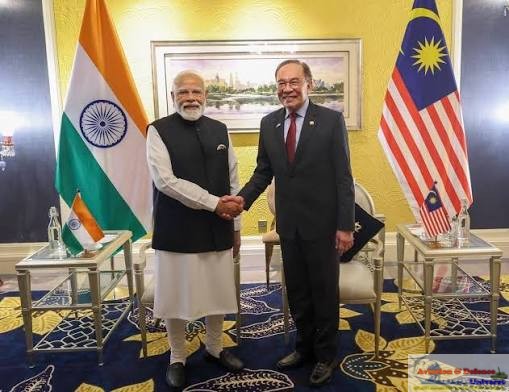 maritime security and strategic cooperation. The timing was equally telling. The agreement followed Malaysia’s ASEAN Chairmanship and came as India continued to deepen its engagement with Southeast Asia under its Act East Policy. Neither country entered the partnership without experience. Malaysia’s National Disaster Management Agency had deployed its MyTeam Relief contingent to Türkiye after the 2023 earthquakes and expanded its international disaster partnerships in the years that followed. India, meanwhile, had strengthened its reputation as the region’s first responder through successive humanitarian operations, including Operation Brahma after the Myanmar earthquake in 2025.
The MoU reflects that shared experience. Rather than creating a new area of cooperation, it gives institutional shape to one that had already been developing through repeated humanitarian operations. It also signals a broader shift in the bilateral engagement. Humanitarian assistance and disaster relief are no longer peripheral to defence partnerships; they have become integral to them.
From Defence Cooperation to Strategic Partnership
The disaster-management MoU arrived as the defence partnership broadened beyond military exchanges. Over the past two years, cooperation has grown to include strategic dialogue, maritime security, defence technology and humanitarian assistance, reflecting a strategic tie that now extends beyond training exercises into the wider Indo-Pacific security environment. Much of that growth has come through regular institutional engagement. The Malaysia-India Defence Cooperation Committee remains the anchor of the strategic ties, but it is now supported by specialised mechanisms that have widened the conversation. A Strategic Affairs 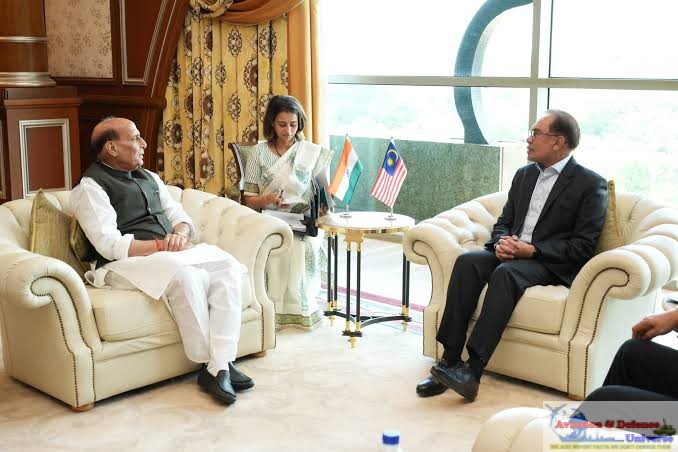 Working Group brings regional and geopolitical issues into bilateral defence talks, while the Su-30 Forum draws on the fact that both air forces operate Russian-origin fighter aircraft. Together, they make defence engagement more regular and less dependent on ministerial visits or annual meetings.
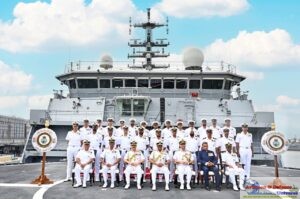
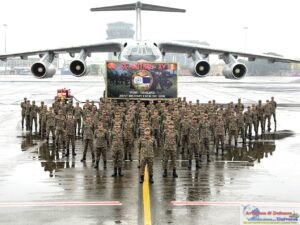
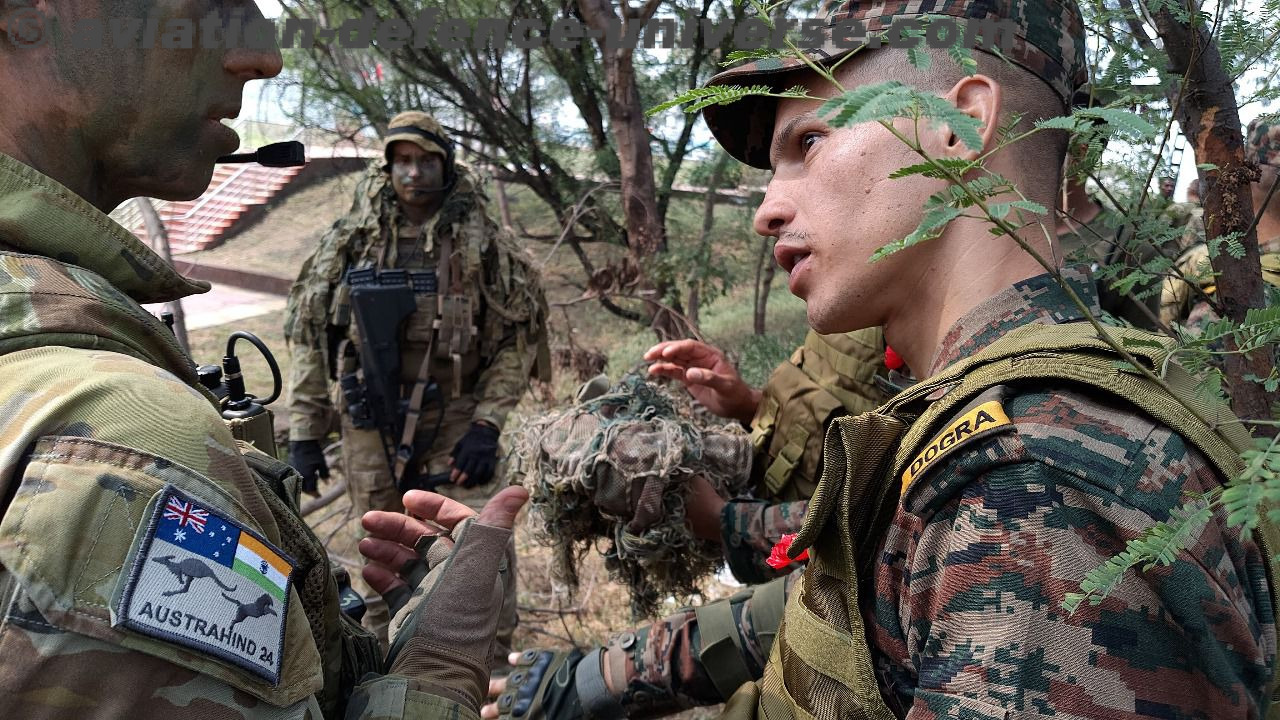
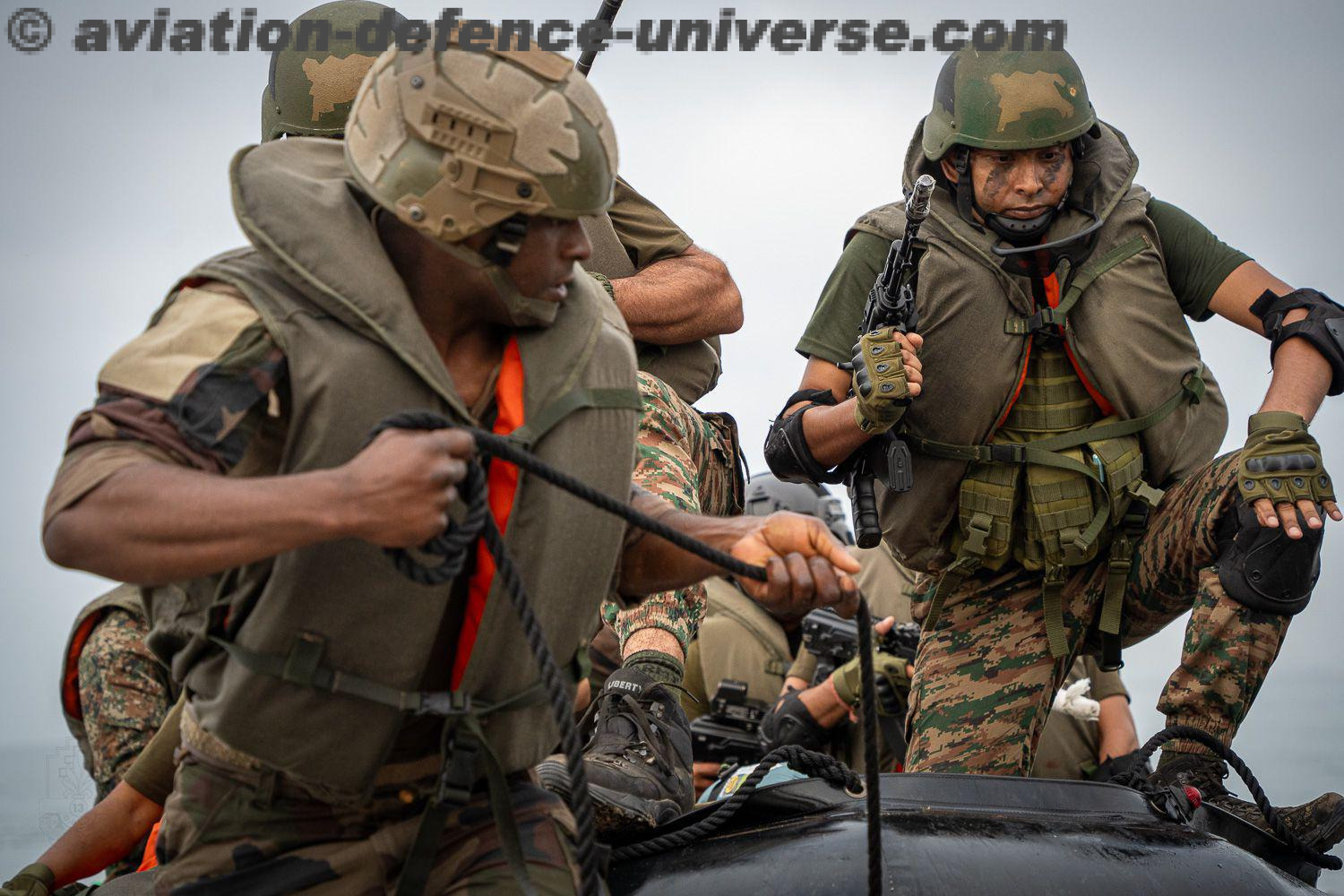
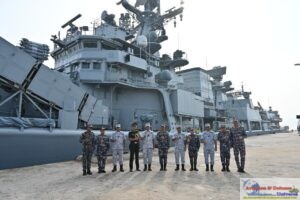
The same shift is visible between the armed forces. Exercise Harimau Shakti, whose fifth edition concluded in Rajasthan in December 2025, has become the flagship engagement between the Indian and Malaysian armies. At sea, the pace has been equally steady. INS Sandhayak visited Port Klang in July 2025, followed by INS Sahyadri‘s port call at Kemaman later that year. Both navies continue to meet through Exercise Samudra Laksamana, MILAN and the ASEAN-India Maritime Exercise. These engagements together show how routine defence engagement has become.
Political engagement has expanded alongside military cooperation. During Prime Minister Narendra Modi’s February 2026 visit, the two countries established the first Malaysia-India Security Dialogue, creating a dedicated forum to discuss regional security beyond traditional military cooperation. A few months later, the 12th Sub Committee Meeting on Military Cooperation identified maritime cooperation, defence technology, cyber security, military training and humanitarian assistance and disaster relief as priority areas for future work. Humanitarian assistance and disaster relief now sit alongside conventional defence issues rather than outside them. Across the Indo-Pacific, armed forces are expected to respond not only to military crises but also to natural disasters, maritime emergencies and other non-traditional security challenges. India and Malaysia are no exception.
Search and rescue fits naturally into that picture and is no longer a narrow maritime issue but one that sits at the intersection of defence diplomacy and naval interoperability. The next step is making sure the operational arrangements at sea keep pace with a defence relationship that has become more regular and more ambitious.
The Next Layer: Maritime Operational Cooperation
Defence cooperation has moved faster than maritime operational mechanisms. Political dialogue is regular and military exchanges now have a formal framework. Maritime search and rescue has followed the same direction, but not quite at the same pace.
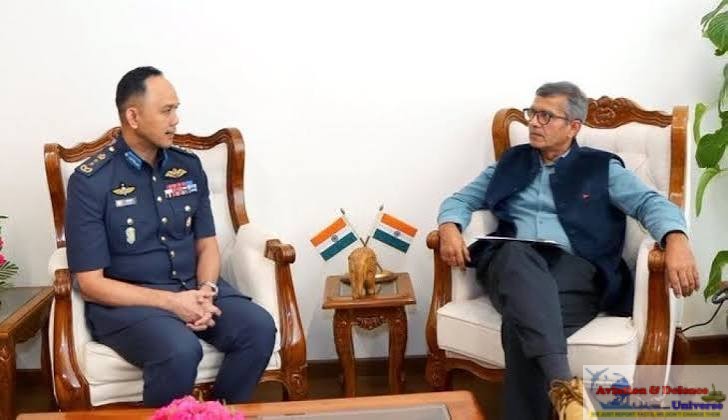 The clearest example is coast guard engagement. The Indian Coast Guard has formal agreements with the coast guard agencies of Bangladesh, Japan, South Korea, Vietnam, Oman and several other maritime partners. These cover search and rescue, maritime law enforcement, pollution response and professional exchanges under a single operational arrangement. Malaysia, despite sharing one of India’s most important maritime neighbourhood, does not appear on that list. But that shouldn’t be read as a lack of cooperation. The Indian Coast Guard describes its engagement with the Malaysian Maritime Enforcement Agency in positive terms, highlighting cooperation on piracy, search and rescue, maritime law enforcement and marine environmental protection. Naval exchanges, defence dialogue and military engagement already provide both countries with established channels of communication. The question is whether that cooperation should now be formalised through a dedicated coast guard agreement.
The February 2026 disaster-management MoU moves in that direction, but it serves a different purpose. Disaster-management agencies coordinate preparedness, training and recovery across government departments. Maritime search-and-rescue operations work on a much shorter timeline. They depend on agreed communications procedures, real-time information sharing and clear operating protocols between the agencies responding at sea. The disaster-management framework strengthens the partnership, but it cannot replace arrangements designed specifically for maritime operations.
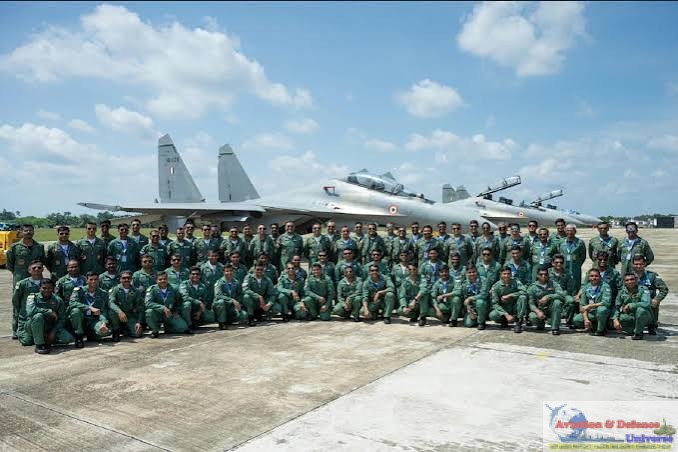 Geography strengthens the case for closer maritime cooperation. India and Malaysia sit across adjoining maritime spaces linking the Bay of Bengal, the Andaman Sea and the Strait of Malacca, one of the world’s busiest shipping corridors. Any large-scale search-and-rescue operation in these waters is unlikely to remain purely bilateral. The proximity of Singapore, Indonesia and other ASEAN maritime agencies means regional coordination quickly becomes part of the operational picture. Commercial shipping, offshore energy, fishing fleets and an expanding naval presence all place greater demands on maritime coordination. Against that backdrop, a dedicated coast guard agreement would be a next step for a defence relationship that has already expanded across most other areas.
A similar opportunity exists at the Information Fusion Centre-Indian Ocean Region in Gurugram. The centre hosts liaison officers from a growing number of partner countries, including Singapore, Thailand and, more recently, Indonesia. Malaysia is not among them. Given IFC-IOR’s role in maritime domain awareness and real-time information sharing, a Malaysian liaison officer would complement the defence cooperation already in place while reducing reliance on the ad hoc coordination that characterised the MH370 search. It would also place India-Malaysia cooperation within a wider information-sharing network, reflecting the interconnected nature of maritime operations across Southeast Asia and the wider Indo-Pacific.
An Indo-Pacific Framework for Maritime Security
India and Malaysia’s maritime engagement is also shaped by regional institutions that have become increasingly important to maritime security and disaster preparedness. Both countries are members of the Indian Ocean Rim Association (IORA), where search and rescue has gained greater attention in recent years. In June 2026, India and Australia hosted a search-and-rescue workshop and tabletop exercise for IORA members in Chennai, bringing together maritime agencies to improve coordination during large-scale emergencies. The participation of the Information Fusion Centre–Indian Ocean Region reflected India’s growing emphasis on linking maritime domain awareness with humanitarian response across the Indian Ocean.
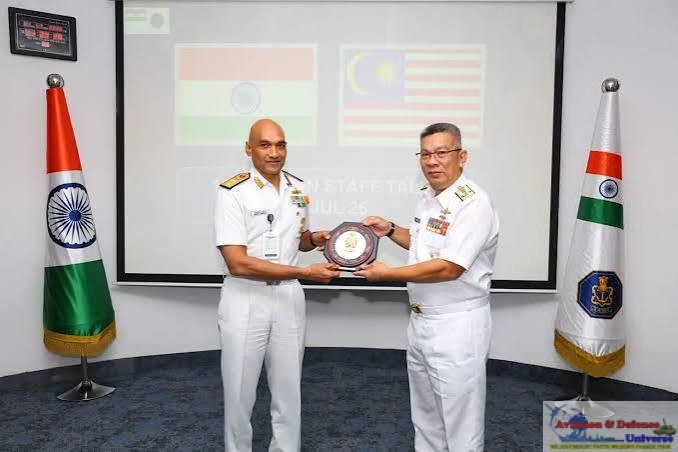 The same logic carries into ASEAN. India and Malaysia currently co-chair the ASEAN Defence Ministers’ Meeting-Plus Experts’ Working Group on Counter-Terrorism for the 2024-2027 cycle, while both continue to align India’s Indo-Pacific Oceans Initiative with ASEAN’s Outlook on the Indo-Pacific. These forums do not replace bilateral coordination, but they make it easier. Exercises build interoperability. Regional forums build familiarity. Both become valuable when emergencies arise.
That fits neatly with India’s own maritime outlook. The shift from SAGAR to MAHASAGAR places greater emphasis on collective security and regional resilience, while Malaysia continues to anchor its regional engagement in ASEAN. Bilateral defence ties are becoming part of something larger: a network of partnerships built around maritime security, humanitarian assistance and practical cooperation. Strengthening operational links between India and Malaysia is part of that effort.
From Crisis Response to Strategic Preparedness
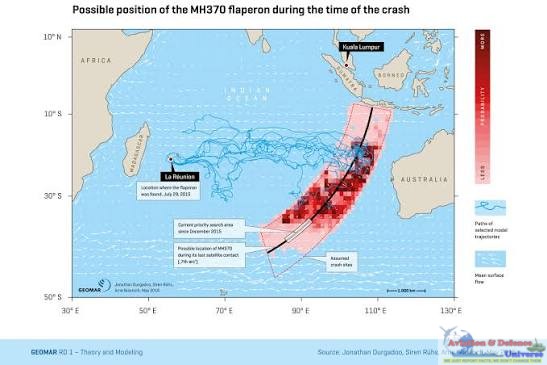 MH370 showed that India and Malaysia could work together long before the agreements caught up. Since then, defence ties have deepened, naval engagement has become routine and disaster management has found a place within the broader security relationship. A coast guard agreement or Malaysian representation at the Information Fusion Centre-Indian Ocean Region would not redefine that partnership. They would reinforce one that already rests on regular military engagement, political dialogue and growing maritime cooperation. The MH370 search remains relevant because it exposed both the strengths and the limits of bilateral coordination.
Today, those strengths rest on a far wider defence engagement built through regular dialogue, military exchanges and humanitarian cooperation. The remaining gaps are practical rather than political. Closing them would not mark the beginning of a new partnership, but another step in one that has steadily grown over the past decade.






















































-A4-Size-(2)_page-0001.jpg)