


 18th BRICS Summit














- India’s Drone Moment Is Now: Calls for a Whole-of-Nation Push
- Drones & Counter-Drones : “Every Brick Should Be Developed in India”
- No More Tick-Marking – Move from Seminar to Battlefield – “We Want to See It Live”
By Sangeeta Saxena/ Harmeet Singh
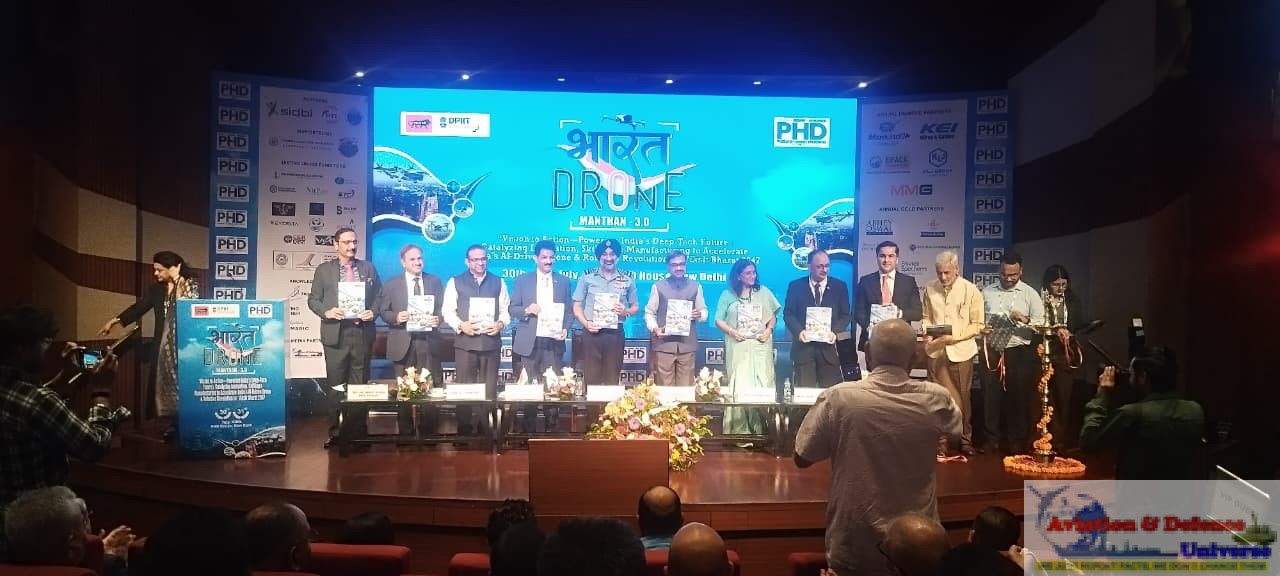
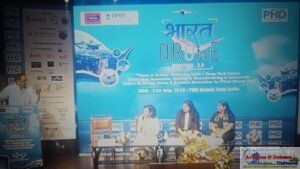
Kuala Lumpur/New Delhi. 30 July 2026. The next war will not wait for India’s technology to catch up. And that, in essence, was the warning from Air Chief Marshal AP Singh, Chief of the Air Staff, as he addressed the Bharat Drone Expo organised by PHDCCI in New Delhi. In a hard-hitting assessment of India’s unmanned and counter-unmanned future, the IAF Chief called for an ecosystem where “every brick” is developed in India, intellectual property remains Indian, AI algorithms are indigenous, networks and data are sovereign, start-ups receive meaningful support and production can surge when conflict arrives. His defining warning was, “Technology delayed is technology denied”—captured the urgency of an era in which battlefield innovation is moving faster than traditional procurement and development cycles can afford.
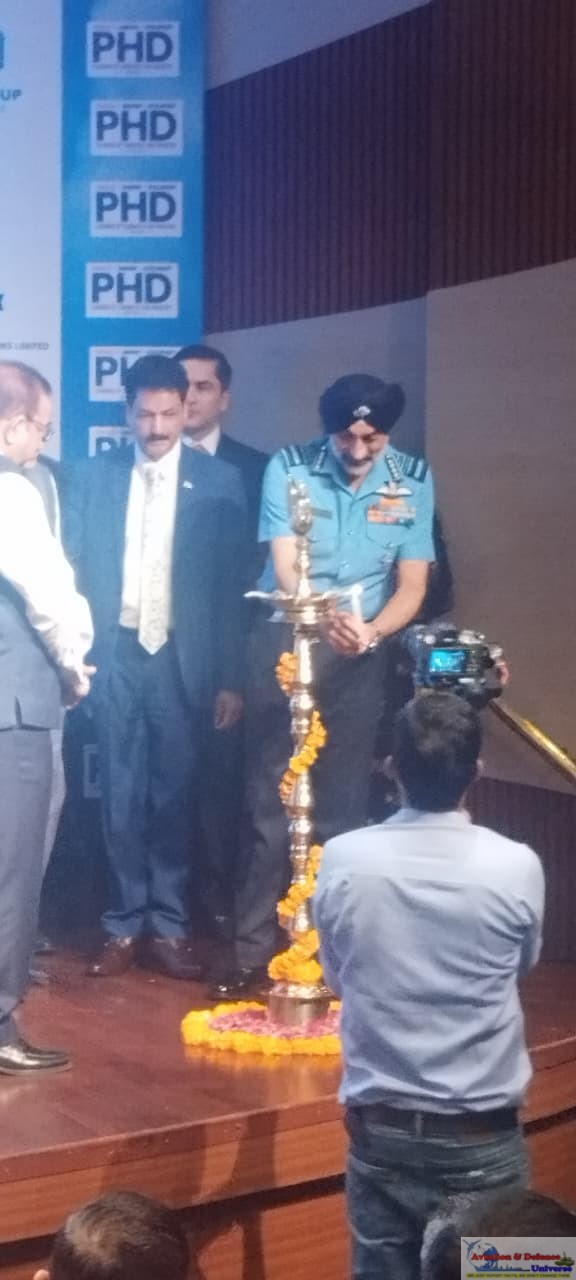 Drones may be inexpensive, expendable and increasingly ubiquitous on the modern battlefield, but India’s ambition cannot stop at assembling them in large numbers. It must be able to design them, own their intellectual property, secure their networks, develop indigenous AI, manufacture every critical component, integrate them safely with manned platforms and scale production dramatically when war demands it. Drawing lessons from recent wars, the IAF Chief declared that drones and unmanned aerial systems are unquestionably “here to stay”, but cautioned that the human cannot yet be taken out of the loop. His address was simultaneously a challenge and a roadmap for India’s rapidly expanding drone ecosystem: move beyond PowerPoints to live demonstrations, turn laboratory technologies into production-ready systems, give start-ups clearer operational problems, make industry invest in indigenous R&D and ensure that India’s unmanned revolution advances at what he memorably described as the “speed of relevance.”
Air Chief Marshal AP Singh said every ‘brick’ of India’s unmanned ecosystem must be developed at home; urges industry to invest in start-ups, build sovereign technology and deliver at the ‘speed of relevance’ The drone revolution may be changing the character of warfare, but for India, merely manufacturing unmanned systems will not be enough. The real test will be whether the country can design, develop, manufacture, scale, secure and continuously upgrade the entire ecosystem indigenously—and do it before technology moves on. He laid out an expansive roadmap for India’s unmanned aerial systems and counter-UAS ecosystem. Moving seamlessly from battlefield lessons and regulatory challenges to sovereign technology, intellectual property, start-up funding, certification, skills and wartime scalability, the IAF Chief made it clear that Atmanirbharta cannot stop at assembling a drone in India.
His message to industry was equally unmistakable: move faster, innovate differently and build for operational relevance rather than technological demonstration. Drawing lessons from recent conflicts, Air Chief Marshal Singh acknowledged that drones and counter-drone systems have permanently altered the battlespace. “In the recent wars, what has happened, they are here to stay. There is no denying that fact. They are here to produce, you know, results at low cost.” But he cautioned against assuming that unmanned warfare would eliminate human involvement anytime soon. “Whether they are the only solution, I always reserve my comments on that because I don’t think we can take the man out of the loop as of now. Not in the near future for sure.” What is required, therefore, is a collaborative approach in which manned and unmanned capabilities complement each other.
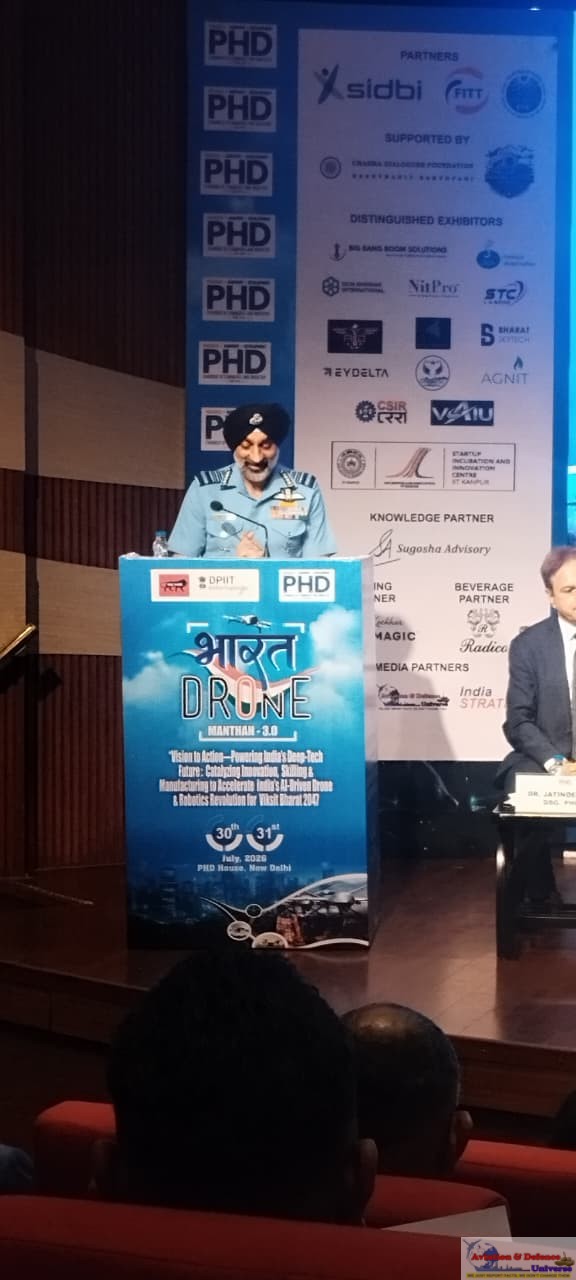 The IAF Chief expressed confidence in Indian industry’s ability to develop unmanned technologies, particularly because drone development cycles and costs can be substantially lower than those of large manned aircraft. Modern computational tools have also transformed development. Where extensive physical testing was once necessary, simulation and Computational Fluid Dynamics can now reduce iterations before final wind-tunnel validation. He pointed to DRDO facilities that have been made available for private-sector use as part of the enabling ecosystem.
One of the most candid portions of the address concerned the responsibility of the Services themselves. For innovation to succeed, Air Chief Marshal Singh said, the user must clearly articulate the operational problem. “As a user, if I can say, the Air Force, I think, we are very clear in our mind that the problem statement has to originate from us.” He pointed to the IAF’s Directorate of Aerospace Design, created to interact with industry and start-ups and communicate requirements for drones, equipment and sensors. And he issued industry an unusually direct invitation, “If we are failing in that, I would request all the industry to come back to me. Come back to me and say that, you know, we have been waiting for this for so many weeks or so many months. Actually, it should not go to more than weeks, according to me, to give you what we want.”
Innovation, he added, need not always begin with a military requirement. Technologies created for other purposes may possess defence potential, and the Services should be prepared to work with innovators to adapt them for warfare or combat-support roles. Putting that philosophy into practice, the IAF is preparing Dronathon 2026, scheduled for September. “We don’t want to see things on, you know, presentations or on either powerpoints or those video recorded systems. We want to see it live, discuss it out and then take it forward from there.” He also urged the uniformed personnel attending the conference to use the opportunity to interact directly with industry, academia, mentors and incubators and discuss requirements and concerns rather than remain within institutional silos.
The accessibility of drone technology brings its own security challenge—uncontrolled proliferation. Air Chief Marshal Singh warned that India needs an effective regulatory mechanism capable of distinguishing legitimate drones from hostile ones. “There is proliferation and we need to have a regulatory control over it… finally should be able to recognise the drone whether it is a bona fide drone or a rogue drone.” The objective must also be to prevent fratricide—shooting down friendly unmanned systems because identification and coordination mechanisms are inadequate. Growing numbers of unmanned systems will require supporting infrastructure, communications, launch arrangements and sophisticated airspace management, particularly because everything from micro-drones to aircraft-sized UAS will increasingly share airspace with manned aircraft and long-range weapons.
The strongest call for self-reliance came when the IAF Chief turned to indigenous content. As drones become smaller, their propulsion systems, sensors, cameras and weapon payloads will also need to be miniaturised. But miniaturisation without technological sovereignty would leave India vulnerable. “Every brick has to be made in India. Actually, every brick should be developed in India. Then only we can say we are fully atnirbhar.” Dependence on imported critical components, he warned, creates the possibility that another country could choke supplies at precisely the moment India needs them most. Removing the pilot from the cockpit cannot become an excuse for lowering standards, “We may not have a human sitting inside, but it can fall on anybody. It can fail in a mission which can cost us a lot.” Current drone operations frequently depend upon numbers partly because individual platforms carry smaller payloads and partly because failure rates remain high. “You don’t know how many you are launching and how many will reach the target for whatever purpose you are launching them for.”
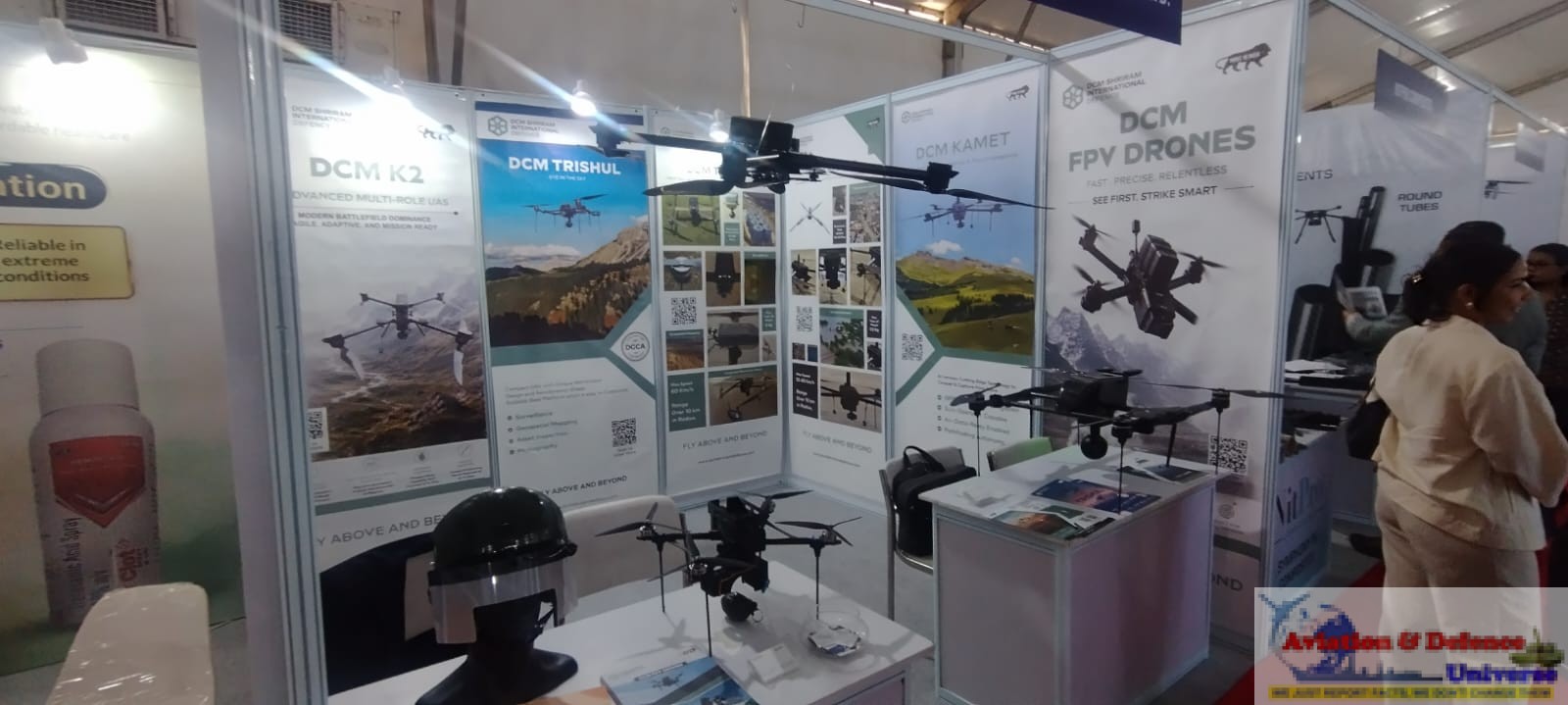 Reliability, redundancy, proper design and development cycles and robust certification therefore have to become integral to India’s unmanned ecosystem. The Chief called for sovereign technology stacks, secure networks, secure storage, data privacy and indigenous AI algorithms. “Only way that can happen is if we have the intellectual property rights for whatever we do. Then we should be able to make changes whenever we want.” True Atmanirbharta, in other words, means possessing the intellectual freedom to modify, encode, decode, secure and upgrade systems without external dependence.
Money remains another challenge, particularly for start-ups developing niche technologies without certainty about future orders. Air Chief Marshal Singh offered an unconventional proposition to established companies—devote a share of earnings to R&D and nurture smaller innovators. “Let that 10% of big players at least, people who are earning, companies which are good, stable. Let that 10% go into the R&D without thinking about whether it will have a return or not.”
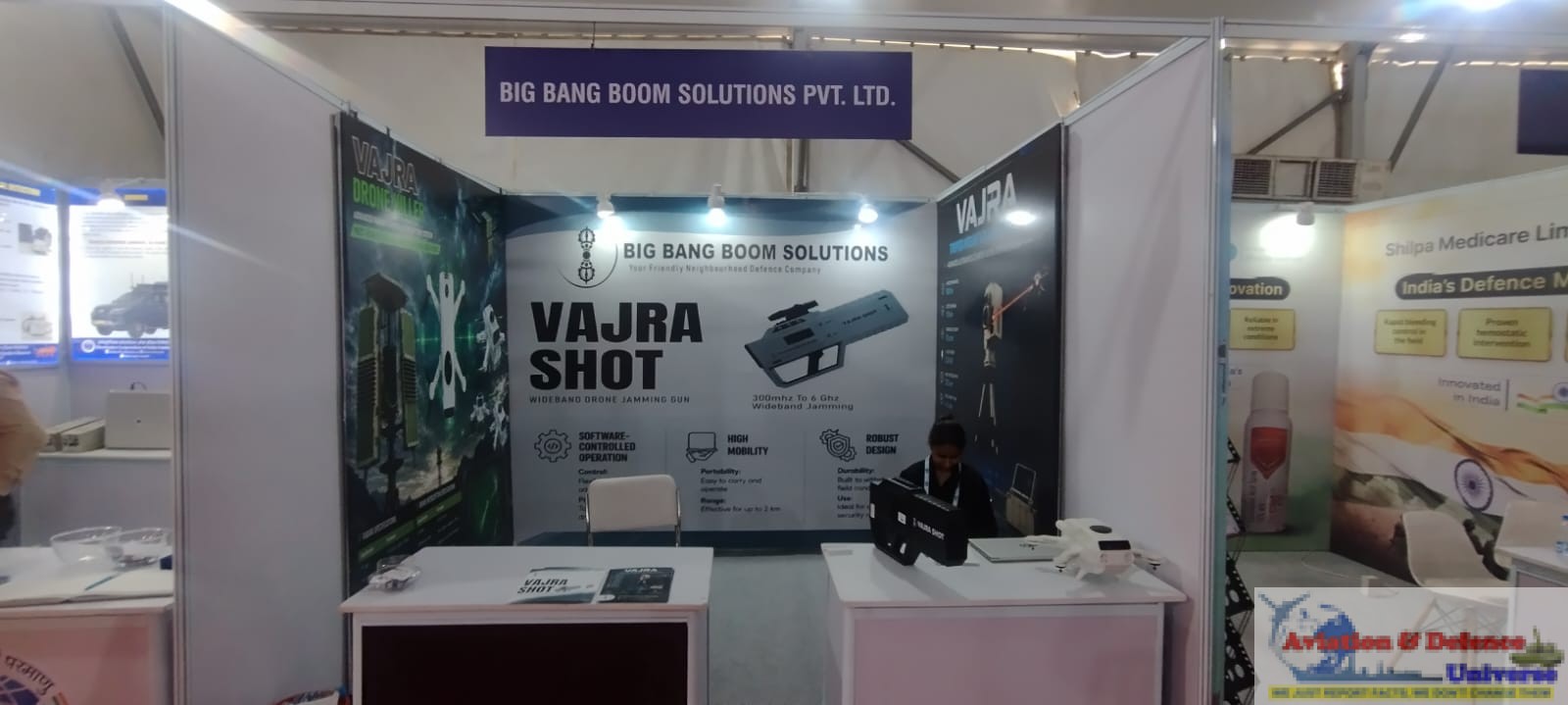 He followed it with a direct appeal, “Let that be an investment from your side towards nation building. And adopt some startups so that you support them. Be incubators there.” Niche defence technologies cannot always be justified by commercial volumes, he pointed out, yet possessing them may be indispensable to strategic autonomy. Government mechanisms such as iDEX and MAKE already provide R&D support, but he acknowledged that existing funding may not always be sufficient.
Perhaps the defining line of the address came as the Chief warned that disruptive technology waits for nobody. “Technology delayed is technology denied.” Having technology after an adversary has already moved to the next generation is of little value. Nor is laboratory success enough. “We have the technology but it’s not gone beyond lab. Then no point. So, we need to have the production capability.” India also needs scalability—the ability to dramatically increase production during conflict. “A normal rate of… production is 100 pieces per month or per year or whatever. And it has to be built up to 500 when the war comes.”
His prescription was concise, “Everything has to be at the speed of relevance. Excellence Cannot Become a Tick-Box Exercise” Towards the conclusion, Air Chief Marshal Singh moved from technology to philosophy, invoking the Bhagavad Gita, “Yogah karmasu kaushalam,” which he explained as, “excellence in performance of one’s duty is the true yoga.” Excellence, he emphasised, cannot be occasional. “Excellence is not one time activity. It is a habit. We have to make it a habit in our system. And conferences themselves must not become another exercise in institutional box-ticking. “Let us take these to logical conclusions. And not just tick mark another seminar… Let it lead to some partnership, let this lead to some projects on indigenous tech development.”
The Chief concluded that no single Service, ministry, company or research organisation can create India’s future unmanned ecosystem alone. “All of us have to come together. It has to be a… whole of nation approach.” Defence forces, industry, government, researchers, regulators, academia, incubators, investors and quality agencies must collectively ensure that India’s drones and counter-drone systems are safe, secure, reliable, scalable, operationally relevant and economically viable.
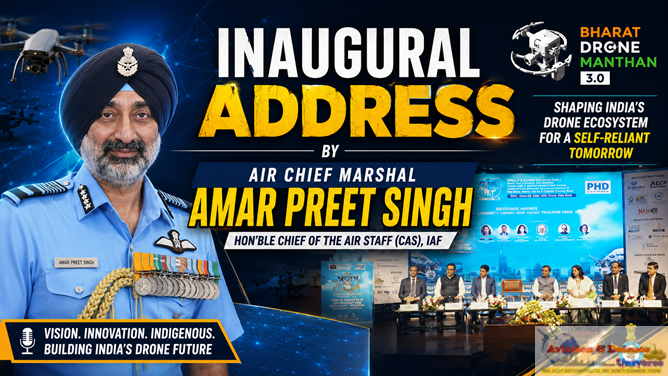 And he left the gathering with a challenge that went well beyond drones, “If we keep doing what we are doing, we will get the same results that we have been getting.” If India’s current pace is inadequate, he argued, the answer cannot be business as usual. “If we feel that it is not good enough, let us do something different. Let us be innovative in this also.” Air Chief Marshal AP Singh’s address at the Bharat Drone Expo in New Delhi went far beyond an assessment of unmanned aerial systems. It was a call to rethink the entire chain through which India creates military capability—from identifying the operational problem and funding innovation to indigenous design, certification, intellectual property, cyber security, AI, production and wartime scalability. His insistence that “every brick should be developed in India” placed technological sovereignty at the heart of Atmanirbharta, while his invitation to established companies to invest in R&D and “adopt some startups” underlined that strategic technologies cannot always be judged by immediate commercial returns.
Above all, the IAF Chief demanded urgency. Technology confined to a laboratory, innovation delivered after its operational relevance has passed, or conferences that end without partnerships and projects will not give India the strategic autonomy it seeks. His appeal for a whole-of-nation approach, bringing together the Armed Forces, government, industry, researchers, regulators, academia, incubators, investors and quality agencies, therefore carried a larger message: India’s drone revolution must not simply be Made in India; it must be conceived, owned, secured, perfected and scalable in India. And if the existing pace is not producing the results the country needs, his final prescription was characteristically straightforward: “Let us do something different.”











































































-A4-Size-(2)_page-0001.jpg)