
















- Breaking Barriers, Building Bharat: Women Entrepreneurs Lead the Deep-Tech Charge
- From Laboratories to the Field: Women Deep-Tech Founders Put Indigenous Innovation to the Test
- From STEM to the Skies and Seas: Women Innovators Power India’s Deep-Tech Revolution
By Sangeeta Saxena
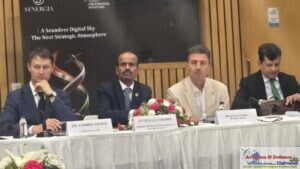
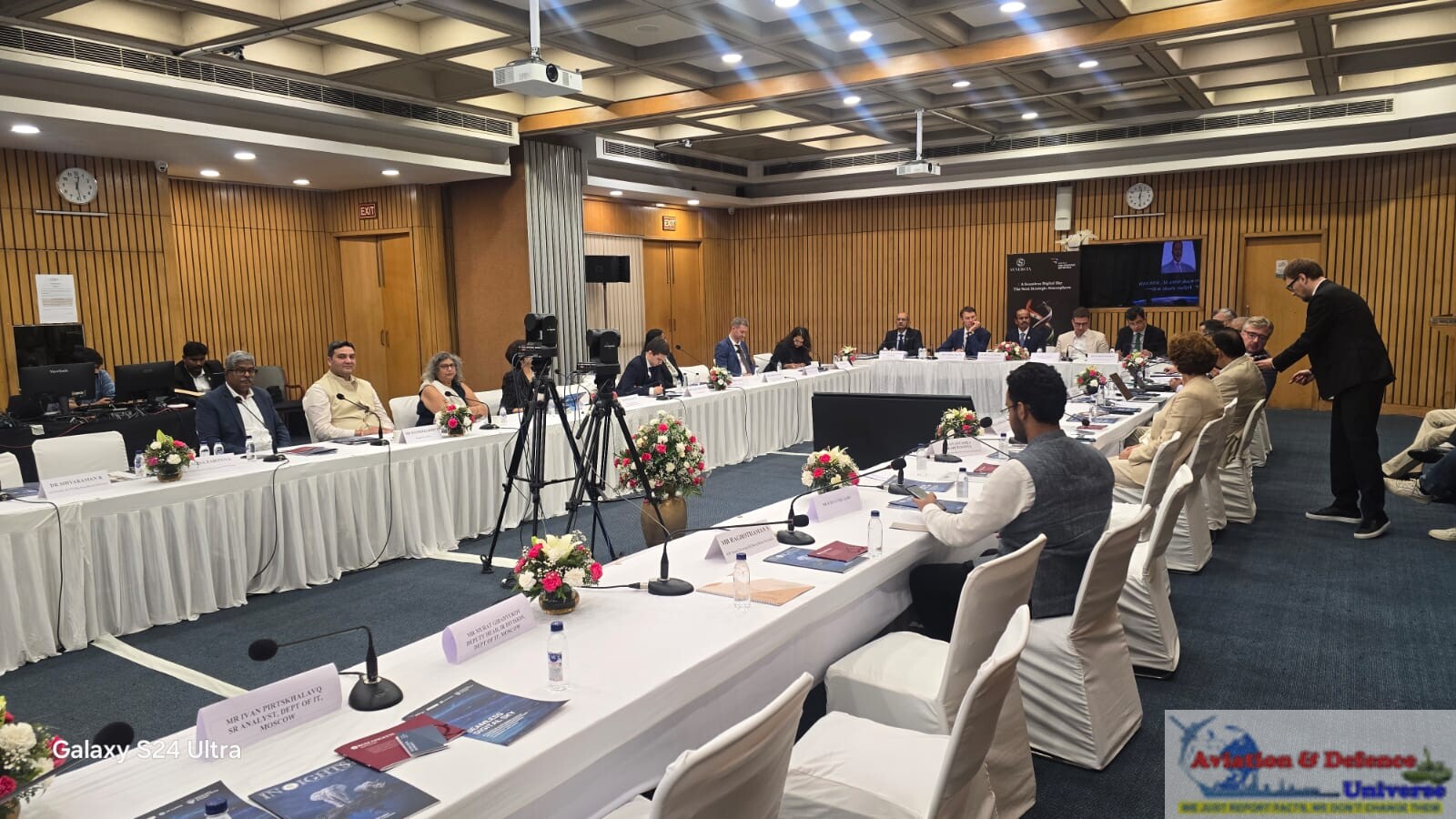
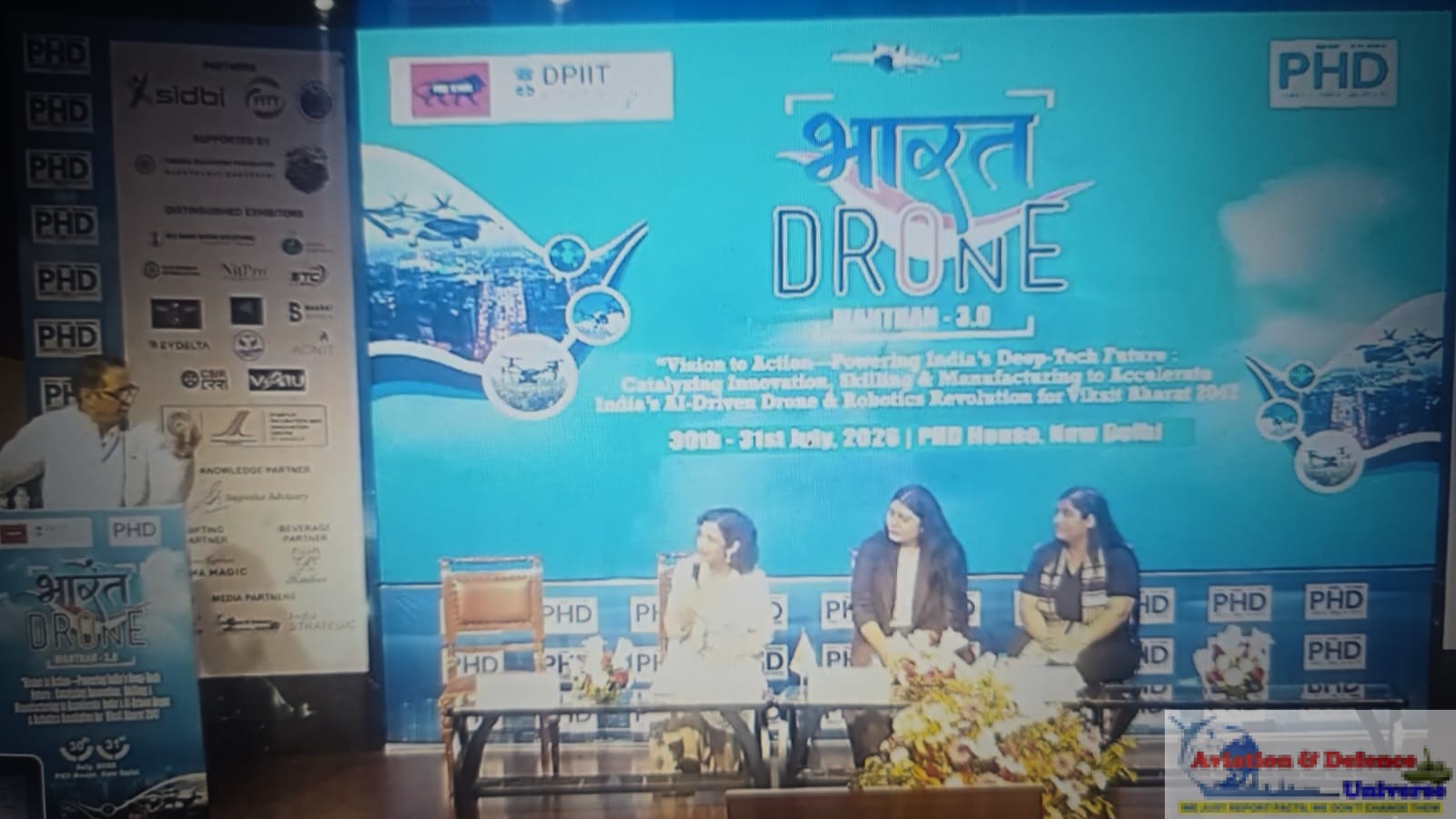
New Delhi. 04 August 2026. They did not come to Bharat Drone Manthan 3.0 merely to discuss women in technology. They came as engineers, researchers, manufacturers and entrepreneurs who had already entered some of the toughest corners of deep tech—underwater sensing, autonomous systems, propulsion, aerospace manufacturing and indigenous components—and discovered that innovation becomes real only when it survives outside the laboratory. The session “Wings of Innovation: Trailblazers Shaping the Future of Autonomous Technologies,” held at Bharat Drone Manthan 3.0 organised by PHDCCI, turned the spotlight away from platforms for a while and towards the people building the technologies behind them.
The discussion was originally designed around women leading India’s deep-tech and autonomous-systems revolution, breaking barriers in drones and robotics, women-led innovation, STEM leadership, inclusive manufacturing and creating an ecosystem that enables more women to enter technology entrepreneurship. But what emerged was something more personal and revealing. Rather than limiting the conversation to products, the session explored the journeys behind them—the decision to return to India, the leap from employment to entrepreneurship, the difficulties of taking laboratory research into the field, the challenge of manufacturing components domestically, the loneliness of being the only woman in the room and the importance of believing strongly enough in an idea to challenge conventional wisdom.
‘Let’s Talk About You’
The tone was established at the beginning when the moderator departed from the conventional technical-panel format. “We will not be talking about drones, we will not be talking about drone components, we will not be talking about motors, so let’s talk about you.” The women on the stage, the moderator observed, had entered niche technological fields where relatively few people—men or women—had ventured. The fact that they were women was significant, but secondary to something more fundamental: they were innovators and “people of substance”, trailblazers in their respective domains. The discussion consequently became as much about the making of an entrepreneur as the making of a technology.
From Germany to India’s Underwater Battlespace
Dr Rashi Mehrotra’s journey illustrated just how far autonomous technology extends beyond the skies. An electrical engineer, researcher and scientist, she had worked in Germany before deciding to return to India with the ambition of conducting deep-tech research and developing deployable products for the Indian Navy. “I always dreamt to be a fighter pilot,” she told the gathering. Her academic work focused on signal processing and underwater signal processing, eventually leading to years of research in underwater sensors and the establishment of a defence startup. The company works in underwater communication and sensing, including technologies associated with Autonomous Underwater Vehicles. Her central message was that the word “drone” should no longer automatically make people look upwards. “When we think about drone, we look at the sky, but the drone is not limited to the sky, it is more enhanced now towards land and sea, especially beneath the sea.” An autonomous underwater vehicle without sensing, she stressed, has limited utility.
What Works in the Lab May Fail at Sea
For Mehrotra, one of the most important lessons of deep-tech entrepreneurship came from taking technology out of controlled laboratory conditions and into the unforgiving maritime environment. Her team conducted sea trials at depths of approximately 100–200 metres, including operations in the Bay of Bengal and Arabian Sea. The challenge increases dramatically with depth. Pressure rises, temperature profiles change, multipath effects interfere with signals and equipment must function in an environment vastly different from the laboratory where it was designed. The discussion distilled this experience into a simple truth, What works in a laboratory may not work at sea. That distinction, Mehrotra argued, is particularly important when evaluating defence startups. A company developing technology for the Army, Navy or Air Force cannot be assessed in the same way as a conventional commercial startup expected to generate rapid revenues.
Deep-Tech Startups Cannot Be Judged on Immediate Revenue
One of Mehrotra’s strongest interventions concerned funding. Investors, she argued, should not judge defence and deep-tech startups primarily on immediate revenue. “Because that will eliminate the technology.” Deep-tech companies can spend years researching, prototyping, testing, failing, modifying and testing again before producing a deployable military system. If innovators are forced to demonstrate quick commercial returns, potentially valuable technologies—and the people creating them—could simply disappear from the ecosystem. Her warning was particularly relevant for scientists who return to India after working abroad. Without a supportive environment, talented researchers could become discouraged and leave again for countries where their work receives greater institutional or financial backing.
The User Must Be Part of Innovation
Mehrotra also stressed the importance of close interaction between technologists and military users. Researchers may possess scientific knowledge and innovative ideas, but only the user can explain the actual operational application. “You have the research, you have the knowledge, you have the idea, you have the innovation, but without user, you don’t know what your product is important for.” For young entrepreneurs, particularly women entering deep tech, her advice was to build strong fundamentals, work on real-world problems, engage with hardware and conduct field trials. “If you have a defence startup, it is only about the field, military works in the field, they don’t work in the lab.” She also encouraged multidisciplinary research rather than remaining confined to one narrow field.
From a Small Town in Bihar to Indigenous PCB Motors
The second entrepreneurial journey began far away from India’s traditional technology centres—in East Champaran, Bihar. The young entrepreneur Alisha Raj described how, with the support of her mother, she studied electronics engineering and began her professional career at Vivo Electronics. COVID-19 changed the direction of her life. She had long wanted to create a business of her own, although she had not initially imagined that it would necessarily be a technology company. The decisive idea came through her partner, Bibhuti Rajput, and eventually evolved into work on fixed-wing drones and then PCB motors. Their original ambition was straightforward: build something indigenous.
From Assembling Drones to Manufacturing Components
The founders initially began building fixed-wing drones and filed several patents. But while attempting to manufacture an indigenous platform, they encountered a problem familiar across India’s drone ecosystem—the components themselves were often unavailable domestically. “We can assemble it, but what’s the point?” She drew an important distinction between assembly and manufacturing. “So, it is just assembly. It is not entirely manufacturing in India. It is just assembly in India.” That realisation changed the direction of the company. Instead of concentrating solely on the complete drone, the team focused on one of its critical components: the motor.
Why Build the Whole Drone When India Needs the Motor?
Developing customised conventional motors could require substantial investment and long development cycles.The PCB motor approach offered a different proposition. The entrepreneur said customised motors could be developed rapidly to customer specifications without necessarily requiring very large production volumes. She also highlighted potential material and environmental advantages, saying the technology could reduce copper usage by approximately 60–65 per cent compared with conventional wound motors and potentially reduce associated CO2 emissions. The ultimate objective is deeper localisation. “Apart from that, we are trying to make the entire motor indigenous. I mean, no component import from China.” The journey demonstrated an important principle of India’s emerging deep-tech ecosystem: sometimes building a complete indigenous platform exposes the component gap that subsequently becomes an even larger business opportunity.
Dream Big, Go Big
The third entrepreneurial story came from an aerospace engineer whose passion for aviation began early. She completed degrees in mechanical and aerospace engineering, became a licensed pilot and described herself as an aerospace enthusiast “through and through.” Shreya Rastogi’s appetite for challenging herself began in childhood. At nine, she persuaded her family to allow her to attend boarding school. Her father’s advice subsequently became a guiding principle, “If you are going to do something, be the best at it. Or don’t do it at all.” “Mediocrity doesn’t get you anywhere.” Growing up around her father’s factory exposed her to manufacturing across metals, glass, rubber, wood and other materials. As the daughter of a first-generation entrepreneur—and the first engineer in a family otherwise deeply involved in business—she wanted to build something herself.
Aerospace Without Giving Up Being Indian
Her decision to study aerospace in the United States presented another dilemma. Aerospace careers there often require citizenship or residency because of the sensitive nature of the industry. “I didn’t want to give up my Indian citizenship.” During her studies, she nevertheless gained extensive hands-on exposure in advanced composites and worked on projects involving organisations including the US Navy and Department of Energy. A female professor gave her another piece of advice that stayed with her, “Your potential is as big as your mind is. The more you push it, the bigger it becomes.” Rather than choosing between space and aviation, she pursued both and said she became the only student in her cohort to complete both streams within four years. The philosophy was simple: “Dream big, go big.”
Women on the Manufacturing Floor
Perhaps one of the most striking parts of the session was not about the woman founder herself, but about the women she brought into manufacturing. She revealed that her manufacturing floor operates with an approximately 80:20 women-to-men ratio. The decision began almost as an experiment. At an early facility on the outskirts of Bengaluru, she recruited women from nearby villages, broke complex manufacturing processes into repeatable steps and adapted working arrangements around their practical requirements. The outcome challenged assumptions about who could perform skilled manufacturing work. “Given the right tools, you cannot distinguish the work they have done versus the skilled labour I had hired.” For her, the experiment demonstrated that inclusive manufacturing does not have to be framed merely as social welfare. With the right training, processes and opportunity, women previously outside the formal manufacturing workforce could perform sophisticated industrial tasks to the required standards.
Taking Technology to Rural Women
The experience directly reflected one of the broader themes of the session: the potential of autonomous technology and advanced manufacturing to create opportunities beyond India’s traditional urban technology workforce. Women from rural communities do not necessarily lack aptitude for advanced manufacturing. Often, they lack access, training, flexibility and the opportunity to demonstrate what they can do. The entrepreneur said the objective was partly to mobilise women who traditionally stayed away from manufacturing because of social barriers and other constraints. The experiment produced something else as well: community. The women became friends, creating a workforce whose participation extended beyond the factory process itself.
The Other Battle: Believing in Yourself
When an audience member asked the entrepreneurs about the obstacles they had encountered, the discussion became deeply personal. For Mehrotra, the challenge was technological and environmental: taking systems into the sea and ensuring that research survived real-world pressure, temperature changes and underwater propagation conditions. For the young motor entrepreneur, the struggle had another dimension. “Especially being a woman, we get a lot of judgement from our, even from our own parents, from society, from our colleagues, multiple challenges we face.” But she described an equally difficult battle occurring internally. “The second thing is the war, which is, we actually always have a fight inside your head and inside your mind.” Her answer was self-belief. “Once you will believe it, you can do it. Then you just, you just have to go with it.” For the aerospace entrepreneur, returning to India presented perhaps the most difficult personal transition. After spending formative years in the United States, she moved to Chennai, where she initially knew neither the city nor its language. She was also frequently the only woman in professional rooms. “There have been too many times when I am the only woman in the room.” At 22, voicing strong technical opinions and challenging others publicly could be daunting. She described the feeling of having her “heart…in my mouth” when objecting to views with which she disagreed. Experience gradually changed that. She became more comfortable expressing disagreement and challenging assumptions—a small but significant illustration of what leadership in technology often demands.
From STEM to the Field
The discussion ultimately brought the theme back to the next generation. Asked whether India’s undergraduate engineering students were adequately prepared for emerging technologies, the panel highlighted how rapidly the educational environment is changing alongside AI and other new technologies. Access to information has dramatically expanded, including through digital and social-media platforms that can connect students to technologies and subjects once difficult to discover. The advice to young engineers was therefore not simply to collect qualifications. They must remain curious, continuously read, learn across disciplines and understand emerging technologies. One line brought the session neatly to its conclusion: “Knowledge is power.”
“Wings of Innovation” ultimately became less a discussion about women entering technology and more a demonstration of what happens after they enter it. They conduct underwater trials in the Bay of Bengal and Arabian Sea. They turn a shortage of indigenous drone components into an opportunity to manufacture motors. They build aerospace technologies, file patents, challenge established industrial practices and bring rural women onto advanced manufacturing floors. Their experiences also exposed the structural challenges that remain.
Deep-tech companies need patient capital rather than being judged solely on immediate revenue. Defence innovators need continuous access to military users and realistic field-testing environments. India must move from assembling platforms towards manufacturing the critical components inside them. And women entering engineering and entrepreneurship need an ecosystem where being the only woman in the room eventually becomes the exception rather than an accepted reality.
Perhaps the strongest message from Bharat Drone Manthan 3.0 was therefore not about gender at all. It was about capability, opportunity and ambition. Give innovators the laboratory and the field. Give entrepreneurs the time to turn research into deployable technology. Give women the tools and access to manufacturing. Give young engineers the confidence to question conventional wisdom.
Then allow the work to speak. Because India’s autonomous-technology revolution will not be built only by those who fly drones. It will also be built by the scientists who make them sense beneath the ocean, the engineers who redesign their motors, the manufacturers who indigenise their components and the women willing to walk into rooms where they were once conspicuous simply because they were there—and make their presence ordinary through achievement.





































































-A4-Size-(2)_page-0001.jpg)