



















- India Needs Integrated Drone Warfare Ecosystem, Not Standalone Platforms: Experts
- Own the Sensors, Own the Software, Own the Battlespace
- From Data Collection to Decision Superiority: Experts Call for Integrated Drone Architecture
By Sangeeta Saxena
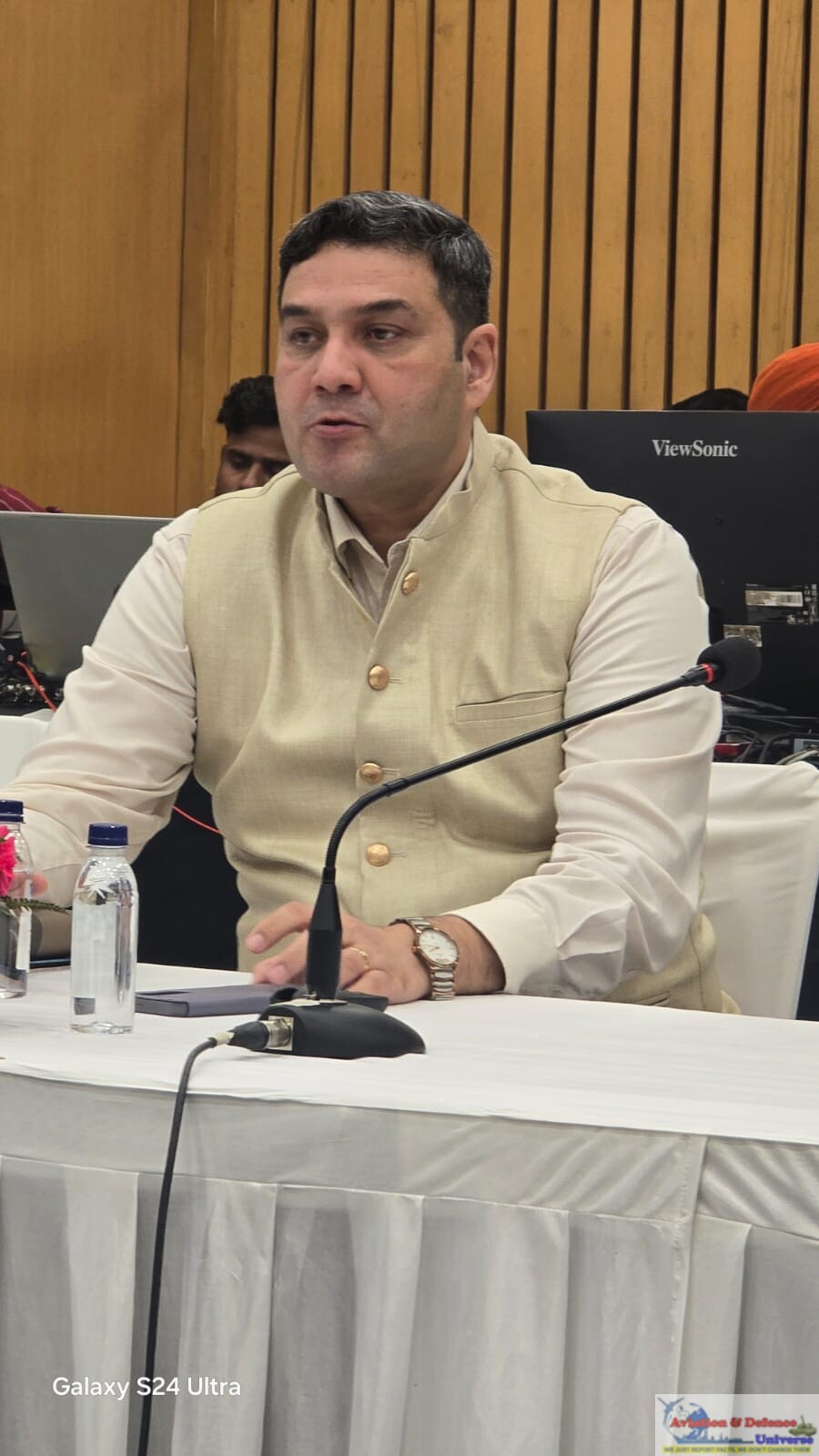
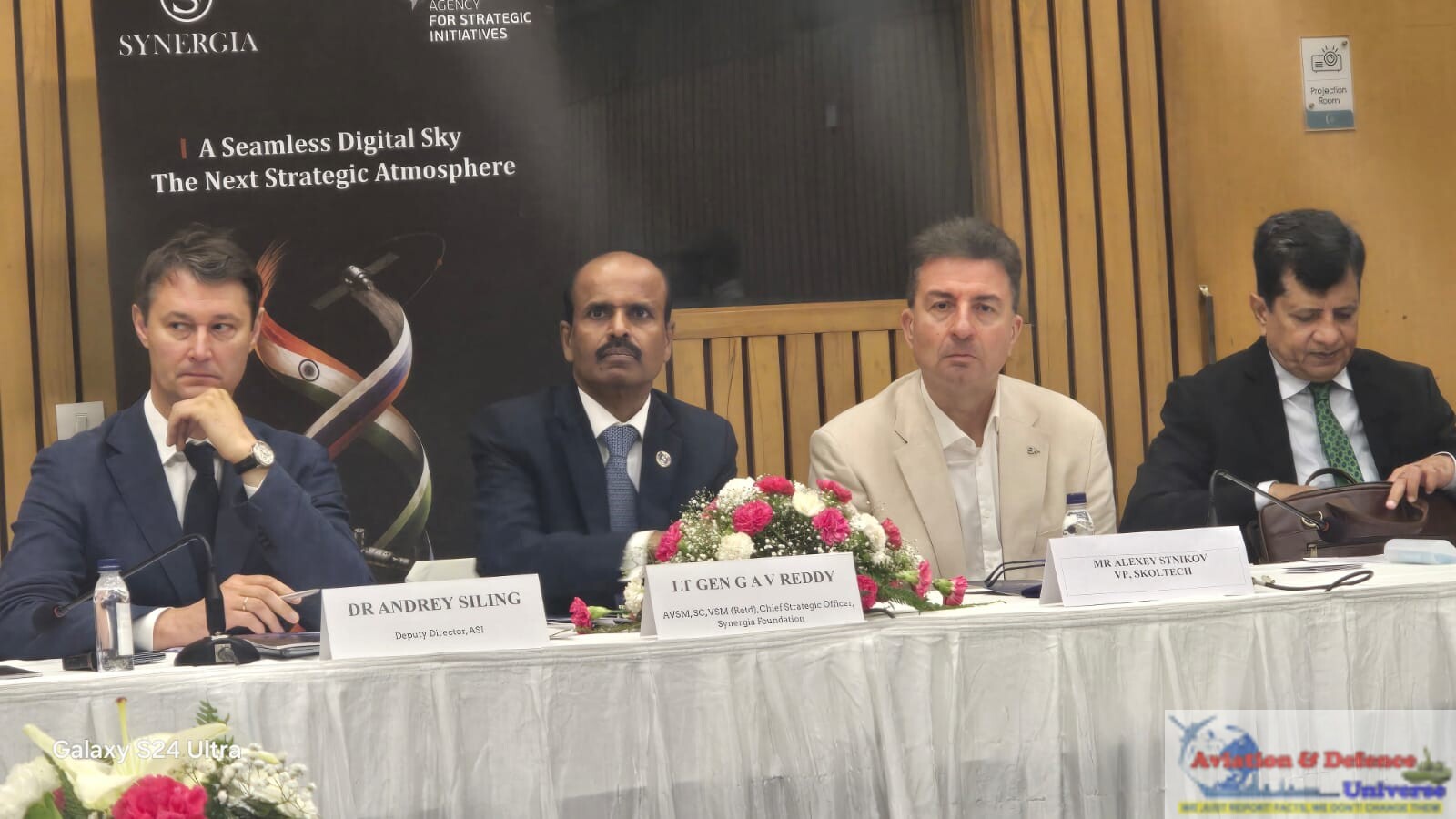
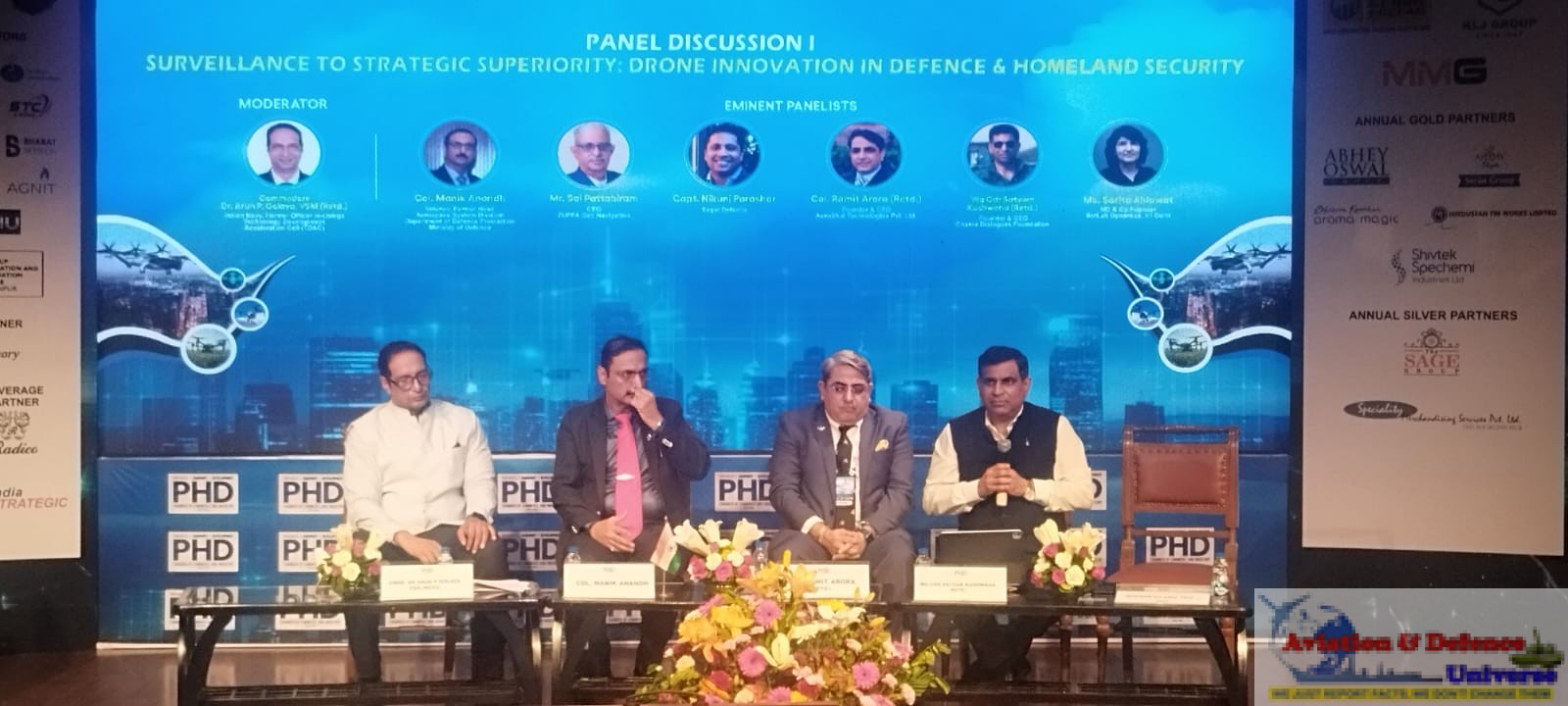
New Delhi. 03 August 2026. The next contest in drone warfare will not be decided merely by who can put the largest number of unmanned platforms into the sky. It will be decided by who can detect first, understand faster, fuse information across sensors, shorten the decision cycle, protect the airspace and convert surveillance into timely battlefield actionThat was the larger message emerging from Panel Discussion I, “Surveillance to Strategic Superiority: Drone Innovation in Defence & Homeland Security,” at Bharat Drone . Manthan 3.0 organised by PHDCCI.
The wide-ranging discussion examined tactical and counter-drone systems, AI-enabled Intelligence, Surveillance and Reconnaissance (ISR), multi-sensor fusion, manned-unmanned teaming, swarms, civil-military technology fusion, indigenous intellectual property, homeland security vulnerabilities and the need to connect drones with the larger air-defence and command-and-control architecture. What emerged was not merely a discussion on drones as aircraft. It was a debate on how India can build a connected military and homeland-security architecture in which unmanned systems, artificial intelligence, sensors, command networks and human decision-makers operate as one integrated fighting system.
Counter-Drone Regulation Must Catch Up with the Threat
Wg Cdr Satyam Kushwaha (Retd.) opened with a warning that India’s civilian counter-UAS regulatory framework needs to evolve before proliferation of drones creates a security challenge that becomes difficult to manage. While India’s Drone Rules, 2021 address the flying ecosystem, he argued that the civilian counter-UAS side remains comparatively underdeveloped. The concern, he said, becomes particularly serious when considering non-state actors and potential drone attacks against VIPs, mass gatherings or other sensitive targets.
He proposed the creation of a specific counter-UAS authorisation and accountability framework, including clearly defined threat tiers, identification of responsible authorities, mandatory logging and post-incident audits. He also argued for a central capability to analyse and “fingerprint” hostile or suspicious drones, particularly systems entering from across borders, so that authorities can identify their origins and characteristics.
Another emerging challenge is the increasing use of non-emitting drones, including fibre-optic-controlled systems that have demonstrated effectiveness in the Ukraine conflict. Counter-drone procurement and RFPs, he cautioned, cannot remain focused primarily on detecting radio-frequency emissions. Systems must increasingly be capable of identifying targets that do not advertise themselves electronically.
From Tactical Sensors to a Common Battlefield Picture
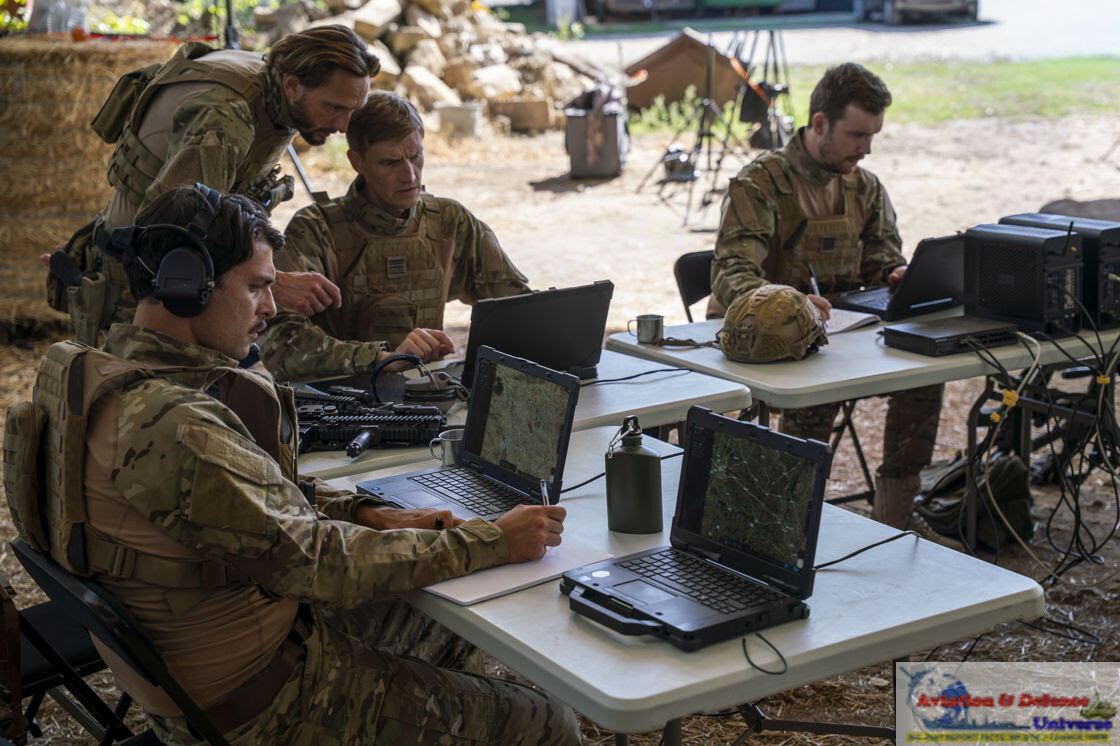
Moving from counter-UAS to surveillance, Kushwaha argued that the future battlefield will be defined by an enormous volume of information. Tactical drones are increasingly providing localised information to troops and commanders, while satellites, aircraft, airborne sensors and potentially High Altitude Platform Systems are simultaneously producing additional layers of intelligence. The challenge is no longer merely collecting data. The question is: who brings it all together? Kushwaha called for information generated by tactical drones to be connected at the backend to centralised data architectures with AI capabilities capable of producing a common battlefield picture.
The objective should be to fuse information from drones, satellites and airborne sensors and feed it rapidly into decision-making systems. As the number of sensors multiplies, he argued, senior military leadership will have less time rather than more to make critical decisions. Accurate information must therefore reach commanders in near real time, accompanied by actionable decision options.
Shortening the OODA Loop
Data fusion, however, is valuable only if it produces faster and better decisions. The panel consequently focused repeatedly on shortening the Observe-Orient-Decide-Act, or OODA, loop. Common standards for geospatial information, data formats and sensor inputs will become essential as information arrives from increasingly diverse sources.
The ambition is to move towards a sensor-to-shooter architecture where information from multiple surveillance platforms is integrated quickly enough to identify a target, assess it, take a decision and act before the operational opportunity disappears. Such integration could also help reduce collateral damage by improving target identification and decision quality.
Can Civil Communications Support Wartime Operations?
The communications layer was identified as another strategic vulnerability. Kushwaha questioned whether military operations should depend exclusively upon dedicated defence communications networks or whether India should develop mechanisms capable of securely exploiting civilian communications infrastructure during wartime. Lessons from Ukraine suggest that armed forces may have to work across unconventional communications networks during prolonged conflict. The technology and procedures enabling this, the panel heard, must be developed during peace rather than improvised after war begins.
Military Technologies Can Transform Civil Surveillance
The same technologies being developed for military surveillance could create significant civilian value. Infrastructure development was cited as one example. Large national highway and infrastructure programmes involve hundreds or thousands of active project sites, making persistent monitoring difficult and expensive. High-altitude platforms, drones and advanced sensors could offer continuous monitoring for infrastructure construction, environmental conditions, pollution and water resources. Creating technologies with both military and civilian applications would increase scale, improve economics and create export potential. This formed part of the session’s wider argument for Military-Civil Technology Fusion, in which technologies do not remain confined within separate defence and civilian silos.
Drones Are Platforms — Intelligence Makes Them Useful
Col Ramit Arora (Retd.) shifted the discussion towards AI, autonomy and the future of warfare. He argued that a drone by itself is essentially a platform. Its military value emerges only when intelligence, sensors, communications and decision-making capabilities are layered on top of it. Recent conflicts — from Armenia-Azerbaijan to Ukraine and West Asia — have demonstrated that unmanned technologies, autonomy, artificial intelligence and C4ISR are increasingly merging into what he described as New Age Attrition Warfare. The future, he argued, lies in combining unmanned systems with command, control, communications, intelligence, surveillance and reconnaissance.
Building Intelligence into the Platform
Arora outlined a framework developed around the acronym BHISHMA, intended to bring together capabilities required for next-generation unmanned operations. Elements described during the discussion included battlefield management systems, hyper-automation for cognitive decision-making, ISR, situational awareness, manned-unmanned teaming and advanced aerial vehicles.
The central idea was to move intelligence to the edge. Instead of sending every piece of raw sensor data back to a distant server or command centre for analysis, the unmanned platform itself should increasingly be capable of processing what it sees. A camera may capture a vehicle, but intelligent perception should determine whether that vehicle is a civilian car, friendly platform or hostile tank. That is the shift from seeing to understanding. One of the most practical applications of edge AI discussed by the panel was reducing the workload on the human operator. Traditional UAV operations can require a person to continuously watch hours of video feed. A momentary distraction can mean missing a fleeting target.
AI-enabled edge processing changes that.
Algorithms aboard the platform can monitor the feed continuously, identify specific objects or patterns and alert the operator only when something operationally relevant appears. The human remains in or on the decision loop, but no longer has to manually absorb every second of surveillance. An unmanned platform could recognise an enemy tank, identify its type, generate an alert and present the operator with a decision.
The human could then authorise engagement while the system performs much of the remaining task autonomously. This, the panel argued, is how AI can move drones from surveillance platforms towards genuine combat capabilities. Arora also argued that unmanned systems should no longer be evaluated only by familiar specifications such as endurance, altitude and range. The more relevant question is: what military effect can they achieve? He introduced the concept of rating unmanned platforms by their actual combat abilities — a shift from evaluating aircraft characteristics towards assessing mission outcomes. The idea reflects a wider change in military technology: platforms increasingly matter less in isolation than their ability to function as nodes inside a networked combat system.
Innovation Must Reach Production
Commodore Dr Arun P. Golaya (Retd.) brought the discussion back to India’s innovation ecosystem. India has created programmes such as iDEX and newer research and innovation mechanisms, but he questioned how many successful prototypes ultimately reach sustained production and military induction. Innovation cannot be measured simply by the number of challenges launched or prototypes produced. The real test is whether a technology enters operational service. He argued for treating companies not as “vendors” but as industry partners, reflecting the deeper relationship required between technology creators and military users.
Homeland Security Cannot Be an Afterthought
Golaya also highlighted the homeland-security dimensions of drone proliferation. India’s military may be increasingly prepared to address unmanned threats, but homeland security presents a much wider and more complex problem. Drones can be used for smuggling, terrorism, attacks on civilian targets and economic disruption. Examples from insurgency-hit regions and attempted hostile use against civilian areas demonstrate that drones are no longer exclusively military tools.
Their dual-use nature makes regulation, identification and monitoring essential. He also called for faster activation and integration of systems such as Digital Sky, involving agencies including DGCA, Airports Authority of India and the Ministry of Civil Aviation. The issue, he argued, is not merely preventing illegal flying. Systems used by security agencies themselves must also operate within an airspace architecture that does not inadvertently hinder legitimate military or government use.
Golaya injected a note of caution into the session’s ambitious title. Before discussing strategic superiority, he argued, India must first establish tactical superiority. That means getting the fundamentals right — indigenous sensors, secure electronics, flight controllers, motors, data links and other critical technologies. Without sovereignty over these building blocks, strategic superiority risks becoming an aspiration unsupported by the technological base required to sustain it.
Innovation Funding: Money Alone Is Not the Answer
The discussion then moved into a lively debate over India’s defence innovation funding mechanisms. Schemes such as iDEX, iDEX Prime and the Technology Development Fund have made progressively larger sums available to defence innovators. But one viewpoint advanced during the panel was that money alone does not determine success. A powerful idea with a clear market and procurement path can attract capital; an idea with no route to induction can struggle even when grants are available. The success of iDEX was attributed not simply to grant funding but also to procurement mechanisms enabling products developed under the programme to move more directly towards acquisition. The real measure of an innovation programme, the panel heard, must therefore be induction and procurement, not merely prototype development.
Deep Tech Needs Patient Capital
Col Manik Anandh offered a differing perspective. He argued that early-stage deep-tech innovators frequently cannot attract conventional capital because their technologies have not yet matured sufficiently. This creates a funding gap between the earliest stages of an idea and the Technology Readiness Levels at which larger government programmes or private investors become comfortable investing. He therefore strongly advocated the availability of patient capital for Indian deep-tech startups.
Promising technologies should not die simply because the innovator cannot finance the journey from an idea to a credible prototype. Funding mechanisms could progressively support technologies as they advance through TRLs, with unsuccessful ideas naturally falling away while stronger technologies receive continued support. He also highlighted another essential requirement: ease of doing business, particularly timely testing, certification and access to defence users.
Ukraine: A Laboratory of Drone Warfare
Contemporary conflicts featured heavily throughout the panel, particularly Ukraine. The conflict has become a real-world laboratory for rapid drone innovation, demonstrating how inexpensive systems, autonomous technologies, unconventional tactics and continuous battlefield feedback can produce effects disproportionate to their cost. Innovation cycles that once took years are increasingly compressed into months or even weeks. For India, the lesson is not simply to copy individual Ukrainian technologies. It is to understand the innovation culture that allows users, engineers and manufacturers to identify operational problems and produce solutions at battlefield speed.
Civil-Military Technology Fusion Needs Institutional Convergence
Another recurring theme was the artificial divide between civil and military technologies. Many components, suppliers and technologies used in a civilian drone are fundamentally similar to those used in military systems. The challenge therefore is to avoid creating separate ecosystems where one integrated national industrial base could serve both. The panel called for stronger coordination among the Ministry of Defence, Ministry of Civil Aviation, Ministry of Home Affairs, Ministry of Electronics and Information Technology, Department of Science and Technology and other stakeholders. Military-civil technology fusion could allow Indian companies to create scale, reduce costs and build technologies competitive in both domestic and global markets.
Integrated ISR Still Has a Long Way to Go
Questions from the audience brought the discussion back to India’s present ISR architecture. Asked whether surveillance systems were already fully integrated across the country, the response was cautious. Efforts are being made, but the scale of integration required remains enormous. Individual sensor ecosystems exist and integration is progressing within services, but future requirements will demand increasingly sophisticated multi-sensor and inter-service integration. Low-altitude drone detection presents a particular challenge because small unmanned systems have very small radar cross-sections. Mountainous areas make that problem even more difficult.
The panel therefore highlighted the requirement for lightweight, low-level radars and complementary sensors capable of identifying small drones in complex terrain. The discussion referenced India’s progress in integrating air-defence command-and-control systems. Networks connecting different sensors and air-defence elements demonstrate the advantage of operating as an integrated architecture rather than as isolated systems.
The lessons from such integration are directly relevant to the drone domain. Thousands of friendly and hostile drones could eventually operate simultaneously in contested airspace. Their safe employment will depend upon coordination with radars, air-defence systems, fighter aircraft, helicopters and command centres. The future battlefield will therefore require not separate “drone operations” but integrated air and land combat operations in which unmanned systems are another participant in the battlespace.
From Make in India to Owning the IP
Perhaps the most important strategic thread emerged towards the end of the discussion. India’s drone journey, the panel argued, must progress beyond assembly. The next stage is IP creation and sovereign ownership of technology. Critical elements such as sensors, chips, flight controllers, electronic speed controllers, motors and software can contain vulnerabilities or technological dependencies. Strategic autonomy will therefore depend upon possessing design authority and intellectual property in the technologies that matter most. Once India owns the design and underlying knowledge, it can manufacture at scale, adapt technologies to changing battlefield requirements and protect itself against supply disruptions or hidden vulnerabilities.
The “Surveillance to Strategic Superiority” panel made clear that India’s drone challenge has already moved beyond the question of how many unmanned platforms it can build or procure. The next stage is about integration, intelligence and ownership. Drones must feed into larger ISR networks. Sensors must communicate with command systems. AI must help operators process overwhelming quantities of information. Manned and unmanned platforms must operate together. Counter-UAS systems must detect both emitting and non-emitting threats. Civil and military technologies must reinforce one another. Startups need patient capital, but innovation programmes must ultimately lead to procurement and operational deployment.
And beneath all of these requirements lies an even more fundamental imperative: India must increasingly own the sensors, software, designs and intellectual property that constitute the nervous system of an unmanned platform. The journey from surveillance to strategic superiority therefore does not begin with the drone in the sky. It begins with the technology underneath it, the network connecting it, the intelligence processing its data and the command architecture capable of converting information into action. Strategic superiority may be the destination. But as the panel repeatedly reminded its audience, India must first build technological sovereignty and tactical superiority at the foundation.














































































-A4-Size-(2)_page-0001.jpg)