























- From Jammers to AI: India Maps the Road to a Self-Reliant Counter-Drone Ecosystem
- Countering the Next Drone War: Calls for Layered, Indigenous Airspace Defence
- Dark Drones, Swarms and Wideband Threats Redefine India’s Airspace Security Challenge
By Sangeeta Saxena
New Delhi. 02 August 2026. The air threat of tomorrow may not arrive as a fighter aircraft or a cruise missile. It may be a few kilograms of composites and electronics, flying low, communicating intermittently—or not at all—and costing a fraction of the weapon required to shoot it down.
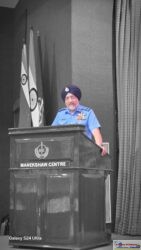
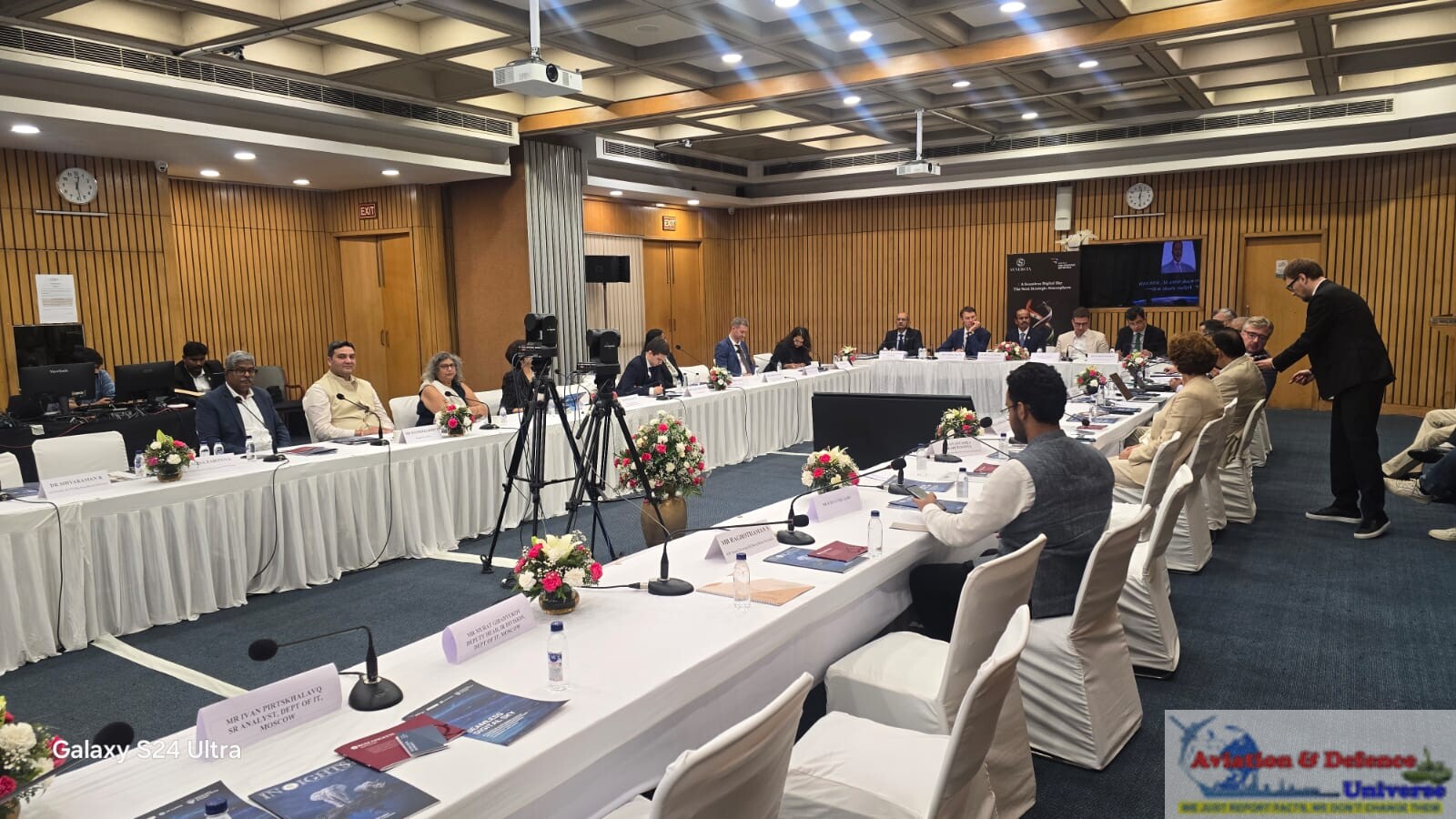
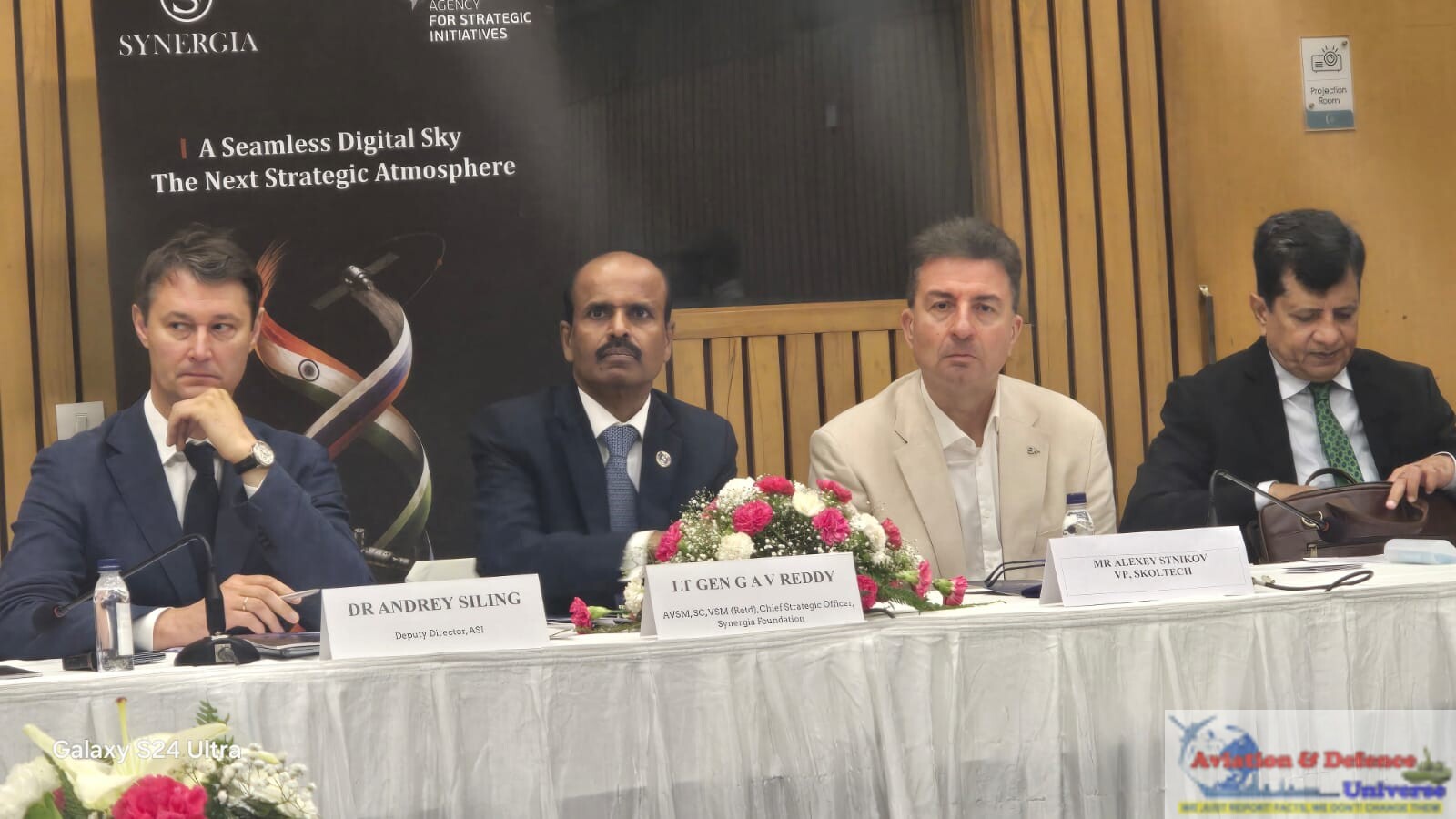
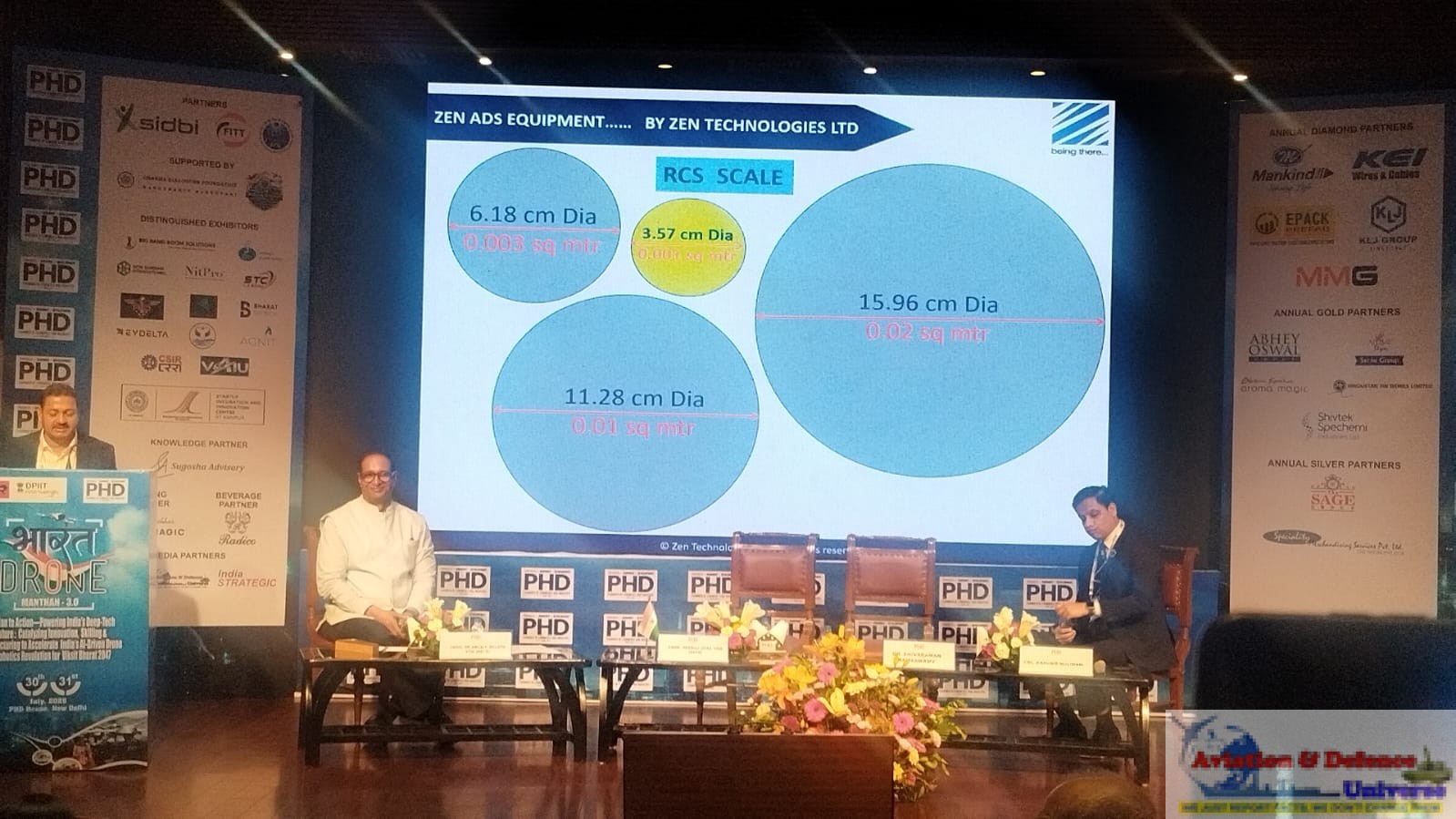
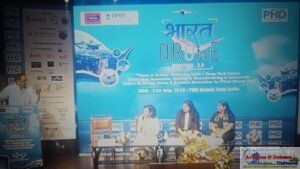
The asymmetry framed the Special Session “Building a Secure and Self-Reliant Airspace” at Bharat Drone Manthan 3.0, organised by PHDCCI, where experts from government industry and the counter-UAS ecosystem examined how India must prepare for a rapidly evolving aerial threat landscape. Moderated by Commodore Dr Arun P. Golaya, VSM (Retd.), Indian Navy, former Officer-in-Charge, Technology Development Acceleration Cell (TDAC), the session brought together Commodore Neeraj Uday, VSM (Retd.), General Manager, Homeland Security Solutions & Engineering Services Division, Electronics Corporation of India Limited; Col Aravind Mulimani, Vice President – Projects (Air Defence), Zen Technologies; and Dr Shivaraman Ramaswamy, Co-Founder & CTO, Big Bang Boom.
The discussion ranged from indigenous jammer technology and RF detection to AI-driven sensor fusion, low-RCS detection, drone swarms, wideband jamming, soft-kill and hard-kill systems, airspace networking, indigenous ownership of the counter-UAS technology stack and the need to think beyond point and area defence towards protecting the individual soldier. At its heart was one stark question: Can India’s counter-UAS ecosystem evolve faster than the drone threat itself?
ECIL: From Nuclear Electronics to Counter-Drone Systems
Commodore Neeraj Uday opened the technical discussion by tracing ECIL’s journey from a company originally established to build indigenous controls and instrumentation for India’s nuclear establishments to a diversified organisation active in defence, aerospace and homeland security. ECIL, he noted, was established in 1967 under the Department of Atomic Energy, with its original mandate centred on ensuring that controls and instrumentation for nuclear power plants and reactors were manufactured domestically. Over time, the company expanded into several verticals, including defence and aerospace. Uday said almost 30 per cent of ECIL’s revenue now comes from defence, while its homeland-security portfolio includes jammers designed and manufactured in-house. “We make our own jammers,” he said, noting that ECIL’s indigenous products include the 5G jammer systems used in VIP security applications. He also highlighted ECIL’s role in Electronic Voting Machines, stating that EVM production in India is undertaken by ECIL and Bharat Electronics Limited.
CBRN Drones Add Another Layer to Homeland Security
Uday also highlighted ECIL’s development of a CBRN drone, designed to carry chemical, biological and radiation detectors. The idea emerged from ECIL’s recent CBRN project for the new Parliament building, where more than 110 nuclear, biological and radiation detectors were installed and integrated into an Integrated Command and Control Centre. A Quick Reaction Team vehicle equipped with similar detectors was also integrated into the command architecture. That experience, Uday explained, led ECIL to explore carrying these sensors aboard unmanned platforms. The application illustrates how drones are expanding beyond surveillance and combat into homeland security, hazardous-environment detection and emergency response.
Detection Is Becoming the Hardest Part
ECIL’s principal anti-drone capability lies in neutralisation rather than complete indigenous detection. “When we say we manufacture anti-drone system, the detection part we have not yet manufactured but the jammer part is 100% in-house manufactured,” Uday explained. Detecting drones, he noted, remains technically difficult because they have extremely low Radar Cross Sections and frequently operate at low altitude. The cost equation compounds the problem. Using a sophisticated air-defence missile to destroy a cheap drone creates severe cost asymmetry, while kinetic engagement can also create collateral risk. This makes layered detection and proportionate neutralisation essential.
ECIL’s SDJ Mark 1
ECIL’s anti-drone product, SDJ Mark 1, combines RF detection, antenna systems, jamming and GPS spoofing. Drone detection can be undertaken through RF detection or radar, though Uday stressed that radar-based detection of small drones is far from simple. RF detection relies on identifying the communication frequencies used between the drone and its ground controller. Common frequency bands include 2.4 GHz, 5.8 GHz and 5.2 GHz as well as 433 MHz and 915 MHz. The system filters the electromagnetic environment to identify frequencies associated with drone operations. Software Defined Radio then demodulates the signal and compares the communication against a library of known protocols to identify the drone and extract relevant parameters. Additional detection is provided through radar. Uday cautioned, however, against exaggerated claims of extremely long detection ranges, noting that real-world detection of small drones remains difficult.
Soft Kill: RF Jamming and GNSS Spoofing
ECIL’s current anti-drone solution is primarily a soft-kill system. “We do RF jamming and we do GNSS spoofing,” Uday said. RF jamming attempts to interrupt the communication link between the aircraft and ground station, while GNSS spoofing feeds false navigational information to the drone. But both technologies are increasingly challenged by smarter unmanned systems. Modern drones may return automatically to their launch point when they detect jamming. Others employ sophisticated encryption, frequency hopping or navigation systems increasingly independent of conventional satellite signals.
Encrypted Protocols Complicate the Counter-UAS Fight
Uday used DJI’s newer OcuSync 4 communication architecture as an illustration of the growing difficulty facing counter-drone developers. The protocol uses AES-256 encryption, making interception and decryption significantly more challenging. “The way drone technology is advancing, the anti-drone technology also need to advance at the same pace,” he warned. This is the fundamental cat-and-mouse problem confronting the entire sector: every improvement in counter-drone capability encourages corresponding innovation in the drone itself. The arrival of quantum navigation and other GPS-independent systems could make today’s GNSS-jamming techniques increasingly ineffective. Counter-UAS Must Evolve with the Drone
Uday’s conclusion was straightforward.
Anti-drone technologies cannot remain static because unmanned systems themselves are evolving continuously. Frequency hopping, multi-antenna systems, encrypted communications and autonomous navigation are all making detection and neutralisation progressively more difficult. For ECIL, part of the response lies in collaboration. The company has created Expressions of Interest inviting startups and other companies to work with it on anti-drone technologies, using ECIL’s R&D capability and funding. “I would request the startups to keep a lookout for such EOIs,” Uday said, adding that ECIL was open to partnerships with companies seeking to collaborate with a larger public-sector enterprise.
Drones Have Shifted the Balance of Power
Col Aravind Mulimani then widened the debate from individual technologies to the architecture required for a national counter-UAS ecosystem. He described secure and self-reliant airspace as one of the most critical contemporary national-security requirements.“Until recently, airspace security was synonymous with defending against aircraft, helicopters and missiles. Today, the greatest challenge often comes from a platform weighing just a few kilogrammes.”
Drones, he argued, have fundamentally altered the balance of warfare. They are inexpensive, widely accessible, adaptable and increasingly autonomous, yet capable of producing strategic effects massively disproportionate to their cost. Recent wars have demonstrated that drones are no longer merely supporting assets. “They have become primary weapons of war.” Swarming systems, loitering munitions and AI-enabled autonomous platforms are therefore fundamentally changing battlefield geometry. “The question today is, therefore, not whether drones will become a dominant threat, but whether our counter-US capabilities can evolve faster than the threat itself.”
Prepare for the Next War
Mulimani stressed that defence industry cannot respond simply by studying the last conflict and fixing weaknesses after the event. “We should always be prepared for the next war, maybe after 2 years, 5 years, whenever it is.” Technology forecasting, he argued, must become part of the defence innovation process. The objective should be to anticipate what technologies adversaries are likely to deploy next and develop countermeasures before those systems become operational threats.
Counter-UAS Is an Entire Kill Chain
Countering drones is far more complicated than simply finding and shooting them down. Mulimani described a complete operational counter-UAS kill chain comprising, Detect – Identify – Classify – Track – Decide – Neutralise – Assess. Failure at any point can compromise the engagement. Small drones complicate this chain because they fly low, possess very small radar signatures, frequently use composite materials and operate in environments cluttered with buildings, terrain and other objects. Increasingly, they are also capable of autonomous navigation. “GPS denied environments are no more an obstacle for drone warfare.” Frequency hopping, anti-jamming techniques, GNSS-denied navigation and fibre-optic control are all making conventional RF-based countermeasures insufficient.
No Single Sensor Can Solve the Problem
The answer, according to Mulimani, lies in layered, integrated and AI-enabled counter-UAS defence. “No single sensor or no single effector can solve the drone problem.” Detection must combine complementary technologies including radars, passive RF sensors, electro-optical and infrared systems, acoustic sensors and other passive surveillance systems. Critically, these cannot operate as independent boxes. They need to be fused through AI into a single real-time picture. Artificial intelligence, he said, is becoming the “brain” of future counter-UAS architectures, enabling automatic target recognition, behavioural analysis, swarm detection, threat prioritisation and decision support while reducing operator workload and response time.
Counter-UAS Maturity Is a Moving Target
One important point raised during the presentation was that an inability to counter every newly emerging drone should not automatically be interpreted as system failure. Drones evolve rapidly, while large counter-UAS architectures containing radars, command systems and effectors take longer to modify. “Current challenges reflect the maturity curve and not the failure of any system,” Mulimani said. The relevant question is therefore whether the system can evolve rapidly enough to close new gaps as they emerge.
Every Nation Must Own Its Counter-UAS Capability
The panel strongly linked counter-drone capability with technological sovereignty. “Every nation should have indigenous COAS capability. Their own COAS capability.” Modern counter-UAS is no longer about isolated sensors or stand-alone jammers. The requirement is an integrated architecture combining complementary sensors with multiple soft-kill and hard-kill effectors capable of responding to different classes of threats. Indian industry, Mulimani observed, is increasingly moving in that direction. He cited Zen Technologies’ Vyomkavach, or “sky shield”, as an example of an architecture combining indigenous detection sensors, AI-enabled command and control and multiple neutralisation options. The importance lies in selecting the appropriate effect depending on the target and operational situation rather than relying upon a single technology for every engagement.
The looming challenge of drone swarms occupied a major part of the session. Traditional air defence evolved around tracking and engaging relatively limited numbers of targets. Swarms change that completely. Future systems will need to detect, track and engage dozens—or potentially much larger numbers—of coordinated targets simultaneously. That means networked sensors, multiple effectors and AI-enabled decision-making will all have to operate together.
Future Wars Could Consume Thousands of Drones Every Day
The swarm discussion led to a larger question about Indian manufacturing capacity. In high-intensity warfare, drones will increasingly become expendable. “What you send out will never come back. Hardly 10% of that may come back.” The purpose in many missions would be to overwhelm enemy defences, implying the use of hundreds of drones in repeated waves. Across a large operational theatre, the numbers could become enormous. “There will be thousands of drones going every day.” And because contemporary warfare increasingly resembles prolonged attrition rather than a short decisive campaign, replenishment capability becomes critical. Mulimani suggested that production figures of 4,000–5,000 drones per month might be insufficient for a major conflict. He pointed towards a future industrial requirement potentially exceeding 10,000–15,000 drones per month, highlighting both the challenge and opportunity facing Indian industry.
Soft Kill First, Hard Kill When Necessary
Counter-UAS responses must also be proportionate to the threat. Soft-kill methods—including RF jamming, GNSS denial, protocol manipulation and cyber effects—should ideally be used first. But increasingly autonomous or electronically silent drones will force defenders towards hard-kill alternatives. These include interceptor drones, directed-energy weapons, high-power microwave systems and kinetic interceptors. The need for hard kill will grow further as “dark drones” emerge. These systems may reveal little or nothing through RF emissions and could also be designed to reduce their physical signatures, creating new challenges for radar and passive surveillance.
Integrating Guns into Counter-UAS
Mulimani demonstrated how existing air-defence weapons can be integrated into modern counter-drone architectures. He cited a 40mm L70 gun integrated with a counter-UAS system, where fused sensor information cues the electro-optical system and gun automatically towards the predicted future position of a target. The gun can be operated remotely through the counter-UAS command architecture. This integration can be extended to other weapons including heavy machine guns, NSVT systems, medium machine guns and 20mm or 30mm cannons. The critical element is ballistic computation and automated cueing from the detection network. The panel emphasised that the Army, Navy, Air Force, Central Armed Police Forces and Border Security Force all face different operational environments. Counter-UAS systems consequently require multiple configurations. These can include single-vehicle, multi-vehicle, containerised, ground-deployed and man-portable systems. High mobility, quick deployment and user-specific customisation will be essential.
Countering Swarms with Micro-Missiles
Mulimani also referred to a vehicle-mounted counter-swarm system using micro-missiles designed to be cued in a similar manner to conventional air-defence weapons. Such systems can engage individual drones or fire multiple interceptors in ripple or salvo modes against swarms. The geometry becomes far more complicated when the swarm is dispersed. Rather than tracking one target, the system may need to calculate and track the moving centroid of the swarm—an abstract point that may not correspond to any single drone. This illustrates why counter-swarm warfare will require sophisticated algorithms rather than simply more weapons.
Low-RCS Detection Remains a Major Challenge
The session repeatedly returned to the challenge of extremely small Radar Cross Sections. Mulimani highlighted demonstrations involving the detection and tracking of an object with an RCS of approximately 0.001 square metres at around 3.5 kilometres. User requirements, however, continue to become more demanding—combining the need to detect extremely small RCS targets at meaningful distance while also expanding overall radar coverage. India is therefore working on lightweight low-level radar technologies intended for both air-defence and counter-UAS roles. But the central lesson remained: radar alone is insufficient. “You need to have all possible sensors to get AI enabled decision, which has to do a lot with the data fusion, which is very, very critical part. It is the brain of the CUS system.”
Towards a Continuous ‘Drone Wall’
Perhaps the most striking strategic concept articulated during the session was the need for individual counter-UAS systems to evolve into interconnected defensive networks. As drone numbers increase, standalone systems will no longer be enough. Multiple nodes should share tracks, sensor information and engagement status in real time. The result would be overlapping surveillance and engagement zones with fewer gaps. Such a network could ultimately form what Mulimani described as a “continuous drone wall.” “That is what should be the final national aim. There should be no gap, continuous drone wall, nothing should at least go undetected.” Such an architecture could provide persistent protection to military formations, strategic assets and critical infrastructure.
Self-Reliance Means Owning the Complete Technology Stack
The discussion returned repeatedly to the meaning of indigenous capability. India already possesses companies working on radars, RF detection, electro-optics, electronic warfare, AI software, interceptor drones and command-and-control systems. But system-level sovereignty remains the real test. The user, Mulimani argued, needs to understand the risks created when a prime system integrator is itself dependent upon multiple external vendors for core technologies.
Subsystem dependencies may remain unavoidable, but the objective should be ownership of the integrated system architecture. “True self-reliance means owning the complete technology stack, from sensor and AI algorithms to mission software, command and control systems and neutralisation technologies and life cycle support.” That ownership would allow systems to be scaled, customised and upgraded while reducing vulnerability to geopolitical disruption. “We will never be held to ransom by any global dynamics. If everything is there indigenous.”
India Needs a Common Drone Airspace Picture
Another strategic proposal was the development of an integrated drone airspace picture analogous in concept to the Indian Air Force’s wider air-defence command-and-control architecture. Drones behave differently from conventional aircraft. They are often small, tactical and transient, appearing for only minutes before disappearing. Their numbers could also be vastly larger than conventional aerial platforms. Feeding every tactical drone track directly into a conventional air picture could create excessive clutter. The counter-UAS architecture therefore requires vertical and lateral integration of drone-specific information into a higher-level decision-making node capable of providing a coherent low-level airspace picture. Such a system could become a crucial element of national airspace security.
The Technology Versus Anti-Technology Contest Never Ends
Commodore Dr Arun Golaya closed the technical discussion with a broader strategic observation. “The cat and mouse game between technology and anti-technology will always continue.” Drawing on the naval concepts of sea control and sea denial, he argued that if a nation cannot master every technology, it should at least seek to master the corresponding anti-technology that can deny an adversary its advantage. But he also pushed the discussion beyond conventional area defence and point defence. The next challenge, he suggested, is individual defence. Small drones will increasingly target individual soldiers and small groups. Counter-UAS thinking must therefore extend down to the level of the soldier, including technologies that reduce detectability, mitigate thermal or other signatures and offer protection if a payload is delivered.
Jamming Must Go Far Beyond Conventional Drone Bands
An audience question on non-conventional frequencies led to a detailed discussion of wideband jamming. Uday explained that ECIL’s barrage jamming capability extends from approximately 20 MHz to 6 GHz, with different power levels across different bands. The frequencies initially discussed were primarily associated with detection and classification, while the jammer itself can operate more broadly. The larger point was that combat drones will not necessarily use familiar consumer or ISM frequency bands. Counter-UAS systems therefore need far wider spectral coverage.
Operation Sindoor Lessons Drive Wider Spectrum Coverage
Mulimani said systems deployed before Operation Sindoor already included wider frequency coverage than many conventional anti-drone systems. He noted that the conflict reinforced the requirement for wideband capability, prompting users to increasingly incorporate such requirements into their specifications. Zen Technologies, he said, subsequently developed systems extending as high as 12 GHz, with simultaneous multi-frequency jamming and directional ranges exceeding 10 kilometres in demonstrations. He also highlighted the continuing difficulty posed by advanced systems capable of resisting jamming through antenna techniques such as null steering. The competition between jamming and anti-jamming, therefore, remains dynamic.
Closing Blind Spots Above the System
Another operational lesson concerned vertical coverage. Many earlier anti-drone systems were designed around approximately 50-degree elevation coverage. An adversary could exploit this by approaching from higher elevation, potentially entering the blind cone directly overhead. The response has been to develop systems with zenith coverage, eliminating the blind zone above the protected asset. Such iterative development reinforces the panel’s broader message: counter-UAS systems must evolve continuously with battlefield experience.
Advice to Startups: Do What Others Have Not Thought Of
The final audience question came from a young company asking where startups should focus in anti-drone technology. Golaya responded with a principle that captured the spirit of Bharat Drone Manthan, “Innovation is seeing what everybody else is seeing and thinking what nobody else has thought.” Startups, he argued, should avoid entering spaces already crowded with multiple companies doing essentially the same thing. Anti-drone technology extends far beyond jammers. Potential innovation areas include Doppler-based detection, individual soldier protection, signature reduction, thermal concealment, payload protection and many other unexplored challenges. “If you are doing what everybody else is doing, you are just one in the crowd.”
The “Building a Secure and Self-Reliant Airspace” session demonstrated that the counter-drone challenge is rapidly becoming one of the most complex dimensions of modern defence and homeland security. Yesterday’s counter-UAS system could rely heavily on radar detection and RF jamming. Tomorrow’s threat may navigate without GPS, communicate through encrypted or unconventional frequencies, employ fibre optics, operate autonomously, fly in coordinated swarms and deliberately suppress both electronic and physical signatures.
India’s answer, the panel argued, must therefore be layered, networked, AI-enabled and indigenous. No single radar, RF detector, jammer or weapon can solve the problem. Multiple sensors must feed into AI-enabled fusion. Soft-kill capabilities must be backed by hard-kill effectors. Individual systems must become connected networks. Area defence must eventually extend to the protection of individual soldiers. And national airspace security will increasingly require a common low-level drone picture capable of connecting military formations, strategic infrastructure and homeland-security agencies.
Above all, self-reliance must mean more than assembling imported subsystems. India needs to own the sensors, algorithms, command software, integration architecture, neutralisation technologies and lifecycle support that make the counter-UAS system work. The ultimate ambition articulated at Bharat Drone Manthan 3.0 was formidable but clear: a continuous indigenous “drone wall” across critical airspace—one capable not merely of responding to today’s threat, but of evolving fast enough to meet the drone that has not yet been invented.
















































































-A4-Size-(2)_page-0001.jpg)