


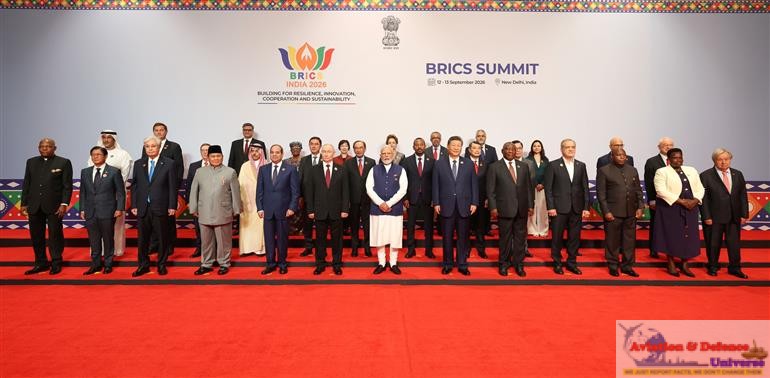
 18th BRICS Summit

















- Beyond Trade: How Defence Is Reshaping the India-Germany Partnership
- The New Germany: Europe’s Military Pivot and India’s Strategic Calculus
- Project 75(I) and the Future of Indo-German Defence Cooperation
By Theertha Panachoor
Hyderabad. 12 June 2026. For decades, India and Germany enjoyed a robust partnership built on trade, technology and diplomacy, while defence cooperation remained a peripheral pillar of the relationship. That equation, however, is changing rapidly. Triggered by the Russia-Ukraine conflict and Chancellor Olaf Scholz’s landmark Zeitenwende declaration, Germany is undergoing the most significant military transformation in its post-war history. As Berlin sheds decades of strategic restraint and emerges as Europe’s leading military spender, its growing defence capabilities are beginning to intersect with India’s ambitions for self-reliance, diversification of military suppliers and deeper technological partnerships. At this critical juncture, Indo-German defence ties are evolving from diplomatic aspiration into strategic necessity, with initiatives such as Project 75(I) potentially redefining the contours of cooperation between New Delhi and Berlin.

For decades, India and Germany built one of Europe’s most successful bilateral relationships without ever making defence its centrepiece. Trade flourished, German companies poured into India, and Inter-Governmental Consultations became a fixture of the diplomatic calendar. Yet for all the talk of strategic partnership, security cooperation remained conspicuously underdeveloped.
That arrangement made sense for the Germany of the post-Cold War era. For three decades, military restraint was an organising principle of the German state, not a failure of ambition. The country that had twice plunged Europe into catastrophe chose, after 1945, to anchor its identity in strategic caution. Economic influence became Berlin’s preferred instrument of power. Defence spending averaged barely 1.2% of GDP in the decade before 2022; the Bundeswehr, the German armed forces, endured years of underinvestment and declining readiness.
The Russia-Ukraine war changed that. On 27 February 2022, three days after Russian tanks crossed the Ukrainian border, Chancellor Olaf Scholz declared a Zeitenwende, a watershed era, committing €100 billion to the Bundeswehr and pledging sustained defence spending above 2% of GDP. Germany was acknowledging that economic interdependence could no longer substitute for hard power. It is now undertaking the most consequential military transformation in its post-war history.
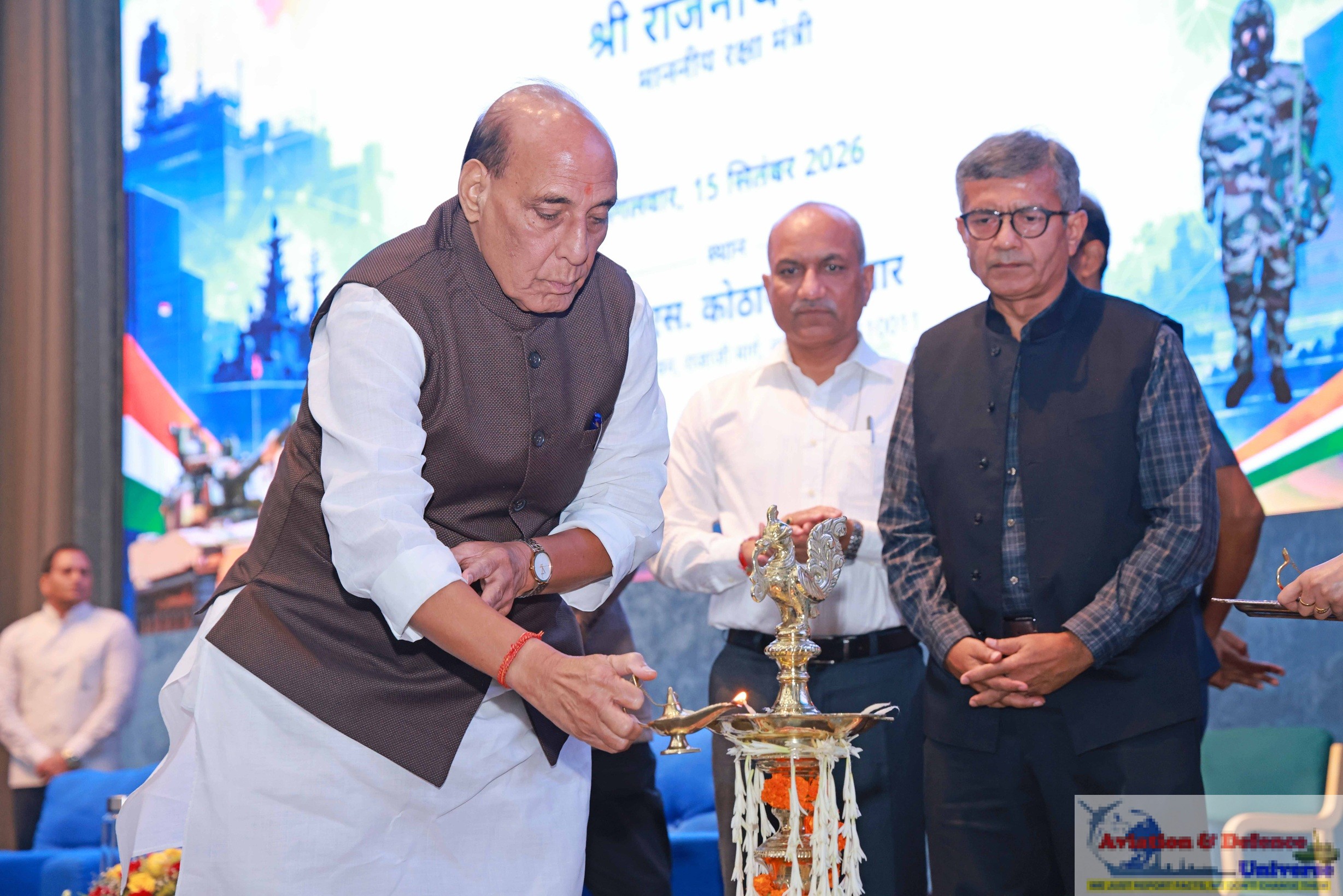
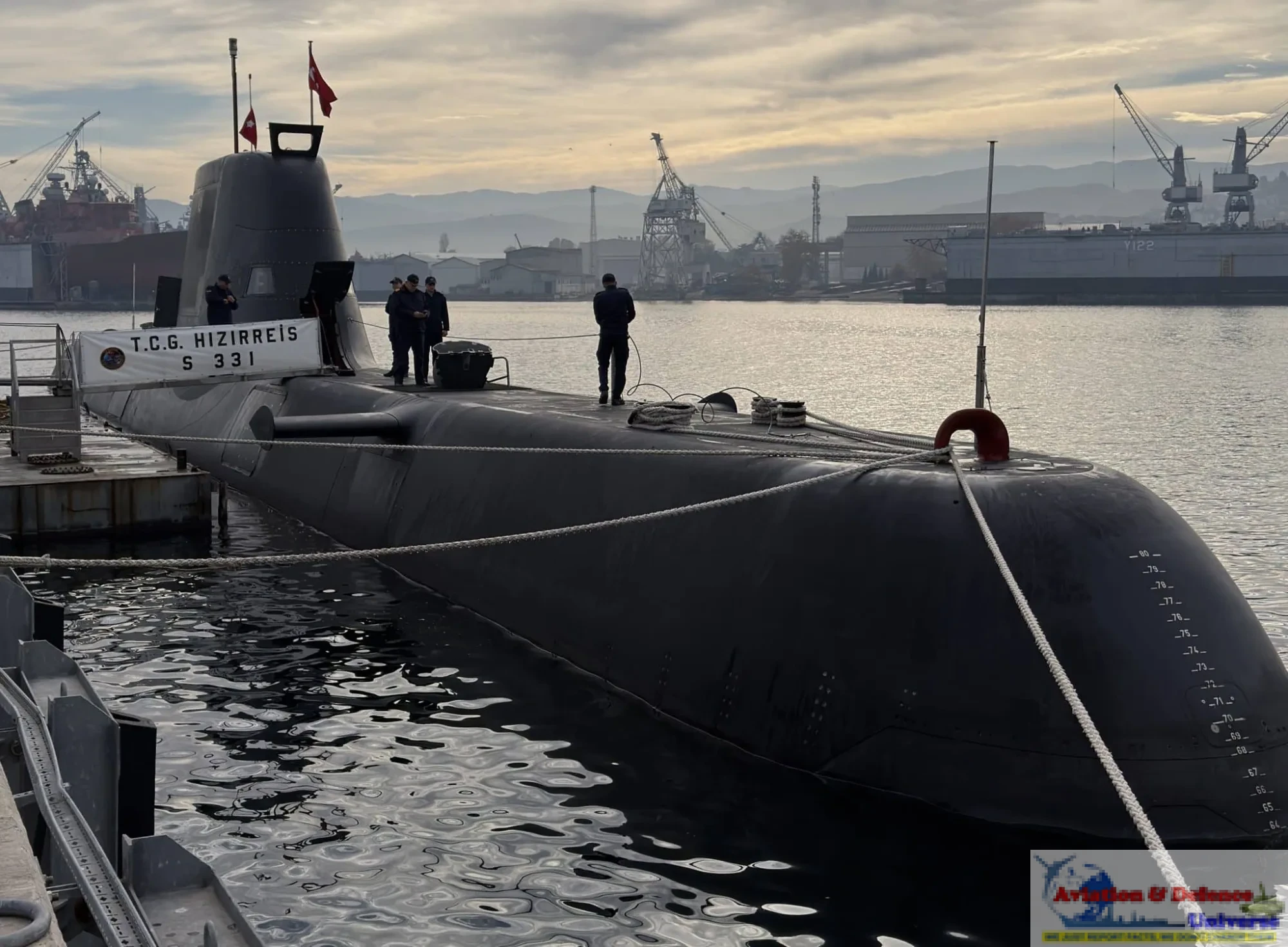
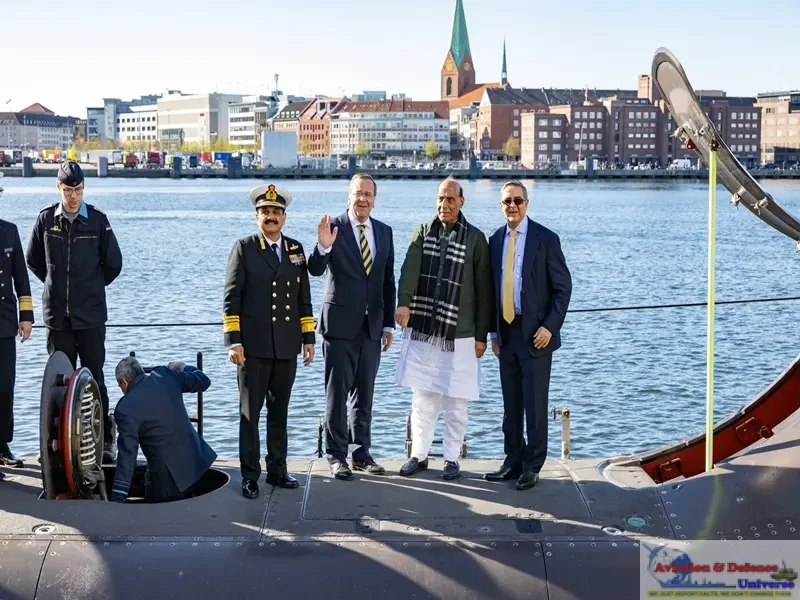 It was against this backdrop that Defence Minister Rajnath Singh arrived in Germany in April 2026. The visit produced a Defence Industrial Cooperation Roadmap and put Project 75(I), India’s $5.8 billion next-generation submarine programme involving ThyssenKrupp Marine Systems (TMKS) and Mazagon Dock Shipbuilders, at the centre of the agenda. What changed was not the agenda item; rather, it was who Germany had become by the time it appeared there.
The scale of Germany’s transformation is easiest to see in its defence budget. Germany spent $114 billion on defence in 2025, a 24% year-on-year increase and the largest rise among NATO’s major powers. For the first time since reunification, Germany became the biggest military spender among European NATO members in absolute terms. The 2026 federal budget allocates €82.69 billion to the Bundeswehr, a €20.2 billion increase, supplemented by €25.51 billion from the Sondervermögen special fund, bringing total defence expenditure to €108.2 billion, the largest military budget in the history of the Federal Republic.
The more significant signal was structural. In March 2025, the Bundestag exempted defence spending above 1% of GDP from Germany’s constitutional debt brake, removing the principal constraint on long-term military investment. Rearmament moved from emergency response to governing principle, reinforced by a €500 billion infrastructure fund and a stated ambition to build Europe’s strongest conventional military. Germany is not responding to a crisis. It is redesigning its role in the international order.
Europe has responded accordingly. NATO’s Hague Summit raised defence spending ambitions across the alliance, but Germany’s trajectory remains exceptional. Defence spending is expected to exceed 3% of GDP by the end of the decade. A country that spent years treating military power with caution is rapidly reassuming a central place in Europe’s security architecture.
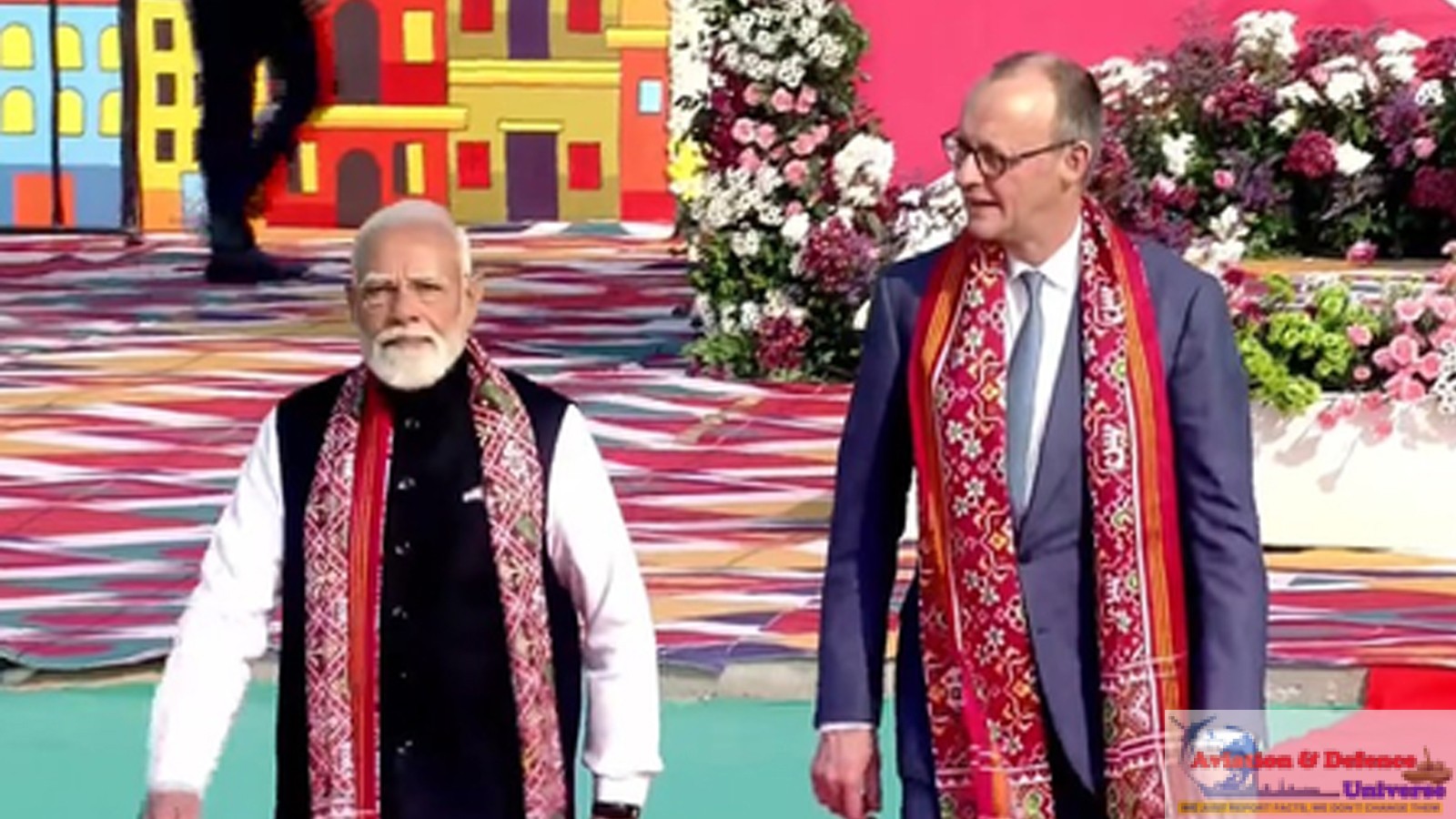 For India, the distinction matters. Spending targets above 3% of GDP by the end of the decade are on track. The Germany emerging from the Zeitenwende is acquiring the financial weight, industrial capacity and political mandate to shape European defence itself. That is a different partner than the one India has dealt with for the past thirty years.
Europe has always had world-class defence companies, advanced technologies and capital. What it lacked was an integrated market capable of converting those advantages into military scale. National procurement systems remained fragmented, supply chains duplicated, and industrial capacity dispersed across borders. ReArm Europe, later rebranded as Readiness 2030, is an attempt to change that, mobilising more than €800 billion for defence, anchored by SAFE (Security Action for Europe), a €150 billion financing mechanism designed to rearm member states and build European industry capacity simultaneously.
The logic is deliberate: European rearmament should build European industrial capacity. SAFE is structured to incentivise joint procurement and deepen cross-border supply chains, with a 65% European components requirement that advantages companies like Airbus, KNDS, MBDA and Rheinmetall. Germany is providing both the financial weight and the industrial demand that drives the whole exercise. That architecture was not designed to accommodate external manufacturing bases. Every conversation India and Germany will have about co-production runs up against that fact eventually.
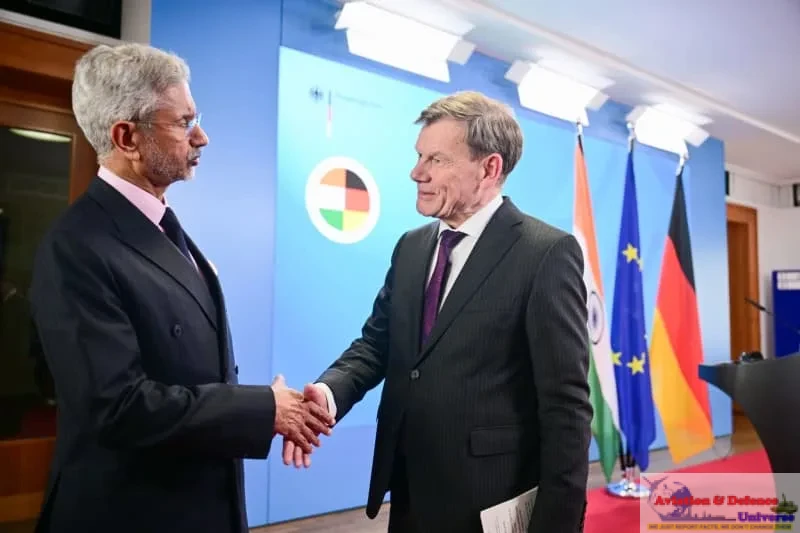 The bilateral relationship has historically been powered by economics rather than security. Germany became one of India’s most significant European trading partners with bilateral trade in goods and services surpassing $50 billion in 2024, German firms expanding across the subcontinent, and political ties deepening through successive rounds of intergovernmental consultations. Defence cooperation was a secondary consideration, present in the communiqués but absent from the procurement orders.
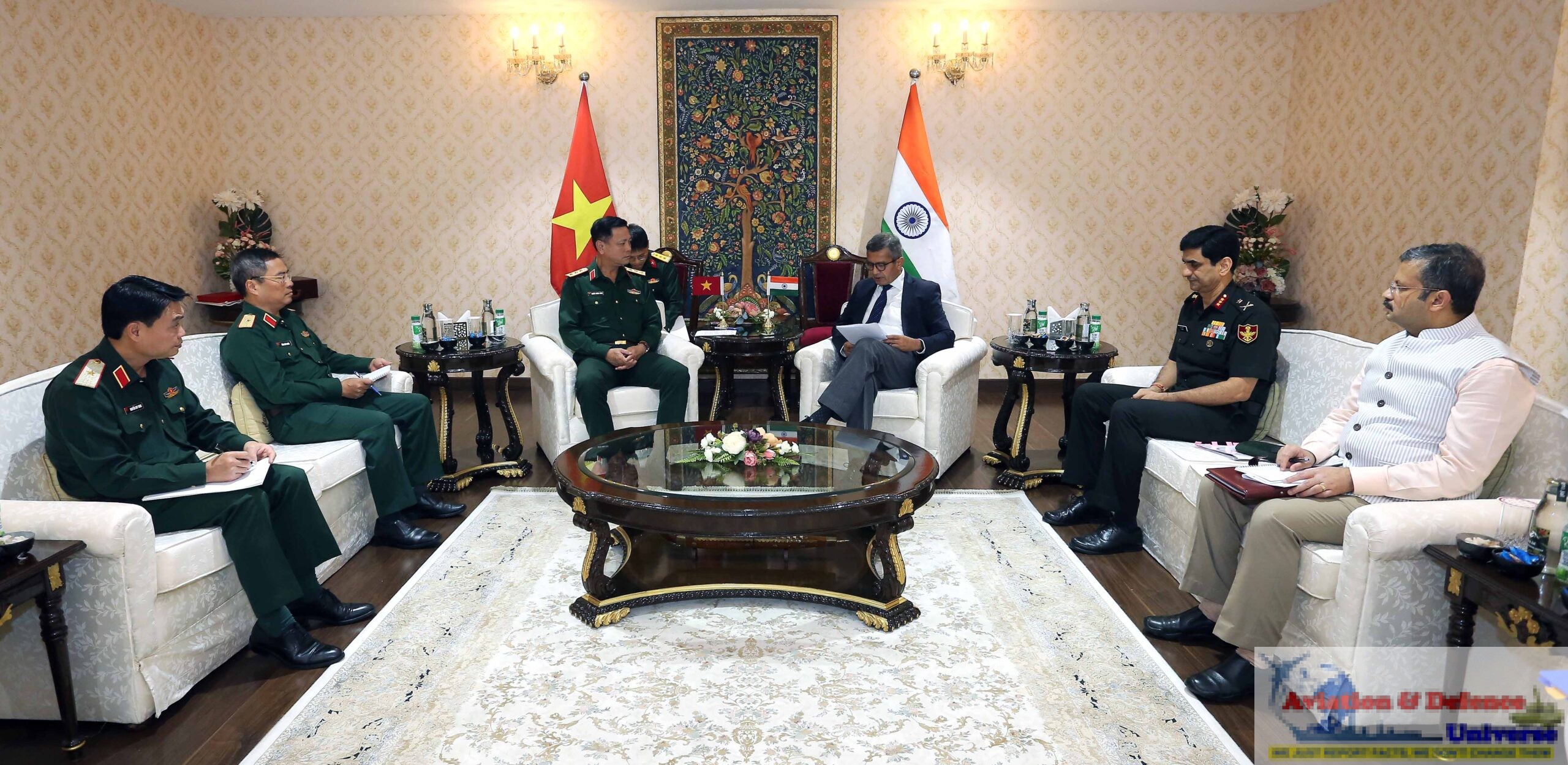
The shift is visible across multiple dimensions. During the 7th India-Germany Inter-Governmental Consultations in October 2024, both sides committed to deeper co-development, co-production and technology cooperation. Germany supported India’s application for observer status in the Eurodrone programme. German aircraft participated in Exercise Tarang Shakti; INS Tabar visited Hamburg and Germany became the first European country to station a liaison officer at India’s Information Fusion Centre for the Indian Ocean Region. None of that is an industrial partnership, but they establish the institutional framework within which industrial partnerships become possible.
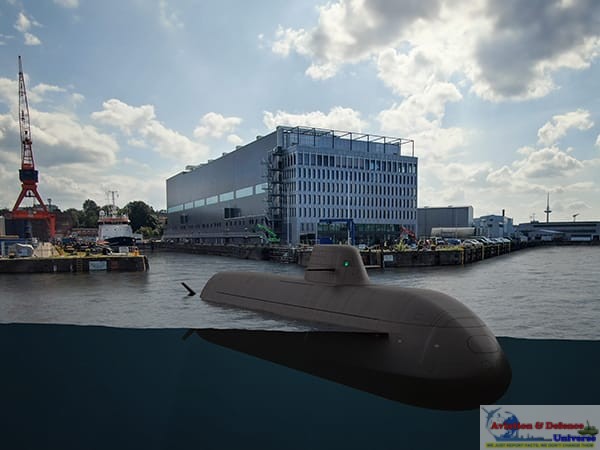
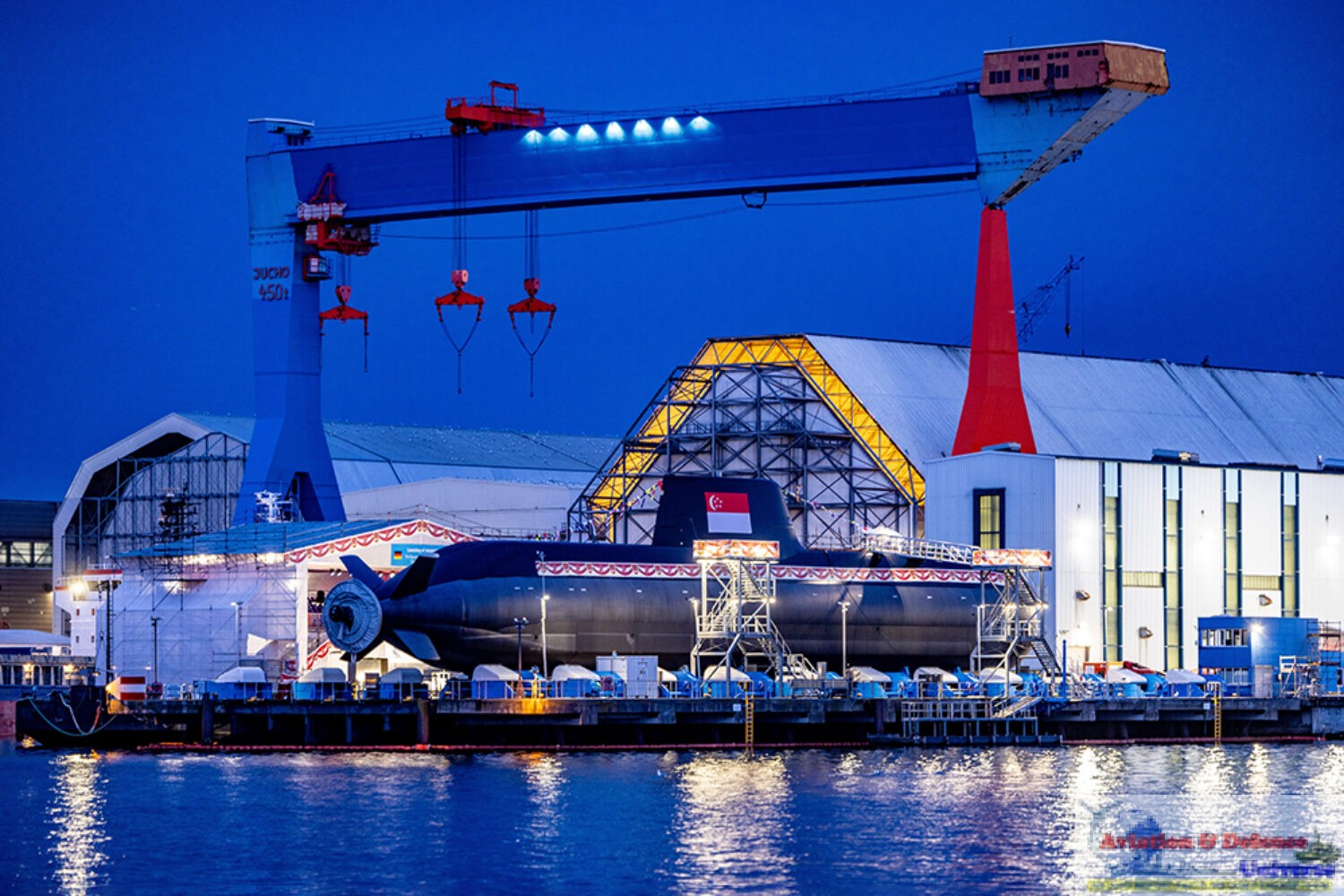
Project 75(I) is where the relationship moves from architecture to substance. More than a submarine contract, it represents the kind of deep technology transfer, domestic manufacturing integration and long-term industrial commitment that Atmanirbhar Bharat was designed to attract. TKMS and Mazagon Dock are not simply vendor and buyer; if the deal closes on terms that embed German technology within Indian production, they become the template for what Indo-German defence cooperation can actually look like.
 There are constraints, too. Europe’s defence revival is being built with European industry at its centre. SAFE’s requirement for significant European content may strengthen the continent’s manufacturing base, but it also raises difficult questions for partners outside it. India’s defence industry is expanding rapidly, yet it remains beyond the boundaries of the ecosystem Brussels is trying to construct. At some point, Germany’s desire for deeper industrial cooperation with India will have to be reconciled with the incentives embedded within Europe’s own procurement architecture.
Attention is the other constraint. Germany is already governing a three-front posture: the Bundeswehr leads NATO’s enhanced Forward Presence brigade in Lithuania, Berlin has committed €28 billion in military assistance to Ukraine through 2025, and European security absorbs most of the political bandwidth that remains. The Federal Foreign Office’s Focus on India strategy, which was adopted in 2024, signals genuine interest in a stronger partnership but turning that intent into sustained institutional effort is the harder task.
There are realities both sides have chosen to manage rather than resolve. India continues to rely on Russian-origin military platforms and remains a major purchaser of Russian energy, even as it gradually diversifies away from both. Berlin understands those constraints; New Delhi understands Germany’s. Neither side has allowed them to derail the relationship. Though the disagreements remain, a shared willingness to work around them exists too.
 That pragmatism may prove one of the partnership’s greatest strengths. Strategic relationships rarely advance because every difference disappears. When two partners choose to manage disagreements rather than resolve them, it means neither side can afford to let those disagreements win. Germany cannot risk losing India as a potential partner in the Indo-Pacific, and India cannot risk narrowing its technology options in a decade when Chinese naval capability is accelerating. The friction exists but so does the logic of proceeding despite it.
The post-Cold War settlement in European security depended on a Germany that chose restraint; that Germany is gone. The Zeitenwende altered the terms on which Berlin engages with the world. The country that was once cautious about exporting military technology, reluctant to project power and uneasy with the language of hard security is now the largest military spender in European NATO, a driving force behind Europe’s rearmament and, from New Delhi’s perspective, is becoming a consequential defence partner.
That shift carries particular significance for India. For years, our defence strategy has centred on reducing dependence on any single supplier. Now Germany offers a different proposition with advanced technology, industrial capability and a relationship backed by decades of political stability. Project 75(I) will reveal how much of that promise can be translated into production reality. A successful TKMS-Mazagon Dock partnership would place Germany at the heart of one of India’s most important naval modernisation programmes. Failure would leave the relationship much where it has traditionally been: strong in goodwill, thinner in industrial substance.
The Zeitenwende reordered European security and has also expanded India’s strategic options. Germany’s military revival, Europe’s industrial reorganisation and India’s search for trusted defence partners are increasingly intersecting. The significance of Indo-German defence ties lies in that point of convergence. What follows will depend less on declarations of intent than on what both sides are prepared to build together.
 Germany’s military revival represents far more than a European security development—it signals the emergence of a new strategic actor whose industrial capabilities, technological strengths and political commitment to defence are increasingly relevant to India’s security landscape. The success or failure of initiatives such as Project 75(I) will determine whether Indo-German defence relations move beyond goodwill into enduring industrial partnerships. As Europe rearms, Germany redefines its global role and India seeks trusted defence collaborators, both nations stand at a historic point of convergence. The future of this relationship will ultimately be measured not by declarations or diplomatic statements, but by the technologies they co-develop, the platforms they manufacture and the strategic trust they build together.

















































-A4-Size-(2)_page-0001.jpg)