








- Hyderabad Reinforces Its Position as India’s Aerospace Gateway
- Aerospace Leaders Back Telangana’s Vision
- Begins with Strong Push for Manufacturing and Global Partnerships
By Sangeeta Saxena
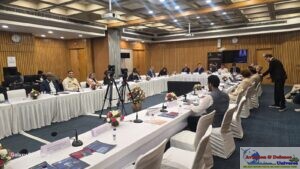
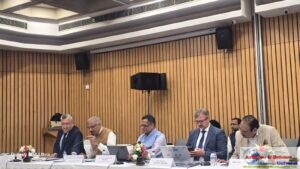
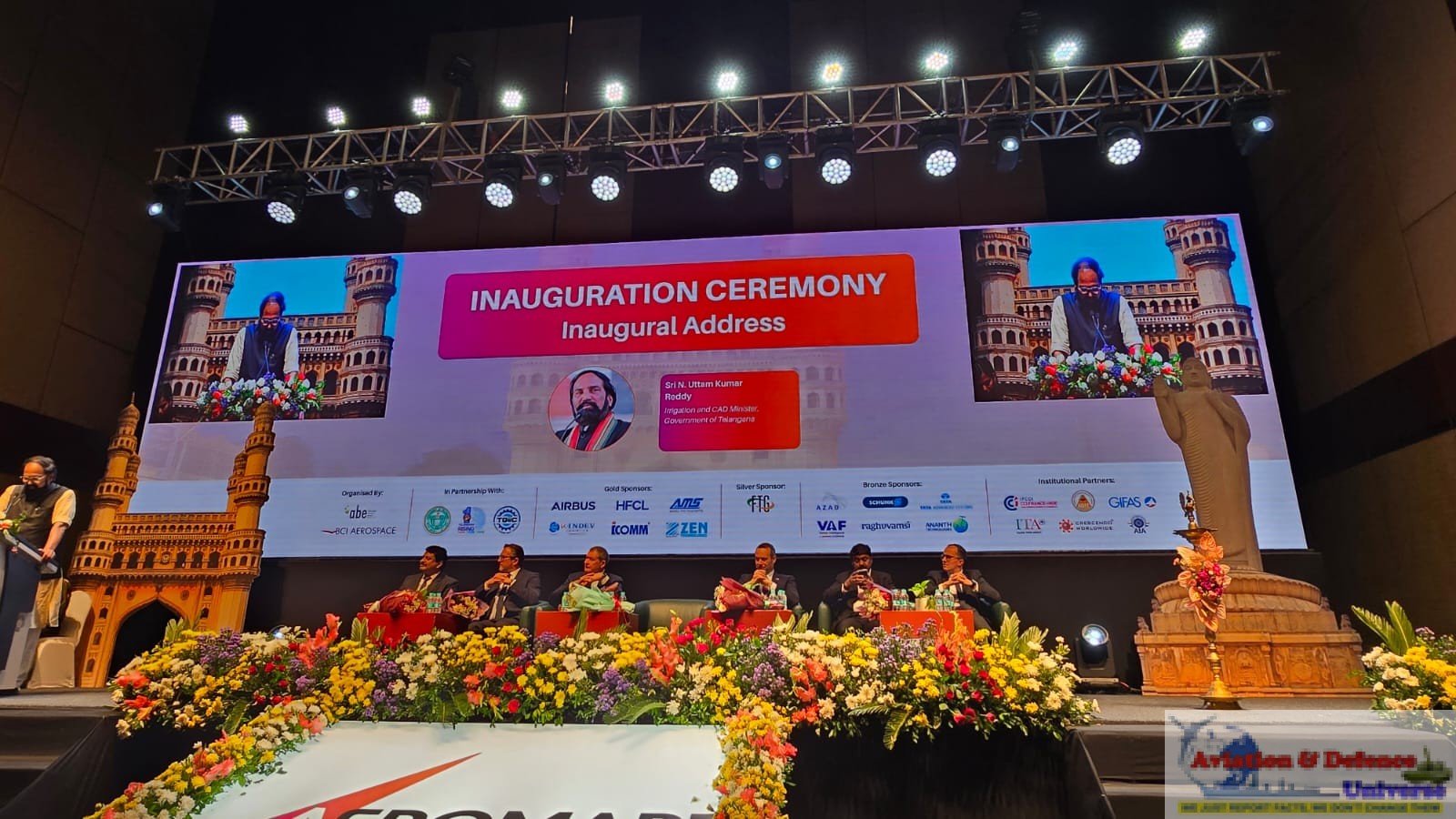
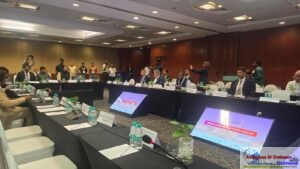
Hyderabad. 30 June 2026. As the global aerospace industry reconfigures its supply chains, embraces next-generation technologies and seeks trusted manufacturing partners, India is no longer standing at the crossroads of opportunity—it is helping define the future of global aviation and defence. At the centre of this transformation is Hyderabad, a city that has evolved into one of the world’s fastest-growing aerospace and defence hubs. Against this backdrop, Aeromart Hyderabad 2026 opened at the Hyderabad International Convention Centre (HICC), bringing together government leaders, diplomats, global OEMs, industry captains and innovators from across 25 countries. More than a business convention, Aeromart has become a strategic platform where ideas are translated into investments, partnerships into production, and conversations into contracts.
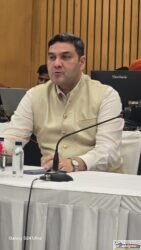
Adding a unique dimension to the inaugural session was Uttam Kumar Reddy, Minister for Agriculture, Food & Civil Supplies, Government of Telangana, whose words carried the weight of both a policymaker and a decorated military aviator. A veteran fighter pilot of the Indian Air Force, who flew the formidable MiG series and also for a small period , Jaguar fighter aircraft during his distinguished service, the Minister brought a practitioner’s understanding of aerospace, defence preparedness and aviation technology to the podium. His address was therefore more than a government statement—it was the perspective of someone who had experienced military aviation from the cockpit before shaping industrial policy from the corridors of governance. Blending his operational insight with Telangana’s developmental vision, he passionately outlined the state’s ambition to become India’s foremost aerospace and defence manufacturing hub, lending both credibility and inspiration to the inaugural proceedings.
“Telangana Is Building the Aerospace Capital of India”
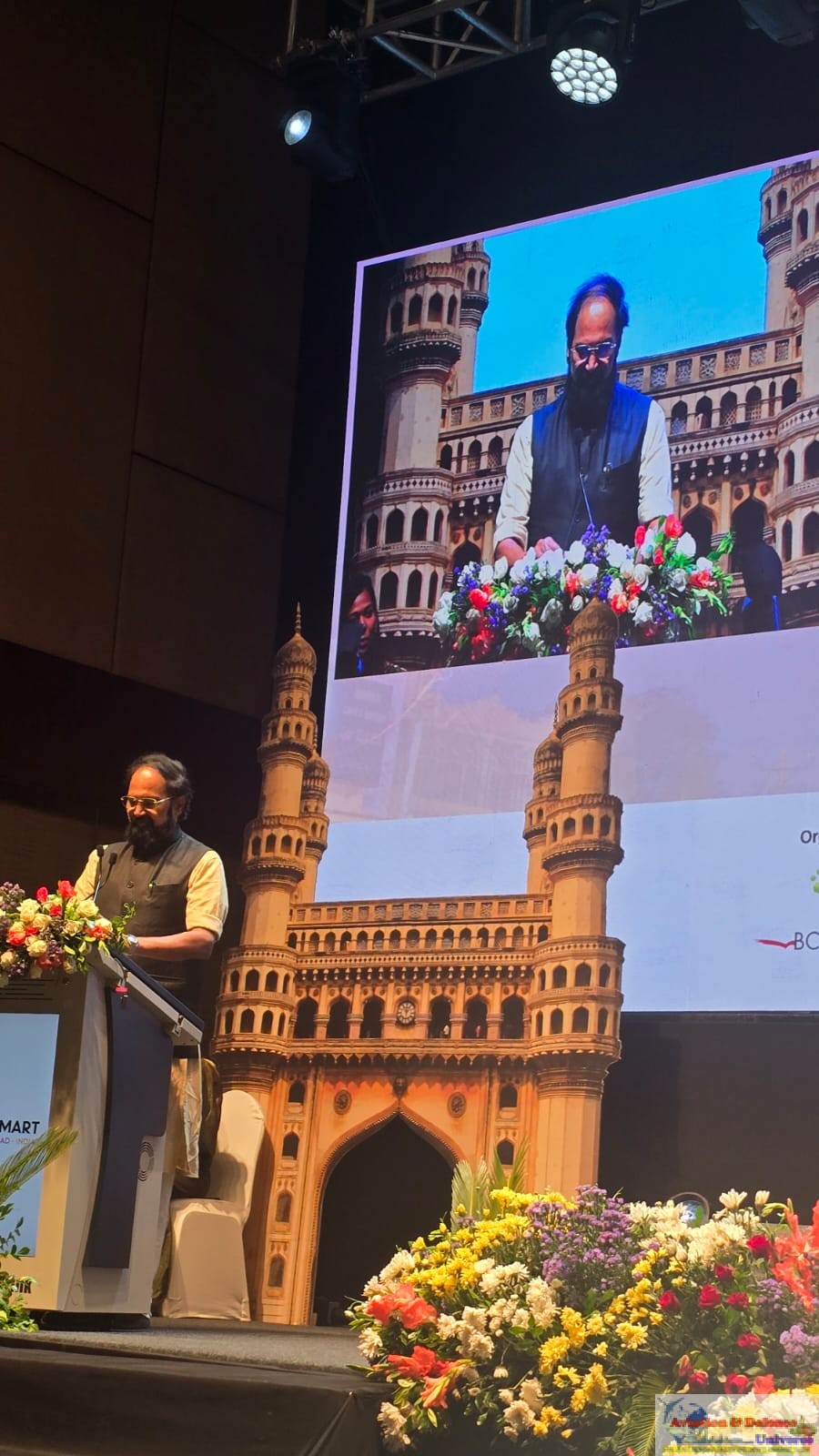 Delivering the inaugural address, Uttam Kumar Reddy, presented an ambitious vision for Telangana’s aerospace and defence sector, describing the state as India’s fastest-growing destination for aerospace manufacturing, defence production and global industrial partnerships. He reaffirmed the government’s commitment to creating a globally competitive ecosystem through progressive policies, world-class infrastructure and close collaboration with industry.
Welcoming delegates from India and abroad, the Minister said Aeromart Hyderabad reflected Telangana’s growing stature on the global aerospace map. Expressing his delight at the scale of participation, he remarked, “It gives me immense pleasure to welcome all our distinguished guests, industry leaders, innovators and international delegates to Aeromart Hyderabad 2026. Your presence reflects the growing confidence that the global aerospace community has in Telangana.” The Minister emphasised that Hyderabad’s success was built on decades of investment in aerospace, defence and advanced manufacturing.
Highlighting the state’s unique ecosystem, he said, “Telangana today has one of the strongest aerospace and defence ecosystems in the country. We are home to major DRDO laboratories, defence public sector undertakings, leading private companies, MSMEs, start-ups and globally recognised research institutions.”
He noted that the state had become a preferred destination for global aerospace companies looking to establish manufacturing and engineering facilities. Describing Hyderabad’s growing international appeal, he observed, “Many of the world’s leading aerospace companies have chosen Hyderabad for manufacturing, engineering, research and supply-chain operations. This confidence has been earned through consistent policy support and a strong industrial ecosystem.”
Turning to Telangana’s industrial policy, the Minister underlined that the government views aerospace and defence as strategic sectors capable of driving economic growth, exports and high-value employment. Reaffirming the government’s commitment, he stated, “Our government is fully committed to supporting aerospace and defence industries. We will continue to provide world-class infrastructure, ease of doing business and every possible support for investors and manufacturers.”
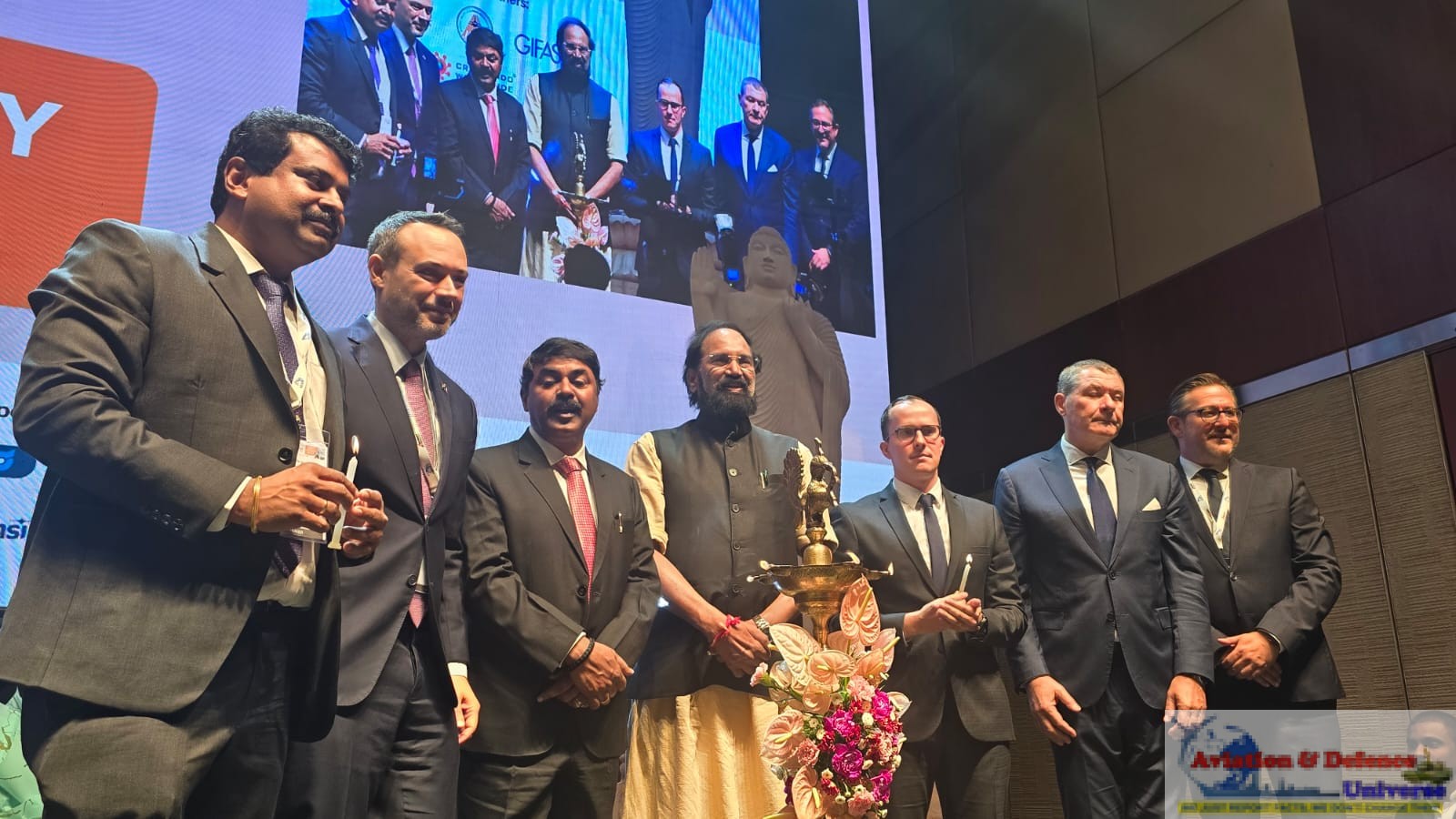 He highlighted the state’s focus on developing an integrated aerospace manufacturing ecosystem rather than isolated industrial projects. Explaining Telangana’s long-term vision, he said, “Our objective is not merely to attract investments. We are building a complete ecosystem where global OEMs, Tier-1 suppliers, MSMEs, start-ups, academia and research institutions work together.”
The Minister also recognised the contribution of international partnerships in strengthening India’s aerospace capabilities. Speaking about global collaboration, he remarked, “Events like Aeromart Hyderabad create opportunities for technology transfer, joint ventures, supply-chain partnerships and innovation. They strengthen India’s integration into the global aerospace industry.”
The Minister reiterated Telangana’s ambition to become India’s leading aerospace manufacturing destination. Summing up the state’s aspirations, he declared, “We want Telangana to become the aerospace capital of India and one of the leading aerospace destinations in the world.” Concluding his address, he invited global companies to become partners in Telangana’s growth story. Ending on an optimistic note, he said, “I invite all of you to invest, innovate and grow with Telangana. Together, let us build the future of aerospace and defence manufacturing.”
India’s Aerospace Renaissance Is Being Powered by Innovation, Self-Reliance and Global Competitiveness
Following the international perspectives presented by industry leaders and diplomats, Dr. G. Satheesh Reddy, Member, National Security Advisory Board, former Secretary, Department of Defence R&D, former Chairman, DRDO and former Scientific Adviser to the Raksha Mantri, shifted the focus to India’s remarkable transformation from a defence importer into one of the world’s fastest-growing centres for indigenous aerospace and defence innovation.
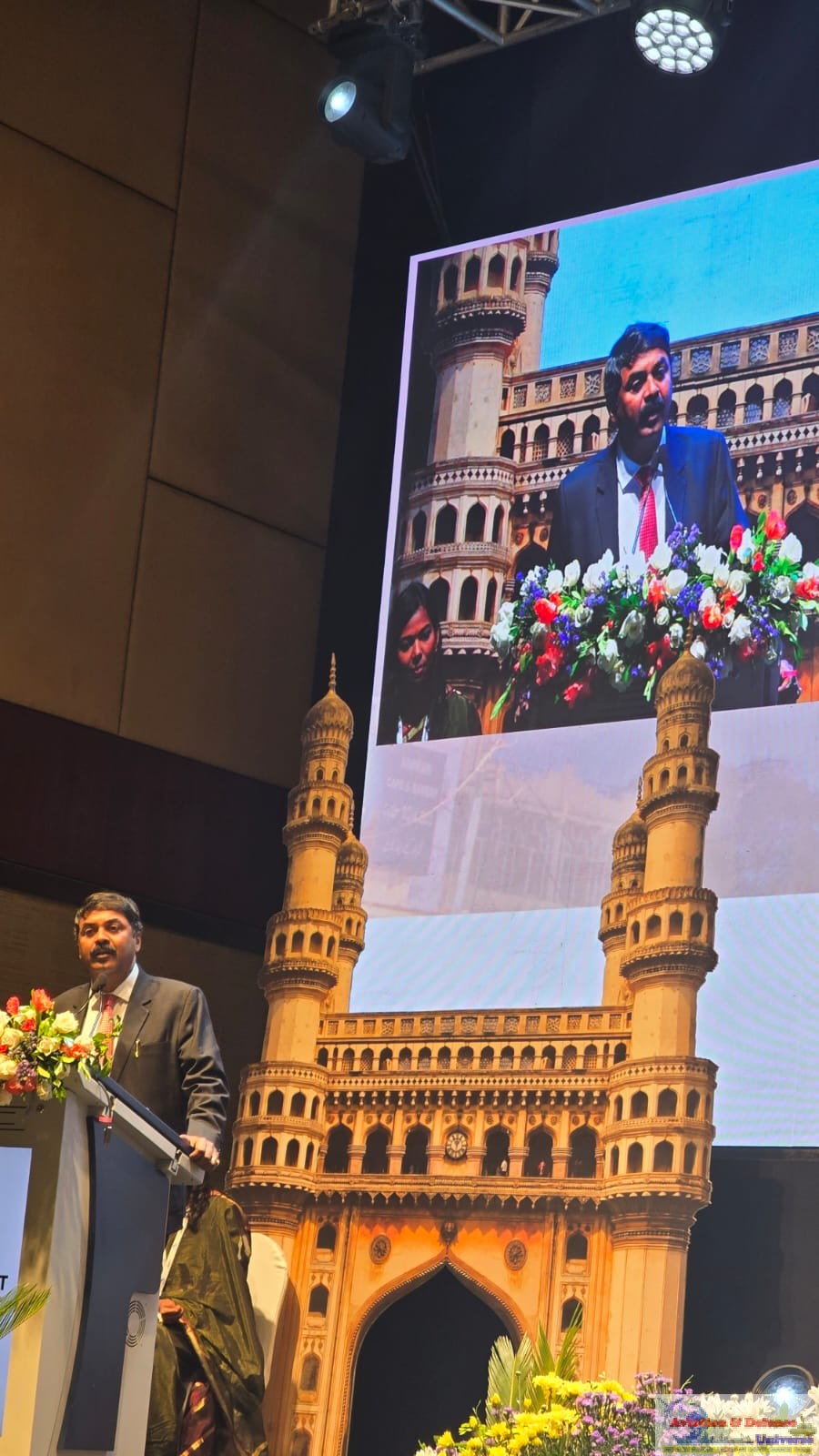 Drawing upon decades of experience in India’s strategic programmes, Dr. Reddy described the country’s aerospace and defence ecosystem as being at a historic inflection point, driven by technological innovation, government policy, private sector participation and international partnerships. Setting the context for his keynote, Dr. Reddy observed that Aeromart Hyderabad was taking place at a defining moment in India’s industrial journey.
Illustrating the pace of growth, he said, “The indigenous defence manufacturing target for the last financial year was about ₹1.25 lakh crore. Instead, India crossed ₹1.58 lakh crore. At the same time, the capital acquisition budget has increased to nearly ₹2.19 lakh crore.”
According to Dr. Reddy, this growth is only the beginning. Looking ahead with confidence, he stated, “The projections indicate that indigenous defence manufacturing will reach nearly ₹3 lakh crore over the next few years.” Turning to India’s export performance, Dr. Reddy highlighted another milestone in the country’s defence journey. Pointing to the extraordinary growth in exports, he observed, “India’s defence exports have increased from about ₹23,600 crore to nearly ₹38,500 crore within a year. The expectation is that they will soon cross ₹50,000 crore.” He said these figures reflected the growing confidence that friendly foreign nations have in Indian defence technologies. Citing an example that symbolised India’s changing global image, he remarked, “During one country’s Republic Day celebrations, three Indian weapon systems—the Pinaka rocket system, the Akash missile system and the ATAGS artillery gun—were showcased. This demonstrates how Indian defence technologies are now receiving global recognition.”
Dr. Reddy also underlined India’s growing integration into international aerospace supply chains. Highlighting India’s manufacturing capabilities, he said, “Today, Indian industries are manufacturing components for leading global companies including Airbus, Safran, Lockheed Martin and many others. Offset programmes have enabled Indian companies to become an important part of the global aerospace ecosystem.” He described India’s innovation ecosystem as another major strength that is attracting global attention. Recalling his recent participation in an international technology forum, he remarked:
According to Dr. Reddy, the country’s start-up ecosystem has emerged as one of the strongest pillars supporting India’s technological transformation. Sharing remarkable statistics, he said, “In 2016 India had only a few hundred recognised start-ups. Today, the country has more than 2.35 lakh start-ups, creating one of the world’s most vibrant innovation ecosystems.” He explained that many of these start-ups are now contributing directly to aerospace, defence, drones, artificial intelligence, space technologies and advanced manufacturing, making India one of the most exciting innovation destinations in the world.
“Aeromart Hyderabad Is About Serious Business, Not Just an Exhibition”
Opening the inaugural session of Aeromart Hyderabad 2026, Praveen P.A., Director – Aerospace & Defence, Government of Telangana, set the tone by underlining that the convention is designed to generate tangible 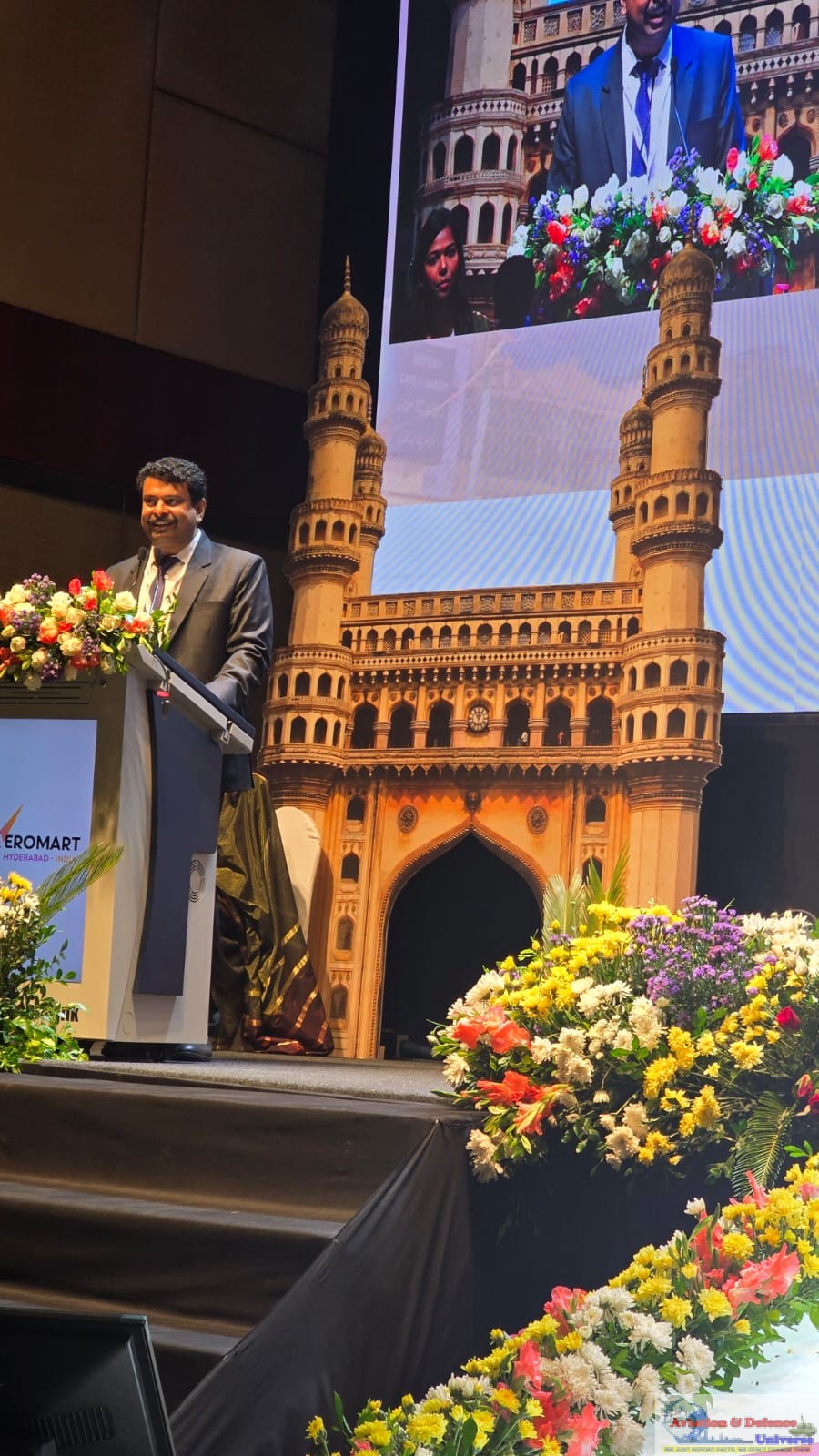 business outcomes rather than simply showcase products. Highlighting the unprecedented scale of this year’s event, he noted that Aeromart Hyderabad had attracted an impressive global participation. Emphasising the magnitude of the convention, he said, “We have 500 companies taking part from 25 countries, around 1,200 delegates, and as of now more than 8,000 B2B meetings have already been pre-scheduled for the participants.” Explaining the philosophy behind the convention, he remarked, “The beauty of this event is that it is not an expo where people simply come to see products and move around. It is about serious B2B meetings. Through this event, Telangana is looking at facilitating serious business transactions with the world.”
His remarks reflected Telangana’s larger vision of transforming the state into a preferred destination for aerospace and defence manufacturing by connecting global original equipment manufacturers (OEMs), suppliers, start-ups and investors through structured business interactions rather than conventional exhibition formats. Praveen’s address also highlighted how Aeromart Hyderabad has evolved into one of the most important international aerospace business conventions in India, where commercial outcomes take precedence over exhibition footfall. By bringing together hundreds of companies from across the global aerospace value chain and facilitating thousands of pre-arranged business meetings, the event seeks to strengthen supply-chain partnerships, promote technology collaborations and position Telangana as a gateway for international aerospace investments.
With more than 8,000 scheduled B2B engagements, Aeromart Hyderabad 2026, he indicated, is expected to generate significant business opportunities for Indian industry while reinforcing Telangana’s position as one of the country’s fastest-growing aerospace and defence manufacturing ecosystems.
‘India No Longer Wants to Buy Aircraft. India Wants to Build Them.’
Delivering the opening industry address, Stéphane Castet, Chief Executive Officer of BCI Aerospace, welcomed delegates from across the world and thanked the Government of Telangana for its unwavering support in making Aeromart Hyderabad a global success. Turning to Hyderabad’s emergence as an aerospace powerhouse, he noted that the city had been chosen deliberately because of its growing industrial capabilities. Explaining why Hyderabad was selected, he said, “Hyderabad was not chosen by chance. This is one place where India builds, designs and allows the future to take flight.” Castet then delivered the defining message of his keynote, encapsulating India’s transformation from an aviation consumer into a manufacturing nation. Speaking with conviction, he declared, “India no longer just wants to buy aircraft. India wants to build them.” He pointed out that India’s booming civil aviation sector provides enormous opportunities for aerospace manufacturing.
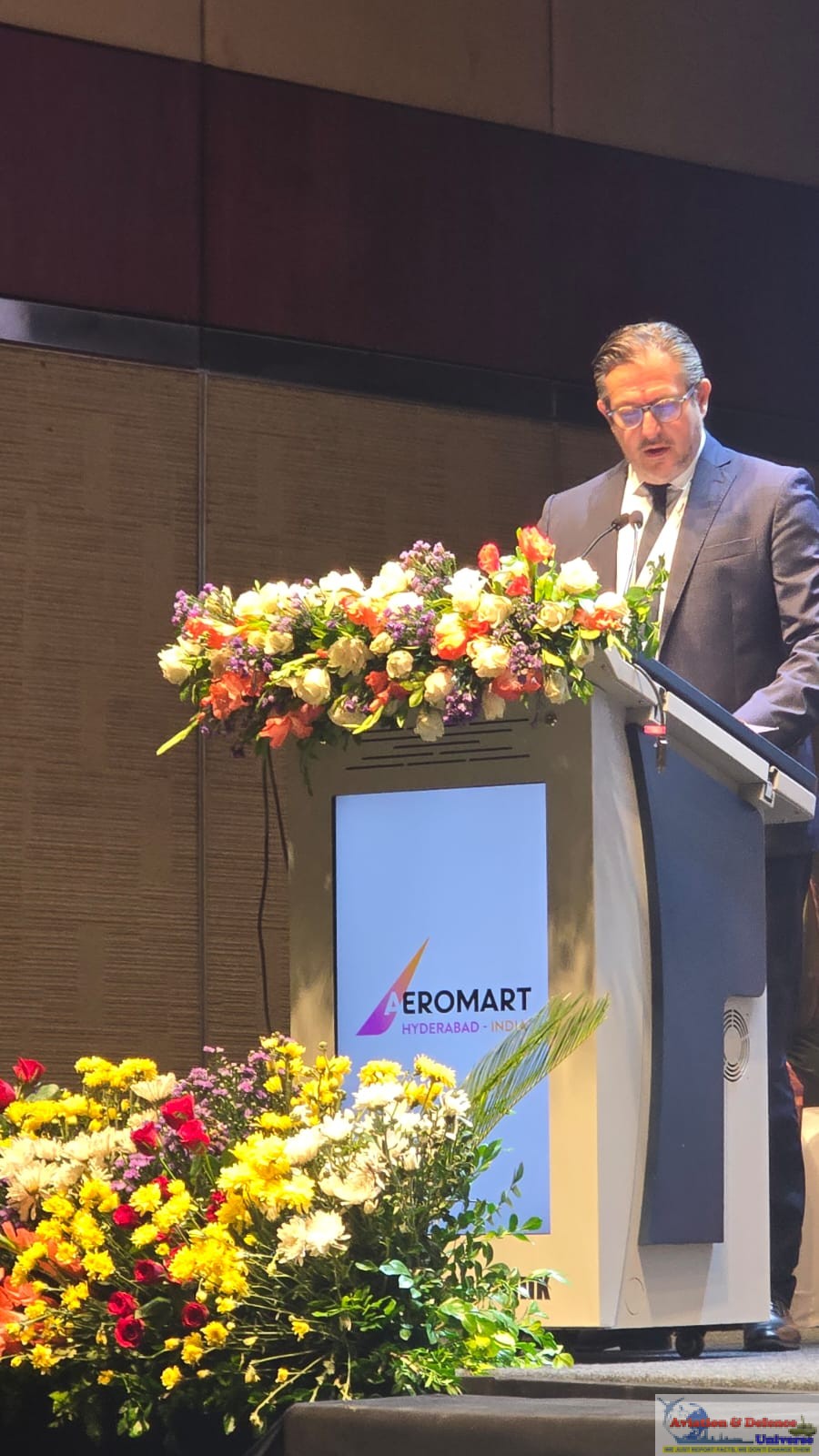 Highlighting India’s market potential, Castet said, “India is the third-largest aviation market in the world with more than 500 million passengers expected by 2030. Every aircraft purchase means 10,000 pieces to produce.” He explained that India’s strength lies not merely in market size but in the maturity of its aerospace ecosystem. Describing the country’s industrial advantages, he observed, “India already has a mature market with large OEMs, Tier-1 suppliers, start-ups, innovation centres, educational institutions and, of course, human capital with 1.5 million engineers graduating every year, competitive costs and quality recognised by all the major OEMs in the world.”
Summarising India’s evolution in global manufacturing, Castet made another powerful observation. He stated, “India is no longer a subcontractor. India is a strategic Tier-1.” Turning to the Government of India’s flagship manufacturing initiative, he said the vision extends far beyond industrial policy. Giving his interpretation of the initiative, Castet remarked, “Make in India is a philosophy, not a slogan.” He elaborated on what this philosophy represents for global industry. Explaining its three dimensions, he said, “Make in India for India, with more than 1,200 civil aircraft expected and increasingly manufactured locally. Make in India for the World, with free trade agreements and an MRO ecosystem growing at 20 per cent annually, enabling India to become an export hub. And Make in India with India, where OEMs and suppliers become co-developers through joint ventures, technology partnerships and collaboration.”
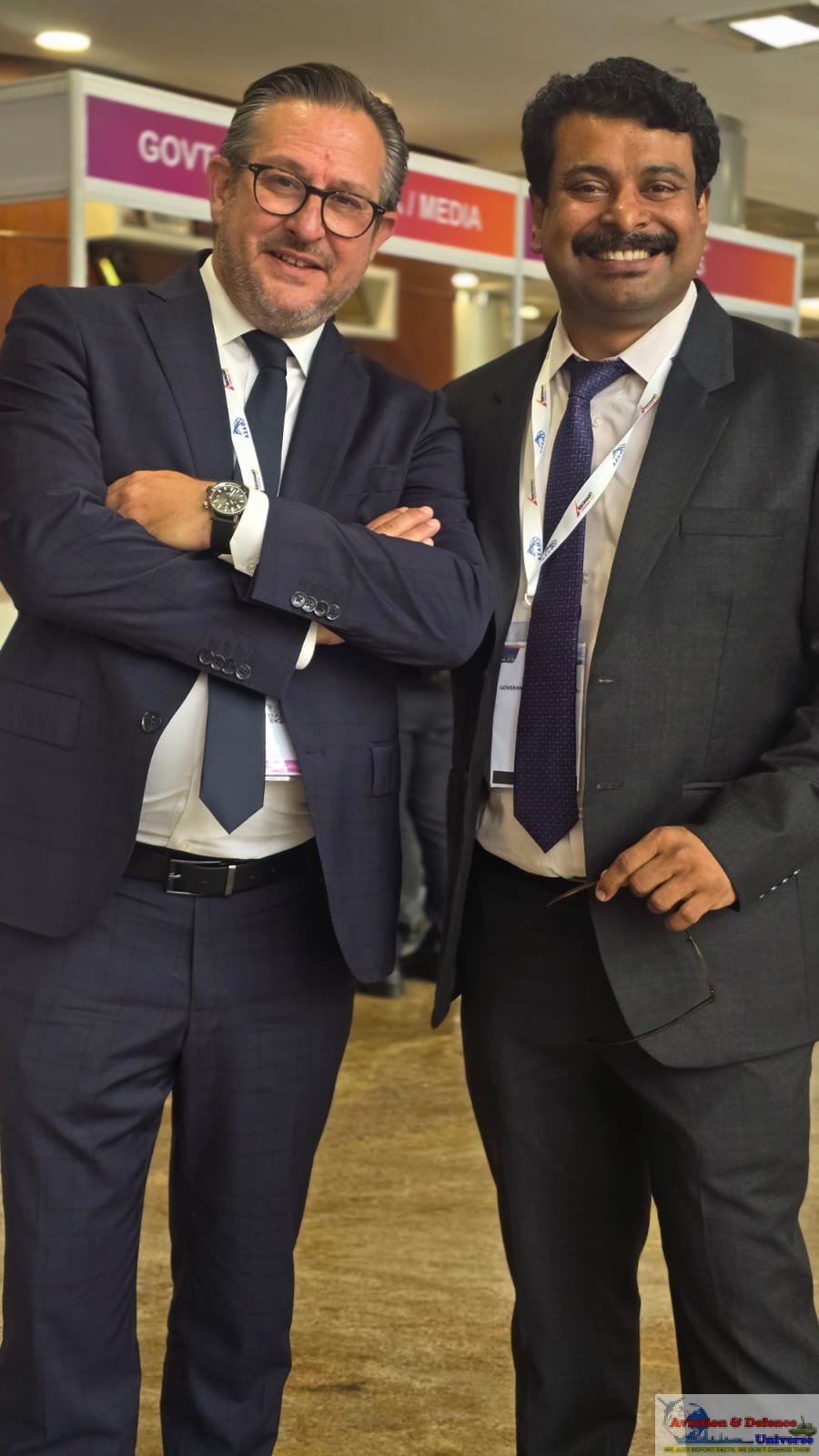
Reiterating the purpose of Aeromart Hyderabad, Castet described it as a bridge between India’s industrial capabilities and the international aerospace supply chain. Looking ahead to the next three days, he concluded, “We hope Aeromart will be an opportunity for you to make the link between the Indian supply chain and the international supply chain. We are an international platform in India with more than 500 companies, 1,200 delegates from 25 countries and more than 8,000 B2B meetings.” Ending his address on an inspiring note, Castet urged delegates to transform conversations into collaborations. Calling upon industry to seize the opportunity, he said, “Let’s open this convention. Let’s do business. Let’s sign MoUs. But above all, let’s build together. Make in India. Fly for India.”
The inaugural sessions of Aeromart Hyderabad 2026 collectively conveyed a powerful and consistent message: India’s aerospace future will be built on collaboration, innovation and manufacturing excellence. From Telangana’s ambition to become India’s aerospace capital, to BCI Aerospace’s vision of integrating Indian suppliers into global value chains, Airbus’ confidence in India’s industrial capabilities, Italy’s and France’s commitment to long-term strategic partnerships, and Dr. G. Satheesh Reddy’s roadmap for indigenous defence technologies, every address pointed towards the same conclusion—India has moved beyond being a major aerospace market to becoming an indispensable partner in global aerospace and defence manufacturing.































-A4-Size-(2)_page-0001.jpg)