
















- Making Defence Accessible: Maj Gen Ashok Kumar on Opportunities for India’s Start-ups and MSMEs
- Building Defence Self-Reliance: Why MSMEs and Start-ups Must Understand the Procurement Ecosystem
- A Roadmap for Defence Innovators: CENJOWS-HQIDS Workshop to Simplify Procurement and Testing Procedures
By Sangeeta Saxena
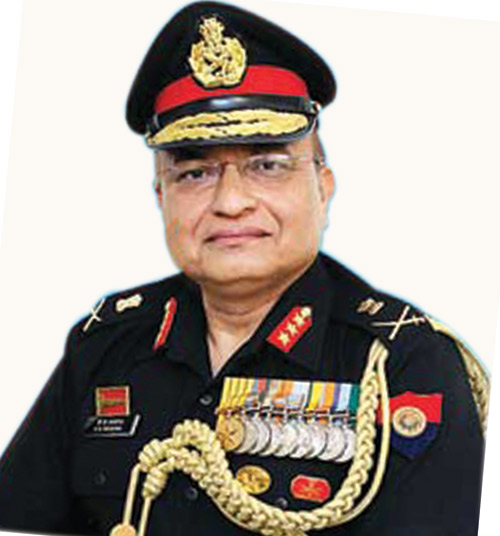
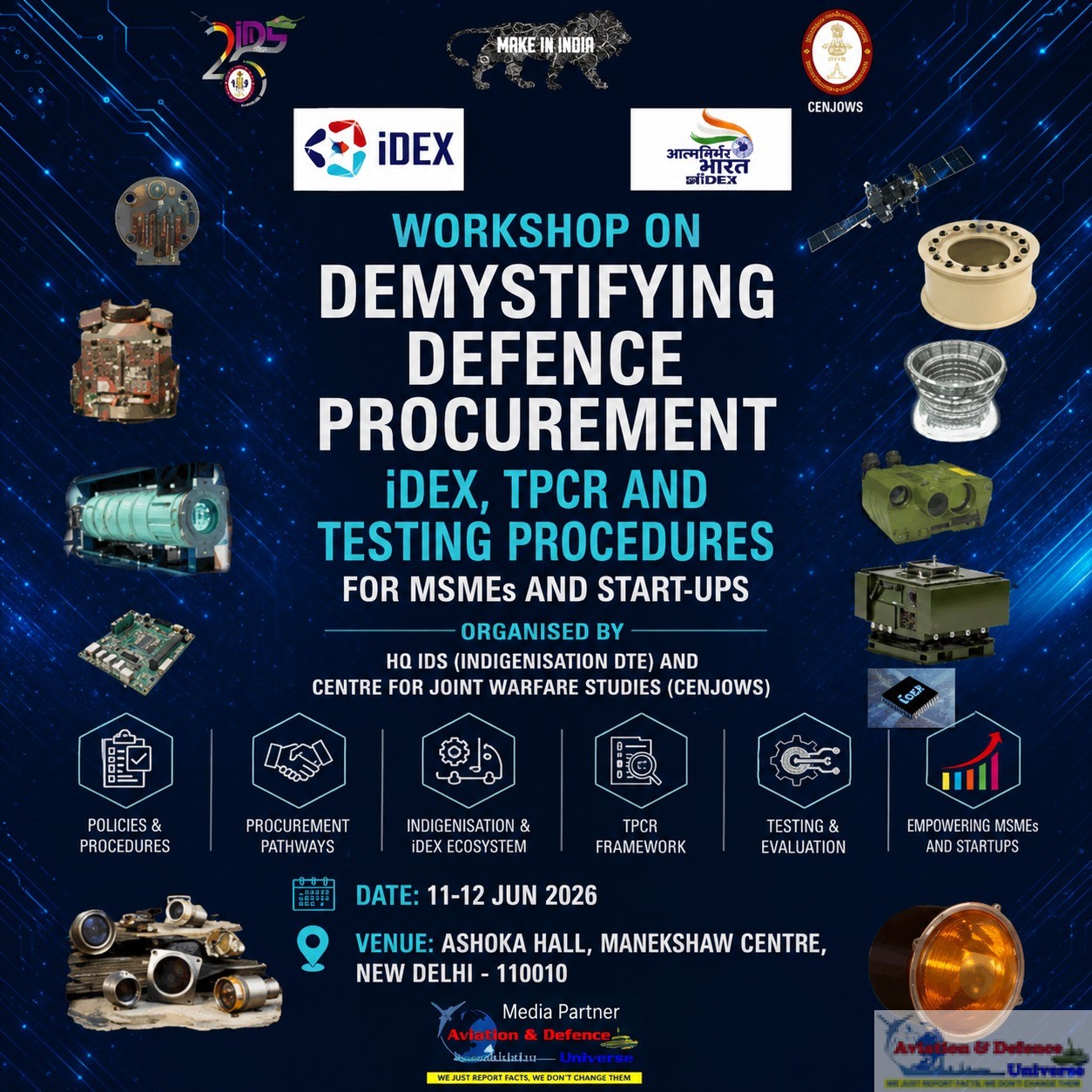
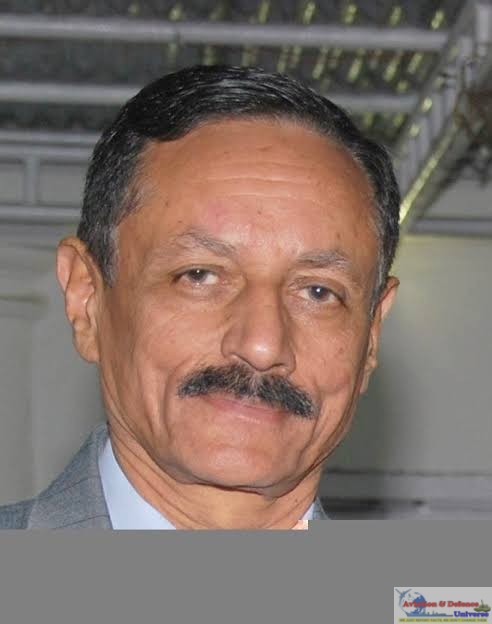
New Delhi. 08 June 2026. As India accelerates its pursuit of Aatmanirbhar Bharat in defence manufacturing and technology development, MSMEs and start-ups are emerging as critical drivers of innovation across domains ranging from artificial intelligence and autonomous systems to cyber security and advanced sensing technologies. Yet, for many first-time entrants, the defence ecosystem remains complex, with procurement 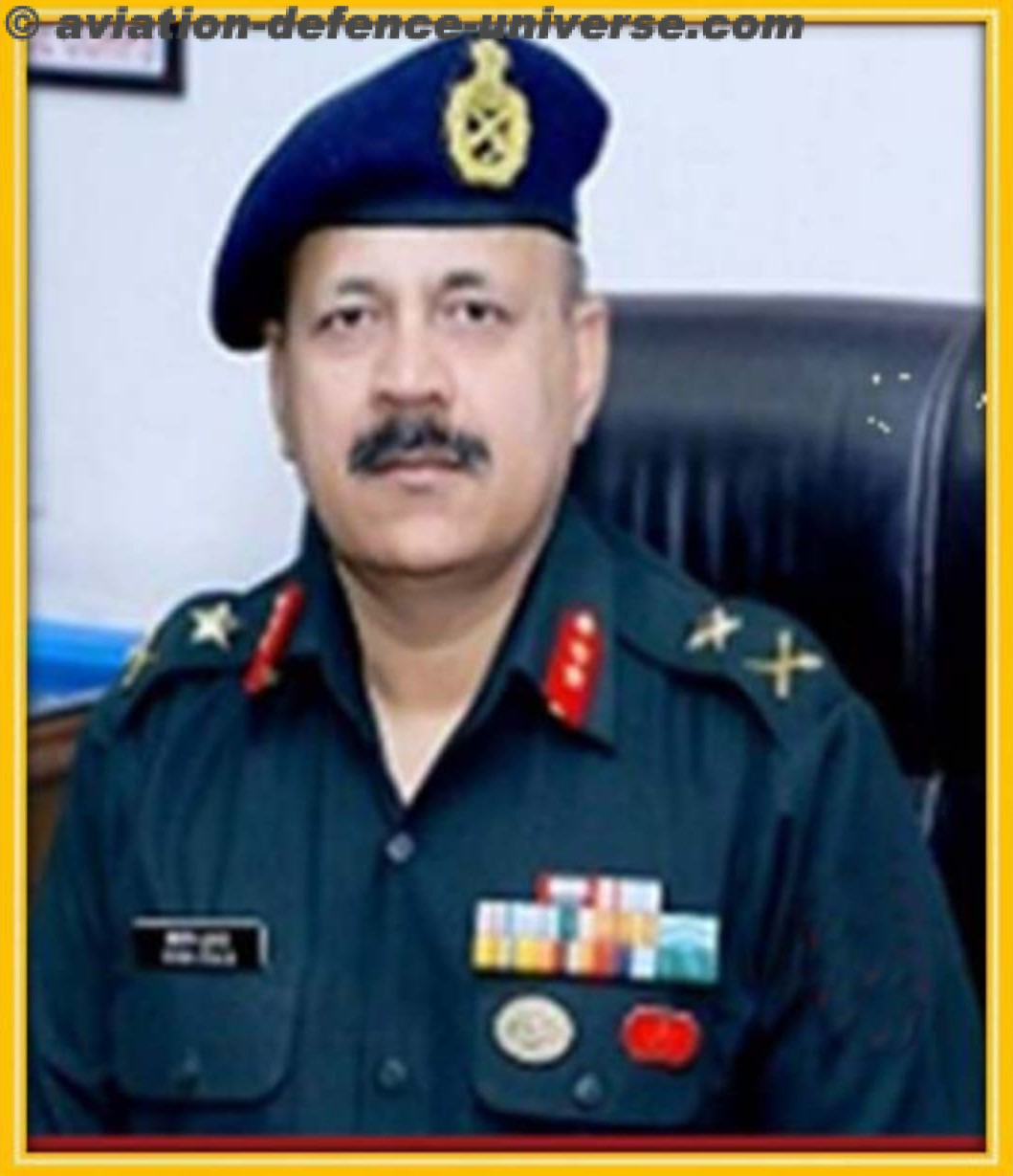 procedures, testing requirements, certification standards, and stakeholder engagement often appearing difficult to navigate. Recognising this challenge, the Centre for Joint Warfare Studies (CENJOWS), in collaboration with Headquarters Integrated Defence Staff (HQ IDS), is organising a two-day workshop on “Demystifying Defence Procurement, iDEX, TPCR and Testing Procedures for MSMEs and Start-ups” at the Manekshaw Centre, New Delhi, on 11–12 June 2026. In this exclusive interaction with ADU, Director General CENJOWS, Maj Gen Ashok Kumar (Retd.), discusses the objectives of the workshop, the opportunities available to innovators, and why understanding the defence acquisition ecosystem is essential for transforming promising ideas into operational capabilities.
ADU. What inspired CENJOWS to organize a dedicated workshop on defence procurement, iDEX, TPCR, and testing procedures specifically for MSMEs and start-ups?
Maj Gen Ashok Kumar (Retd.). I believe India is currently witnessing one of the most significant transformation in its defence industrial ecosystem since Independence. Over the last few years, there has been a strong policy push towards indigenisation, innovation, and self-reliance.
However, despite these positive developments, I have observed that many MSMEs and start-ups still find the defence sector difficult to understand and navigate. In my interactions with entrepreneurs, I often hear the same concerns. They possess innovative technologies and promising ideas, but they are unsure about procurement procedures, testing requirements, certification mechanisms, or even where to begin engaging with the armed forces. I felt there was a clear need for a platform that could bring all these aspects together under one roof.
 This workshop therefore, has been designed precisely to address that requirement. We wanted to move beyond broad discussions and provide practical guidance on the Defence Acquisition Procedure, iDEX, the Technology Perspective and Capability Roadmap, and testing and certification processes. These are areas that directly influence the journey of a technology from concept to induction. I firmly believe that if India is to achieve genuine Aatmanirbharata in defence, innovation must be supported by awareness and understanding. Through this workshop, we hope to equip participants with the knowledge and confidence required to engage effectively with the defence ecosystem and contribute meaningfully to national security.
ADU. Despite significant reforms in recent years, many entrepreneurs still perceive defence procurement as complex and inaccessible. What are the biggest misconceptions that this workshop seeks to address?
Maj Gen Ashok Kumar (Retd.). I think that one of the biggest misconceptions is that defence procurement is a domain reserved exclusively for large corporations with extensive resources and long-standing relationships with the government. While that may have been the case in the past, today’s defence ecosystem offers numerous opportunities for MSMEs and start-ups through various initiatives and procurement categories. Another big misconception is that a technologically superior product will automatically find a place in the armed forces. In reality, successful induction requires much more than innovation. It involves understanding operational requirements, testing standards, quality assurance procedures, certification requirements, and procurement pathways. Many entrepreneurs focus entirely on technology development without adequately considering these equally important aspects. I have also noticed that some innovators assume the armed forces are inaccessible to new entrants. However, initiatives such as iDEX, innovation challenges, industry interactions, and user engagements have significantly improved communication between the military and industry.
This workshop seeks to clarify these realities. We want participants to understand that the defence sector is not closed. Rather, it is a structured one. Once companies understand the processes and stakeholders involved, the ecosystem becomes far more navigable.
I believe knowledge reduces uncertainty. By explaining the procedures, opportunities, and expectations in clear terms, we are hoping to replace misconceptions with practical understanding and encourage greater participation from India’s innovation community.
ADU. How important are MSMEs and start-ups in realizing the vision of Aatmanirbhar Bharat in defence manufacturing?
Maj Gen Ashok Kumar (Retd.).I firmly believe that MSMEs and start-ups are indispensable to India’s vision of Aatmanirbhar Bharat in defence. In fact, I would go so far as to say that the future success of indigenous defence manufacturing will depend significantly on their contribution.
 Historically, as we know, defence production was often associated with large public-sector organisations and established industrial players. While these institutions continue to play a vital role, modern warfare is increasingly shaped by innovation-driven technologies that often emerge from smaller, more agile enterprises. Areas such as artificial intelligence, autonomous systems, cyber security, robotics, advanced sensors, and data analytics are examples where start-ups are making remarkable contributions globally.
What I find particularly encouraging is the energy, creativity, and problem-solving mindset that MSMEs and start-ups bring to the table. They are often willing to challenge conventional approaches and develop solutions tailored to specific operational requirements.
I want India not merely to manufacture defence equipment domestically but to become a global leader in defence innovation. Achieving that objective requires a vibrant ecosystem where small companies can collaborate with the armed forces, research institutions, and industry partners. The government’s focus on indigenisation, positive indigenisation lists, iDEX, and defence innovation initiatives has created an enabling environment. However, the true success of these initiatives will depend on the extent to which MSMEs and start-ups can translate innovative ideas into deployable capabilities.
I am convinced that they will be among the principal drivers of India’s defence transformation in the coming decade.
ADU. The defence procurement ecosystem involves multiple stakeholders, procedures, and regulations. What are the key areas where new entrants generally face difficulties?
Maj Gen Ashok Kumar (Retd.). From my experience, the greatest challenge for new entrants is not the lack of innovation but the lack of familiarity with the defence ecosystem.
Many companies enter the sector with excellent technologies but limited understanding of how defence acquisition processes actually function. One of the fisrt difficulties is of identifying the appropriate stakeholders. Defence procurement involves the Services, DRDO, quality assurance agencies, testing establishments, acquisition organisations, and industry partners. For a newcomer, understanding who does what can be quite challenging. Another area of difficulty relates to documentation and compliance. Defence procurement requires detailed technical documentation, quality assurance measures, certification procedures, and adherence to prescribed standards. Companies that are accustomed to commercial markets often underestimate these requirements. Testing and validation present another challenge. Defence equipment must perform reliably under demanding operational conditions. As a result, evaluation procedures can be rigorous and time-consuming. Many innovators are not fully prepared for this aspect of the process. I have also observed that some companies focus exclusively on technological excellence without adequately understanding operational requirements. A technically impressive product may still face challenges if it does not address a clearly defined military need. This is precisely why workshops such as this are important. By providing a comprehensive understanding of procedures, stakeholders, standards, and expectations, we can help new entrants navigate the ecosystem more effectively and avoid common pitfalls.
ADU. Could you explain the significance of the Defence Acquisition Procedure (DAP) and why MSMEs need to understand it better?
Maj Gen Ashok Kumar (Retd.). I often describe the Defence Acquisition Procedure, or DAP, as the foundational framework that governs defence procurement in India. For any company seeking to participate in the defence sector, understanding DAP is not optional. It is absolutely essential. The DAP establishes the procedures through which defence equipment is acquired, evaluated, contracted, and inducted. It defines procurement categories, indigenous content requirements, acquisition processes, commercial considerations, and evaluation methodologies. In simple terms, it provides the rules of engagement for industry participation in defence acquisition.
 I believe many MSMEs view DAP as a complex policy document meant only for procurement specialists. In reality, it is a strategic guide that can help companies align their business decisions with future opportunities. A thorough understanding of DAP allows enterprises to identify relevant procurement categories, understand eligibility requirements, and position themselves effectively within the acquisition ecosystem. The importance of DAP I believe, have increased further with the government’s emphasis on self-reliance and indigenous manufacturing. Several provisions encourage domestic design, development, and production. Companies that understand these provisions can leverage them to strengthen their competitive position.
I would strongly encourage MSMEs and start-ups to view DAP not as a procedural hurdle but as a roadmap. The better they understand the acquisition framework, the better equipped they will be to develop relevant technologies, engage with stakeholders, and ultimately contribute to India’s defence capability development.
The objective of this workshop is to simplify these concepts and make them more accessible to industry participants.
ADU. The Innovations for Defence Excellence (iDEX) initiative has emerged as a major catalyst for innovation. How has iDEX transformed the relationship between the armed forces and India’s start-up ecosystem?
Maj Gen Ashok Kumar (Retd.). I genuinely believe that iDEX has been one of the most transformative developments in India’s defence innovation landscape. During much of my military career, the interaction between the armed forces and emerging technology companies, I feel, was limited. While innovative ideas certainly existed, there were very few structured mechanisms through which young entrepreneurs could directly engage with military users, understand operational requirements, and develop solutions accordingly.
 What iDEX has done is fundamentally change that dynamic. It has created an institutional framework that encourages collaboration rather than separation between the armed forces and innovators. For the first time, start-ups are being presented with clearly defined military challenges and are being encouraged to develop solutions that directly address operational requirements. This has created a level of engagement that was previously difficult to achieve. I have observed that one of the greatest strengths of iDEX is that it brings users and innovators together at a much earlier stage of development. Instead of developing a technology in isolation and then attempting to find a customer, innovators can now understand the problem from the perspective of the armed forces and tailor their solutions accordingly. This significantly increases the chances of relevance and eventual adoption.
Another important aspect is confidence. Many young entrepreneurs previously viewed the defence sector as inaccessible. iDEX has demonstrated that innovative ideas, regardless of the size of the company proposing them, can receive serious consideration. It has helped foster a culture where merit, innovation, and problem-solving are increasingly becoming the defining criteria.
I believe the long-term impact of iDEX will extend far beyond individual projects. It is helping create a mindset where innovation is viewed as a partnership between the military, industry, academia, and government. That collaborative approach will be critical if India is to emerge as a global leader in defence technology and innovation.
ADU. What opportunities does iDEX offer to young innovators and technology-driven companies that may have no prior experience in the defence sector?
Maj Gen Ashok Kumar (Retd.). I often tell young entrepreneurs that there has never been a better time to enter India’s defence sector than today.
One of the reasons I say this is because iDEX has significantly lowered the barriers that traditionally discouragd new entrants from participating in defence innovation. The most visible opportunity is funding support. Developing defence technologies can be resource-intensive, particularly during the prototype stage. Through its grant-based model, iDEX provides innovators with the financial support necessary to develop and demonstrate promising solutions. This allows start-ups to focus on innovation without being overwhelmed by early-stage financial constraints.
However, I believe the value of iDEX extends far beyond funding. Equally important is the access it provides to end-users and subject-matter experts.
For a young company entering the defence sector for the first time, understanding military requirements can be challenging. Through iDEX, innovators gain opportunities to interact directly with users, receive feedback, and refine their technologies based on operational realities.
 I also think iDEX provides credibility. Participation in an iDEX challenge signals that a company’s technology has been evaluated and recognised within a structured framework. This can be extremely valuable when seeking investors, industry partnerships, or future business opportunities.
Another major opportunity lies in visibility. Defence innovation often requires collaboration across multiple stakeholders. By participating in iDEX, start-ups become part of a broader ecosystem that includes the Services, DRDO, industry leaders, investors, and policymakers.
I see iDEX as a gateway into the defence ecosystem. It enables talented innovators who may have no prior defence experience to demonstrate their capabilities and contribute meaningfully to national security. That is a powerful opportunity, and one that I believe will continue to grow in importance.
ADU. Technology Perspective and Capability Roadmap (TPCR) is often described as a guide for future defence requirements. How can MSMEs and start-ups effectively use TPCR to align their research and product development efforts?
Maj Gen Ashok Kumar (Retd.). I believe one of the most important qualities of a successful defence innovator is the ability to anticipate future requirements rather than merely respond to current demand. This is precisely where the Technology Perspective and Capability Roadmap becomes so valuable. The TPCR provides insight into the capabilities that the armed forces are likely to require in the future. While no roadmap can predict every technological development, it offers industry a strategic understanding of the broad areas in which military capability enhancement is expected.
For MSMEs and start-ups, this information can be immensely useful when making decisions regarding research priorities, investments, and product development strategies.
I often advise innovators not to develop technology simply because it is technically impressive. The real question should always be whether the technology addresses a future operational requirement.
TCPR helps answer that question by highlighting capability areas that are likely to receive sustained attention and investment. From a business perspective, alignment with it can also reduce risk. Defence technology development often requires significant investments of time and resources. By focusing on capability areas identified within the roadmap, companies can improve the probability that their innovations will remain relevant over the long term. I would encourage MSMEs and start-ups to study that not merely as a document but as a strategic planning tool. It should inform research agendas, partnership decisions, talent acquisition strategies, and investment priorities. I believe that companies which successfully align innovation with anticipated military requirements will be best positioned to contribute to India’s future defence capabilities and achieve sustainable growth within the defence sector.
ADU. In your assessment, which emerging technologies are likely to generate the greatest opportunities for Indian defence start-ups over the next decade?
Maj Gen Ashok Kumar (Retd.). If we examine global trends in military modernisation, it becomes clear that technology will play an increasingly decisive role in future conflicts. I believe this presents tremendous opportunities for Indian start-ups and technology-driven enterprises.
Artificial intelligence is perhaps the most obvious example. AI has applications across intelligence analysis, decision support, logistics, predictive maintenance, autonomous systems, and battlefield management. I expect its importance to grow significantly over the coming decade. Autonomous and unmanned systems represent another major opportunity. Whether in the air, on land, at sea, or underwater, autonomous platforms are becoming increasingly important for surveillance, reconnaissance, logistics, and combat support functions. Indian innovators have already demonstrated significant capabilities in this area.
Cyber security will remain a critical domain. As military systems become increasingly networked and data-driven, protecting digital infrastructure will be essential. Start-ups with expertise in cyber resilience, threat detection, and secure communications will find substantial opportunities.
I am also particularly interested in developments relating to quantum technologies, advanced materials, electronic warfare, space systems, and intelligent sensors. These technologies have the potential to reshape military capability in profound ways.
What excites me most is the fact that many of these technologies are dual-use in nature. Innovations developed for civilian applications can often be adapted for defence purposes and vice versa. This creates additional opportunities for start-ups to scale their businesses while contributing to national security. I want India to be not merely a consumer of these technologies but a leader in their development.
Our innovation ecosystem possesses immense talent, and I believe the coming decade offers unprecedented opportunities for technology-driven enterprises.
ADU. Testing, certification, and validation are frequently cited as major hurdles for smaller companies. Why are these processes so critical in the defence sector?
Maj Gen Ashok Kumar (Retd.). I fully understand why many start-ups view testing and certification as challenging processes. They can be time-consuming, technically demanding, and resource-intensive. However, I would emphasise that these processes exist for very important reasons. Unlike other commercial products, defence systems often operate in highly demanding and unforgiving environments. Equipment may be exposed to extreme temperatures, high altitudes, maritime conditions, electromagnetic interference, and intense operational stress. Under such circumstances, reliability is not merely desirable. It is essential.
I often say that military users must have complete confidence in the equipment they are asked to operate. A failure during a critical mission can have consequences far beyond financial loss. It can affect operational effectiveness, mission success, and in some circumstances even human lives.
 Testing and certification provide objective evidence that a system performs as intended. They help verify safety, reliability, interoperability, durability, and compliance with established standards. These processes also ensure that equipment can integrate effectively with existing military systems. At the same time, I recognise that many MSMEs require greater clarity regarding testing pathways and certification requirements. One of the objectives of this workshop is to help participants understand these procedures in practical terms and prepare for them more effectively.
I encourage innovators to view testing and certification not as obstacles but as enablers of credibility. Successfully validated technologies inspire confidence among users, improve adoption prospects, and strengthen the reputation of the company.
In the defence sector, credibility I feel is often one of the most valuable assets an innovator can possess.
ADU. What practical guidance will participants receive during the workshop regarding testing facilities, certification procedures, and trial requirements?
Maj Gen Ashok Kumar (Retd.). One of the primary objectives of this workshop is to move beyond broad policy discussions and provide participants with practical, actionable guidance.
I have often observed that many MSMEs and start-ups possess strong technological capabilities but remain uncertain about the procedural aspects of defence testing, certification, and trials. This uncertainty can sometimes discourage promising innovators from pursuing opportunities within the defence sector. Through this workshop, participants will gain a clearer understanding of the various testing and certification pathways that exist within the defence ecosystem. Experts from relevant organisations will explain how products are evaluated, what standards are typically applied, and what documentation companies should prepare before approaching testing agencies. This knowledge is particularly important because testing requirements can vary depending on the nature of the product, its intended application, and the operational environment in which it will be deployed.
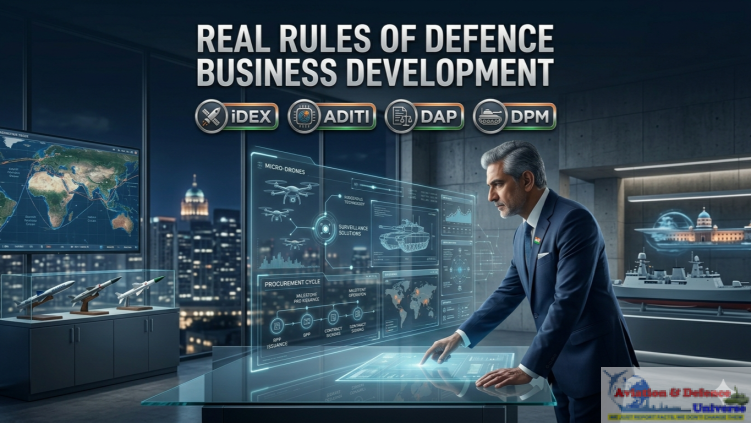 I also believe it is important for industry to understand that testing should not be viewed as a single event at the end of development. In many cases, testing and validation should be integrated throughout the product development cycle. Early identification of shortcomings can save considerable time and resources later. Participants will also be receiving guidance regarding user trials, demonstration requirements, and the importance of maintaining quality assurance throughout the development process. We want innovators to understand not only what is required but also why it is required. Our aim remains that participants leave the workshop with greater clarity and confidence. A well-informed company is far better positioned to navigate the certification ecosystem, engage with stakeholders effectively, and accelerate the journey from innovation to induction.
ADU. How can MSMEs gain access to defence testing infrastructure and what institutional mechanisms currently exist to support them?
Maj Gen Ashok Kumar (Retd.). I believe access to testing infrastructure has historically been one of the most significant concerns raised by MSMEs and start-ups. Defence technologies often require specialised facilities that are beyond the financial reach of smaller enterprises. Recognising this challenge, various policy initiatives have sought to improve industry access to testing and evaluation infrastructure.
Today, there are significanntly more opportunities for MSMEs to access testing facilities than existed a decade ago. Various laboratories, quality assurance organisations, certification agencies, and specialised establishments have introduced mechanisms that enable industry participation. These initiatives reflect a broader recognition that innovation cannot flourish unless developers have access to the facilities required to validate their products.
However, I have noticed that awareness of these mechanisms remains uneven. Many companies simply do not know which facilities are available, how access can be obtained, or what procedures must be followed. This is one of the reasons why workshops such as this are so important.
Participants will have an opportunity to interact with experts who can explain the available infrastructure, eligibility requirements, application procedures, and associated considerations. We also hope to clarify common misconceptions regarding timelines, costs, and documentation requirements. I would encourage MSMEs to engage with testing infrastructure at an early stage rather than waiting until product development is complete. Early engagement often helps identify technical issues, refine designs, and improve eventual outcomes.
I firmly believe that wider access to testing infrastructure is essential for strengthening India’s innovation ecosystem. The more effectively we enable innovators to validate their technologies, the stronger our indigenous defence capability will become.
ADU. What role do the Services, DRDO, DPSUs, and private industry play in creating a more collaborative innovation ecosystem?
Maj Gen Ashok Kumar (Retd.). I often describe defence innovation as a team effort. No single organisation, regardless of its capabilities, I personally feel, can independently address every challenge associated with modern military capability development.
Success requires collaboration among multiple stakeholders, each bringing unique strengths to the ecosystem. The services plays a crucial role because they are the end-users of military capability. They define operational requirements, identifies capability gaps, and provide valuable feedback throughout the development process. Without user involvement, innovations are at the risk of becoming disconnected from operational reality.
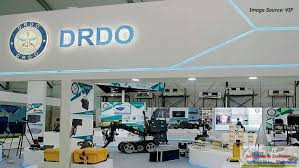 DRDO contributes scientific expertise, research capabilities, and technological development. Over the years, DRDO has played a central role in advancing indigenous defence technologies and continues to be an important pillar of India’s defence research ecosystem.
DPSUs possess extensive experience in manufacturing, systems integration, lifecycle support, and large-scale programme execution. Their institutional knowledge and industrial capacity remain valuable national assets. Private industry, including MSMEs and start-ups, contributes agility, innovation, specialised expertise, and entrepreneurial energy. In many emerging technology domains, private enterprises are often able to innovate rapidly and develop highly specialised solutions.
I believe the future lies in collaboration rather than competition between these stakeholders. The objective should not be to determine which institution is most important but to ensure that each contributes effectively within an integrated ecosystem.
India’s defence challenges are becoming increasingly complex. Addressing them will require partnerships that combine military experience, scientific excellence, industrial capability, and entrepreneurial innovation. I am encouraged by the progress already made, and I believe even greater collaboration will be possible in the years ahead.
ADU. How important is early engagement with end-users the armed forces during the product development cycle?
Maj Gen Ashok Kumar (Retd.). In my experience, early engagement with end-users is one of the most important factors influencing the success of a defence technology program.
I have seen many technically impressive products struggling because they were developed without a sufficient understanding of operational requirements. Also, I have also seen relatively simple solutions achieve significant success because they addressed genuine user needs. The armed forces operate in unique and often demanding environments. Military requirements are shaped by operational realities that may not always be apparent to technology developers. Factors such as terrain, climate, logistics, survivability, maintainability, interoperability, and tactical employment can all influence the suitability of a particular solution.
When innovators engage with users early in the development cycle, they gain valuable insights into these realities. This helps ensure that technological development remains aligned with operational needs rather than becoming an exercise in technology for its own sake.
 I believe early engagement also helps build trust. Users gain confidence that developers understand their challenges, while innovators gain a better appreciation of operational priorities.
This creates a more constructive relationship and often leads to better outcomes for both parties. Initiatives such as iDEX have been particularly valuable in this regard because they facilitate interaction between innovators and users at an early stage. I would encourage all start-ups and MSMEs to take advantage of such opportunities whenever possible.
It is safe to say that the defence innovation begins with understanding the problem. The earlier that understanding is established, the greater the likelihood that the resulting solution will be relevant, effective, and operationally valuable.
ADU. Many start-ups possess innovative ideas but lack familiarity with defence standards and operational requirements. What advice would you offer them?
Maj Gen Ashok Kumar (Retd.). You see, my first piece of advice would be to approach the defence sector with patience and a willingness to learn. Defence is not like most commercial markets out there. The requirements are often more demanding, the development cycles can be longer, and the standards are understandably rigorous. However, the opportunities are equally significant. I would therefore encourage innovators to focus first on understanding the operational problem they are trying to solve. Technology is important, but technology alone is not enough. The most successful innovations are those that address clearly defined military requirements and deliver tangible operational value.
My next advice to companie would be to invest time in understanding standards, certification requirements, quality assurance processes, and procurement procedures. These aspects may appear administrative, but they are essential components of successful participation in the defence ecosystem.
 It is my firm brlief that engagement is critical. Attend workshops, participate in innovation challenges, interact with users, collaborate with academic institutions, and seek mentorship from experienced professionals.Defence innovation is definitely not a solitary endeavour.
Another important point to focus on is of persistence. Many breakthrough technologies require multiple iterations before they reach maturity. Setbacks should be viewed as learning opportunities rather than failures.
It is my wish and hope that Indian innovators think ambitiously. Our country possesses extraordinary talent and creativity. If innovators combine technical excellence with an understanding of operational requirements and a commitment to quality, I believe they can make a significant contribution to both national security and economic growth. The future of India’s defence innovation ecosystem will be shaped by those who are willing to combine vision with perseverance, and I am confident that many of today’s start-ups will become tomorrow’s strategic capability providers.
ADU. How can industry participants better understand the actual capability gaps and operational needs of the armed forces?
Maj Gen Ashok Kumar (Retd.). One of the most common mistakes made by companies in my opinion while entering the defence sector is assuming that a good technology will automatically find a market. In reality, successful defence innovation begins with a deep understanding of operational requirement. The armed forces do not procure technology simply because it is advanced. They do those, that solve specific operational problems. In my experience, industry participants must make a conscious effort to understand the environment in which military personnel operate.
The challenges faced by a soldier deployed in high-altitude areas, a sailor operating in the maritime domain, or an air warrior executing time-sensitive missions are often very different from commercial requirements. Appreciating these operational realities is essential if technology developers are to create meaningful solutions. I would strongly encourage industry to study publicly available documents such as the Technology Perspective and Capability Roadmap, defence policy publications, innovation challenge statements, and indigenisation initiatives. These documents often provide valuable insights into future capability requirements and strategic priorities.
 Equally important is the direct engagement. Workshops, seminars, industry interactions, user demonstrations, and innovation forums provide opportunities to interact with military professionals and gain a better understanding of operational challenges.
I believe and also have often found that, productive innovations emerge when developers spend time listening to users rather than simply presenting products.
Collaboration with academia, think tanks, and research institutions can help companies better understand evolving military requirements. Defence capability development is increasingly influenced by technological, geopolitical, and strategic factors that extend beyond traditional military domains. I would hence say that understanding capability gaps requires curiosity, engagement, and a willingness to learn. Companies that invest time in understanding operational needs will be far better positioned to deliver solutions that create genuine value for the armed forces.
ADU. What unique value does CENJOWS bring in fostering dialogue between the military, industry, academia, and policymakers?
Maj Gen Ashok Kumar (Retd.). I believe CENJOWS occupies a unique position within India’s strategic and defence ecosystem. As a premier and the only joint warfare studies and research institution, our role extends beyond research and analysis.
We serve as a platform where diverse stakeholders can come together to discuss challenges, exchange perspectives, and identify opportunities for collaboration. Modern defence capability development is no longer the responsibility of a single organisation or institution. Emerging technologies, changing security dynamics, and evolving operational concepts require continuous interaction between the military, industry, academia, and policymakers. Each stakeholder brings a different perspective, and meaningful progress often occurs when these perspectives are brought together. What I value most about CENJOWS is our ability to facilitate informed dialogue.
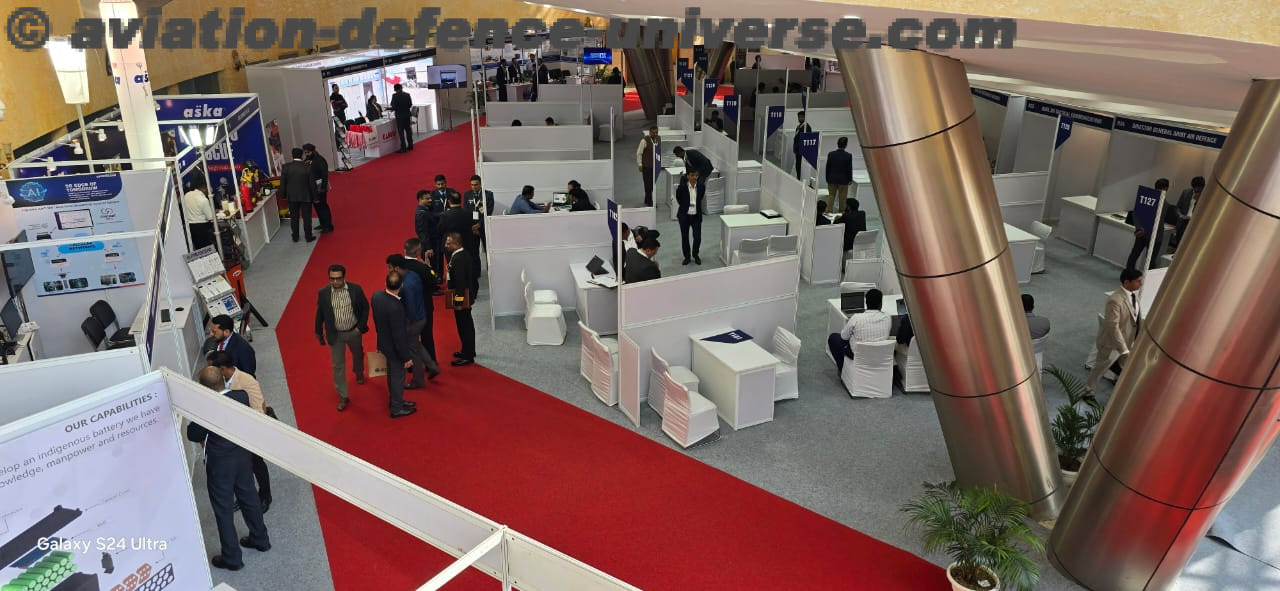 We are able to engage with military practitioners who understand operational realities, researchers who explore emerging trends, industry leaders who drive innovation, and policymakers who shape the strategic environment. This creates a rich ecosystem of ideas and perspectives. I have always believed that effective policy and capability development require informed discussion. CENJOWS provides a neutral and credible platform where such discussions can occur constructively.
Through seminars, workshops, conferences, publications, and research initiatives, we seek to contribute to a deeper understanding of national security challenges and opportunities. In the context of this workshop, our objective is not merely to disseminate information but to foster relationships. We want participants to engage with one another, exchange ideas, and develop partnerships that continue beyond the event itself. I see CENJOWS as a bridge that connects stakeholders who may not otherwise have regular opportunities to interact. In an increasingly complex security environment, such connections are more important than ever.
ADU. Looking ahead, what policy or procedural reforms would further strengthen the participation of MSMEs and start-ups in India’s defence ecosystem?
Maj Gen Ashok Kumar (Retd.). India has already undertaken several important reform to encourage greater participation by MSMEs and start-ups, and I believe these initiatives have produced encouraging results. However, as with any evolving ecosystem, there is always room for further improvement.
One area where I see significant potential is procedural simplification. While safeguards and accountability are essential in defence procurement, processes should remain as transparent and efficient as possible. Reducing unnecessary complexity can encourage greater participation and help innovators focus their energies on technology development. I also believe wider awareness is needed regarding existing opportunities.
Many companies remain unaware of the mechanisms already available to support innovation, testing, certification, and procurement. Greater outreach and capacity-building initiatives could help address this challenge. Another important area is access to testing infrastructure. While considerable progress has been made, continued efforts to expand accessibility, reduce bottlenecks, and improve industry awareness would be beneficial. For many MSMEs, affordable access to testing facilities remains a critical requirement.

I would also welcome stronger mechanisms for sustained user-industry engagement. Early interaction between developers and end-users often improves outcomes and reduces the risk of developing solutions that do not align with operational requirements. From a broader perspective, I think fostering a culture of innovation is equally important. Policy reforms must be accompanied by institutional support, mentorship, collaboration opportunities, and mechanisms that help promising technologies transition from prototype to production. While I remain optimistic about the future via Indian defence innovation ecosystem, I believe that a continued reforms will further strengthen the role of MSMEs and start-ups in supporting national security objectives.
ADU. What outcomes do you expect from this workshop, and how do you envision participants benefiting from it in the long term?
Maj Gen Ashok Kumar (Retd.). My expectations from this workshop are both practical and strategic.
At the most immediate level, I hope participants leave with a clearer understanding of the defence acquisition ecosystem and the opportunities available within it. If attendees gain clarity regarding procurement procedures, innovation initiatives, testing requirements, and future capability needs, we will have achieved an important objective. However, I also believe the true value of the workshop extends beyond information sharing.
One of our key goals is to build confidence among MSMEs and start-ups. Many innovators possess excellent ideas but remain uncertain about how to engage with the defence sector. By bringing together experts, policymakers, industry representatives, and military stakeholders, we hope to create an environment where those uncertainties can be addressed. I also expect the workshop to facilitate meaningful networking and collaboration. Defence innovation as mentioned earlier, rarely succeeds in isolation. Partnerships between industry, academia, research institutions, and users are often essential.
Events such as these, provide opportunities to establish relationships that may eventually lead to technology development, joint ventures, research collaborations, and business opportunities. From a long-term perspective, I hope participants develop a more strategic understanding of the defence ecosystem.
Success in this sector requires patience, planning, and sustained engagement. The workshop is intended to help participants begin that journey with greater awareness and confidence. Ultimately, I would like this event to serve as a catalyst. If even a few participants go on to develop technologies that contribute to India’s defence capabilities, strengthen indigenous manufacturing, and support national security, I would consider the workshop a meaningful success.
ADU. Finally, what message would you like to convey to entrepreneurs, innovators, and MSMEs considering entry into the defence sector for the first time?
Maj Gen Ashok Kumar (Retd.).My message is simple. Do not be intimidated by the defence sector.
I understand why many first-time entrants perceive it as complex. Defence procurement, testing standards, certification requirements, and operational expectations can appear daunting at first glance. However, I want entrepreneurs and innovators to recognise that there has never been a more favourable environment for participation than exists today. India is visibluy undergoing a historic transformation in defence manufacturing and innovation. The emphasis on Aatmanirbhar Bharat, indigenous capability development, technological self-reliance, and innovation-driven growth has created opportunities across multiple domains. The government, the armed forces, industry, and research institutions are all working towards creating a more inclusive and dynamic ecosystem. I would encourage innovators to focus on solving real problems. The most successful defence technologies are not necessarily the most complex. They are the ones that address genuine operational needs. Spend time understanding the user, studying the environment, and identifying capability gaps. Innovation rooted in operational relevance is far more likely to succeed. I also urge entrepreneurs to remain patient and persistent. Defence capability development often requires time, rigorous evaluation, and continuous refinement. Challenges are inevitable, but perseverance is often the difference between success and failure.
Most importantly, I want India to become a nation that is recognised not only for manufacturing defence equipment but also for creatng world-class defence technologies.
Our innovators possess tremendous talent, creativity, and determination. If these strengths are combined with professionalism, quality, and a commitment to national service, I am confident that they will play a defining role in shaping India’s future defence capabilities. The future belongs to those who are willing to innovate with purpose, and I believe India’s next generation of entrepreneurs is more than capable of rising to that challenge.
 For Maj Gen Ashok Kumar (Retd.), the workshop is more than an information-sharing exercise; it is an effort to build confidence, foster collaboration, and create a clearer pathway for innovators seeking to contribute to India’s defence capabilities. By bringing together policymakers, military users, industry leaders, testing agencies, and technology developers under one roof, CENJOWS and HQ IDS aim to bridge knowledge gaps that often prevent promising innovations from reaching the armed forces. As India seeks to emerge not only as a manufacturer but also as a global leader in defence innovation, initiatives such as this workshop are expected to play a crucial role in connecting ideas with opportunities, technology with operational needs, and entrepreneurs with the broader national security ecosystem. For MSMEs and start-ups willing to innovate with purpose, the message from CENJOWS is clear: the defence sector is more accessible than ever before, and the time to engage is now.
As told to Sangeeta Saxena















































































-A4-Size-(2)_page-0001.jpg)