














- From Vikram-S to Vikram-I: Skyroot’s Journey Reaches Orbit
- Vikram-I Opens a New Chapter in India’s Private Space Story
- ISRO and IN-SPACe Enable the Private Space Breakthrough
- India Enters a New Era of Commercial Launch Services
By Sangeeta Saxena
London. 18 July 2026. Sometimes, a journalist’s journey from one aerospace milestone to another creates its own unforgettable moment. I had barely landed in London, ready to head towards Farnborough for the much-awaited Farnborough International Airshow 2026, opening on Monday, when switched on my phone to a piece of news that instantly connected home with the global aerospace stage—Skyroot Aerospace had successfully launched Vikram-I from Sriharikota. What a welcome to England! As the world’s aerospace fraternity prepares to converge at Farnborough, India had already sent a powerful message soaring into the skies back home. From Sriharikota’s launchpad to Farnborough’s bustling showground, it felt like one seamless aerospace story—one that ADU was privileged to witness, celebrate and chronicle as India’s ambitions reached for space while the world prepared to showcase the future of flight.
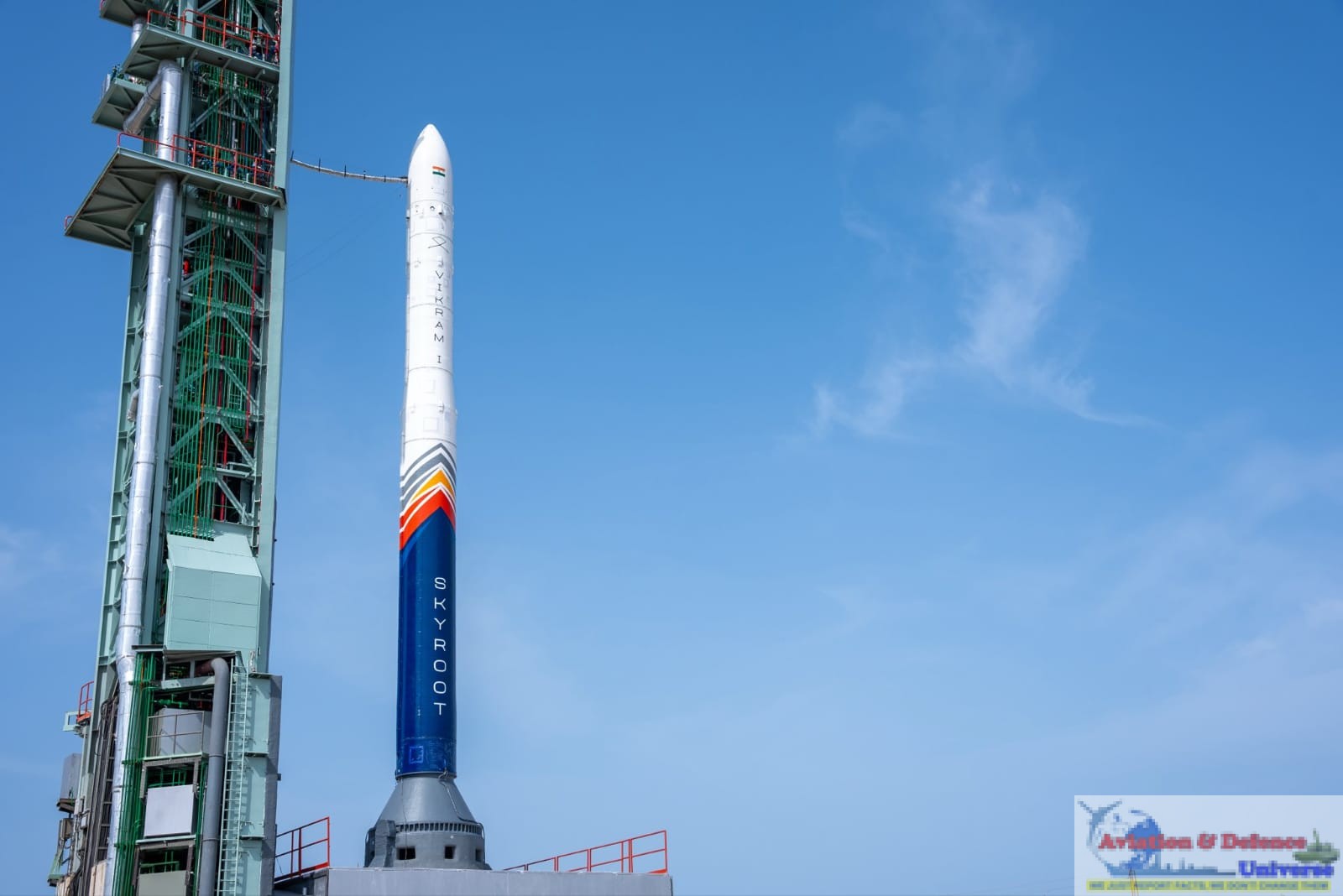
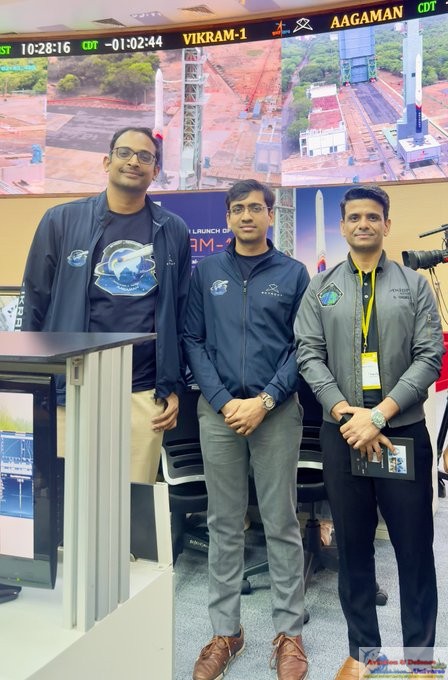
India’s private space sector crossed a historic frontier today on July 18, 2026, as Skyroot Aerospace’s Vikram-I lifted off from the Satish Dhawan Space Centre (SDSC-SHAR) at 12:05:30 pm, becoming the first orbital rocket developed by a private Indian company to launch from Indian soil. The maiden mission successfully placed two satellites—SCOPE and Grahaa—into Low Earth Orbit, marking a defining moment in India’s journey towards a commercially driven and globally competitive space economy. The successful mission also made Skyroot Aerospace the first private Indian company to achieve orbit from the country—and to accomplish the feat on its first orbital launch attempt. The breakthrough comes six years after the Government of India opened the space sector to greater private participation through the reforms announced in 2020.
The Vikram-I mission represents a significant technological and commercial leap for India’s growing private space ecosystem. Developed by Hyderabad-based Skyroot Aerospace, the four-stage launch vehicle comprises three solid propulsion stages and a liquid-powered upper stage and has been designed to carry small satellites into Low Earth Orbit.
 Besides successfully injecting SCOPE and Grahaa into orbit, Vikram-I carried additional payloads aboard its upper stage for conducting in-orbit experiments. The mission demonstrated the ability of an Indian private launch company to develop, integrate and operate an orbital-class launch vehicle from the country’s premier spaceport.
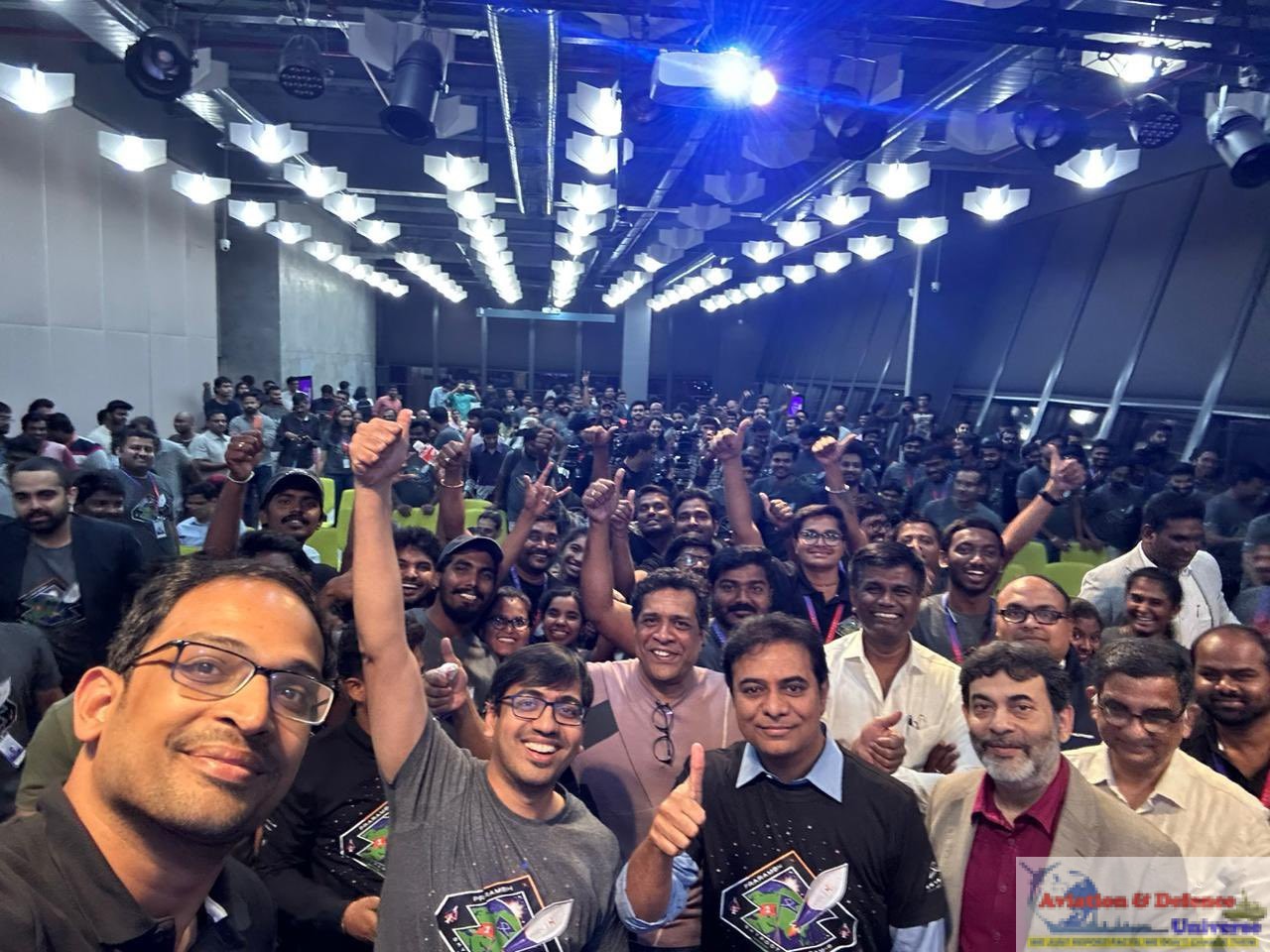
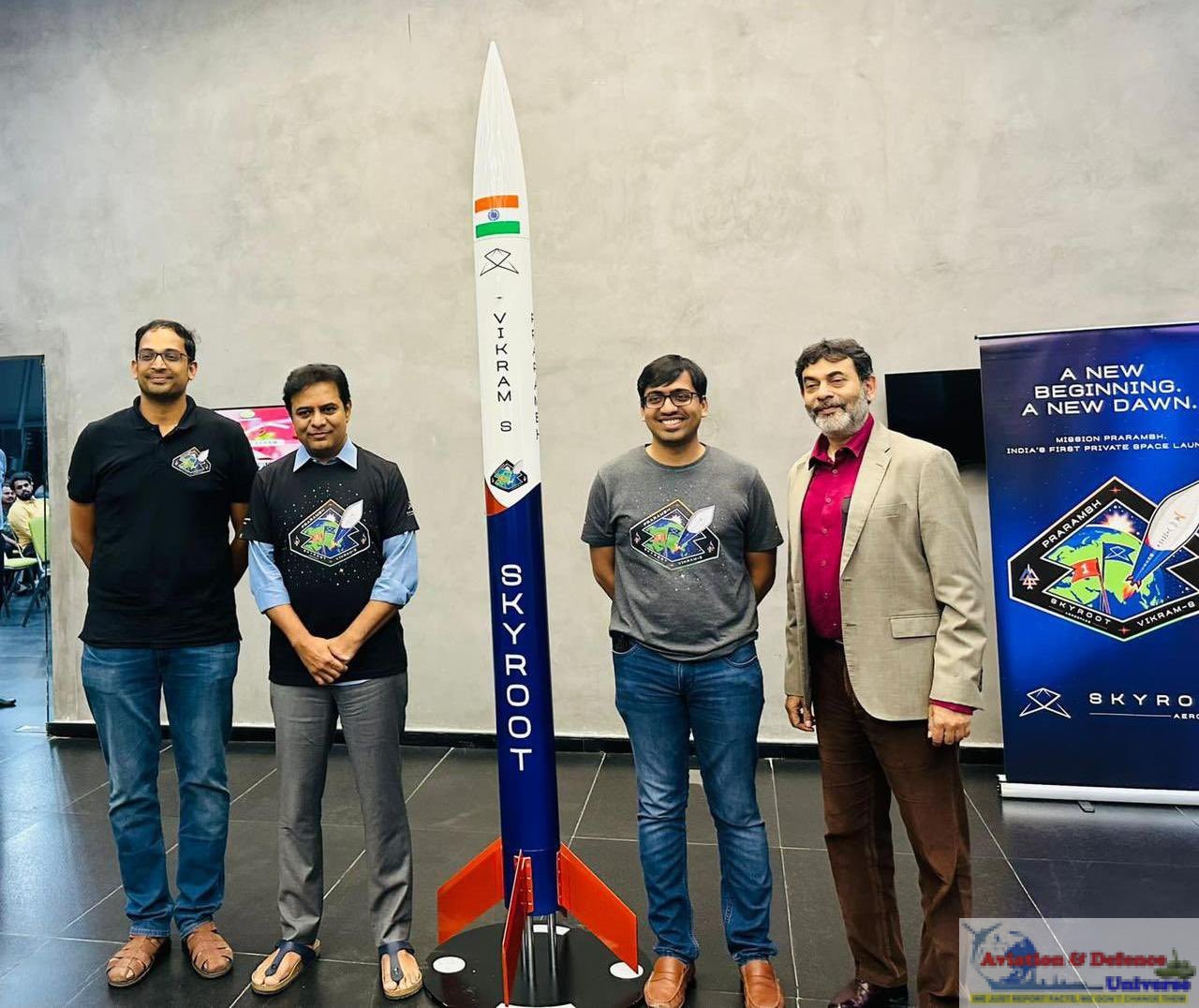
For Skyroot, the achievement marks the culmination of a journey that took a major public step forward in November 2022 with Mission Prarambh. During that mission, Vikram-S became the first privately developed Indian rocket to launch from Sriharikota. The suborbital technology demonstrator reached an altitude of 88.8 km and helped validate technologies subsequently developed for the company’s orbital launch vehicles.
While Vikram-I was developed by Skyroot, the mission also showcased the collaborative model emerging between India’s public and private space sectors. ISRO and IN-SPACe provided extensive support to the programme, including access to critical testing infrastructure, technical consultancy, mission-readiness processes and launch facilities.
ISRO facilitated the casting and static testing of Vikram-I’s solid propulsion systems at Sriharikota. The rocket’s first-stage Kalam-1200 motor was successfully static-fired at SDSC-SHAR in August 2025. The upper-stage Raman-I liquid engine was also tested at ISRO’s Liquid Propulsion Systems Centre.
During the final pre-launch phase, ISRO supported stage preparation, material handling, transportation, trajectory analysis and vehicle integration at the First Launch Pad. Its safety teams also supported operations around the clock, while IN-SPACe facilitated access to national space infrastructure and the regulatory clearances required for the mission.
Founded in 2018 by former space scientists Pawan Kumar Chandana and Naga Bharath Daka, Skyroot has sought to develop flexible launch services for the rapidly expanding global small satellite market. The company now employs more than 1,000 people and has developed the Vikram family of launch vehicles from its base in Hyderabad.
The successful Vikram-I mission represents a dramatic progression from the company’s Vikram-S technology demonstrator. Where Vikram-S established that a privately developed Indian rocket could successfully fly from Sriharikota, Vikram-I has now demonstrated the ability of the country’s private sector to reach orbit and deploy satellites.
 The milestone also carries significance beyond Skyroot itself. India’s 2020 space reforms and subsequent policy framework sought to open national space infrastructure to private enterprises and enable companies to participate across launch services, satellite manufacturing and space applications. Vikram-I’s success provides perhaps the most visible demonstration yet of the transformation those reforms have helped set in motion.
With the successful orbital flight of Vikram-I, India has taken an important step towards building a broader commercial launch ecosystem alongside ISRO’s established capabilities. Small satellites and constellations are driving demand for more flexible launch options globally, creating an opportunity for private launch providers offering dedicated and rideshare missions. For Skyroot, the successful maiden orbital mission is therefore not simply a technological achievement—it is an entry ticket into the competitive global launch services market.
Vikram-I’s flight from Sriharikota has transformed the promise of India’s private launch industry into an orbital reality. From the historic suborbital flight of Vikram-S in 2022 to the successful deployment of satellites by Vikram-I in 2026, Skyroot’s journey reflects the rapid evolution of India’s new-space ecosystem. As private enterprises increasingly work alongside ISRO and IN-SPACe, the successful launch could prove to be a defining moment when India’s private space ambitions truly took flight—and reached orbit.
 Adding a special resonance to the historic moment was the presence of Group Captain Shubhanshu Shukla, India’s astronaut and a symbol of the country’s new generation of human spaceflight ambitions, who witnessed the Vikram-I launch live from Sriharikota. Having himself experienced the extraordinary journey from the launchpad to space, Shukla’s presence at the maiden orbital flight of India’s first privately developed rocket was a powerful meeting of two defining strands of the country’s space story—India’s growing human spaceflight capabilities and the rise of its dynamic private space industry. As Vikram-I thundered skyward, his presence reiterated just how rapidly India’s space ecosystem is expanding beyond traditional boundaries, bringing together astronauts, established national institutions and ambitious space industry in a shared journey towards making India a formidable global space power.
India’s private sector has taken a giant leap into the skies—and is now heading decisively into space. What began with private industry supporting India’s national space programme through components and subsystems has evolved into an ecosystem capable of designing, developing and launching its own rockets. The rise of companies such as Skyroot Aerospace signals a profound transformation: India’s entrepreneurs are no longer content to remain suppliers to the space economy; they aspire to become global space players in their own right. From factory floors and test facilities to the launchpad at Sriharikota, Indian private enterprise is pushing the boundaries of indigenous innovation and technological ambition. The journey from looking up at the sky to launching towards the stars has begun, and India’s private space sector is poised to turn the country’s enormous reservoir of engineering talent, entrepreneurial energy and scientific excellence into a powerful new chapter in the global space race.










































































-A4-Size-(2)_page-0001.jpg)