





















- From Silicon to Society: Why India Must Own the Entire Technology Stack
- The Battle Beyond Borders: Why Sovereign Data Centres Matter
- India’s Digital Future Must Be Built, Not Borrowed
- From Stack to Society: Indigenising the Datacentre for Applications, Users & IP Ownership
By Sangeeta Saxena
New Delhi. 12 July 2026. If data has become the currency of the digital age, then the infrastructure that stores, processes and protects it, has emerged as one of the defining pillars of national power. The conversation around digital sovereignty has therefore moved far beyond technology circles into the realms of defence preparedness, strategic autonomy, economic resilience and national policy. It is no longer enough for a nation to generate vast quantities of data, the real question is who owns the infrastructure, intellectual property and technologies that transform that data into strategic advantage.
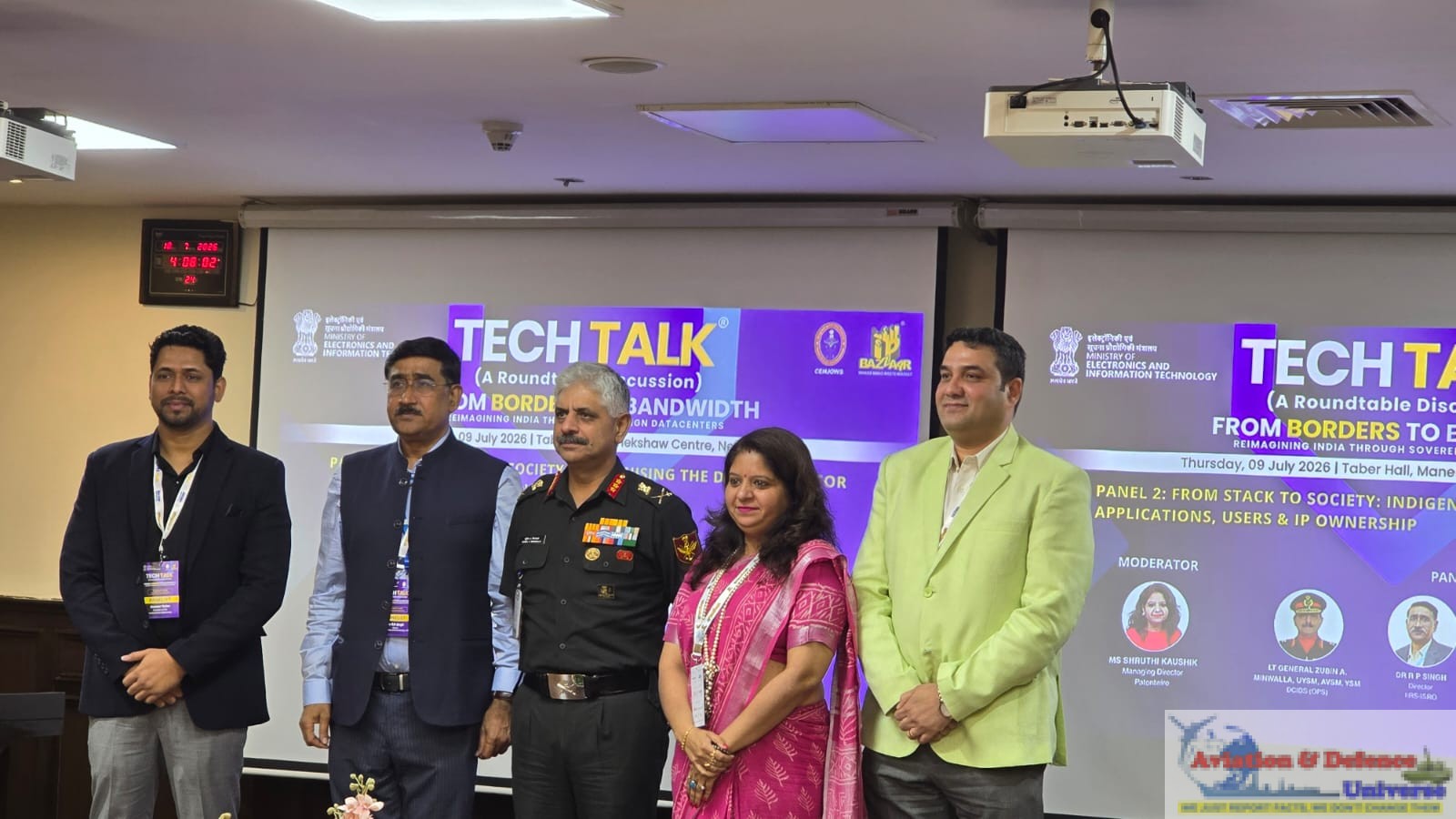
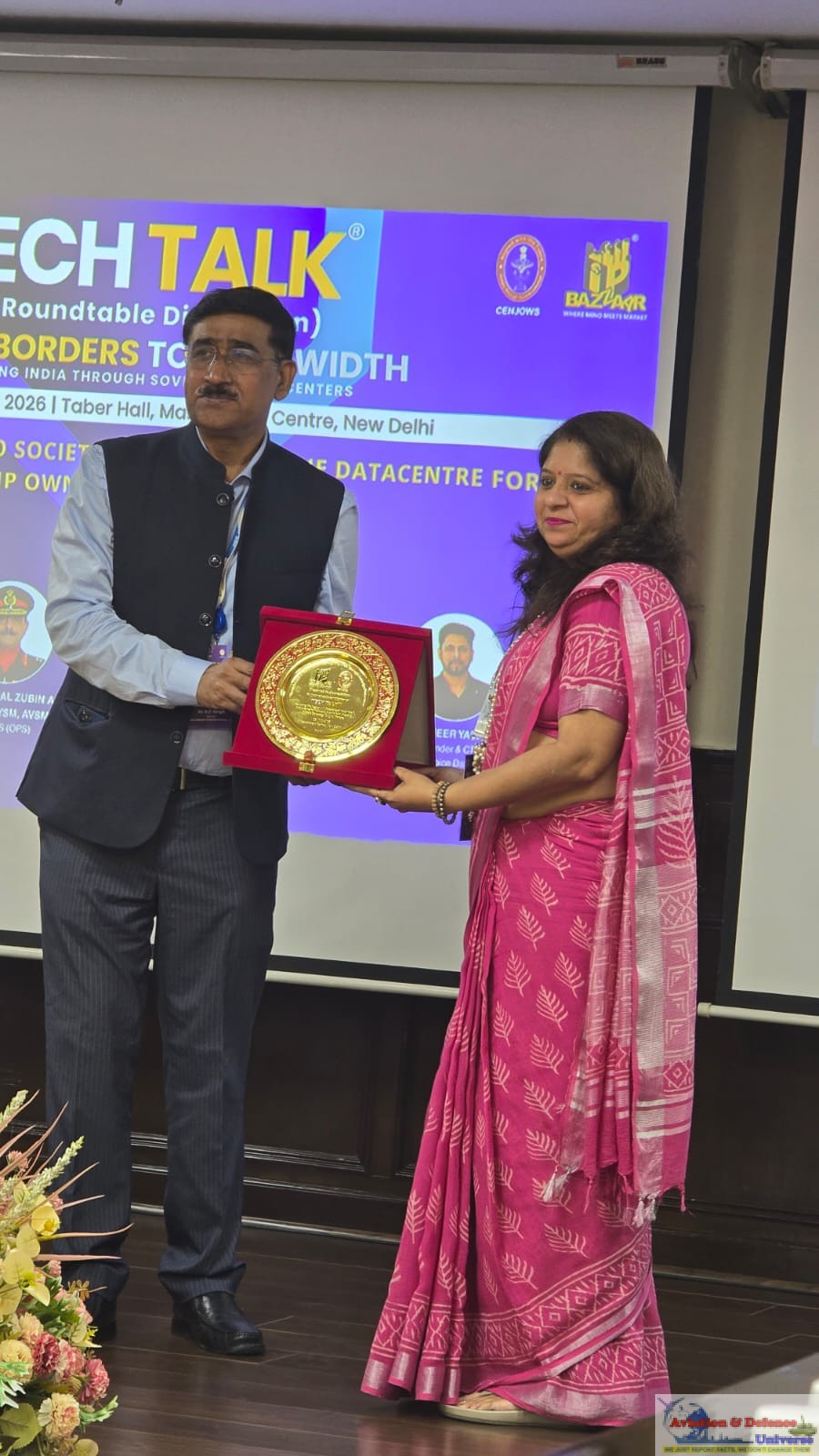
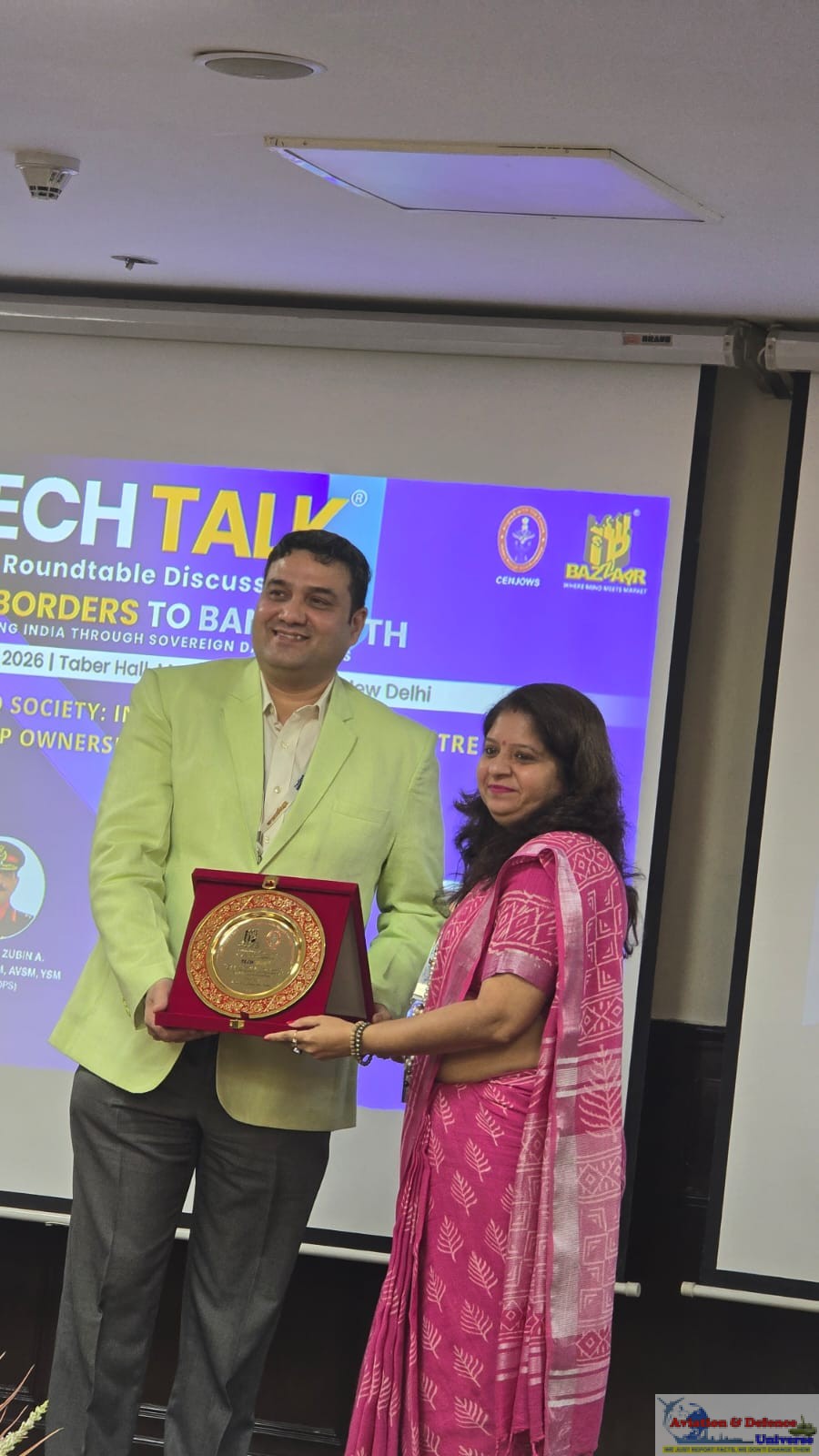
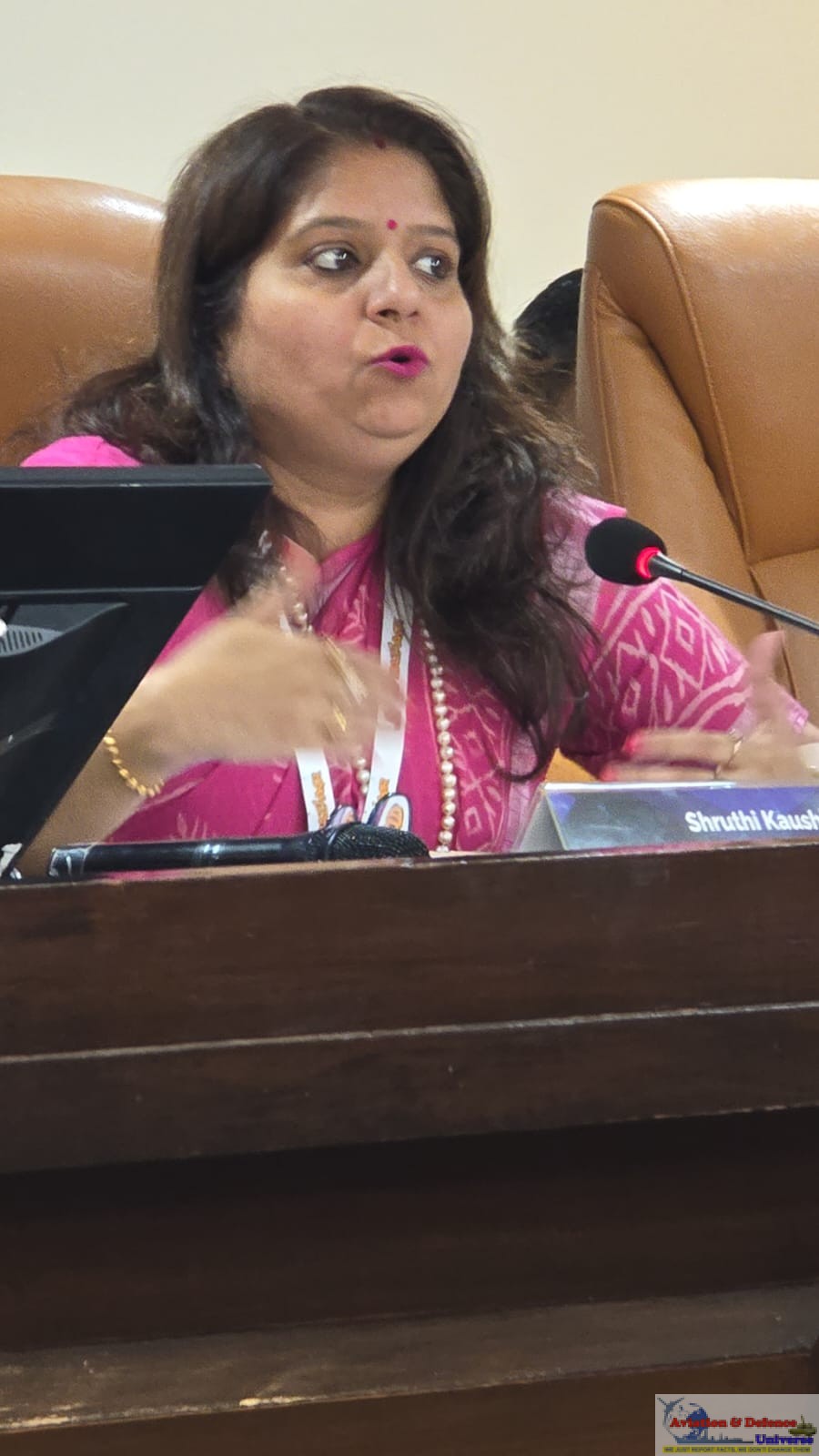
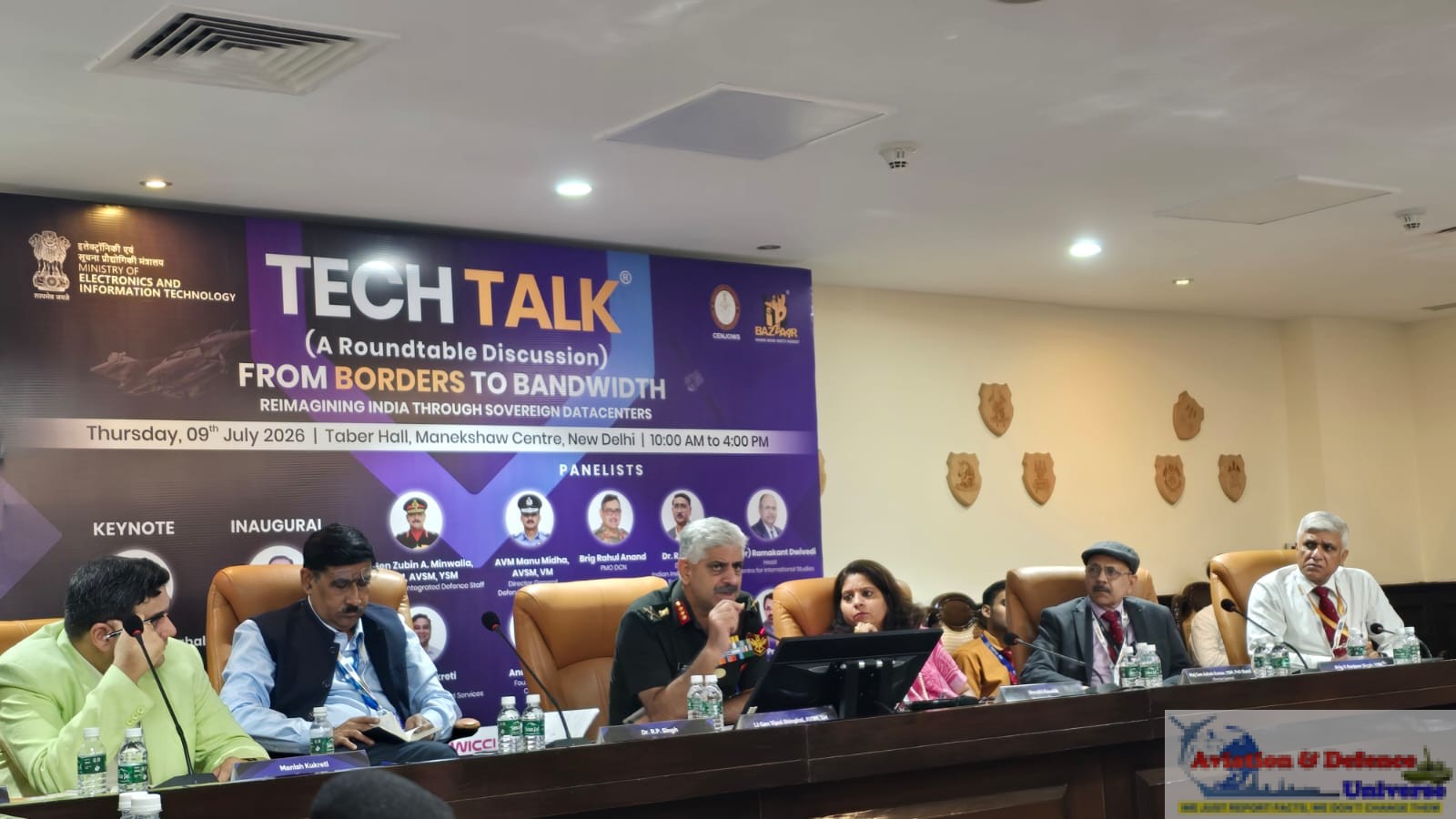
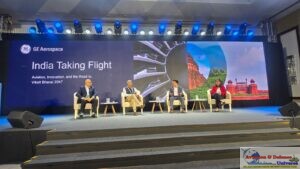
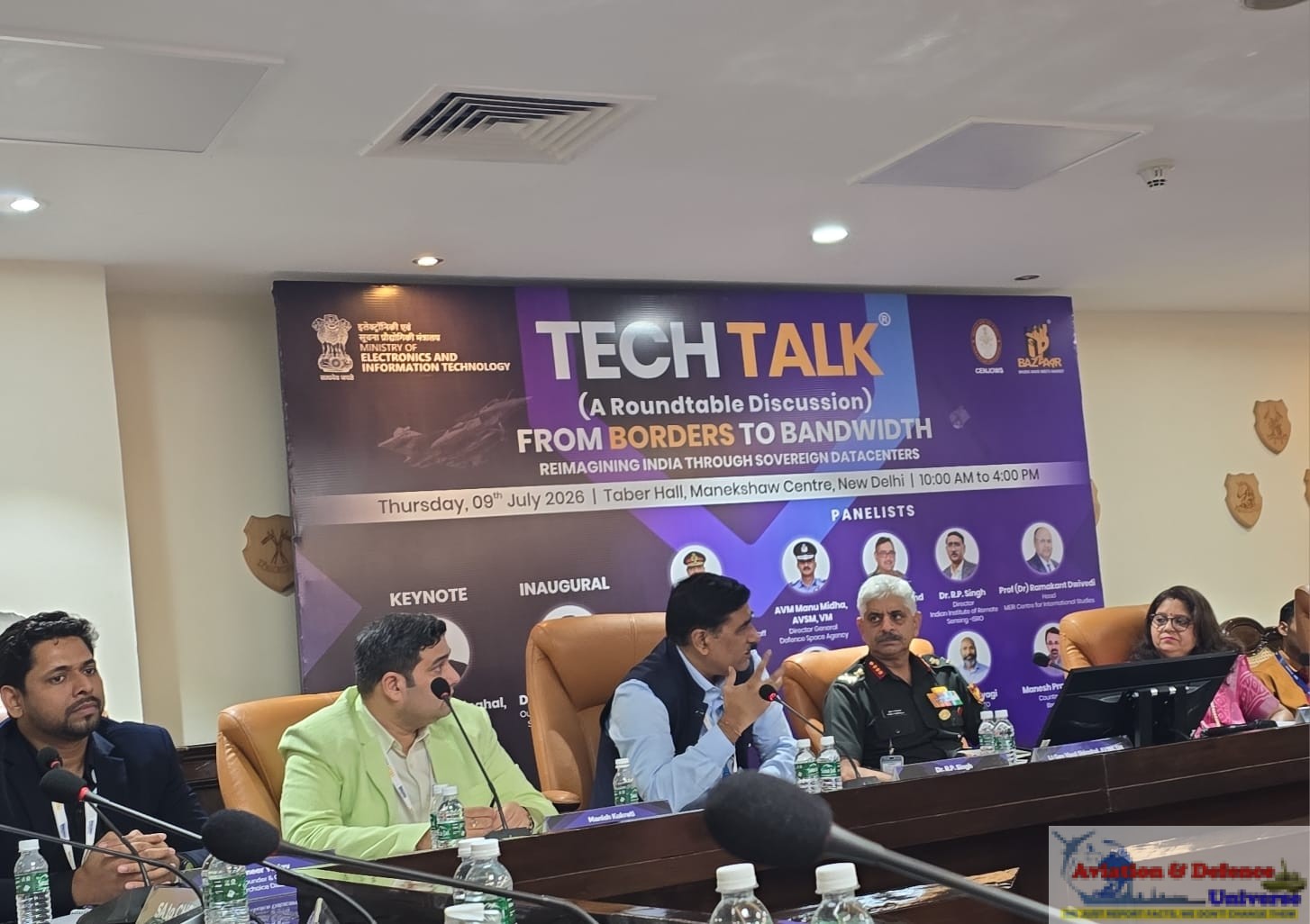 These issues formed the centrepiece of an intellectually stimulating roundtable titled “From Stack to Society: Indigenising the Datacentre for Applications, Users & IP Ownership,” held at the Manekshaw Centre. Moderated by Ms Shruthi Kaushik, Managing Director, Patentwire | IP Attorneys, the discussion brought together senior military leadership, India’s space establishment and industry pioneers to examine the practical steps required to build an indigenous digital ecosystem that serves both national security and economic development.
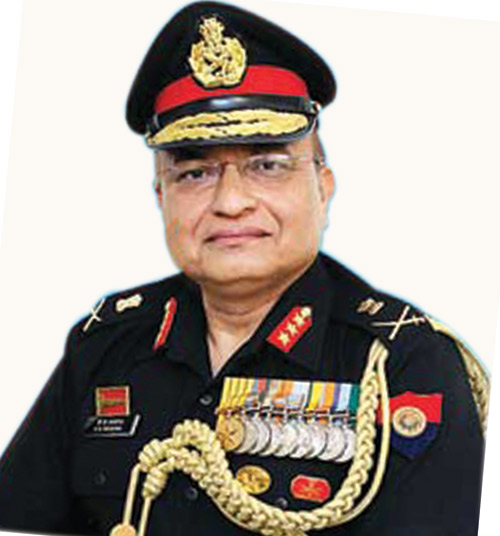
The panel comprised Lt Gen Zubin A. Minwalla, UYSM, AVSM, YSM, Deputy Chief Integrated Defence Staff (Operations); Dr R. P. Singh, Director, Indian Institute of Remote Sensing (IIRS), ISRO; Manish Kukreti, Founder, Vyom Space Exploration & Services; and Sameer Yadav, CEO, NetforChoice Data Center. Together, they explored subjects ranging from sovereign cloud infrastructure and defence communications to artificial intelligence, semiconductor capability, geospatial intelligence, critical minerals and intellectual property.
What made the discussion particularly compelling was its central premise: digital sovereignty cannot be achieved by merely locating servers within national borders. It demands ownership of every critical layer of the technology stack—from raw materials and semiconductor design to software, cloud infrastructure, artificial intelligence and the intellectual property that binds them together.
Sovereignty Must Ultimately Benefit Society
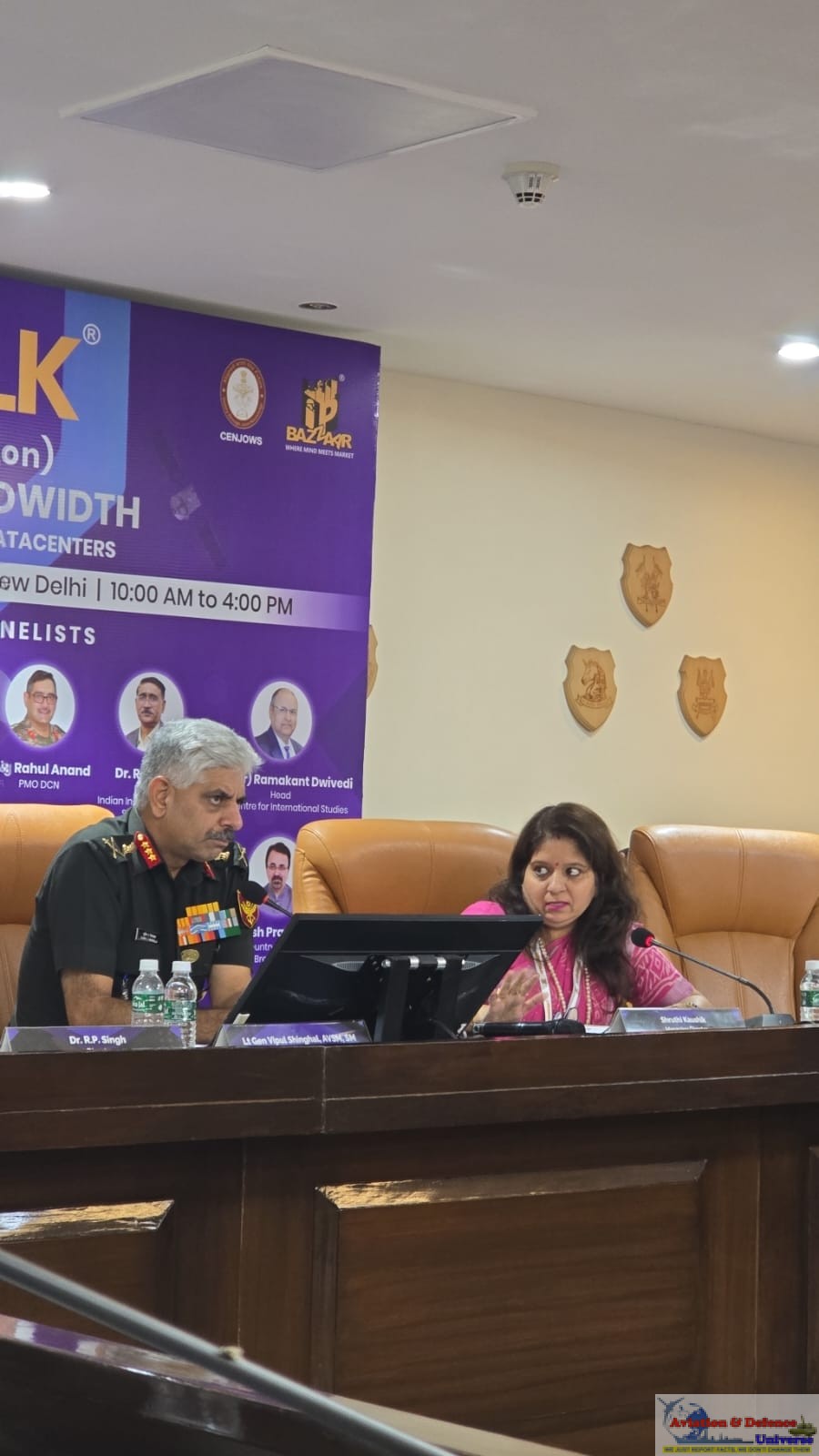 Opening the discussion, moderator Shruthi Kaushik reminded the audience that digital sovereignty must never become an abstract technological exercise detached from the lives of ordinary citizens. “Sovereignty is meaningful only when it reaches the citizens. What is a nation? It is nothing but its citizens and the ownership that resides with them under the Constitution.”
She explained that the purpose of indigenising data centres extends far beyond securing government databases. It should empower farmers through AI-driven advisory services in regional languages, ensure that patients’ medical records remain under Indian jurisdiction, enable small businesses to leverage secure digital platforms and create trust across every layer of the digital economy.
Rather than focusing solely on infrastructure, she urged the audience to think about ownership, affordability and trust. An indigenised technology ecosystem, she observed, must ultimately be judged by its ability to serve more than 1.4 billion Indians.
The Data Centre Has Become Operational Terrain
Providing the defence perspective, Lt Gen Zubin A. Minwalla delivered what would become one of the defining interventions of the session. Drawing upon nearly four decades of military evolution, he observed that the nature of warfare itself has fundamentally changed.
“When I was commissioned, we were taught that the sinews of war were three—fuel, ammunition and rations. If I were writing that manual today, I would add the fourth, and that is computing.” The significance of data centres, he argued, can no longer be confined to information technology departments.
“The data centre is no longer back-office infrastructure. It is operational terrain. It is simultaneously an arsenal, a headquarters and, if we are careless, the most critical vulnerability.” Using examples from contemporary military operations, he explained how every sensor, communication network, weapon platform and decision-support system now depends upon secure digital infrastructure. Whether information originates from a soldier deployed on the Line of Control, a fighter aircraft, a submarine or a warship, every operational decision ultimately traverses a digital network whose security determines operational success.
Referring to India’s evolving multi-domain operational doctrine, Lt Gen Minwalla cautioned that future conflicts will increasingly focus on disrupting these networks rather than destroying physical platforms. “The first strikes may not be on land, or on an airfield, or on a formation headquarters. They may actually be on our data infrastructure and our networks.” He linked this directly to China’s doctrine of Systems Destruction Warfare, which seeks to paralyse military capability by targeting the information systems connecting sensors, shooters and decision-makers. “If the data centre is among the first targets, then it must be defended like a vital installation. And you cannot truly defend what you do not own.”
Localisation Alone Does Not Guarantee Sovereignty
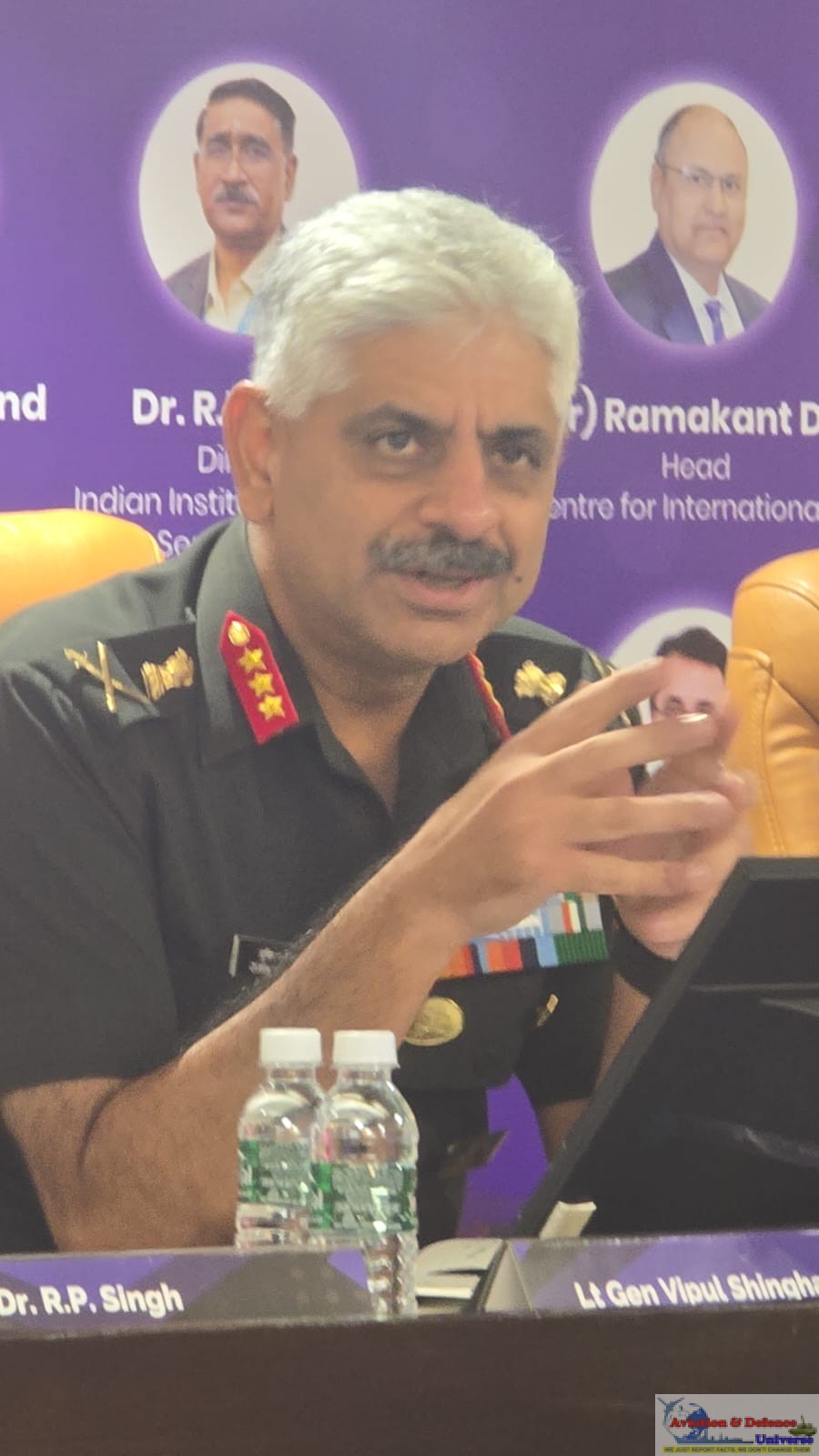 Lt Gen Minwalla challenged another widespread assumption—that storing data within India’s geographical boundaries automatically ensures national control. “Localisation is not sovereignty. It is only localisation by latitude and longitude.” According to him, true sovereignty must encompass the entire technology stack. Breaking down the architecture of modern digital infrastructure, he identified seven interconnected layers requiring progressively greater indigenous capability: Physical infrastructure, land, power and cooling, Semiconductor capability, Firmware and hardware root of trust, Cloud and orchestration software, Data and AI models, Applications and users and Intellectual property
While India has made significant progress in digital public infrastructure and software applications, he observed that semiconductor technologies, firmware, trusted hardware and cloud operating systems remain areas demanding sustained national investment.
Ownership Means Freedom
One of Lt Gen Minwalla’s strongest observations concerned the meaning of intellectual property. Rather than treating patents as legal instruments, he argued that IP represents operational freedom. “Owning the IP means three rights—the right to inspect, the right to modify and the right to deny others its use.” Recognising that complete indigenisation cannot occur overnight, he proposed a phased strategy based on graded sovereignty.
“We cannot indigenise everything at a go.” Instead, India should prioritise technologies directly influencing operational capability, particularly cryptography, secure communications and trusted computing infrastructure, before expanding indigenous ownership across the remaining technology layers.
Equally important, he stressed resilience. “We must assume it is destroyed. We must assume it is denied. To rebuild, it must be our own supply chains, our own people, our own sovereign effort, our own silicon.”
The Real Asset is Intelligence, Not Data
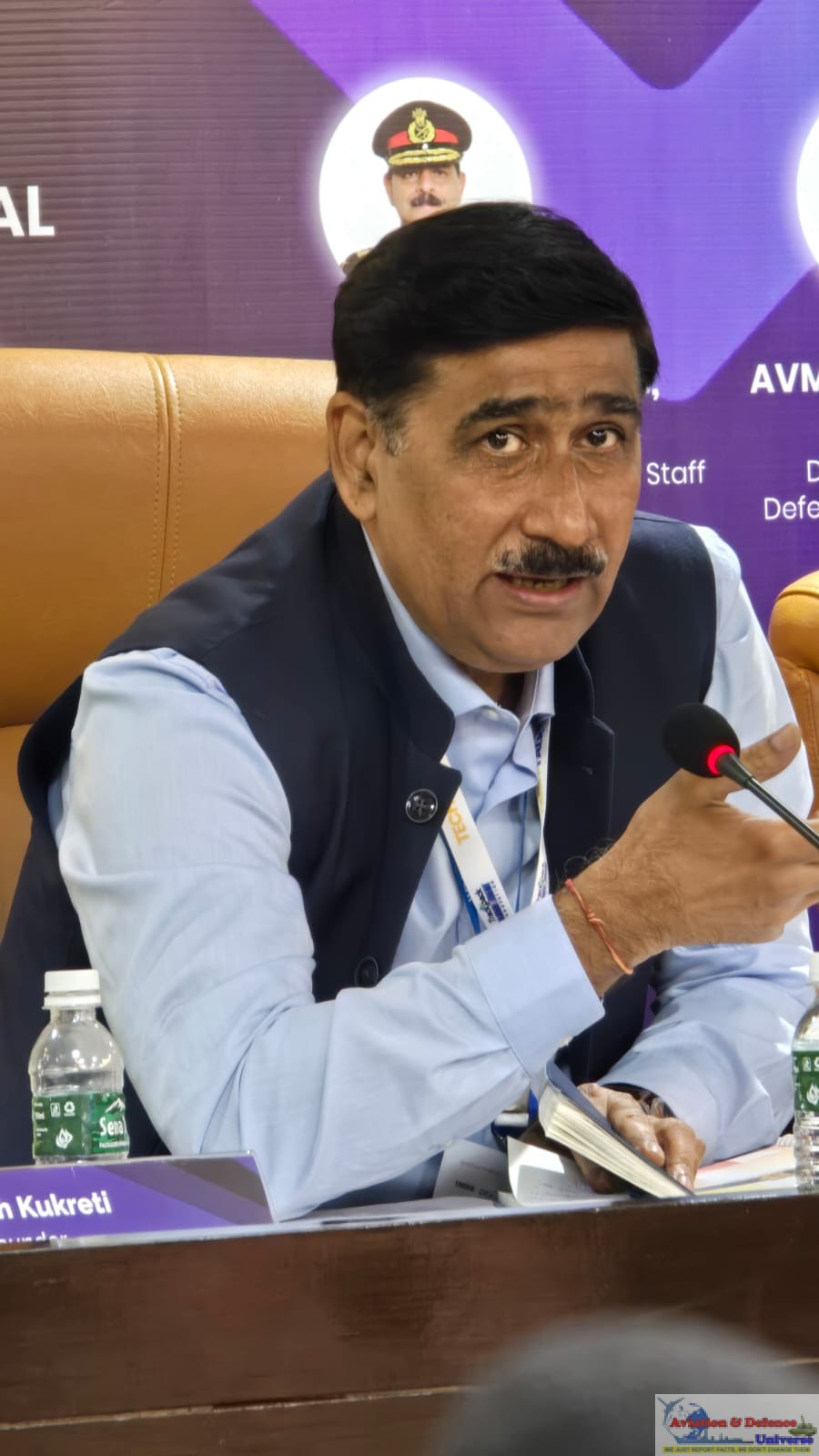 Transitioning from defence to space, Dr R. P. Singh, Director, Indian Institute of Remote Sensing (IIRS), ISRO, argued that nations often overestimate the value of raw data while underestimating the importance of the intelligence generated from it. “Whatever we generate, it is the intelligence, the value of the data, which matters.”
Reflecting upon India’s remote sensing journey, he observed that although dozens of countries today possess satellites, only a handful have mastered the analytical capability needed to convert imagery into actionable intelligence.
“Images are numbers. End of the day, somebody has to know how to analyse them, put them together in a short duration and take an appropriate decision. This is where the IP comes. This is where foundational research comes.”
Dr Singh illustrated how India’s space programme offers perhaps the country’s finest example of technological self-reliance built through patient, long-term investment. Looking back at his early years in remote sensing during the early 1990s, he recalled an era when satellite data arrived on magnetic tapes and processing even modest volumes of imagery required room-sized computers and weeks of computation.
“Data were only a few megabytes. We used to receive them by post. The computers occupied an entire room… Those fifteen days’ work, I can now do in one day.” The remarkable transformation, he noted, was not merely the result of faster computing but of decades of indigenous research, software development and analytical expertise.
Importantly, ISRO had anticipated the need for sovereign digital capability long before it became a fashionable policy objective. As commercial platforms such as Google Earth gained prominence, ISRO simultaneously developed indigenous alternatives capable of processing, analysing and disseminating geospatial information independently. “Google came in 2016 and before that we had our own way of analysing the datasets. We had our own way of seeing them. We had our own way of processing them.”
 He described ISRO’s philosophy as one of cooperation without dependence. Referring to the NASA–ISRO Synthetic Aperture Radar (NISAR) mission, Dr Singh explained that while NASA contributed the L-band radar, ISRO simultaneously developed its own S-band capability to ensure technological redundancy.
“Whenever we cooperate, ISRO has a policy of cooperation, but at the same time it is taken care that we have our own redundancy. Nothing is stopped because of it.” Concluding his remarks, he emphasised that future leadership in artificial intelligence, big data, augmented reality and digital technologies would depend upon investments in education and collaborative research.
“The future is of data analytics, big data, AI, augmented reality, virtual reality and many digital technologies. Government bodies have a specific role, but without industry these cannot move.”
India Must Own the Entire Technology Ecosystem
Building upon the discussion, Manish Kukreti, Founder of Vyom Space Exploration & Services, argued that India’s greatest vulnerability lies not in data centres or cloud platforms but much deeper within the industrial ecosystem.
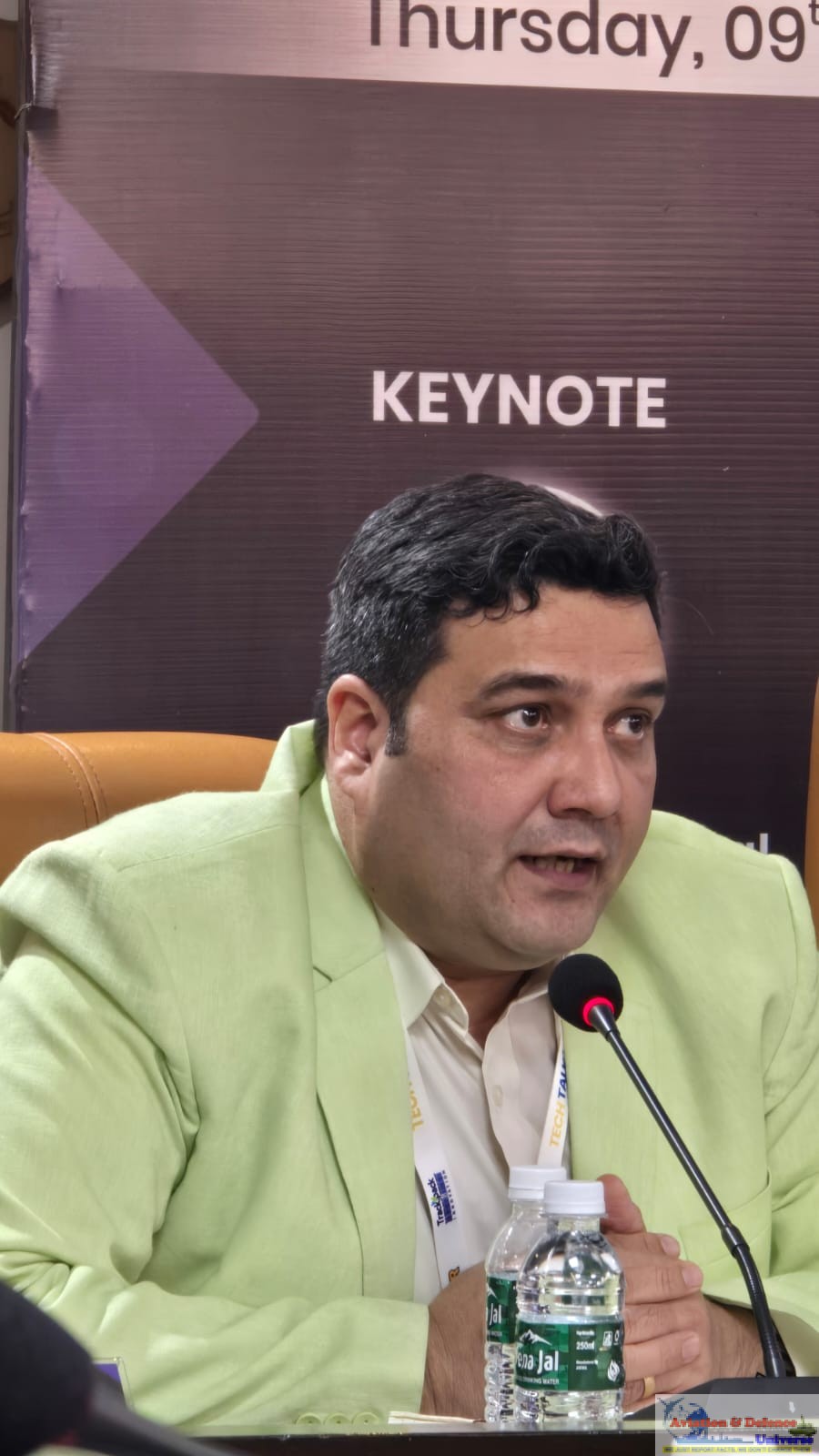 “The aim was how could we be valuable to our country by delivering a solution which nobody is addressing. Unless the whole ecosystem is controlled by our country, we will always remain dependent on somebody else.” He illustrated this through India’s handling of critical minerals. “Many Indians thought they were very smart when they said we have sold our sand to China. It was only after a few years that we realised sand is one of the most valuable products.”
The exported “sand”, he explained, contained strategic minerals such as zircon and hafnium that are essential for aerospace engines, semiconductor manufacturing and advanced defence systems. India exported raw materials cheaply while importing high-value processed products at many times their original value.
Similarly, he questioned whether satellite imagery purchased from foreign providers could ever be considered fully sovereign. “That Indian data is already compromised from day one.” For Kukreti, sovereignty begins long before the data centre. It starts with ownership of raw materials, processing technologies, semiconductor architecture, communications infrastructure and intellectual property.
Creating Demand Before Creating Products
One of Kukreti’s strongest recommendations concerned government procurement. He argued that deep-tech industries cannot mature without long-term demand. “Let us define the demand for the next ten years.” If government agencies provide assured procurement for strategic technologies, investors will finance indigenous innovation with confidence. “If we are able to do that, our country will exactly do what happened in the 1990s IT sector boom in the space and data domain.”
Drawing comparisons with the United States, he observed that companies such as SpaceX became global leaders because they received sustained government support before becoming commercially successful. He urged India to create similar ecosystems where public investment catalyses private innovation.
Question the Global Technology Narrative
 Kukreti also challenged India to critically evaluate global technology trends rather than following them unquestioningly. Speaking about semiconductor fabrication, he remarked, “Does India need a five-nanometre chip? The answer is no.” Instead, India should build technologies it can fully understand, manufacture and secure. “We need a chip which we can control… in terms of software and hardware.”
Likewise, he cautioned against blindly accepting narratives surrounding space-based data centres or emerging technologies without evaluating whether they genuinely serve India’s strategic interests. Summing up his philosophy, he observed, “We will not do what America wants us to do. We will do what benefits India… I don’t care if it is my three-legged horse—it is mine.”
Data Localisation Must Become Operational Reality
Turning to enterprise infrastructure, Sameer Yadav, CEO of NetforChoice Data Center, argued that India’s dependence on foreign cloud platforms stems as much from commercial incentives as from technology. “People adopt foreign cloud because they get ready-made infrastructure at low cost. It is like the taste of  sugar which is a sweet poison.” He pointed out that free cloud credits and attractive commercial packages encourage startups to build their digital ecosystems overseas, making migration increasingly difficult as datasets grow. At the heart of his intervention lay a simple principle, “AI is an engine; data is the fuel.” Without sovereign ownership of data, India will remain dependent upon foreign AI ecosystems. Instead of rejecting cloud technologies altogether, Yadav advocated hybrid architectures combining local infrastructure with secure centralised disaster recovery.
“Being an Indian, we should not talk about the problem; we should talk about the solution.” He also stressed the importance of edge computing, particularly for manufacturing, surveillance and industrial automation, where processing data close to its source dramatically reduces latency.
Audience Questions Broadened the Discussion
Questions from the audience extended the debate to rare earth minerals, semiconductor supply chains and AI development. Responding to concerns over China’s dominance in rare earth processing, Kukreti acknowledged that India faces a significant challenge but also an opportunity. “Without material, we can’t produce anything.” He advocated international collaborations to acquire processing know-how while simultaneously investing in indigenous capability.
The discussion also explored defence applications of AI. Responding to a question on access to military datasets, Lt Gen Minwalla clarified that once indigenous technologies demonstrate credible capability, defence organisations are willing to collaborate. “Data can be created synthetically, it can be created offline, it can be created as archival data and it is being provided today to firms we are working with in artificial intelligence.”
Five Tests for Sovereign Digital Infrastructure
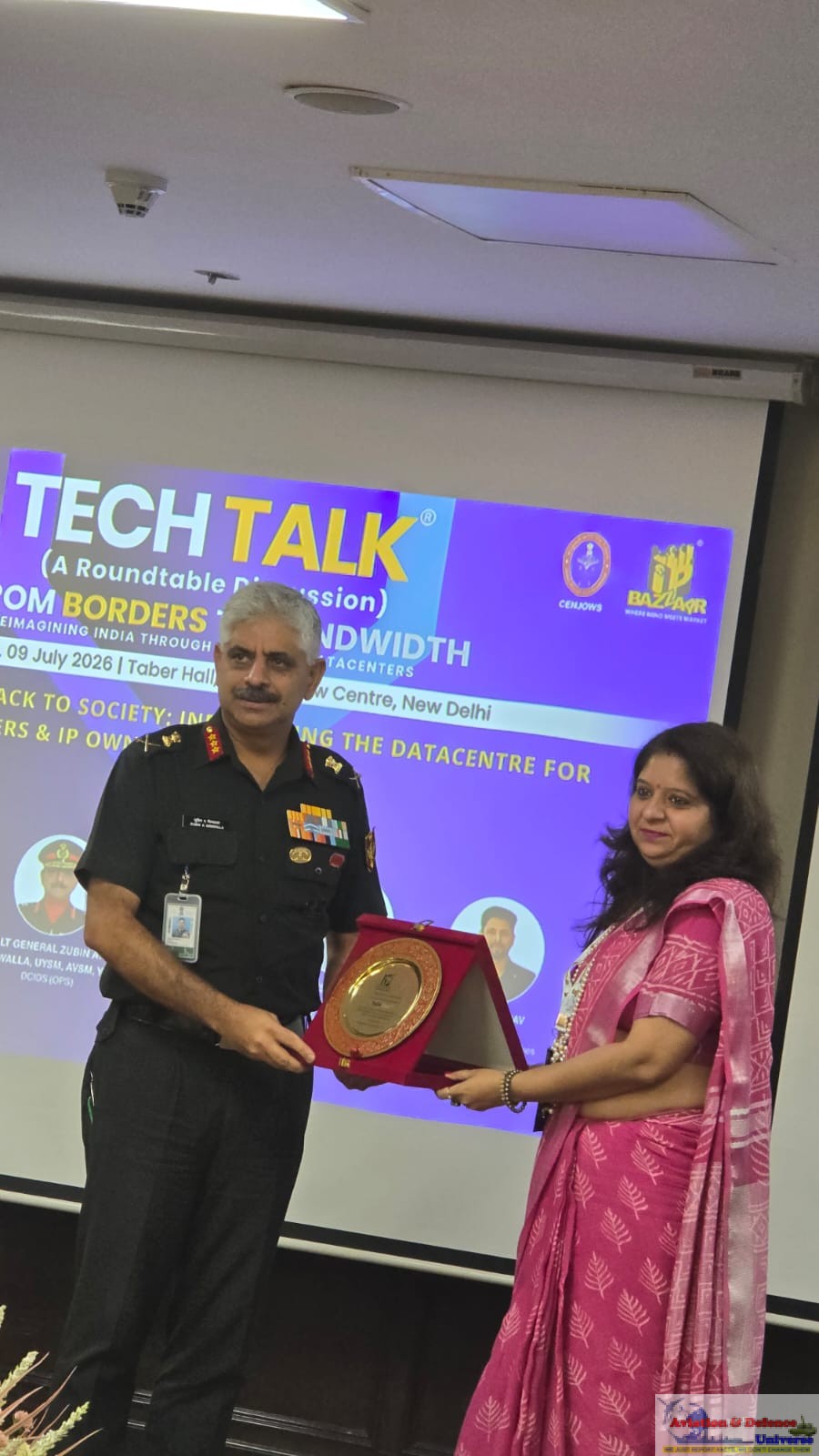 In his concluding remarks, Lt Gen Minwalla distilled the discussion into five operational principles. The first was availability under contestation—whether infrastructure can continue functioning during conflict. The second was integrity, ensuring digital systems execute commands correctly. The third was confidentiality, guaranteeing secure encryption and access control. The fourth was jurisdictional immunity, ensuring foreign governments cannot deny India access to critical technologies. The fifth was reconstitutability, the ability to rebuild infrastructure through indigenous supply chains after disruption. He concluded with what became the defining message of the afternoon, “Speed matters in capability building, but ownership matters in war. We buy time with the first, but buy freedom with the second.”
Moderator’s Four S for India
Closing the session, Shruthi Kaushik proposed her own roadmap for India’s digital future. “My four S for India would be: Stop the illusion. Spot the opportunity. Speak – Discussions should continue. And Solve it today.” Her message encapsulated the spirit of the roundtable: building sovereign digital capability requires continuous dialogue between government, defence, academia and industry.
 The roundtable made one point unmistakably clear: digital sovereignty is no longer merely an issue of technology policy—it is now central to India’s national security, economic competitiveness and strategic autonomy. The panellists demonstrated that sovereign data centres cannot exist in isolation; they must be supported by indigenous semiconductors, trusted communications, AI platforms, geospatial intelligence, resilient supply chains and strong intellectual property ecosystems.
Equally important, technological self-reliance must be accompanied by long-term government demand, industry participation, academic excellence and sustained investment in research. As India positions itself as a global digital power, the challenge will not simply be to generate more data, but to own every critical layer that transforms that data into national capability. The discussion at the Manekshaw Centre reiterated that the road to digital sovereignty begins not with servers, but with strategy, collaboration and the confidence to build technologies that India can truly call its own.





































































-A4-Size-(2)_page-0001.jpg)