












- India’s Aerospace Revolution Needs More Than Manufacturing
- Tie-Ups Emerges as the Engine of Aerospace Growth
- Global OEMs See India Moving Up the Aerospace Value Chain
By Sangeeta Saxena
Hyderabad. 04 July 2026. India’s aerospace industry stands at a defining moment. With the country poised to become the world’s fastest-growing aviation market and defence indigenisation gathering unprecedented momentum, the focus is no longer confined to attracting investments or establishing manufacturing facilities. The challenge now is to create an aerospace ecosystem capable of sustaining innovation, developing globally competitive suppliers and nurturing the skilled workforce required for the next generation of aviation and defence programmes.
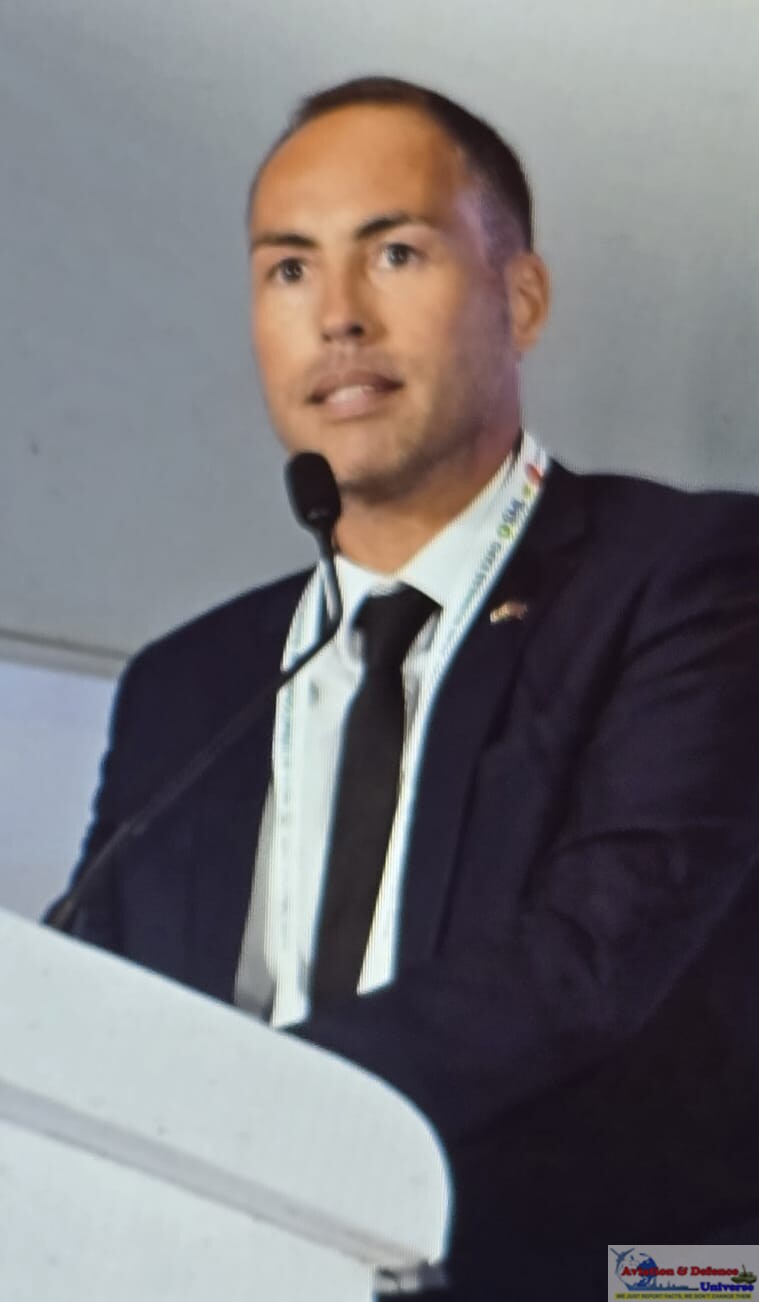
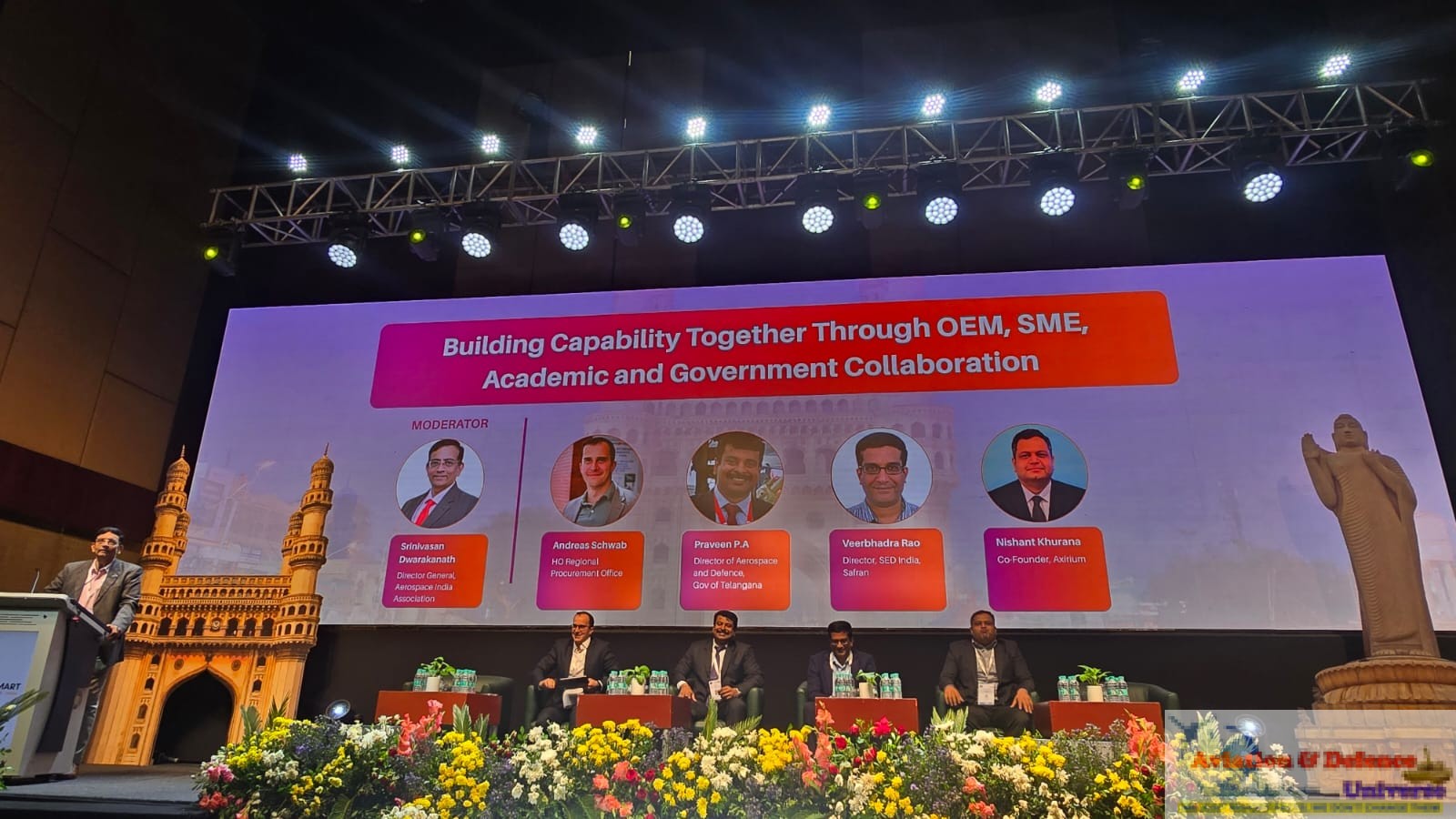
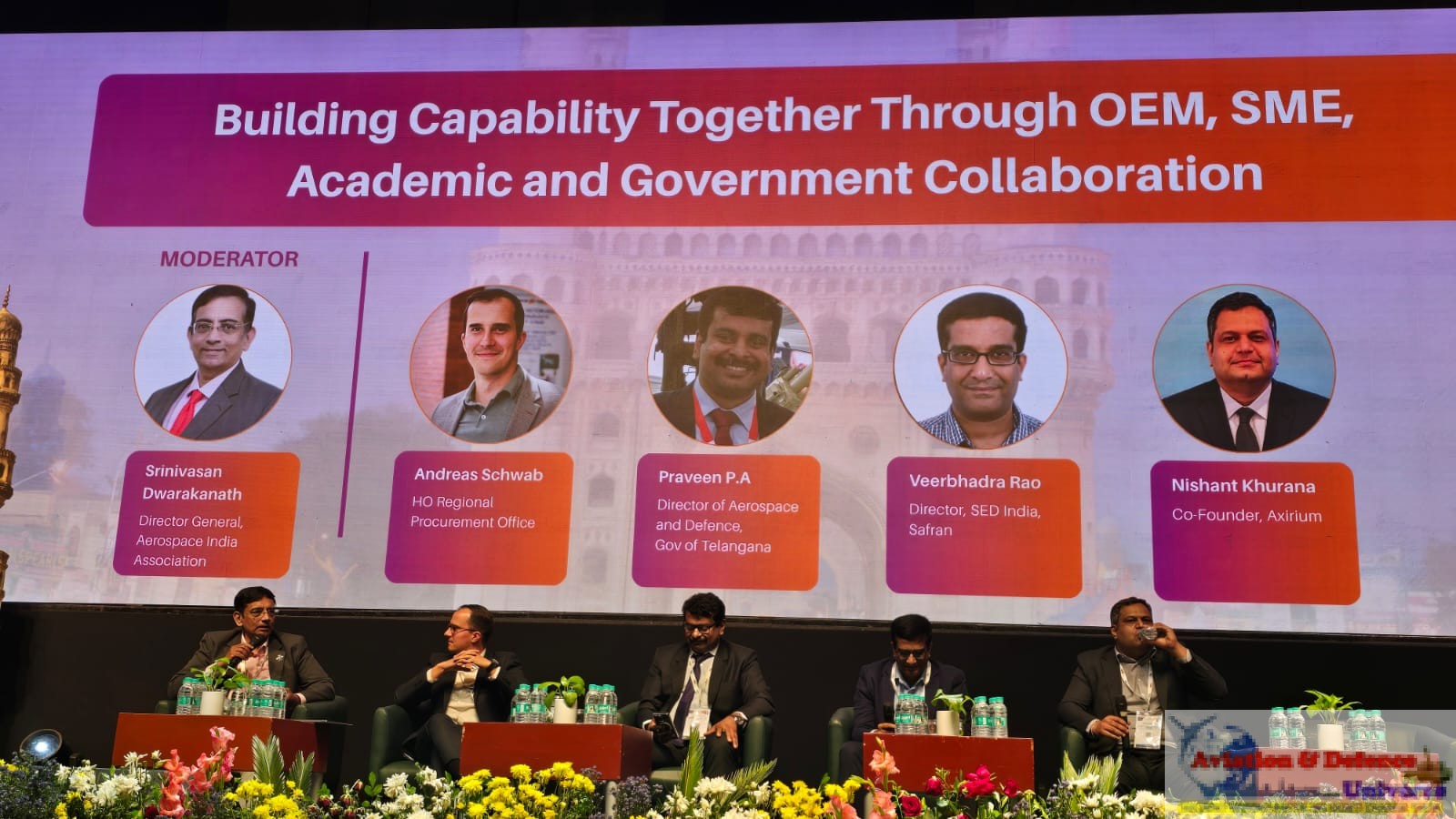
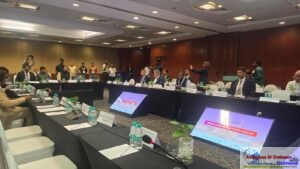
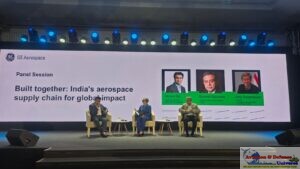
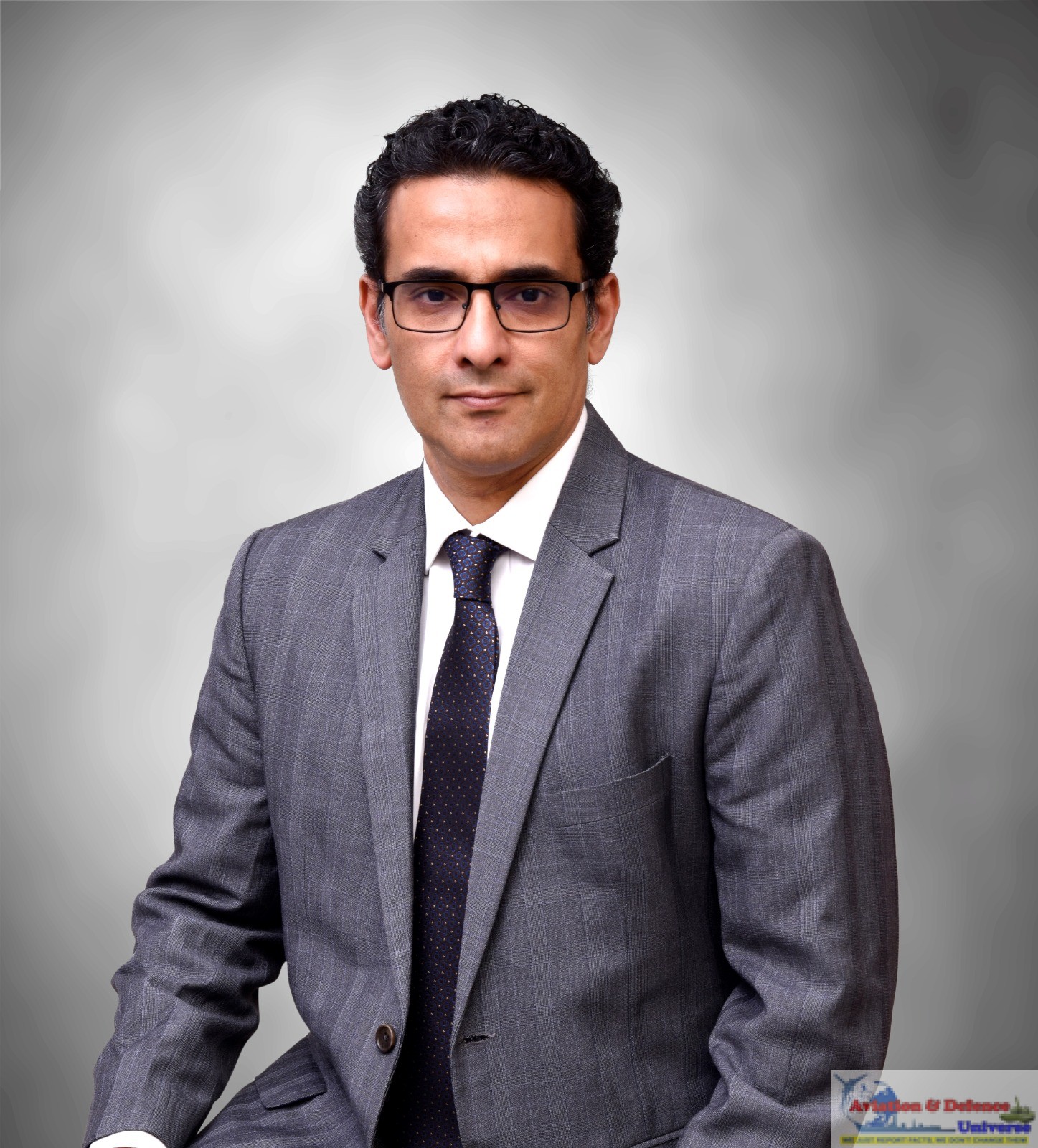
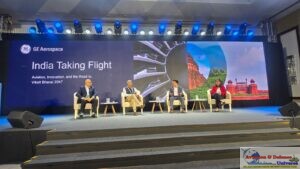
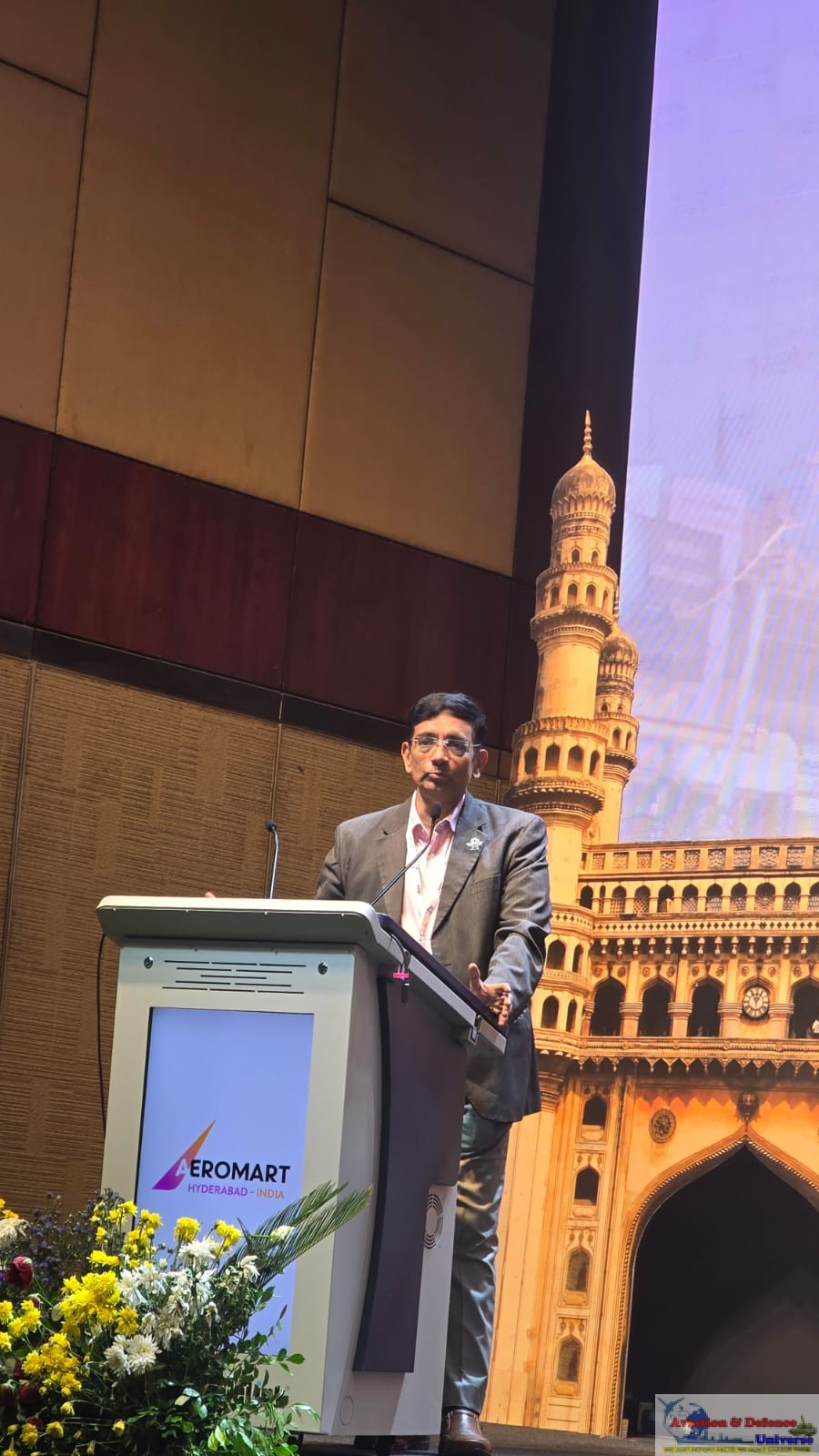 These themes formed the core of an engaging panel discussion at Aeromart Hyderabad 2026, moderated by Srinivasan Dwarkanath, Director General, Aerospace India Association (AIA). Joining him were Andreas Schwab, Regional Procurement Officer, Airbus for India; Praveen P.A., Director (Aerospace & Defence), Government of Telangana; Veerbhadra Rao, Director, Safran Electronics & Defence India; and Nishant Khurana, Co-Founder and CEO, Axirium Aerospace. Together, they examined how collaboration among industry, academia and government can transform India into one of the world’s leading aerospace ecosystems.
Opening the session, moderator Srinivasan Dwarkanath emphasised that no global aerospace ecosystem has succeeded in isolation. Whether in the United States, Europe, Japan or emerging aerospace nations such as South Korea, sustained success has always depended on collaboration between industry, academia, research institutions and government. Describing the complementary roles of each stakeholder, he observed, “Large OEMs provide vision, technology and market access. SMEs and MSMEs bring agility, innovation and specialised capabilities. Universities nurture talent and undertake research, while governments provide the policy framework and strategic direction.” He pointed out that India is now at the threshold of an aerospace revolution. As the world’s third-largest aviation market and the fastest-growing domestic aviation sector, India is expected to witness annual growth of nearly nine per cent—well above the global average. Simultaneously, initiatives such as Make in India and Atmanirbhar Bharat are encouraging global OEMs to establish manufacturing capabilities while creating opportunities for indigenous suppliers to join international value chains.
Dwarkanath cautioned, however, that building factories alone will not create a globally competitive aerospace ecosystem. Highlighting the need for long-term capability building, he remarked, “Capability has to be sustainable, scalable and continuously improving. We need capabilities that are globally competitive.” He stressed that OEMs must move beyond merely sourcing components from suppliers and instead actively develop supplier capabilities, enabling Indian companies to progress from “build-to-print” manufacturing towards design-led engineering and product development. He also called for stronger collaboration between academia and industry, suggesting that not only students but even university professors should spend time within industrial environments to better align education with practical requirements. Responding to the moderator’s opening question, Andreas Schwab, Regional Procurement Officer for Airbus India and South Asia, explained that India’s importance to Airbus extends well beyond procurement.
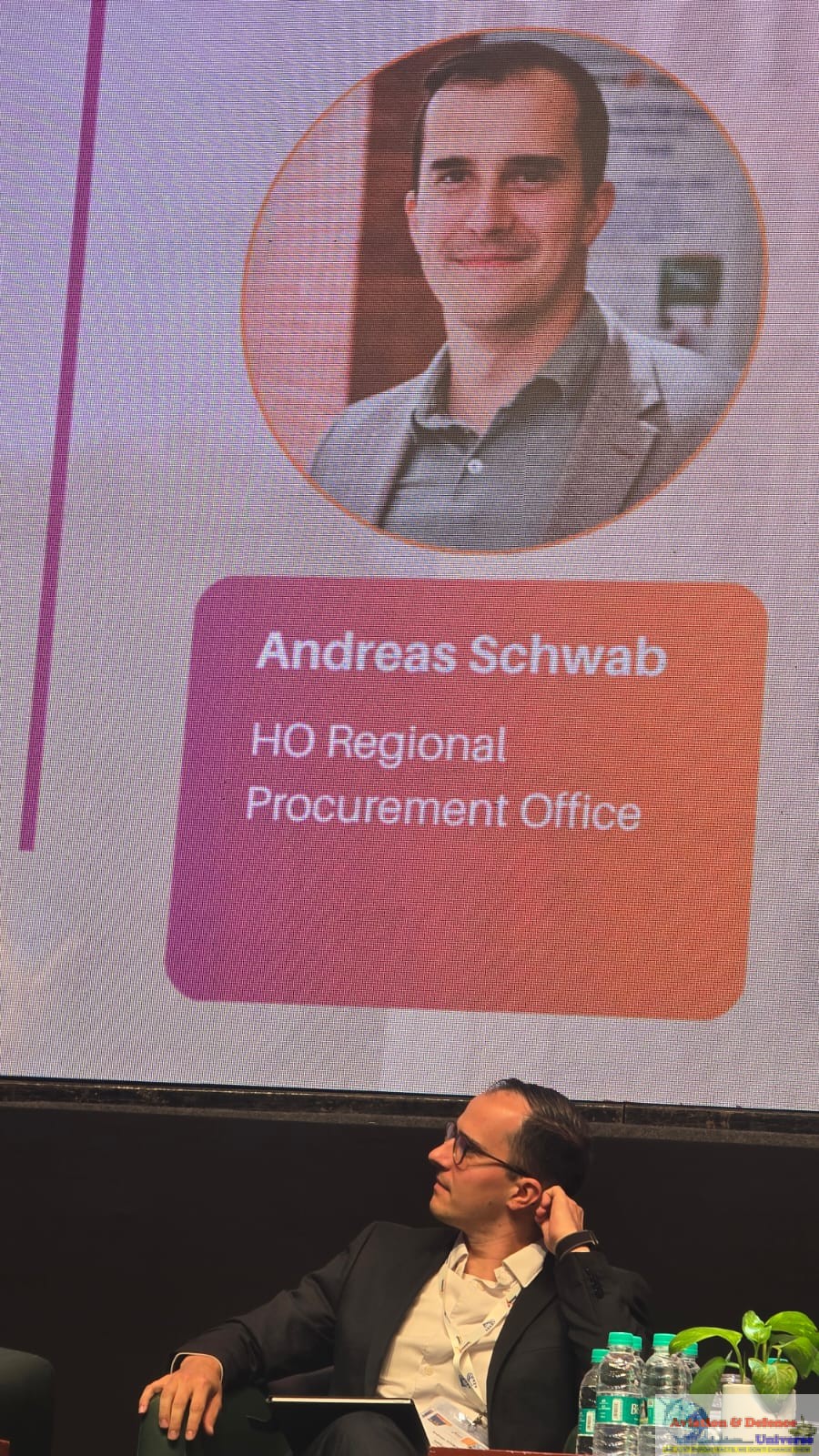 Introducing his role, he noted that Airbus operates in an inherently international industry where collaboration across borders is essential. Speaking about his mandate, he said, “My purpose in India is to find the right partners across the country and develop the supply ecosystem together with the Indian aerospace industry.” Schwab emphasised that strengthening India’s aerospace capability requires progress on three distinct fronts. The first requirement, according to Schwab, is ensuring that every supplier develops strong foundational capabilities. Highlighting the characteristics that define successful aerospace companies, he explained, “Operational excellence, quality excellence, competitiveness and technology focus are fundamental. These are the qualities that have kept companies like Airbus successful for decades, and they will keep Indian companies successful for decades as well.” He stressed that these fundamentals apply equally to manufacturers of metallic structures, electronics, software and advanced aerospace systems.
Looking ahead, Schwab identified composite manufacturing as one of India’s greatest long-term opportunities. Explaining the shift underway within commercial aviation, he observed that while today’s Airbus A320 family relies heavily on metallic structures, future aircraft platforms will contain a significantly larger proportion of composite materials. Drawing attention to this transformation, he said, “The replacement of today’s platforms will have a much higher composite share. That is probably the main area where India should invest because the future demand for composite structures will increase substantially.” He encouraged Indian industry to invest now in advanced composite capabilities so that the country is well positioned when the next generation of commercial aircraft enters production. Perhaps the strongest message from Airbus centred on collaboration within India’s aerospace ecosystem. While acknowledging that competition drives innovation, Schwab argued that Indian companies should increasingly view themselves as partners rather than rivals.
Expressing this philosophy, he remarked, “Competition is good. But at some point, Indian companies need to collaborate more and see themselves as one ecosystem. Rather than everyone fighting for the same cake, someone should take the cake and share it with everyone else.” According to him, integrated industrial solutions created through collaboration would significantly strengthen India’s global competitiveness and enhance the country’s attractiveness to international OEMs. Schwab also reflected on how Airbus’ procurement philosophy has evolved in recent years. Explaining the lessons learned from supply-chain disruptions experienced during the pandemic and subsequent global crises, he said Airbus now prioritises supplier development over aggressive supplier replacement. Describing the company’s new approach, he explained, “Ten years ago competition was our main tool. Today, collaboration has become much more meaningful. We have developed structured programmes to improve supplier quality, competitiveness and technology readiness together with our partners.
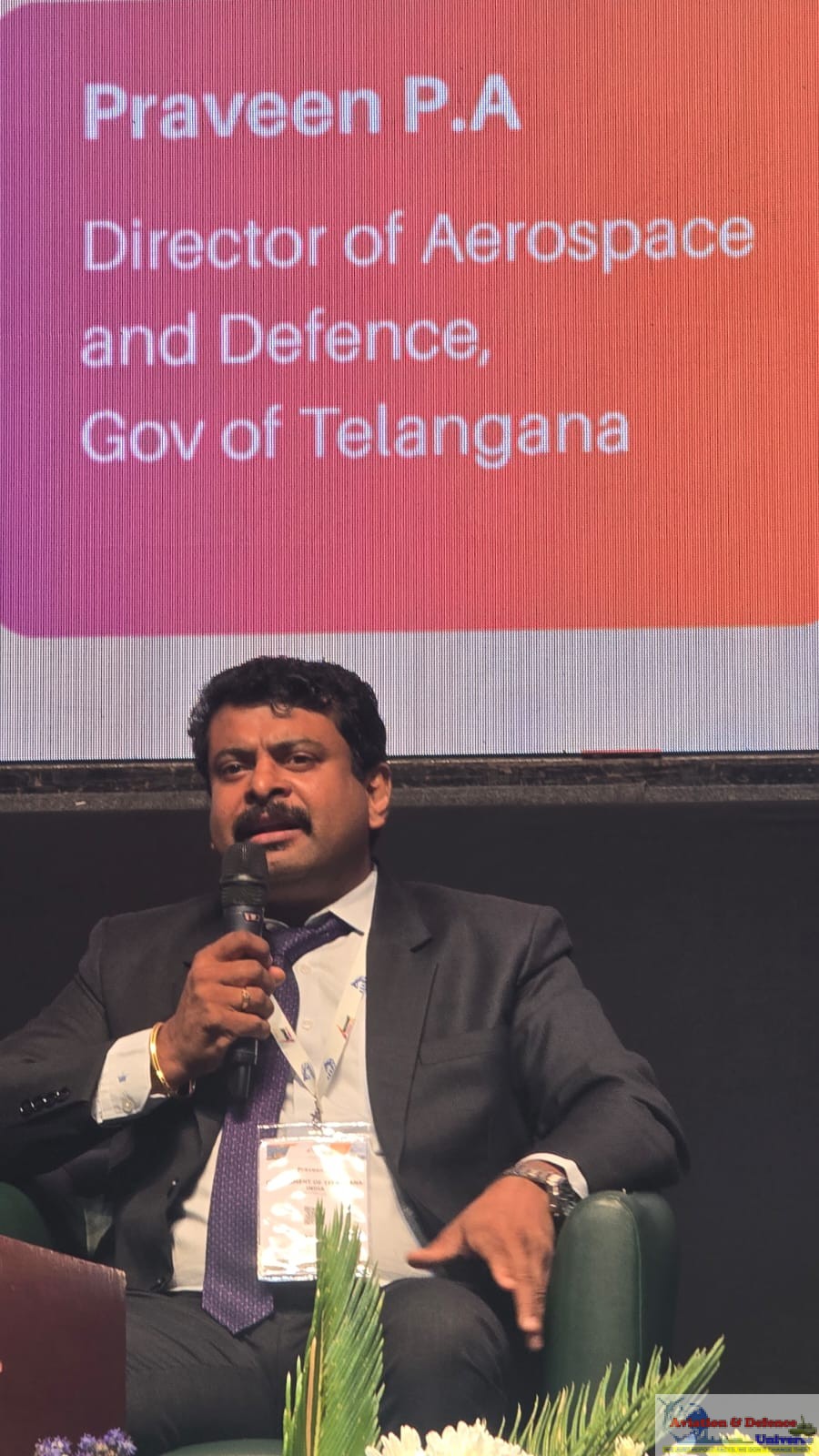 Building upon Airbus’ perspective, Praveen P.A., Director (Aerospace & Defence), Government of Telangana, explained that Telangana’s strategy has never been limited to attracting investments through incentives alone. Instead, the state has focused on creating a complete aerospace ecosystem where industries can grow sustainably with access to skilled manpower, research institutions and collaborative partnerships. Reflecting on the state’s long-term approach, he said, “Any government can promise land and incentives. But what is actually lacking is a very robust ecosystem with abundant skilled manpower. Companies should be able to recruit and replace talent immediately within the ecosystem.” According to Praveen, while fiscal incentives may attract investors, sustained industrial growth depends on the continuous availability of trained engineers, technicians and researchers. To address future skill requirements, Telangana has forged partnerships with globally recognised aerospace institutions. Highlighting these collaborations, Praveen said, “We have initiated partnerships with Embry-Riddle Aeronautical University in the United States, Aero Campus Aquitaine in France and Cranfield University in the United Kingdom to strengthen aerospace education and training.” He explained that while the original intention was to replicate international curricula, the state soon recognised that India’s industrial requirements differ from those of mature aerospace economies.
Instead of simply importing foreign programmes, Telangana worked with industry to create shorter, customised courses aligned with the practical needs of Indian aerospace companies. Praveen described how Telangana has developed an industry-led approach to workforce development. Sharing the experience of working with Safran, he explained, “Together with TASK, we screened candidates from universities, created a customised curriculum, conducted online and offline training over several weeks and successfully prepared candidates for employment within the company.” He noted that this collaborative model has achieved exceptionally high placement success rates and demonstrated how governments, educational institutions and industry can jointly prepare job-ready professionals.
One of Telangana’s flagship initiatives is the establishment of the Young India Skill University, designed specifically to meet industry requirements rather than follow traditional academic structures. Explaining its philosophy, Praveen remarked, “This is different from a conventional university. Industry participates in designing the curriculum based on future skill requirements. We want to create trained manpower for the ecosystem even before companies begin hiring.” He emphasised that the university’s objective is not merely to award degrees but to produce professionals capable of contributing immediately to advanced manufacturing environments. Beyond universities, Telangana is encouraging industries themselves to become active partners in workforce development.
 Highlighting this initiative, Praveen said, “We encourage industries to establish their own Centres of Excellence. Tata Advanced Systems has its own skilling initiative, Kalyani has developed specialised capabilities, and we have also allotted land to the Aeronautical Society of India to establish a Centre of Excellence dedicated to aerospace and defence.” These initiatives, he explained, complement government-led programmes by allowing companies to directly shape the workforce they require. Praveen revealed that Telangana is comprehensively upgrading technical education to align with Industry 4.0 requirements. Describing the transformation, he observed, “The Government has partnered with Tata Technologies to modernise ITIs and polytechnics into Advanced Technology Centres where students will be trained in automation, robotics, artificial intelligence and advanced manufacturing technologies.” As a result, graduates entering aerospace industries will already be familiar with digital manufacturing environments and smart factory technologies.
According to Praveen, attracting major global aerospace companies generates benefits extending far beyond the OEM itself. Explaining the cascading effect, he remarked, “When a major company establishes operations, it sends a signal to the world. The opportunities naturally flow to SMEs, MSMEs and the wider supplier ecosystem.” He pointed out that the rapid growth of companies such as Safran and other international investors has significantly strengthened Telangana’s aerospace manufacturing base. Beyond manufacturing, the state is actively nurturing innovation-driven enterprises through dedicated startup platforms. Introducing Telangana’s innovation ecosystem, Praveen said, “T-Hub is the country’s largest software incubator, T-Works is the largest hardware incubator, and we have WE-Hub to support women entrepreneurs. Together, these institutions are creating the next generation of aerospace and defence startups.” He noted that global companies including Boeing, Collins Aerospace and Pratt & Whitney have already partnered with these innovation platforms to mentor startups and accelerate technology development.
Looking towards the future, Praveen expressed confidence that India is well positioned to move beyond conventional manufacturing into high-value aerospace innovation. Explaining this transition, he observed, “Earlier, we were constrained because manufacturing technologies and materials were largely prescribed by global OEMs. Today, as India develops its own OEMs, we have the opportunity to leapfrog into new technologies and indigenous innovation.” He pointed to emerging sectors such as drones, space technologies and urban air mobility as areas where Indian companies can establish global leadership. Concluding his remarks, Praveen outlined his vision for India’s aerospace ecosystem over the next decade. Looking ahead, he said, “Five years from now, India will have significantly higher employment in aerospace and defence. We are not merely talking about creating jobs—we are talking about creating high-value employment built on advanced technologies, innovation and indigenous capability.” He added that India’s demographic advantage, combined with supportive government policies and increasing global confidence, places the country in a strong position to become one of the world’s most trusted aerospace manufacturing and innovation destinations.
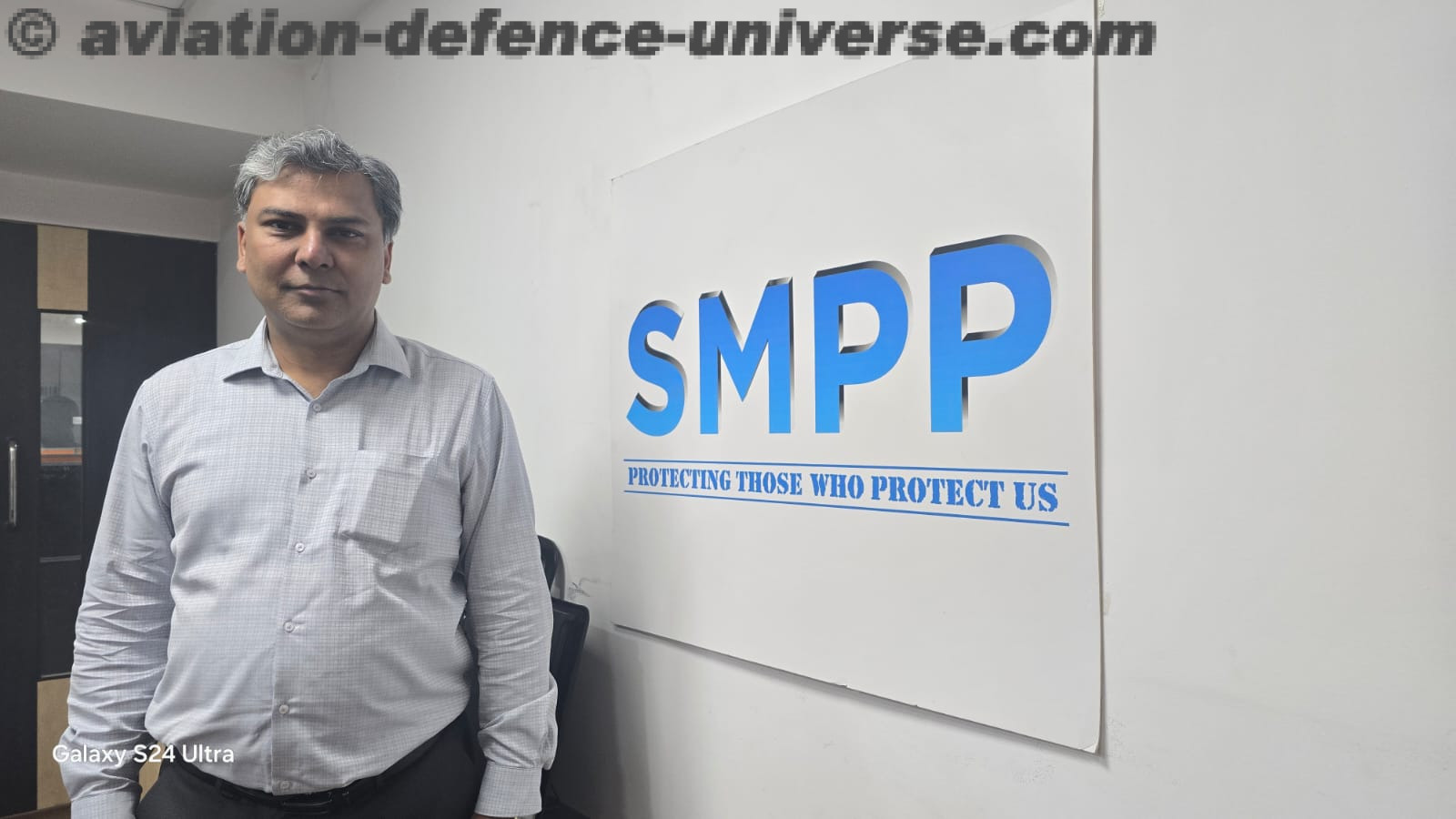
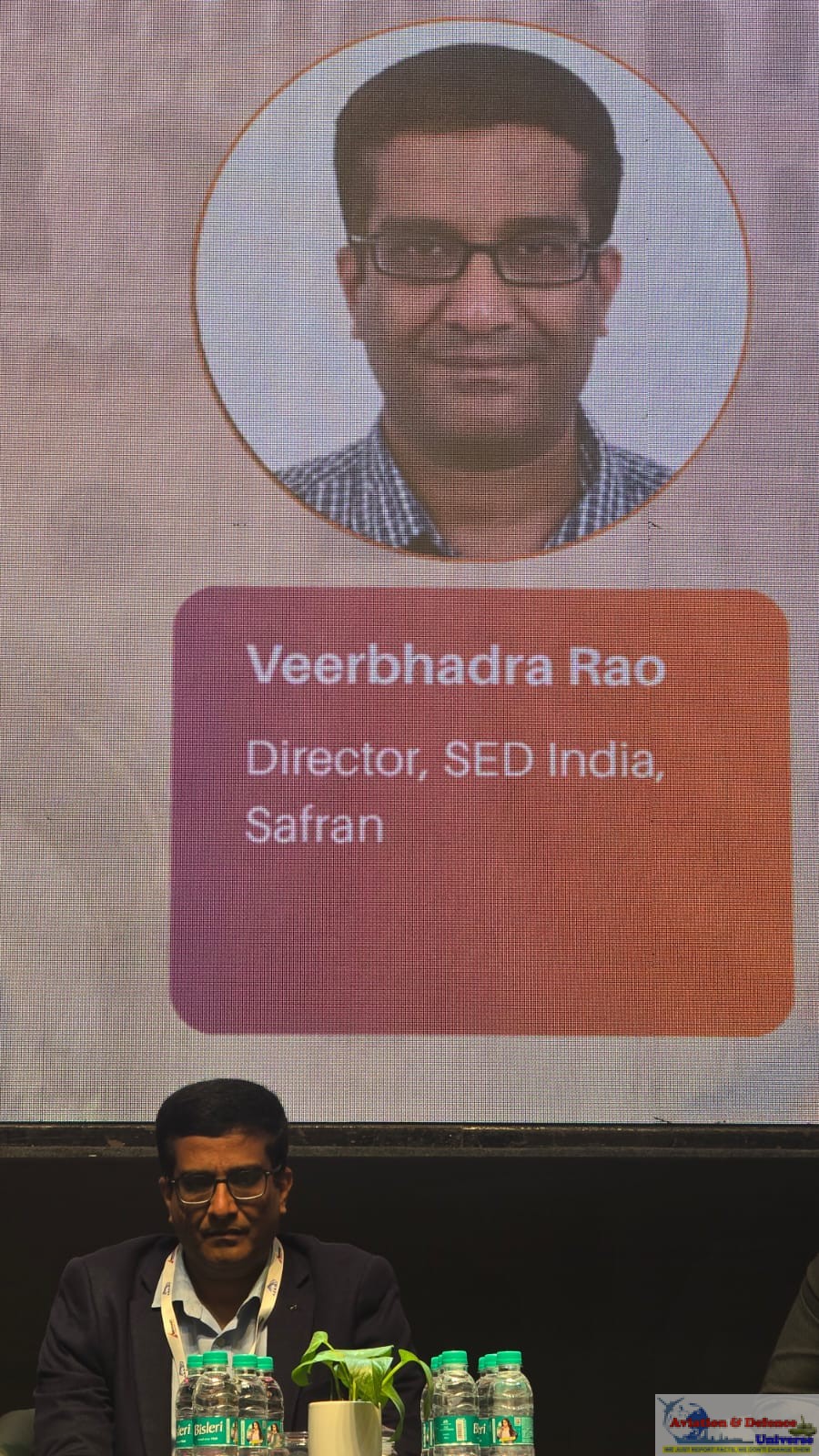 The discussion then shifted to the industry’s perspective, as Veerbhadra Rao of Safran Electronics & Defence India and Nishant Khurana of Axirium Aerospace shared their insights on supplier readiness, startup challenges, workforce expectations and the next phase of India’s aerospace manufacturing journey. Offering the perspective of one of the world’s leading aerospace suppliers, Veerbhadra Rao (“Badri”), Director, Safran Electronics & Defence India, explained that becoming part of a global aerospace supply chain is less about size and more about consistency. Introducing Safran’s growing presence in Hyderabad, he noted that the company is establishing two major facilities—an engineering and R&D centre focused on end-to-end electronics development, and a manufacturing unit dedicated to actuation systems and electronic printed circuit boards. These investments, he said, reflect Safran’s long-term confidence in India’s aerospace ecosystem.
Responding to the moderator’s question on supplier development, Veerbhadra Rao outlined the attributes Safran values most when evaluating potential partners. Summarising the company’s expectations, he stated, “Whether it is Safran or any other aerospace company, the core parameters are reliability, consistency, quality, safety and innovation. Even a small supplier can grow into a global player if these fundamentals are consistently demonstrated.” According to him, these principles underpin every successful aerospace partnership and remain essential regardless of a supplier’s size or stage of growth. Veerbhadra Rao then turned the discussion towards education, arguing that the industry’s skills gap often originates in outdated academic curricula rather than a lack of talent. Illustrating this with an example from his own recruitment experience, he recalled, “Twenty years ago, we used to ask mechanical engineering graduates to convert engineering drawings into isometric views. Over the years we had to progressively simplify the assessment because subjects such as drafting and visualisation had gradually disappeared from the curriculum.”
He stressed that today’s graduates are intelligent and capable but often lack the prctical exposure needed to become industry-ready immediately after graduation. Calling for stronger integration between academia and industry, Veerbhadra Rao argued that internships should occupy a much larger share of engineering education. Highlighting their value, he observed, “The eighth-semester internship is extremely valuable and, for us, it is non-negotiable. Students need to experience the workplace before graduation because it helps them decide whether aerospace is truly the career they want.” He suggested that engineering education should ideally consist of an equal balance between classroom learning and industrial exposure, drawing comparisons with international models that successfully combine academic instruction with extended workplace experience.
Looking beyond internships, Veerbhadra Rao advocated sustained collaboration between universities and industry rather than isolated training programmes. Describing the approach he believes India should adopt, he said, “There should be long-term associations, industry-sponsored academic chairs, collaborative research, joint patents and sustained partnerships. These create lasting capability rather than short-term engagement.” He noted that such partnerships allow educational institutions to remain aligned with rapidly evolving industrial requirements while simultaneously fostering research and innovation.
When asked what the company seeks while recruiting young engineers, Veerbhadra Rao made it clear that academic percentages alone are insufficient. Explaining Safran’s recruitment philosophy, he remarked, “A good percentage is not enough. Fresh graduates must possess strong engineering fundamentals. If the basics are sound, everything else can be developed.” He explained that across Safran’s engineering, manufacturing, MRO and electronics businesses, technical fundamentals remain the cornerstone of long-term career growth.
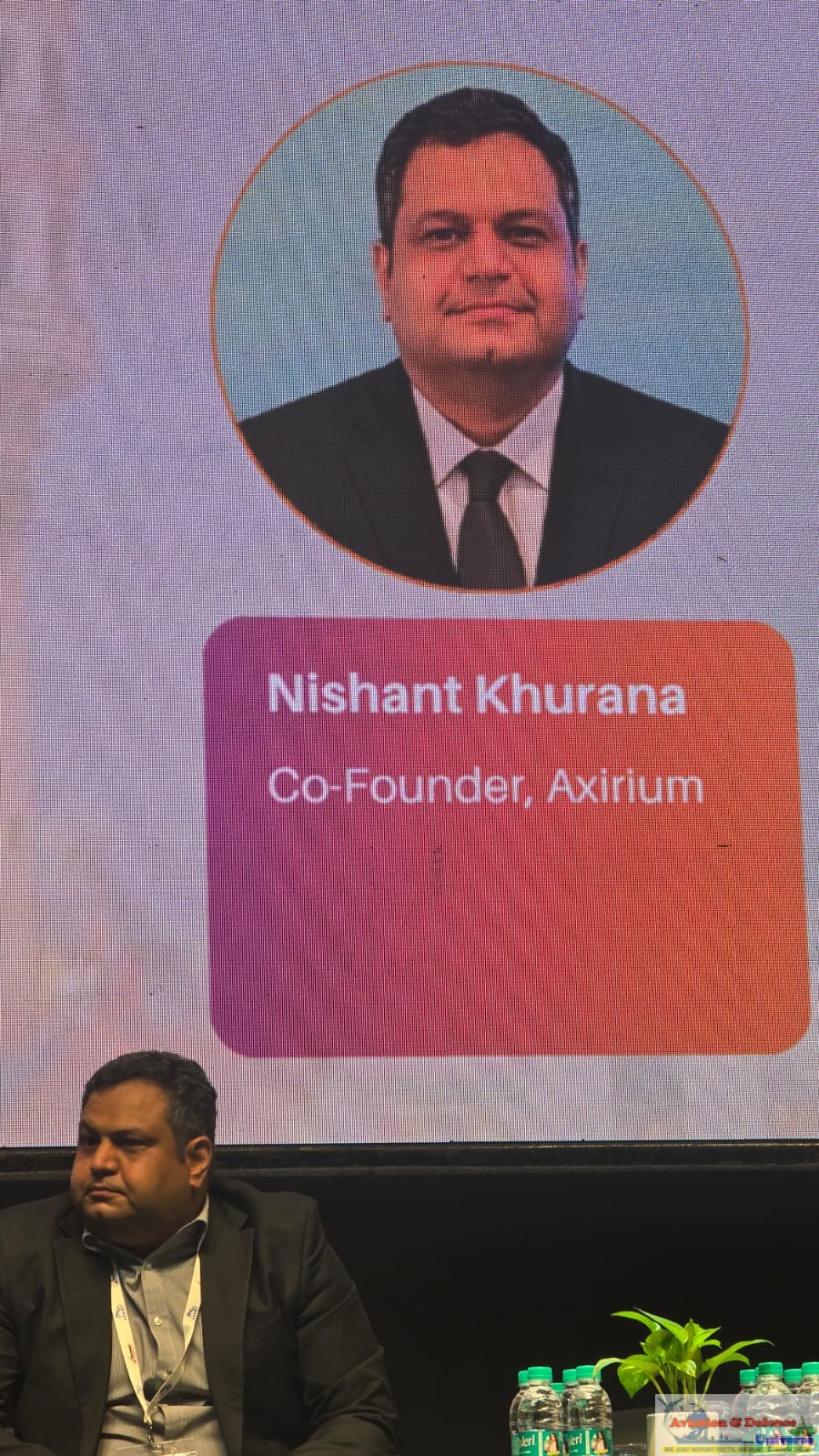 Representing India’s new generation of aerospace entrepreneurs, Nishant Khurana, Co-Founder and CEO, Axirium Aerospace, offered an insightful perspective on building a manufacturing company in one of the world’s most demanding industries. Having previously spent fifteen years with Tata before launching Axirium in Hyderabad, Khurana acknowledged that aerospace presents exceptionally high barriers to entry. Describing the nature of the business, he observed, “Aerospace is probably one of the most difficult industries to enter because customers are not merely placing a purchase order—they are placing their trust in your long-term ability to deliver quality and repeatability.” He stressed that entrepreneurs entering aerospace must be prepared for a long-term commitment rather than expecting quick commercial returns.
According to Khurana, the first priority for any startup must be creating a technically strong organisation. Explaining Axirium’s strategy, he said, “At the core, aerospace is an engineering endeavour. We have invested heavily in engineering, quality and operations because these functions become the backbone of the organisation.” He added that robust engineering capability ultimately determines a company’s credibility with global aerospace customers.
While large multinational companies naturally attract experienced professionals, Khurana believes startups possess a unique advantage in nurturing emerging talent. Highlighting this opportunity, he remarked, “India has tremendous talent in Tier-II and Tier-III colleges. If we can harness that energy and provide opportunities, aerospace becomes the place where talent meets opportunity.” He explained that startups can offer young engineers wider responsibilities and faster professional growth than larger organisations, making them attractive platforms for ambitious graduates.
Sharing one of the session’s most memorable observations, Khurana explained how startups can successfully compete with established players. Summarising his philosophy, he said, “You have to become a big small company. Bring the processes, discipline and rigour of a large organisation while retaining the flexibility and agility of a startup.” He encouraged young companies to focus on solving difficult customer problems that larger organisations may be less willing to address. Looking towards the future, Khurana argued that India’s aerospace ambitions cannot be achieved by OEMs alone.
 Explaining the evolving industrial landscape, he observed, “As Tier-I companies move up the value chain into larger assemblies and system integration, there will be enormous opportunities for MSMEs to fill the resulting space in component manufacturing and specialised production.” He described this transition as one of the greatest opportunities available to India’s emerging aerospace entrepreneurs. Concluding his remarks, Khurana shared how Axirium is investing in graduate engineers despite being a young company itself.
Highlighting the importance of nurturing talent early, he said, “Yesterday we inducted ten graduate engineer trainees because we genuinely believe they will become the future leaders of our organisation.” He encouraged students considering careers in aerospace to cultivate curiosity, technical aptitude and a willingness to learn. Offering a final piece of advice, Khurana concluded, “We look for a little bit of talent, but a great deal of aptitude, attitude and hunger to build something meaningful. If you have that mindset, aerospace offers extraordinary opportunities.” The session concluded with an engaging interaction between the audience and the panellists, covering certification, industry-academia partnerships, recruitment, future technologies and India’s long-term aerospace ambitions.
The panel discussion concluded with an interactive question-and-answer session in which students, entrepreneurs and industry professionals sought practical guidance on entering the aerospace sector. The questions revolved around certification, intellectual property, industry-academia collaboration, emerging technologies and the skills required for the next generation of aerospace professionals. Responding to a question on the challenges faced by start-ups in obtaining certifications and protecting intellectual property while working with global OEMs, Nishant Khurana acknowledged that aerospace remains one of the most demanding industries to enter. Drawing upon Axirium Aerospace’s own experience, he said, “It is difficult, but if you put the right systems and processes in place and build the right team, you will get there. We started in August and achieved our AS9100 certification with only a couple of minor observations.”
 He stressed that there are no shortcuts in aerospace manufacturing. Reinforcing the industry’s uncompromising standards, he remarked, “At the end of the day, you are building an aeroplane, not a car. Quality comes first and safety is always non-negotiable.” A student then asked whether the aerospace industry was actively collaborating with educational institutions to create specialised courses similar to those developed in the information technology sector. Opening the response, moderator Srinivasan Dwarkanath observed that aerospace has always maintained close relationships with academia but admitted that much more needs to be done. Highlighting existing collaborations, he explained that companies are increasingly partnering with ITIs, engineering colleges and universities, while professors are also beginning to spend time within industry to better understand practical requirements. He cited Airbus’ collaboration with Toulouse Business School and IIM Bangalore as an example of programmes designed to strengthen both technical and managerial capabilities.
Adding Airbus’ perspective, Andreas Schwab explained that the company has already established partnerships with institutions such as Gati Shakti Vishwavidyalaya and Mahindra University. While acknowledging these initiatives, he emphasised that the current scale remains insufficient. Reflecting on the industry’s future needs, he observed, “Everyone in the ecosystem has to do their share. Airbus is contributing, but considering the growth that lies ahead, we can certainly do even more.” From the Government of Telangana’s perspective, Praveen P.A. explained that aerospace, defence, semiconductors and nuclear technologies represent the country’s future high-value industries. Highlighting the nature of employment these sectors create, he remarked, “We are not talking about large numbers alone. We are talking about high-value employment. That is the future we are preparing for.” He added that the state continues to encourage OEMs to partner with universities so that curricula remain aligned with evolving industrial requirements.
 Sharing another perspective from Safran, Veerbhadra Rao pointed out that companies are increasingly collaborating with specialised finishing schools in addition to universities. Explaining their value, he said, “We work with finishing schools that specialise in areas such as embedded software and technical publications. These institutes become an excellent pathway for students who may not have secured campus placements but possess the right aptitude.” According to him, such partnerships significantly expand the available talent pool while helping students become industry-ready more quickly.
Towards the close of the discussion, Srinivasan Dwarkanath invited Andreas Schwab to share his personal assessment of India’s strengths and weaknesses after working closely with Indian industry. Schwab’s response captured the optimism that characterised the entire session. Reflecting on India’s greatest competitive advantage, he observed, “The biggest strength I see in India is the hunger. There is an enormous desire to learn, improve and succeed, and that is something we are already seeing within our own teams.” He added that nurturing this collaborative mindset would enable India to strengthen its position within the global aerospace ecosystem over the coming decade.
The panel concluded with a shared conviction that India’s aerospace future will be shaped not by isolated achievements but by sustained collaboration across the entire ecosystem. From Airbus’ emphasis on supplier capability development and composite manufacturing to Telangana’s investments in skilling, Centres of Excellence and startup incubation, from Safran’s focus on engineering fundamentals to Axirium’s entrepreneurial vision for MSMEs, the discussion painted a comprehensive picture of an industry preparing for its next phase of growth. As India advances towards becoming a global aerospace manufacturing and innovation hub, success will depend on the country’s ability to combine world-class engineering, skilled human capital, collaborative partnerships and a culture of continuous improvement. The message from Aeromart Hyderabad 2026 was unmistakable: India’s aerospace ambitions are no longer aspirational—they are rapidly becoming an industrial reality, built on partnership, capability and innovation.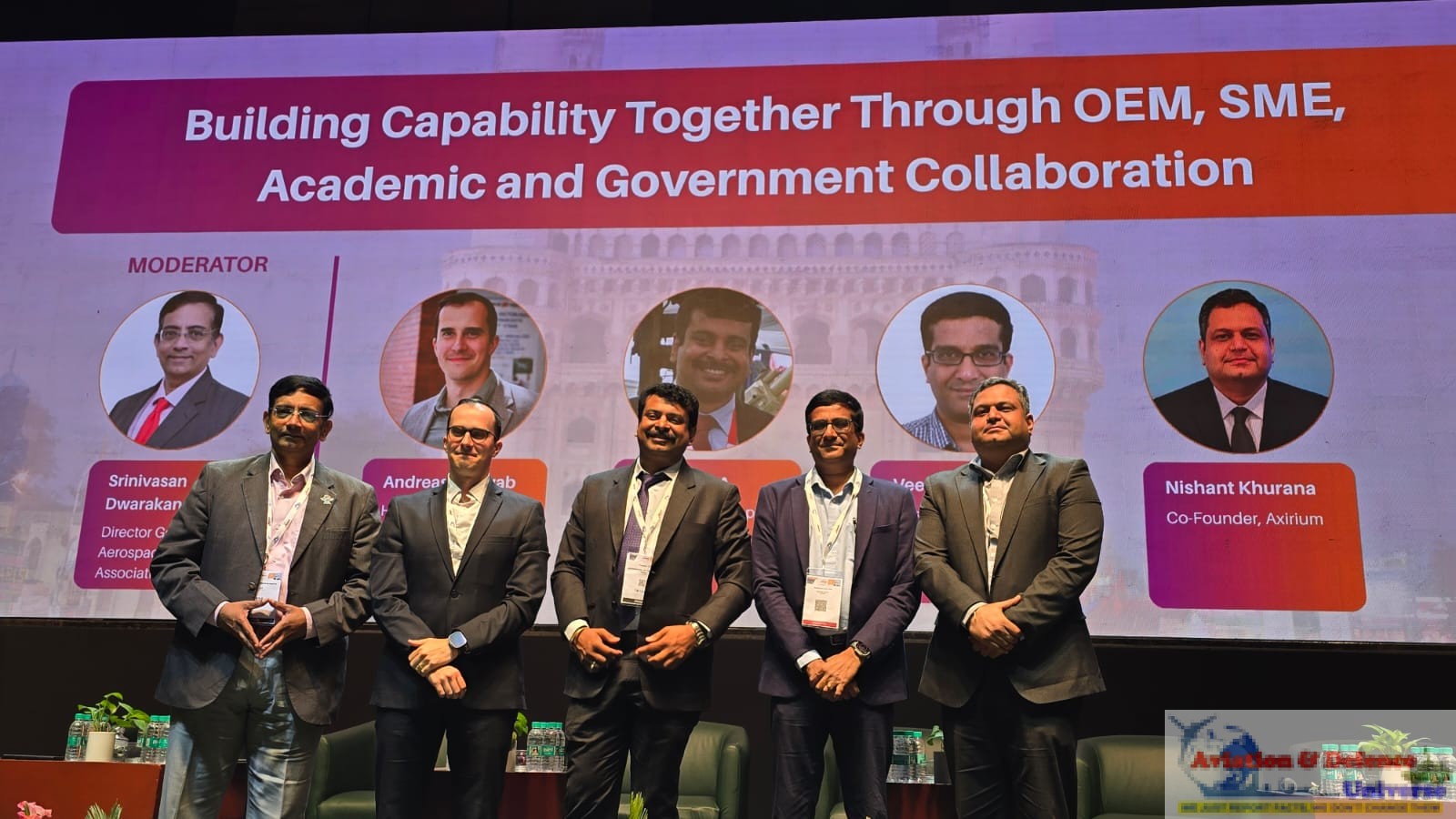










































-A4-Size-(2)_page-0001.jpg)