









- Seeks Stronger Aerospace Bridges with Hyderabad
- Explore New Frontiers in Aerospace Cooperation
- Collaboration and Global Partnerships Drive Aerospace Valley’s Hyderabad Pitch
By Sangeeta Saxena
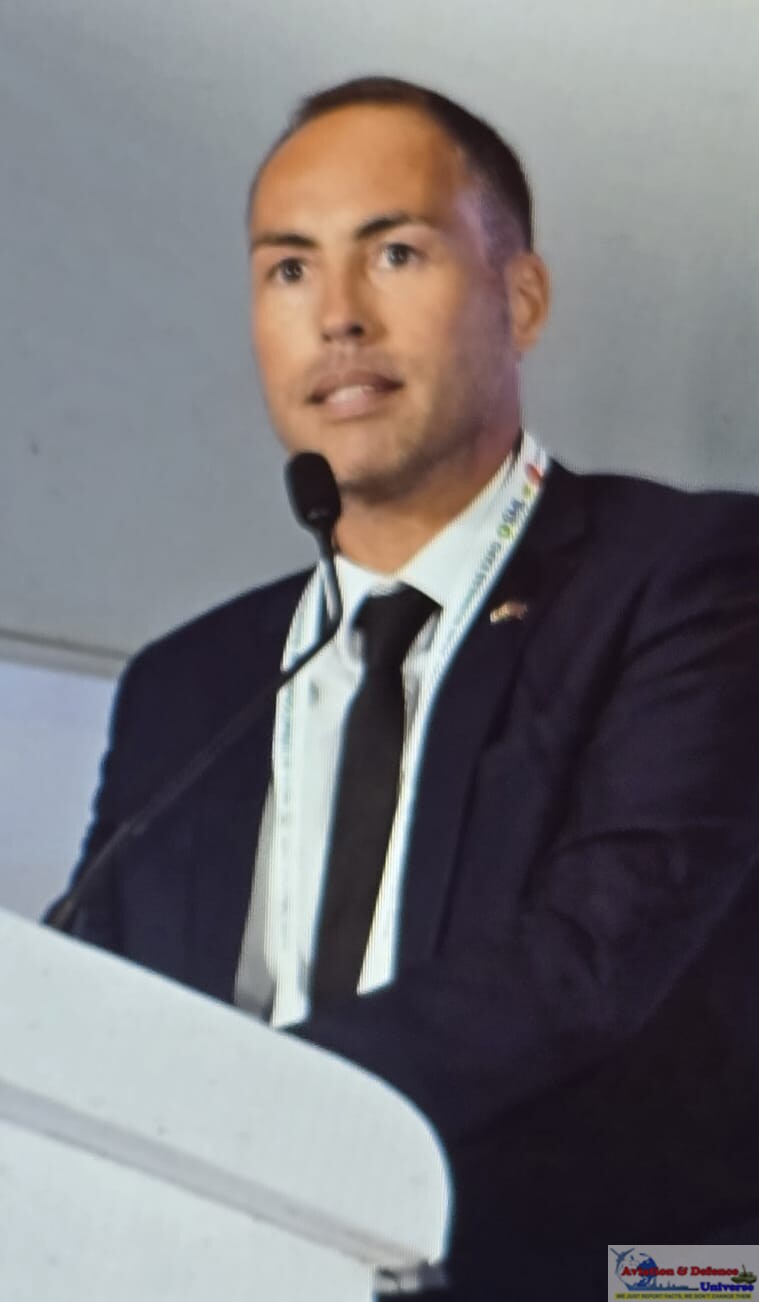
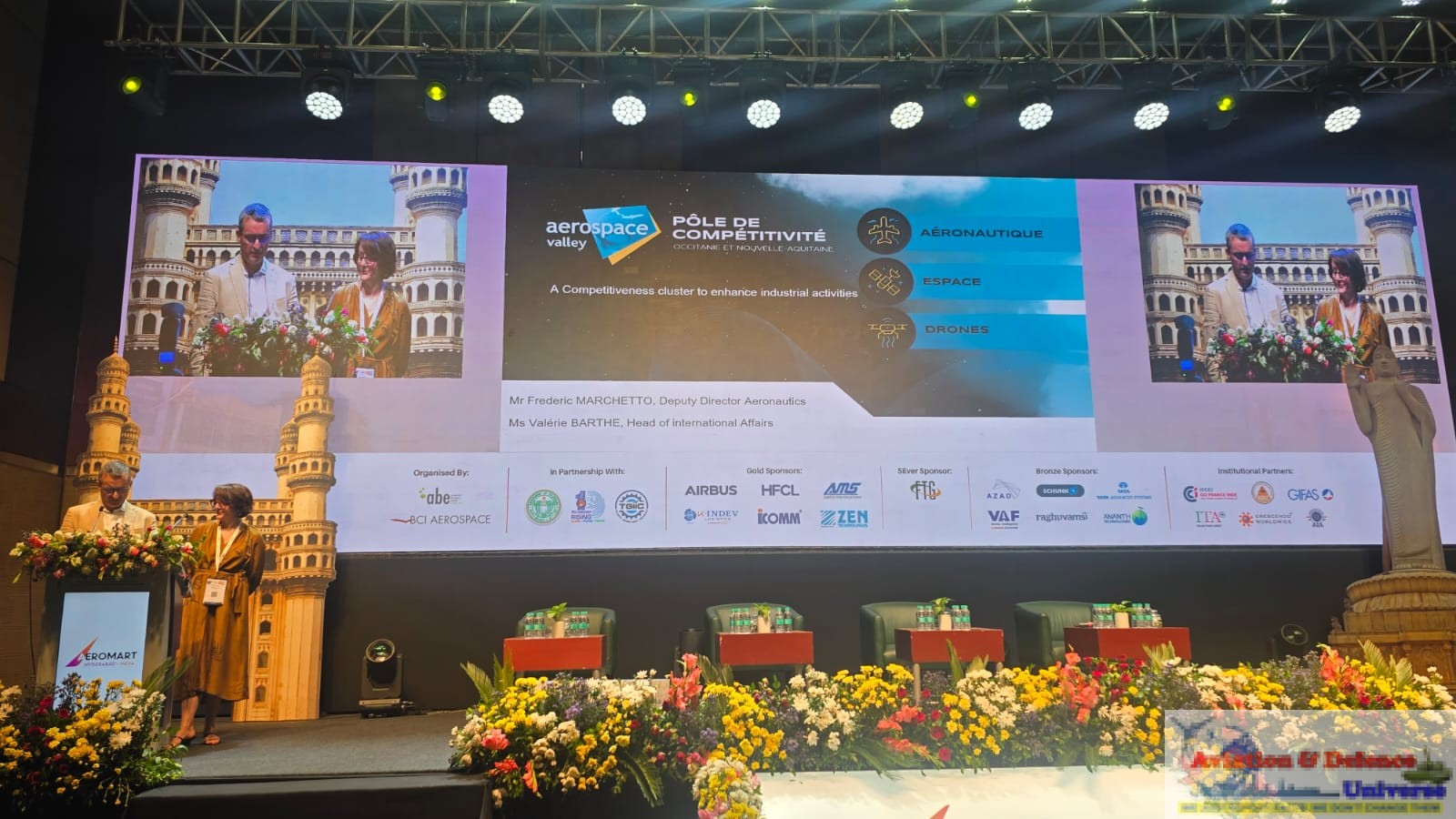
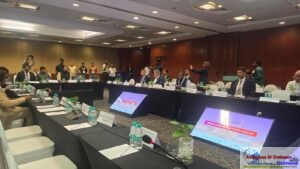
Hyderabad. 01 July 2026. The French aerospace ecosystem made a strong knowledge-led intervention at Aeromart Hyderabad 2026 as Aerospace Valley, the leading European cluster for aeronautics, space and drones, presented how a competitiveness cluster can enhance industrial activity, accelerate innovation and create international partnerships. The session was addressed by Frédéric Marchetto, Deputy Director for Aeronautics, Aerospace Valley, and Valérie Barthe, Head of International Affairs and Talent Development, Aerospace Valley. Together, they outlined the evolution of Aerospace Valley, its Toulouse-Bordeaux industrial base, its innovation model, its funding mechanisms, its support to startups, and its intent to build bridges with the Hyderabad aerospace ecosystem.
Opening the session, Frédéric Marchetto introducing Aerospace Valley’s guiding principle, said, “Aerospace Valley motto is here, through innovation we foster the development and competitiveness of our ecosystem.” He stressed that the word innovation was central to the cluster’s functioning. According to him, Aerospace Valley goes beyond traditional cluster activity and is not limited to networking members. It is actively involved in “shaping the future by deploying collaborative innovation.” He underlined two key ideas that define the cluster: “innovation and collective action.”
Marchetto described Aerospace Valley as an ecosystem with “exceptional density” and traced its roots to the deep aerospace heritage of Toulouse and Bordeaux. He recalled Toulouse’s historical connection with Aéropostale and aviation pioneers, saying that it was the place of “the legendary” aviation journey associated with Latecoere and famous pilots such as Antoine de Saint-Exupéry.
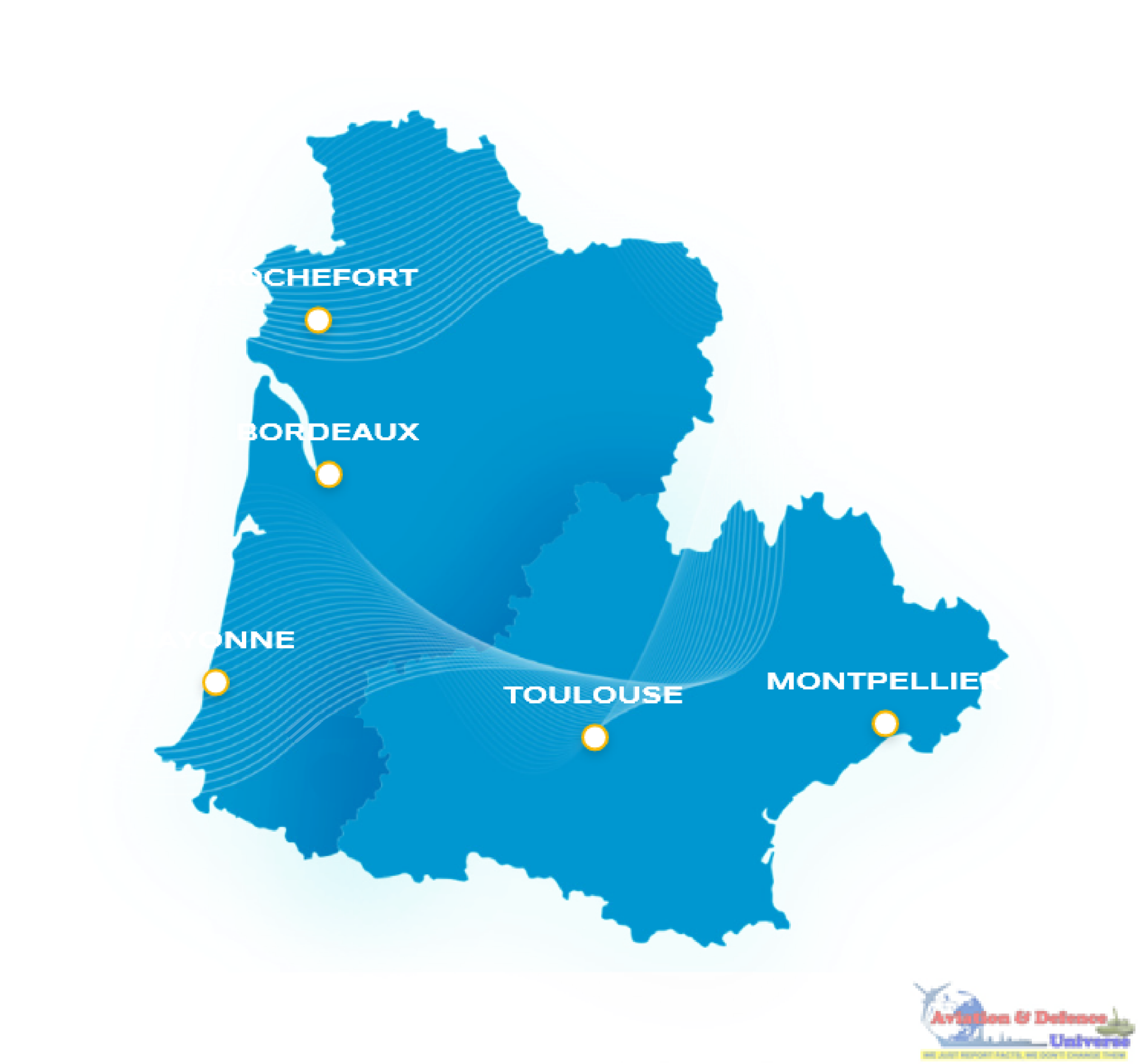
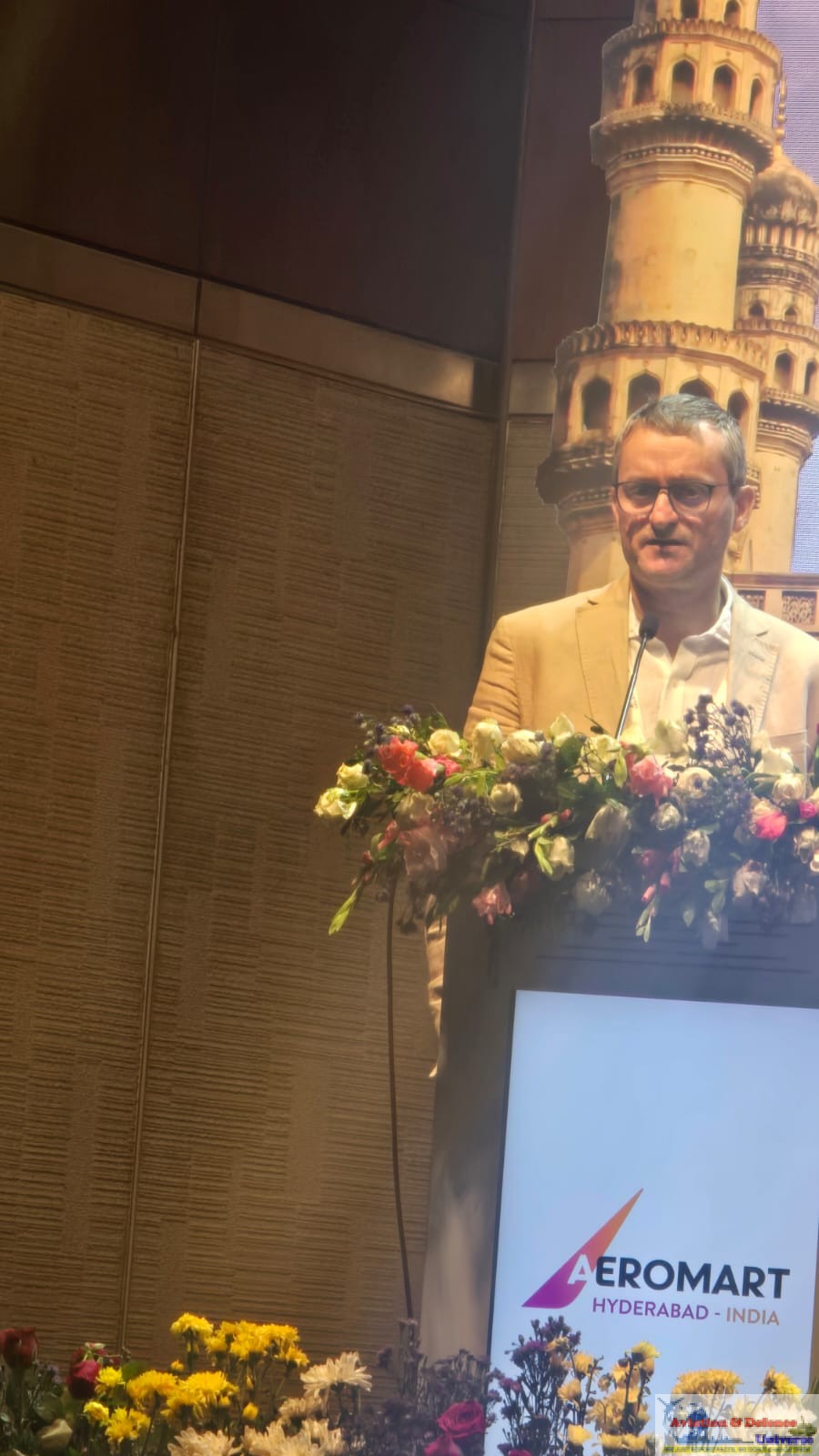 He noted that this heritage later evolved into a powerful industrial base, producing major aerospace leaders such as Airbus, Safran, Thales and Dassault. Speaking of the scale of the ecosystem, he said that the region represents more than “30 billion” in turnover and more than “100,000 resources directly involved in the business,” including around “10,000 researchers. Combining the two regions, he said, “We have something like half of the French workforce working for aeronautics and space,” with most world-class actors present in the ecosystem. Explaining the concept of “Pôle de Compétitivité,” translated as “Competitiveness Cluster,” Marchetto said it was a model deployed in France in 2004. He explained that Aerospace Valley’s structure is built around strategic sectors such as aeronautics, space, drones, sensors and autonomy, alongside major transition themes that are shaping the market.
He identified these transitions as environmental transition, defence, digital transition, skills and international development. On environmental transition, he referred to areas such as “recycling material” and “life cycle aspects.” On defence, he said the geopolitical context is creating a trend towards more military business, with companies increasingly turning towards this area. On digital transition, he said, “AI is one of the major shifts in the industry.” Marchetto highlighted a unique feature of Aerospace Valley: its close connection with major industry players through experts seconded from leading companies. He said, “This organisation is mostly aided by people that are seconded from industry, as I am, to make the cluster more connected to the trends, to the strategies of the big groups.” Giving examples, he stated, “For the aeronautics sector, I am seconded from Airbus. I am an Airbus employee working for Aerospace Valley. For the avionics sector, it is someone that is seconded from Thales Avionics. For the energy, it is someone that is seconded from Safran.”
He said this model allows the cluster to remain close to the actual needs of large industry groups. Marchetto said Aerospace Valley’s missions are producing tangible results. Over the 20 years since the creation of the French cluster system in 2004, he said Aerospace Valley has run “more than 2.5 billion euro projects.” He added, “Through that, we have been capturing more than 1 billion of funding, be it European funding or French funding.” He explained that Aerospace Valley has a dedicated team that examines funding opportunities across Europe and France and makes these available to its members. The cluster also organises consortia to submit proposals and supports the development of business through workshops, technology preparation and international development.
Marchetto then spoke about Aerospace Valley’s three major roadmaps, explaining that every strategic sector defines its own roadmap. For aeronautics, he said one of the most important trends is decarbonisation. Referring to the industry’s long-term goal, he said the sector is working towards “carbon zero in 2050.” He added that in France, each industry is legally committed to defining a roadmap to reach that objective. For aeronautics, he said the roadmap relies on the progressive implementation of sustainable aviation fuels as well as preparation for future aircraft programmes, including the eventual replacement of the A320 family in the next decade. He said this would be a very ambitious challenge and would require the local industry to prepare.
 He also listed other critical technology areas, including AI, connectivity, cyber, earth observation, telecommunications and space debris. On drones, Marchetto said the sector is growing rapidly, especially because of the military context. Referring to the Ukraine war, he said it has caused “a revolution in the battlefield,” creating growing interest in drones. He added that Aerospace Valley has “more than 300 members dealing with the topic.” He said drones have civilian use cases such as urban logistics and air mobility, but there is also strong development in the defence sector, with several companies shifting towards defence applications.
Returning to the theme of innovation, Marchetto explained how Aerospace Valley supports its members through different phases of a project. These include project emergence, project structuring, project labelling, startup incubation and funding support. He said Aerospace Valley scrutinises funding opportunities and connects small companies with big groups through “events, challenges, hackathons” and other formats that help bridge people and ideas. On project structuring, he said the cluster builds consortia between industry, academics and research laboratories, and then submits projects to European or French funding mechanisms. He placed special emphasis on project labelling, calling it a unique feature. He described it as “a kind of delegation that the cluster has from the state” and “a kind of quality seal.” Aerospace Valley organises a labelling committee made up of experts from industry and laboratories, and once a project obtains this stamp, he said, companies get “twice as much chances to get funded.”
Marchetto also spoke about startup support. He said Aerospace Valley runs ESA BIC, the European Space Agency Business Incubation Centre, and also has its own startup district in Toulouse and Bordeaux. He said the cluster hosts startups, advises them on strategy and supports them in funding. He added that Aerospace Valley has a European team focused on getting projects funded. Concluding his part of the presentation, Marchetto said Aerospace Valley’s comprehensive set of actions is aimed at “shaping the future of the industry.” He added that Aerospace Valley was at Aeromart Hyderabad 2026 to “build bridges with the Hyderabad ecosystem” and define areas of cooperation with Telangana.
Taking forward the discussion on international collaboration, Valérie Barthe, Head of International Affairs and Talent Development at Aerospace Valley, expanded on how the French cluster supports startups, develops talent, builds international partnerships and creates opportunities for collaborative innovation. Beginning with startup incubation, Barthe elaborated on the role of Aerospace Valley as one of the European Space Agency’s recognised incubation centres.
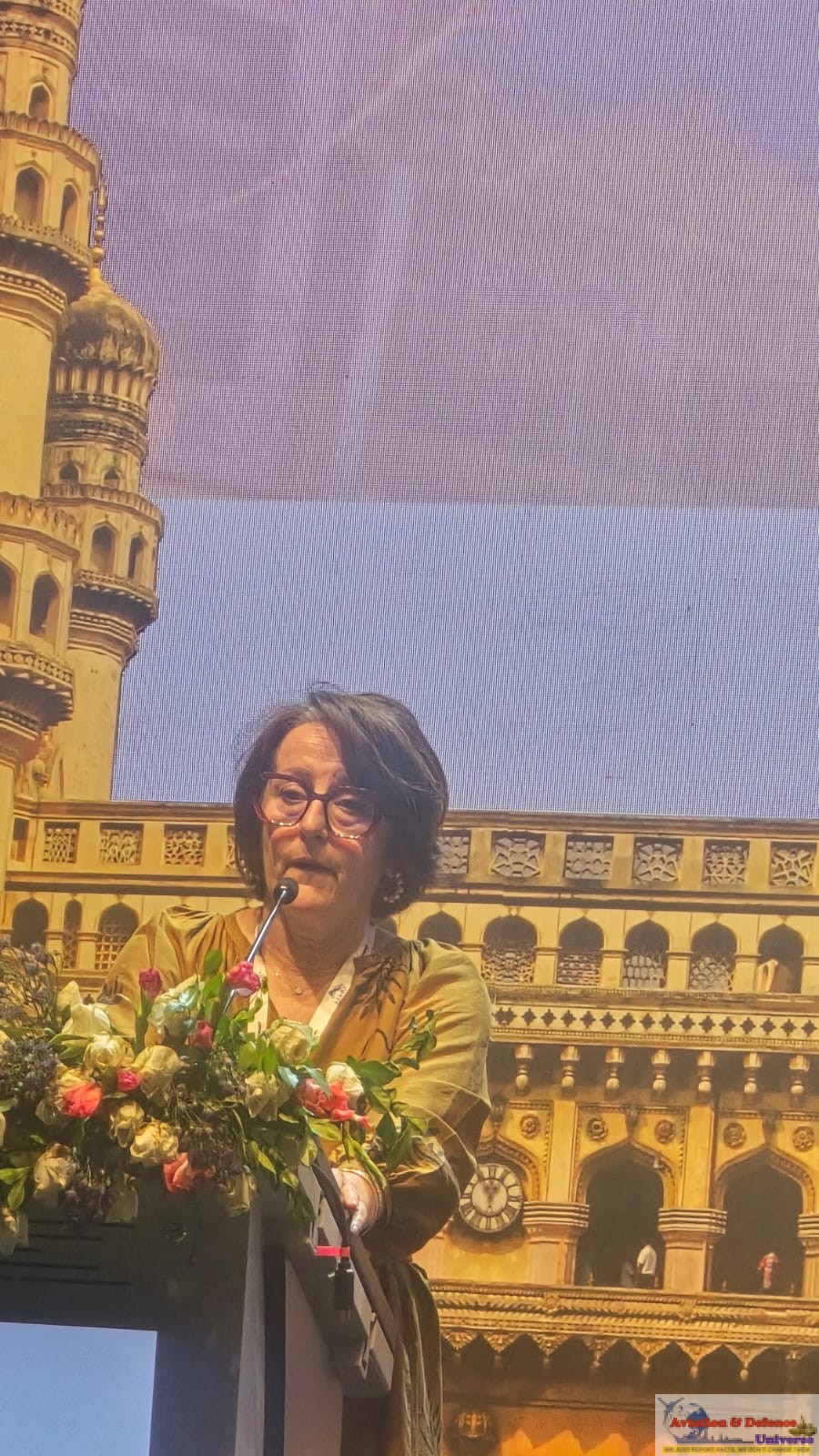 “I will give additional word on the startup support,” she said. “As Frédéric mentioned, we are selected by ESA, the European Space Agency, in order to cover all the incubation from a higher technical level, to enlarge their ecosystem and their connection with big groups.” She pointed out that the incubation programme has now been opened to international startups as well. “What I would like to add on this is that this one is open now to foreign startups,” she said. Explaining the eligibility criteria, Barthe noted that Aerospace Valley carefully evaluates every proposal before acceptance. “We examine each candidacy. Of course, the foreign startup must have a strong intention to develop some business and open manufacturing, at least—not just commercial offices—in France. We need to check as well if the technology could be a complement with what we’ve got in France.” She extended a direct invitation to Indian innovators. “We would like to say this because we will be very happy to enlarge this cooperation with Indian startups, either in Toulouse or in Bordeaux.”
Moving to Aerospace Valley’s global vision, Barthe explained that international cooperation is closely linked to the broader transformation of the aerospace sector. “Our main mission is to build a decarbonised aviation sector while ensuring a sustainable and secure presence in space that directly serves our planet, our citizens and global science.” She explained that achieving this objective requires a strong international strategy designed to support Aerospace Valley’s members in identifying customers, collaborators and technology partners around the world.
Barthe said Aerospace Valley actively promotes the aerospace ecosystem of Southwest France at both the European and international levels. “We promote the region and the ecosystem of the Southwest at European and international level.” This, she explained, is done in partnership with organisations including GIFAS, regional institutions and government agencies. She also highlighted Aerospace Valley’s role in helping members identify funding opportunities. “We are trying to identify as far as we can some funding in order to support the development of our members.” According to Barthe, these include private investment, European programmes, international funding and government support mechanisms.
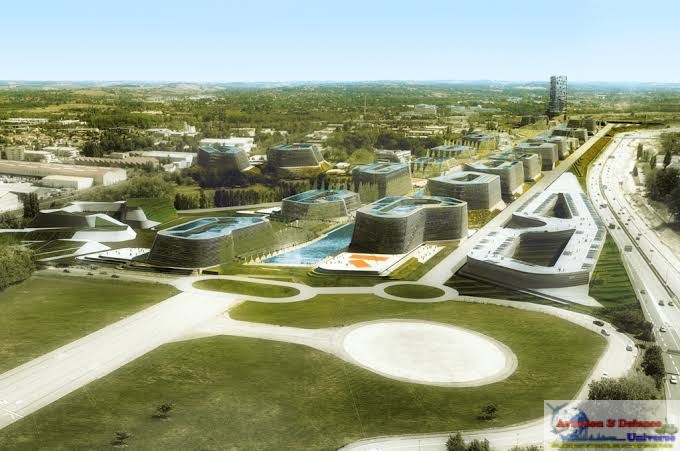
Barthe explained that Aerospace Valley believes long-term international cooperation should be built not only between companies but also between innovation ecosystems. “We are building international ecosystem connection.” She noted that Aerospace Valley is an active member of both European and global cluster networks. “We are part of two kinds of organisations… a consortium of European clusters and a consortium of global international clusters.” These relationships, she said, help establish “long-term technological partnership and commercial relationships.”
One of the strongest messages delivered by Barthe centred on skills development. She acknowledged that the aerospace industry across the world faces an increasing shortage of specialised talent. Drawing a comparison between France and India, she observed that although India possesses a young population, both countries face similar challenges in ensuring that future workforce requirements are met. “In order to support our members, we identify the competencies we will need in 10 and 15 years.”
She explained that Aerospace Valley studies existing skills, identifies future gaps and then works closely with industry and academia to bridge those gaps. “When we finish this analysis, we’ve got relation with industry, with academic partners, in order to say to them, ‘In 10 years, these competencies will be needed. We need to work on them and create a specific syllabus.'” According to Barthe, this methodology has already been shared with several international partners.
Barthe explained that Aerospace Valley also supports companies during their international expansion. “Regarding export and sales, we support our members in their export campaign, providing them some customised training solution for their customers.” She emphasised that international business development extends well beyond trade promotion. The organisation regularly welcomes foreign delegations to France and designs programmes tailored to their interests.
Highlighting Aerospace Valley’s matchmaking capabilities, Barthe shared figures that demonstrated the scale of its international engagement, “Last year, in 2025, we hosted more than 25 delegations from 24 countries.” She explained that visiting delegations are introduced to the French aerospace ecosystem before participating in focused discussions and business meetings. “For example, an Indian delegation will be more than welcome with some 10 or 20 SMEs or industry.” According to Barthe, these programmes include ecosystem presentations, thematic discussions, B2B matchmaking sessions and industrial site visits. She noted that the organisation had facilitated “more than 531 B2B meetings” during 2025. “You can see that we’ve got more requests on the space field than on the aeronautical field, but we are more than open to organise some.”
 Barthe illustrated Aerospace Valley’s international outreach through examples from Africa. “For Africa, for example, we support the development of Africa and support the French Space Agency.” She added that Aerospace Valley works closely with organisations such as the Rwanda Space Agency and partners in Kenya. These collaborations include learning expeditions, data analysis, space applications and competency gap assessments designed to strengthen local aerospace ecosystems.
Returning to the subject of human capital, Barthe stressed that international competitiveness ultimately depends on attracting and developing the right talent. “We work as well on talent management because we need to have the top talent for tomorrow to equip our industry for competitiveness.” She explained that Aerospace Valley regularly conducts skill assessment exercises and shares these findings with its international partners.Barthe clarified that Aerospace Valley is not itself a training institution. Instead, it develops industry-led training programmes by identifying the most suitable academic and industrial experts. “We are not a training centre. We design the training and after we are looking for the best expertise in the industry or in the academic.” She described these programmes as an important pillar of international cooperation. As an example, Barthe referred to Aerospace Valley’s collaboration with Hindustan Aeronautics Limited (HAL). “We welcomed 30 people, directors from HAL sites.” The programme included knowledge-sharing sessions on digital transformation, supply chain management, lean management and quality management, supported by visits to industrial facilities. “We organised some training and exchange on topics such as digital transition, supply chain management, lean management, quality management and so on, and we illustrate all of those exchanges or courses by industrial site visits.” She said Aerospace Valley would be delighted to replicate similar programmes with organisations in Telangana. “This is something that we will be very happy to extend with the partners in Telangana.”
Concluding her presentation, Barthe invited Indian industry, startups, MSMEs and academic institutions to build stronger ties with Aerospace Valley. “Keep in mind that we will be happy to welcome you for some learning expedition, for B2B session, to enrich your syllabus, to work on a syllabus, and as well to welcome some startup either in Bordeaux or in Toulouse.” Her remarks reinforced Aerospace Valley’s commitment to transforming Indo-French aerospace cooperation from industrial engagement into a long-term innovation partnership built on technology, talent, entrepreneurship and collaborative research.
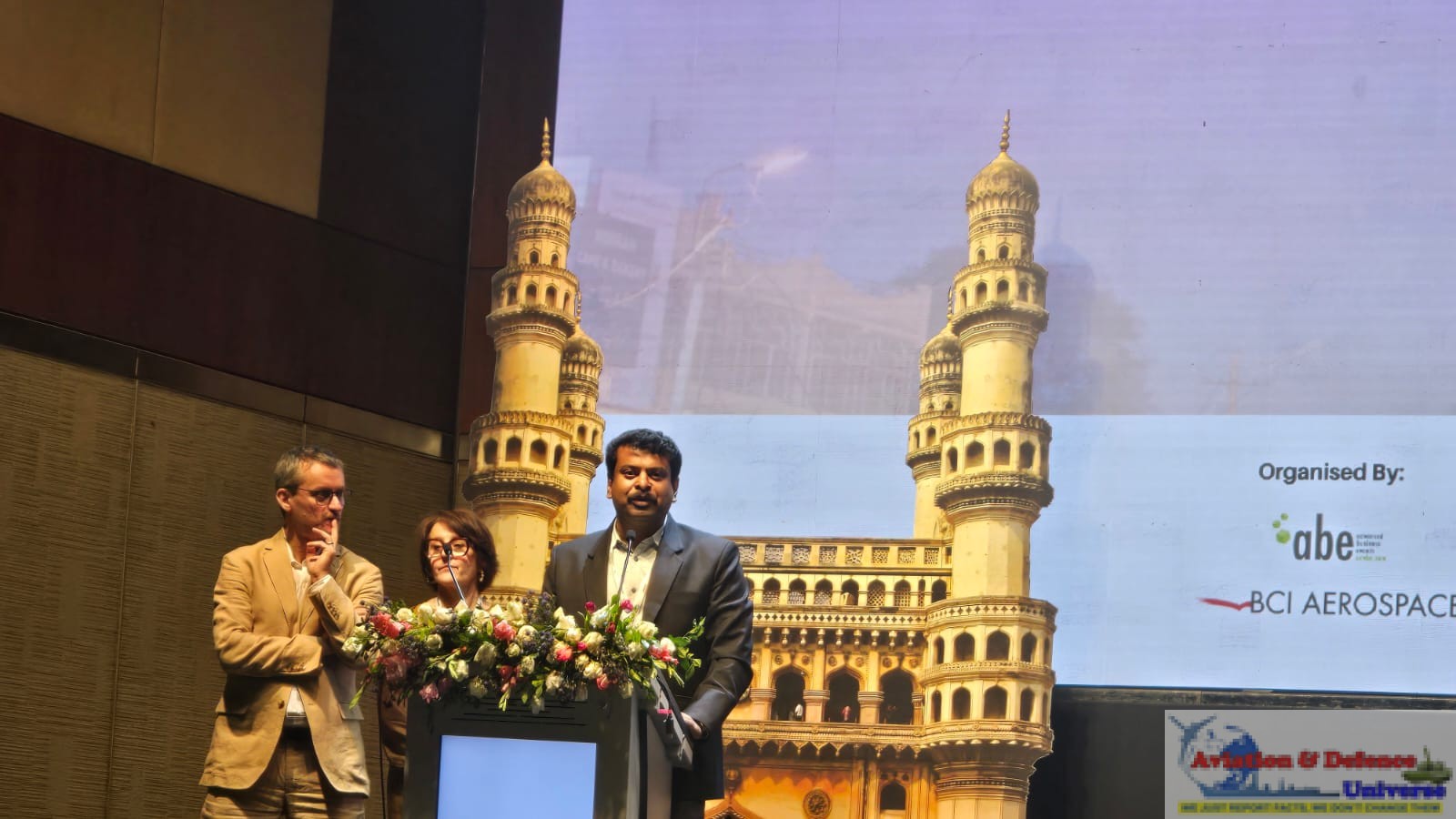 Concluding the session, Praveen PA, Director Aerospace & Defence of the Government of Telangana highlighted that the interaction was more than an exchange of ideas—it marked another step towards institutional collaboration between Telangana and Aerospace Valley. He informed the audience that the Government of Telangana had already initiated formal engagement with Aerospace Valley and was now working towards strengthening that relationship. “Government of Telangana has a Letter of Intent for partnership with Aerospace Valley which was signed during the Paris Air Show, and we are now coming to the structure of an MoU in terms of what all can be added to it.” He also acknowledged the support of Bordeaux Métropole in taking the partnership forward. “Bordeaux Métropole, represented by Hugo here, is also supporting it. In fact, the visit of Valérie and Frédéric was supported by Bordeaux Metropole too.”
Highlighting the rapid growth of Hyderabad’s aerospace sector, the Telangana representative pointed to the increasing industrial opportunities emerging from major global aerospace programmes. “Larger programmes are coming to India. Airbus C295 is a major programme in Hyderabad.” He said these developments require the creation of stronger industrial capabilities within the state. “We require more capacity building, we require more supply chain integration at a local level to support this programme.” He explained that Aerospace Valley’s experience in developing globally competitive aerospace ecosystems would be invaluable in helping Telangana achieve these objectives. “We are looking forward to taking support as well as cooperation from Aerospace Valley to see how we can build talent, how we can bring the MSMEs together and also to see how these two ecosystems can work together for mutual growth.”
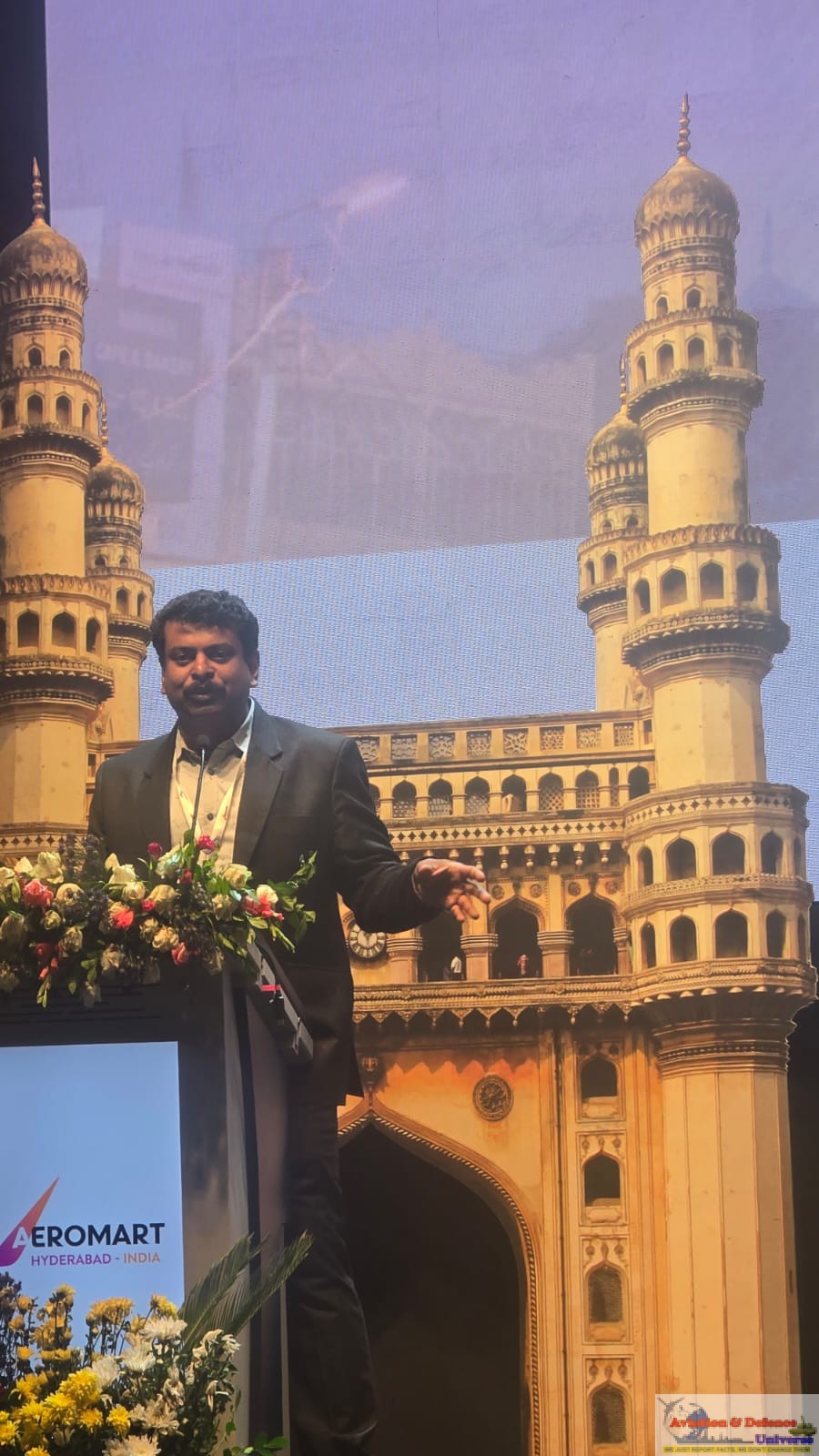 His remarks reiterated Telangana’s ambition to leverage Aerospace Valley’s proven cluster model to strengthen local manufacturing capabilities, improve supply chain resilience, enhance workforce skills and create greater opportunities for MSMEs to participate in global aerospace programmes.
The Aerospace Valley session at Aeromart Hyderabad 2026 demonstrated how internationally connected innovation clusters can accelerate industrial growth through collaboration, research, technology development and talent creation. Frédéric Marchetto showcased the strengths of Europe’s largest aerospace cluster, its innovation ecosystem, funding mechanisms and roadmap for future technologies, while Valérie Barthe outlined Aerospace Valley’s global strategy centred on startups, skills, international partnerships and industrial cooperation. The session concluded on an optimistic note with Telangana reaffirming its commitment to building a long-term institutional partnership with Aerospace Valley. With a proposed Memorandum of Understanding under discussion and common priorities in aerospace manufacturing, MSME development, talent creation and supply chain integration, the dialogue reflected the growing strategic depth of Indo-French aerospace cooperation and the shared ambition to build globally competitive aerospace ecosystems.
































-A4-Size-(2)_page-0001.jpg)