






























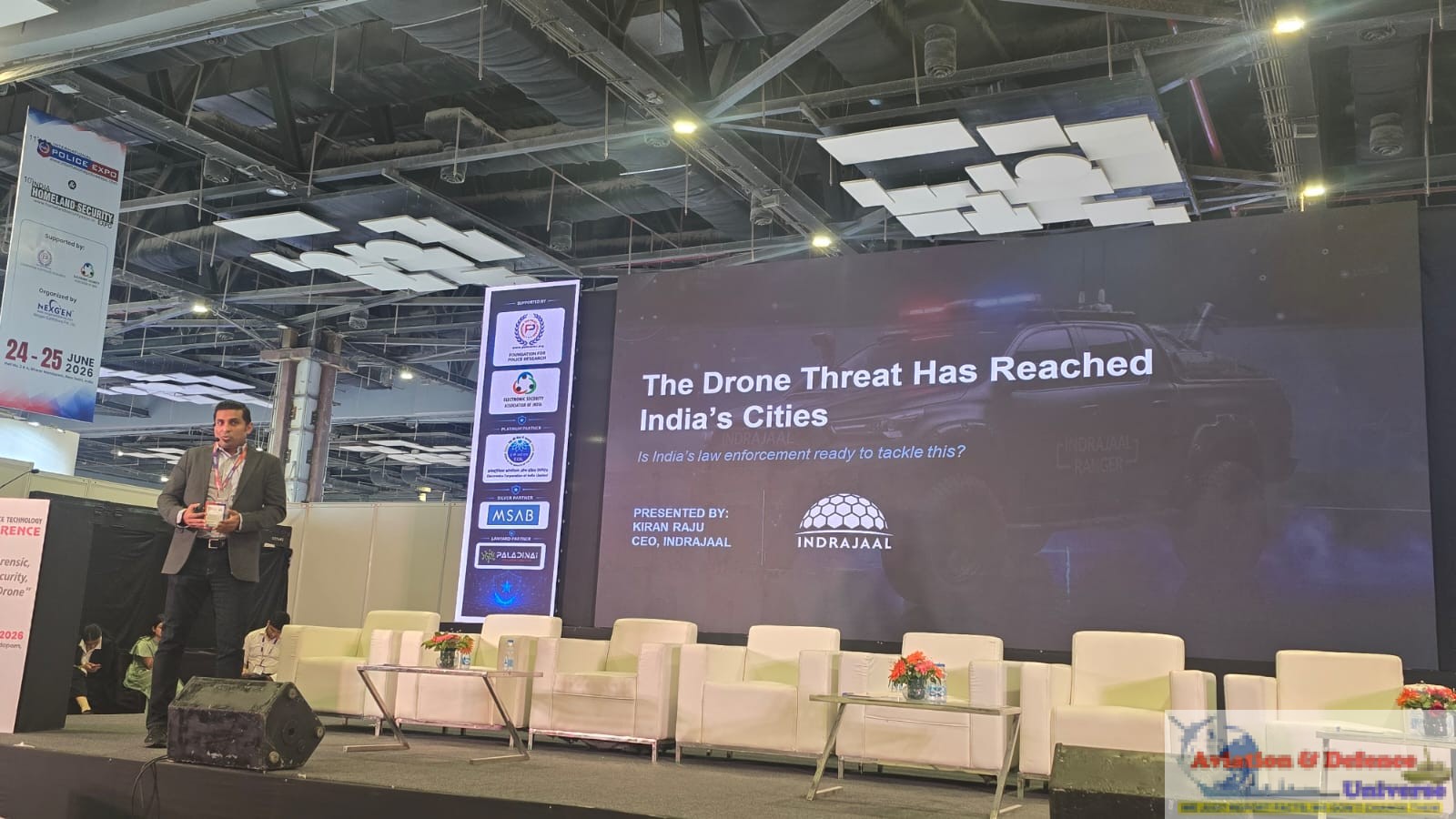
- Drone Threats Are No Longer Military Problems Alone, he says at Police Expo 2026
- Cities, Stadiums and Critical Infrastructure Under Threat from Weaponised Consumer Drones
- Counter-Drone Networks Will Become Public Infrastructure, Predicts Indrajaal CEO
By Sangeeta Saxena
New Delhi. 24 June 2026. The rapid proliferation of drones, coupled with lessons emerging from recent conflicts in the Middle East, Ukraine and South Asia, is transforming the nature of security threats worldwide. Addressing delegates at the Police Expo at Bharat Mandapam, New Delhi, Kiran Raju, Co-founder and CEO of Indrajaal, argued that drones are no longer confined to battlefields or border regions. Instead, they are increasingly becoming tools capable of targeting cities, critical infrastructure, government facilities and public gatherings. In a thought-provoking address, he urged law enforcement agencies to rethink security architecture and prepare for a future where monitoring and protecting urban airspace becomes as important as policing roads and public spaces.
 Setting the tone for the changing nature of conflict, Raju observed, “So, I think it is fair to say that it will reach cities, maybe if the consultation was done two months back or three months back, we would not agree to this, but the recent Iran conflict has made it clear that they are going to attack buildings, they are going to attack oil and gas refinery, they are going to attack everything.” He argued that future conflicts are unlikely to remain confined to border areas. Reiterating on the changing battlefield, he warned, “It is not going to only stick at the border, most wars will not stick to the border, they are going to come into the critical infrastructure and various other systems that are there.”
According to him, recent conflicts have demonstrated that civilian infrastructure and urban centres are increasingly becoming targets, forcing governments to rethink traditional security paradigms. Turning attention to peacetime security, Raju posed a crucial question, “If a drone is seen in the vicinity of your home, who do you call?” Providing his own answer, he stated, “You will have to call the police, right and they are the gatekeepers for anything related to the city.”
He emphasised that while drones are often viewed through a military lens, the responsibility for dealing with most drone-related incidents in urban environments will ultimately fall upon local police forces rather than the armed forces or border security agencies.
 Highlighting the shift in threat perception, he remarked, “The whole mindset of the threat of drones has changed.” Drawing attention to evolving attack patterns, he noted, “Today, the threat really lives above the crowd.” He identified potential targets including, “Stadiums, political rallies, airports, critical infrastructure, cities.” Presenting his assessment of recent incidents, he said, “We can fairly say that most of the drone attacks, if you take the last 500 drone attacks in conflict areas as well as non-conflict areas, they are on the right side more than the left side, where they are not attacking military bases as much, but they are really attacking this.” His point was clear that the drone threat is increasingly focused on civilian and public infrastructure rather than traditional military targets.
Explaining why drones have become such a potent threat, Raju stated, “What is happening is they are weaponising consumer tech.” He pointed out that commercially available drones can be easily modified for malicious purposes. Illustrating the simplicity of the threat, he explained, “You take a regular DJI Mavic Pro and you can weaponisethat by putting in some sort of explosive, you can put in some kind of contraband, small weapons.” Such drones, he said, can easily transport explosives, weapons or contraband across borders and into sensitive locations.
Sharing a real-world operational example, Raju recounted, “This was a joint operation we did with BSF maybe last year, June, and in six days we were able to capture about 40 drones coming in across the border.” Highlighting the nature of the drones involved, he added, “They are all Phantom DJI. It is not like some complex military drone they are using.” The drones were reportedly carrying contraband, handguns and ammunition.
Raising a broader security concern, he asked, “When we can see that, what stops the same drone to go drop something into an embassy or a chief minister house or any kind of location?” The implication, he suggested, is that the same low-cost platforms being used for smuggling today could easily be repurposed for attacks against high-value civilian or governmental targets.
 Drawing attention to a frequently overlooked vulnerability, Raju observed, “Most of the places you go, they will check you for metal objects at the door, but they do not check that on the terrace.” Explaining the weakness in current security systems, he said, “You think that you are safe because of the metal detector at the door, but the reality is that once you get past the door, you can very easily drop something on the terrace.” According to him, traditional physical security measures have not evolved to address threats arriving from the air. Sounding a warning, he remarked, “Most of the embassies in India are not protected.” He added that similar vulnerabilities exist across government buildings, prisons, metro systems, schools, stadiums and public venues.
Challenging conventional assumptions, Raju stated, “We look at anti-drone as a defence technology, but it really is not.” He argued that because drone threats increasingly target urban areas, police forces will ultimately be responsible for protecting a significantly larger geographical area than military forces. Summarising the shift, he said, “End of the day, now the war has come to cities.”
Looking ahead to future policing, Raju predicted, “The second step is that they are going to have drone command centres.” Drawing parallels with existing CCTV monitoring systems, he envisioned dedicated police airspace monitoring hubs capable of tracking and managing all drone activity across a city. Explaining the need for centralised control, he said, “Police will be the force that is actually monitoring counter-drone systems and being able to bring all of them together into a unified interface.” Such systems, he argued, will be necessary to distinguish legitimate commercial drones from potential threats.
Offering a long-term vision, Raju suggested, “It will become airspace infrastructure, quite like mobile networks.” He compared future drone and counter-drone networks to telecommunications infrastructure, where a limited number of integrated systems provide services across entire cities and states. Linking security to economic growth, he noted, “For the drone economy to succeed, you need the infrastructure to be in place first.” Without such infrastructure, he warned, cities could face increasing risks from rogue drones operating without oversight.
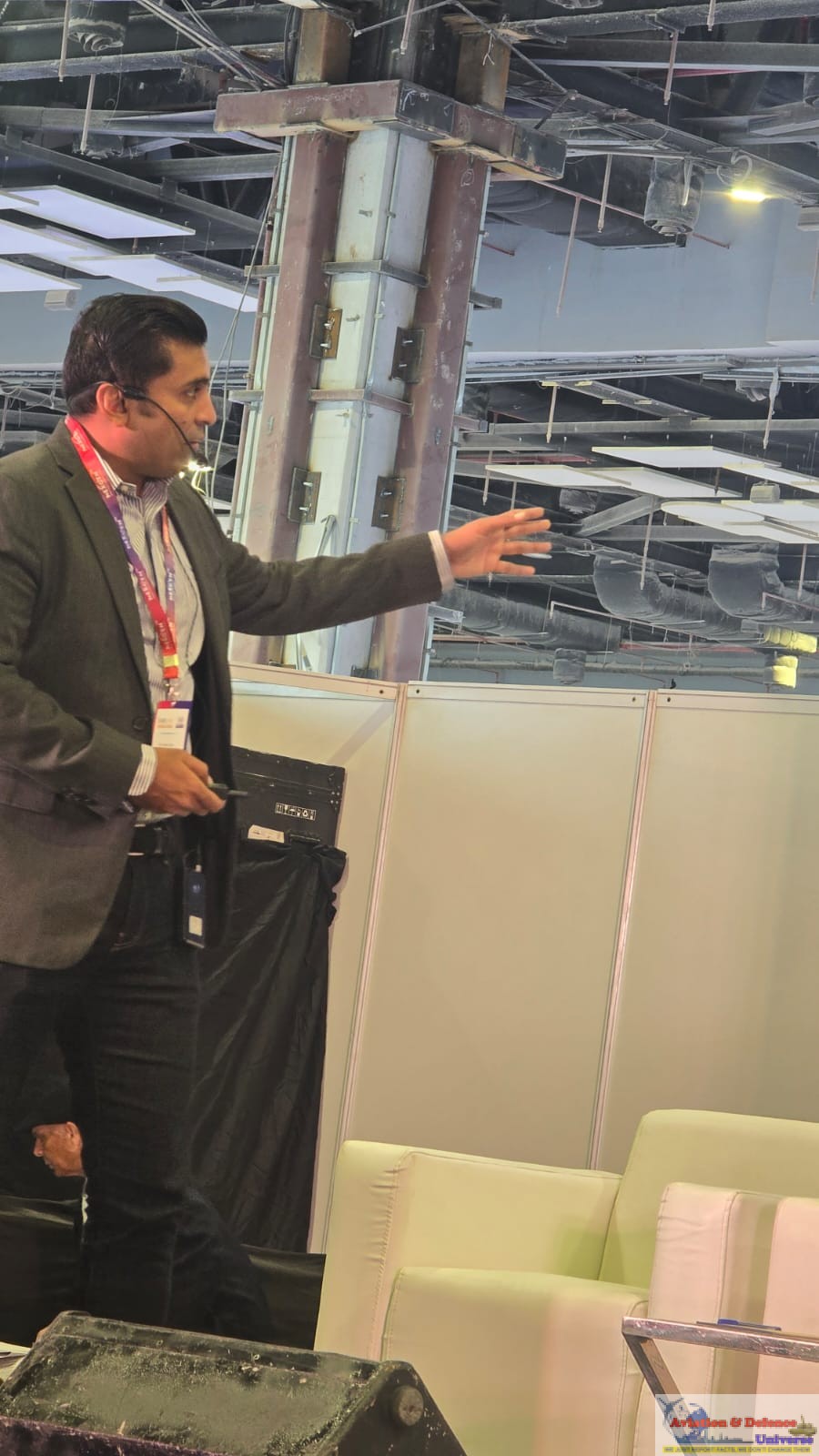 Painting a picture of future law enforcement operations, Raju explained, “If I think of the police control room of 2030, I would say you will have CCTVs, cars, vehicles… but you will also have airspace cyber and drone capability to be seen in one place.”
According to him, the next generation of command-and-control centres will integrate physical security, cyber monitoring and airspace management into a unified operational picture. Concluding with a stark reminder, he said, “The question is no longer whether drones will reach our cities, the point is that are we ready when they do.” The answer to that question, he suggested, will define the effectiveness of future urban security strategies.
Kiran Raju’s address highlighted a profound shift in the security landscape, where drones have evolved from military tools into accessible platforms capable of threatening cities, critical infrastructure and public spaces. He argued that the responsibility for managing this emerging challenge will increasingly fall upon police forces, requiring new command structures, counter-drone networks and integrated airspace management systems. As drones become more widespread and affordable, he contended that cities must begin building the infrastructure needed to detect, monitor and neutralise aerial threats before they become a routine feature of urban life.

A thought which comes up is that a critical component of any modern counter-drone system is its ability to distinguish between friendly, authorised and hostile drones, often referred to as a Friend-or-Foe Identification (IFF) capability. As drone usage expands for commercial deliveries, emergency services, surveillance, agriculture and infrastructure inspection, simply detecting a drone is no longer sufficient. Counter-drone systems must be capable of identifying whether a drone belongs to authorised agencies, licensed commercial operators or poses a genuine threat. This is achieved through a combination of drone registration databases, Remote ID technology, transponder signals, flight authorisations and AI-enabled behavioural analysis. Such identification prevents accidental engagement of legitimate drones while enabling security agencies to focus on rogue or hostile platforms. In the future, as cities deploy integrated drone traffic management and counter-drone networks, robust Friend-or-Foe capabilities will become essential to ensure both public safety and the smooth functioning of the emerging drone economy.
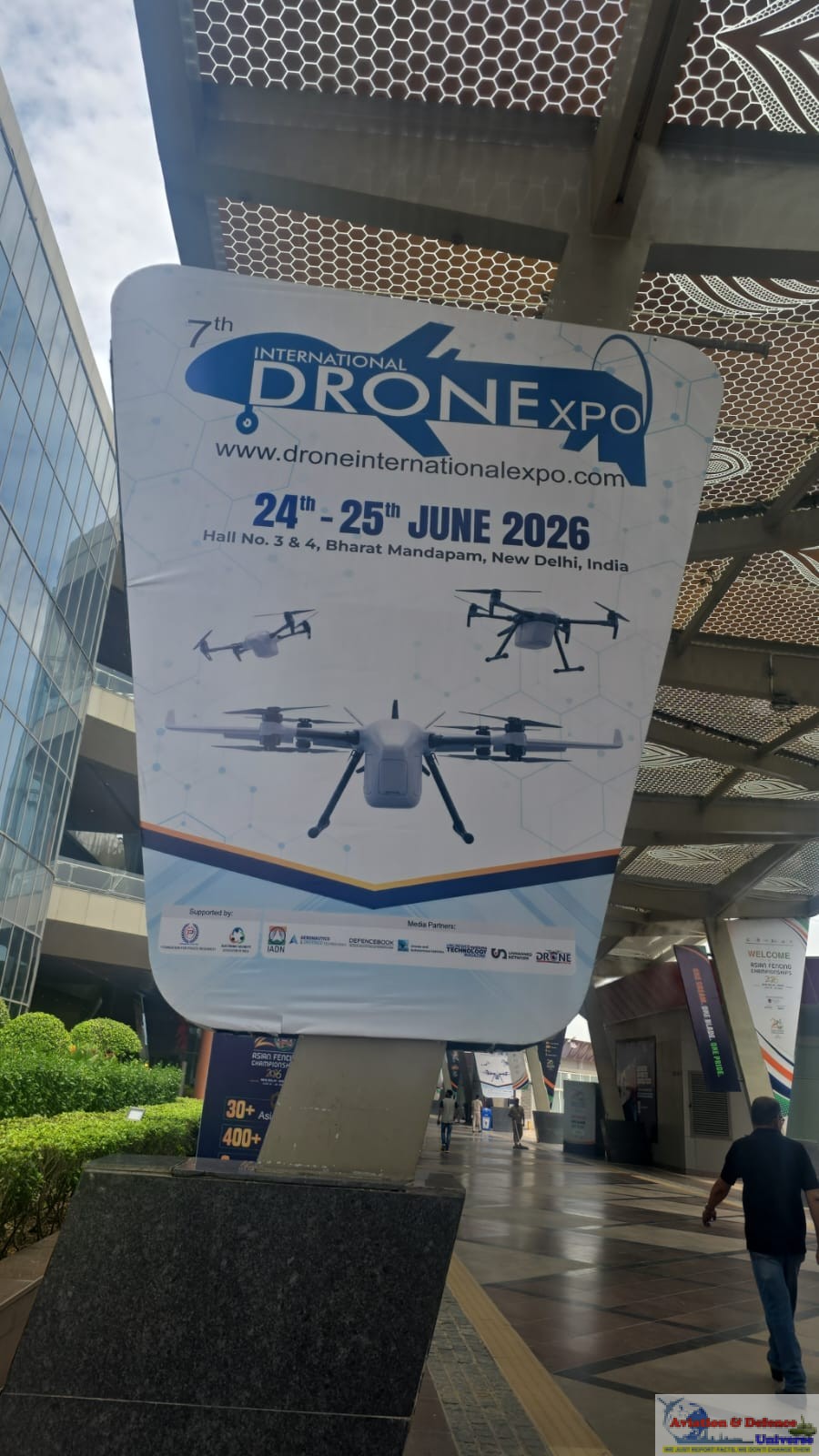 The counter-drone industry faces several technological, regulatory and operational challenges as drone threats continue to evolve rapidly. One of the biggest difficulties is detecting and identifying increasingly smaller, quieter and autonomous drones that can operate at low altitudes and blend into urban environments. Distinguishing between legitimate commercial drones and hostile platforms is another major challenge, especially as drone delivery services, infrastructure inspections and emergency response operations become more common. The industry must also contend with rapidly changing drone technologies, including AI-enabled navigation, swarm operations, anti-jamming capabilities and autonomous flight systems that reduce reliance on GPS or radio-frequency links. On the regulatory front, the absence of uniform standards governing drone identification, airspace management and counter-drone deployment creates uncertainty for operators and security agencies. Additionally, the high cost of deploying comprehensive counter-drone networks across large urban areas, critical infrastructure and public venues remains a significant hurdle. As the drone ecosystem expands, the industry must balance security requirements with the need to support legitimate drone operations, making integration, interoperability and real-time airspace management some of its most pressing challenges.

















































































-A4-Size-(2)_page-0001.jpg)