




 18th BRICS Summit























- RF Cyber Intelligence Emerges as the Next Frontier in Homeland Security
- From Bugged Boardrooms to Compromised Smartphones: Addressing the Hidden RF Threat
- Traditional Jammers Are No Longer Enough for Secure Facilities
By Sangeeta Saxena
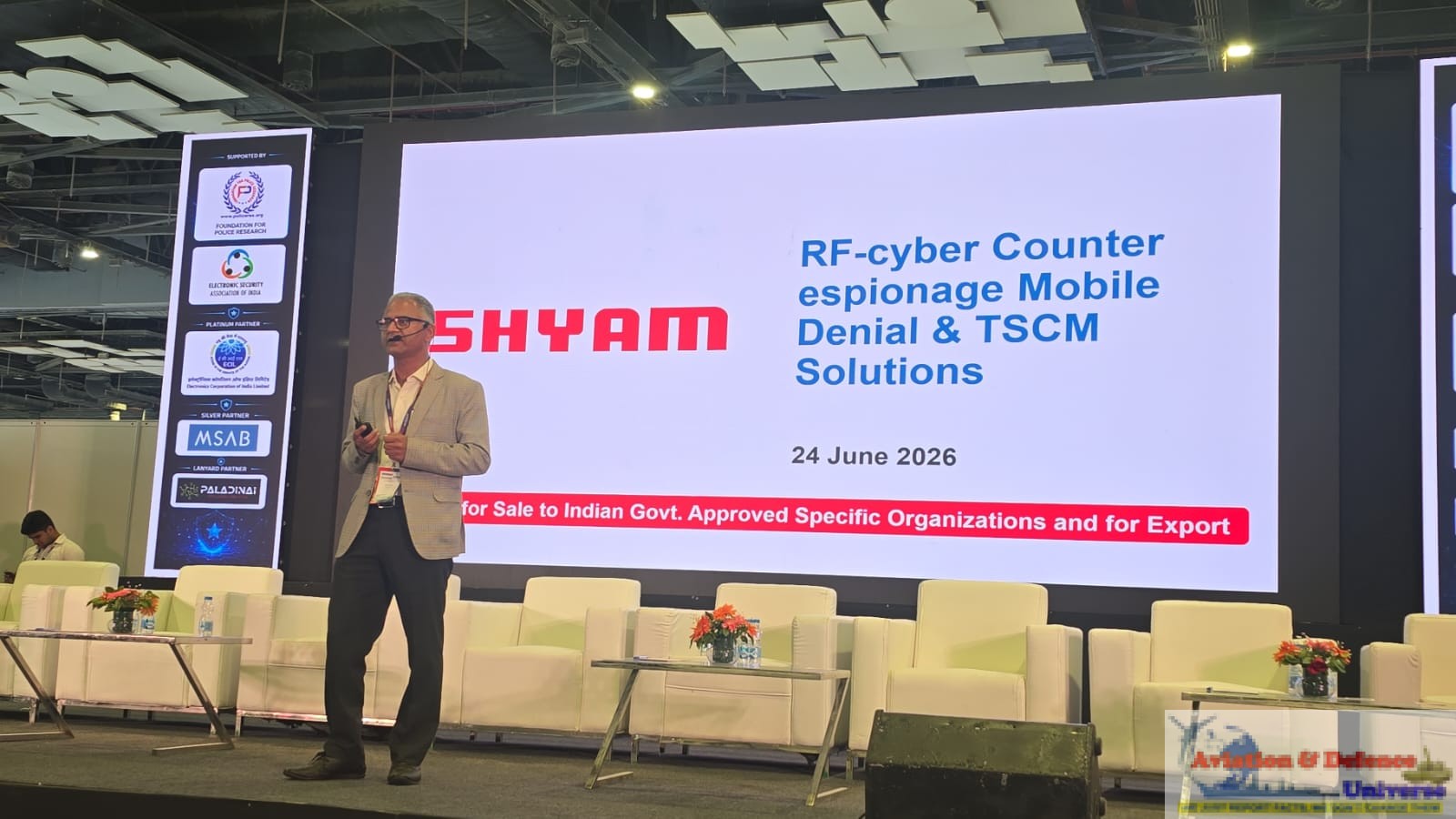
New Delhi. 25 June 2026. As governments, armed forces, critical infrastructure operators and security agencies increasingly focus on cyber security, another threat vector often remains overlooked—the invisible world of radio frequency (RF) communications. Speaking at the Homeland Security Expo 2026, Sunil Joshi, Vice President, Shyam Technologies, highlighted the growing risks posed by unauthorised mobile devices, wireless bugs, covert communication equipment and RF-based espionage. Presenting Shyam’s indigenous RF cyber intelligence and counter-espionage solutions, Joshi argued that security organisations must move beyond traditional jamming technologies and adopt intelligent systems capable of detecting, identifying, denying and locating hidden RF threats operating inside sensitive facilities.
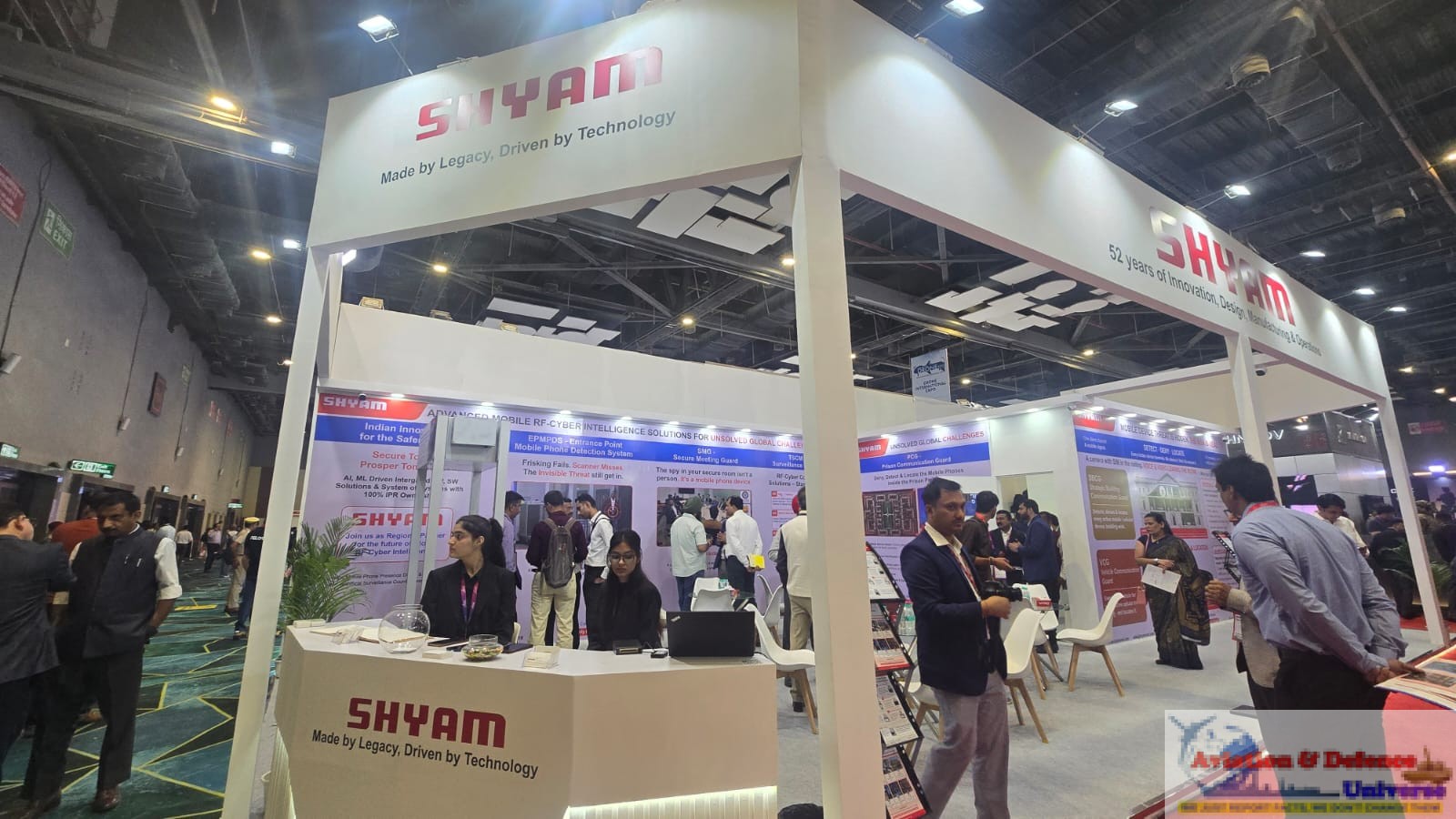 Establishing the company’s credentials, Joshi made a clear distinction, “First and foremost, last but not least, we are not a SI. We don’t buy anything from outside. We don’t integrate any third-party solutions with our solution.” He emphasised that except for standard computing hardware such as laptops and computers, the company’s technologies are developed in-house. Tracing the company’s evolution, he remarked, “Only the computers, laptops we buy from outside, rest are ours.” According to Joshi, Shyam’s journey has evolved from cable television and satellite communications to advanced RF cyber intelligence and homeland security solutions.
Drawing attention to a little-understood security challenge, Joshi observed, “So, again I repeat, we are not in cyber, but we are in RF cyber.” He explained that while organisations invest heavily in conventional cyber security, they often overlook wireless communications moving through the air around them.
Illustrating the hidden nature of the threat, he said, “Nobody can see what is happening. Nobody sees what is going out from your bedrooms, your workplaces, your confidential meeting rooms, your war rooms.” According to him, RF-based espionage represents an invisible attack surface that can compromise sensitive conversations and information without physical access to networks or devices.
 Questioning the effectiveness of existing approaches, Joshi noted, “People use jammers, but jammers do not have any outcome. You don’t know whether it is working or not.” He argued that conventional jamming systems merely disrupt communications without providing actionable intelligence about the devices operating within a protected area. Presenting an alternative vision, he stated, “Today what technology we have, it is beyond jammers.” According to Joshi, security agencies require systems that not only deny communications but also identify and locate the source of the threat.
Unveiling the company’s latest capabilities, Joshi announced, “Today I am introducing RF cyber and counter-espionage on mobile denial detection and locating system.” The system, he explained, can identify mobile devices operating within secure facilities and determine details such as service provider, SIM origin and location. Highlighting foreign-device detection capabilities, he remarked, “If any foreign SIM comes, immediately detect that the foreign SIM is inside your lab, inside your building.” He stressed that the technology can identify both conventional SIM cards and eSIM-enabled devices operating in restricted environments.
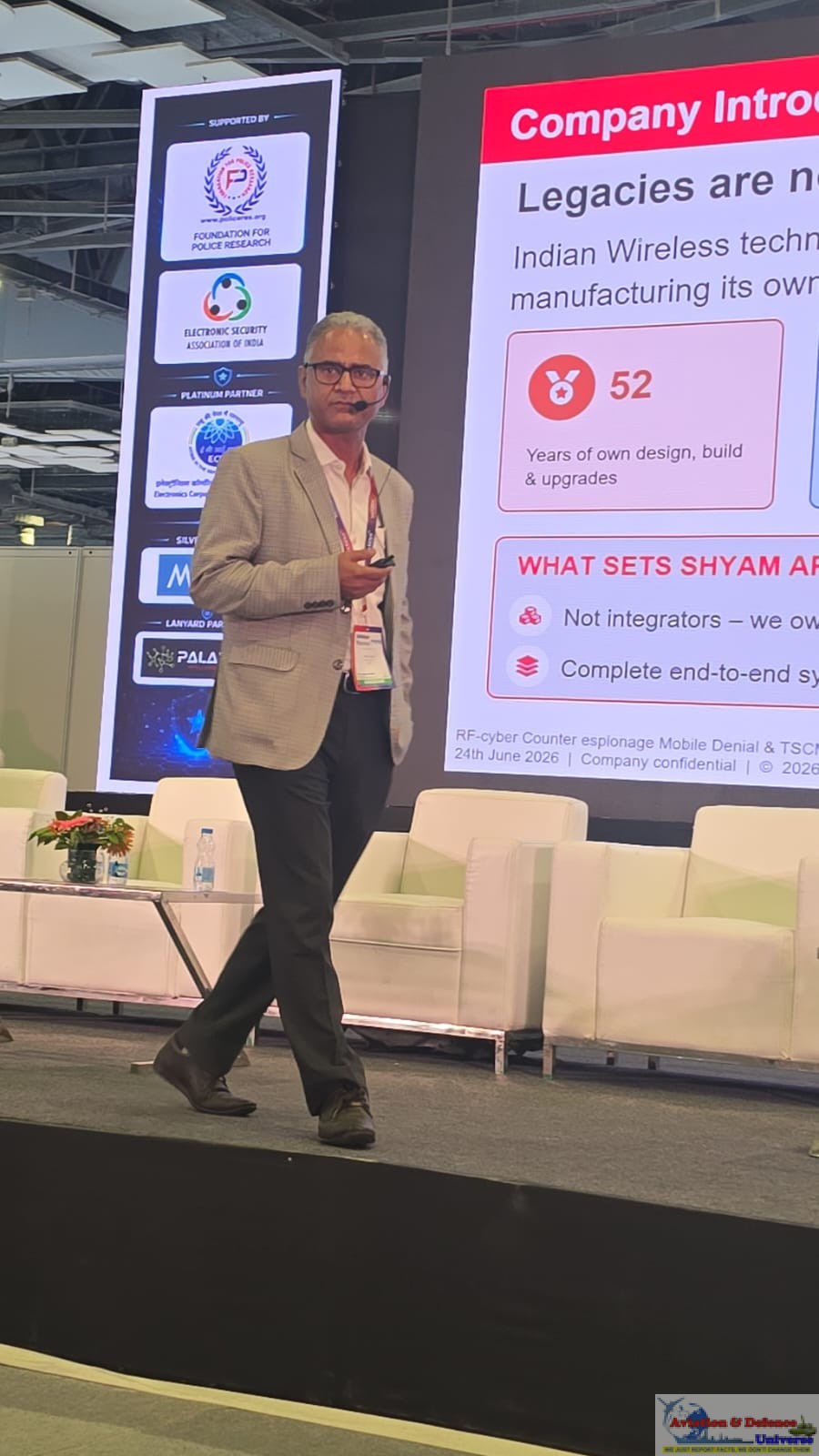 Drawing attention to the sophistication of modern espionage tools, Joshi warned, “Even your bedroom has been bugged.” Using examples of high-profile international espionage incidents, he argued that covert listening devices can be concealed in ordinary objects. Explaining the diversity of modern surveillance threats, he noted, “This is a clock presented to you. You just put on your watch and it is transmitting all the data what you are speaking.”
He showcased examples of hidden bugs disguised as clocks, power sockets, adapters, computer peripherals and wearable devices. Summarising the capability of Shyam’s systems, he stated, “We have a technology to detect them, deny them, locate them.” Distilling the company’s approach into three key actions, Joshi explained, “We identify, we deny and we locate.” According to him, the system can determine whether a device contains multiple SIMs, identify the countries of origin and locate individual devices operating within secure areas.
Emphasising the importance of RF visibility, he remarked,”People don’t know what is going through air.” He argued that RF monitoring should become a standard element of security architecture alongside conventional cyber security tools. Highlighting the scalability of the solution, Joshi said, “This system is from small meeting room to entire strategic building.” He explained that the technology can be deployed across meeting rooms, government facilities, research laboratories, military installations and critical infrastructure sites.
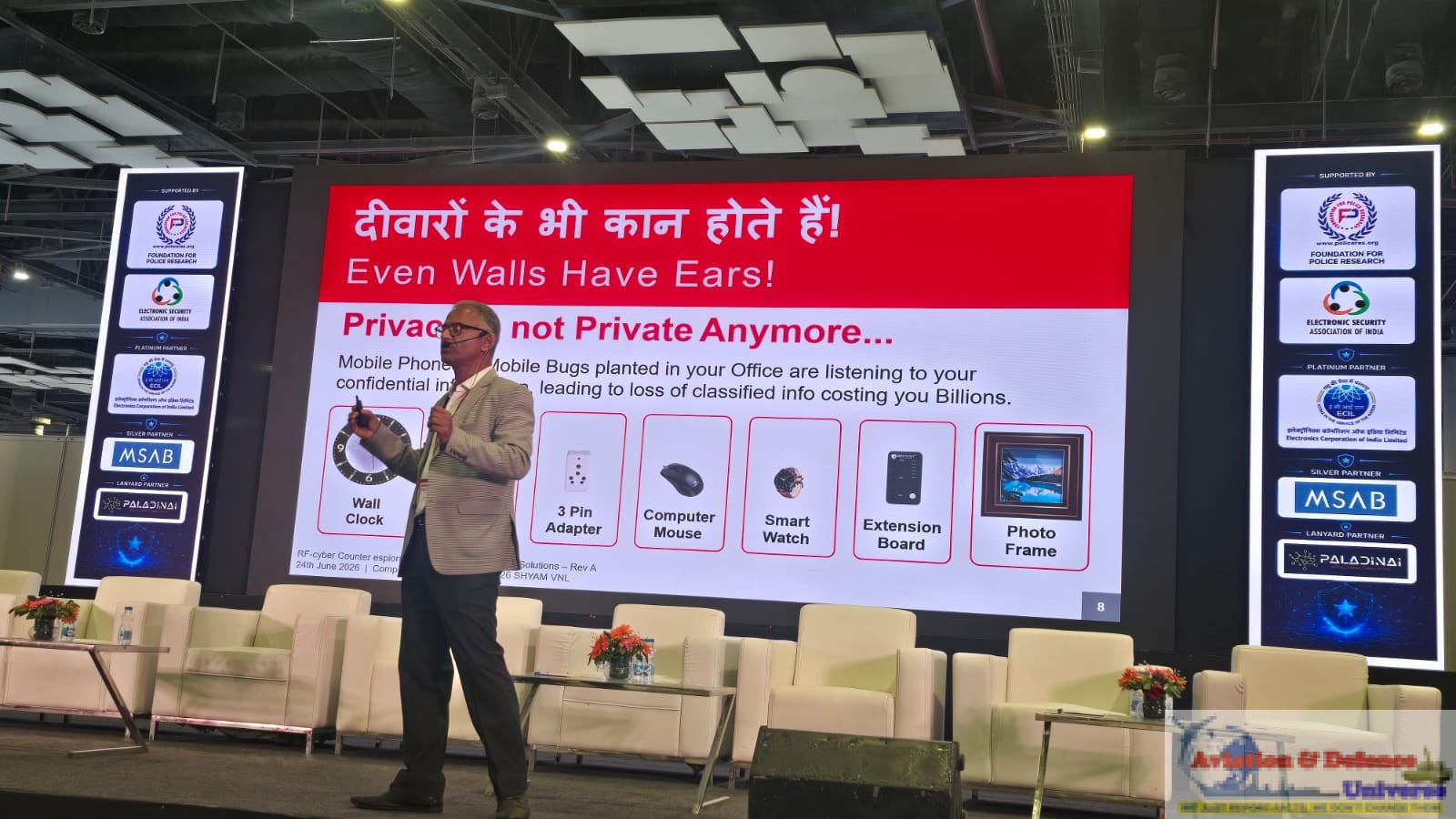 Stressing operational independence, he noted, “Our system doesn’t require any internet to function.” According to Joshi, the ability to operate on isolated networks enhances security for sensitive government and defence installations. Turning to correctional facilities, Joshi highlighted a growing concern, “The law enforcement agencies are facing lot of problems because the mobile phone has been smuggled inside.” He explained that illicit communication devices continue to present major security challenges for prisons. Showcasing the system’s precision, he claimed, “Our system not only deny but detect and locate the mobile phone in one metre accuracy.” Reiterating in its sensitivity, he added, “Even if the phone is buried below the soil, we will detect it.” According to Joshi, such capabilities could significantly improve prison security and reduce contraband communication.
Explaining the operational value of the system, Joshi stated, “The efficacy of the system is 100% denial.” Elaborating further, he said, “100% identity of this device is known.” The system can reportedly provide details including device origin, network operator, entry time and movement history within protected facilities. Describing the intelligence picture available to operators, he noted, “Everything you will get on your screen.” According to him, centralised command centres can provide comprehensive RF situational awareness across large facilities and campuses.
Discussing large-scale deployments, Joshi explained, “All the systems integrated together in a common command centre.” He described how multiple facilities, campuses and secure zones can be linked into a unified monitoring network. Highlighting operational simplicity, he remarked, “Even a person having a kind of worst standard can operate the system and see what is happening inside.” The objective, he said, is to simplify operations while providing actionable intelligence to security personnel.
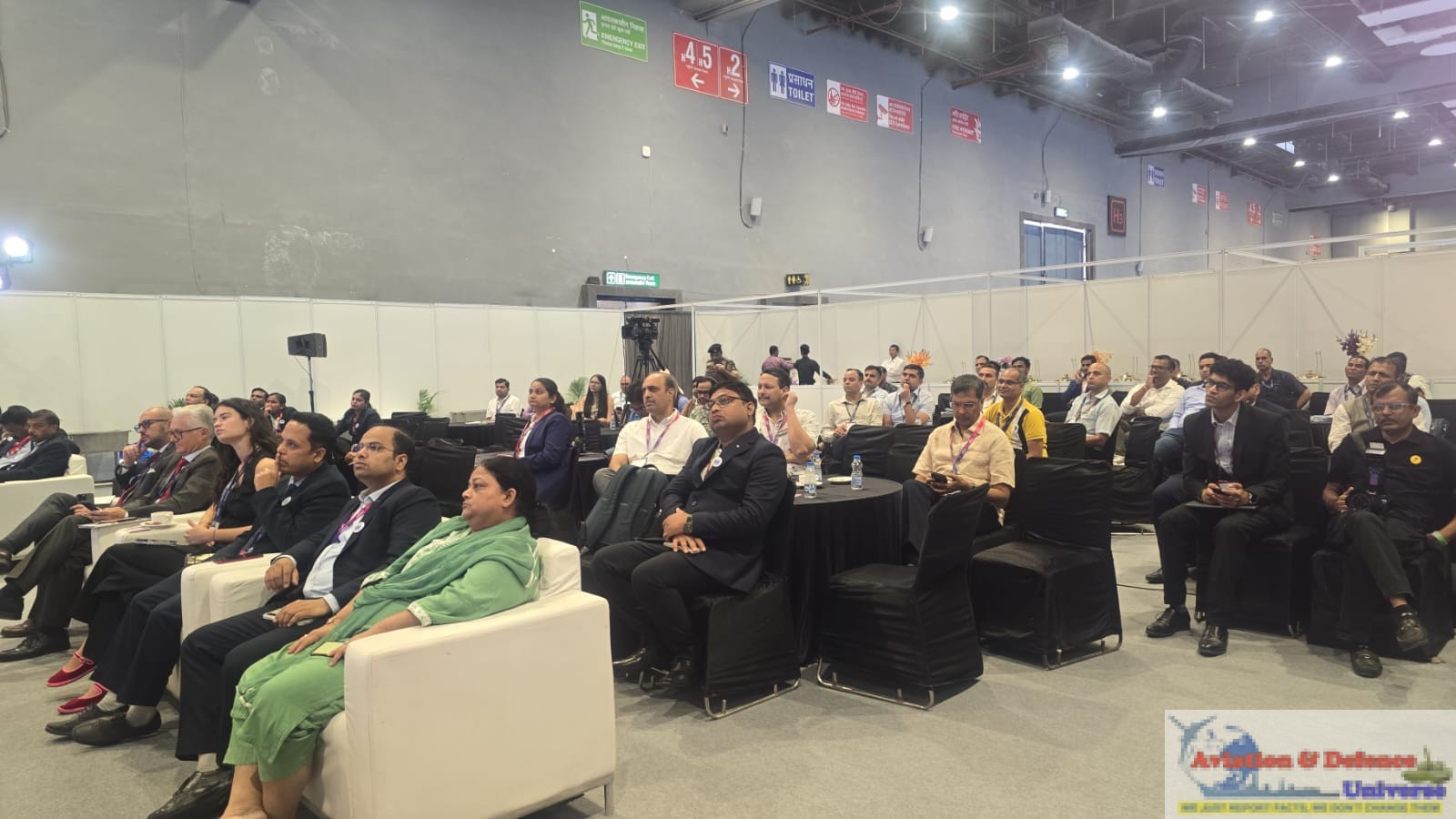 Looking beyond conventional mobile communications, Joshi warned, “As technology is growing, the outfits, the people and the terrorist groups are using different communication mode.” He pointed to satellite phones, Wi-Fi-based systems and emerging communication technologies as future challenges for security agencies. Emphasising comprehensive coverage, he noted, “We have a solution for them also.”The company has developed systems capable of addressing multiple RF communication technologies beyond traditional cellular networks.
Making one of his strongest claims during the presentation, Joshi declared, “100% denial, guaranteed.” Reiterating the system’s core strengths, he added, “Identity of these devices inside. And pinpoint location of the device.” According to him, organisations can maintain historical records, track recurring devices and identify communication patterns within secure facilities.
Sunil Joshi’s presentation emphasised the growing importance of RF cyber security in an era where information can be transmitted through invisible wireless channels beyond the reach of traditional cyber defences. By highlighting the limitations of conventional jammers and introducing integrated systems capable of detecting, denying and locating mobile devices, wireless bugs and covert communications, he argued for a more comprehensive approach to protecting sensitive facilities. From prisons and government buildings to defence installations and strategic infrastructure, Joshi positioned RF intelligence and counter-espionage technologies as a critical layer in the future security architecture of organisations facing increasingly sophisticated threats operating across the airwaves.



















































































-A4-Size-(2)_page-0001.jpg)