


 18th BRICS Summit














By Jai Kumar Verma
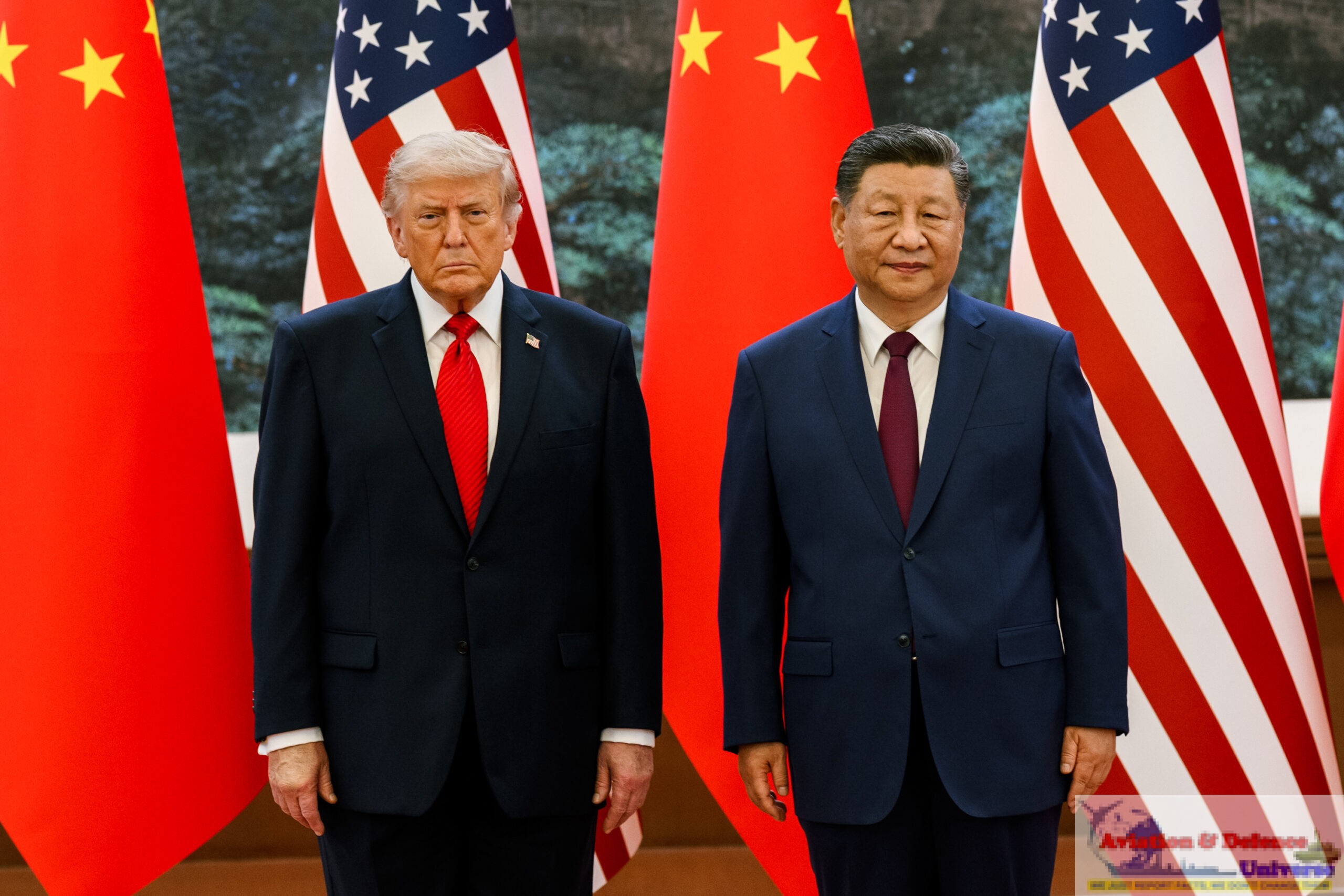
New Delhi. 19 June 2026. The return of Donald Trump to high-stakes diplomacy has revived an older and deeply consequential doctrine in American foreign policy: strategic ambiguity. Trump’s current Beijing visit comes at a moment when the United States is simultaneously confronting instability in the Gulf, rising energy insecurity, economic pressures at home, and intensifying great-power competition with China. Against this backdrop, a provocative question has begun circulating across diplomatic and strategic circles: will Trump “gift” Taiwan to Xi Jinping in exchange for Chinese cooperation over Iran and the Strait of Hormuz?

As President Trump arrived in Beijing for his high-profile summit with Chinese President Xi Jinping, anxiety in Taiwan was visible not merely within strategic circles, but across the political establishment and civil society. Taiwanese Foreign Minister Lin Chia-lung publicly expressed hope that the Trump-Xi meeting would not produce any “surprises” on Taiwan-related issues, reflecting Taipei’s concern that the island’s future could become entangled in wider negotiations involving Iran, trade and regional stability. Equally revealing was the blunt warning issued earlier by Taiwan’s Deputy Foreign Minister François Wu, who remarked that Taipei’s greatest fear was not simply being “on the agenda” of US-China talks, but being “on the menu”, a striking metaphor for the possibility of Taiwan becoming a bargaining chip in great-power diplomacy.
These apprehensions are unfolding alongside a broader social mobilisation within Taiwan itself. Recent international reports indicate that ordinary citizens, including teachers, office workers and small business owners, are increasingly participating in civil-defence and self-protection training programmes amid growing fears of military escalation across the Taiwan Strait. The atmosphere in Taiwan today reflects not panic, but a deepening recognition that strategic ambiguity in Washington may compel Taiwanese society itself to prepare psychologically and physically for an uncertain geopolitical future.
The evidence so far suggests something more subtle, transactional and politically calibrated. Rather than formally abandoning Taiwan, Trump appears willing to increase strategic ambiguity around America’s commitment to Taipei in order to secure Beijing’s assistance on Iran, energy flows and trade stabilization. The significance of this shift lies not in any declared policy reversal, but in the changing psychological and geopolitical signals emanating from Washington during this unusually sensitive phase in US-China relations.
One of the most consequential aspects of the summit was not what Donald Trump said, but what he deliberately chose not to say. During discussions with Xi Jinping, the Chinese leader reportedly warned that mishandling Taiwan could push US-China relations into a “dangerous place.” Yet Trump refrained from publicly responding with any clear deterrent message or reaffirmation of America’s military commitment to Taiwan’s defense.
The silence was notable because previous US administrations, including that of Joe Biden, repeatedly emphasized strategic deterrence and military readiness regarding Taiwan. Instead, Trump appeared to return to a framework built around strategic ambiguity, transactional diplomacy, and carefully managed summit optics. Across Asia, analysts and regional allies are increasingly interpreting this restrained posture as a meaningful signal that Washington’s approach toward Taiwan — and potentially broader regional security commitments — may be shifting.
Ostensibly, the Trump-Xi discussions in Beijing revolved around artificial intelligence, rare earth minerals, trade imbalances and the escalating Iran crisis. Yet beneath these formal agendas lay a deeper strategic anxiety: the future of Taiwan. Many geopolitical analysts argue that the present balance of leverage temporarily favours Beijing, largely because Washington urgently requires Chinese cooperation to stabilise the Gulf and reopen the Strait of Hormuz, through which nearly 20 percent of global oil supplies transit. China today remains Iran’s principal economic lifeline, purchasing more than 80–90 percent of Iranian oil exports despite sanctions. Reports also indicate that Beijing has maintained extensive strategic and technological links with Tehran, though claims of large-scale direct Chinese arms transfers during the present conflict remain difficult to independently verify. What is increasingly evident, however, is that Trump entered Iran expecting Chinese neutrality over Iran, only to discover that Beijing possesses significant leverage over both Tehran and the global energy market. Trump’s immediate objective appears to be persuading Beijing to reduce its economic and strategic support to Iran, thereby enabling Washington to de-escalate the conflict and eventually secure a politically viable American exit from the region.Bottom of Form
 The present anxieties in Taiwan inevitably evoke memories of an earlier geopolitical bargain. In 1972, President Richard Nixon’s historic visit to China fundamentally altered the strategic balance of the Cold War. Washington, deeply exhausted by the Vietnam War and seeking an honourable exit from Southeast Asia, viewed Beijing as a crucial counterweight against the Soviet Union, then America’s principal strategic rival. The resulting rapprochement opened the door for eventual economic engagement between China and the West, including expanding trade and later large-scale investments by American corporations in the Chinese economy. Most significantly, the Shanghai Communiqué of 1972 acknowledged the Chinese position that there is “one China” and that Taiwan is part of China, while the United States stated it would not challenge that position. Nevertheless, Washington stopped short of formally endorsing Beijing’s sovereignty claim over Taiwan. Today, Beijing seeks something stronger: explicit American opposition to Taiwanese independence and reduced strategic support for Taipei — demands that have again become central to US-China diplomacy amid growing global instability.
Although the US Congress and the Trump administration approved a record arms package worth $11.1 billion for Taiwan in December 2025, President Trump has recently introduced uncertainty over additional pending sales, a move widely interpreted by analysts as an attempt to reassure Beijing during sensitive negotiations over Iran, trade and regional stability. The package reportedly included HIMARS rocket systems, howitzers, drones, anti-tank missiles and other asymmetric warfare platforms intended to strengthen Taiwan’s deterrence capabilities against China.
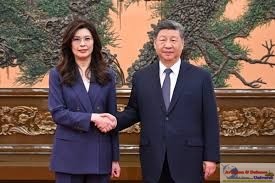 In April 2026, Taiwan’s opposition leader Chiang Chi-Chen travelled to Beijing for high-level meetings with Xi Jinping, in what analysts described as one of the most symbolically significant cross-Strait political engagements in recent years. Chinese state media gave the visit exceptional prominence, with Xi receiving Chiang in the Great Hall of the People, a venue typically reserved for interactions with heads of state and senior foreign dignitaries. During the visit, Beijing announced a series of economic, cultural and travel-related concessions aimed at Taiwanese businesses, students and investors, alongside multiple cooperation initiatives between Chinese provincial authorities and Taiwanese political and commercial groups. Although these were not formal state-to-state treaties, the optics were carefully designed to convey Beijing’s willingness to offer economic incentives and political accommodation under the “One China” framework. The larger strategic message was directed at the Taiwanese public: peaceful integration, Beijing suggested, could bring tangible benefits. This aligns with Xi Jinping’s broader national objective of achieving “national reunification” by 2049 — the centenary of the People’s Republic of China — a goal increasingly embedded within Chinese strategic and political discourse.
Nonetheless, any perception that Washington is willing to dilute its commitment toward Taiwan would carry consequences far beyond the Taiwan Strait. For the United States, the issue is not merely territorial or symbolic; it is fundamentally about strategic credibility. If America appears unwilling to stand by Taiwan under pressure from Beijing, allies and partners across the Indo-Pacific would inevitably begin questioning the reliability of US security guarantees.
Japan, which hosts major American military bases and depends heavily on the US security umbrella for deterrence against both China and North Korea, would view such a shift with deep alarm. South Korea, similarly reliant on nearly 28,000 US troops stationed on its soil, could begin reassessing the long-term credibility of American commitments in East Asia. The Philippines, which has expanded American military access under the Enhanced Defense Cooperation Agreement (EDCA), depends substantially on US naval and air support in its maritime disputes with China in the South China Sea. Australia, a central member of the AUKUS security partnership alongside the US and the UK, has tied much of its long-term defence planning, including nuclear submarine cooperation, to sustained American strategic engagement in the Indo-Pacific.
 Even India, despite its tradition of strategic autonomy, would interpret an American retreat on Taiwan as weakening the broader anti-China balancing framework represented by the Quad. New Delhi increasingly views the Quad not merely as a diplomatic forum, but as an indirect strategic stabiliser against Chinese assertiveness along the Himalayan frontier and across the Indian Ocean. In such a scenario, the United States could increasingly be perceived as a “fair-weather friend”, dependable in rhetoric but uncertain in moments of geopolitical risk. That perception alone could trigger strategic recalculations across Asia, encouraging regional powers to either accommodate Beijing more openly or accelerate independent military capabilities, including nuclear deterrence. The larger danger for Washington, therefore, is not only losing Taiwan, but losing confidence in the entire architecture of American alliances and partnerships built over decades in the Indo-Pacific.
In the immediate aftermath of the Beijing visit, President Trump described the summit as “highly successful,” claiming that China had agreed to increase purchases of Boeing aircraft and extend cooperation on stabilising the Iran crisis, including facilitating the reopening of the Strait of Hormuz. Yet significantly, Beijing has neither fully confirmed nor categorically denied many of these assertions, reinforcing the impression that the summit produced more strategic signalling than verifiable agreements. Beneath the carefully choreographed optics, mutual distrust remained unmistakably visible. Several reports suggested that members of the American delegation travelled with burner phones and avoided carrying personal electronic devices, reflecting longstanding concerns regarding Chinese surveillance and cyber-espionage. It was also reported that official gifts presented during the visit were not retained by members of the US entourage, underscoring the deep trust deficit that continues to define US-China relations despite public displays of diplomatic warmth.
Ultimately, the real significance of Trump’s Beijing visit may lie less in what was formally agreed and more in the geopolitical ambiguities it revealed. Taiwan remains the central fault line in the emerging contest between a declining but still dominant superpower and a rising China increasingly confident of its historical trajectory. Trump’s invitation to Xi Jinping for a reciprocal visit to the United States in September 2026 indicates that both sides wish to keep channels of engagement open. Yet the deeper strategic contradictions remain unresolved: Washington seeks Chinese assistance on Iran and global economic stability even as it simultaneously attempts to contain Beijing’s long-term influence across the Indo-Pacific. For America’s allies and partners, the concern is no longer merely whether Taiwan can defend itself, but whether the United States itself retains the strategic clarity and political resolve necessary to sustain the regional order it created after the Second World War.
(Jai Kumar Verma is a Delhi-based strategic analyst and Life Member of United Services Institute of India and The Manohar Parrikar Institute for Defence Studies and Analyses. The views in the article are solely the author’s. He can be contacted at editor.adu@gmail.com)


















































-A4-Size-(2)_page-0001.jpg)