


















- Diplomacy Opens Doors, Processing Must Follow
- From Exploration to Processing: India’s Next Critical Minerals Challenge should be overcome
- Can India Build the Processing Backbone for Critical Minerals?
By Theertha Panachoor
Hyderabad. 14 July 2026. India is rapidly strengthening its position in the global critical minerals landscape  through an expanding network of international partnerships, strategic investments and policy initiatives. From the India–US Framework on Securing the Supply of Critical Minerals and Rare Earths to the Quad’s multi-billion-dollar commitment towards resilient supply chains, New Delhi is emerging as an active participant in shaping the future of mineral security. Yet, while diplomatic engagement, overseas resource acquisition and domestic exploration are gathering pace, a closer examination of official records suggests that India’s greatest strategic challenge lies elsewhere—building sufficient downstream processing and refining capacity. The country’s long-term success in achieving industrial resilience and strategic autonomy will depend not only on securing access to critical minerals but also on developing the infrastructure needed to transform them into high-value industrial and defence applications.
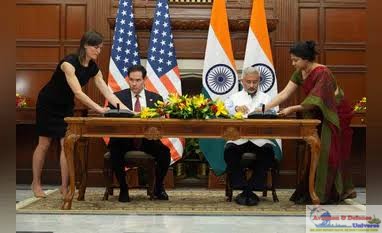
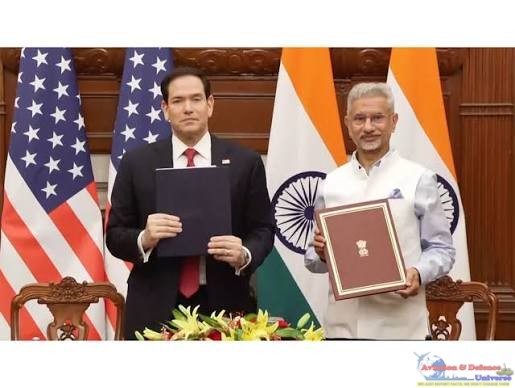
India has been pairing technological ambition with governance frameworks, allowing it to enter international discussions with proposals of its own. On 26 May, External Affairs Minister S. Jaishankar and US Secretary of State Marco Rubio signed the Framework on Securing of Supply in the Mining and Processing of Critical Minerals and Rare Earths. The document commits both countries to cooperate across mining, processing, recycling and investment, extending an area of collaboration that has steadily moved closer to the centre of the bilateral relationship.
 The framework was announced on the sidelines of the Quad Foreign Ministers’ Meeting, which produced a second document the same day. Australia, India, Japan and the United States jointly committed to support up to $20 billion in public and private investment for critical minerals projects spanning mining, processing and recycling. Separately, the US Embassy in New Delhi stated that Washington has mobilised more than $30 billion worldwide through letters of interest and financing for critical minerals projects. The two figures appear in different official statements, refer to different initiatives and are not presented as cumulative. It is important to pay attention to since the documents point less to the scale of announced financing than to the growing effort to build institutional mechanisms around critical mineral supply chains.
The framework establishes a mechanism for cooperation but it does not, by itself, expand processing capacity or secure new supplies of critical minerals. That becomes clearer when viewed alongside the Government of India’s own record on implementation.
The National Critical Mineral Mission, approved by the Union Cabinet in January 2025, provides a very clear picture of where India’s efforts currently stand. The mission spans across seven years with a financial outlay of ₹34300 crores and covers thirty critical minerals. Parliamentary replies from the Ministry of Mines indicate that progress has so far been concentrated at the exploration stage. The Geological Survey of India has carried out 458 exploration projects in Field Season 2025–26, including 230 projects focused on critical and strategic minerals and 92 projects targeting rare earth elements. The GSI says this is part of its broader target of 1200 exploration projects under the National Critical Mineral Mission by 2030–31.
India’s overseas footprint also remains limited. Khanij Bidesh India Ltd. (KABIL) has secured a lithium asset in Catamarca in Argentina, which continues to be the principal overseas mining investment identified in official documents. The primary record therefore points to an effort still focused on identifying resources and building institutional capacity. It offers less evidence of a corresponding expansion in downstream processing, refining or manufacturing capability. That is an inference drawn from what official documents describe and equally from what they do not.
 The gap becomes more apparent in processing, which is also the first area identified in the India-US framework of 26 May. That is where India’s constraints currently lie. Official documents point to a progress in exploration and mineral-block auctions, both of which depend primarily on regulatory approvals, licensing and geological surveys. They provide far less evidence of comparable progress in downstream processing and refining.
It’s important to note since the two stages run parallelly. Exploration can accelerate through policy decisions, expanded surveys and faster approvals. Processing capacity depends on refineries, separation facilities, specialised equipment and sustained capital investment, all of which require considerably longer development cycles. The National Critical Mineral Mission’s visible progress therefore remains concentrated in activities that governments can initiate through administrative action. The transition from identified resources to processed material is a separate industrial challenge, and one that official records suggest is still at an earlier stage.
Rare earth permanent magnets show us the challenge more clearly than broad discussions of supply chains. In a Lok Sabha reply, Union Minister Jitendra Singh places India’s current annual requirement at around 4000 tonnes, also stating that the government’s production target is 5000 tonnes by 2030, suggesting that planned capacity would exceed present demand.
The picture changes when viewed against future requirements. In the same parliamentary reply, the minister estimated that India’s annual demand for rare earth permanent magnets could approach 8000 tonnes by 2030. That figure is the government’s own projection rather than an independently verified forecast and should be understood as such. Even so, it provides the benchmark against which the government’s own production target must be assessed.
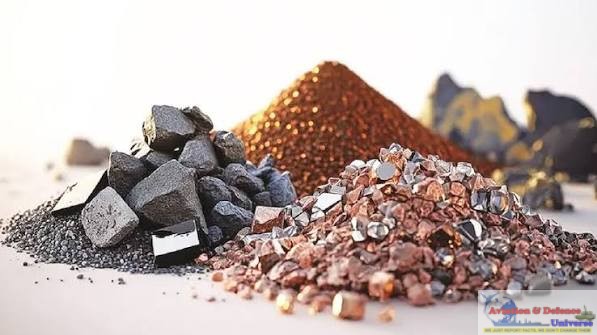 When looking at the two figures together, they point to a structural gap. The planned production target exceeds current consumption but falls below the level of demand the government itself expects by the end of the decade. Whether that gap ultimately narrows will depend on how quickly processing capacity expands, an area where official documents continue to show fewer concrete outcomes than upstream exploration and resource development.
India’s first rare earth permanent magnet manufacturing facility was commissioned in Visakhapatnam in 2023. Parliament was told that the facility would support defence and other high-technology sectors. No production figure accompanied that statement, and no indication was given of how output would be distributed across different users. The government’s principal intervention is the Scheme to Promote Manufacturing of Sintered Rare Earth Permanent Magnets, backed by an outlay of ₹7280 crore. It aims to establish 6000 tonnes of integrated annual manufacturing capacity, from rare earth oxide to finished magnet, through support for up to five manufacturers selected by competitive bidding.
The implementation matters. Manufacturers are selected through successive bidding rounds, each following its own procurement timeline. The scheme defines the total capacity it seeks to create but does not identify when individual plants are expected to begin production or whether that capacity will come online simultaneously. The announced figure therefore describes the programme’s objective rather than the capacity currently available to industry. Electric vehicles, renewable energy, electronics and defence are all identified as priority sectors. The public documents do not divide capacity between them or indicate whether any share is reserved for defence applications. That absence does not establish that defence manufacturers will face shortages but it leaves unanswered how supply would be prioritised if demand outpaces production.
The same pattern appears further along the supply chain, in finished defence platforms rather than the critical minerals that underpin them. This time the evidence comes from outside the Indian government. SIPRI’s Trends in International Arms Transfers 2026 places India as the world’s second-largest arms importer during 2021-25. Imports declined only marginally from the previous five-year period, while Russia’s share continued its long downward trajectory, falling from 70 per cent in 2011-15 to 40 per cent in 2021-25. When looked at alone, the figures suggest diversification but when read together, they suggest that India’s dependence on a single supplier has eased, but its dependence on external suppliers has not. The source of the imports has changed more quickly than the structure of reliance behind them.
China offers a more revealing comparison. SIPRI attributes its exit from the world’s ten largest arms importers to the expansion of domestic production rather than a redistribution of foreign purchases. The contrast is therefore less about procurement than industrial capability. One country reduced the strategic importance of foreign suppliers by expanding domestic capacity. The other has broadened the range of countries it buys from while remaining one of the world’s largest importers. Those are different forms of resilience, even if both appear under the language of diversification.
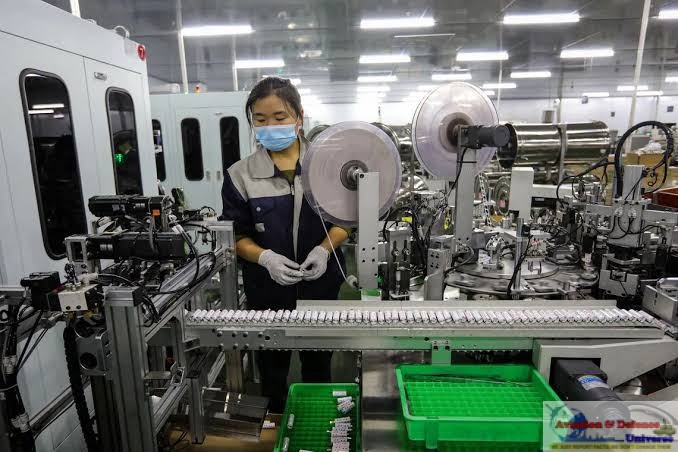
China’s rare earth and critical minerals processing industry is concentrated across a network of specialised provincial hubs, each playing a distinct role in the global supply chain. Jiangxi Province serves as the world’s leading centre for the separation and processing of heavy rare earth elements, including dysprosium and terbium, which are indispensable for high-performance permanent magnets. Inner Mongolia dominates the processing of light rare earth elements such as neodymium and praseodymium—key materials for electric vehicle motors —while also hosting extensive graphite refining operations. Yunnan and Sichuan have emerged as the principal processing corridors for lithium and cobalt, handling feedstock sourced from both domestic mines and imported African concentrates. Meanwhile, Shandong Province has developed significant capabilities across multiple critical mineral value chains, including aluminium refining and speciality chemical processing, reinforcing China’s integrated leadership in the global critical minerals ecosystem.
Brazil and India have also agreed to deepen cooperation in critical minerals and rare earths, marking another step in New Delhi’s efforts to diversify its supply chains and reduce its dependence on China for strategically important resources. The agreement was reached during Brazilian President Luiz Inácio Lula da Silva’s meeting with Prime Minister Narendra Modi in February 2026, where the two leaders also explored ways to expand bilateral trade, strengthen investment flows and enhance collaboration across key strategic sectors, including mining and critical mineral value chains.
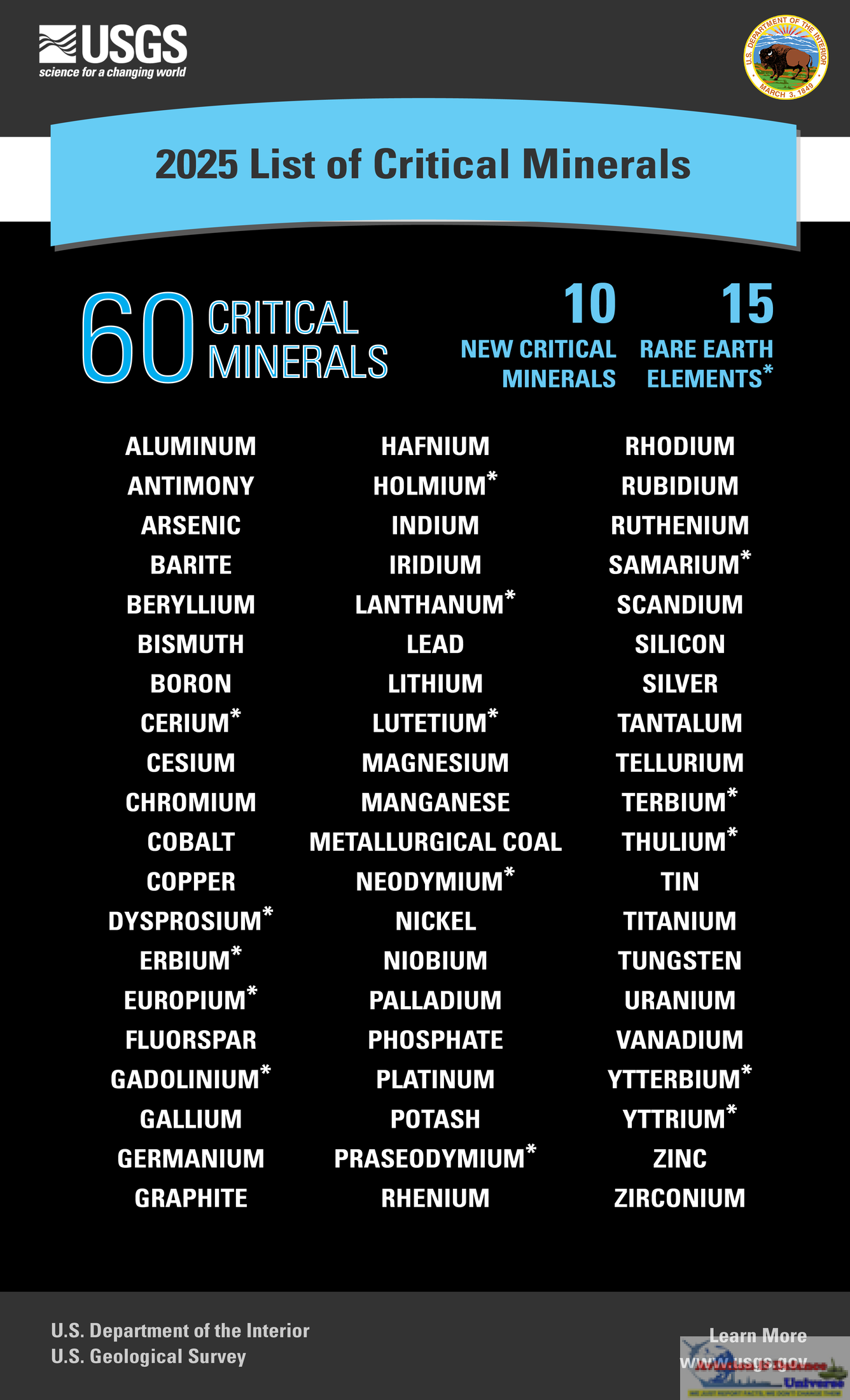
As per an International Energy Agency (IEA) report, critical minerals are fundamental to modern energy technologies and the wider global economy. Lithium, nickel, cobalt, manganese and graphite are vital for battery performance, while rare earth elements are indispensable for the permanent magnets used in wind turbines and electric vehicle motors. Electricity networks also depend heavily on aluminium and copper, with copper serving as a core material across virtually every electricity-related technology. As demand for these resources rises, their strategic value has grown sharply, making the development of secure, diversified and resilient mineral supply chains a major policy priority. Yet critical mineral markets are becoming more concentrated, particularly in refining and processing. For copper, lithium, nickel, cobalt, graphite and rare earth elements, the combined market share of the three leading refining countries increased from about 82 per cent in 2020 to 86 per cent in 2024. Much of this growth came from a single dominant supplier—Indonesia in the case of nickel and China for all the other major minerals—underlining the continuing vulnerability of global supply chains.
Viewed together, the evidence from critical minerals and defence procurement points to the same structural pattern. India is reducing dependence on individual suppliers more quickly than it is reducing dependence on external supply itself. In critical minerals, the emphasis has been on expanding exploration, securing overseas assets and building international partnerships while domestic processing capacity develops. In defence procurement, Russia’s declining share has broadened India’s supplier base but India remains one of the world’s largest arms importers. The pattern is consistent across both sectors. Diversification has advanced faster than industrial substitution.
That is also the context in which the India-US Framework on Securing of Supply in the Mining and Processing of Critical Minerals and Rare Earths should be understood: it commits both governments to cooperation across mining, processing, recycling and investment. It expands access to capital, technology and international partners. It does not create processing capacity by itself, nor does it claim to. The official record suggests that India’s greatest constraint remains downstream processing, the stage that depends on refineries, separation facilities and manufacturing plants rather than policy announcements or regulatory reform. It’s interesting because international partnerships can broaden sourcing options almost immediately. Processing capacity is built through projects that move according to investment decisions, procurement
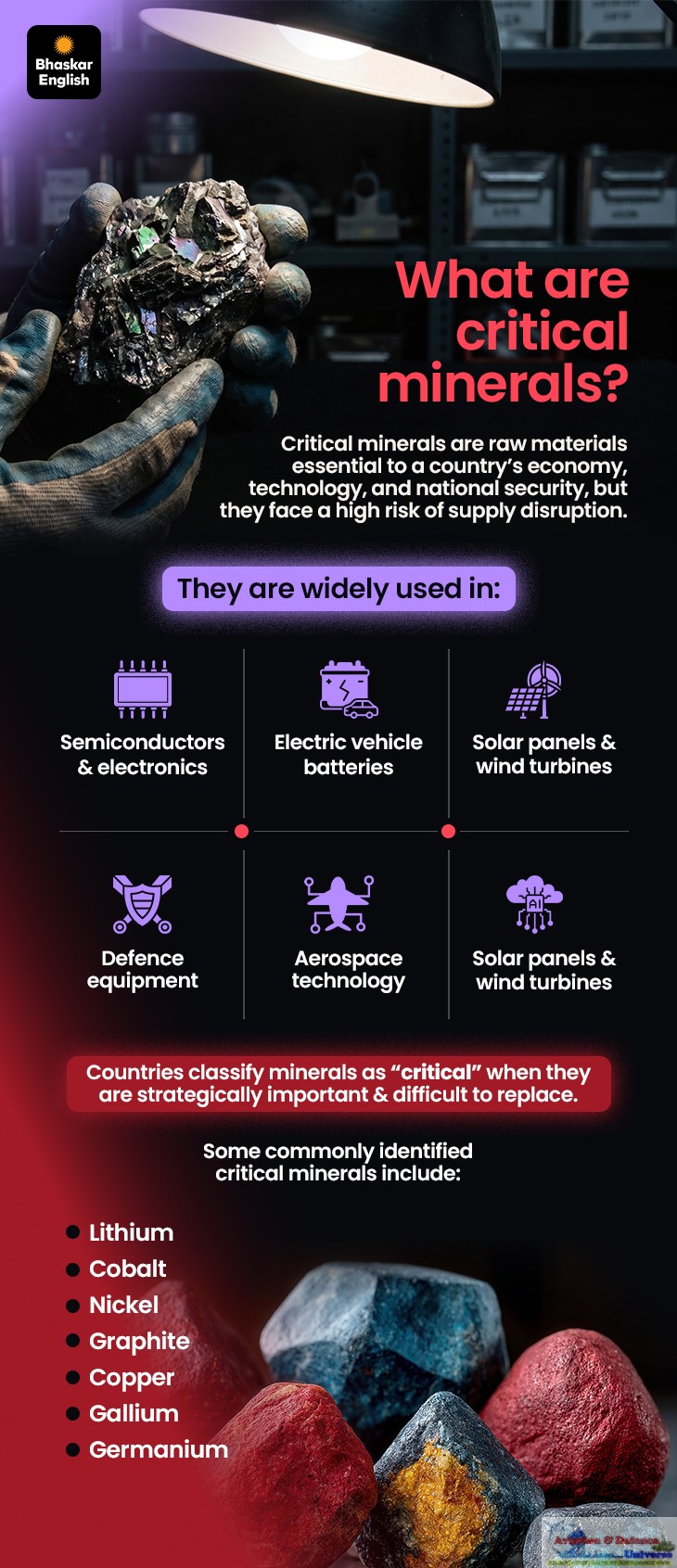 The question therefore extends beyond the framework signed on 26 May. It is whether India’s industrial base can expand quickly enough for diversified supply chains to become a complement to domestic capability rather than a substitute for it. The answer will determine not only the resilience of India’s critical mineral strategy but also the degree of strategic autonomy its defence industrial base can ultimately sustain.
India’s critical minerals strategy has entered a decisive phase where international diplomacy and domestic industrial capability must advance together. The country’s expanding network of strategic partnerships has undoubtedly enhanced access to resources, investment and technology, while initiatives such as the National Critical Mineral Mission have accelerated exploration and resource identification. However, the evidence indicates that processing, refining and advanced manufacturing remain the weakest links in the value chain.
Unless these downstream capabilities grow at the same pace as diplomatic outreach and upstream exploration, India risks remaining dependent on external processing even as it diversifies its sources of supply. Ultimately, the strength of India’s critical minerals strategy—and the strategic autonomy of its defence and high-technology sectors—will be measured not by the number of agreements it signs, but by its ability to convert mineral resources into domestically processed materials that power the nation’s industrial future.











































































-A4-Size-(2)_page-0001.jpg)