




























- From Airport Innovation to Global Interoperability: DigiYatra’s Next Flight
- Seamless, Secure and Smart: DigiYatra is Redefining Passenger Experience
- India Leads the World in Contactless Air Travel, Says DigiYatra CEO
By Sangeeta Saxena
New Delhi. 13 July 2026. Just imagine you are at the airport to catch a flight to London, no queues to get in, no queues for security, no queues to checkin and all you might face a queue for immigration which too the Digiyatra is trying work out for you. This was the news of the day announced by the Digiyatra CEO in an address at the Airport Modernisation Summit in the national capital.
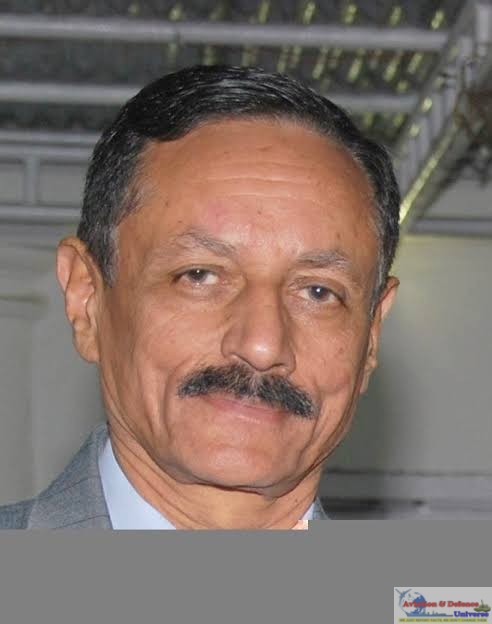
Few innovations have transformed India’s aviation ecosystem as profoundly as Digiyatra. What began nearly a decade ago as an ambitious effort to eliminate long airport queues has today evolved into one of the world’s largest biometric-enabled passenger facilitation platforms, making India a global leader in seamless, paperless and privacy-centric air travel. Speaking at the Airport Modernisation Summit 2026, Suresh M. Khadakbhavi, Chief Executive Officer, DigiYatra Foundation, outlined how an initiative conceived to simplify passenger movement has matured into a global benchmark that is now attracting the attention of airports and aviation regulators worldwide. Looking beyond India’s borders, he unveiled DigiYatra’s next frontier—passport-based international travel, global interoperability and a future where a traveller’s face becomes the only document required from departure to arrival.
 Having transformed domestic passenger processing across Indian airports, Suresh M. Khadakbhavi turned his attention to what he described as DigiYatra’s next major milestone—taking India’s seamless travel ecosystem to the global stage. According to him, international travel has always been part of DigiYatra’s long-term vision. However, the complexity of immigration procedures, passport verification and international security protocols meant that the journey required extensive consultation with multiple stakeholders before implementation could begin.
Announcing the next phase, he revealed, “In the next six to nine months, we will roll out complete electronic passport-based enrollment.” Passengers will soon be able to enroll using India’s new electronic passports, in addition to Aadhaar and the upcoming driving licence integration. Explaining the process, Khadakbhavi said that travelers will simply scan the passport’s information page before placing their smartphone over the embedded chip using Near Field Communication (NFC) technology.
The passport’s digital credentials will then be securely read, verified against a live selfie and stored on the traveler’s own device, maintaining DigiYatra’s decentralised, privacy-first architecture. The CEO then unveiled what may well become DigiYatra’s most transformative innovation—global interoperability. Working closely with the International Civil Aviation Organization (ICAO), DigiYatra is developing a platform capable of securely recognising electronic passports issued by countries across the world. Sharing this vision, he said, “We have a contract with ICAO to be able to read electronic passports of various global citizens.”
He explained that the objective extends far beyond simplifying departures from India. Illustrating the future passenger experience, Khadakbhavi invited delegates to imagine travelling from Bengaluru to London. He said, “Imagine you are flying from Bengaluru to London. You share your credentials at Bengaluru Airport and also with London Airport. After a ten-hour flight, you don’t have to stand in a two-hour immigration queue. Your credentials are already there—you simply scan your passport, your face is matched, and you walk through.” According to him, the system will work not only for Indian citizens but eventually for international travelers as well. He revealed that initial trials have already demonstrated the concept’s viability. Sharing an encouraging milestone, he announced, “We have already tested it on the Bengaluru–Doha flight with seven passengers, and they successfully completed the airport process.” More extensive trials, he said, are expected to commence from October, with the aim of operational deployment before March 2027.
Continuing his address on a light-hearted note, Khadakbhavi reminded the audience that DigiYatra’s mission has always been centred on the passenger. Smiling at delegates, he remarked, “People tell us that you make our life easier. That’s actually our tagline. We are here to make your life easier.”He explained that while DigiYatra was conceived as an Indian solution to India’s airport challenges, it has now evolved into something much larger. Highlighting India’s growing global leadership in passenger facilitation, he said, “We started with India, but today it has become a global phenomenon. We have become the torchbearers across the world for seamless, hassle-free travel.”
 According to him, airports across the world are now studying the Indian model to understand how biometric travel can be deployed at the scale achieved in India. He proudly observed, “Airports across the world are trying to understand how we have been able to manage this at the scale and the volumetric that we are operating.” Every transformational innovation begins with a simple problem. For DigiYatra, that problem was something every Indian traveller understands—queues.
Explaining the genesis of the initiative, Khadakbhavi said, “In India, everybody has to go through queues. Whether it is airports or any other service, you have to stand in long queues. That was the genesis of DigiYatra.” The objective, he explained, was straightforward yet ambitious: eliminate repetitive document verification and make airport journeys almost invisible. Recalling the original vision from 2015, he remarked,”The intent was to offer a walk-in-the-park experience to every passenger who goes to any airport in India.” He noted that travelling by air often creates unnecessary stress because passengers repeatedly produce the same identity documents at multiple checkpoints.
DigiYatra, he said, changes that experience fundamentally. Describing the transformation, Khadakbhavi explained, “The same document checks happened time and again. We have completely taken out those checks. You simply walk through. Your face becomes your single travel document.” Identity verification, boarding validation and passenger authentication all happen automatically, allowing travellers to move through the airport almost without noticing the security infrastructure around them.
One of the most striking outcomes of DigiYatra, according to Khadakbhavi, has been the dramatic reduction in passenger processing time. He revealed that the platform is steadily approaching an important benchmark. “Within seven minutes, you should ideally be in the boarding area.” Although security screening itself depends on operational conditions, DigiYatra’s biometric identity verification significantly reduces delays at every other checkpoint. Sharing feedback from passengers, he smiled ,”People often tell me, ‘You saved me the other day when I was almost going to miss my flight.'” Traffic congestion on city roads may remain beyond anyone’s control, he remarked, but DigiYatra ensures that once passengers reach the airport, technology helps them recover precious minutes.
Reflecting on the pandemic years, Khadakbhavi noted that contactless travel acquired an entirely new meaning. He observed, “I also like to call it health-risk-free travel. Passengers no longer exchange boarding passes or identity cards with security personnel. Instead, facial authentication allows them to move through airport checkpoints without touching documents or equipment. According to him, this not only enhances passenger convenience but also improves airport safety, operational efficiency and sustainability by reducing paper consumption and making better use of airport infrastructure.
Beyond convenience and speed, Suresh M. Khadakbhavi devoted a significant part of his address to what he described as DigiYatra’s biggest differentiator—privacy by design. At a time when data privacy is becoming one of the world’s foremost digital concerns, he made it clear that DigiYatra has deliberately adopted an architecture that keeps passengers firmly in control of their personal information.
Delivering one of the most important messages of his presentation, he stated, “We, ourselves as the DigiYatra Foundation, do not store any of your credentials. All your credentials are in your phone. It’s with you.” He described this decentralised approach as the platform’s unique selling proposition, ensuring passengers enjoy a seamless travel experience without surrendering ownership of their personal information. According to him, growing public awareness around digital privacy has made this approach more relevant than ever. Observing changing consumer behaviour, he remarked. “People are becoming very sensitive today. They don’t want to share their phone number, their photograph or their name unnecessarily.”
 Khadakbhavi then explained how the enrollment process works. Passengers authenticate themselves using Aadhaar, following which DigiYatra validates the identity through a selfie. Once authenticated, a digital credential is created—not on DigiYatra’s servers—but securely on the user’s own mobile device. When passengers subsequently upload their boarding pass, only the minimum information required for that specific journey is securely shared with the origin airport. Importantly, even that limited data has a strictly defined lifecycle. Emphasising the platform’s commitment to privacy, he explained, “Within 24 hours of the scheduled departure of your flight, that data also gets purged.” He added that this deletion is not dependent on manual intervention.
Highlighting the robustness of the process, he said, “We consistently conduct audits to ensure that the data shared with airports is also purged within 24 hours as a systemic process—not as a manual process. Khadakbhavi then took delegates through DigiYatra’s remarkable evolution over nearly ten years.The initiative, he recalled, first emerged as an idea in 2015, when the objective was simply to improve passenger experience at a single airport. Transforming that vision into reality, however, required years of technological development, stakeholder consultations and policy formulation.
The first working prototype became operational in 2017, after extensive collaboration with biometric technology providers. Thereafter, the Ministry of Civil Aviation, Bureau of Civil Aviation Security (BCAS), CISF, Intelligence Bureau, airports and airlines jointly worked to formulate a national DigiYatra policy. Reflecting on this collaborative effort, Khadakbhavi noted that the programme could never have succeeded without consensus among every stakeholder involved in Indian aviation. One of the more interesting insights from the presentation was the reasoning behind DigiYatra’s institutional structure.
Rather than creating a commercial enterprise, the founders deliberately established the DigiYatra Foundation as a not-for-profit company. Explaining the rationale, Khadakbhavi said, “One of the primary reasons was that we were dealing with personally identifiable information of passengers. It is a sensitive thing and people should never misinterpret our intent.” Equally important, he added, was maintaining an unwavering focus on passenger experience.
 Summarising the philosophy, he remarked,”Our focus is completely on making your travel seamless and hassle-free. We did not want to lose focus.” Today, the DigiYatra Foundation is jointly owned by Airports Authority of India (AAI), which holds a 26 per cent stake, and five major public-private airports—Bengaluru, Delhi, Hyderabad, Cochin and Mumbai—which collectively hold the remaining 74 per cent. The Ministry of Civil Aviation also participates as a non-shareholding board member, ensuring strategic oversight and policy alignment Following delays caused by the COVID-19 pandemic, DigiYatra adopted a decentralised architecture and launched a national start-up challenge to build the platform. The system was finally rolled out on 1 December 2022 at Bengaluru, Delhi and Varanasi airports. Since then, the growth has been extraordinary.
Sharing the latest statistics, Khadakbhavi announced, “Today, 39 airports are on DigiYatra, we have more than 25 million registered users and have enabled over 100 million journeys.” Then, with a smile, he added the line that drew warm appreciation from the audience. “We would actually like to call them more than 100 million smiles.” For Khadakbhavi, those numbers represent much more than adoption statistics—they signify a transformation in how millions of Indians now experience air travel.
Khadakbhavi concluded his presentation by broadening the discussion beyond airports. The same verifiable credential architecture that powers DigiYatra, he explained, has applications across multiple sectors where trusted identity verification is required. Offering the audience a glimpse of this future, he observed, “Verifiable credentials could also be your health records, your diagnosis reports, your degree certificates—any credential that you wish to share securely while preserving your privacy.” Such an ecosystem, he suggested, would enable citizens to share only the information required for a specific transaction while remaining in complete control of their personal data.
 Summing up the broader significance of this approach, he remarked, “This helps take care of your data privacy requirements because misuse of your data becomes impossible.” For Khadakbhavi, DigiYatra is therefore no longer merely an airport facilitation platform—it is the foundation of India’s emerging trusted digital identity ecosystem.
Suresh M. Khadakbhavi’s address at the Airport Modernisation Summit 2026 illustrated how DigiYatra has evolved from a solution for reducing airport queues into a global model for seamless, privacy-centric travel. By combining biometric authentication, decentralised digital identity and a robust privacy-by-design architecture, the platform has already transformed the airport experience for more than 25 million registered users, enabling over 100 million seamless journeys across 39 Indian airports. Yet, the most ambitious chapter still lies ahead. With electronic passport enrollment, international interoperability and ICAO-backed standards on the horizon, DigiYatra is poised to redefine cross-border travel just as it has revolutionised domestic aviation. If realised at scale, its vision of allowing passengers to move across airports worldwide using nothing more than their face and a securely shared digital identity could establish India not merely as a participant in the future of aviation, but as one of its principal architects.



























































































-A4-Size-(2)_page-0001.jpg)