


 18th BRICS Summit























- From Manufacturing Clusters to Global Markets: Rethinking India’s Air Cargo Ecosystem
- Industry Calls for Integrated, Technology-Driven Air Cargo Networks to Boost Exports
- Air Cargo Networks Must Evolve with Exporters’ Needs, Say Industry Leaders
- Speed, Connectivity and Collaboration Key to India’s Export Competitiveness
By Sangeeta Saxena
New Delhi. 04 June 2026. The relationship between airports, airline cargo divisions, freight forwarders, logistics companies, exporters and end customers is much like a relay race where every participant carries the baton for a critical part of the journey. Exporters create the product, freight forwarders design the supply chain, cargo companies consolidate and move shipments, airports provide the infrastructure and connectivity, while airline cargo wings bridge continents with speed and reliability. At the end of this chain stands the customer, whose expectations for timely delivery, product integrity and transparency drive every decision made along the way. When these stakeholders operate in harmony—sharing information, planning together and responding swiftly to disruptions—they create more than just an efficient logistics network; they build trust, enhance competitiveness and transform a simple shipment into a successful global business transaction. In today’s interconnected economy, the strength of this partnership often determines not only the success of individual exporters but also the competitiveness of entire nations in global trade.
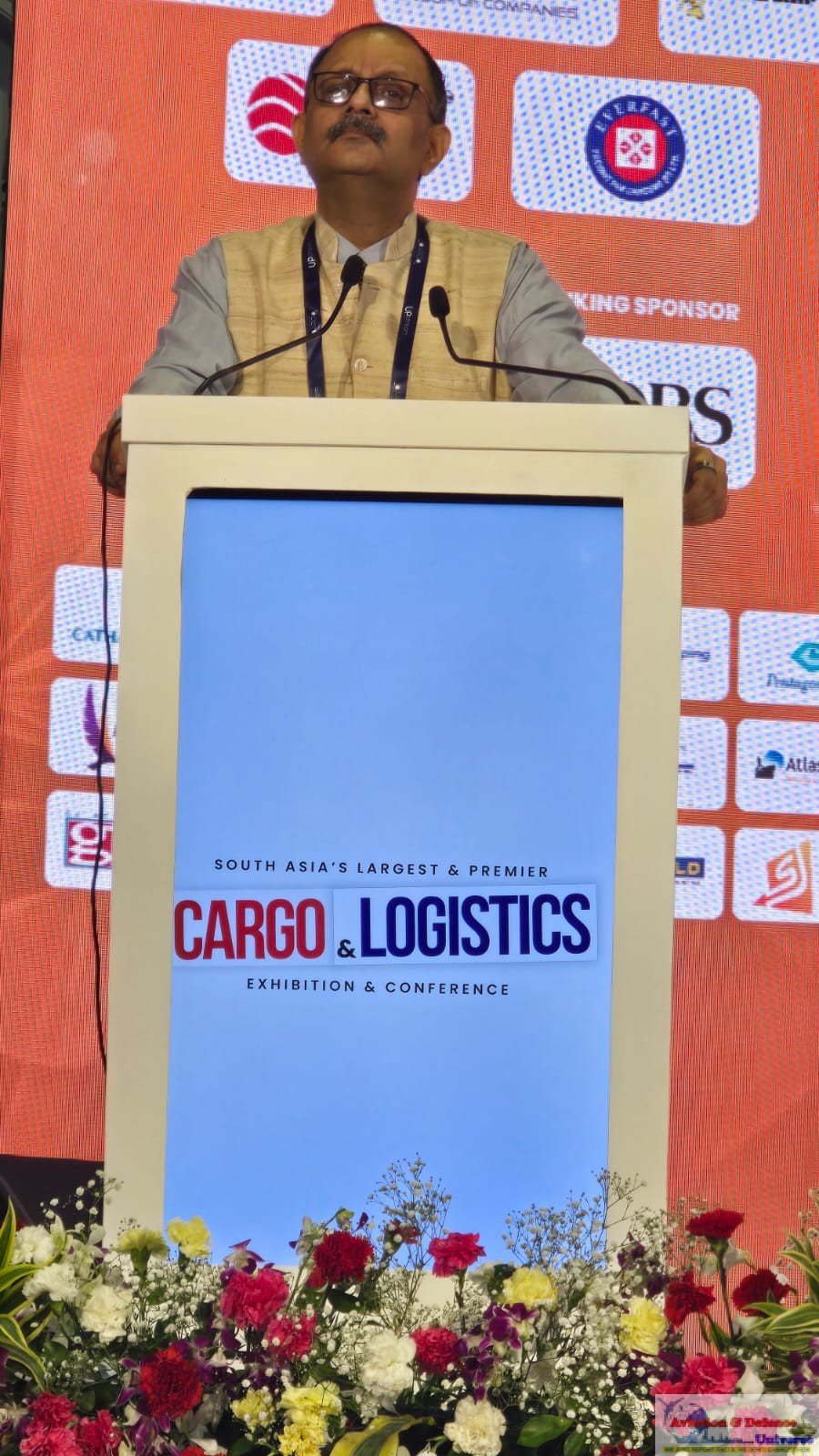 As global supply chains undergo rapid transformation and exporters face increasing pressure to deliver faster, more reliably and at competitive costs, industry leaders gathered at the India International Cargo Show (IICS) 2026 at Bharat Mandapam to discuss how India’s air cargo ecosystem must evolve to meet these changing demands.
The session, titled “Aligning Air Cargo Networks with the Evolving Needs of Exporters,” brought together representatives from airlines, airports, freight forwarding companies, exporters and industry bodies to examine the challenges and opportunities shaping India’s export logistics landscape. Discussions centred on resilience, predictability, digitalisation, multimodal integration and the need for stronger collaboration between cargo service providers and exporters.
Opening the discussion, the moderator Keku Bomi Gazder MD & CEO Aviapro Logistics, urged stakeholders to look beyond cargo as merely a shipment and understand the value and promise each consignment represents for exporters and their customers. Emphasising that every shipment embodies a business commitment, speakers noted that logistics providers must understand the specific requirements of different industries—from electronics and telecommunications equipment to pharmaceuticals, perishables and apparel—to deliver tailored logistics solutions that support export competitiveness.
The discussion revolved around three fundamental questions that continue to define customer expectations across the supply chain: Where is my shipment? When will it arrive? Who is accountable if something goes wrong? These concerns, participants agreed, remain central to building trust and reliability in global trade.
 Representing the airline perspective, Halit Tuncer, VP Cargo Sales, Turkish Cargo highlighted the increasing complexity of managing diverse export products and changing market conditions. Speakers stressed that modern cargo operations require a combination of passenger belly capacity, dedicated freighters, charter services and multimodal transport solutions to address varying customer requirements.
The importance of agility was underscored by recent geopolitical disruptions and regional conflicts, which have demonstrated the need for airlines and logistics providers to adapt rapidly while maintaining service continuity. Airlines emphasised that close communication with exporters and long-term cargo commitments are essential for planning capacity and investing in emerging markets.
 One of the key highlights of the session was the tete-e-tete with Kiran Jain , COO, Noida International Airport, which outlined its vision of becoming a benchmark cargo and logistics hub for India. She emphasised that the airport’s cargo infrastructure has been designed around two key principles—simplicity and efficiency. Developed as a greenfield project, the facility incorporates dedicated processes for different categories of cargo, including electronics, pharmaceuticals, perishables and apparel, with a strong focus on reducing turnaround times and simplifying regulatory procedures.
She revealed that the airport’s cargo ecosystem extends beyond a traditional terminal and includes an integrated logistics and warehousing zone spread across more than 80 acres. The objective is to create a multimodal cargo hub capable of competing with leading logistics centres in the Middle East, Europe and North America. Industry experts stressed that exporters, freight forwarders, airports and airlines must move beyond transactional relationships and embrace deeper collaboration.
Vaibhav Vohra, MD, Continental Carriers, representing the freight forwarding community, argued that modern supply chains require complete visibility—from raw material sourcing and production schedules to transportation planning and delivery commitments. He noted that technology, data-sharing and trust are becoming indispensable components of resilient supply chains.
 He agreed that supply chain partners must work together to improve forecasting, increase predictability and ensure that capacity planning reflects actual market demand. Greater transparency would also help airlines and airports make informed infrastructure and investment decisions. Representatives from major exporting industries, including electronics and apparel, highlighted the increasing importance of logistics performance in determining global competitiveness.
Additional recommendations included cargo aggregation systems for MSMEs, specialised fast-track facilities for time-sensitive sectors such as electronics, pharmaceuticals and fashion exports, and a national digital cargo platform capable of integrating stakeholders across the supply chain. The ongoing geopolitical tensions in West Asia featured prominently in the discussion as an example of why resilience must be built into logistics networks. Industry leaders advocated greater use of cargo block-space agreements, multimodal transportation solutions and Air Freight Station (AFS) models that allow cargo processing closer to manufacturing centres. Such approaches, they argued, would improve predictability, reduce first-mile bottlenecks and help exporters manage disruptions more effectively.
 Ramkesh Jangra, Global Inbound Supply Manager Ericsson Global, Exporters pointed out that in many cases freight costs are rising faster than component costs, while delivery timelines continue to face disruptions due to global uncertainties. To compete effectively with manufacturing hubs such as China, India requires stronger multimodal connectivity, better cargo infrastructure and more reliable transportation networks. He described logistics providers as “marathon partners” whose ability to add value at every stage of the supply chain directly impacts exporters’ success in international markets.
Participants cited successful examples from China and Hong Kong, where integrared logistics ecosystems and cargo aggregation models have enabled greater efficiency and resilience. The discussion also touched upon digital transformation and sustainability. While acknowledging the growing importance of technology, AI and paperless cargo processes, speakers cautioned that technological investments alone are insufficient.
 Mithileshwar Thakur, Secretary General, Apparel Export Promotion Council reiterated that the need to redesign logistics systems around manufacturing clusters rather than airports alone. He suggested the creation of dedicated export air corridors connecting industrial districts directly to airports through synchronised trucking systems. He also proposed integrated “air cargo cities” where testing, packaging, warehousing, customs clearance and cargo consolidation activities could be co-located to reduce delays and costs.
With major infrastructure projects such as Noida International Airport, increasing adoption of digital technologies and a growing focus on multimodal connectivity, the foundations are being laid for a more responsive and globally competitive air cargo network. The discussions at IICS 2026 stressed that aligning logistics capabilities with exporter needs will be essential if India is to strengthen its position in global trade and achieve its long-term export ambitions.
Industry leaders argued that the real challenge lies in maintaining momentum, encouraging innovation and creating regulatory frameworks that allow businesses to take calculated risks. The success of future cargo networks, they noted, will depend as much on collaboration, adaptability and human decision-making as on technology itself. The session concluded with a clear consensus that India’s air cargo sector must evolve from a transport-centric model to a fully integrated supply chain ecosystem. As exporters demand faster deliveries, greater visibility, lower costs and stronger resilience, stakeholders across the logistics value chain will need to collaborate more closely than ever before.
 The discussion made one thing abundantly clear: the future of India’s export success will be shaped not merely by the volume of goods produced, but by the efficiency, resilience and intelligence of the logistics networks that move them. As global supply chains become increasingly complex and customer expectations continue to evolve, airports, airlines, freight forwarders, cargo operators and exporters must move beyond traditional transactional relationships and embrace a more integrated, collaborative approach. From developing multimodal cargo hubs and digital platforms to improving predictability, reducing transit times and building resilience against disruptions, the stakeholders collectively underscored that logistics is no longer a support function—it is a strategic enabler of trade competitiveness. With major infrastructure projects such as Noida International Airport, growing technological adoption and a renewed focus on exporter-centric solutions, India has a unique opportunity to transform its air cargo ecosystem into a global benchmark. The session concluded on a shared belief that stronger partnerships, greater transparency and continuous innovation will be essential to ensuring that Indian products reach global markets faster, smarter and more competitively than ever before.
















































































-A4-Size-(2)_page-0001.jpg)