


















- From HAL Supplier to Global Aerospace Innovator : Vamsi Vikas Shares Raghu Vamsi’s Story
- From Components to Complete Systems : “We Want to Build in India What the World Imports”
- Vertical Integration, Indigenous Engines and UAVs : Made in Telangana, Built for the World
By Sangeeta Saxena
Farnborough, UK. 22 July 2026. Few Indian aerospace companies represent the country’s rapid industrial transformation as comprehensively as Raghu Vamsi Machine Tools. What began as a modest enterprise with just ten employees has grown into a diversified aerospace and defence company employing more than 1,200 people across manufacturing facilities in India, the United Kingdom and the United States. Today, the company supplies aero-engine components and sub-assemblies to leading global OEMs while simultaneously developing indigenous UAVs, micro turbojet engines and advanced defence systems for the Indian Armed Forces.
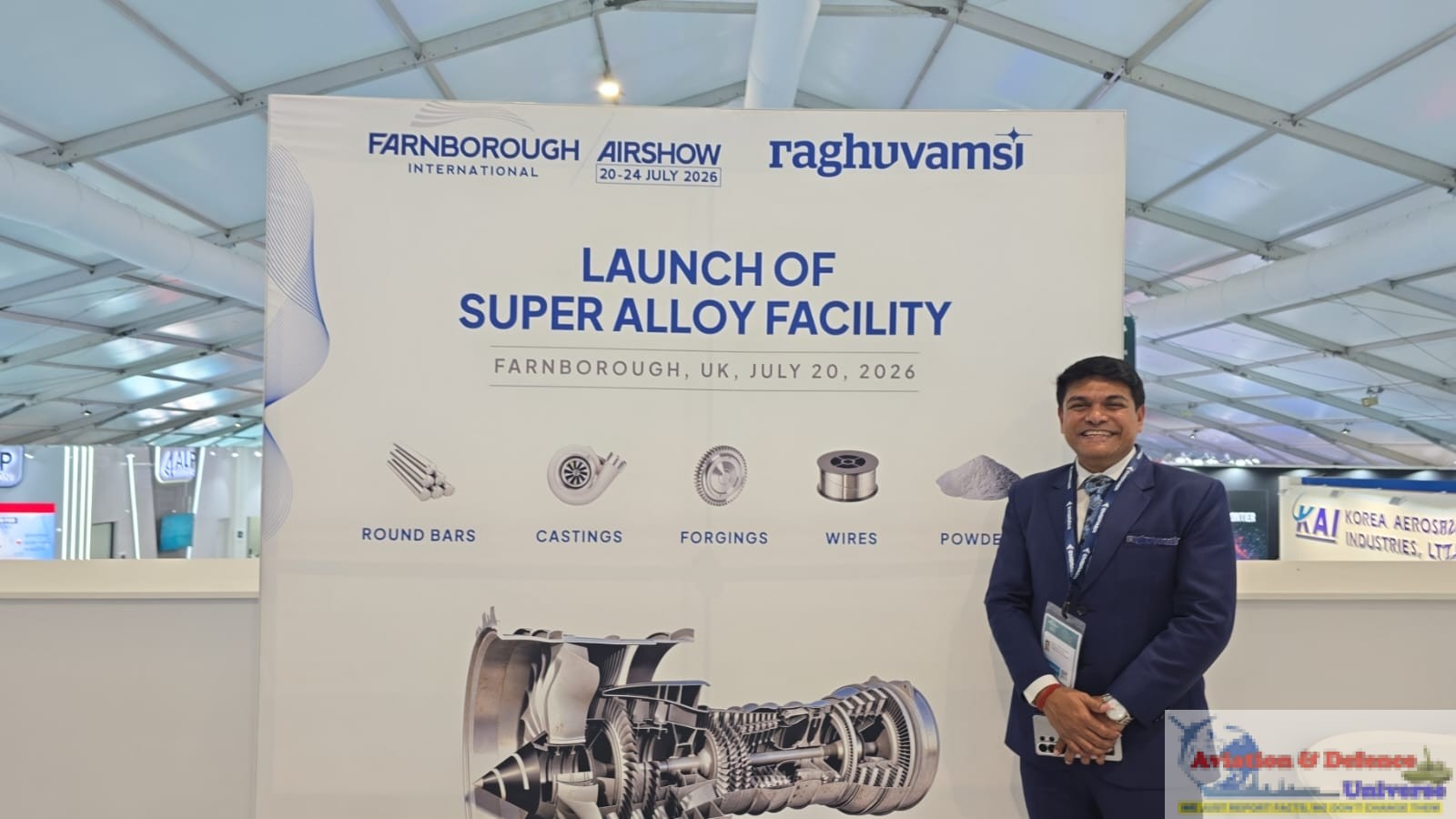
At Farnborough International Airshow 2026, the company announced one of its most ambitious projects yet—a ₹600 crore investment in a state-of-the-art super alloy manufacturing facility in Telangana. The project aims to reduce India’s dependence on imported aerospace-grade nickel alloys and establish a fully integrated domestic capability for critical aerospace materials.
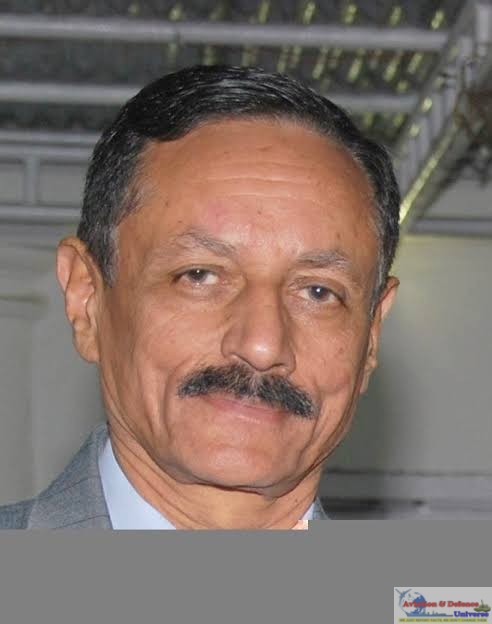
Speaking exclusively to Aviation & Defence Universe (ADU) at Farnborough International Airshow 2026, Vamsi Vikas, Chairman & Managing Director, Raghu Vamsi Machine Tools, discusses the company’s remarkable journey, its global manufacturing footprint, indigenous technology development, expansion into autonomous systems and homeland security, and its vision of transforming Raghu Vamsi from a precision manufacturing company into a globally recognised aerospace OEM.
ADU. We are meeting here at Farnborough International Airshow 2026. What is Raghu Vamsi showcasing this year?
Vamsi Vikas. Raghu Vamsi is predominantly an aerospace and defence company. We manufacture aero-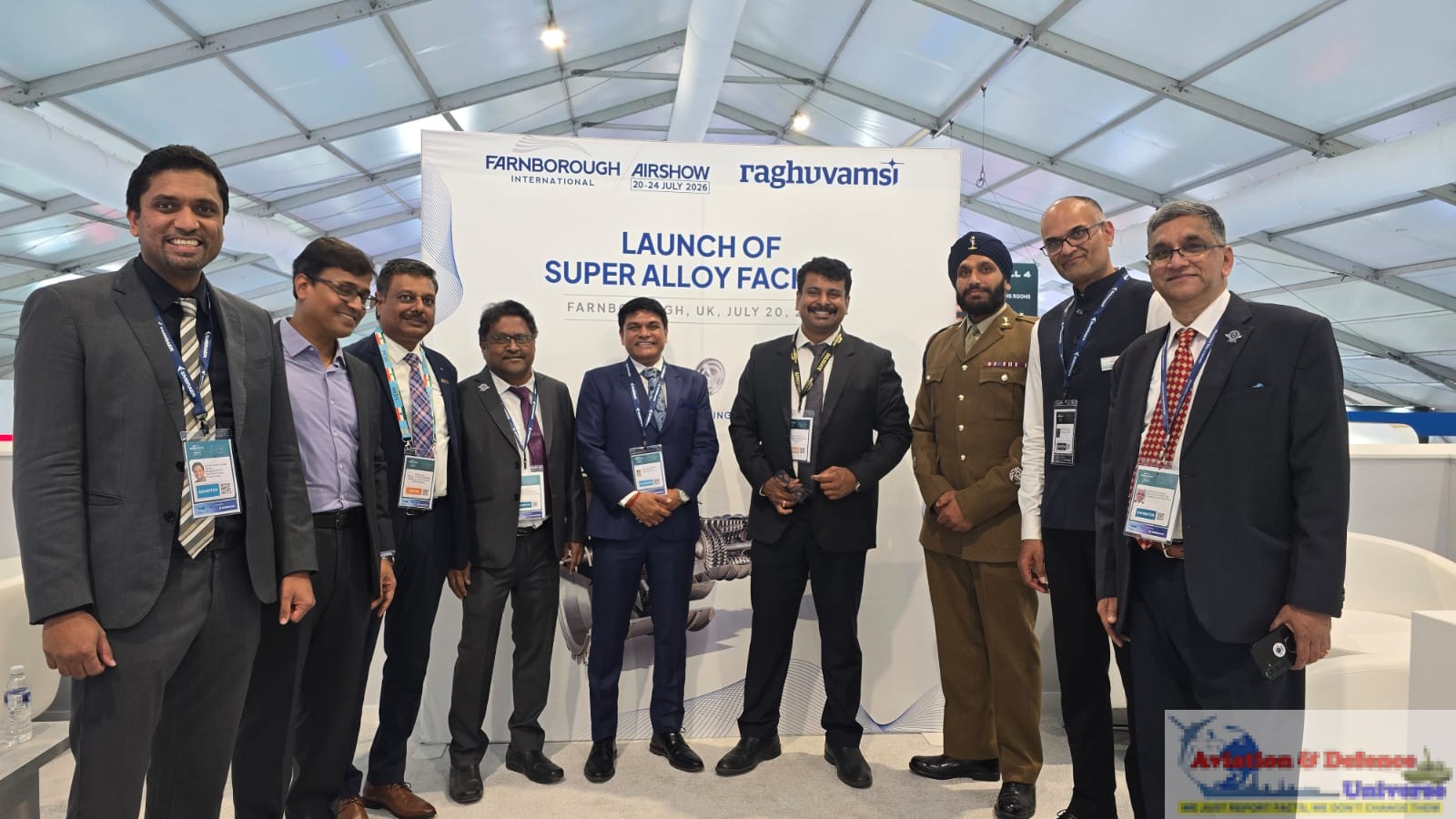 engine parts and sub-assemblies and supply virtually all the major global OEMs, including GE Aerospace, Honeywell, Collins Aerospace, Safran and others. At this year’s Farnborough Airshow, we are showcasing products primarily for commercial aerospace. More importantly, we are announcing our new super alloy manufacturing facility. At present, India has very limited capability in this area. Our objective is to establish a complete end-to-end facility capable of producing nickel alloys, bars, forgings, castings, wires and powders. The project involves an investment of more than ₹600 crore and will be established on a 50-acre site in Telangana near the Adibatla aerospace cluster. Alongside aerospace, we are also showcasing our indigenous micro turbojet engines and UAV capabilities for the defence sector.
ADU. Tell us about the journey of Raghu Vamsi Machine Tools. How did it all begin?
Vamsi Vikas. We started nearly twenty years ago. It was actually my father’s dream. Unfortunately, he passed away at the age of 47 when the company was still in its infancy. I took over the business when I was just 22 years old with only ten employees. Initially, we manufactured components for HAL. Subsequently, we entered into a joint venture with ITP of Spain, which at that time was associated with Rolls-Royce. From there, we continued adding new capabilities through strategic partnerships. We diversified into aerospace fasteners, gears, electronics and composite structures. During the last five years, we have moved beyond manufacturing individual components and have started designing and developing complete indigenous products. We have signed MoUs with DRDO and, more recently, with the Indian Air Force, Indian Navy and Indian Army for the development of next-generation UAVs.
ADU. From ten employees to where you are today—that is quite a journey. What is the company like now?
Vamsi Vikas. Today, we have a workforce of more than 1,200 people. We operate ten manufacturing locations. Six are in Hyderabad, three are in the United Kingdom and one is in the United States. Our UK facilities are located in South Wales and Sheffield, while our US facility is in Auburn, near Syracuse in New York State, where we manufacture fuel-nozzle components.
ADU. Export has always been a major strength of Raghu Vamsi. How important are international markets today?
Vamsi Vikas. We have always been an aerospace export company. Until about three years ago, virtually all 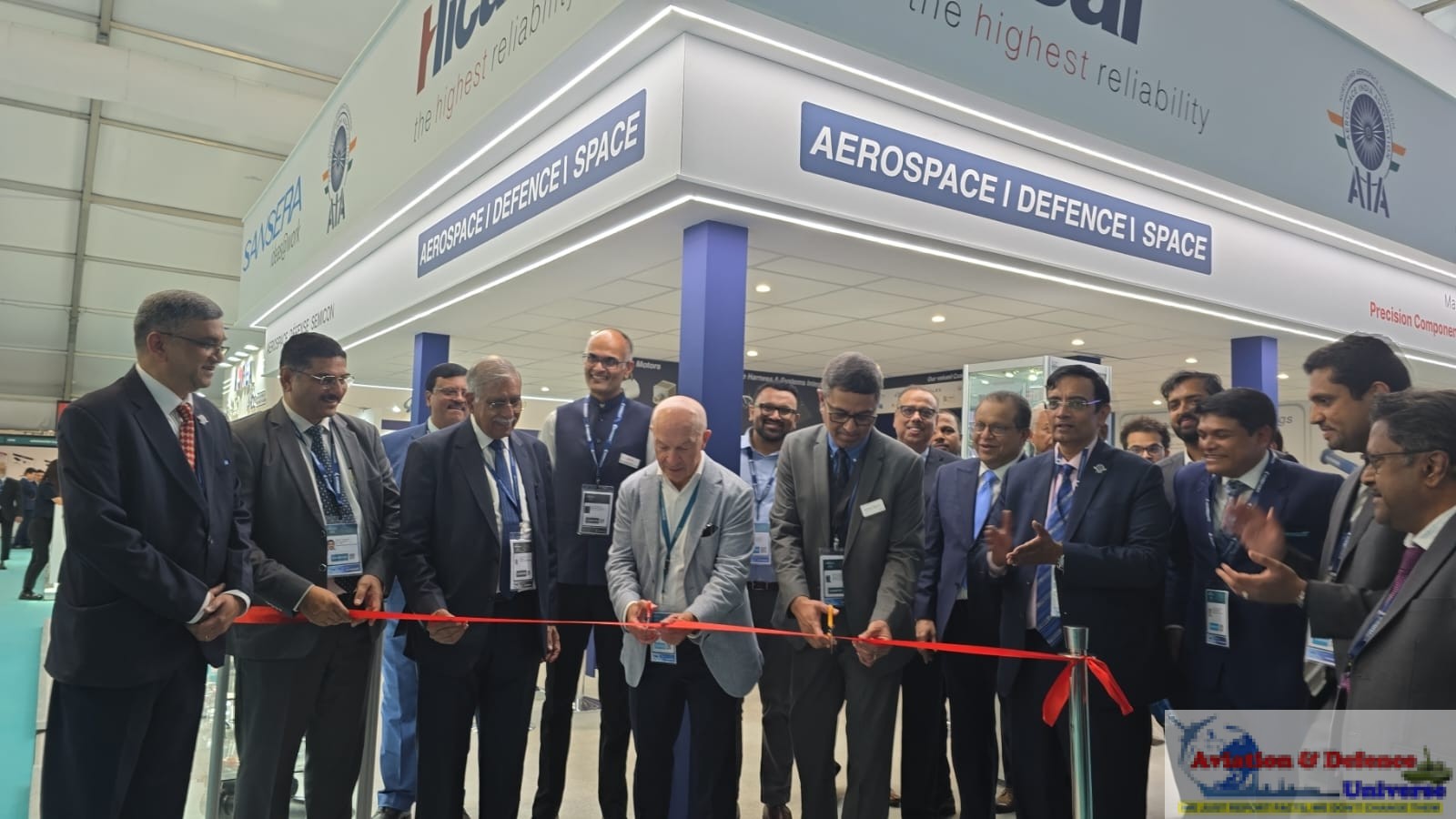 our production was exported. Today, as we have started supporting Indian programmes as well, exports account for around 85 per cent of our annual revenue of more than ₹500 crore. The United States and Europe continue to remain our principal international markets.
ADU. Aerospace manufacturing depends heavily on a strong supply chain. How do you see your supply chain evolving?
Vamsi Vikas. At present, most aerospace-grade raw materials continue to be imported. That is precisely why we are establishing the new super alloy facility. This project will be a game changer because it will vertically integrate our manufacturing—from raw materials to finished aerospace products—within India. That has always been our vision.
ADU. Apart from aerospace and defence, do you also see opportunities in homeland security?
Vamsi Vikas. Absolutely. We have recently acquired 100 acres in Andhra Pradesh to establish dedicated  UAV manufacturing facilities. Within autonomous systems, we are working across three domains—air, land and software. For aerial systems, we manufacture UAVs powered by IC engines, jet engines and electric propulsion. We are pioneers in jet-engine-powered UAVs. We are also developing unmanned ground vehicles and tethered drones for civilian and homeland security applications, particularly for surveillance requirements extending up to 10 kilometres. Homeland security is becoming a very important growth area for us.
ADU. What is your short-term growth strategy?
Vamsi Vikas. For the last five years we have consistently achieved nearly 40 per cent CAGR and expect to continue that momentum because we already have long-term agreements extending over the next five years. We are steadily moving from manufacturing components to producing complex assemblies, sub-assemblies and complete systems while continuing to invest in advanced technologies. Alongside our export business, we are developing indigenous products for the Indian Armed Forces.
ADU. And what is your long-term vision?
Vamsi Vikas. Our ambition is to develop in India the products that the country currently imports—whether 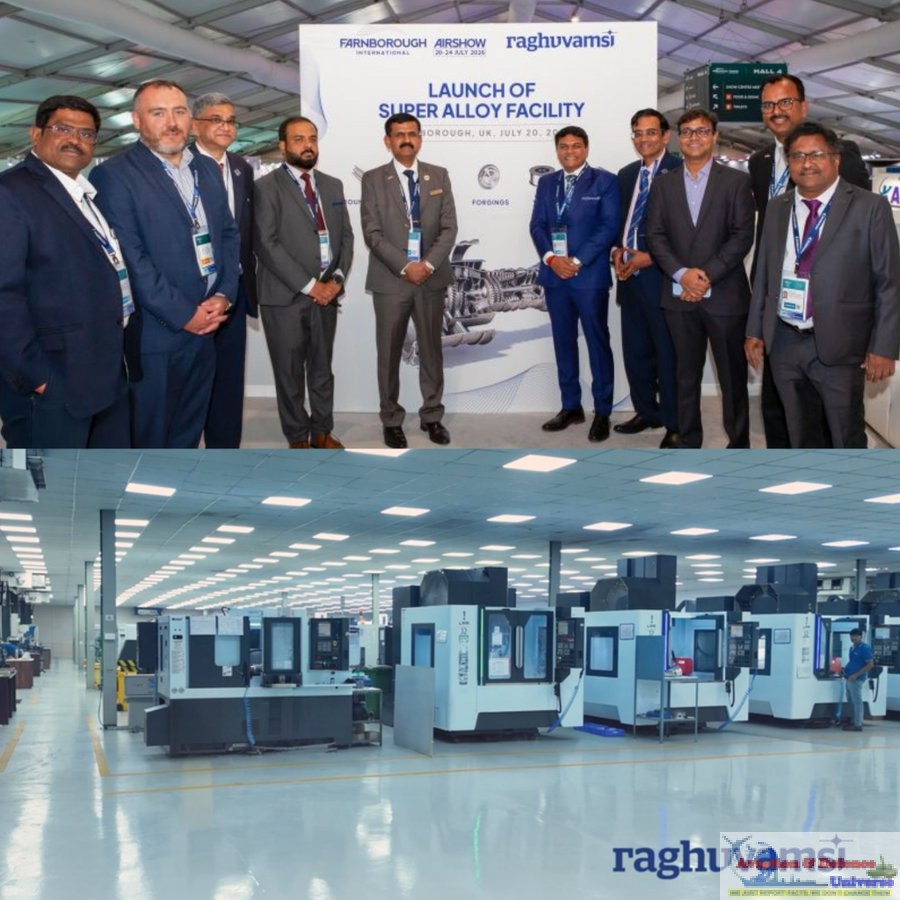 those are aero engines, advanced UAVs or other deep-technology aerospace products. Many of these systems are already undergoing combat trials. Within the next six months, several of them should be inducted by the Indian Army, Navy and Air Force.
ADU. Finally, what message would you like to give from Farnborough Airshow 2026?
Vamsi Vikas. India is opening up in a very significant way. Our own journey reflects that transformation. Twenty years ago we were a company with just ten employees. Today we are over 1,200 strong and operate globally. We believe Raghu Vamsi will become a recognised aerospace OEM within the next three to five years, continuing to grow in aero engines as well as deep-technology aerospace products.
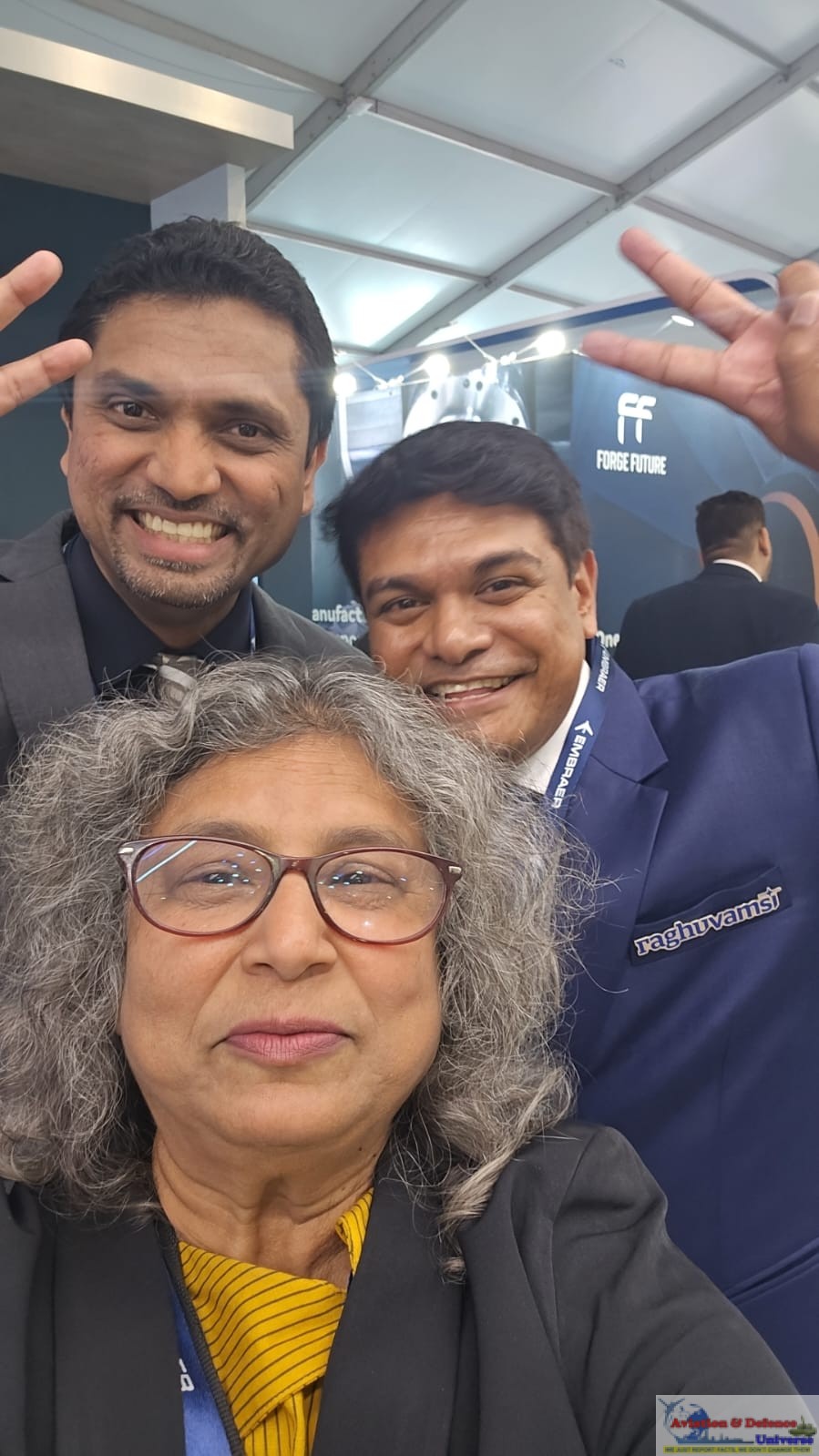
Raghu Vamsi Machine Tools’ evolution mirrors the remarkable transformation of India’s aerospace industry itself. From supplying precision-engineered components to global OEMs, the company is now moving decisively towards designing and manufacturing complete aerospace systems. Its ₹600 crore investment in a super-alloy manufacturing facility, expansion into indigenous micro turbojet engines, autonomous systems and advanced UAVs reflects a strategy focused not merely on replacing imports but on building foundational technologies within India.
For Vamsi Vikas, however, manufacturing is only one part of the vision. The larger ambition is to transform Raghu Vamsi into a globally recognised aerospace original equipment manufacturer capable of competing with established international players. From ten employees to more than 1,200 across India, the United Kingdom and the United States, the company’s journey demonstrates how sustained investment in technology, partnerships and innovation can create globally competitive Indian enterprises. As India’s aerospace ecosystem matures, Raghu Vamsi aims to be among the companies leading the country’s transition from a supplier of components to a creator of complete aerospace platforms and deep-technology products.
As Told To Sangeeta Saxena







































































-A4-Size-(2)_page-0001.jpg)