
















- Iran’s Leadership Decapitated in Escalating US–Israel Offensive
- Khamenei’s Death Reshapes Regional Power Balance
- A Defining Moment in the Israel–Iran Conflict
By Sangeeta Saxena
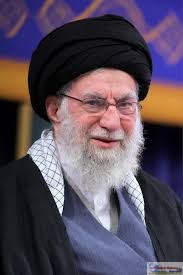
New Delhi. 28 February 2026. Iran’s Supreme Leader Ayatollah Ali Khamenei was killed in a coordinated joint United States and Israeli military airstrike on Iran on 28 February 2026, marking a dramatic escalation in the ongoing Middle East conflict. Iranian state media confirmed the 86-year-old leader’s death after the attack, which reportedly also claimed the lives of members of his immediate family and at least dozens of senior Iranian officials. U.S. President Donald Trump publicly acknowledged Khamenei’s death and framed the action as a significant blow to the Iranian regime, while Israeli officials said they struck key strategic sites and eliminated high-ranking figures linked to Iran’s nuclear and defence infrastructure. Iran announced a 40-day period of national mourning following the confirmation.
The neutralisation of Khamenei — who had led Iran’s theocratic state since 1989 — represents a watershed moment with profound geopolitical ramifications. His death creates immediate uncertainty over Iran’s leadership succession and the future direction of the Islamic Republic, a nation that for decades has been central to regional proxy networks and confrontations with the U.S. and Israel. Analysts expect this shift to intensify tensions across West Asia, as Iran’s Revolutionary Guard and allied groups may seek retaliation. The international community has expressed deep concern about the prospects for wider conflict, with implications for regional stability, oil markets, and global security dynamics.
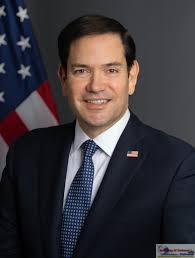 And this came just a day after US Secretary of State Marco Rubio stated , “ Today, I am designating Iran as a State Sponsor of Wrongful Detention. When the Iranian regime seized power 47 years ago, Ayatollah Khomeini consolidated his control of power by endorsing the hostage taking of U.S. embassy staff. For decades, Iran has continued to cruelly detain innocent Americans, as well as citizens of other nations, to use as political leverage against other states. This abhorrent practice must end.”
West Asia has entered a sharper escalation cycle after Israeli strikes on Iranian targets were followed by direct US military action, triggering Iranian retaliation across the region and raising the risk of a wider, multi-front conflict. Early indicators suggest the crisis is no longer confined to calibrated “deterrence messaging”; it is now testing the survivability of military infrastructure, the credibility of air and missile defence networks in the Gulf, and the resilience of global trade routes linked to energy flows. Markets have reacted to the possibility of disruptions around critical maritime choke points and the prospect of sustained attacks on bases, airspace, and strategic infrastructure, while governments across the region are simultaneously trying to avoid a runaway spiral that could pull them deeper into open war.
“A short time ago, the United States military began major combat operations in Iran. Our objective is to defend the American people by eliminating imminent threats from the Iranian regime. A vicious group of very hard, terrible people. Its menacing activities directly endanger the United States, our troops, our bases 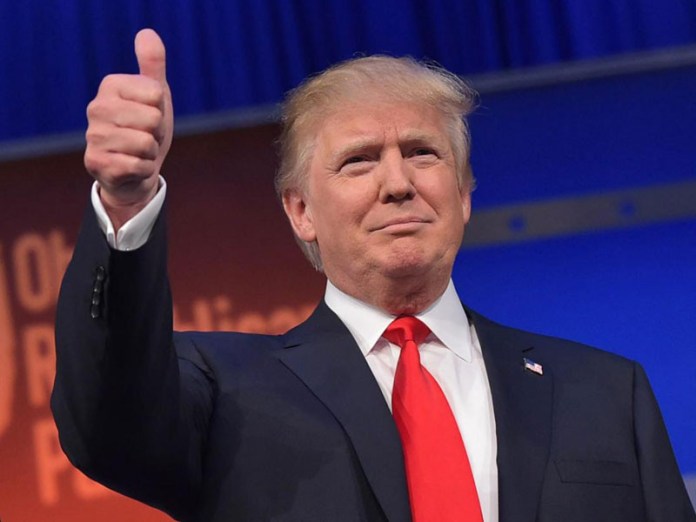 overseas, and our allies throughout the world. Iran is the world’s number one state sponsor of terror, and just recently killed tens of thousands of its own citizens on the street as they protested. It has always been the policy of the United States, in particular my administration, that this terrorist regime can never have a nuclear weapon. I’ll say it again, they can never have a nuclear weapon. That is why in Operation Midnight Hammer last June, we obliterated the regime’s nuclear program at Fordo, Natanz and Isfahan. They’ve rejected every opportunity to renounce their nuclear ambitions, and we can’t take it anymore. Instead, they attempted to rebuild their nuclear program and to continue developing the long range missiles that can now threaten our very good friends and allies in Europe, our troops stationed overseas, and could soon reach the American homeland. Just imagine how emboldened this regime would be if they ever had, and actually were armed with nuclear weapons as a means to deliver their message,” announced US President Donald Trump.
The immediate driver is the shift from proxy-mediated pressure to direct state-to-state strikes and counterstrikes. Israel’s campaign appears aimed at degrading Iranian capabilities (and signalling deterrence), while the US entry changes the strategic geometry by increasing the costs of Iranian retaliation but also increasing Iran’s incentives to broaden the conflict’s “pain footprint” through asymmetric methods—missiles, drones, cyber, maritime disruption, and proxy activation. Reuters’ live updates also indicate the conflict has already spilled into wider regional consequences—airspace disruptions, heightened military alerts, and diplomatic escalation—suggesting the crisis is now operating on multiple tracks at once: military, economic, and political.
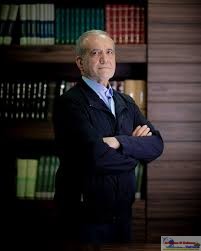 Iranian President Masoud Pezeshkian has condemned the killing of Khamenei and called it a great crime vowing that those responsible would face consequences, according to a statement from his office. “This great crime will never remain unanswered and will turn a new page in the history of the Islamic world and Shiism. Iran will respond with all our strength and determination,” the statement said.
After the death of Iran’s Supreme Leader Ayatollah Ali Khamenei in February 2026, Ayatollah Alireza Arafi was elevated to serve as the country’s interim spiritual and political authority during a critical period of transition. A senior cleric with decades of experience within Iran’s religious and constitutional institutions, Arafi has held influential roles including membership in the Guardian Council and the Assembly of Experts, as well as leadership of Iran’s seminaries and the Friday prayers in Qom. He is currently part of a three-member transitional Leadership Council alongside President Masoud Pezeshkian and Chief Justice Gholam-Hossein Mohseni-Ejei, collectively assuming the Supreme Leader’s constitutional responsibilities until a permanent successor is chosen.
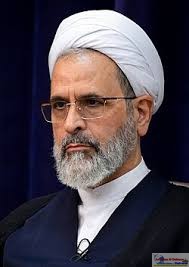 Arafi’s appointment ensures immediate continuity in Iran’s governance structure, but his role remains provisional. The Assembly of Experts — the clerical body empowered to select the Supreme Leader — will determine the long-term successor, a process closely watched both domestically and internationally. With no figure possessing Khamenei’s consolidated authority, the transition introduces uncertainty within Iran’s political and religious establishment. The interim leadership’s ability to maintain stability, manage external tensions, and navigate internal power dynamics will be pivotal in shaping the Islamic Republic’s next chapter.
Secretary of War Pete Hegseth described the U.S. strikes on Iran as the most lethal, most complex, and most-precision aerial operation in history. In a post on the social platform X, Hegseth said, “The Iranian regime had their chance, yet refused to make a deal — and now they are suffering the consequences.” He added, “For almost fifty years, Iran has targeted and killed Americans, always seeking the world’s most powerful weapons to further their radical cause. Last night, unlike any previous president, President Trump began dealing with this cancer.”
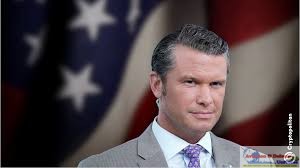 Hegseth warned that any Iranian missile strikes targeting Americans following the mission, officially designated “Operation Epic Fury,” would not be tolerated. He further stated that the Iranian navy would be “destroyed” if it engaged in hostile actions. Emphasising Washington’s position, Hegseth declared that the United States had not initiated the conflict but was prepared to bring it to a decisive end. He added that if Americans were killed or threatened anywhere in the world — as he alleged Iran had done — the United States would pursue those responsible and respond with lethal force.
The ongoing strikes on Iran by Israel and the United States — followed by Iran’s retaliatory missile and drone attacks — have significantly unsettled the wider West Asian region. What began as targeted military action has rapidly expanded into a broader security crisis affecting multiple Gulf states. Several countries have reported aerial threats, intercepted projectiles, and debris falling near urban centres and strategic infrastructure. Airports across key hubs such as Dubai, Abu Dhabi, Doha and other Gulf cities have faced temporary closures or operational disruptions, leading to cascading impacts on international aviation and regional mobility. The conflict has effectively transformed parts of the Gulf airspace into a high-alert defensive theatre.
Beyond immediate security concerns, the strikes have amplified geopolitical strain and economic uncertainty across the region. Energy markets have reacted nervously amid concerns about potential disruptions to oil exports and shipping lanes, particularly around critical chokepoints like the Strait of Hormuz. Governments across West Asia have heightened military preparedness while simultaneously engaging in urgent diplomatic efforts to prevent further escalation. The unfolding crisis reiterates how quickly localized military exchanges can destabilize regional security architectures, threaten economic stability, and draw global powers into a rapidly intensifying confrontation.


































































-A4-Size-(2)_page-0001.jpg)