





















- Private Industry Takes the Cockpit in India’s AMCA Ambition
- Time to Fly: India’s AMCA Programme Enters its Decisive Phase
- Stealth, Speed & Sovereignty: India Bets on AMCA for the Future of Air Power
By Air Marshal Anil Chopra (Retd)
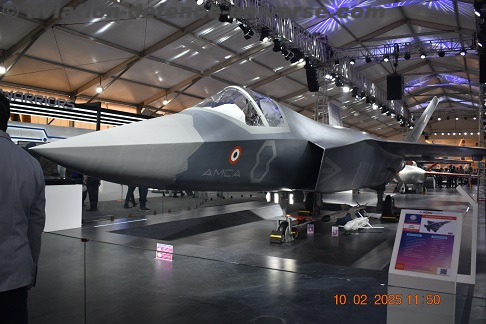
New Delhi. 13 August 2026. The Advanced Medium Combat Aircraft (AMCA) is India’s flagship and sole 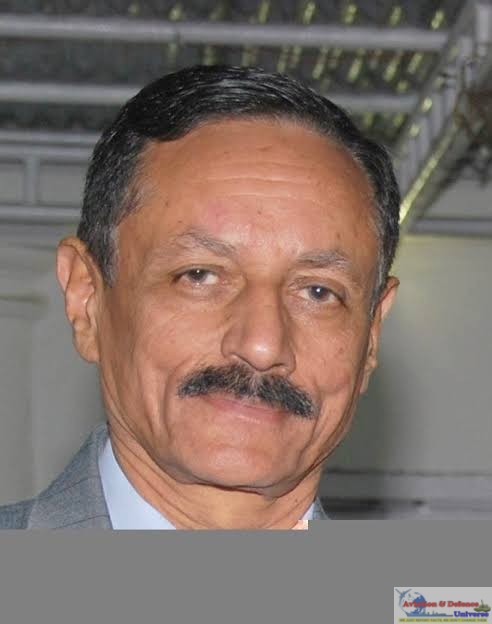 indigenous fifth-generation stealth fighter jet initiative. Led by the Aeronautical Development Agency (ADA) under the Defence Research and Development Organisation (DRDO), it aims to design and build an advanced aircraft for the Indian Air Force (IAF). The twin-engine, 25-tonne fighter will have supercruise performance, internal weapon bays, advanced AESA radar, and AI-assisted sensor fusion. Initially powered by the imported American GE F414 engines, the AMCA Mark 2 targets a jointly developed 120-140 kN indigenous engine to evolve between India’s Gas Turbine Research Establishment (GTRE) and a European vendor. Prototype rollout and first flight are projected for the late 2020s, with series production targeted to begin in the mid-2030s. The aircraft will be developed through a competitive public-private partnership framework involving major Indian private and public consortia.
Why Stealth is Important?
Stealth is important because it minimizes detectability across radar, thermal, and acoustic sensors, allowing military assets to survive in hostile territory, strike targets pre-emptively, and act as powerful force multipliers. By shrinking an asset’s signature, stealth shifts the tactical advantage to the side that remains unseen. It gives the aircraft first-strike capability. One can spot and engage adversaries before they realize a threat is present. It allows deep penetration, as aircraft can navigate through heavily defended airspace or waters without triggering alarm systems.
It has a force multiplier effect, because strategic goals cam be achieved with fewer overall platforms and logistical risks compared to legacy forces. Stealth also reduces risk of catastrophic loss against advanced surface-to-air missiles and integrated air defences.
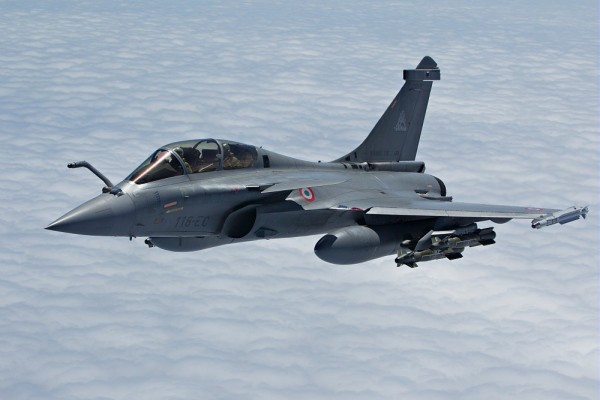 Stealth is achieved through body shaping to reduce radar reflections, and by using radar-absorbent materials (RAM) scatter or absorb radio waves. Infrared signature suppression is achieved through shielded exhausts and cooling systems that reduce thermal trails tracking. Typically, a large fighter aircraft like Su-30 MKI will have a radar cross-section (RCS) of roughly 4.0 square meters, Rafale frontal RCS of 1.0 square meter, China’s Chengdu J-20 stealth fighter estimated at 0.1 square meters, and the F-35 an extremely small RCS of approximately 0.0015 to 0.005 square meters.
Notwithstanding the continuing Iran war, fifth-generation stealth aircraft like the F-35 Lightning II and B-2 Spirit bombers managed undetected penetration, and dismantled integrated air defences.
Stealth Aircraft Urgency for India
China already has over 400 J-20 fifth-generation fighters, and plans to have 1,500 by 2035. J-20s are now stationed at Hotan in Xinjiang opposite India’s Ladakh, and also seen operating in Tibet. China is ready to export the second fifth-generation fighter Shenyang J-35. China is also the first country test flying two sixth-generation fighters. Pakistan is likely to get the J-35 in the nearest future. Pakistan, a country in economic and political mess, and de facto run by military, acquiring the fifth-generation aircraft before the fastest growing large economy, India, could change the air combat dynamics in the region. Therefore the urgency or AMCA. India has to put the whole of nation backing for the AMCA.
AMCA Core Mission
The AMCA is likely to be a single-seat twin-engine jet with advanced stealth coatings and internal weapons bays. The aircraft being developed for the IAF and the Indian Navy. It is intended to perform a multitude of missions including air supremacy, ground-strike, suppression of enemy air defences (SEAD), and electronic warfare missions. It is intended to supplant the Sukhoi Su-30MKI and Rafale air-superiority fighters, which forms the backbone of the IAF fighter fleet. Similarly it will add significant air power to Indian Navy. The AMCA design is optimized for low radar cross section and super-cruise capability.
AMCA Design and Mission Capabilities
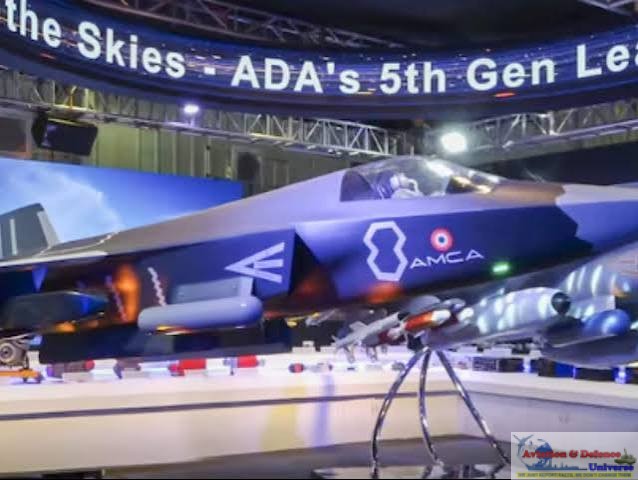 The AMCA design has inherent radar stealth, achieved through tilted twin-tail layout, platform edge alignment and serration, body conformal antenna and low intercept radar, diverterless supersonic inlet with serpentine ducts which conceal engine fan blades, internal weapons bay and extensive use of composites in airframe (40%).
The AMCA is expected to have distributed passive sensors with artificial intelligence assisted multi-sensor data fusion to increase situational awareness and to work in tandem with the advanced electronic warfare suite on-board. The AMCA will have a glass cockpit equipped with a wide panoramic touchscreen display for enhanced man-machine interaction, a multi-function display (MFD) placed in portrait orientation and a wide-angle holographic head-up display. The AMCA will have hands-on throttle-and-stick (HOTAS) arrangement to ease the pilot workload.
Private sector firm Astra Microwave emerged as the lead bidder for the vital Active Antenna Array Unit (AAAU) radar development contract, and may join with Bharat Electronics Limited (BEL). The core indigenous Active Electronically Scanned Array (AESA) technology incorporating high-efficiency Gallium Nitride (GaN) established by the DRDO’s Electronics and Radar Development Establishment (LRDE) via the Uttam AESA radar family will be used.
The AMCA will feature an internal weapons bay for carrying missiles and standoff precision guided munitions in stealthy configuration, and also will be capable of mounting ordnance to external hard-points for non-stealthy missions. Directed energy weapons (DEW) are also planned to be equipped on the AMCA. It is expected to have an operational ceiling of 65,000 feet and carry 1,500 kg in weapons in internal bays, with 5,500 kg more externally. It will initially be powered by two modified GE F414 afterburning turbofan. Maximum speed will be Mach 1.8. Range 3,240 km, and combat range 1,620 km.
The aircraft will have an internal gun (23 mm GSh-23), Astra missile variants, Close Combat Missiles, Air to ground missiles, BrahMos NG, and Rudram variants. It will carry variety of laser and Precision-guided munitions.
India Chooses Private Sector Route for AMCA
In a historic move private players will build India’s first fifth-generation fighter AMCA. The government has issued the request for proposal (RFP) to three players, Tata Advanced Systems, the L&T-BEL-Dynamatic consortium, and the Bharat Forge-BEML-Data Patterns consortium. The Rs 15,000 crore initial project will see the winning private partner build five prototypes of the very modern jet. For the first time, for a major fighter jet programme, the Defence Ministry has kept out state-owned Hindustan Aeronautics Ltd (HAL). It is hoped that free from bureaucratic control, and ability to bring in latest technologies, and industrial best practices, and with a hope of faster development. It should also strengthen India’s push for self-reliance in cutting-edge aerospace technology.
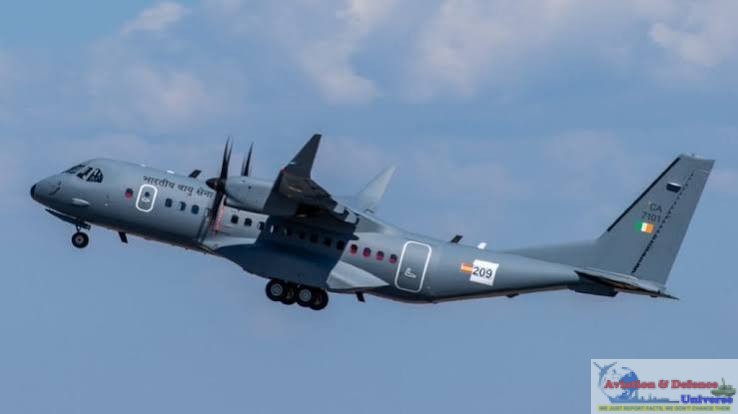 India’s private sector has come of age in aero-structures and sub systems manufactured for major global platforms. The first made-in-India Airbus C-295 by Tata Advanced Systems has already rolled-out. Keeping all this in mind, it was well informed decision to let private sector take-on AMCA. The winning private partner will work with ADA in building five flying prototypes and one structural test aircraft. This work will be done at the new 650-acre facility in Andhra Pradesh’s Puttaparthi.
The companies have to submit detailed bids by August 28, 2026. The technical and commercial bids will be evaluated and contract awarded by around January-March 2027, with the first prototype flight expected between 2028 and 2032. It may enter service after 2035 with series production at the new facility. Only then will India join the select club of fifth-generation fighter manufacturers the US (F-22 and F-35), China (J-20, J-35) and Russia (Su-57). Even Turkey is ahead and flight testing the TAI Kaan.
AMCA’s Engine
The American General Electric F414 is an afterburning turbofan engine in the 22,000-pound (98 kN) thrust. F414-GE-INS6 is the variant selected for use on HAL Tejas Mk2. Proposed for HAL TEDBF and initial variants of the AMCA. The F414 originated from GE’s widely used F404 turbofan, enlarged and improved for use in the Boeing F/A-18E/F Super Hornet. The engine variants also power the Saab JAS-39E/F Gripen, and the South Korean KAI KF-21 Boramae.
Past and current delays involving GE F404 engine deliveries for the LCA Tejas Mk1A fleet have strained
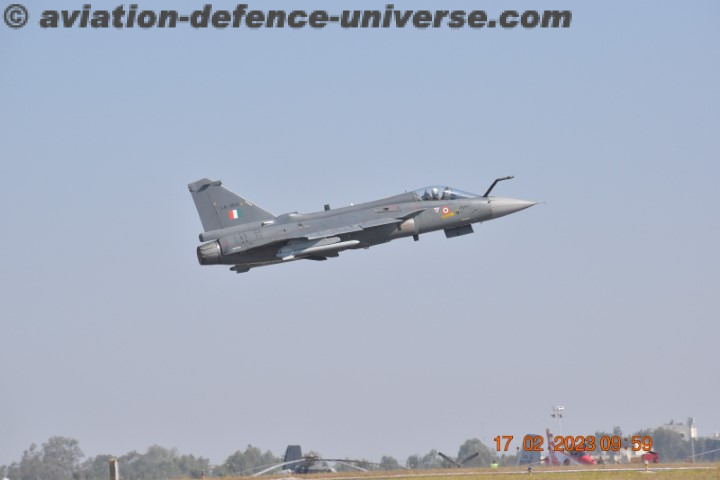
timelines and led to friction with Hindustan Aeronautics Limited (HAL). Negotiations for the GE Aerospace F414 engine deal with India have hit hurdles over cost escalations and delivery delays. The proposed co-production agreement to power jets like the Tejas Mk2 and AMCA Mark 1 has faced friction over reported technology transfer issues. AMCA Mark 2 is planned to have a clean-sheet Indo-French turbofan co-developed by Safran Aircraft Engines and India’s DRDO (GTRE). It will 120 kN to 140 kN thrust class. It is meant to offer full technology transfer, including critical hot-section core architecture and local intellectual property rights to achieve complete sovereign propulsion autonomy for India’s advanced fifth-generation fighter configurations.
Private Sector in Defence
India has a great industrial base and significant defence equipment demand to allow advantage of scale. India’s total defence production in FY2025-26 was Rs 1.78 lakh Crore. Of this Rs 42,000 (24%) was by private sector. India’s defence exports saw a 60% jump to Rs 38,424 Crore, and 45% of this was by private sector. The leading recipients of India’s defence exports were USA, Armenia, and Philippines.
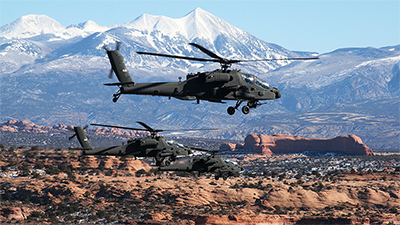
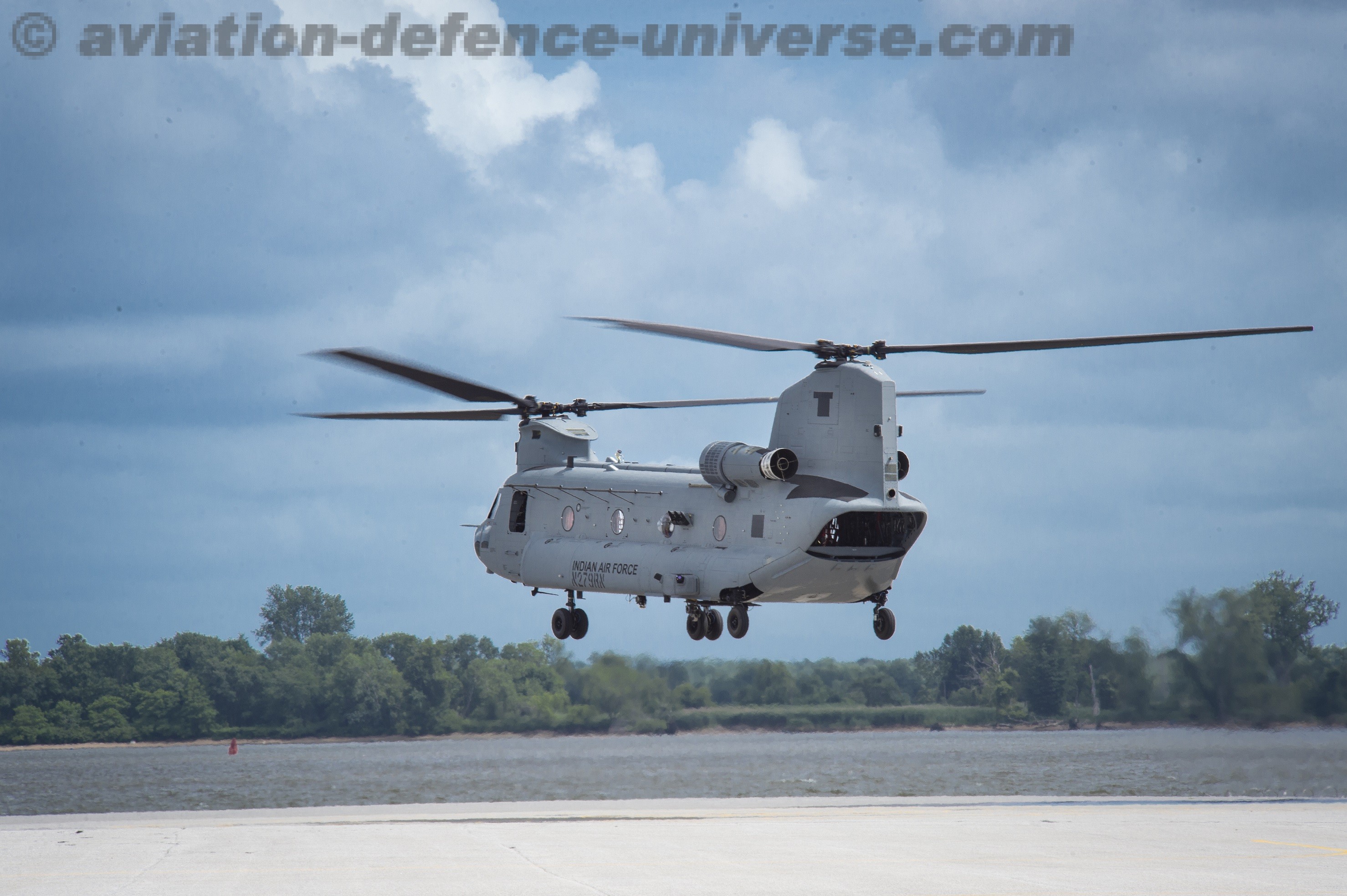 Among the airborne systems projects, Tata Advanced Systems (TASL) is making aero-structures for the AH-64 Apache combat helicopter, Boeing’s CH-47 Chinook helicopters, Sikorsky S-92 helicopter. India makes 24 C-130 empennages annually. All C-130Js delivered to customers around the world have major aero-structure components from India. Tata group is working with GE to manufacture CFM International LEAP engine components in India.
Lockheed Martin selected TASL to produce F-16 wings in India. Adani-Elbit JV will make Hermes 900 UAVs in India. Many private players are into defence electronics supplying to French defence solutions provider Thales. Tata Power Strategic Engineering Division (SED) make launchers for IAF Akash AD system. Mahindra Group bagged a large aero-components production contract to manufacture a variety of metallic components for several Airbus aircraft. Embraer and the Mahindra Group have formed a strategic alliance to introduce the C-390 Millennium military transport aircraft to the IAF.
Bharat Forge Limited, the flagship company of the Kalyani Group, has rapidly expanded its footprint in the aerospace sector by manufacturing critical, high-precision components and developing indigenous propulsion systems for both civil aviation and defence. Several small companies have acquired advanced technological capabilities. Dynamatic Technologies makes assemblies of vertical fins for Sukhoi 30 MKI fighters. Samtel electronics makes SU-30 Head-Up Displays and other electronics. Indian companies have the global opportunity not only due to cheaper skilled labour but have also developed the ability to manufacture accurately to specifications, particularly in aerospace, metalworking, and electronics. MKU Ltd is into body-armour, helmets and NVGs, and nearly 90% of their production is exported.
An estimated 24,000 MSMEs currently involved in defence supply chain, and the contribution of private players in the defence sector has steadily grown over the years with more than 500 licenses issued so far to private companies.
Production at Puttaparthi
In May 2025, Chief Minister, Chandrababu Naidu, during a meeting with the Union Defence Minister, Rajnath Singh, pitched for a proposed defence industrial corridor in the state. The plan included to transfer of a proposed 10,000 acres land at the Lepakshi-Madakasira hub, an hour away from the Bengaluru Airport.
 In early May 2026, the State Cabinet of Andhra Pradesh cleared the free of cost transfer of 600 acres of land in Puttaparthi Airport, Sri Sathya Sai district to the DRDO for the AMCA project. An ADA team had already conducted an inspection of the land parcel and had declared it suitable. The systems design, testing and assembly of AMCA prototype modules will be done at the Bengaluru-based facility of the ADA which will then be transferred to the new Andhra Pradesh facility which will host a dedicated flight testing complex, residential township for scientists and an assembly line. The site was chosen due to its “easier airstrip access” and “streamlined airspace coordination.” The Union government would extend the runway to 9,800 ft (3 km) length, establish a dedicated local flying zone at Puttaparthi and facilitate the setup of more advanced ATC tower systems, military navigation aids and meteorological support facilities. On 15 May, defence minister Rajnath Singh visited Andhra Pradesh and laid foundation stone for AMCA’s Core Integration & Flight Testing Centre at Puttaparthi along with chief minister Chandrababu Naidu. The Ghatak programme could also use the same facility.
AMCA Success Strategic Imperative
The IAF proposes to have seven squadrons (~126 aircraft) of AMCA. The external geostrategic dynamics in the region requires early induction of AMCA. The nation has to put its full weight for the project to succeed and that too quickly.
 There is also the Russian proposal for make-in-India Su-57 fifth-generation fighter with full technology transfer. India cannot afford two separate design and development projects in the country. Any project that can affect the AMCA program is not good for the country. If at all, India could consider one-time purchase of about 40 Su-57 as an interim measure. Even if ordered today, the Su-57 will be available only 5-6 years hence.
IAF is short of fighter squadrons. The Rafale is a highly advanced, 4.5-generation fighter with some stealth features. India plans to go for 114 latest F4 and F5 variants of the Rafale. India is already making Rafale fuselage in India. Dassault has already announced setting up of MRO for M-88 engines (powers Rafale) in India. India is also considering joining the French let FCAS sixth-generation fighter aircraft project.
AMCA’s early success is a strategic imperative for India, enhancing its air combat capabilities and reducing reliance on foreign platforms. The AMCA is meant to provide a technological advantage over adversaries and enabling India to compete in modern air warfare. The program aims to boost indigenous aerospace capabilities.
 India is still at ‘work-in-progress’ in technologies related to aero-engines, AESA radars, EW systems, modern weapons, directed energy weapons (DEW), Artificial Intelligence (AI) and other advanced avionics, and has still to get its MUM-T “Loyal Wingman” technology right. India needs to put more money on the table, and invest in more sixth generation technologies to imbibe in AMCA. It is imperative that India hastens the LCA Mk2, and AMCA. India must quickly decide a major private player to be the lead integrator. The integrator must then identify private industries to team up with as has been done in most programs around the world. Meeting the projected induction timeline of the AMCA is crucial to address the operational gaps and maintain a credible deterrent. In essence, the AMCA is not just a fighter jet project; it’s a national security priority that requires swift and decisive action to maintain India’s aerial dominance and strategic posture. The program must be monitored at PMO level.
Strategic Resilience: The New Imperative for Indian Defence Industry
By 2047, India aims to command a ₹8.8 trillion defence economy, six times its current size and emerge as a true global military power capable of designing, developing, and exporting advanced weapons systems at scale. India currently spends around 0.6% of the GDP on R&D, compared to 2.7% by China, and 3.6% by USA. This figure has to go up considerably. Aerospace requires leading edge technologies. Obsolescence sets in early. No one is willing to share hard developed technologies. Building own IPR is crucial to become a global power.
 Strategic resilience has emerged as the defining imperative for the Indian defence industry in 2026, transitioning from a policy goal to a mandatory component of national security. Driven by evolving geopolitical tensions and the need for autonomy, India is accelerating its shift toward a robust, indigenous defence ecosystem.
Self-reliance (Aatmanirbharta) is recognized as critical for ensuring that India’s armed forces are not constrained by foreign sanctions or supply chain vulnerabilities. The need to diversify away from traditional, lengthy foreign supply chains, which are susceptible to disruptions, is critical.
Future wars demand “technological superiority”, rapid innovation, with a strong focus on AI, cyber warfare, autonomous systems, and space-based defence solutions. The Indian government is moving towards opening up high-end manufacturing, including ballistic missiles, to the private sector. Time to get going was yesterday. Let India get its act right now at least.
(Air Marshal Anil Chopra (Retd.), is a former Mirage 2000 Pioneer and a Test Pilot, of Indian Air Force. He is former Director General, Centre for Air Power Studies. Currently he is Strategic Advisor, Society of Indian Defence Manufacturers. The views in the article are solely the author’s. He can be contacted at editor.adu@gmail.com)
















































































-A4-Size-(2)_page-0001.jpg)