





















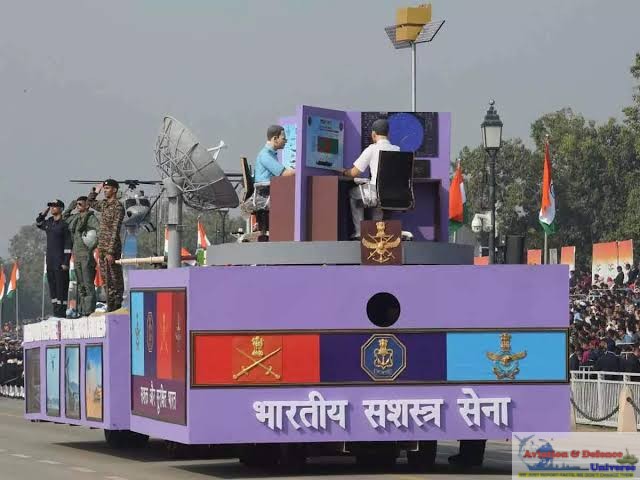
- Beyond Algorithms: Why Joint Command Will Decide India’s Military AI Future
- From Silos to Synergy: India’s Armed Forces Prepare for an AI-Enabled Joint Battlefield
- AI is the Next Frontier in India’s Military Transformation
- At 80, India’s Defence Conversation Turns to AI, Jointness and the Future Battlefield
By Theertha Panachoor
Hyderabad. 13 August 2026. As India prepares to celebrate its 80th Independence Day, the national security conversation is increasingly looking beyond the weapons and platforms that traditionally symbolised military power. The focus is shifting towards something less visible but potentially far more transformative—Artificial Intelligence, jointness and the creation of an integrated digital battlespace. At a time when warfare is being reshaped by autonomous systems, drones, intelligent sensors, data-driven decision-making and increasingly compressed response times, the question before India is no longer simply whether its Armed Forces can develop AI capabilities. They already are. The more consequential question is whether the Army, Navy and Air Force can employ those capabilities together as a truly integrated fighting force.

That makes the convergence of military AI and theatre-command reforms particularly relevant as the nation marks eight decades of independence. India has spent the past several years creating the institutional, technological and industrial foundations for defence AI—from dedicated governance structures and autonomous systems to C4ISR applications and a framework for evaluating trustworthy AI. At the same time, the movement towards greater jointness seeks to reshape how the three Services plan and conduct operations. These two transformations can no longer be viewed separately.
India’s defence establishment has spent the past several years proving that the Army, Navy and Air Force can each build serious artificial intelligence capabilities of their own. They can. Each service is doing it on its own timeline and around its own operational needs. The interesting part is what happens next: A conflict does not arrive neatly divided among three services, nor does the information required to fight one. Intelligence gathered by one service can shape a decision in another, sometimes within minutes. The systems carrying that information therefore have to work across the same boundaries.
This is where India’s theatre-command reforms become important to its AI ambitions. The next step may not be another breakthrough in artificial intelligence, but a change in the way the military itself is organised. India has spent years building the technology; it is now beginning to build the command structure that could allow the Army, Navy and Air Force to use it together.
What Already Exists
India’s defence AI push did not begin with a single platform or breakthrough. It was built in stages, and the sequence is worth stating plainly. In February 2018, a task force under the Department of Defence Production, chaired by Tata Sons chairman N. Chandrasekaran, was constituted to study the strategic implications of artificial intelligence for national security, and submitted its recommendations that June. By February 2019, that report had produced the Defence Artificial Intelligence Council, chaired by the Minister of Defence, and the Defence AI Project Agency to run its day-to-day work. AI roadmaps for defence public-sector undertakings followed, with projects identified for development under those plans.
By July 2022, the Ministry had launched 75 finished products and technologies spanning platform automation, autonomous systems, C4ISR and intrusion detection in an exhibition in New Delhi, where Defence Minister Rajnath Singh called AI revolutionary and spoke of the importance of developing AI-enabled and autonomous capabilities.
On October 17, 2024, then Chief of Defence Staff General Anil Chauhan and DRDO Chairman Dr Samir V. Kamat launched the Evaluating Trustworthy Artificial Intelligence framework, a DRDO risk-assessment model built around five principles: reliability and robustness, safety and security, transparency, fairness and privacy. The concern was not whether these systems perform as designed but whether they survive an adversary trying to break them, a question about resilience rather than output. ETAI gave India a formal, defence-specific framework for assessing trustworthy AI before the wider adoption of such systems, not after.
 That institutional layer now sits above an industrial one that has outgrown the DPSUs that carried the early roadmap. The Indigenous Design, Development and Manufacturing framework lets private companies retain full intellectual property on AI-enabled systems built for the services and iDEX-backed startups have moved from pilot grants to fielded products in surveillance, autonomous systems and counter-drone technology within a few years. The opportunity here goes beyond self-reliance; a fragmented industrial base selling into three separately governed services tends to produce three incompatible AI toolchains rather than one interoperable ecosystem. Building toward a joint command’s requirements is a different design brief than building toward whichever service issues the next tender, and Indian industry is only now being asked to make that shift.
Three Services, Three Clocks
None of this governance has produced uniform adoption and that is not necessarily a weakness. The three services have different operational demands, different procurement cycles and different reasons for adopting AI. The Army has moved fastest. Following Operation Sindoor in 2025, it accelerated a roadmap toward AI integration by 2026-27, covering drone swarming, predictive maintenance, battlefield simulation and large language model-based intelligence summarisation, overseen by a dedicated task force under the Directorate General of Information Systems. The more important change is that AI requirements now sit inside General Staff Qualitative Requirements, so new platforms are specified as AI-ready before contracts are signed, though the full scope and pace of that shift is best confirmed against a specific Army procurement record rather than taken as service-wide policy on reported detail alone. The other two services have yet to adopt a comparable approach.
The Air Force and Navy have nevertheless been developing their own capabilities. The Air Force’s visible work includes a 200-drone swarm contract with Delhi-based Veda Aeronautics, alongside internal programmes on aircraft identification and course prediction. What it does not yet have is the kind of public AI roadmap the Army has put forward. The Navy’s work is less visible in the public domain, with AI largely appearing within broader modernisation efforts rather than a programme with a name of its own, an interesting contrast for a service whose operations generate enormous amounts of information, from tracking ships and submarines to maintaining surveillance across the Indian Ocean Region.
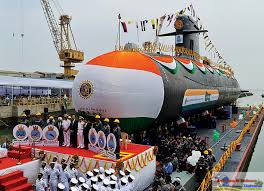 Different priorities are understandable. An Army looking for battlefield intelligence has different problems from an Air Force managing aircraft or a Navy watching a maritime theatre. AI, however, makes the boundaries between those problems less useful. A drone detected by one service may be relevant to another. An intelligence assessment generated in one domain may alter decisions in another. For those systems to work together, the underlying data, networks and standards have to work together too. Theatre commands are designed to bring the services together at precisely this level.
Command Before Code
The significance becomes clearer once the services are expected to operate as one force. India’s theatre-command reform has developed largely separately from its AI conversation, but the two are now converging. General N. S. Raja Subramani took over as India’s third Chief of Defence Staff on May 31, 2026, inheriting an Integrated Theatre Command proposal that General Chauhan had spent months building service-level consensus around. The government has confirmed, in principle, its intent to establish joint theatre commands as part of a wider jointness and defence-reform agenda. The specifics reported publicly, a Northern Theatre facing China, a Western Theatre facing Pakistan and a Maritime Theatre covering the Indian Ocean region, each headed by a four-star officer, along with a tri-service Joint Operations Control Centre and Joint Logistics Nodes already running at Mumbai, Guwahati and Port Blair since 2021, come from defence reporting on the process rather than a published Ministry of Defence order, and the final structure, timeline and legal notification remain pending Cabinet Committee on Security clearance.
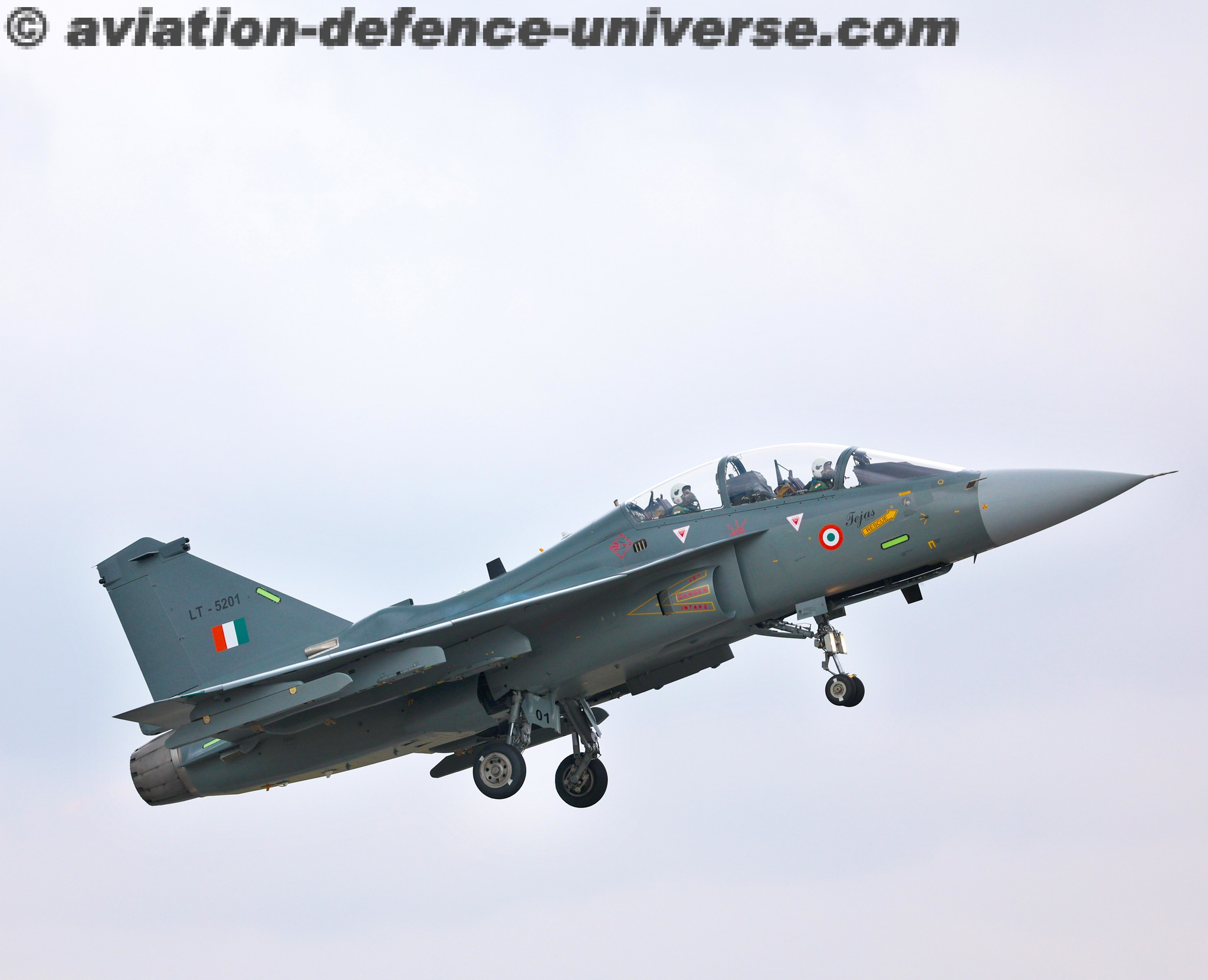 India’s existing AI institutions can encourage development, set standards and fund projects, but they operate outside the operational chain of command. The Defence Artificial Intelligence Council can set principles while the Defence AI Project Agency can fund pilots. Neither determines what information an Army unit, an Air Force squadron and a naval formation must share during a joint operation. A theatre command does: its commander is responsible for a geographical theatre rather than a single service, which means a surveillance system becomes more useful the moment information from an aircraft can feed a naval or Army decision and a logistics system becomes more useful the moment it can see requirements across the force rather than within one service. The same applies to AI-enabled targeting and intelligence tools. The incentive to make these systems communicate becomes part of getting the operation right, not an optional upgrade layered on afterward.
India has already spent years building the platforms and institutional machinery. What it has not yet fully built is the common operational environment in which those systems can work together and theatre commands are an attempt to create that environment. India’s AI story may ultimately be decided not by how effectively it reorganises the command structure around it.
The Governance Advantage India Is Learning to Spend
India’s relative position in military AI offers an advantage: it is still building capability at scale but it has also put rules and institutions around that capability early. ETAI came before widespread deployment of military AI, while the country now moves toward a command structure designed to make the services operate more closely together.
Indian strategic and military-ethics writing has repeatedly stressed that machines should not acquire independent human agency, sometimes drawing on the distinction between atman, the self, and yantra, the machine. That idea sits alongside a more forward-leaning political position on autonomous weapon systems and the tug of war between restraint and ambition has not been fully resolved. Having that argument in the open is itself useful as it forces India to define where it wants the boundary between human judgement and machine action to sit before technology decides for it.
India is beginning to carry that debate beyond its own institutions. It hosted the AI Impact Summit in New Delhi in February 2026, the first global AI summit held in the Global South and continues to engage the REAIM process on responsible military AI. Both give India a platform to move past broad calls for responsible use and offer something more concrete: a governance framework that can be examined, adapted and potentially adopted by others. ETAI gives that effort a practical reference point. India has not solved military AI governance but its advantage is that it is building the rules while it is still building the capability and if it can connect ETAI’s principles to the way its armed forces deploy and integrate AI, it will have something more valuable than another statement on responsible technology.
The Way Forward
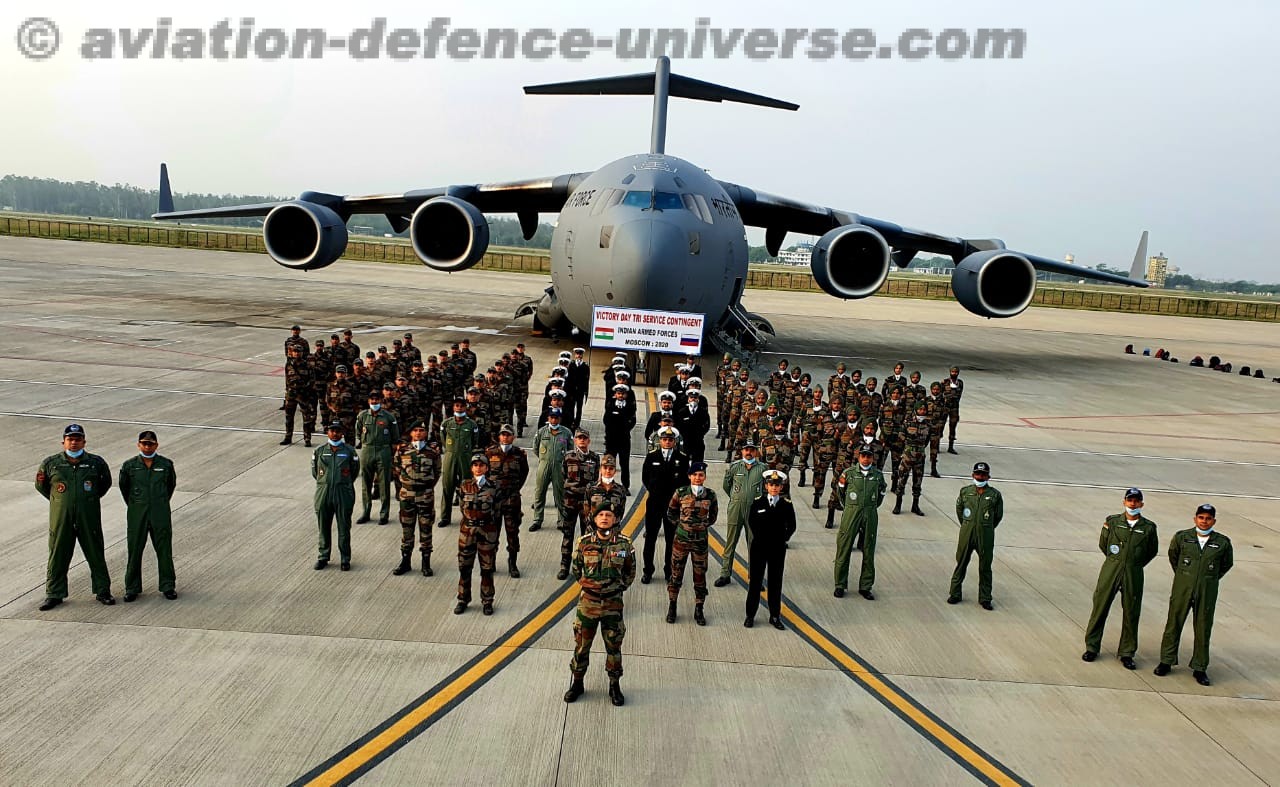 India now has the pieces needed to build a serious military AI system, but they have largely developed through separate institutions and processes. Bringing them together calls for three practical shifts. First, ETAI needs to move beyond research laboratories and into defence procurement, testing whether systems are reliable, safe and secure before they enter service rather than addressing those concerns after deployment. Second, any new theatre commands need to be built around systems that can share information from day one. The Army, Navy and Air Force should not have to work out different data standards after the new structure is already in place; building common systems while the theatre commands are being established is far easier than connecting separate networks and procedures later. Third, India has an opportunity to take its approach to responsible military AI beyond its own armed forces. Through the AI Impact Summit and its REAIM engagement, India has platforms from which to share that experience with other countries and it need not present it as a finished model. A framework others can examine and adapt is already useful on its own.
None of this requires India to build faster; rather, it requires the work already underway to start connecting. The council was created, the project agency was established, the framework was written. The joint logistics mechanisms are operational and the theatre commands are closer to real than at any point in India’s post-independence military history. India’s advantage comes from being the rare military that built the rules, the industry and the command structure to use that AI together, at the same time, instead of one after another.
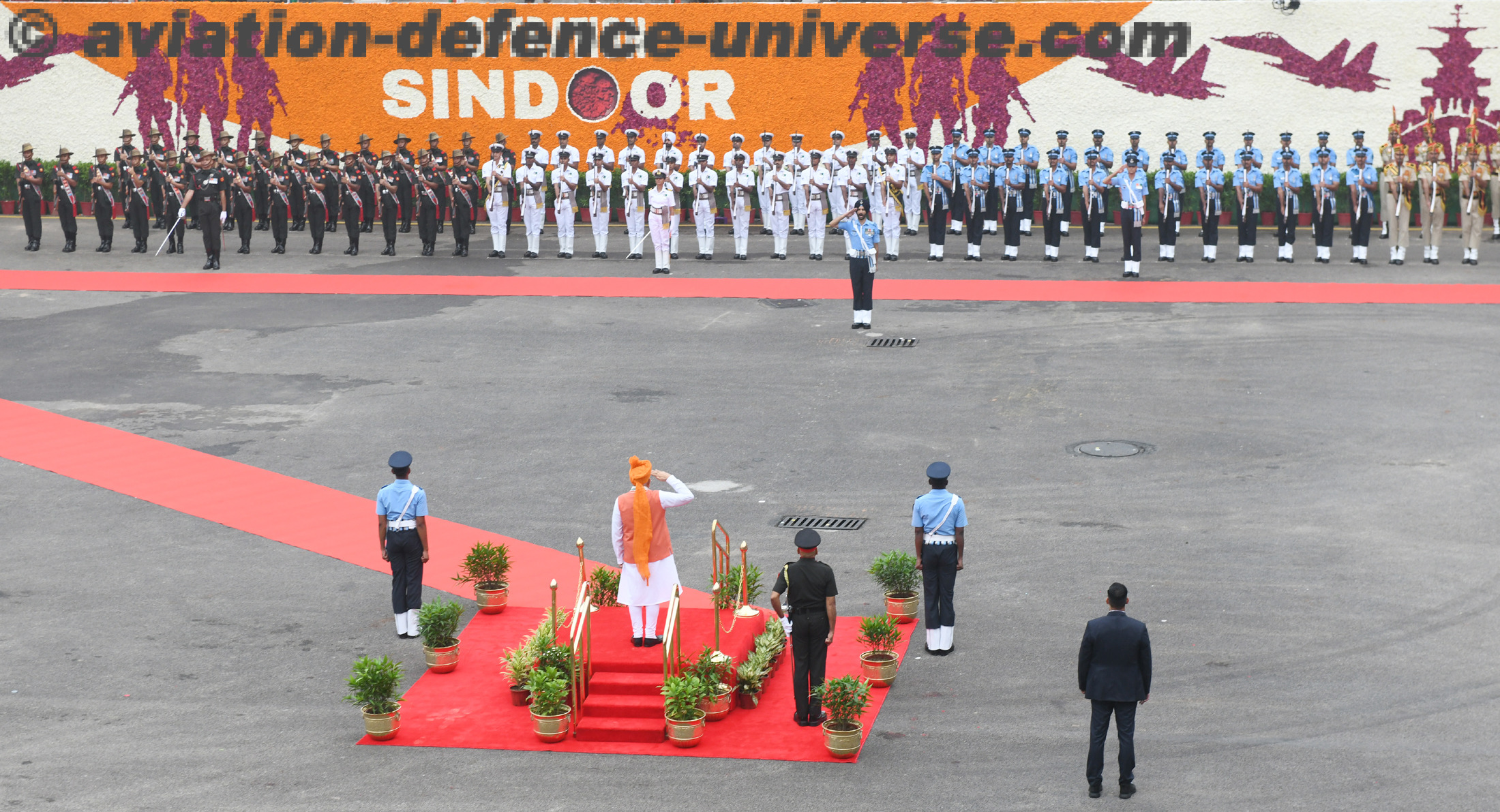
The battlefield of tomorrow will not recognise organisational silos. Intelligence collected by an aircraft may influence an Army commander’s decision; maritime surveillance could trigger an air response; a drone detected in one domain could pose an immediate threat in another. Data will have to travel as seamlessly as commands, and machines will have to communicate across Service boundaries as effectively as the men and women operating them. That is why India’s 80th Independence Day provides an appropriate moment to look beyond how much military technology the country has indigenously created and ask the next question: how intelligently can India connect it?
For an India that has travelled from dependence on imported defence equipment towards Atmanirbharta , indigenous innovation and an increasingly sophisticated defence-industrial ecosystem, the next measure of strategic autonomy could therefore be integration. The coming decade will test India’s ability to combine AI, indigenous technology, responsible governance and joint command structures into a force capable of thinking, sensing and responding across domains. As the Tricolour rises on the 80th Independence Day, the defence conversation is moving decisively from platforms to networks, from individual Service capabilities to joint operations—and, ultimately, from code to command.





































































-A4-Size-(2)_page-0001.jpg)