


























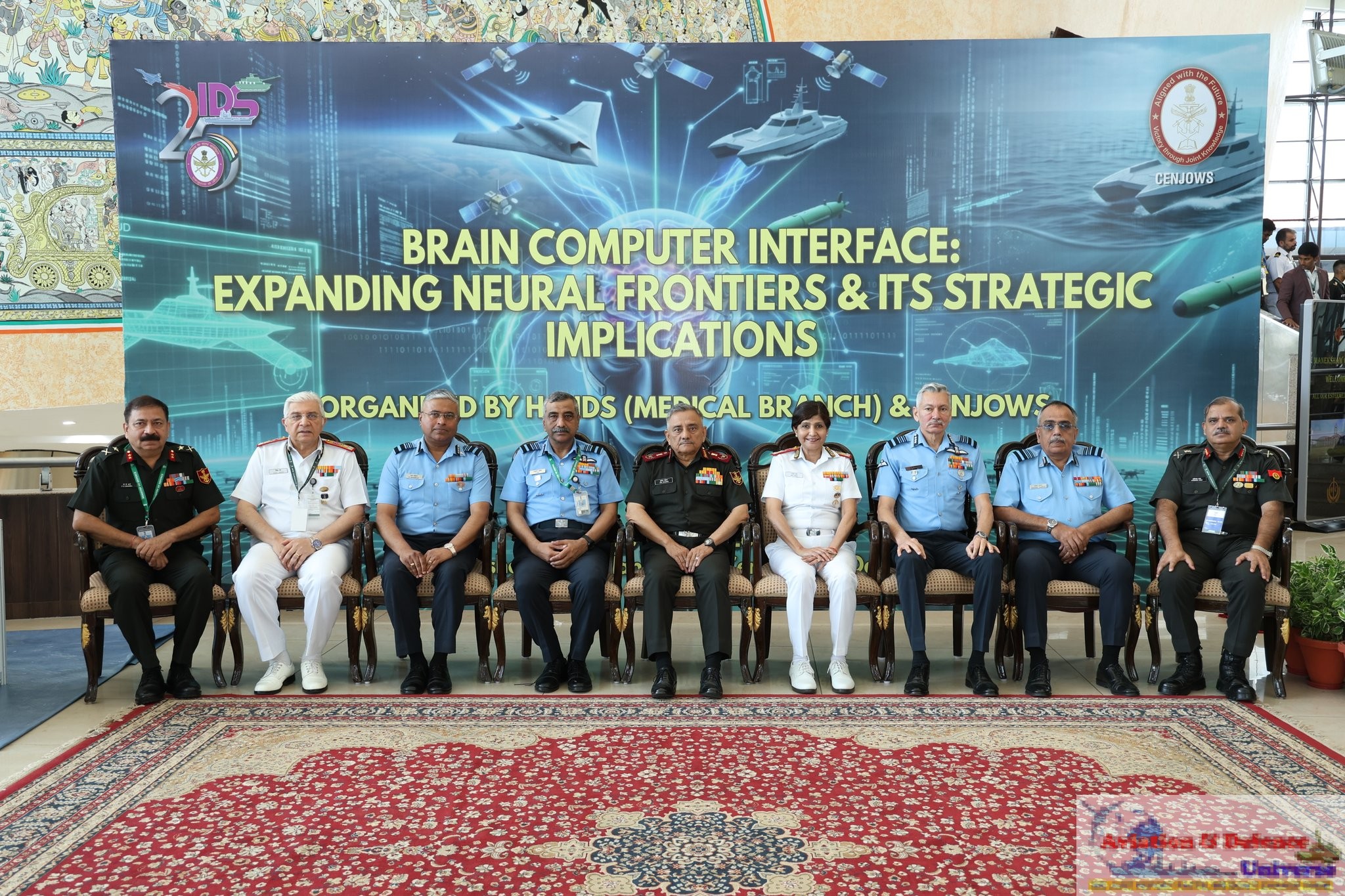
- Mind Over Machine: The Growing Role of Brain-Computer Interfaces in Armed Forces Operations
- When Neural Signals Become Weapons Systems: The Strategic Promise of Brain-Computer Interfaces
- The Next Revolution in Defence Technology: Understanding Brain-Computer Interfaces
- From Medical Rehabilitation to Military Application: The Expanding Scope of Brain-Computer Interfaces
By Sangeeta Saxena
New Delhi. 06 May 2026. Brain-Computer Interface (BCI) technology represents one of the most transformative frontiers in modern science and defence innovation. A BCI establishes a direct communication pathway between the human brain and external devices by interpreting neural signals and converting them into actionable commands. Initially developed to assist individuals suffering from paralysis, speech impairment, or neurological disabilities, the technology is now rapidly expanding into strategic and military applications. In the armed forces domain, BCI has the potential to revolutionise warfare by enabling soldiers to control unmanned systems, weapons platforms, robotics, and communication networks using thought processes alone. Combined with Artificial Intelligence, autonomous systems, and advanced computing, Brain-Computer Interfaces could significantly enhance battlefield decision-making, operational speed, cognitive resilience, and human-machine integration, thereby reshaping the future character of warfare.
A seminar on Brain-Computer Interface (BCI) was organised under the aegis of Centre for Joint Warfare Studies (CENJOWS), bringing together senior military leadership, medical experts, technologists, industry representatives, start-ups, and members of the media to deliberate upon one of the most transformative emerging technologies of the future.
The event commenced with a welcome address by Maj Gen Ashok Kumar (Retd.), Director General, CENJOWS, who welcomed the distinguished gathering, including the Chief of Defence Staff (CDS), Chief of Integrated Defence Staff (CISC), Director General Armed Forces Medical Services (DGFMS), senior officers from the three services, members of the media, distinguished guests, industry representatives, and start-ups participating in the seminar.
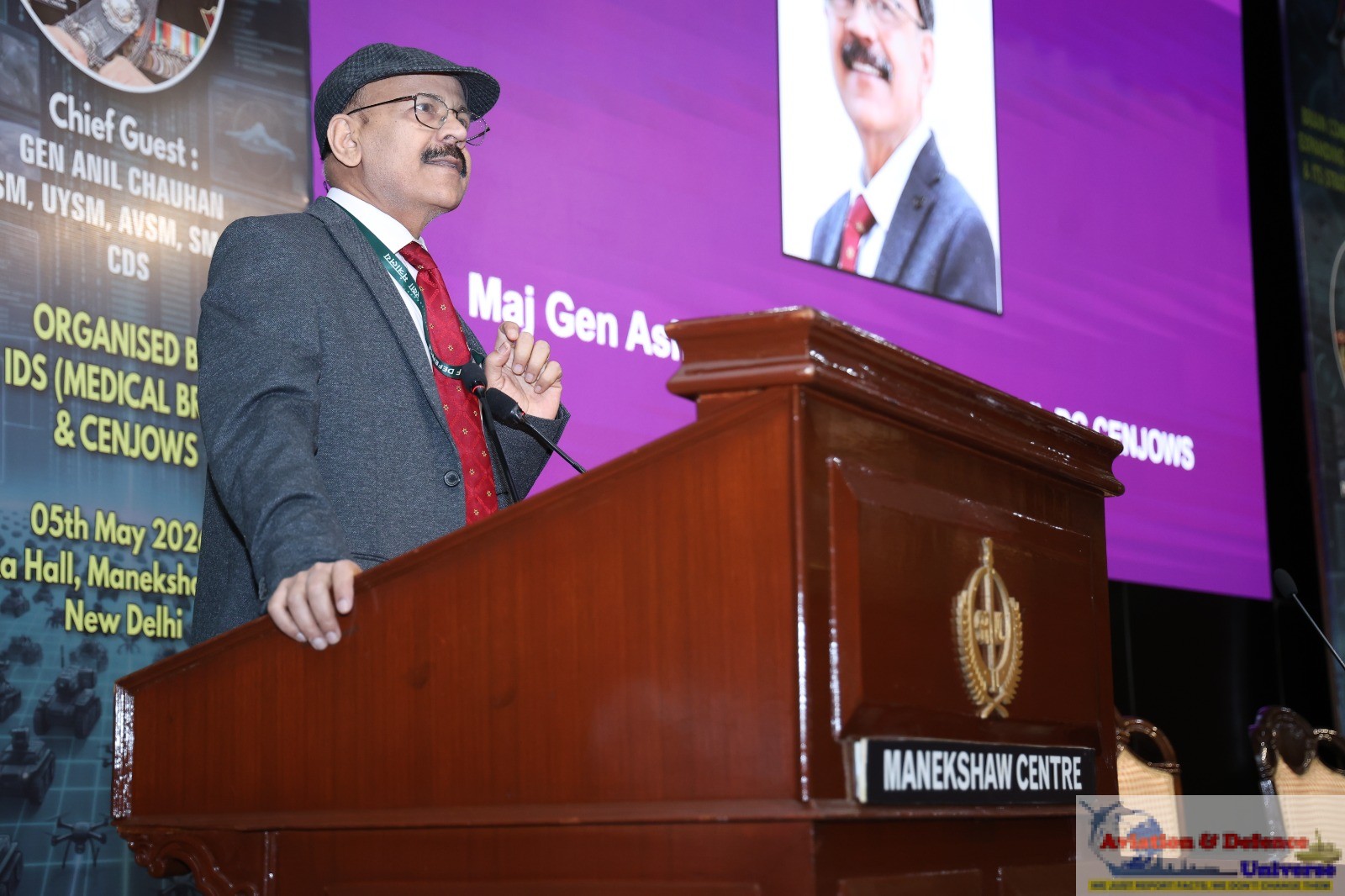 In his address, Maj Gen Ashok Kumar drew a powerful analogy from the Ramcharitmanas, referring to the episode of Lankadhahana by Hanuman. He observed that although Hanuman was alone in Lanka, his reflections appeared many to the demons because “reflection is created by feeling.” Using this metaphor, he highlighted how human thoughts possess the power to transform actions, linking the idea directly to the concept of Brain-Computer Interface technology.
He remarked that BCI represents the realisation of a thought process in which neural signals from the human brain can produce extraordinary outcomes. He noted that while the world is still grappling with Artificial Intelligence, Generative AI, and other technological advancements, Brain-Computer Interface technology has the potential to move humanity into an entirely new domain of capability.
Commending Air Marshal Sankar Subramaniam and his team for selecting such a futuristic subject, Maj Gen Ashok Kumar stated that India has an opportunity to emerge as a leader in this field. He pointed out that only the United States and China have significantly invested in BCI research, whereas elsewhere the technology has largely remained confined to medical applications.
He elaborated that traditionally BCI has been viewed as a medical facilitation tool capable of assisting paraplegic and quadriplegic individuals by enabling bodily and mental functions through neural signals. However, he stressed that the seminar would go beyond medical applications and explore the broader operational and strategic possibilities of the technology.
Highlighting the immense future potential of BCI, he stated that neural signals could eventually enable actions such as initiating missile systems across continents directly through thought processes. He emphasised that mental communication and chip-to-chip communication across barriers have already been demonstrated, indicating the disruptive potential of the technology.
Maj Gen Ashok Kumar also drew attention to the role of start-ups in driving innovation in this domain. He observed that larger industries have yet to invest substantially in BCI because the field may not currently offer immediate financial returns, whereas start-ups are devoting significant effort and energy to advancing the technology. He noted that CENJOWS was providing logistical support to encourage such innovators and bring their knowledge to a wider strategic audience.
Referring to industry projections, he mentioned that studies estimate the BCI sector could achieve a turnover of approximately USD 5 billion by 2030, after which it may outpace several existing technological domains in terms of impact and manifestation.
The Director General further remarked that Brain-Computer Interface technology is no longer a distant dream but an evolving reality capable of restoring mobility to paralysed individuals, enabling communication for people with speech impairments, and enhancing cognitive rehabilitation. He emphasised that beyond neural signals, the technology is fundamentally about restoring dignity, independence, and hope.
Drawing parallels with contemporary warfare, he observed that the democratisation of advanced technologies has altered the balance between conventionally stronger and weaker nations. Traditional assumptions regarding battlefield superiority are increasingly becoming irrelevant. According to him, as BCI technology advances and becomes widely accessible, it could usher in an entirely new era of warfare.
Maj Gen Ashok Kumar also noted that CENJOWS has consistently organised discussions on emerging strategic subjects, but this seminar represented one of the most futuristic themes yet explored by the institution. He complimented the teams from Headquarters Integrated Defence Staff and the medical fraternity for conceptualising the seminar.
Referring to the initiatives of the Chief of Defence Staff, he highlighted the ongoing focus on technological advancement and future warfare concepts within the Indian Armed Forces. He stated that BCI possesses the potential to bring unprecedented operational and strategic changes, where neural signals could control not only missile systems but also any equipment integrated with computer interfaces.
He added that while robotics, humanoids, and Artificial Intelligence are already transforming warfare, Brain-Computer Interface technology could create an entirely new operational reality. In his concluding remarks, he stated that the word “impossible” could now be “thrown out of the window,” expressing confidence that the seminar would lead to meaningful and thought-provoking discussions on the future of this transformative technology.
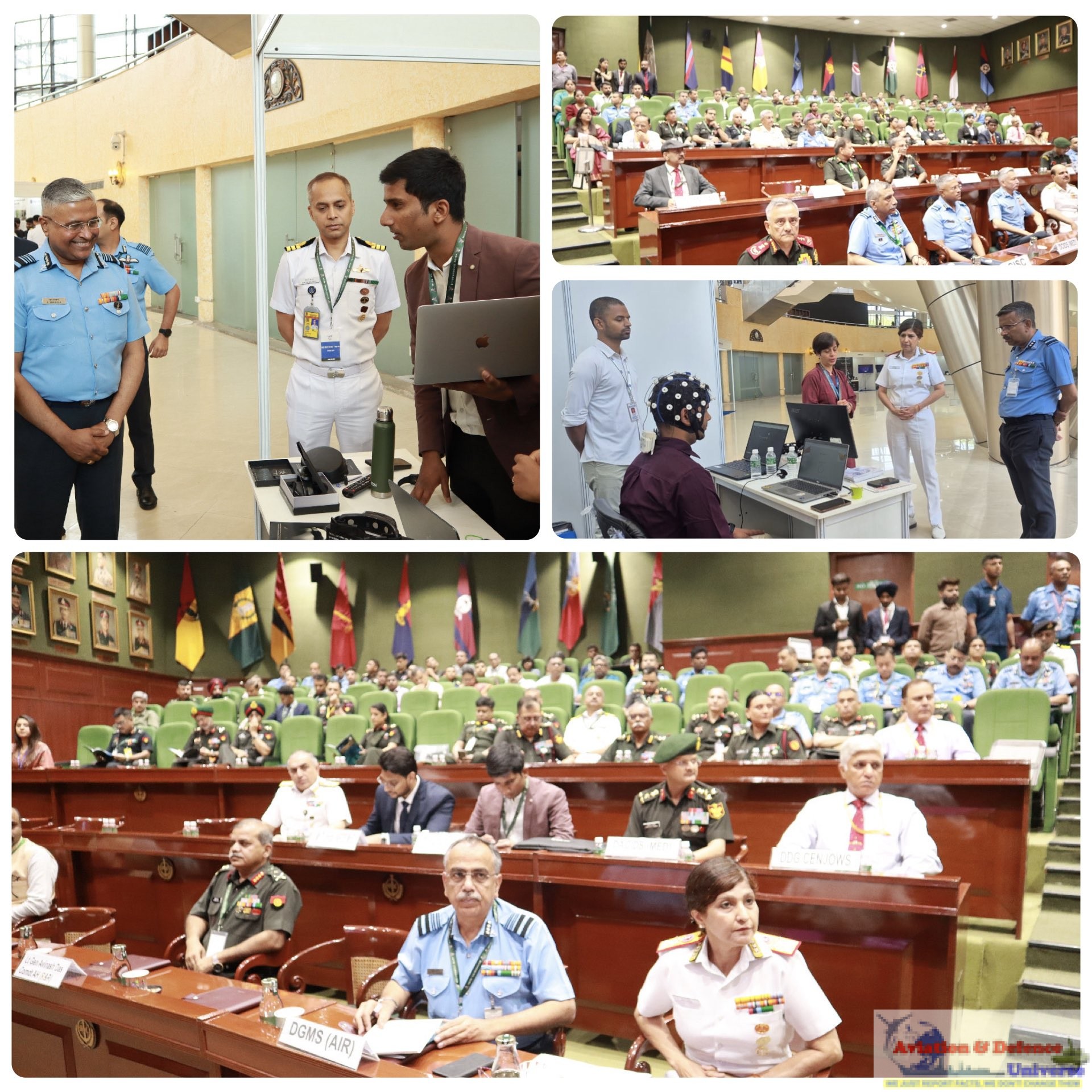 The event reiterated the growing importance of emerging technologies in defence preparedness and highlighted India’s intent to remain at the forefront of innovation in future warfare domains. The seminar on Brain-Computer Interface technology highlighted the transformative potential of neural engineering in both healthcare and future warfare. Through insightful deliberations led by senior military leadership, experts, innovators, and start-ups, the discussions underscored that BCI is no longer confined to the realm of science fiction or medical rehabilitation alone. Instead, it is rapidly emerging as a strategic technology capable of redefining communication, human-machine interaction, operational decision-making, and combat systems in the modern battlefield environment.
The address by Maj Gen Ashok Kumar (Retd.), Director General, Centre for Joint Warfare Studies, reinforced the importance of anticipating disruptive technological shifts before they become mainstream realities. By emphasising the convergence of Brain-Computer Interfaces with Artificial Intelligence, robotics, autonomous systems, and future warfare concepts, the seminar highlighted India’s opportunity to become a significant player in this emerging domain.
As warfare increasingly evolves into a contest of technological superiority and cognitive advantage, Brain-Computer Interface technology may fundamentally alter the way military operations are conducted in the decades ahead. The seminar therefore served not only as a platform for technological discussion, but also as a strategic dialogue on preparing India’s defence ecosystem for the next generation of warfare and human capability enhancement.












































































-A4-Size-(2)_page-0001.jpg)