






















- Warns India Against Falling Behind in AI-Driven Warfare
- “Algorithmic Warfare Is Now a Battlefield Reality
- Future Wars Will Be Fought at Machine Speed : India Must Become a Frontline AI Military Power
By Sangeeta Saxena
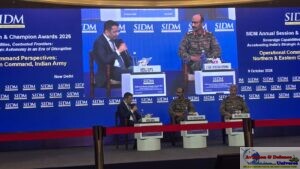
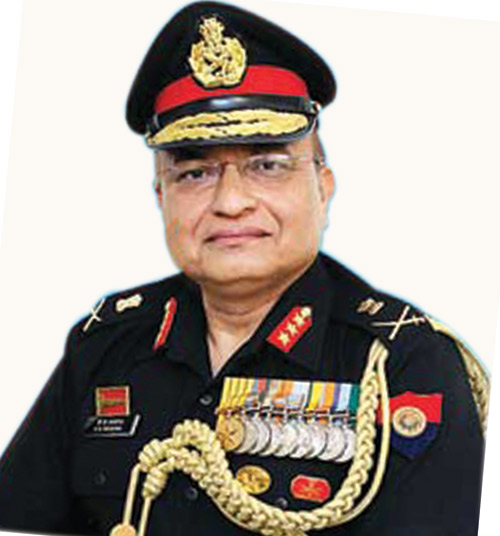
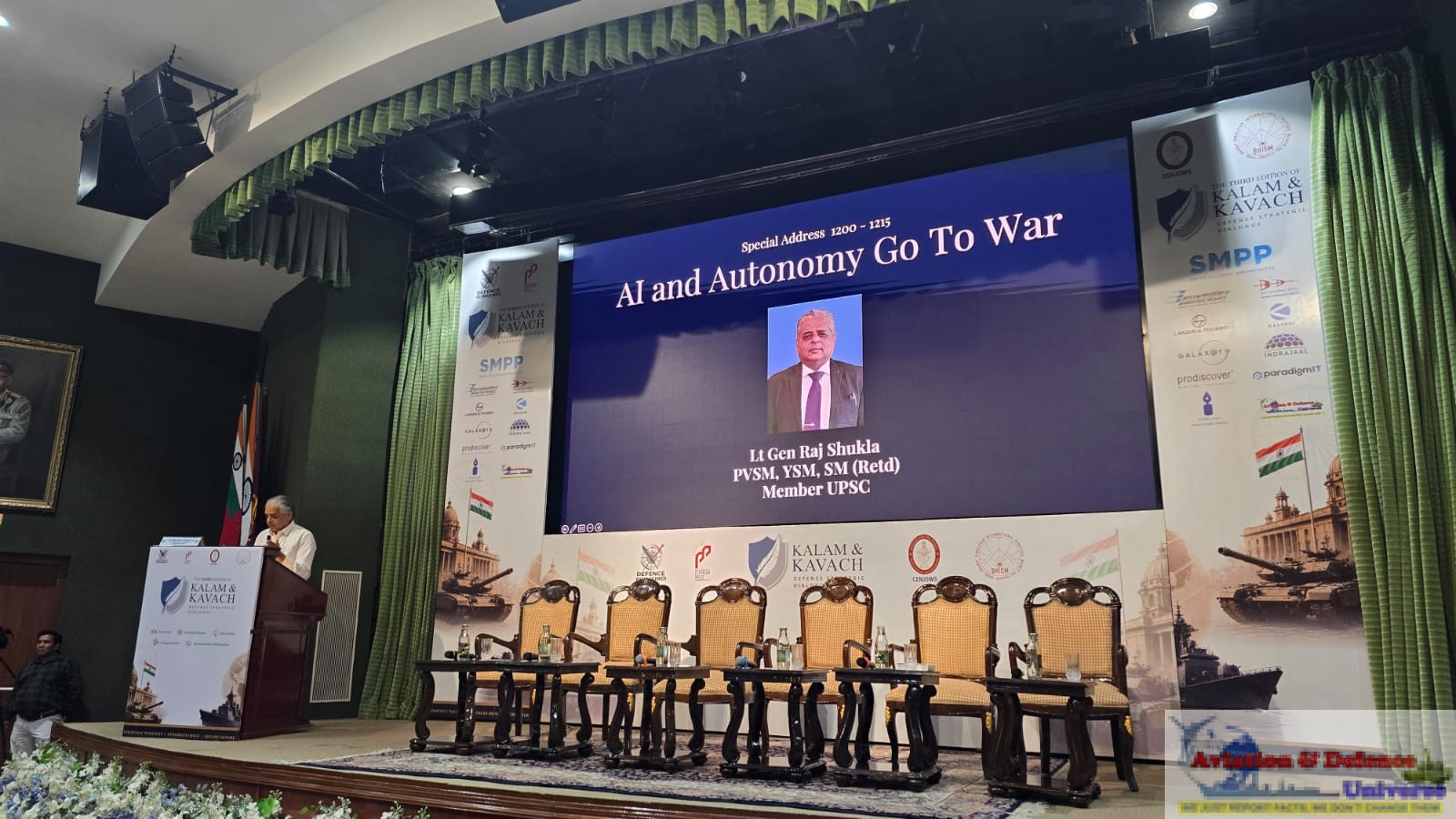
New Delhi. 2026. Delivering one of the most powerful and strategically provocative addresses at Kalam & Kavach 3.0, Lt. Gen. Raj Shukla (Retd.) warned that warfare has already entered the age of artificial intelligence, military autonomy and algorithmic combat. In his special address, the former Army Commander argued that the global battlefield is undergoing a revolutionary transformation driven by AI-enabled command systems, drones, cyber operations, autonomous platforms and machine-speed decision-making — and that India can no longer afford to treat these technologies as future possibilities.
Drawing extensively from the Ukraine conflict, American military transformation and emerging AI-enabled combat systems, Lt. Gen. Shukla emphasised that the character of war, battlefield lethality, procurement cycles and defence-industrial models are changing fundamentally. He repeatedly stressed that India must rapidly accelerate investments in AI, data readiness, military cloud systems, algorithmic warfare and sovereign digital capability if it wishes to remain strategically relevant in the coming decade.
Opening his address, Lt. Gen. Raj Shukla made a direct and forceful observation about the current state of military transformation worldwide. “For years we have spoken about AI and military autonomy in the future tense,” he said. “Let me say that both AI and military autonomy have arrived — not in the loop, not on the loop, but out of the loop.”
Referring to lessons from the Russia-Ukraine conflict, he noted how quickly technological adaptation is reshaping operational realities. “When the Ukraine conflict started, the Russians were six years behind in AI-enabled warfare,” he observed. “Today, the gap has narrowed to two years.” Lt. Gen. Shukla highlighted Ukraine’s AI-enabled command-and-control ecosystem, particularly systems such as Delta and Donary, as examples of how warfare is changing.
“This AI-enabled command-and-control system has completely changed the way war is being fought,” he stated. According to him, the battlefield itself is being fundamentally redefined by drones and autonomous surveillance systems. “Along a 45-kilometre zone on either side of the front line, tanks don’t move and artillery has been pushed back,” he said. “Any infantry movement is picked up by surveillance drones within three minutes and destroyed within seven minutes.” The retired Army Commander argued that these developments are transforming traditional military doctrines.
“Dronery has been reborn as an art and science,” he remarked. “Combined arms warfare today can become four men on a golf cart with surveillance drones above and killer drones behind.” Lt. Gen. Shukla strongly criticised the tendency to delay adoption of AI capabilities within India’s defence ecosystem. “If the Ukrainians can do AI, if the Americans can do AI, if the Chinese can do AI, why can’t we do AI?” he asked. “Now let’s stop talking about it. It should be done within the next one to one-and-a-half years.”
He declared that “algorithmic warfare has arrived” and warned that future conflicts will increasingly be fought at machine speed. “It is no longer remote control. It is all algorithms,” he stated. Drawing attention to America’s AI-enabled Project Maven ecosystem, Lt. Gen. Shukla highlighted how AI is already deeply integrated into operational military planning. “AI-enabled targeting at machine speed made 15,000 targets possible,” he explained. “In earlier wars, they never crossed 2,000–3,000 targets.”
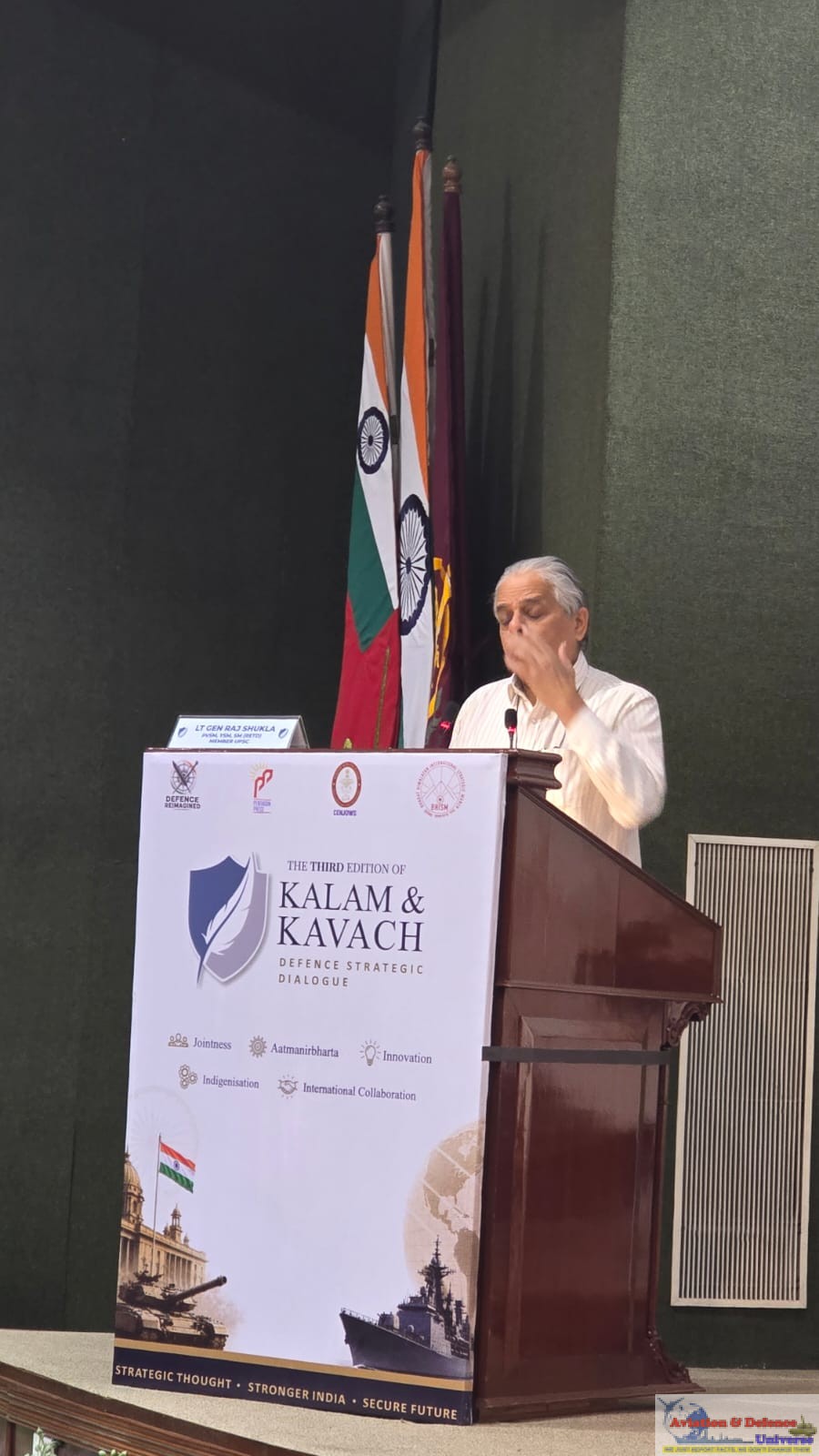 He also described how AI systems now generate common operational pictures and predictive battlefield intelligence. “You ask natural language queries and you don’t get verbal responses — you get a common operational picture,” he said. Lt. Gen. Shukla argued that AI is fundamentally expanding military decision-making capability. “AI in deterrence and warfighting is making soldiers discover the limits of their own minds,” he remarked. “It is like the injection of genius into war planning.”
The address repeatedly returned to the importance of data, sovereign cloud infrastructure and AI readiness. “The biggest advantages of AI are happening in intelligence,” he stated. “Only then will targeting at machine speed become a reality.” He warned against India choosing a secondary or “diffusion-only” approach to AI development. “When I hear that India will remain content with diffusion and not compete in frontline AI, I think it is extremely dangerous,” he said. “National security must be frontline AI.”
According to Lt. Gen. Shukla, battlefield lethality will increase exponentially over the next few years because of AI and military autonomy. “AI, military autonomy and algorithmic warfare will grow battlefield lethality by ten times over the next two years,” he observed.
He further argued that these technologies are already enabling operations in GPS-denied environments across land, sea and undersea domains.“These technologies are enabling operations in GPS-denied environments,” he explained. “Even at sea and underwater where there are no landmarks.”
He also criticised outdated business and procurement models within defence ecosystems. “Defence departments which were once weapon factories will now need to think and operate like software companies,” he remarked. Contrasting modern innovation cycles with traditional procurement procedures, he warned, “In Ukraine, innovations are being delivered in two weeks,” he said. “So what is the point of producing a perfect RFP in two years?”
Lt. Gen. Shukla emphasised that future strategic advantage will belong to nations capable of embracing AI-led transformation faster than others. “Those who embrace these technologies will become the new strategic haves,” he stated. “The rest will become the have-nots.” Calling for significant changes in defence budgeting and priorities, he argued that future military investments must increasingly focus on AI, cloud systems, data readiness and digital combat capability. “If ₹2 lakh crore has been allotted for modernisation, at least ₹1 lakh crore must go into AI, data readiness and AI diffusion,” he suggested.
He also called for the military and educational ecosystem to rapidly adapt to new technological realities. “We should be teaching prompt engineering in our engineering colleges,” he remarked. “That is the new stuff.” Concluding his address, Lt. Gen. Shukla urged the Indian military to treat 2026 as a decisive turning point in military AI transformation.
“I hope 2026 becomes the pivotal moment for the Indian military to make the transition,” he said. “And 2027 becomes the year for ushering in AI, algorithmic warfare, military autonomy, drones and robotics into the Indian military at machine speed and with algorithmic resolve.”
Lt. Gen. Raj Shukla’s address at Kalam & Kavach 3.0 delivered a stark and compelling warning about the speed at which warfare is being transformed by artificial intelligence, autonomous systems, drones, cyber capability and algorithmic decision-making. By drawing lessons from Ukraine, American military AI systems and emerging global technological competition, he underscored that future wars will increasingly be fought through machine-speed operations, data dominance and integrated digital ecosystems rather than conventional industrial-era doctrines alone.
His remarks reflected the growing global recognition that AI and military autonomy are no longer experimental concepts but operational realities already reshaping combat, targeting, intelligence and battlefield lethality. At the same time, his repeated emphasis on sovereign capability, data readiness, military cloud systems and faster innovation cycles highlighted the urgent reforms required within India’s defence ecosystem.
As India advances toward future warfare preparedness, Lt. Gen. Shukla’s address served both as a strategic warning and a call to action — urging the military, industry, academia and policymakers to accelerate AI-led transformation before the next revolution in military affairs leaves traditional systems behind.










































































-A4-Size-(2)_page-0001.jpg)