
















- From Jointness to Total Integration : Theatre Commands Are a Strategic Imperative
- CENJOWS on Future Warfare, Defence Innovation and India’s Strategic Vision for 2047
- From Silicon Labs to Battlefields: How CENJOWS Sees India’s Defence Evolution
By Sangeeta Saxena
New Delhi. 12 May 2026. As India accelerates its military transformation amid rapidly evolving geopolitical and technological challenges, institutions like the Centre for Joint Warfare Studies (CENJOWS) are playing a critical role in shaping the nation’s strategic outlook. From integrated theatre commands and multi-domain operations to AI-driven warfare, cyber resilience and space security, the nature of conflict is undergoing a profound shift. At the same time, India’s emphasis on Atmanirbhar Bharat, defence indigenisation and civil-military fusion is redefining the relationship between policy, industry and the armed forces.
In this exclusive conversation with ADU, CENJOWS shares insights into the evolving character of warfare, the challenges of achieving true jointness within the Indian military structure, and the importance of future-ready leadership and doctrine. The discussion also highlights the objectives of Kalam & Kavach 2026, the significance of the “JAI” framework — Jointness, Atmanirbharata and Innovation — and the role of strategic dialogues in building a technologically sovereign and globally competitive India.
ADU. What is the evolving role of CENJOWS in India’s defence and strategic ecosystem today?
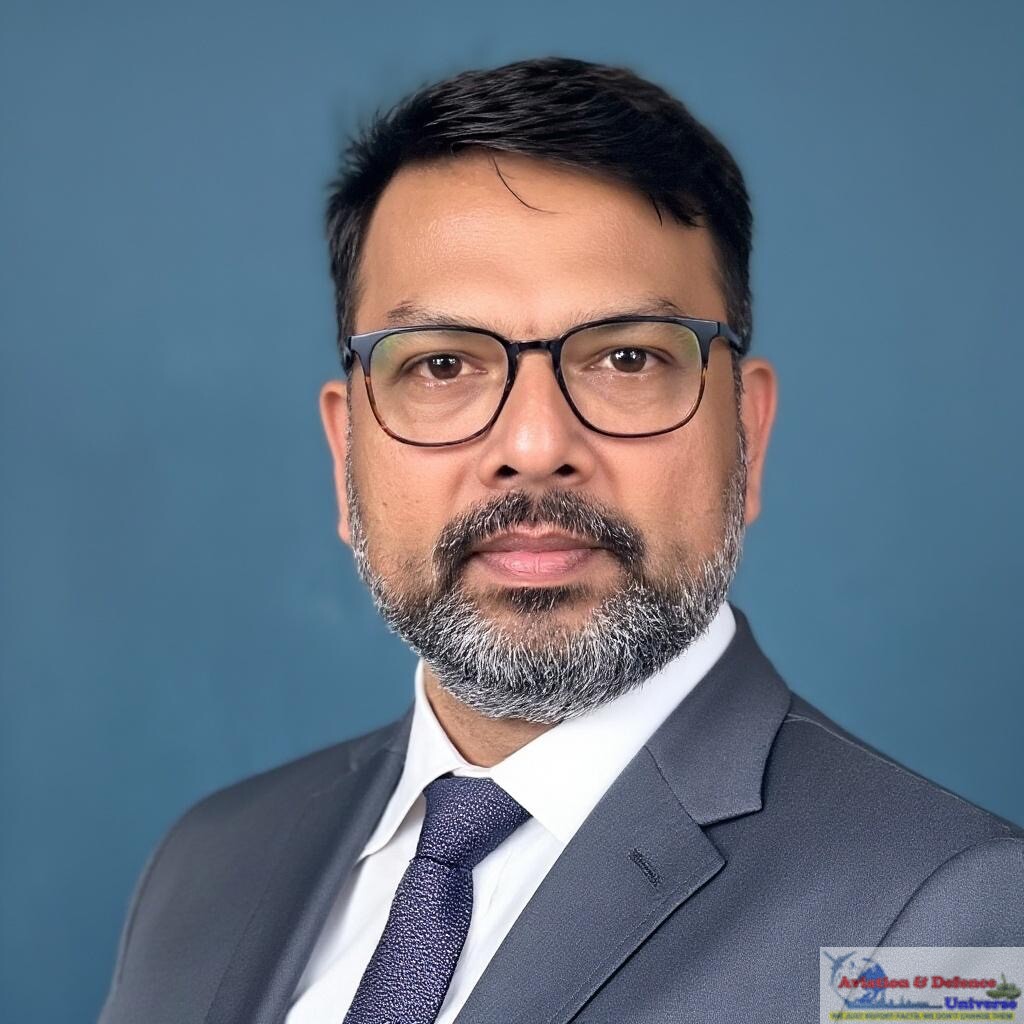
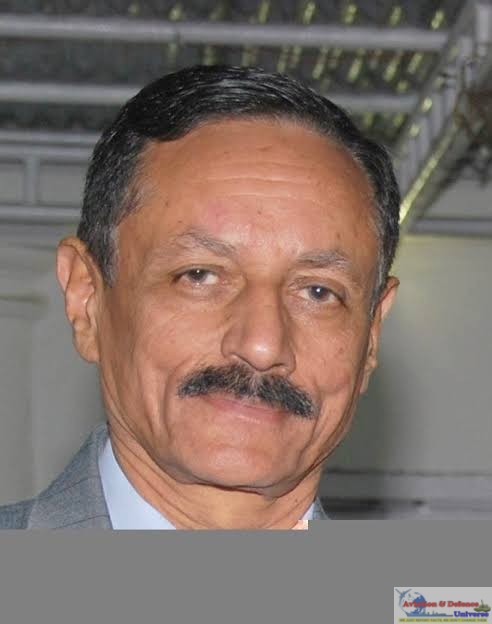
Maj Gen Ashok Kumar (Retd.). I view our institution as a Multi Domain Operation (MDO) catalyst that which, sits at the very heart of India’s military modernisation. Our role has undergone a profound transformation. We have evolved and continue to, from being a traditional research body into a dynamic engine for the “Jointness” and “Integration” mandate. In the current geopolitical climate, our primary objective has expanded to provide the conceptual and doctrinal blueprints required to transition the Indian Armed Forces from service specific silos into a Unified Structure. We serve as the critical intellectual bridge to ensure that this transition is not just organisational, but also operational, rooted in a deep understanding of future conflicts and the necessity of synchronised Land, Air, Sea, Space, Cyber and Cognitive operations.
A recent, pivotal milestone in this evolution is the establishment of the CENJOWS Space Cell. This move was necessitated by the recognition that space is no longer just a support dimension but the fourth frontier of active military engagement.
CENJOWS provides the essential foresight that is required to preempt threats in the “Grey Zone” and the rapidly converging realms of AI, Space, and Cyber along with the three traditional domains. We aim to ensure that the concept of “Integrated Strategic Deterrence” is truly comprehensive, spanning from the seabed to the highest orbits of the exosphere. As we continue to refine joint doctrines and promote the synergistic application of Comprehensive National Power, CENJOWS stands as an indispensable pillar in preparing a modern, agile, and technology-enabled force ready to protect India’s interests in an increasingly volatile global landscape.
ADU. How does CENJOWS contribute to policy formulation and jointness among the armed forces?
Maj Gen Ashok Kumar (Retd.). The conversation underscores that India’s future military preparedness will depend not only on advanced technologies but also on the ability to integrate people, policy, industry and doctrine into a unified national security framework. From AI-enabled decision-making and cyber warfare to theatre commands and space capabilities, the future battlefield is becoming increasingly interconnected and multi-domain in nature.
Our contribution to “Jointness” is most visible through our leadership in the professional development of the next generation of military leaders. A cornerstone of this effort is the Future Warfare Course, which we conduct under the aegis of HQ IDS. This three week, rank agnostic, intensive program, now in its third edition as of 2026, brings together officers from the Army, Navy, and Air Force ranging from Majors to Major Generals and their equivalent in Navy and Air Force. This course is a deliberate exercise in fostering a common professional language and culture, focusing on how technological disruptions like AI and cyber tools necessitate a fundamental re look at our joint strategies and TTPs (Tactics, Techniques, and Procedures). By aligning the operational priorities of all three services with indigenous industrial capabilities, we are moving jointness from a conceptual ideal to a functional, everyday reality.
ADU. In your view, what are the key challenges in achieving true jointness in India’s military structure?
Maj Gen Ashok Kumar (Retd.). Achieving true jointness in India’s military structure is not merely a bureaucratic task of merging offices. It is a fundamental re-engineering of our strategic DNA. As we observe the evolving landscape in 2026, the primary challenge remains the service centric culture.
For decades, the Army, Navy, and Air Force have developed individual doctrines, procurement priorities, and training protocols. This, I feel has created a “silo effect” where each service views the battlefield through its own lens. Overcoming this requires more than just structural changes like the creation of Integrated Theatre Commands. It demands a shift in the very identity of all ranks, moving from a service first affiliation to a National First joint warfighting mindset. CENJOWS addresses this through our Future Warfare Courses as I mentioned earlier, where we bring together middle and senior-level leadership to forge a common professional language before they ascend to theatre-level command roles.
This challenge is further complicated by the need for a unified “C4ISR” (Command, Control, Communications, Computers, Intelligence, Surveillance, and Reconnaissance) architecture. Without a single, seamless digital backbone that allows a soldier in the Himalayas to call for precision fire from a naval platform in the Indian Ocean, structural jointness remains a dream.
Furthermore, the “Technological Integration Gap” I feel, is a significant hurdle. Modern warfare is increasingly fought in the non-kinetic realms of Space, Cyber, and Information. Integrating these invisible domains into traditional land or sea-based operations is difficult because the pace of technological change often outstrips the pace of doctrinal evolution. Integrating their outputs into the daily tactical planning of a ground commander requires sophisticated “domain fusion.”
ADU. CENJOWS is a partner to the defence dialogue Kalam & Kavach 2026. What are the primary objectives of this dialogue, and how is it different from other defence forums?
Maj Gen Ashok Kumar (Retd.). The primary objective of the Kalam & Kavach 2026 dialogue is to advance the “JAI” framework that represents the core pillars of Jointness, Atmanirbharata (Self-Reliance), and Innovation. A specific spotlight is on the I² Imperative: Indigenisation and International Collaboration. This strategic initiative focuses on strengthening India’s defence preparedness by integrating indigenous capability development with advanced global innovation. The forum aims to accelerate defence Research and Development (R&D), enable effective international collaboration, and position India as a globally competitive defense manufacturing hub. Key focus areas include future-proofing India’s warfighting edge against multi-domain threats like AI and hypersonics, reforming policy and finance for R&D through iDEX scaling, and forging strategic partnerships with foreign OEMs to bridge technological gaps.
Furthermore, it serves as a critical interface for “Whole-of-Nation” engagement, leveraging the partnership between CENJOWS, the Bharat Himalayan International Strategic Manch (BHISM), and leading defense publishers to ensure that the dialogue leads to measurable outcomes.
ADU. What key themes or strategic issues will be at the forefront of discussions this year?
Maj Gen Ashok Kumar (Retd.). The discussions this year are centered on the I² Imperative – Indigenisation and International Collaboration. These serve as a strategic roadmap to strengthen India’s defense preparedness. A primary focus is future proofing India’s warfighting edge by adapting to the technology trajectories of multi-domain warfare, including Artificial Intelligence (AI), hypersonics, and quantum threats. This involves prioritising the development of directed energy weapons, unmanned swarms, and resilient C4ISR systems to ensure readiness for the year 2035. Strategic issues regarding defense R&D and finance are also at the forefront, specifically focusing on scaling iDEX, reforming DDR&D, and utilising venture capital and private blends to close funding gaps. The dialogue covers the establishment of dedicated R&D hubs and startup incubators to accelerate low-TRL (Technology Readiness Level) technologies while ensuring robust Intellectual Property (IP) safeguards during technology transfers with foreign OEMs.
Another core area of coverage is the transition of India into a global collaborative hub. This includes analysing successful models of tech infusion such as the BrahMos exports and GE F414 deals to refine FDI policies and bilateral frameworks that balance self-reliance with global expertise. Finally, the roadmap for scaling defense manufacturing will be detailed, focusing on the role of Defence Corridors, PLI schemes, and synergies between the private sector and DPSUs to achieve a target of $25 billion in exports by 2030.
ADU. How do you see the character of warfare evolving in the next decade, especially with emerging technologies like AI, cyber warfare, and space capabilities?
Maj Gen Ashok Kumar (Retd.). Over the next decade, I feel that the character of warfare will shift from sequential operations to a state of permanent, multi-domain conflict that unfolds simultaneously across land, sea, air, space, cyberspace, and the cognitive domain. This evolution is driven by the compression of the “OODA” (Observe, Orient, Decide, Act) loop, where the combination of high-speed sensors and Artificial Intelligence allows for decision-making at “machine speed”. In this environment, AI is not merely a support tool but an autonomous actor capable of orchestrating swarms of unmanned vehicles and conducting sophisticated cyber-espionage that exceeds human cognitive processing limits.
Cyber and Cognitive Warfare will become the primary non kinetic frontiers, targeting an adversary’s command-and-control networks and the very perception of its leadership and public. We see cyber operations transitioning into a state of “persistent engagement,” where nations continuously probe digital defenses even during peacetime. Simultaneously, Cognitive Warfare leverages AI-driven deep fakes and customised disinformation to manipulate decision-making, effectively turning the information space into a battleground that can achieve strategic victory without traditional kinetic engagement.
The domain of Space is evolving from a support function into a critical combat theater. There is an urgent need to address the weaponisation of space, from counter-space kinetic threats to co-orbital systems, ensuring our strategic assets are protected. In the coming decades, the integration of satellite-provided imagery and timing into almost all precision weaponry will make space the eye of the entire joint force, necessitating a shift toward Multi-Domain Operations (MDO) that treat space as an interconnected grid extending from the seabed to the highest orbits.
ADU. What lessons from recent global conflicts should India be paying close attention to?
Maj Gen Ashok Kumar (Retd.). From a strategic and academic perspective, CENJOWS closely monitors contemporary global conflicts to extract lessons that are vital for India’s evolving security landscape. One of the most significant takeaways is the democratisation of precision and the rise of Transparent Battlefields. We have observed that the proliferation of low-cost drones and ubiquitous commercial satellite imagery has made it nearly impossible to achieve large-scale tactical surprise. This necessitates a shift in our doctrine toward dispersion and deception, where the survivability of our forces depends on their ability to remain mobile and digitally camouflaged in an era of constant surveillance.
The second lesson is the criticality of “Deep Tech” and indigenous supply chains in high-intensity, prolonged wars. Recent conflicts have shown that traditional stockpiles can be depleted in weeks, not months. The ability of a nation to rapidly scale production of precision-guided munitions and unmanned systems is what determines long-term resilience. This reinforces the importance of our “JAI” framework with a special focus on the I² Imperative. By integrating our domestic startups and defense corridors into the core military supply chain, we aim to ensure that India is never dependent on external “on-off” switches for its critical defense technology.
Finally, the role of space has transitioned from a supporting utility to a primary contestable domain. Global events have highlighted how the loss of space-based PNT (Positioning, Navigation, and Timing) or communication can paralyse a modern force.
ADU. How critical is integrated theatre command structure in preparing for future conflicts?
Maj Gen Ashok Kumar (Retd.). The establishment of an Integrated Theatre Command (ITC) structure is what I feel is perhaps the most profound military reorganization in India’s history, and its criticality cannot be overstated. As India faces increasingly complex security challenges, the traditional “siloed” system comprising 17 disparate service-specific commands is becoming a relic of the past. The move toward theatre commands is not merely an administrative shift. It is a strategic imperative to separate the functions of force generation (training and equipping) from force application (operational execution). This allows the Service Chiefs to focus on long-term capability building, while Theatre Commanders are empowered to conduct unified operations under a single command. The operational necessity of this structure is driven by several key factors in the modern battlespace:
- Multi-Domain Synchronisation: Future conflicts will be fought simultaneously across land, sea, air, cyber, and space. Integrated Theatre Commands provide the framework to “converge and centralise” capabilities, ensuring that an anti-air strike can come from a submarine or anti-ship missiles from an Army unit on the ground without traditional service-boundary delays.
- Decision Superiority: In an era where wars can be won in minutes through lightning-fast coordination, the fragmented command structure hinders speed. Theatre commands unify operations, intelligence, and logistics under one roof, allowing for the “lightning-fast digital and kinetic coordination” required for high-intensity, multi-front scenarios.
- Optimal Resource Management: By pooling the limited high-value assets of the Army, Navy, and Air Force under a unified commander, India can achieve a concentration of force that is otherwise impossible under separate command chains. This structure ensures that interoperable C4ISR systems and joint logistics become the standard rather than the exception.
- Consensus and Clarity: There is complete consensus among the three services on the conceptual framework of these commands. This unified vision is essential for addressing implementation challenges such as command-and-control discipline and the leadership matrix required for “Next Generation Officers” who will lead these integrated formations.
ADU. What role does indigenisation and Atmanirbhar Bharat play in strengthening India’s defence capabilities?
Maj Gen Ashok Kumar (Retd.). Indigenisation and the vision of Atmanirbhar Bharat are the foundational pillars of India’s modern defense strategy, serving as a critical safeguard against geopolitical vulnerabilities.
Furthermore, the drive for Atmanirbharata is deeply intertwined with technological superiority in modern, multi-domain warfare. Finally, the economic dimension of self-reliance is a powerful force multiplier for national security. With an ambitious target of reaching $25 billion in defence exports by 2030 as I mentioned earlier, India is transforming from a leading importer into a defence exporter. This economic scaling, supported by Production Linked Incentive (PLI) schemes and export incentives, provides the necessary financial depth to reinvest in cutting-edge R&D.
ADU. How can think tanks like CENJOWS bridge the gap between policy, industry, and the armed forces?
Maj Gen Ashok Kumar (Retd.). Think tanks like CENJOWS act as the vital intellectual and networking conduit necessary to synchronise the operational requirements of the Armed Forces with the innovative potential of the domestic defense industry and the strategic vision of policymakers.
We serve as a “Requirement Translator,” bridging the gap where the military speaks in terms of operational effects and the industry speaks in technical specifications. By providing a common platform for General Staff officers, DRDO scientists, and private sector leaders, we align their roadmaps to ensure that the deep tech being developed today meets the specific doctrinal needs of 2035 and beyond.
ADU. In an era of rapid technological change, what qualities should future military leaders possess?
Maj Gen Ashok Kumar (Retd.). In the era of rapid technological disruption, the primary quality future military leaders must possess is multi-domain proficiency, specifically the ability to command and synchronise operations across the traditional spheres of land, sea, and air while simultaneously mastering the invisible domains of space, cyber, and the electromagnetic spectrum. These leaders must be technology-fluent, moving beyond a general understanding to an agile adaptation of Artificial Intelligence, hypersonics, and quantum threats that are currently shaping the character of 21st-century warfare. This requires a fundamental shift from service-specific thinking toward a joint first mindset, ensuring that every tactical decision is integrated into a larger, unified warfighting matrix.
Crucially, future leaders must develop a high degree of strategic intuition which allows them to navigate what we at CENJOWS refer to as the transparent battlefield. The future leaders have to operate from the position of hope and need to take risks as against being affected due to fear of failures.
Finally speaking, I feel that future military leaders must possess resilience and ethical clarity in the face of autonomous systems. As warfare incorporates more unmanned swarms and AI-assisted targeting, the human element remains the final arbiter of intent and morality. Leaders must be prepared to manage the “People-Technology-Structure” matrix, ensuring that while our forces become more technology-enabled, remain grounded in a strong strategic culture.
ADU. How can training and doctrine evolve to prepare personnel for hybrid and multi-domain warfare?
Maj Gen Ashok Kumar (Retd.). To prepare personnel for the complexities of hybrid and multi-domain warfare, training and doctrine must undergo a fundamental shift from service-specific specialisation toward a model of Integrated Strategic Deterrence. This evolution begins with the institutionalisation of a common professional language across the Army, Navy, and Air Force, ensuring that jointness is not just an administrative layer but a functional reality at every level of command.
Doctrines must be rewritten to treat the invisible domains of space, cyber, and the electromagnetic spectrum as equal to traditional physical theaters, requiring personnel to be proficient in the simultaneous synchronisation of kinetic and non-kinetic effects. All doctrines must be joint doctrines from which individual service doctrines should flow.
Training must pivot toward fostering technology fluency as I mentioned earlier, and agile adaptation, particularly in navigating the “transparent battlefield” created by high-speed sensors and AI-driven data.
Our personnel need to be prepared for an environment where the OODA loop is compressed to machine speed, necessitating training in the management of autonomous systems, unmanned swarms, and resilient C4ISR networks. This involves moving beyond traditional drills to immersive, multi-domain simulations that challenge leaders to integrate advancements like directed energy weapons into their tactical planning for future readiness.
ADU. What outcomes do you hope Kalam & Kavach 2026 will achieve?
Maj Gen Ashok Kumar (Retd.). The Kalam & Kavach 2026 dialogue is engineered to deliver concrete, multi-dimensional outcomes that transcend traditional academic debate, moving firmly into the realm of operational and industrial execution. A primary outcome is the institutionalisation of the “JAI” framework (Jointness, Atmanirbharata, and Innovation) as a unified national security doctrine.
By bringing together the highest levels of military leadership alongside industry titans, the forum establishes a high-level consensus on the roadmap for India’s military transformation toward 2035 and beyond.







































































-A4-Size-(2)_page-0001.jpg)