























- Future Warfare Will Demand Modular, Scalable and Survivable Systems
- Building India’s Export-Capable Defence Manufacturing Ecosystem is mandatory
- India’s Defence Industry Is Moving from Import Dependence to Capability Ownership
- SMPP Targets Global Defence Markets with Indigenous Protection and Ammunition Technologies
By Sangeeta Saxena
New Delhi. 10 May 2026.As modern warfare evolves towards precision engagement, autonomous systems,  and technology-driven operations, India’s defence manufacturing ecosystem is undergoing a significant transformation under the Aatmanirbhar Bharat initiative. In this conversation with ADU Ashish Kansal, CEO of SMPP, outlines the company’s long-term strategic vision, including its expansion into next-generation ammunition manufacturing, advanced ballistic protection systems, and emerging unmanned domains. He discusses the growing importance of survivability solutions, indigenous capability development, global competitiveness, policy reforms, and the role of collaboration in strengthening India’s defence industrial base.
ADU. As CEO, what are your top strategic priorities for SMPP over the next decade?
Ashish Kansal. Our vision for the next decade rests on three strategic pillars – deep set disruptive technologies, vertical & horizontal with integration of energisers, and global sales of our products. We intend to consolidate our leadership in advanced ballistic protection products while building the next generation Precision ammunition capability in ammunition manufacturing. The goal is to evolve from a product manufacturer to a comprehensive defence solutions contributor in Aatmanirbharta.
Our strategic priorities include selective participation in emerging domains such as unmanned systems and precision technologies. Modern battlefields are increasingly technology-driven, and unmanned aerial platforms, particularly tactical and ISR drones, are redefining operational doctrine. SMPP is evaluating how our scientific expertise, protection technologies, and manufacturing capabilities can support indigenous drone ecosystems, whether through survivability solutions, indigenisation of critical components and partnerships with major producers of the world.
Equally important is global integration. India is no longer just a consumption market, it is an emerging supply hub with the philosophy of “Make in India-Make for the world”. SMPP’s long-term objective is to be recognised worldwide as a trusted Indian defence manufacturer delivering equipment, ammunition and weapons for enhancing the combat prowess of our Armed Forces.
ADU. How do you see India’s defence manufacturing ecosystem evolving under Aatmanirbhar Bharat?
Ashish Kansal. The change has been structural and evolving. With positive indigenisation lists, increased  capital procurement from domestic industry and stronger policy backing for private participation, we are witnessing a fundamental shift in the Indian Defence manufacturing. India is moving steadily from import dependence to capability ownership for exports and for meeting the domestic demand. The private sector now plays a critical role in delivering mission-oriented equipment. This momentum, if sustained with policy stability and procurement predictability, can transform India into a major global defence manufacturing Node.
Aatmanirbhar Bharat is accelerating indigenous capability not just in traditional defence platforms but also in next-generation systems such as unmanned aircraft and autonomous systems. The government’s push for domestic drone manufacturing, coupled with operational learnings from global conflicts, has created a clear imperative for resilient local supply chains. Indian companies must now integrate protection systems, propulsion, electronics, and ammunition ecosystems to support this transformation.
ADU. SMPP is entering ammunition manufacturing. What opportunities and challenges do you foresee?
Ashish Kansal. Recent global conflicts have demonstrated one clear lesson: ammunition stockpiles determine operational sustainability. Nations with robust domestic production capability are not only strategically stronger but have a prolonged sustenance capability.
The opportunity lies in strong domestic demand and export potential. The challenge lies in building high-precision, safety-driven, and quality-consistent systems that meet global standards. Ammunition manufacturing demands automation, rigorous testing, and uncompromising quality control with more focus on navigation guidance technologies for precision strikes.
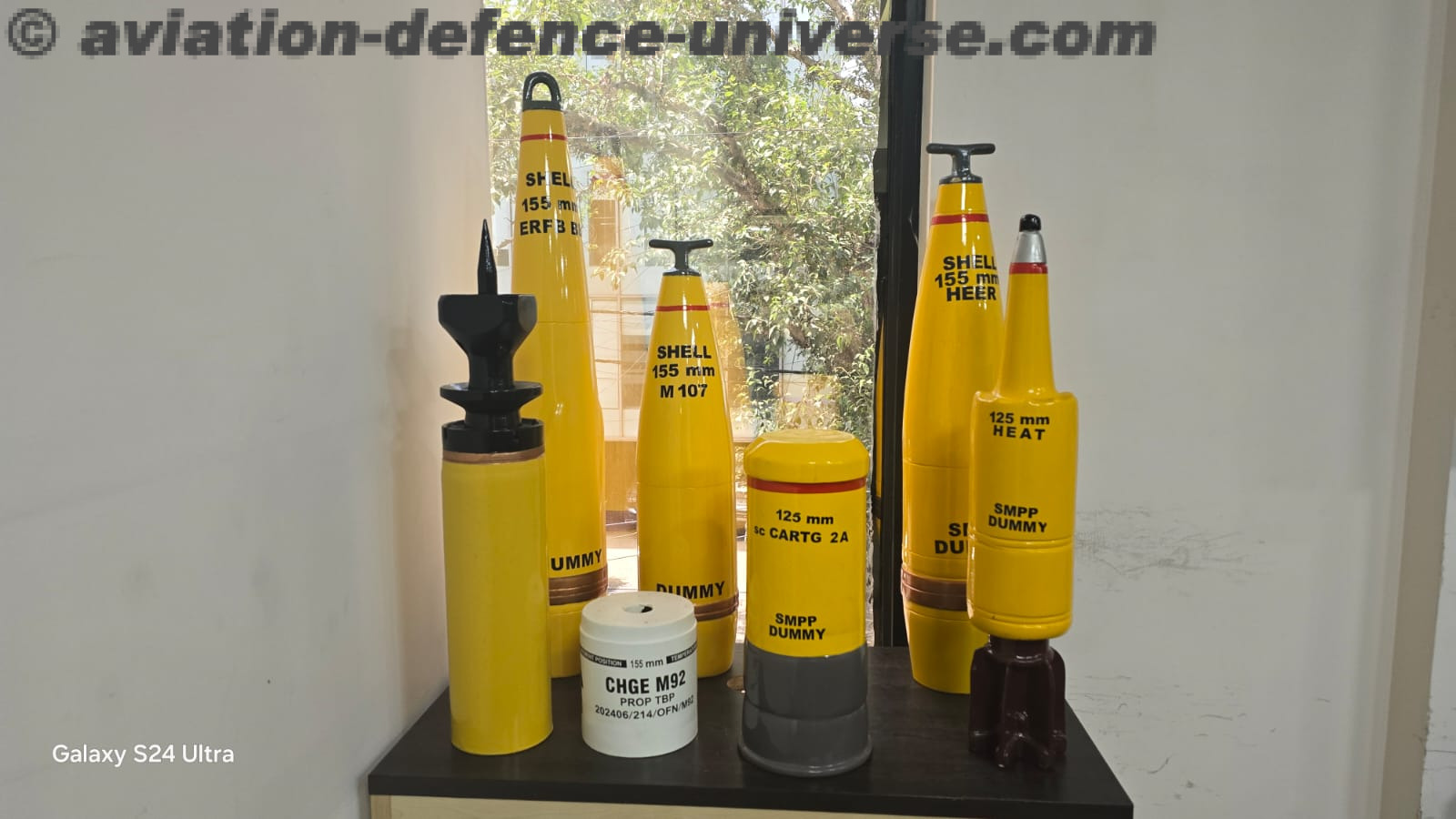 Ammunition demand today is not limited to conventional artillery, tanks, Air Defence or Infantry weapon systems. The rise of unmanned aerial platforms, including loitering munitions and precision guidance technologies, are changing the mosaic of accurate engagement without collateral damage. As India strengthens its domestic ammunition capabilities, there is a concurrent opportunity to support next-generation systems that integrate AI with the drone-based delivery and precision strike technologies.
ADU. How is technology evolving in ballistic protection systems?
Ashish Kansal. The defining trend is lighter protection with higher survivability. Advances in Boron carbide ceramics, ultra-high molecular weight polyethylene (UHMWPE), and hybrid composite systems are enabling weight reduction without compromising ballistic performance. Modular designs, enhanced trauma mitigation, and improved ergonomics are becoming essential.
Protection today is about enhancing mobility, endurance, and second strike capability even after absorbing the fire of enemy weapon.
ADU. What emerging threats are shaping innovation?
Ashish Kansal. The battlefield is increasingly hybrid and unpredictable. Armour-piercing rounds, IEDs, drone-delivered threats, and urban combat environments demand adaptable systems.
Protection must now account for multi-hit strike absorption capability, blast resistance, and protection from projectile and mines splinters. Innovation cycles are shortening, and manufacturers must anticipate threat evolution rather than react to it.
ADU. What defines SMPP’s R&D philosophy?
Ashish Kansal. Our R&D approach is guided by operational realism. We focus on neutralising the bullets of  enemy through our next generation ballistic protection products by studying the enemy weapon systems and his ammunition capabilities for negating the effect on own soldiers.
Credibility in defence manufacturing rests on performance under extreme combat situations. We invest in validation of products under war like conditions because protection systems must perform flawlessly, there being no margin for error.
ADU. How competitive is India globally?
Ashish Kansal. India has emerged as a strong player in ballistic protection. Products meeting NIJ and STANAG standards are now being manufactured domestically with global acceptance. We have evolved our own test standards-BIS, which are more stringent than the Western standards and are based on the weapon systems and ammunition of our adversaries.In ammunition, India is at an inflection point. With private sector participation increasing and technology partnerships expanding, the competitiveness gap is narrowing rapidly. Scale and consistency will define the next phase.
ADU. What challenges do defence exporters face?
Ashish Kansal. Export approvals, financing constraints in certain markets, and long sales cycles remain structural challenges. To address these, we need streamlined licensing processes, stronger government-to-government engagement, export credit support, and sustained participation in international defence exhibitions. Exports are also restricted during war time to countries which are involved in a conflict or a war situation. Brand India in defence must be built through reliability and long-term commitment.
ADU. Can defence manufacturing and sustainability converge?
 Ashish Kansal. Absolutely. Modern defence manufacturing must integrate energy efficiency, responsible material sourcing, waste management, and compliance with environmental standards. Sustainability strengthens resilience. Efficient manufacturing reduces costs, improves process discipline, and enhances long-term competitiveness. Strategic autonomy and environmental responsibility can, and must, coexist.
ADU. What policy reforms would strengthen private defence manufacturing?
Ashish Kansal. Faster procurement cycles, long-term order visibility, and predictable testing frameworks are critical. Incentivising R&D, facilitating technology transfers, and simplifying export licensing can accelerate growth. The private sector requires policy continuity to plan capital investments confidently.
Public-private engagement must evolve from transactional procurement to strategic partnership. Private sector must get the assistance from Government for embedding period before getting into a competition with the erstwhile PSUs/DPSUs. Their sustainability and survival will also come about by ensuring the regular procurements till their break-even stage.
ADU. How important is collaboration?
Ashish Kansal. Collaboration is fundamental. Armed forces articulate operational needs, research institutions develop foundational technologies, and industry scales solutions. Collaboration between the Indian and Foreign partners and between the Private and Public sector is a must for growth. Innovation ecosystems thrive when these three pillars function in alignment.
ADU. What role do startups and MSMEs play?
Ashish Kansal. Startups and MSMEs are vital for niche technologies, components, materials innovation, and system integration. A resilient defence industrial base depends on a layered supply chain where larger integrators and agile innovators collaborate seamlessly.
 ADU. How will future warfare shape demand?
Ashish Kansal. Future warfare will be multi-domain, technology-driven, and highly dynamic. Yet core requirements remain constant – protection and firepower. Urban warfare, border tensions, and asymmetric conflicts will continue to drive demand for lighter armour, advanced ballistic systems, and reliable ammunition. The next generation of defence products must be modular, adaptable, and scalable.
ADU. What is your long-term vision for SMPP?
Ashish Kansal. Our long-term vision is to position SMPP at the core of India’s defence industrial transformation, evolving from a leader in ballistic protection to an integrated player across protection systems, next generation ammunition with precision capabilities and extended ranges, and emerging unmanned domains of Land, Sea and Air platforms.
Modern warfare is being reshaped by precision munitions, autonomous systems, and unmanned aerial platforms. Drones and loitering systems are now central to operational strategy, and India must build sovereign capability across this ecosystem – from materials and survivability to scalable manufacturing.
We are focused on expanding ammunition capacity, advancing protection technologies, and aligning with the growing unmanned systems landscape. Our goal is clear: to build resilient, export-capable defence manufacturing that strengthens India’s strategic autonomy under Aatmanirbhar Bharat.
Ashish Kansal’s vision for SMPP reflects the broader transformation taking place within India’s defence manufacturing sector — one driven by indigenous innovation, operational realism, and global ambition. From advanced ballistic protection systems to precision ammunition and future unmanned warfare technologies, SMPP aims to position itself at the centre of India’s evolving defence ecosystem. As the country pushes towards strategic autonomy and export-led growth, Kansal emphasises that collaboration, sustained policy support, technological advancement, and resilient domestic manufacturing will be critical in shaping the next generation of India’s defence capabilities.






















































































-A4-Size-(2)_page-0001.jpg)