
















- How GalaxEye Is Redefining Earth Observation Through OptoSAR Technology
- Why Reliable Earth Observation Matters for India’s Strategic Future
- GalaxEye’s OptoSAR Technology Could Reshape Defence Surveillance and Disaster Response
By Sangeeta Saxena
New Delhi. 09 May 2026. As we go into print, Galaxeye has created history in the world and Indian space arena. GalaxEye achieved a major milestone with the launch of its first satellite, marking an important step in India’s rapidly growing private space-tech ecosystem. The satellite demonstrated the company’s proprietary OptoSAR capability, which combined optical and Synthetic Aperture Radar (SAR) imaging within a single synchronised platform to deliver reliable, all-weather, day-and-night Earth observation data. Beyond being a technological achievement, the launch represented GalaxEye’s transition from concept and R&D into operational capability. The mission focused on in-orbit validation of the satellite system and the quality of the fused datasets it generated, with the long-term objective of developing a full constellation capable of providing continuous, decision-grade geospatial intelligence for applications ranging from national security and disaster response to climate monitoring and strategic infrastructure planning. For India’s deep-tech and space sector, the launch also symbolised the growing confidence of indigenous companies in building globally relevant, sovereign space capabilities from within the country.
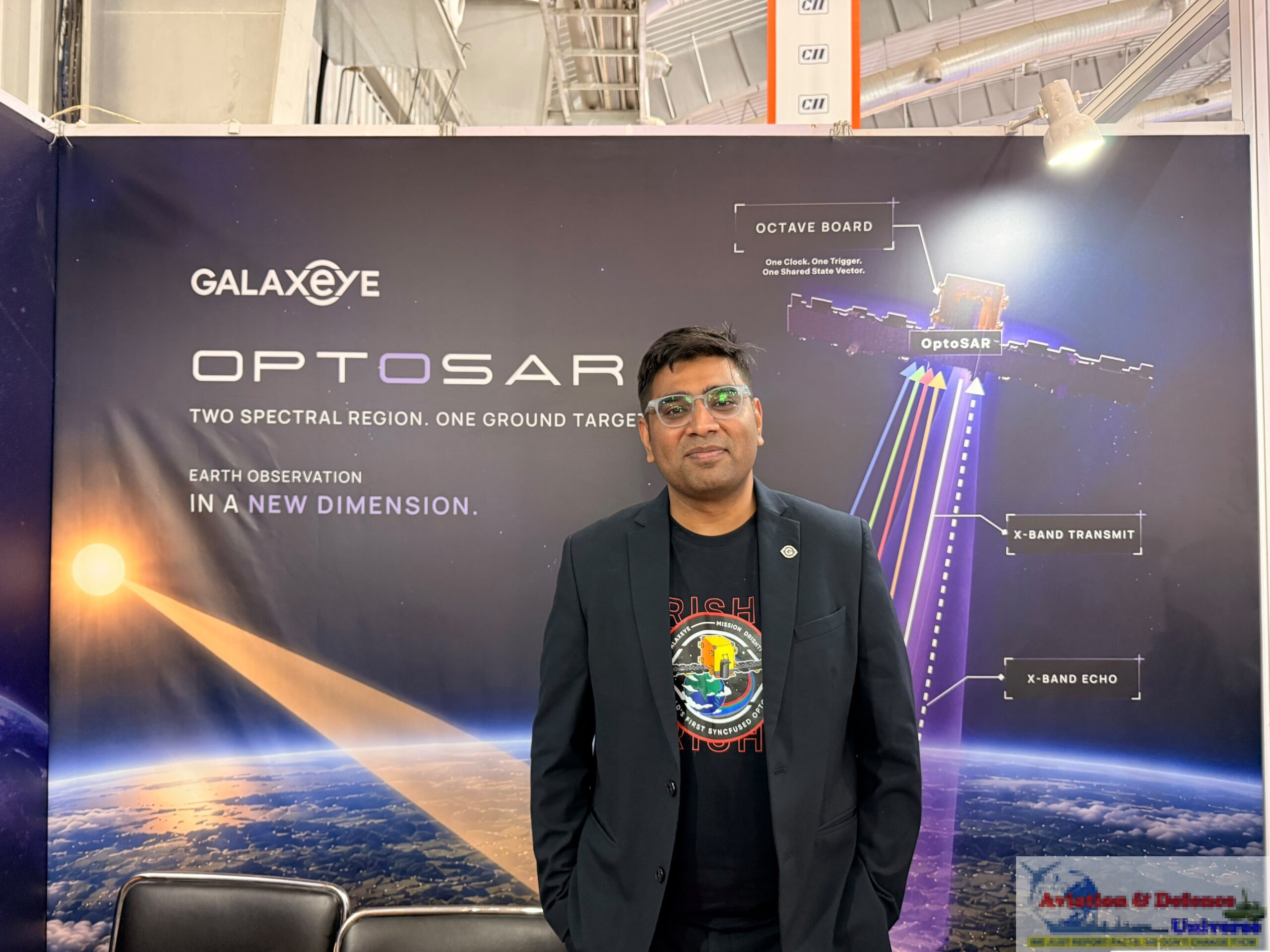
As the demand for reliable, real-time geospatial intelligence grows across defence, disaster response, climate monitoring, and strategic planning, the limitations of conventional Earth observation systems are becoming increasingly evident. In this evolving landscape, GalaxEye is developing a new approach through its proprietary OptoSAR technology, which integrates optical and Synthetic Aperture Radar (SAR) capabilities into a single synchronised platform. Founded with the vision of eliminating uncertainty in Earth observation data, the company is positioning itself at the intersection of deep-tech innovation, national security, and space-based intelligence.
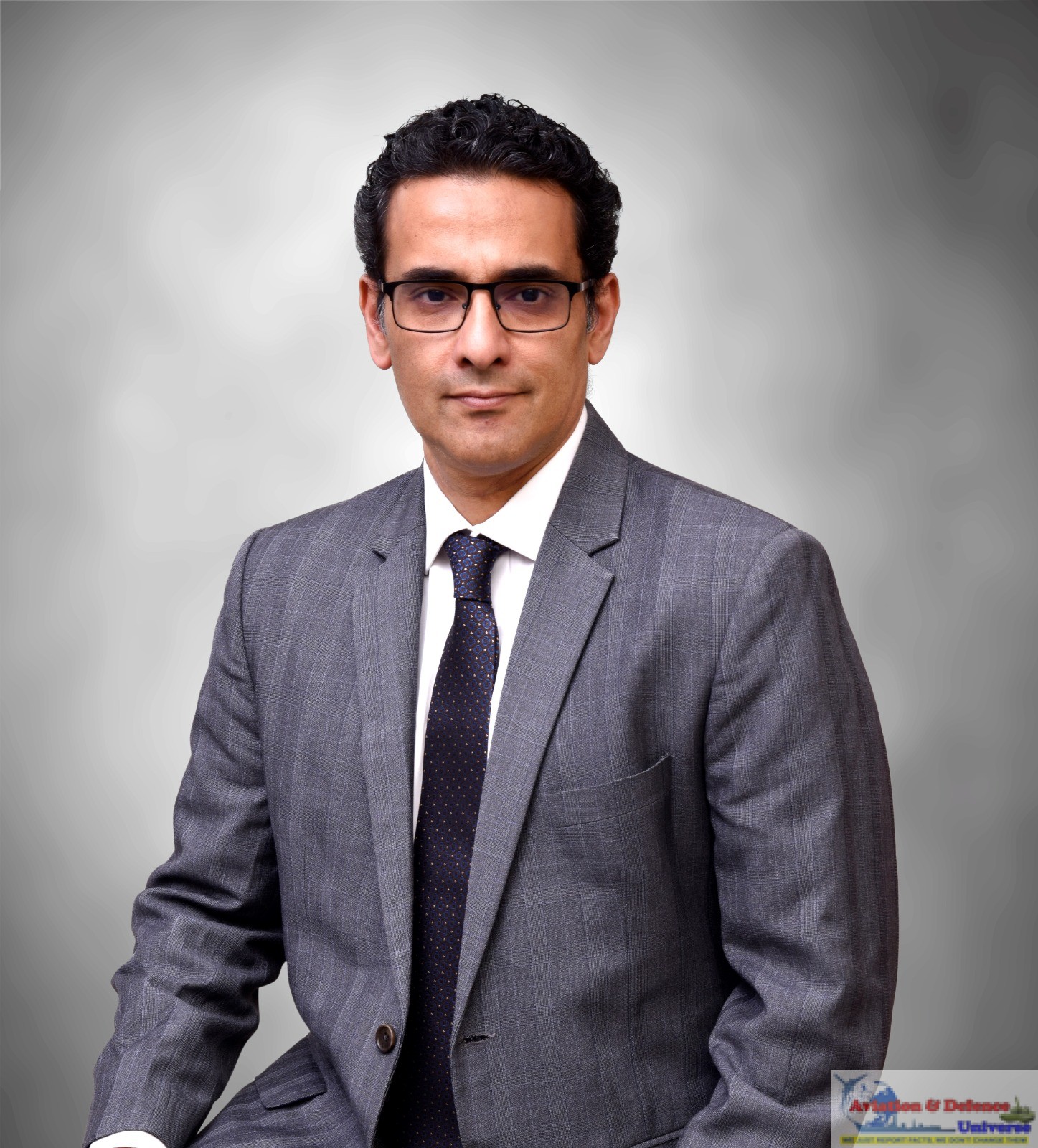
In this conversation with Aviation & Defence Universe (ADU), Suyash Singh, Founder & CEO of GalaxEye, discusses the evolution of the company’s vision, the strategic importance of sovereign geospatial intelligence, India’s deep-tech ecosystem, and how integrated Earth observation technologies could redefine operational decision-making across military and civilian domains.
ADU. What was the original vision behind GalaxEye, and how has it evolved over time?
Suyash Singh. GalaxEye is built on a very clear premise—Earth observation today is fundamentally unreliable, and that’s unacceptable for real-world decision-making. From day one, our goal has been to eliminate that uncertainty. What started as solving for data gaps has evolved into building a full-stack geospatial intelligence company, where we don’t just capture data, but deliver consistent, decision-grade intelligence at scale.
ADU. For our readers, could you explain what makes OptoSAR technology unique and how it differs from conventional Earth observation satellites?
Suyash Singh. The industry has operated in silos for decades—optical and SAR have been treated as separate systems, leading to fragmented and often inconsistent datasets. OptoSAR breaks that model. By combining both modalities on a single platform, we’re not just improving data quality—we’re redefining how Earth observation is done. It’s synchronized, aligned, and inherently more reliable. This technology increases the reliability of satellite and makes data available in night, cloud or adverse weather conditions.
ADU. What are the key advantages of combining optical and SAR capabilities in a single platform?
Suyash Singh. It removes compromise. With standalone systems, you’re always trading off—resolution versus reliability, clarity versus continuity. By combining optical and SAR, you get both context and consistency in a single pass. That fundamentally improves detection accuracy, reduces uncertainty, and makes the data far more usable in operational environments.
ADU. How do you see this technology transforming applications like defence surveillance, disaster response, and climate monitoring?
Suyash Singh. These sectors don’t suffer from a lack of data—they suffer from a lack of dependable data. OptoSAR directly addresses that. Whether it’s persistent surveillance, real-time disaster assessment, or long-term climate tracking, the shift is from fragmented inputs to continuous intelligence. That changes how quickly and confidently decisions can be made.
ADU. How supportive has the Indian regulatory and policy environment been for deep-tech space startups?
Suyash Singh. There’s been a clear and welcome shift in intent—India is opening up its space ecosystem in a meaningful way. But for deep-tech companies, intent alone isn’t enough. Speed, clarity, and execution still need to improve. The opportunity is massive, and if policy keeps pace with innovation, India can become a serious global leader in this space.
ADU. How did you navigate scepticism—from industry, investors, or even within the ecosystem?
Suyash Singh. We didn’t try to convince people through narratives—we focused on building. In deep-tech, credibility comes from execution, not claims. As we moved from concept to demonstrated capability, scepticism naturally reduced. It’s a predictable cycle—until you build it, it sounds ambitious; once you do, it becomes obvious.
ADU. Could you share insights into your R&D philosophy and how you built deep-tech IP from India?
Suyash Singh. Our approach has been very deliberate—own the core, integrate tightly, and build for the long term. We’ve focused on developing critical technologies in-house, especially where differentiation matters. India has the talent and capability to build deep-tech IP, but it requires conviction and patience. You can’t shortcut that process.
ADU. How do you attract and retain talent in a niche and demanding sector like space-tech?
Suyash Singh. Top talent is drawn to hard, meaningful problems. What we offer is the opportunity to work on something that is both technically challenging and strategically important. We also ensure that people have real ownership across the stack. That combination tends to attract the right individuals and keep them engaged.
- How significant is this technology for national security and defence applications?
Suyash Singh. This is not just important—it’s foundational. Sovereign, reliable Earth observation is a critical layer of national security infrastructure. Today, much of the world still operates with fragmented or externally dependent data sources.
At the same time, it’s important to recognize that India’s challenges are unique. As a tropical country, we deal with persistent cloud cover, dynamic terrain, and complex borders. Our focus has been on solving for these conditions from the ground up—not adapting Western solutions but building systems that are inherently suited to India’s realities.
That shift—from catching up to building for our own context—is where real strategic capability emerges.
ADU. Do you see global demand for such capabilities, and how are you positioning GalaxEye internationally?
Suyash Singh. Global demand is clearly moving towards more reliable and integrated geospatial intelligence, and that’s exactly where we are positioned. Most existing systems still operate in silos—we’re offering a fundamentally different approach by delivering fused, decision-grade datasets.
At the same time, this is no longer just a commercial conversation—it’s increasingly geopolitical. Access to high-quality Earth observation data is becoming a lever of technological influence and strategic sovereignty. Building this capability within India is critical—not just for serving domestic needs, but for strengthening long-term technological leadership and ensuring data sovereignty in an increasingly contested global landscape.
ADU. Deep-tech ventures often face long gestation periods. How did you approach funding and investor alignment?
Suyash Singh. We’ve been very intentional about working with investors who understand that deep-tech is inherently long-term. This isn’t about quick cycles—it’s about building durable capability. Every round of funding has been tied to clear technical milestones, which helps maintain alignment and discipline.
ADU. With the satellite now ready for launch, what are the next big milestones for GalaxEye?
Suyash Singh. The immediate milestone is a successful launch, followed by in-orbit validation of both the system and the data it generates. A key focus for us is demonstrating that OptoSAR can consistently deliver high-quality, reliable datasets in real-world conditions, and that this translates effectively into decision-making across use cases.
In parallel, we’ll be working closely with early users to integrate this data into operational workflows and validate its impact on the ground. Over the longer term, the goal is to scale this capability into a full constellation—expanding coverage, improving revisit, and making this level of intelligence consistently accessible at scale.
The insights shared by Suyash Singh underline the growing importance of reliable, sovereign, and integrated Earth observation capabilities in an increasingly data-driven world. Through OptoSAR technology, GalaxEye is attempting to address one of the most persistent challenges in geospatial intelligence — the fragmentation and inconsistency of conventional datasets. By combining optical and SAR imaging into a unified platform, the company is positioning itself to deliver continuous, decision-grade intelligence capable of supporting defence operations, disaster response, climate monitoring, and strategic planning.
The conversation also reflects the broader rise of India’s deep-tech and space-tech ecosystem, where indigenous innovation, long-term technological capability, and strategic self-reliance are becoming central national priorities. As geopolitical competition increasingly extends into the domains of data, space infrastructure, and technological sovereignty, companies like GalaxEye represent a shift from adapting external models toward building solutions tailored to India’s unique operational realities. With its upcoming launch milestones and long-term constellation plans, the company’s journey highlights how Indian deep-tech enterprises are beginning to shape the future of global geospatial intelligence and strategic space capability.





















































































-A4-Size-(2)_page-0001.jpg)