 18th BRICS Summit




















- Global partnerships must enable capability-building — not dependency
- Procurement reform is critical to match the pace of modern warfare
- Future warfare will be driven by AI, autonomy, and decision speed
By Sangeeta Saxena
New Delhi. 24 April 2026. India’s defence manufacturing sector is undergoing a structural transformation — one that is redefining its position from a major importer to an emerging global supplier. At the heart of this shift is the vision of Aatmanirbhar Bharat, which has catalysed private sector participation, accelerated technology adoption, and strengthened domestic capability.
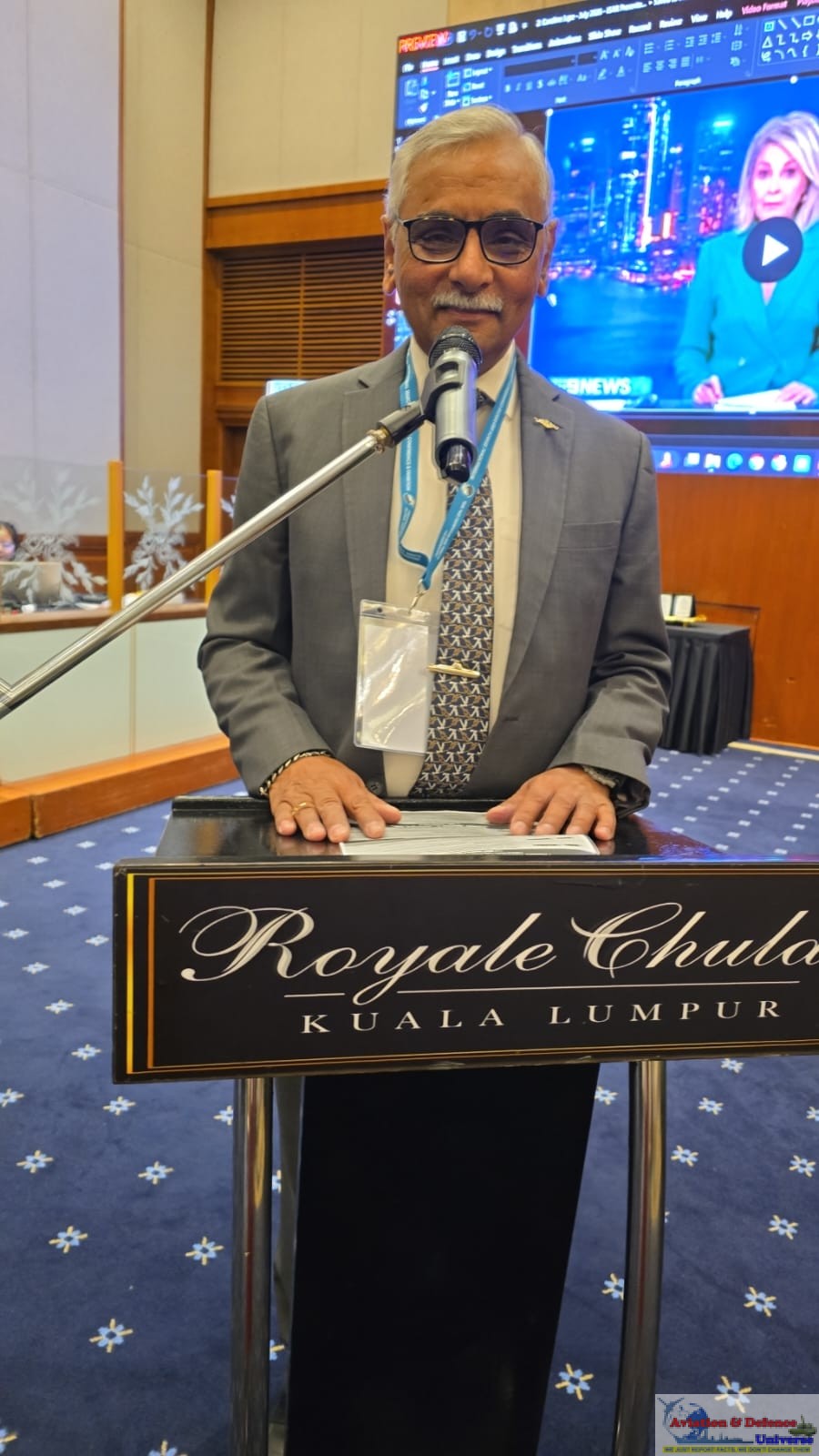
In this in-depth conversation with Aviation & Defence Universe (ADU), Ashish Rajvanshi, CEO of Adani Defence & Aerospace, shares a candid and strategic perspective on India’s evolving defence ecosystem. From building sovereign capabilities and scaling advanced manufacturing to leveraging global partnerships and preparing for next-generation warfare, he outlines how India — and Adani Defence — are positioning themselves for long-term strategic relevance.
ADU. Adani Defence has emerged as a major private player in India’s defence sector. How do you assess the current trajectory of India’s defence manufacturing sector under Aatmanirbhar Bharat?
Ashish Rajvanshi. Something irreversible is happening in Indian defence — and I mean that in the best possible way. For decades, we were among the world’s largest importers, not for lack of ambition, but because the ecosystem to convert ambition into capability hadn’t been built. Aatmanirbhar Bharat changed that orientation fundamentally. It didn’t just set targets; it changed the philosophy — from dependence as default to self-reliance as imperative. The numbers are striking. Domestic defence production has crossed ₹1.51 lakh crore. Exports have grown from under ₹1,000 crore a few years ago to nearly ₹25,000 crore today, against a national target of ₹50,000 crore by 2030. But what excites me more than the headlines is the quality of change — private companies competing for programmes once exclusively reserved for state entities, technology absorption accelerating, a genuine industrial base being forged through investment and delivery. At Adani Defence & Aerospace, we have committed fully to this moment. We are not here to participate at the margins. We are here to help India build the sovereign defence capability it has long deserved.
ADU. How can private sector companies accelerate India’s transition from import dependence to export capability?
Ashish Rajvanshi. No single actor can drive this alone — and any company that says otherwise isn’t being  straight with you. India’s transition requires the entire ecosystem to move together: private industry, DPSUs, the armed forces, and government — each playing to their strengths, creating conditions for the others to succeed. DPSUs bring institutional depth. The armed forces understand operational reality. Government is building the policy architecture. Private companies add speed, capital, technology absorption, and execution discipline. Where private industry can most accelerate this transition is in three areas: first, raising quality and delivery standards to prove that indigenous does not mean inferior; second, investing seriously in R&D and IP creation so India isn’t permanently dependent on licensed technology; and third, building export-ready supply chains competitive on the global stage.The goal is not to replace one dependency with another. It is to build capability so deep and so competitive that India becomes a trusted global supplier — because its products earn that trust.
ADU. Adani Defence has invested across ammunition, UAVs, small arms, and systems integration. Which segments do you see as key growth drivers?
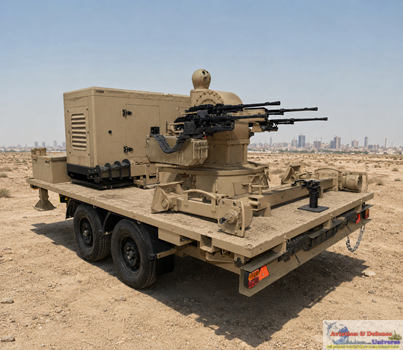
Ashish Rajvanshi. I would frame this not as which segments are growing fastest, but which matter most for India’s security and strategic autonomy. Unmanned systems are transformative. Every recent conflict has reinforced this. Drones, loitering munitions, autonomous platforms — these are no longer niche capabilities. They are central to how modern warfare is fought. Ammunition and small arms are foundational. Assured domestic supply of munitions is a national security requirement, not just a procurement preference. The Prahar LMG — India’s first indigenously designed Light Machine Gun, delivered eleven months ahead of schedule — is a signal about what private sector commitment actually looks like. Counter-drone technology is becoming its own strategic category, and electronics and systems integration will be the connective tissue holding future networked platforms together. We are not trying to be present everywhere. We are focused on being genuinely excellent in domains that define India’s future defence capability. That focus is deliberate.
ADU. Could you elaborate on your strategy for scaling manufacturing capabilities while maintaining quality and compliance?
Ashish Rajvanshi. Scale without quality is just organised mediocrity. That is not what we are building. Our  approach starts with a conviction: facilities must be world-class from day one — not upgraded over time to meet global standards, but designed to exceed them from the ground up. We are embedding digital manufacturing ecosystems across our operations — AI-enabled process control, predictive maintenance, real-time quality monitoring, and higher automation where it genuinely improves precision and consistency. Compliance in defence is not a checkbox. Every product we make has a life-or-death application. That reality shapes our quality culture at every level of the organisation. What I tell our teams consistently: cost competitiveness and quality are not trade-offs. If you are doing both right, one enables the other. Efficient, intelligent manufacturing at global standards is precisely what makes India competitive internationally.
ADU. How is Adani Defence leveraging emerging technologies like AI, autonomous systems, and advanced materials?
Ashish Rajvanshi. Technology is not a support function for us. It is a core strategic investment. Defence capability is shifting from mass and firepower to intelligence, precision, and decision speed. If India wants to be competitive — domestically and as a global supplier — it must build indigenous depth in the technologies defining next-generation warfare. AI is embedded across our manufacturing operations, from predictive maintenance and process optimisation to quality assurance. Beyond the factory floor, it is foundational to the autonomous systems we are developing — enabling platforms to process information and operate effectively in contested environments.
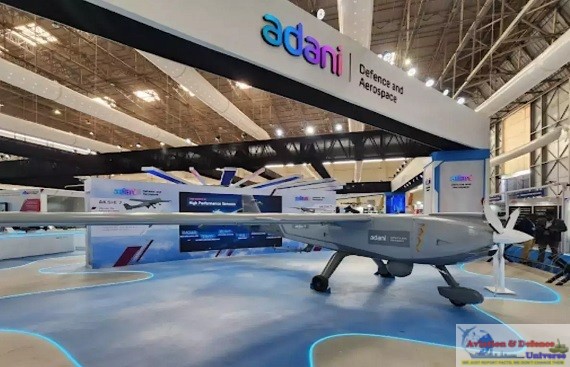
In unmanned systems, we are not assembling imported components. Our partnership with Elbit on the Drishti 10 is built around localisation, technology absorption, and progressive capability-building in India. Our Leonardo collaboration in aerostructures is an investment in materials science and precision fabrication that aerospace-grade manufacturing demands. Emerging technologies require patience and sustained investment. But for a company with our ambition for India, there is no alternative to operating at the frontier.
ADU. Adani has tied up with Leonardo and Embraer and also has Israeli partnerships. Where have these international collaborations reached?
Ashish Rajvanshi. Our international partnerships are guided by a clear principle: we are not looking for distributors or licence manufacturers. We are looking for partners who want to build genuine capability in India, for the long term. With Leonardo, the relationship has deepened meaningfully — joint responses to RFIs for Indian armed forces requirements, and a strategic MoU in aerostructures manufacturing. That domain demands aerospace-grade precision, and combining Leonardo’s technical depth with Adani’s manufacturing scale is a combination that serves both sides and the country.
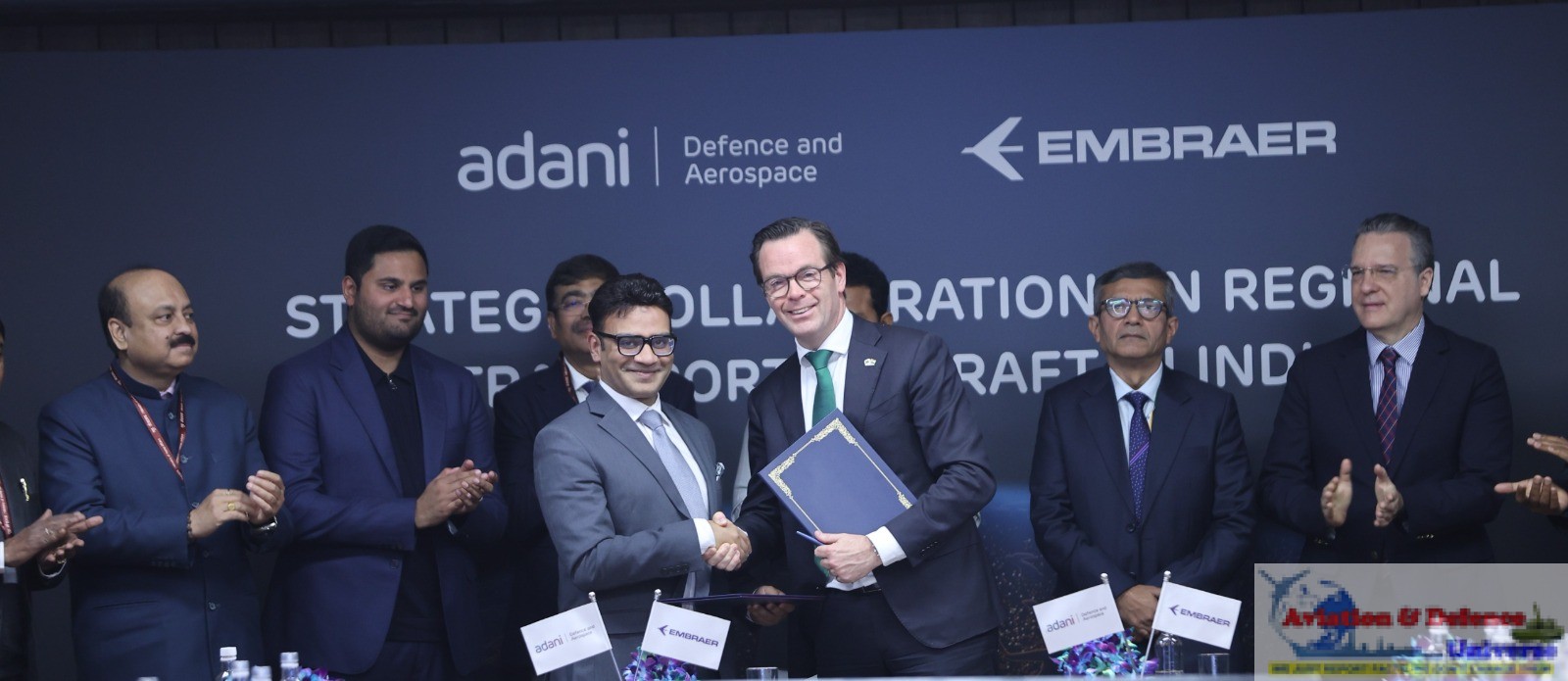 With Embraer, we are at an important early stage in a significant domain of opportunity for India. Our priority is ensuring strong alignment with all stakeholders — customers, regulators, the broader ecosystem. That foundation is being laid carefully, because sustainable execution in aerospace cannot be rushed. With Elbit and IWI, the outcomes are already tangible — over 50% cost efficiencies achieved on certain programmes while maintaining global quality standards. That is not a talking point. It is the proof of what serious localisation delivers. The common thread: technology transfer, indigenous manufacturing, long-term capability creation — not indefinite import dependency dressed up as partnership.
ADU. Defence exports are a key focus for India. What is your strategy to expand Adani Defence’s global footprint, and which markets are most promising?
Ashish Rajvanshi. India’s export ambition must be grounded in one reality: you cannot export credibly what you haven’t first proven domestically. Our priority today is building products and platforms that earn their reputation with India’s own armed forces — because that operational track record becomes our most powerful international credential. That said, the global opportunity is real. There is a large cohort of countries — across Southeast Asia, Africa, the Middle East, and Latin America — looking for reliable defence suppliers without the geopolitical baggage of traditional arms exporters. India’s relationships, democratic credentials, and demonstrated manufacturing capability position it well to serve this demand.
For Adani Defence specifically, our export focus is on segments where we have genuine technological depth — unmanned systems, ammunition, small arms, and over time, more complex integrated systems. We are not chasing markets where India has no inherent advantage. We are focused on segments where our cost structure, combined with global quality standards, creates a genuinely competitive proposition. The ₹50,000 crore national target by 2030 is achievable — but only if execution matches ambition across the entire ecosystem.
ADU. What challenges do Indian companies face in competing globally, and how can they be addressed?
Ashish Rajvanshi. The biggest challenge is not technology, and it is not capital. It is perception. Externally,  India is still working to overcome decades of being associated with defence imports rather than exports. When you approach an international buyer, you are not just selling a product — you are selling confidence in India’s industrial reliability, after-sales support, and long-term commitment. That confidence is earned through consistent delivery, not marketing. Internally, there is sometimes a residual reluctance — within procurement systems and even within industry — to back indigenous solutions fully when proven foreign alternatives exist. This creates a self-defeating cycle: without domestic adoption at scale, you cannot build the track record needed to compete globally.
The solutions are connected to the problem: compete for and win domestic programmes on merit, deliver with discipline and speed, and use that operational credibility to open international doors. Government can help by ensuring procurement specifications don’t inadvertently favour established foreign suppliers. Access to patient capital for long-cycle R&D, export financing mechanisms, and stronger diplomatic support for defence exports are also necessary conditions. Defence exports are ultimately a sovereign activity as much as a commercial one — they need to be resourced accordingly.
ADU. How can India create a more agile procurement and decision-making framework?
Ashish Rajvanshi. We have made genuine progress and I want to acknowledge that — positive indigenisation lists, DAP 2020, iDEX, faster AoN approvals. These are meaningful changes, not cosmetic ones. But the pace of procurement still lags the pace of threat evolution, and that gap has strategic consequences.
The changes I believe are most urgent:
- End nomination-based orders to PSUs in favour of merit-based competition — not to disadvantage them, but because competition is what drives innovation across the ecosystem.
- Mandate a level playing field with clear domestic procurement rules targeting 50% private
 participation as an expectation, not an aspiration.
 - Introduce hybrid contracts and modular bidding structures that allow faster incremental decisions rather than forcing everything into single, lengthy procurement cycles.
- Time-bound decision-making with real accountability — some decisions today take longer than the development cycle of the technology being procured.
- Pilot agile frameworks in high-priority segments like munitions and drones, scale successes across the ecosystem.
None of this requires abandoning rigour. It requires applying rigour to process design, not just process execution.
ADU. Defence manufacturing requires specialised skills. How is Adani Defence addressing talent development and skilling?
Ashish Rajvanshi. India’s next competitive advantage in defence and aerospace will not come from land or capital — it will come from the calibre of its human talent. Everything else can be acquired or built. The right people cannot be. What we are seeing across the broader aviation and aerospace ecosystem — where demand consistently outpaces the talent pipeline — is a warning signal the sector needs to take seriously. If we build industrial capacity faster than we build the human capability to run it, the bottleneck simply shifts.
 At Adani Defence & Aerospace, we are investing in skilling, technical training, leadership development, and academic partnerships with the same seriousness we bring to infrastructure investment. FSTC has been an important platform in building this ecosystem. We are expanding across precision engineering, electronics, MRO, advanced manufacturing, and future technologies.
Equally important is culture — creating environments where continuous learning is valued, hands-on mastery is respected, and people feel the pride of contributing to something that matters for national security. India will become a global aerospace and defence hub. But only if talent creation is treated as a strategic priority, not an afterthought.
ADU. How is sustainability being integrated into Adani’s defence manufacturing and aerospace operations?
Ashish Rajvanshi. In a defence context, sustainability carries a dimension beyond the conventional environmental conversation — though that matters too. For us, it fundamentally means building systems that are resilient, efficient, and reliable over the long term. A supply chain that breaks under pressure isn’t just a business problem — it is a national security problem.
 We are embedding sustainability through digital manufacturing, AI-enabled process control, and predictive maintenance — all of which improve productivity while reducing waste and energy consumption. Localising supply chains is as much a sustainability decision as a strategic one: every critical component manufactured in India reduces external dependence and strengthens supply security.
In aerospace, sustainability connects to lifecycle efficiency — smarter MRO ecosystems, longer asset lives, next-generation training platforms that reduce cost and carbon footprint.
My belief is straightforward: responsible growth and strategic growth must move together. A company that externalises its costs is borrowing from the future. That is not the kind of enterprise we are building.
ADU. How do you see the nature of warfare evolving, and how is Adani Defence preparing for it?
Ashish Rajvanshi. Future conflicts will not be defined only by conventional platforms or firepower. They will be decided by speed of decision-making, autonomy, electronic dominance, and cognitive warfare — the ability to shape perception, disrupt information environments, and influence outcomes before physical engagement begins.
Battlefields are becoming connected, intelligent, and multi-domain. Drones, loitering systems, AI-enabled surveillance, cyber resilience, and real-time data superiority will be decisive. Preparedness must move beyond legacy thinking to integrated, technology-led capability creation.
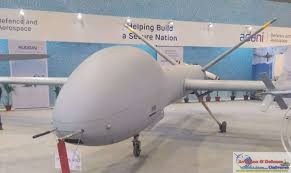 At Adani Defence, we are investing in precisely these new-age warfare domains — not because they are fashionable, but because India’s armed forces will need them and India must be able to produce them indigenously. The alternative — importing the technologies that define future warfare — is not self-reliance. It is a more sophisticated form of dependence. That sense of urgency shapes how we invest, how we partner, and how fast we move.
ADU. What are the company’s key priorities over the next 5–10 years?
Ashish Rajvanshi. When I think about where Adani Defence & Aerospace needs to be in a decade, I think less in terms of revenue targets and more in terms of the role we play in India’s strategic architecture. Three pillars define our direction. First, sustained investment in R&D and indigenous IP creation — genuine self-reliance cannot be built on permanently licensed technology. Second, manufacturing excellence at scale: globally benchmarked quality across unmanned systems, ammunition, aerospace, electronics, and systems integration. Third, ecosystem building — deep talent pipelines, strong MSME partnerships, and international collaborations that accelerate localisation and exports. Underpinning all of this is a clear purpose: to make India a trusted global defence and aerospace hub, where the products are world-class, the supply chains are sovereign, and the capability is enduring. That is the company we are building.
ADU. What has been the most challenging aspect of building a defence manufacturing ecosystem from the ground up?
Ashish Rajvanshi. Honestly — it isn’t capital, or technology access, or regulatory complexity, though all of those are real. The hardest part is earning trust in an industry where trust is everything, and nothing substitutes for a track record.
 When you enter a sector with no history of private participation at scale, you are not just competing on specifications. You are competing against institutional inertia built over decades. Armed forces need to know that a private company will deliver — not just on the day of contract signing, but when supply chains are under pressure, when requirements change, when an operational situation demands responsiveness no procurement manual can fully anticipate.
The only answer is relentless execution. Every on-time delivery is an argument. Every product that performs in the field is a proof point. The Prahar LMG — delivered eleven months ahead of schedule — matters not just as a milestone, but as a signal about what we are and what we are capable of.
The second challenge is holding two imperatives together: the discipline and precision that defence demands, and the pace that a fast-growing enterprise must maintain. Rigour without rigidity. Speed without shortcuts. That is a daily leadership challenge. I would not trade it. This is exactly the kind of problem worth spending a career on.
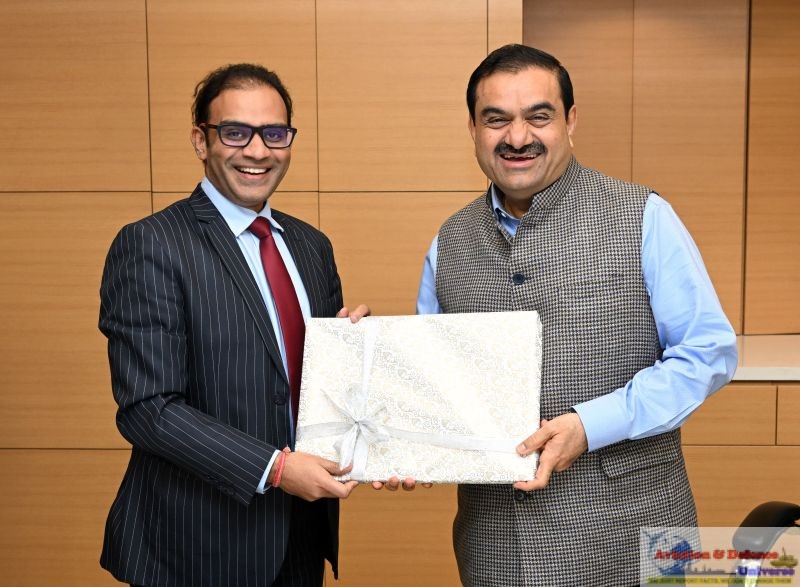 India’s defence sector is no longer defined by ambition alone — it is increasingly defined by execution. As Ashish Rajvanshi emphasises, the transformation underway is not incremental, but foundational. The convergence of policy reform, private sector participation, technological advancement and global collaboration is creating a defence ecosystem capable of delivering both strategic autonomy and global competitiveness.
For Adani Defence & Aerospace, the focus is clear: build deep indigenous capabilities, invest in next-generation technologies, and earn credibility through consistent delivery. The path ahead is not without challenges — from perception gaps to procurement inefficiencies — but the direction is unmistakable.
















































































-A4-Size-(2)_page-0001.jpg)