 18th BRICS Summit



















- From Platforms to Architecture: Calls for Deep Military Convergence
- Standing Still Is Not an Option: Pushes for Integrated Warfighting Approach
- Emphasises Convergence, Data and Jointness in Future Warfare Strategy
By Sangeeta Saxena
New Delhi. 11 April 2026. The future of warfare is increasingly being shaped by the seamless convergence of capabilities across domains, the intelligent use of data, and a deeper level of jointness among the armed forces. Modern conflicts demand that land, air, sea, cyber, and space operations are not planned or executed in silos, but integrated into a unified operational framework that enables faster and more effective decision-making. Data has emerged as a critical enabler in this transformation, requiring not just collection but real-time fusion, filtering, and dissemination to the right decision-makers. At the same time, true jointness goes beyond coordination—it calls for shared doctrines, interoperable systems, and a culture of trust and collaboration across services. Together, convergence, data-driven operations, and jointness form the backbone of a future-ready military strategy capable of responding to complex, multi-domain threats with speed, precision, and resilience.
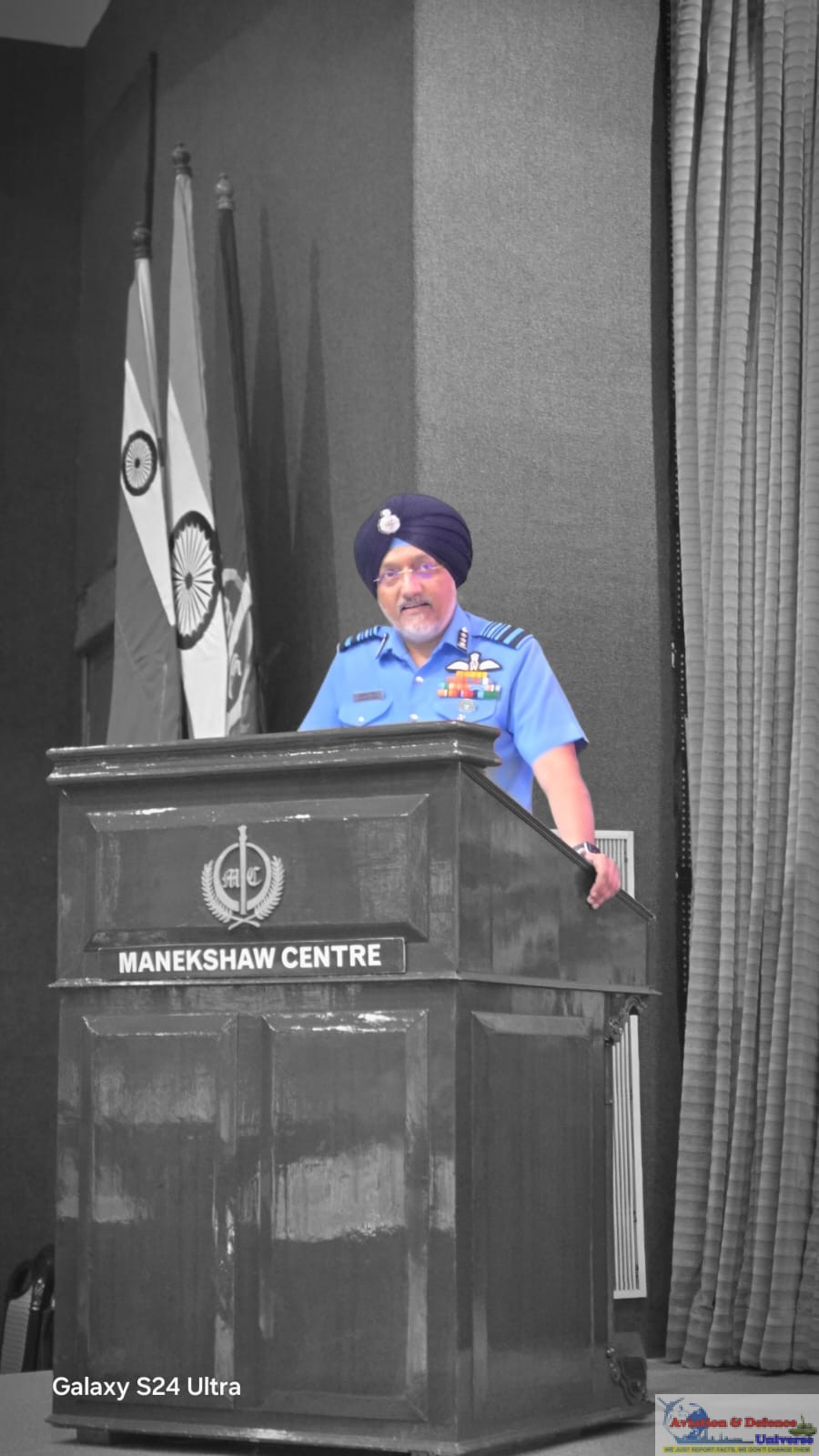
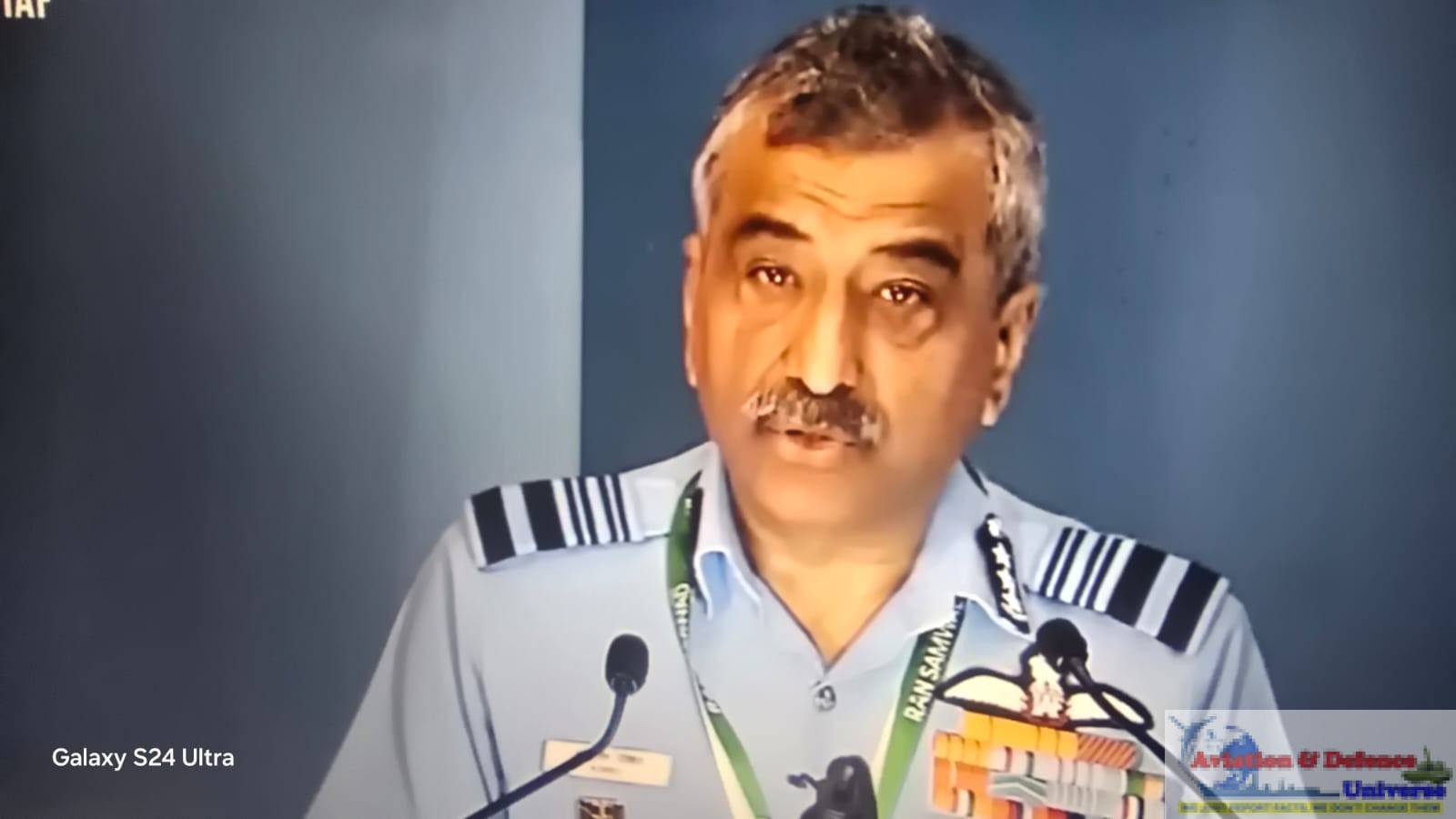
In a comprehensive and forward-looking address at Ran Samwad 2026, the Chief of Integrated Defence Staff (CISC), Air Marshal Ashutosh Dixit , outlined the evolving character of warfare and the urgent need for India to transition toward Multi-Domain Operations (MDO). Drawing from contemporary conflicts, including the ongoing West Asian crisis, he emphasised that convergence across domains is no longer optional but essential for survival. His speech highlighted the shift from platform-centric warfare to integrated, networked, and data-driven operations aimed at achieving decision superiority.
Setting the tone for his address, the CISC emphasised the centrality of convergence in modern warfare, stating, “This is not an ordination for its own sake. It is convergence becoming the central principle of warfare.” Reflecting on lessons from current battlefields, he noted, “Forces that relied on centralised command nodes and exposed logistics proved deeply vulnerable. The lesson? Resilience and convergence are not optional. They are the price of survival.”
Highlighting the ongoing West Asian conflict, he said, “The US-Israel conflict with Iran is perhaps an instructive study in multi-domain operations. No single domain has been decisive. Every domain is contested.” He pointed to the strategic implications for India, stating, “For us, this is not a distant spectacle. It is a strategic lesson delivered in real time.”
On jointness, he reiterated its urgency, noting, “Integrated operations coordinated across services and domains in real time define the new standard.” Using an aviation analogy, he explained the concept of MDO, stating, “In a fifth generation platform, sensor fusion architecture presents the pilot with a single coherent picture. The result is not incremental, it is transformational.” Defining MDO at the strategic level, he said, “It is the deliberate integration of our capabilities, information flows and command authorities to generate decision superiority across all domains simultaneously.”
Modern warfare is witnessing a decisive shift from a focus on individual platforms to the creation of integrated operational architectures that can deliver coordinated effects across domains. No longer is combat effectiveness defined by the number or sophistication of standalone assets such as ships, aircraft, or tanks; instead, it is determined by how well these assets are networked, interoperable, and able to function as part of a cohesive system. Deep military convergence requires aligning sensors, shooters, command systems, and data networks into a unified framework that enables rapid information flow and synchronized action. This architectural approach enhances situational awareness, compresses decision cycles, and multiplies combat effectiveness, ensuring that forces can respond faster and more intelligently than adversaries in a complex, multi-domain battlespace.
Clarifying misconceptions, he stressed, “It is not cosmetic jointness not about adding a cyber annexe , not about buying advanced platforms without thinking how they connect.” Instead, he emphasised, “True MDO is architectural it requires force structures, command relationships, data standards, training pathways and industrial ecosystems be built for interoperability from the very start.”
On India’s security environment, he stated, “We face threats that do not respect domain boundaries… they must be addressed simultaneously across domains in a synchronised response.” Reinforcing urgency, he declared, “MDO is not a future option. It is a present imperative.” On decision-making, he emphasised, “At the heart of MDO is only one objective—decision superiority. Not more data, but better decisions and faster.”
He cautioned against data overload, stating, “Information overload is as dangerous as information scarcity… commanders drowning in unfiltered data are slow and paralysed.” Highlighting operational lessons, he noted, “Units that compress the sensor-shooter loop impose disproportionate costs on adversaries.” On capability development, he outlined key principles, stating, “Sensor and shooter must be able to speak to each other seamlessly… resilience must be built into design… technological sovereignty is essential.”
Addressing emerging technologies, he observed, “The proliferation of drone technology has changed the calculus of conflict… the answer is architectural integration.” On human capital, he stressed, “Platform and networks alone will not win future wars. People will.” He further added, “The future officer must be a hybrid warrior… deeply grounded in domain expertise but fluent in cross-domain effects.”
On joint structures, he stated, “Planning for theatre commands has reached more than 90%… but structures alone do not guarantee synergy. Cultural integration is what makes structure come alive.” Emphasising trust, he noted, “Technology connects systems, trust connects people.” Concluding his address, he highlighted the urgency of transformation, stating, “Standing still is not an option… participating in directing change is the best way ahead.” He ended on a confident note, saying, “Our nation expects nothing less and I am confident that this forum will move us closer to delivering exactly that.”
The CISC’s address at Ran Samwad 2026 laid out a clear and compelling roadmap for the future of India’s military strategy, centred on convergence, integration, and decision superiority. By drawing lessons from contemporary conflicts and aligning them with India’s operational realities, the speech underscored the urgency of transitioning to a fully integrated multi-domain force. As technological advancements and geopolitical complexities reshape warfare, the emphasis on architecture, interoperability, and human capital positions India’s armed forces to remain agile, resilient, and future-ready in an increasingly contested global environment.
In an era defined by rapid technological disruption and evolving threat landscapes, standing still is no longer a viable option for modern militaries. The pace of change in warfare—driven by artificial intelligence, autonomous systems, cyber capabilities, and real-time data networks—demands continuous adaptation and transformation. An integrated warfighting approach is essential, where forces operate seamlessly across land, air, sea, cyber, and space domains to generate unified and decisive effects. This requires not only technological integration but also doctrinal evolution, joint training, and a culture that embraces collaboration and agility. By moving beyond service-centric thinking and adopting a truly integrated framework, armed forces can remain responsive, resilient, and capable of outpacing adversaries in an increasingly complex battlespace.
















































































-A4-Size-(2)_page-0001.jpg)