











- “Adaptability May Become the Core of National Security Doctrine”
- BHISM and the Future of Strategic Thought in India
- Why Strategic Institutions Matter in the Age of AI and Hybrid Warfare
- From Himalayan Strategy to National Security: Lt Gen AK Singh’s Vision for BHISM
By Sangeeta Saxena
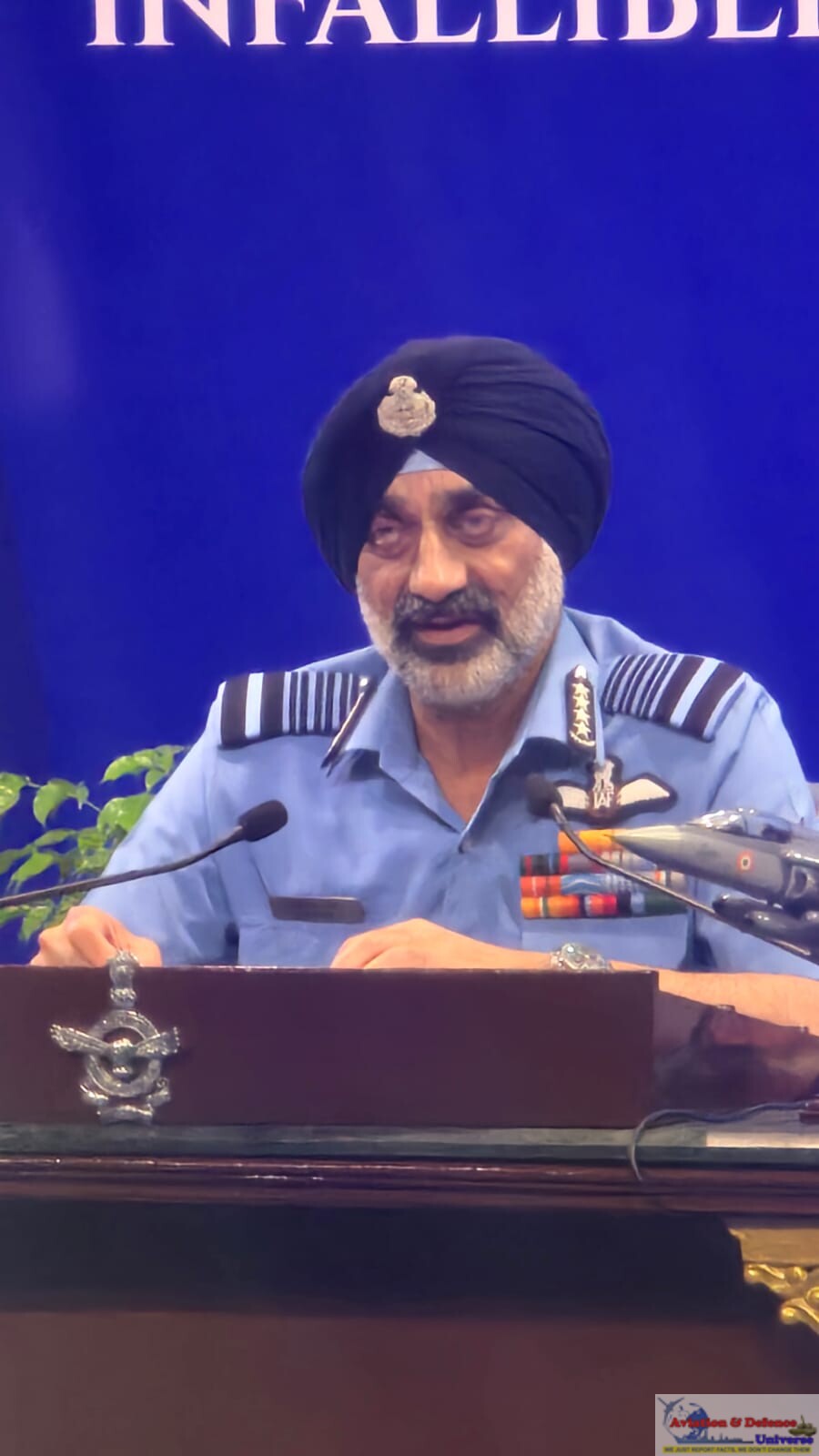
New Delhi/Dehradun. 14 May 2026. As warfare increasingly expands beyond conventional battlefields into the domains of cyber operations, information warfare, Artificial Intelligence, space technologies, and cognitive influence, the very definition of national security is undergoing a profound transformation. In this evolving strategic environment, nations require not only military capability, but also long-term institutional thinking, civil-military integration, technological adaptability, and strategic coherence across government, industry, academia, and society. In this exclusive interaction with Aviation & Defence Universe (ADU), Lt Gen AK Singh (Retd.) shares his perspectives on the changing character of conflict, the growing importance of strategic institutions, and the role of think tanks such as BHISM in shaping India’s national security discourse. Drawing from decades of military experience and strategic engagement, he discusses future warfare, civil-military fusion, Himalayan security, institutional resilience, and why India’s long-term rise as a major power must be supported by deeper strategic consciousness and integrated national preparedness.
ADU. Having served at senior levels in the Army, how do you view the evolving nature of national security challenges today?
Lt. Gen. AK Singh (Retd.). For decades, national security was largely understood in physical terms. Borders. Territory. Military strength. Platforms. Tanks, ships, aircraft. Today, that entire construct has expanded. A nation can now be destabilised without a conventional war. Through cyber attacks. Through manipulation of information. Through economic coercion. Through disruption of critical technologies and supply chains. Even through sustained psychological shaping of public perception. So the battlefield is no longer only geographical. It is cognitive. It is informational. It is technological. And I think that is the single biggest shift we are witnessing globally.
The other important aspect is that conflict today is continuous. Earlier, nations moved from peace to war and back to peace. Today, countries operate in a perpetual competitive environment below the threshold of declared war. You are seeing it in cyber intrusions. Influence operations. Space domain contestation. Maritime coercion. AI-enabled information campaigns. Therefore, security can no longer be viewed purely through a military prism. It requires what I would call a whole-of-nation approach. Government, military, industry, academia, technology ecosystems, all operating with strategic coherence.
Because ultimately, future conflicts may not be decided merely by who has the bigger platform… but by who can make better decisions, faster, across multiple domains. And that is why I often say… the next great wars may not begin with an invasion. They may begin with confusion.
ADU. What motivated your transition from military service to contributing through a think tank like BHISM?
Lt. Gen. AK Singh (Retd.). I honestly do not see it as a transition away from service. I see it as a continuation of service in a different form. The uniform gives you operational exposure, institutional understanding, and a very deep appreciation of national security realities. But many of the challenges we face today are long-horizon challenges. They require sustained strategic thinking beyond individual appointments or tenures. And that is where institutions become important.
A think tank, if structured correctly, allows you to step back from day-to-day operational compulsions and examine larger questions… where is warfare heading, how should India prepare, how do we build strategic resilience, how do we integrate technology, policy and national capacity. So for me, BHISM was never about commentary. It was about contribution. I have always believed that nations need strong strategic memory. They need platforms where operational experience can be converted into doctrine, policy thinking, institutional learning and future preparedness. Because ultimately, soldiers protect the nation’s borders… but strategic institutions help protect the nation’s future direction.
ADU. What role do think tanks like BHISM play in shaping India’s defence and security discourse?
Lt. Gen. AK Singh (Retd.). Think tanks are important because governments are often consumed by immediate priorities. Strategic institutions create the space to think beyond immediate crises. Their role is not simply to produce reports. Their role is to anticipate change. To challenge assumptions. To examine emerging technologies, geopolitical shifts, doctrinal gaps and institutional reforms before they become urgent national problems. And importantly, they can do so with a degree of intellectual flexibility which formal systems sometimes cannot.
Now in India, we have tremendous talent. Military expertise. Academic capability. Technological innovation. Policy experience. But these often exist in silos. Platforms like BHISM attempt to bring these streams together. The idea is not to criticise institutions from the outside. The idea is to strengthen national capacity through informed strategic dialogue. And I think one very important point here is this… good think tanks do not tell governments what they want to hear. They help nations hear what they need to hear. That distinction is extremely important.
ADU. How can think tanks bridge the gap between policymakers, the armed forces, and industry?
Lt. Gen. AK Singh (Retd.). I think the issue is not lack of capability. India has immense talent across all three domains. The challenge is that each ecosystem often operates in its own language and within its own timelines. The military understands operational realities. Industry understands technological possibilities. Policymakers understand governance and national constraints. But unless these three converge early, we lose both speed and efficiency.
And this becomes even more critical in areas like AI, cyber security, drones, semiconductors, autonomous systems, space technologies… where innovation cycles are moving extremely fast. Modern national security is no longer built only in military establishments. It is equally being shaped in startups, research labs, data centres and technology ecosystems.
Therefore, think tanks can serve as neutral integrators. They can create structured platforms where operational requirements, technological capability and policy direction can align coherently. Because future wars will not be won merely by isolated institutions. They will be won by integrated national ecosystems.
ADU. In your view, how can India strengthen its strategic thought ecosystem to match global standards?
Lt. Gen. AK Singh (Retd.). I think India has never lacked intellectual depth. What we need is institutionalised strategic thinking at scale. If you look globally, major powers invest heavily in strategic research ecosystems. Universities, defence institutions, industry, technology platforms and policy bodies operate in much closer synergy. In India, we are improving significantly, but there is still a tendency to approach strategic thinking episodically rather than continuously. And strategy cannot function only during crises. It requires long-term research. Scenario building. Red teaming. Emerging technology assessments. Historical study. Civilisational understanding. Cross-domain integration.
The second important aspect is encouraging intellectual diversity. Strong strategic cultures are built not through uniformity of thought, but through rigorous debate. Because assumptions challenged before crises strengthen nations. Assumptions challenged during crises weaken them. And therefore, I believe India’s rise as a major power must be accompanied by parallel growth in strategic depth and strategic consciousness.
ADU. How can India strengthen civil-military fusion to enhance national preparedness?
Lt. Gen. AK Singh (Retd.). Today, civil-military fusion is not an option. It is a strategic necessity. Because many of the technologies shaping future warfare are emerging primarily from civilian ecosystems… artificial intelligence, cyber capabilities, quantum research, autonomous systems, advanced computing, space technologies. So national preparedness can no longer be viewed purely through a traditional military framework. We need stronger institutional integration between government, armed forces, academia, startups, industry and research organisations.
And this integration should not happen only during crises. It should become part of national planning. If you study recent global conflicts, one thing becomes very clear… civilian innovation ecosystems are increasingly becoming force multipliers during wartime. Commercial satellites. Private cyber firms. AI systems. Drone startups. Open-source intelligence networks. The countries that integrate fastest adapt fastest. And therefore, future preparedness will depend not merely on military strength, but on how effectively nations mobilise their entire technological and societal capacity.
ADU. What are the challenges in achieving seamless coordination between military and civilian agencies?
Lt. Gen. AK Singh (Retd.). Coordination sounds very simple conceptually. In practice, integration between institutions is always complex. Different organisations have different cultures, decision-making structures, legal frameworks, operational priorities and timelines. Military systems are designed around clarity, speed and mission orientation. Civilian systems often have broader regulatory and procedural responsibilities. So naturally, friction emerges.
The second challenge is fragmentation of information and ownership. Many times, institutions possess pieces of the larger picture, but there is insufficient integration of those pieces into a unified operational understanding. And in modern crises, delays in coordination can become strategic vulnerabilities. I think another important issue is that many systems globally were designed for efficiency during peace, not agility during crises. Therefore, going forward, nations will increasingly need common operating pictures, joint protocols, shared situational awareness, regular inter-agency exercises and above all, institutional trust.
Because ultimately, during crises, the nation does not experience institutions separately. It experiences the state as one entity.
ADU. How did you conceive the idea of BHISM and what is its mission?
Lt. Gen. AK Singh (Retd.). BHISM emerged from a simple conviction: India needs institutions that can think long-term, independently and in an integrated manner. The Himalayan region is central to that vision. The Himalayas are not merely mountains. They are a strategic system influencing borders, water, climate, ecology, connectivity, culture, livelihoods, military preparedness and regional stability. For India, they are simultaneously a frontier, a civilisational space, an ecological zone, a security challenge and a developmental responsibility.
The present Chief of Defence Staff, Gen Anil Chauhan, PVSM UYSM AVSM SM VSM, played an important role in the early conceptual thinking behind BHISM. His emphasis on jointness, integration, future warfare and strategic dialogue reinforced the need for platforms where practitioners, scholars, policymakers and civil society can think together beyond departmental silos. The idea also resonated deeply with the Honourable Governor of Uttarakhand, Lt Gen Gurmit Singh, PVSM UYSM AVSM VSM (Retd). His exposure to the STRIVE model in Lucknow strengthened the belief that Uttarakhand, with its unique concentration of soldier-scholars, institutions of learning, Himalayan geography and civilisational depth, deserved a similar platform. That convergence of thought gave BHISM its final momentum.
Too often, the Himalayas are discussed in fragments, security separately from ecology, development separately from culture, strategic competition separately from local communities. BHISM seeks to bring these conversations together. Its mission is to promote rigorous research, informed dialogue and policy engagement on the Himalayan region, national security, governance, sustainability and civilisational thought. Rooted in Dehradun and Uttarakhand, but national and international in relevance, BHISM aims to create a platform where soldier-scholars, policymakers, academics, technologists, environmental experts, entrepreneurs and young leaders can think together about India’s future. The objective is strategic clarity. And clarity, in uncertain times, is itself a form of national strength.
ADU. What is your long-term vision for Think Tank BHISM?
My long-term vision is to see BHISM develop into a serious, credible and globally respected strategic institution. Credibility is the key word. Visibility without depth becomes noise. The ambition must be relevance, seriousness and trust. I see BHISM growing in four directions.
First, as a centre for Himalayan strategic studies – examining geopolitics, borders, regional competition, connectivity and security.
Second, as a defence and security platform – contributing to debates on military modernisation, jointness, technology, civil-military fusion and strategic autonomy.
Third, as a sustainability and resilience institution – because climate, water, ecology and disasters are now central to national security.
Fourth, as a civilisational and societal forum – because nations are sustained not only by power, but by identity, cohesion, values and memory.
Over time, BHISM should produce high-quality research, policy briefs, strategic dialogues, youth fellowships, international collaborations and an annual State of the Himalayas Strategic Report that becomes a reference point for scholars and policymakers.
I would also like BHISM to develop the concept of a National Wargame, not merely as a military exercise, but as a whole-of-nation strategic simulation. It should bring together policymakers, armed forces, civil administration, industry, academia, technology leaders, disaster-response agencies and young scholars to test national responses to complex future scenarios: conflict, cyber disruption, climate shocks, information warfare, supply-chain stress and societal resilience. Modern crises will not arrive in neat departmental compartments. Our preparation cannot remain compartmentalised. Institutions matter because individuals are temporary. A good institution preserves memory, nurtures talent and outlives its founders. That is the real vision for BHISM.
ADU. How can platforms like BHISM contribute to shaping India’s national security doctrine?
Lt. Gen. AK Singh (Retd.). Doctrine does not emerge in isolation. It evolves through experience, reflection, technological change and strategic anticipation. And today, the pace of change is extraordinary. Artificial intelligence, cyber warfare, autonomous systems, space capabilities, information warfare… all these are reshaping the nature of conflict far more rapidly than traditional doctrinal cycles were designed for.
Therefore, strategic institutions can play an important role by studying emerging trends, examining global conflicts, stress-testing assumptions and generating future-oriented frameworks. They provide intellectual space to explore ideas before those ideas become operational necessities. And importantly, they can help connect tactical lessons to national-level strategic thinking. Because one of the biggest dangers in modern conflict is not merely weakness. It is obsolescence. So going forward, adaptability itself may become one of the most important elements of national security doctrine.
The insights shared by Lt Gen AK Singh (Retd.) reflect the rapidly evolving nature of national security in an era defined by technological disruption, geopolitical competition, hybrid warfare, and cognitive conflict. Throughout the conversation, he emphasises that future security challenges will extend far beyond traditional military domains, requiring integrated national ecosystems capable of combining strategic thinking, technological innovation, institutional coordination, and societal resilience.
The discussion also highlights the growing relevance of strategic institutions such as BHISM in fostering long-term policy thinking, civil-military fusion, and interdisciplinary dialogue across defence, governance, technology, sustainability, and Himalayan strategic studies. By advocating a whole-of-nation approach to security and preparedness, Lt Gen AK Singh underlines the importance of adaptability, institutional memory, and strategic coherence in an increasingly uncertain global environment.
Ultimately, the interview reinforces a broader message: future conflicts may not always begin with conventional invasions or visible battlefronts, but through disruption, confusion, and multi-domain competition. In such an environment, nations that can think strategically, integrate rapidly, and adapt continuously will possess the decisive advantage.













































































-A4-Size-(2)_page-0001.jpg)