















- “Jointness Is Built on Trust”: “The Anchor Has to Be Within Self-Sufficiency”
- Highlights Need for Synergy Across India’s Security Ecosystem
- “Jointness Is Not Just SOPs”
By Sangeeta Saxena
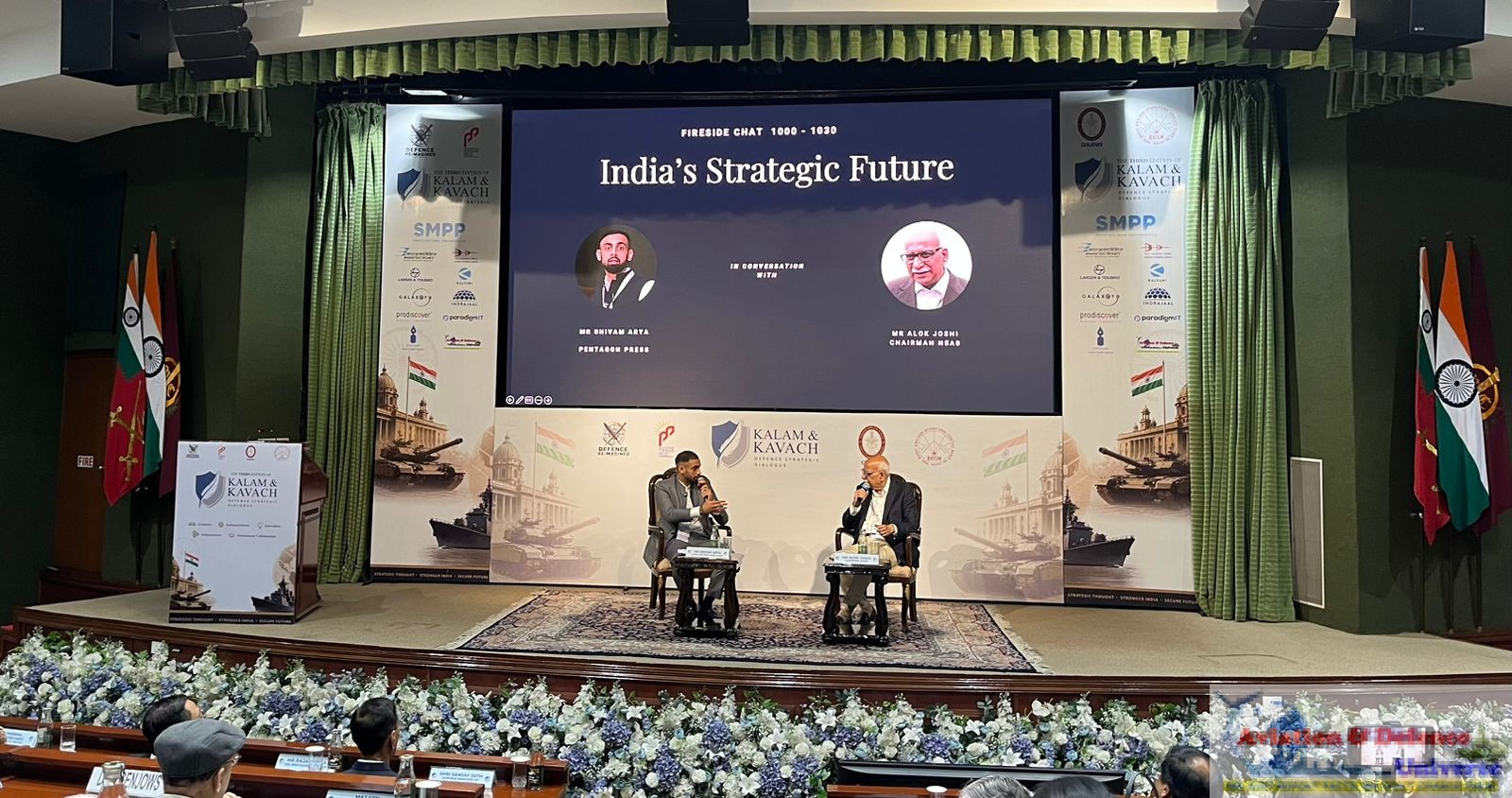
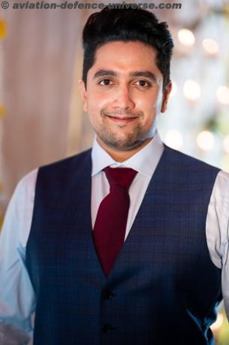
New Delhi. 16 May 2026. The rapidly evolving global security environment, intelligence integration, cognitive warfare and the importance of trusted strategic partnerships formed the core of an insightful fireside chat featuring Chairman of the National Security Advisory Board (NSAB), Alok Joshi, at Kalam & Kavach 3.0. Conducted by Shivam Arya, Convenor of the event, the conversation explored the changing dimensions of national security and the growing need for whole-of-nation approaches in an increasingly complex geopolitical landscape.
Drawing upon decades of experience in intelligence, strategic affairs and national security — including his tenure as former Chairman of NTRO and senior leadership positions within India’s intelligence establishment — Alok Joshi offered perspectives on geopolitical shifts, inter-agency coordination, cognitive warfare, technology, self-sufficiency and institutional synergy. Throughout the interaction, he emphasised that future national security preparedness would depend not only on military capability, but also on trust-based partnerships, integrated institutional thinking and the ability to adapt to emerging information and technological threats.
Opening the fireside chat, Shivam Arya welcomed Alok Joshi and described the discussion as an opportunity to better understand the evolving dimensions of intelligence and statecraft in modern national security. Responding to the opening question about the role of the National Security Advisory Board, Joshi explained the broad mandate and institutional diversity of the NSAB.
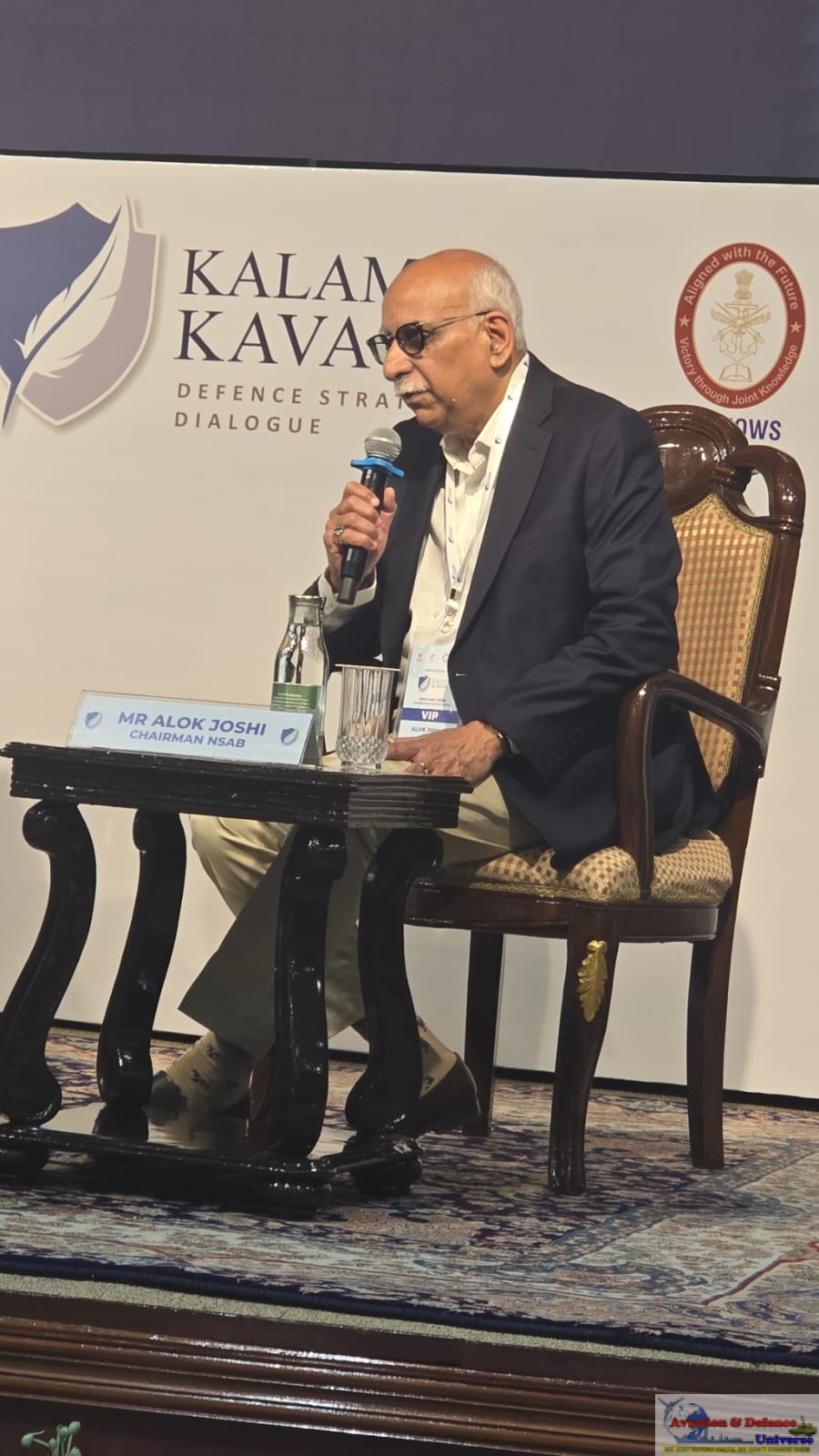 “As the word itself suggests, apart from looking at long-term perspectives, we also examine processes and whether by tweaking those processes we can bring more efficiencies,” he said. According to him, one of the strengths of the NSAB lies in the diversity of expertise represented within the board. “The members bring very rich experience gained over the years,” he remarked. “We have expertise from the armed forces, technology, diplomacy and multiple dimensions of national security.”
When asked about his assessment of the current global geopolitical environment, Joshi observed that the world is witnessing significant strategic realignments.“The whole equations across geographies are changing,” he stated. “And we have to find our place under the sun in those changing equations.”
While emphasising the importance of self-sufficiency, he also highlighted the necessity of stable and trusted international partnerships. “The anchor has to be within self-sufficiency,” Joshi said. “But the fact remains that you cannot do without partnerships — partnerships that are stable, trusted and beneficial to both countries.”
The conversation then moved toward the issue of jointness and institutional integration across intelligence and security organisations. Addressing the challenge of integrating multiple agencies with different operational cultures, Joshi argued that jointness cannot be reduced merely to procedural frameworks. “Jointness does not mean drawing up only SOPs,” he remarked. “It comes about when you understand the capacities and limitations of the organisations with whom you are interacting.” According to him, trust remains the foundation of effective coordination across security institutions. “It is only when there is an element of trust between organisations that jointness can actually come to fruition,” he said. Drawing from operational experience, Joshi referred to the Pathankot crisis as an example of successful collaborative integration.
“During the Pathankot crisis, we opened up and said — these are the systems we are operating, this is the information we are getting, now help us analyse it together,” he recalled. He stressed that genuine integration depends on transparency and calibrated information sharing. “Whenever we have opened up in a calibrated way on issues of common interest, it has borne fruit,” Joshi observed.
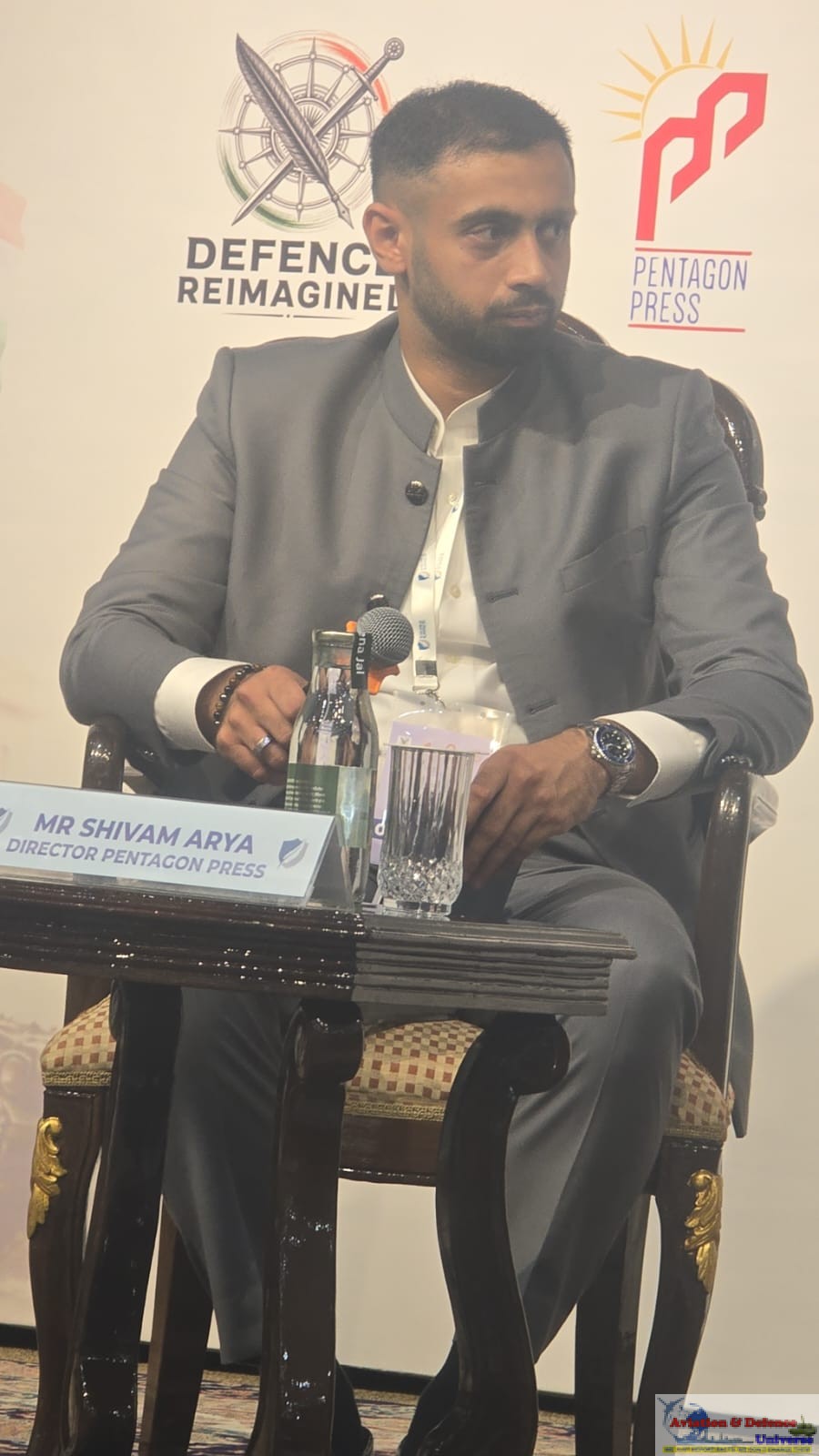 The discussion also focused heavily on cognitive warfare, disinformation and the growing challenges posed by AI-generated content and influence operations. Asked about the distinction between false narratives and actual warfare threats, Joshi argued that threats to the cognitive domain must be treated seriously regardless of the context. “Once negativity seeps into the cognitive domain, it becomes very difficult to pull it out,” he said. “Whether in conflict or peacetime, such threats have to be taken very seriously.”
On the issue of AI-generated misinformation, Joshi acknowledged the growing challenge posed by deepfakes, manipulated media and false information ecosystems. “There is technology which can be brought to play,” he remarked. “But apart from technology, you also need a centralised structure and dialogue with the media.”
Referring to the role of information ecosystems during military operations, he underlined the importance of credibility and coordinated communication. “It is often the media that creates question marks over the credibility of information,” he observed while discussing information environments during conflict situations. According to Joshi, countering disinformation requires a whole-of-society approach involving all stakeholders. “You need a holistic view and all stakeholders from different platforms must be brought onto the same page,” he said.
The interaction also touched upon India’s defence-industrial ecosystem and technological capability development. Responding to questions from the audience regarding indigenous propulsion systems and gaps in critical defence technologies, Joshi acknowledged that propulsion remains an area where India has faced challenges.
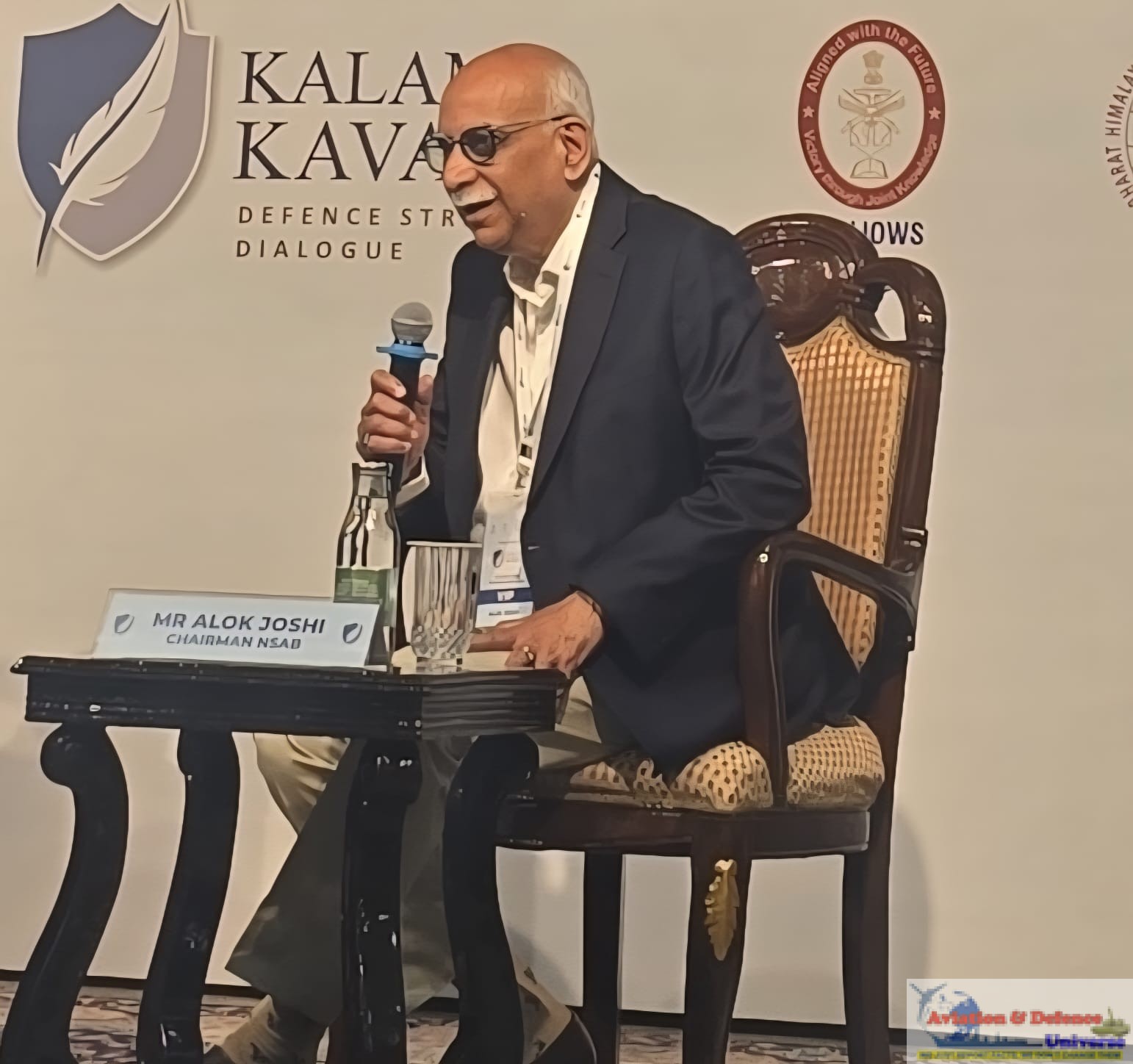 “Propulsion is one area where we have really missed out,” he admitted while referring to India’s long-running Kaveri engine development efforts. However, he also stressed that India possesses sufficient scientific and technical talent to overcome such challenges if institutional coordination improves.“There is enough technical and scientific talent in the country,” he said. “The question is — what held us back from developing those facilities?” Joshi repeatedly returned to the importance of institutional synergy and communication. “There is a need for synergy. There is a need for communication,” he emphasised.
Referring to his recent visit to defence institutions in Bengaluru, he observed that even organisations located within the same ecosystem often lack adequate coordination. “My impression was that there was a gap in communication between institutions that are in the same city,” he remarked. According to him, open discussion of operational and technological challenges is essential for generating effective solutions.“How would you expect solutions unless you openly discuss your problem statements?” he asked.
Toward the conclusion of the session, Joshi reflected on leadership and risk management in national security systems. “Risk management is part of the job,” he stated. “It is not about acting without applying your mind, but about understanding and managing risk responsibly.”
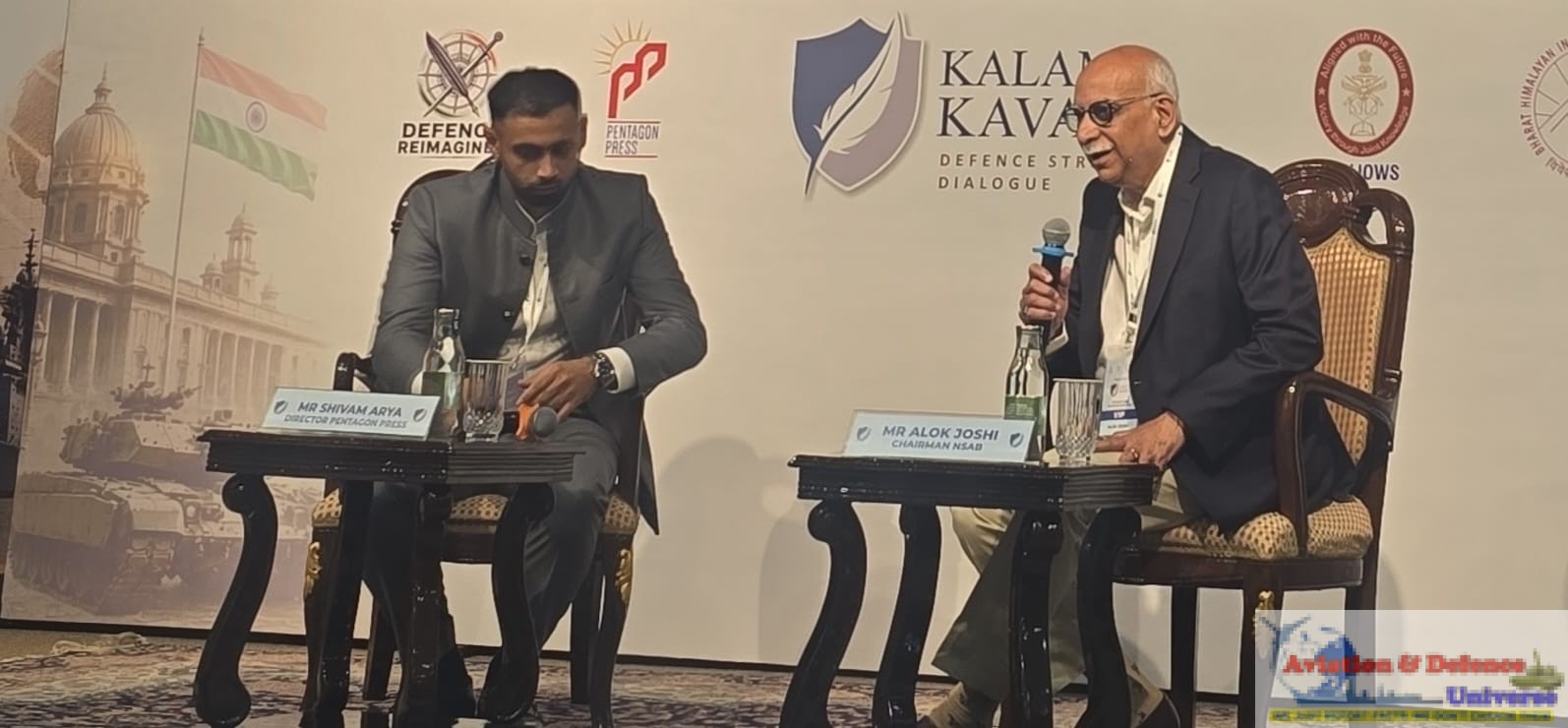 Alok Joshi’s fireside chat at Kalam & Kavach 3.0 offered a wide-ranging and deeply insightful perspective on the evolving dimensions of India’s national security architecture in an era increasingly shaped by geopolitical instability, cognitive warfare, technological disruption and institutional complexity. Through his reflections on intelligence integration, trusted partnerships, information warfare and strategic self-sufficiency, he highlighted the growing need for coordinated and adaptive national security frameworks capable of responding to emerging multidomain challenges.
The discussion also reinforced that future security preparedness will depend not only on technological capability or military strength, but on trust-based institutional cooperation, integrated decision-making and the ability to effectively manage information ecosystems and cognitive threats. His repeated emphasis on synergy, communication and calibrated openness underscored the importance of building collaborative cultures across India’s strategic institutions.
As India navigates an increasingly uncertain global environment, the fireside chat highlighted how the country’s long-term strategic resilience will depend on combining self-reliance, trusted partnerships, institutional integration and technological adaptation into a truly whole-of-nation approach to national security.










































































-A4-Size-(2)_page-0001.jpg)