












- “India Must Move Towards Joint IPR and Technology Collaboration”
- Calls for Faster Integration of Startups into Defence Projects
- “The Success of Ops Sindoor Was Network-Centricity”
- Calls for 10x Expansion of iDEX and Startup-Driven Defence Innovation
By Sangeeta Saxena
New Delhi. 16 May2026. Modern day warfare and India of today lays emphasis on linking startups, MSMEs, DPSUs, DRDO and the armed forces into cohesive capability development frameworks reflected the growing recognition that future warfare will increasingly depend on AI-enabled networks, indigenous ISR systems, autonomous platforms and real-time operational integration. The ecosystem and debates have been reinforcing the importance of shifting international defence collaboration from production-focused models toward joint development, co-innovation and shared intellectual property partnerships.
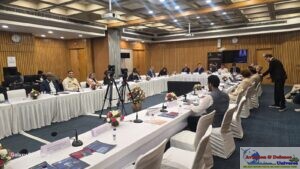
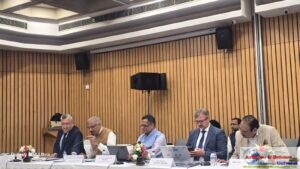
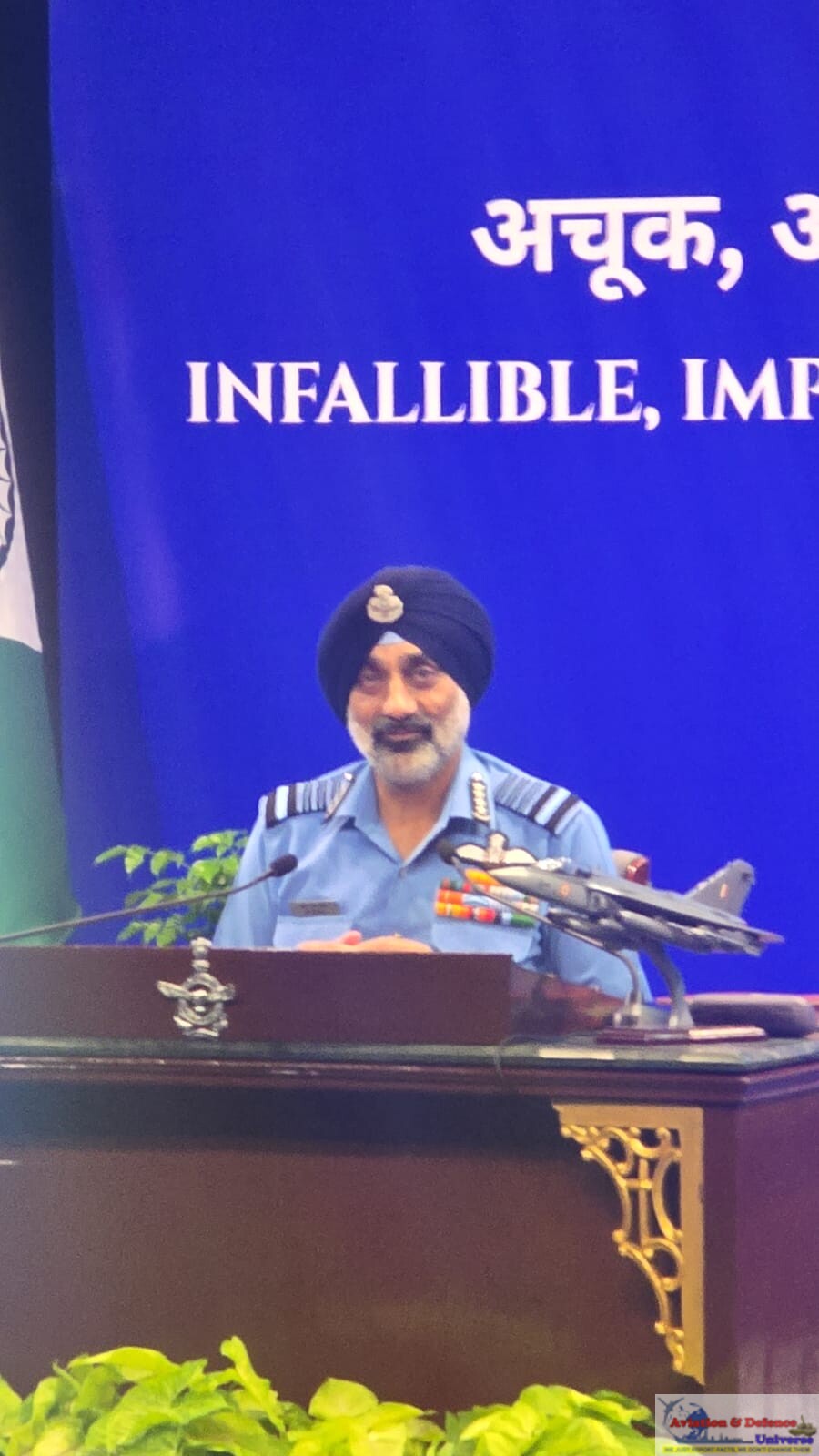
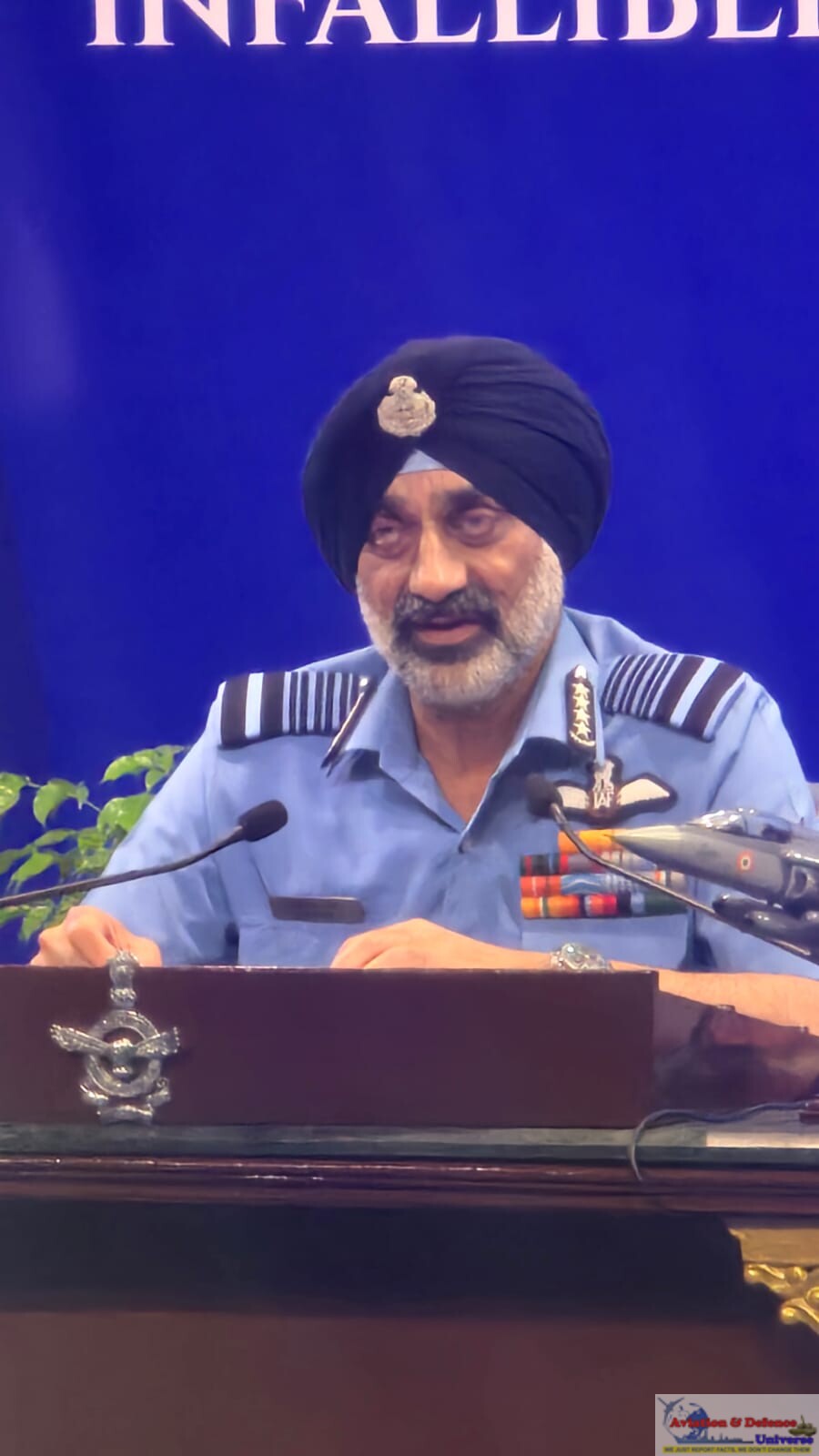
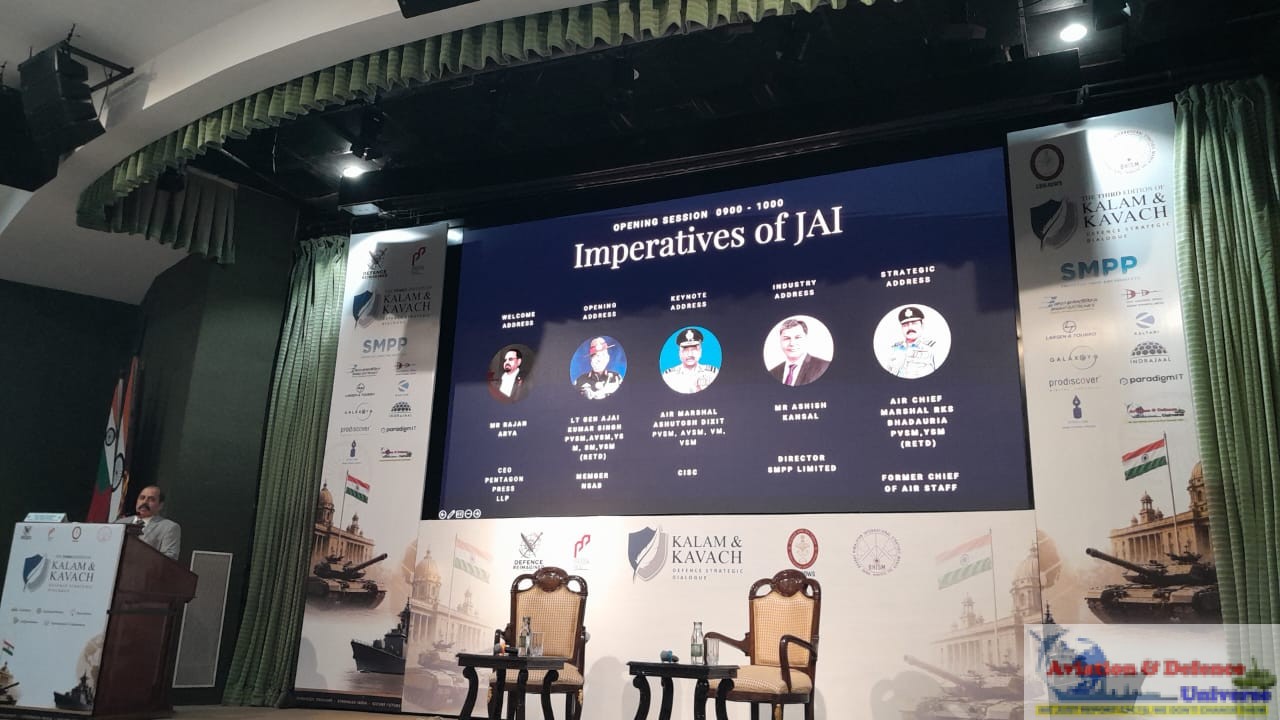
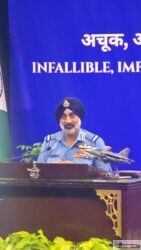
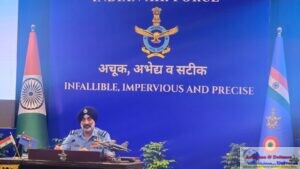
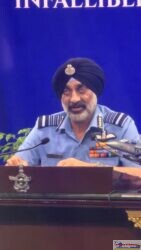
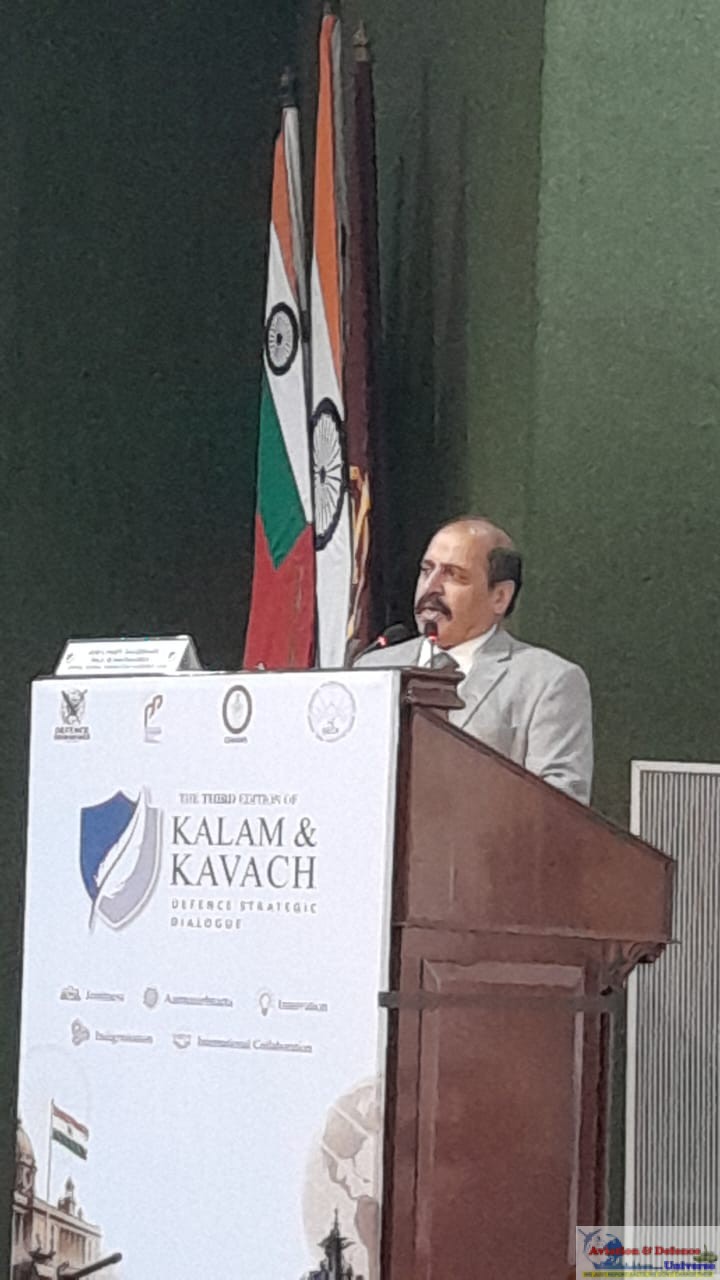 Delivering a strategic and deeply insightful special address at Kalam & Kavach 3.0, former Chief of the Air Staff, Air Chief Marshal RKS Bhadauria (Retd.) emphasised that India’s true journey toward Atmanirbharta must move beyond licensed manufacturing and import substitution toward indigenous design, technological sovereignty and innovation-led capability development. Addressing military leaders, defence experts, industry representatives, startups and international partners, ACM Bhadauria outlined the structural, technological and policy shifts required for India to emerge as a future-ready defence power.
Focusing on innovation ecosystems, startup integration, AI-enabled warfare, indigenous ISR networks, drones, cyber capability and international collaboration models, the former Air Chief stressed that future conflicts will demand rapid technology development cycles and seamless integration between the armed forces, startups, DPSUs, DRDO and industry. He repeatedly underlined that India’s future defence ecosystem must be built on joint development, sovereign technological capability and collaborative innovation rather than dependence on traditional import-led models.
Opening his address, Air Chief Marshal RKS Bhadauria stated that while several aspects of Atmanirbharta had already been discussed during the event, he wished to focus specifically on innovation, indigenous capability and international collaboration. “I will concentrate briefly on what I think about Atmanirbharta, innovation and international collaboration,” he said. According to ACM Bhadauria, true Atmanirbharta fundamentally rests on indigenous design and technological development.“Atmanirbharta fundamentally has to do with our own design and developed systems through innovation and technological development,” he remarked.
He acknowledged that manufacturing in India remains an important component of self-reliance, but cautioned against equating manufacturing alone with strategic autonomy.“I do not consider manufacturing alone as the true strength of Atmanirbharta,” he stated. “But it is a very important strength for building ecosystem capability.” The former Air Chief also highlighted the importance of indigenising and modernising existing military systems already in service.
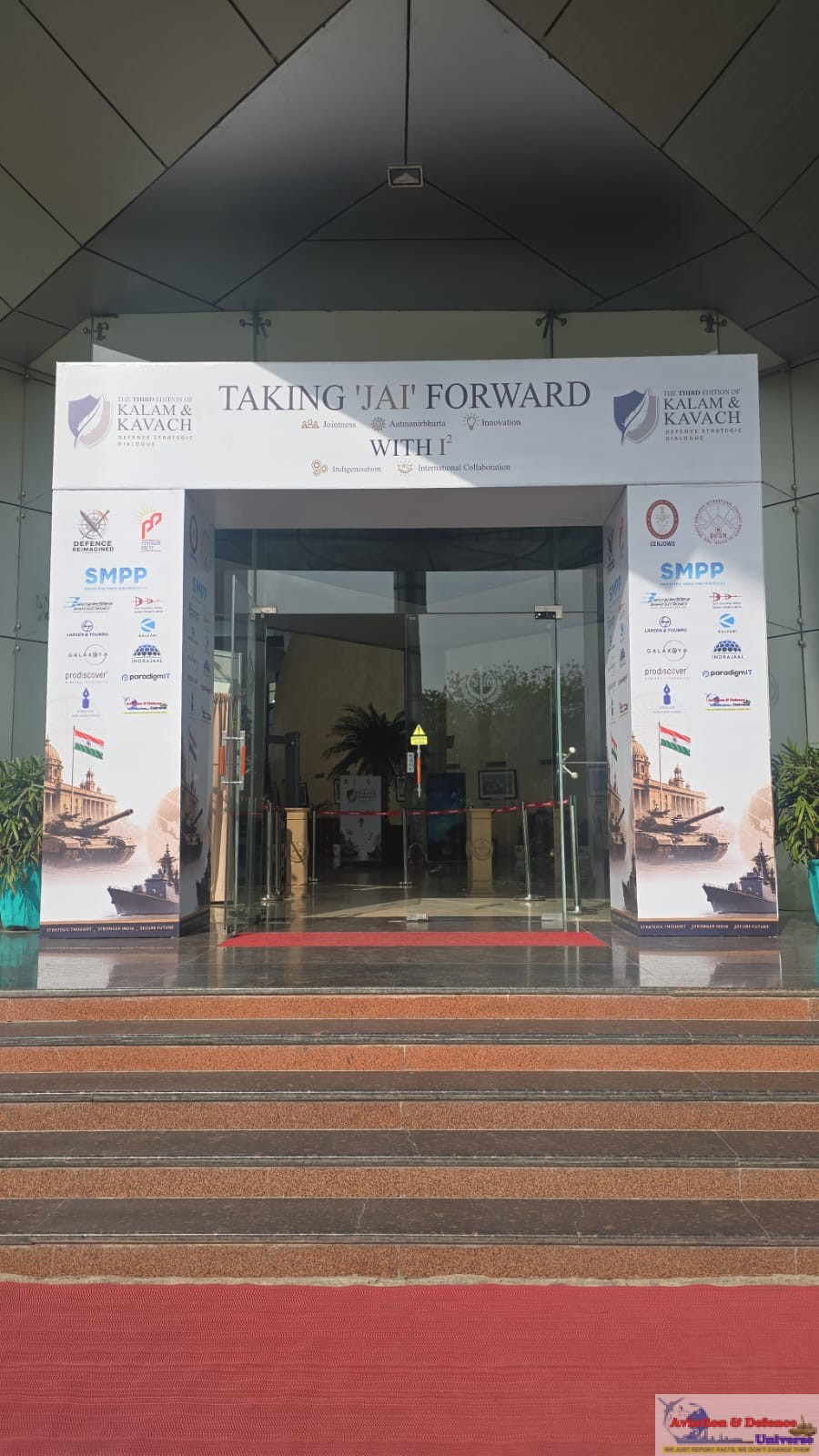 “Our current capabilities will remain with us for the next 20 to 40 years,” he said. “We need the ability to indigenise and modernise them ourselves.” Reflecting on past experiences with import substitution efforts, ACM Bhadauria offered a candid assessment of why many indigenisation programmes struggled.“Wherever we attempted import replacement, nearly 95 percent of those efforts were unsuccessful,” he observed.
According to him, the primary challenge was not technological impossibility but lack of sustained focus and commitment. “It boils down to the lack of energy, thrust and focus from the players involved,” he remarked. The former IAF Chief repeatedly emphasised that India’s future defence ecosystem must prioritise innovation and indigenous technology development. “We need to innovate and develop technologies in areas critical for our technological sovereignty,” he stated. However, he warned that innovation alone is insufficient unless technologies are integrated into operational military systems. “It is not enough to have startups and innovation happening in laboratories,” he said. “Technology must eventually reach the hands of the soldier.”
According to ACM Bhadauria, this requires startups and innovators to work closely with DPSUs, DRDO, larger industry players and the armed forces from the beginning.“All system-level development must happen together with the organisations that will eventually manufacture and induct those systems,” he remarked. Referring to emerging warfare requirements, ACM Bhadauria identified several “low-hanging fruits” for India’s defence innovation ecosystem.
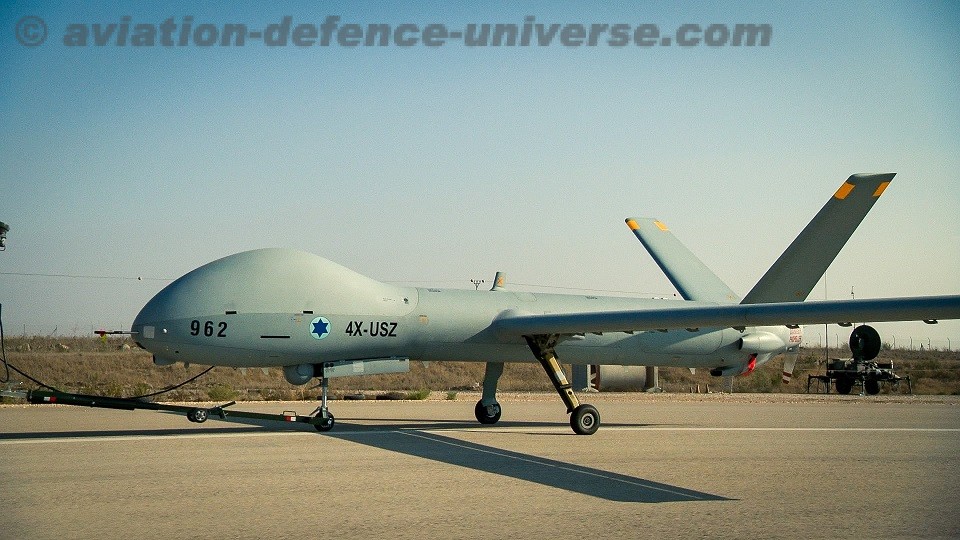 “Drones, loitering munitions, counter-UAS systems, directed energy weapons, ISR networks and persistent situational awareness are all critical areas,” he said. He stressed that India’s future battlespace would require indigenous control over surveillance, sensors and networked systems across land, air and space.“All sensors in space, all radar sensors and all electro-optical systems need to be Indian,” he stated.
ACM Bhadauria also described the changing role of iDEX and startup ecosystems within India’s defence innovation landscape.“iDEX is probably the only scheme which has successfully supported startups at scale,” he observed.He particularly highlighted recent changes in the iDEX framework involving DPSU participation as a major policy breakthrough. “The inclusion of DPSUs in supporting iDEX schemes is a game-changing shift,” he remarked.
However, the former Air Chief warned that most innovation projects risk stagnating unless linked directly with operational military systems and larger programmes.“If projects are not linked to systems that will induct them, 90 percent of current iDEX and R&D projects may continue languishing in labs,” he cautioned. He argued that future military capability development must increasingly revolve around AI-enabled command-and-control systems and integrated ISR architectures.“We are moving toward complete real-time situational awareness and command-and-control with a huge element of AI in the background,” he said.
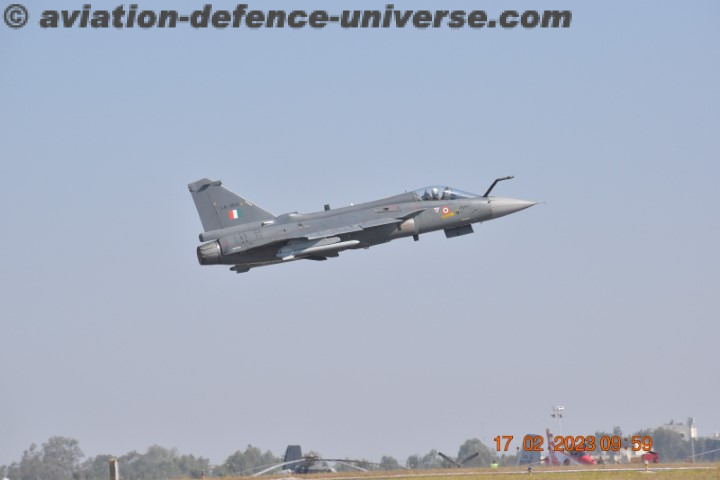
To illustrate successful indigenous integration, ACM Bhadauria cited the Integrated Air Command and Control System (IACCS) developed by the Indian Air Force.“The success of Ops Sindoor is IACCS-centred,” he stated. “It is today a world-class network-centric system.” According to him, the IACCS model demonstrates how future defence innovation ecosystems should function.“This is the template we need to shift toward for all future capability development,” he remarked.
The former Air Chief also stressed the need for AI, cyber capability and network-centric warfare integration. “If we are integrating sensors in the future, we will need AI in a very big way,” he observed. A major focus of the address was the future direction of international defence collaboration. ACM Bhadauria criticised older models focused only on transfer of production and licensed manufacturing.
“Every critical technology was either not transferred or transferred sub-optimally,” he said while discussing earlier collaboration models. According to him, India must now move toward joint development and shared intellectual property frameworks. “We need joint collaborative projects with joint IPR in the future,” he stated. He argued that technological interdependence between India and trusted partner nations would create more stable and resilient defence ecosystems.“Unless there is technological dependence on each other and supply-chain interdependence, we will not have a stable system for the future,” ACM Bhadauria remarked.
 The former Air Chief also acknowledged that despite major reforms and what he described as a “golden period” of governance and defence reforms, industrial transformation remains slower than required. “In spite of all the reforms, the pace of industrial change is still limited,” he observed. He called upon DRDO, DPSUs, certification agencies and quality organisations to adopt a more transparent and collaborative approach with private industry and startups.
“The spirit, transparency and soul of the ecosystem need to change,” he emphasised. ACM Bhadauria also strongly advocated scaling up defence innovation programmes. “iDEX projects need to go 10x from the very next instalment,” he said. According to him, once defence projects and military requirements become more tightly integrated with startups and industry, financial investment and innovation momentum would increase dramatically. “The moment this cycle starts, the funding and energy from the industry ecosystem will multiply,” he remarked.
 Concluding his address, ACM Bhadauria reiterated that India’s defence future depends on cohesive collaboration across services, startups, industry, DRDO and international partners. “The direction is right,” he stated. “But it needs to happen faster, quicker and in a far more cohesive manner.” Air Chief Marshal RKS Bhadauria’s address at Kalam & Kavach 3.0 provided a comprehensive strategic perspective on the future direction of India’s defence modernisation and Atmanirbharta journey. By distinguishing between licensed manufacturing and true technological sovereignty, he highlighted the urgent need for India to focus on indigenous design, innovation-led capability development and integrated operational ecosystems.
As India advances toward future-ready military capability and strategic self-reliance, ACM Bhadauria’s remarks that speed, collaboration, technological sovereignty and operational integration will be central to shaping the country’s defence transformation in the coming decades.









































































-A4-Size-(2)_page-0001.jpg)