














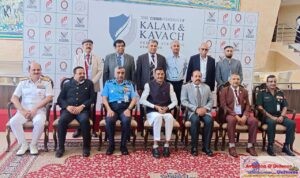
 New Delhi, 14th May 2026: The third edition of Kalam & Kavach 3.0, themed “Taking JAI Forward With I²”, concluded successfully at Ashoka Hall, Manekshaw Centre, New Delhi, bringing together senior military leadership, policymakers, diplomats, defence industry leaders, technology innovators, and strategic experts for high-level deliberations on India’s evolving defence and security ecosystem.
Organised by Pentagon Press in collaboration with leading strategic and defence stakeholders, the conclave focused on strengthening India’s journey towards Atmanirbharta through innovation, industrial partnerships, capability development, and future-ready defence technologies.
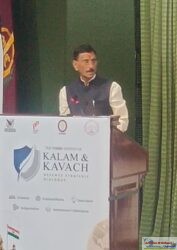
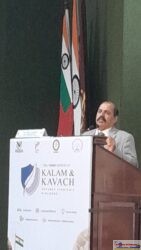
 Delivering the inaugural address, Sanjay Seth, Hon’ble Minister of State for Defence said, “Kalam & Kavach represents the spirit of a modern and self-reliant India where knowledge, innovation and national security come together with purpose. In today’s rapidly evolving security environment, preparedness must be driven by technological advancement, indigenous capability, strategic partnerships and the collective strength of our innovators, scientists, industry leaders and armed forces. As India moves towards the vision of Viksit Bharat 2047, platforms like Kalam & Kavach will play an important role in shaping a secure, technologically empowered and resilient nation.”
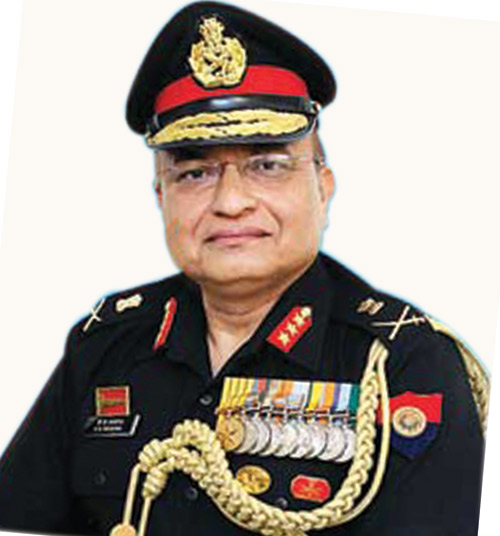
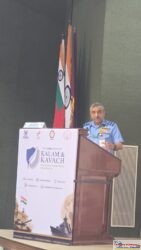
 Delivering a special address, Air Marshal Ashutosh Dixit PVSM, AVSM, VM, VSM CISC, emphasised the importance of indigenous innovation in securing India’s strategic future. He stated, “India’s defence future will not be built by imitation, but by innovation, self-reliance, and the courage to create technologies that secure both our borders and our strategic interests. Platforms like Kalam & Kavach are essential in bringing together the thinkers, innovators, industry, and armed forces shaping that future.”
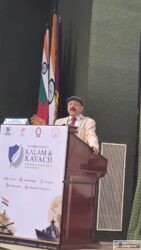
 Highlighting the critical role of private industry and manufacturing ecosystems in defence preparedness, during his special industry address Ashish Kansal CEO and Director SMPP said, “Any modern conflict demands immediate readiness and surge capacity, and that can only come through a strong indigenous industrial ecosystem. Indian private industry and MSMEs are today proving that they can not only support the armed forces, but also build globally competitive technologies and manufacturing capabilities focused on Make in India, Make for the World.”
 Delivering a strategic perspective on global security collaboration and technology-driven defence ecosystems, Dr Vivek Lall CEO General Atomics Global Corporation remarked, “Our ability to secure the future will depend on how effectively nations, industry, innovators, and academia come together to build resilient ecosystems powered by advanced technology, trusted partnerships, and strategic foresight. India today stands at the forefront of this transformation, with the potential to emerge as a global hub for innovation-led security and aerospace advancement.”
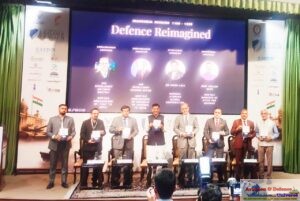
 The conclave also witnessed the inauguration of Defence Reimagined, a strategic volume exploring India’s evolving defence and national security landscape across emerging domains including aerospace, cyber warfare, innovation, maritime strategy, and indigenous capability development by Shivam Arya. The book was formally unveiled by Sanjay Seth along with distinguished military and industry leaders during the event.
The event witnessed participation from senior representatives across the Government of India, the armed forces, defence PSUs, private industry, startups, academia, and international partners. Key dignitaries included senior officials from the Ministry of Defence, members of the National Security Advisory Board (NSAB), distinguished military veterans, strategic experts, and global industry leaders.
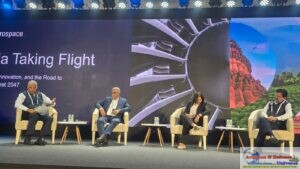
The conclave featured a series of strategic sessions, keynote addresses, and fireside conversations focused on some of the most critical issues shaping India’s defence future — including AI-enabled warfare, autonomous systems, defence manufacturing scale-up, aerospace technologies, strategic partnerships, and strengthening India’s warfighting edge.
 Discussions throughout the day underscored the importance of deeper collaboration between government, armed forces, industry, startups, academia, and global OEMs to accelerate indigenous capability development and reinforce India’s position as a trusted global defence manufacturing and innovation hub.
A dedicated focus was placed on next-generation technologies such as AI swarms, hypersonic systems, quantum-enabled C4ISR, advanced manufacturing ecosystems, and defence-industrial partnerships designed to support long-term strategic preparedness and operational readiness.
The conclave also highlighted the growing role of Indian private industry, MSMEs, and startups in advancing defence innovation and self-reliance, while emphasising the need for faster technology absorption, co-development frameworks, and scalable manufacturing ecosystems.
The event concluded with a collective call for stronger integration between innovation, industrial capability, and national security priorities to support India’s long-term defence transformation agenda and its vision of becoming a globally competitive defence and aerospace power.





































































-A4-Size-(2)_page-0001.jpg)