












AUTHOR: Ms Vaibhavi Katal, Research Assistant at CENJOWS
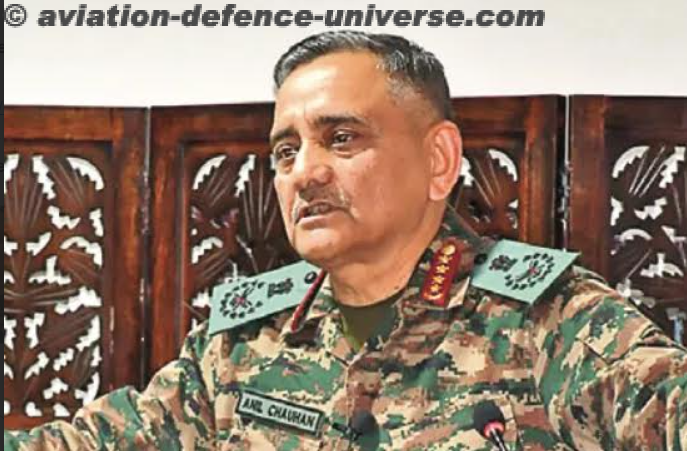
New Delhi. 25 May 2026. General Chauhan inherited neither a settled institution nor a stable strategic environment. Yet, unlike his predecessor General Bipin Rawat, who will largely be remembered for conceptualising and initiating transformational military reforms, General Chauhan’s contribution has been as a consolidator; someone who deepened inter-service coordination, and gradually translated reform into operational practice.
His tenure has consequently been more significant in terms of institutional consolidation. Whether in sustaining India’s military posture in Eastern Ladakh, refining the idea of jointness among the services, or steering the armed forces during Operation Sindoor, his leadership has reflected restraint, operational realism, and a keen awareness of the changing nature of warfare.
Stabilising the CDS Institution After General Rawat
The creation of the CDS post in 2019 represented one of the most decisive defence reforms undertaken in post-independence India. The office was intended to improve coordination among the Army, Navy, and Air Force, rationalise procurement, and facilitate the eventual establishment of integrated theatre commands. The untimely demise of General Rawat in December 2021 generated a genuine institutional uncertainty, since the office itself was still in its formative years. There were concerns within strategic circles about whether the momentum for military integration would slow down or become contested.
General Chauhan entered this environment not as a flamboyant reformer, but as a steady operational professional with extensive field and staff experience. His tenure as Director General of Military Operations (DGMO) had already exposed him to strategic planning, border management, counter-terror operations, and crisis coordination involving both China and Pakistan. Later, as General Officer Commanding-in-Chief of the Eastern Command, he oversaw one of India’s most sensitive operational theatres, covering Arunachal Pradesh, Sikkim, and the eastern frontier with China. This background gave him credibility across the services. More importantly, it shaped his approach to military leadership.
One of his understated achievements was restoring confidence in the continuity of the CDS system itself. The Department of Military Affairs continued to function without disruption, while reforms relating to jointness and theatre integration proceeded incrementally, avoiding unnecessary institutional friction. In many ways, General Chauhan ensured that the CDS structure survived its first major test of continuity.
Jointness as Practice, Not Slogan
A defining feature of General Chauhan’s tenure has been his emphasis on practical military integration. The idea of “jointness” had long existed in Indian strategic discourse but often remained confined to doctrinal discussions. Under General Chauhan, the focus increasingly shifted toward operational coordination. Integrated logistics planning, intelligence sharing, surveillance coordination, and inter-service operational preparedness received sustained attention. His larger strategic argument was that future wars would not resemble the conventional battlefield models of the twentieth century.
At the Shangri-La Dialogue, he observed that “We’re no longer fighting linear wars; we’re operating across distributed networks, applying force in non-linear ways, where deception is becoming more important than surprise”. In another remark at the same forum, he noted that “Modern warfare is undergoing a complex convergence of tactical, operational and strategic layers; old and new domains — land, air, sea, cyber and space”. These statements reflected a broader doctrinal shift in Indian military thinking.
General Chauhan consistently argued that the armed forces could no longer function through isolated service-specific approaches. Instead, cyber warfare, drones, electronic warfare, information operations, space-based surveillance, and precision systems would increasingly shape future conflict. His approach was also politically and institutionally pragmatic. General Chauhan’s measured leadership style helped reduce friction and build consensus rather than confrontation. In that sense, his contribution lay not merely in advocating integration, but in making it administratively acceptable and operationally credible.
The China Challenge and the Institutionalisation of Readiness
One of the most enduring strategic developments during General Chauhan’s tenure has been the continued management of the China challenge in Eastern Ladakh. The Galwan Valley clash in 2020 fundamentally altered India’s assumptions regarding border stability with China. The idea that the LAC could be managed primarily through confidence-building measures and diplomatic engagement lost credibility after the violent confrontation.
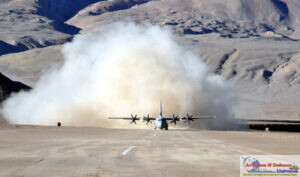
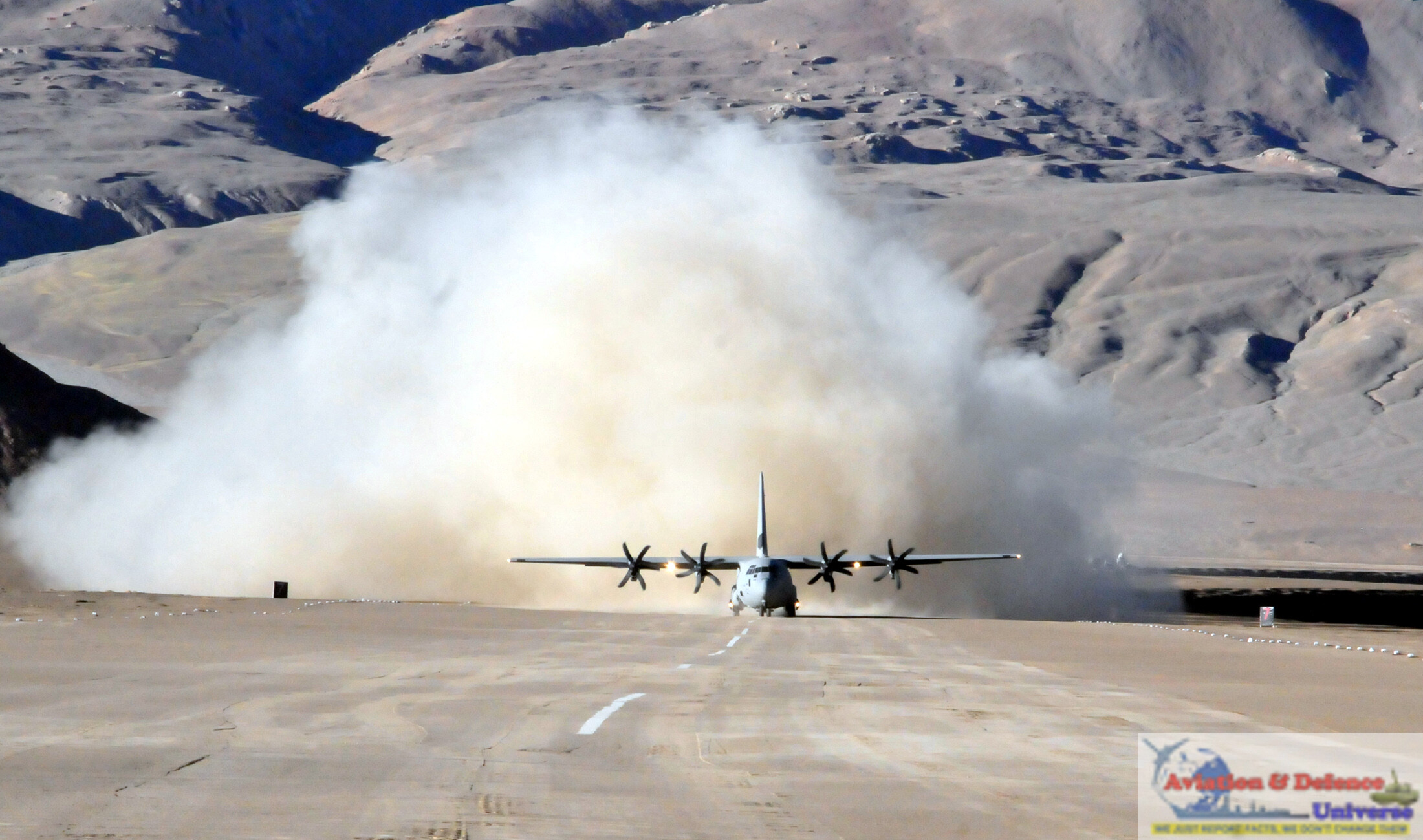
Although the initial military mobilisation preceded General Chauhan’s appointment as CDS, the longer-term consolidation of India’s military posture in Ladakh took shape substantially during his tenure. India gradually transitioned from emergency deployment to permanent preparedness. Infrastructure development accelerated, logistics systems improved, winter sustainment capacities expanded, and troop deployment models became more institutionalised. Airlift capabilities, ammunition stocking, surveillance integration, and habitat infrastructure in high-altitude areas all witnessed sustained enhancement.
General Chauhan’s operational experience played an important role here. As former DGMO and Eastern Army Commander, he understood that deterrence against China required sustained military readiness backed by logistics, infrastructure, and inter-service coordination. His tenure therefore marked the consolidation of India’s hardened military posture against China, not through dramatic declarations, but through institutional preparedness.
Operation Sindoor and the Evolution of Crisis Response
Operation Sindoor became one of the defining operational episodes during General Chauhan’s tenure. Following the terrorist attack in Pahalgam in 2025, India launched calibrated strikes against terrorist infrastructure in Pakistan and Pakistan-occupied Kashmir. Beyond the tactical dimension, the operation demonstrated how India’s military thinking had evolved under the CDS framework.
Tri-Service Coordination
Perhaps the most visible feature of Operation Sindoor was the level of coordination among the Army, Air Force, Navy, and intelligence agencies. Surveillance assets were integrated, planning was synchronised, and strategic signalling was coordinated across multiple domains.
General Chauhan described the operation as “a testament to the synergy and operational cohesion among the three Services”. The statement reflected more than institutional pride. It underlined how the CDS framework had gradually moved from conceptual integration to operational application.
Precision and Escalation Management
Operation Sindoor also highlighted India’s increasing preference for calibrated and precision-based responses. Rather than broad escalation, military force was employed selectively to achieve political and operational objectives while avoiding uncontrolled conflict expansion. This balancing of deterrence and restraint became one of the defining characteristics of General Chauhan’s strategic outlook.
Hybrid Warfare and Indigenous Systems
Operation Sindoor also underscored the changing character of warfare itself. Pakistan’s use of drones and loitering munitions during the confrontation highlighted the growing importance of hybrid and technology-driven conflict. Indian forces responded through integrated air defence systems and increasingly indigenous anti-drone capabilities. General Chauhan repeatedly emphasised the strategic importance of self-reliance in defence technology.
Referring to India’s operational preparedness, he observed, “We’ve not only used indigenous platforms like the Akash missile system effectively, but we’ve also built our own networking infrastructure for air defence without relying on foreign vendors”.
This emphasis on indigenous capability was not merely ideological. It reflected an operational lesson: in prolonged crises, dependence on external systems can become a strategic vulnerability.
Modernisation Beyond Weapons Acquisition
General Chauhan’s approach to military modernisation has been broader than conventional procurement debates. He consistently argued that future wars would be shaped by data integration, automation, artificial intelligence, cyber capability, and networked systems rather than merely troop strength.
At the Shangri-La Dialogue, he remarked, “We can’t rely 100 per cent on foreign elements, especially for networked warfare”. He also pointed toward India’s technological potential by stating, “We produce the largest number of STEM graduates in the world… Give them a defence problem and you’ll have hundreds working on it”.
Under his leadership, India accelerated work on:
- Drones and anti-drone systems
- Artificial Intelligence
- Electronic warfare
- Cyber capability
- Indigenous surveillance systems
- Precision-guided weapons
Importantly, his modernisation agenda linked technology with strategic autonomy. The argument was not merely about acquiring advanced systems, but about ensuring that India retained operational independence during crises.
Strategic Vision and the Future of Warfare
General Chauhan’s larger contribution may ultimately lie in how he helped shape India’s strategic thinking about future conflict.
He consistently warned that future wars would be multi-domain, information-centric, and technology-driven. Cyber operations, drones, misinformation campaigns, electronic warfare, and space-enabled systems would increasingly operate alongside conventional force structures. At the same time, he stressed the importance of perpetual preparedness. Following Operation Sindoor, he emphasised the need for “continued vigilance, jointness and synergy across the services to address evolving threats”.
This idea of continuous readiness has become increasingly relevant for India as it simultaneously manages tensions with China, Pakistan-backed terrorism, and the uncertainties of an evolving geopolitical order.
Conclusion
General Anil Chauhan’s tenure as India’s second CDS has largely been a story of consolidation rather than disruption.
If General Bipin Rawat created the institutional architecture of the CDS system, General Chauhan ensured that it acquired continuity, operational depth, and administrative credibility. He inherited an institution facing uncertainty after the loss of its first occupant and gradually transformed it into a functioning pillar of India’s higher defence management structure.
His leadership during the prolonged Ladakh deployment strengthened India’s long-term deterrence posture against China. During Operation Sindoor, he demonstrated the value of integrated military planning, calibrated force application, and technological adaptation. Across the armed forces, he advanced jointness, encouraged indigenous capability development, and reinforced the idea that future wars would demand integration across multiple domains.
His tenure will forever be recognised as the phase during which India’s integrated military framework moved from concept to operational maturity.






































































-A4-Size-(2)_page-0001.jpg)