














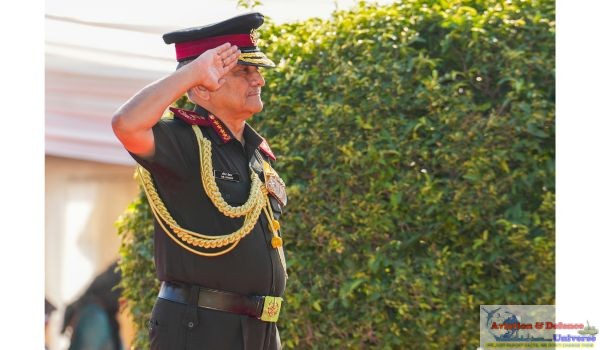
- General Anil Chauhan Bids Farewell to Uniform
- Leaves Legacy of Military Integration and Reform
By Sangeeta Saxena
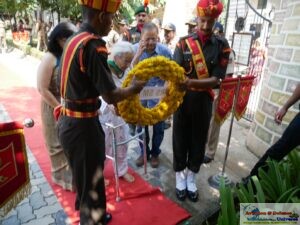
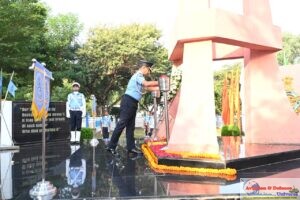
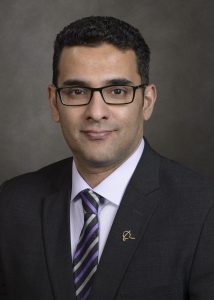
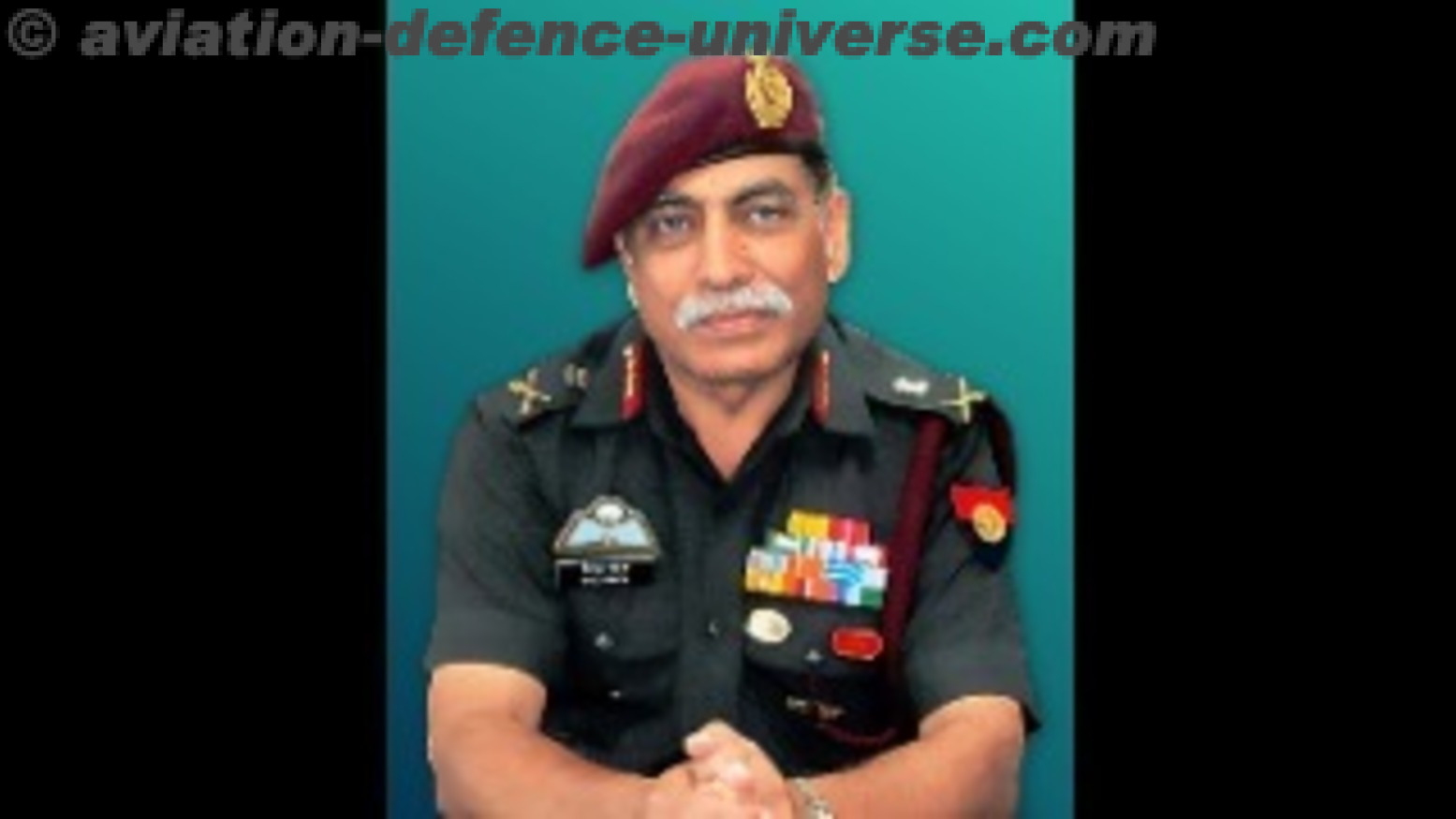
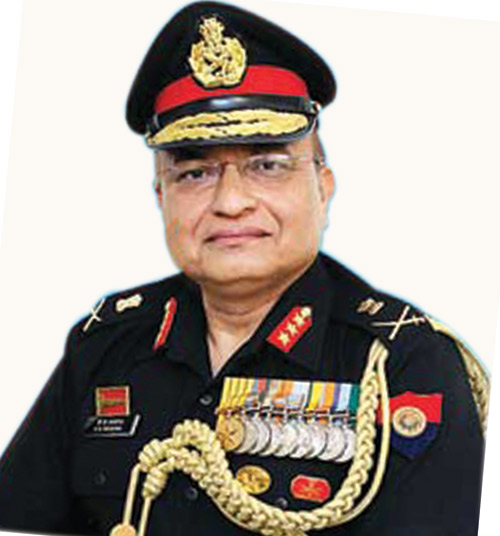
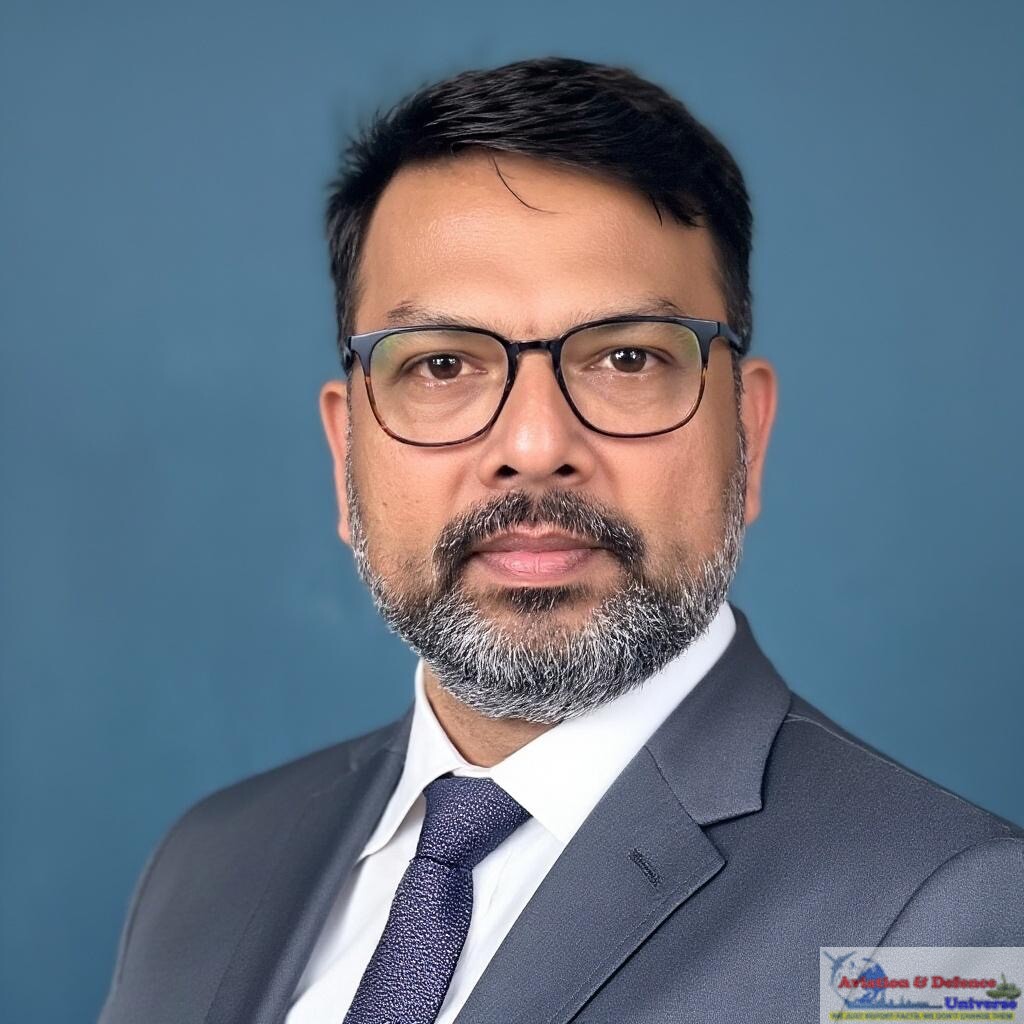
New Delhi. 31 May 2026. After more than four decades of distinguished service to the nation, Chief of Defence Staff (CDS) General Anil Chauhan demitted office on Sunday, bringing to a close an illustrious military career marked by operational excellence, strategic leadership and an unwavering commitment to strengthening India’s defence capabilities. As the country’s second Chief of Defence Staff, General Chauhan played a pivotal role in advancing jointness among the Armed Forces and steering key military reforms aimed at enhancing integration and operational preparedness. His retirement marks the end of a remarkable journey from a young Army officer to the highest military position in the country. Before demitting office, General Chauhan paid homage to the nation’s fallen heroes by visiting the National War Memorial in New Delhi, where he laid a wreath in honour of those who made the supreme sacrifice in service of the nation. In recognition of his exceptional service and leadership, he was accorded a ceremonial Tri-Services Guard of Honour, reflecting the respect and admiration he earned across the Army, Navy, and Air Force.
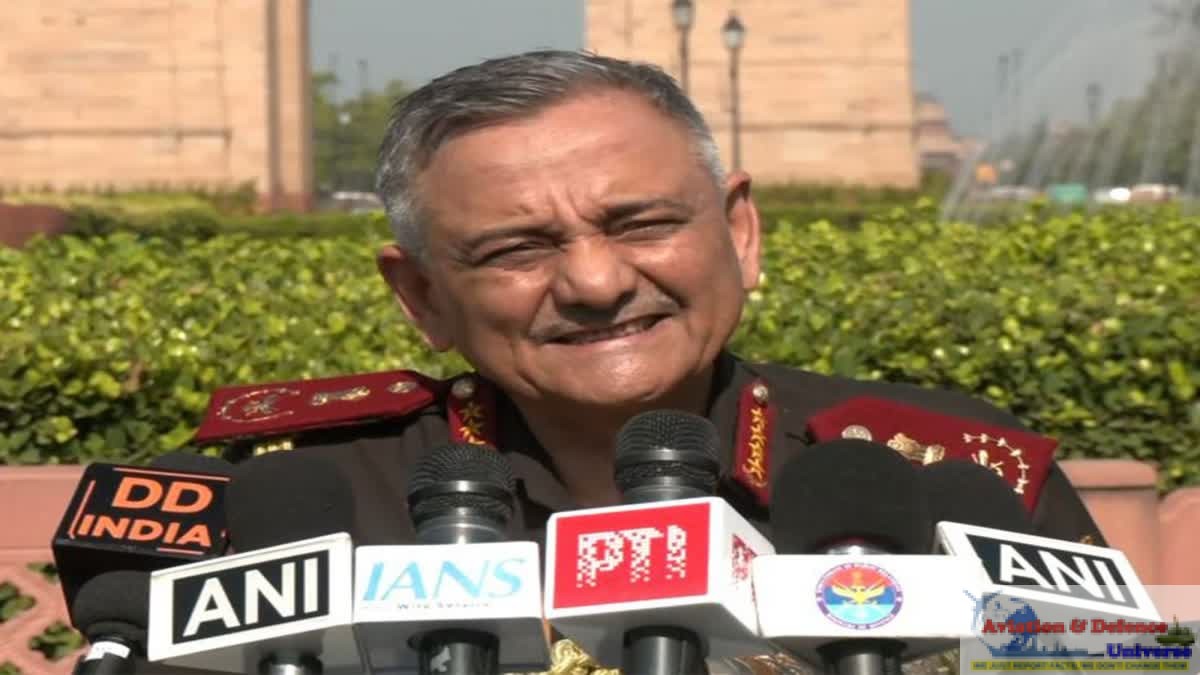
Recently while speaking at the Defence event Kalam & Kavach General Chauhan emphasised, that joint military structures are one of the “most transformative reforms” India has attempted. “We are not the first nation doing this and we won’t be the last,” he remarked. “Without fail, in all countries there have been differences between the services. That is natural.” He explained that India’s approach towards theatreisation and integration was based on building consensus rather than imposing change through rigid directives. “I tried to work through consensus,” he said. “Consensus meant taking everyone along and spreading awareness among people.”
Throughout his tenure as CDS, General Chauhan oversaw a critical phase in India’s defence evolution, focusing on greater inter-service synergy, force modernisation, and the implementation of integrated military structures. His leadership came at a time when the Armed Forces were navigating complex security challenges and undertaking transformational initiatives designed to prepare for future warfare and emerging threats.
As General Anil Chauhan lays down the mantle of Chief of Defence Staff, he leaves behind a legacy defined by professionalism, foresight, and dedicated service to the nation. His contributions towards fostering jointness, strengthening military preparedness, and advancing the vision of integrated theatre commands have significantly shaped India’s evolving defence architecture.
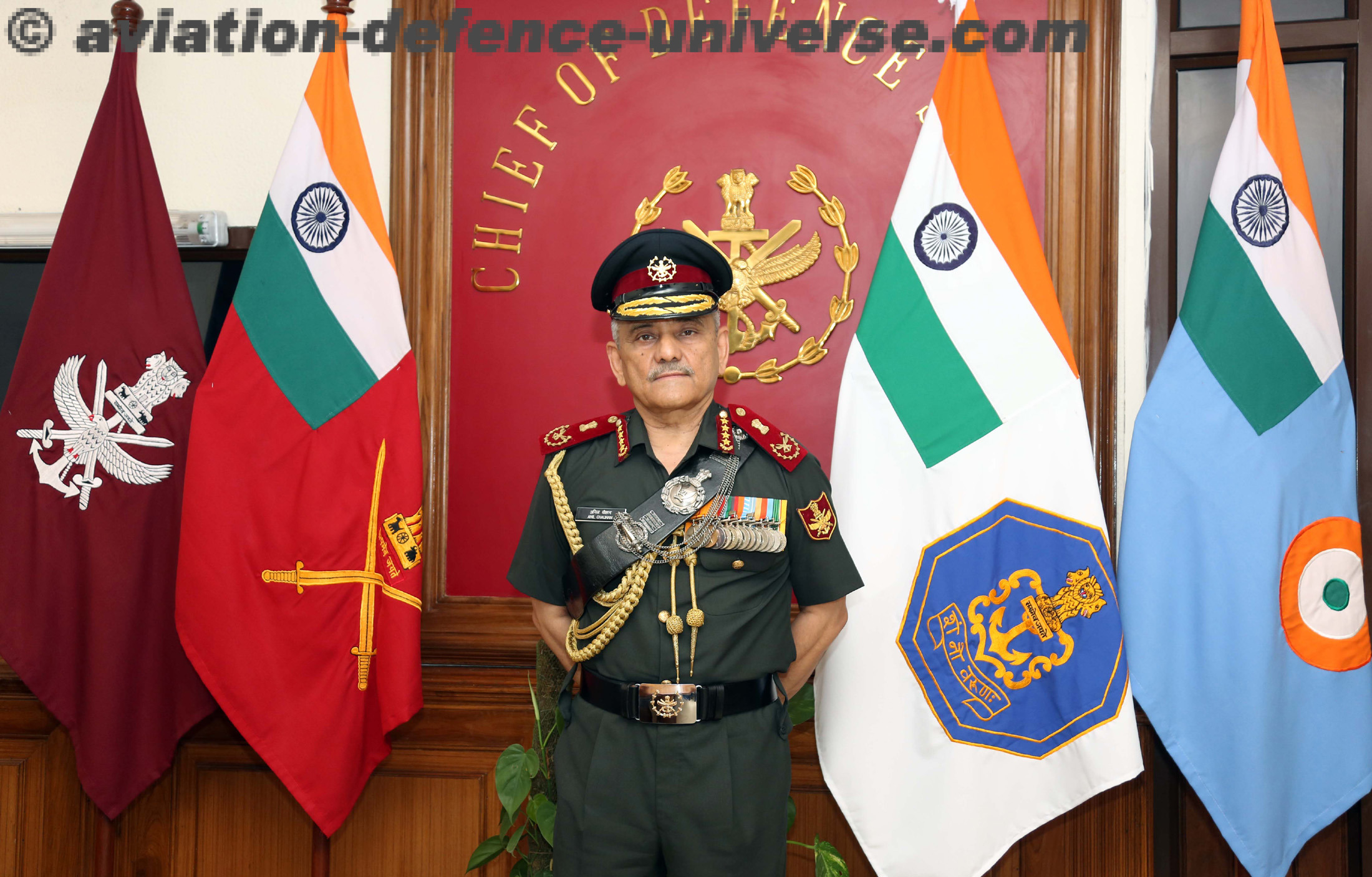
General Anil Chauhan had taken over as the second Chief of Defence Staff (CDS) in September 2022 with the expectation that he would carry forward his predecessor General Bipin Rawat’s unfinished agenda of integrating the Armed Forces through the creation of theatre commands. His role extended beyond promoting tri-service cooperation; it also involved fostering closer coordination between the Ministry of Defence bureaucracy and the Armed Services. During his tenure, he undertook the challenging task of helping shape India’s security strategy amid the complex geopolitical realities posed by its two nuclear-armed neighbours, China and Pakistan.
He was also entrusted with balancing defence procurement between imports and indigenous manufacturing under the government’s Atmanirbhar Bharat initiative, with the objective of equipping the Armed Forces with state-of-the-art capabilities comparable to the best in the world. Recognising the increasingly interconnected nature of geopolitics and military strategy, General Chauhan served as a crucial bridge between strategic policy and military planning. His experience, vision, and operational expertise contributed significantly to India’s evolving defence architecture during a period of transformation.
Throughout his tenure, he was required to take difficult decisions and provide informed military advice to the government on a range of strategic and operational issues. As an officer with deep expertise on India’s northern and eastern frontiers, particularly concerning China, he brought valuable insight to the nation’s security discourse. At the same time, he remained focused on the challenges emanating from Pakistan, ensuring that India’s defence preparedness remained robust on both fronts.
 For an officer who had served as the Director General of Military Operations (DGMO) during the Balakot air strikes, played a key role in Operations Sunrise I and II conducted jointly by India and Myanmar, commanded an infantry division in Jammu & Kashmir, led a Corps in the Eastern sector, and later served as General Officer Commanding-in-Chief of the Eastern Command, the responsibilities of the CDS were perhaps less daunting than they appeared. His extensive operational and strategic experience, coupled with his tenure as Military Adviser to the National Security Council Secretariat after retirement from active Army service, provided him with a unique perspective that helped guide the Armed Forces through a critical phase of reform and integration.
Widely respected for his strategic acumen and calm leadership, General Chauhan’s tenure will be remembered as a period of meaningful transformation within the Armed Forces. As he concludes an extraordinary military journey spanning over four decades, his service stands as an enduring testament to duty, leadership and commitment to national security.






































































-A4-Size-(2)_page-0001.jpg)