


















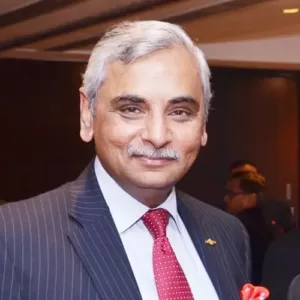
- From Foxtrots to SSBNs: A Submarine Veteran on India’s Undersea Journey
- Submarines, Strategy and Aatmanirbharta: Cmde AJ Singh Maps India’s Underwater Future
By Sangeeta Saxena
New Delhi. 08 December 2025. As Indian Navy celebrated Submarine Day, marking 58 years of its undersea arm, we sat down with Cmde AJ Singh, a veteran submariner and Vice President of the Indian Maritime Foundation, to reflect on where India stands beneath the waves. From the commissioning of INS Kalvari in 1967 and a baptism by fire in the 1971 war, to today’s nuclear-armed SSBNs and planned nuclear attack submarines, India’s submarine story has been one of high standards, quiet achievements and relentless adaptation.
In a candid conversation, Cmde AJ as he if fondly known as, walks us through the evolution of India’s submarine capability—SSBNs, SSNs and SSKs—the strategic challenge posed by China and Pakistan, the urgent need for sustained submarine building, the role of MSMEs and technology transfer, and what it really takes to be a submariner in a world that struggles to stay offline even for minutes. He also underlines why undersea capability, more than ever, will decide who holds the real advantage in the Indian Ocean in the coming decades.
ADU. Reminiscing submarine growth with a veteran submariner is exciting. How do you look at the Indian Navy’s submarine arm at 58 years?
 Cmde AJ Singh. The submarine arm completed 58 years. Our first boat was commissioned on 8 December 1967 in Riga, in the then Soviet Union. It really was a baptism by fire—by 1969 we had four submarines and by 1971 they were in combat. We were still learning submarining, but the training in the Soviet Union and the incredible effort of the pioneers set a very high bar. Those standards of professionalism, commitment and operational sharpness are what later generations, including mine, inherited. We’ve come a long way in these five-plus decades, and while it’s a moment to celebrate, it’s also a moment to introspect—where we stand in terms of capacity, capability and performance.
ADU. When you say “introspect,” what are the key questions you believe India must ask itself today about its submarine arm?
Cmde AJ Singh. Two big ones. First, do we have the numbers and the right mix of submarines for the threats we face? And second, with the capability we do have, how well can we actually perform in real operations. I’d say we’ve done well on the latter—our training, doctrines and professionalism are strong. But our acquisition has been ad hoc, with gaps between building cycles. The good news is that there’s now a much clearer recognition that the underwater domain is decisive. Technology has made the surface increasingly transparent; whatever opacity remains is below the waves. That’s where submarines come in—especially in the complex littorals of the Indian Ocean and Indo-Pacific for deterrence, sea denial, ISR and clandestine operations.
ADU. Let’s break down the three categories—SSBNs, SSNs and SSKs. How do you assess India’s SSBN programme?
Cmde AJ Singh. On SSBNs, we’ve done remarkably well considering nobody gives you that technology—you have to learn it yourself. SSBNs are strategic platforms, not conventional warfighting tools. Once India adopted a No First Use nuclear doctrine, it became essential to have a credible, survivable second-strike capability. That essentially means a sea-based deterrent: submarines carrying ballistic missiles that an adversary cannot easily locate.
We started with INS Arihant, which was both a technology demonstrator and a fully operational platform. Then came the second boat, and media reports suggest a third is close to commissioning, with a fourth under construction. By the end of this decade, we could have four or even five SSBNs, which is a healthy number. The benchmark is that to maintain continuous at-sea deterrence (CASD) 24/7/365, most navies have found that a minimum of four SSBNs is required. The UK, for example, has maintained CASD for decades with four boats.
ADU. Beyond hull numbers, what else matters for a credible sea-based deterrent?
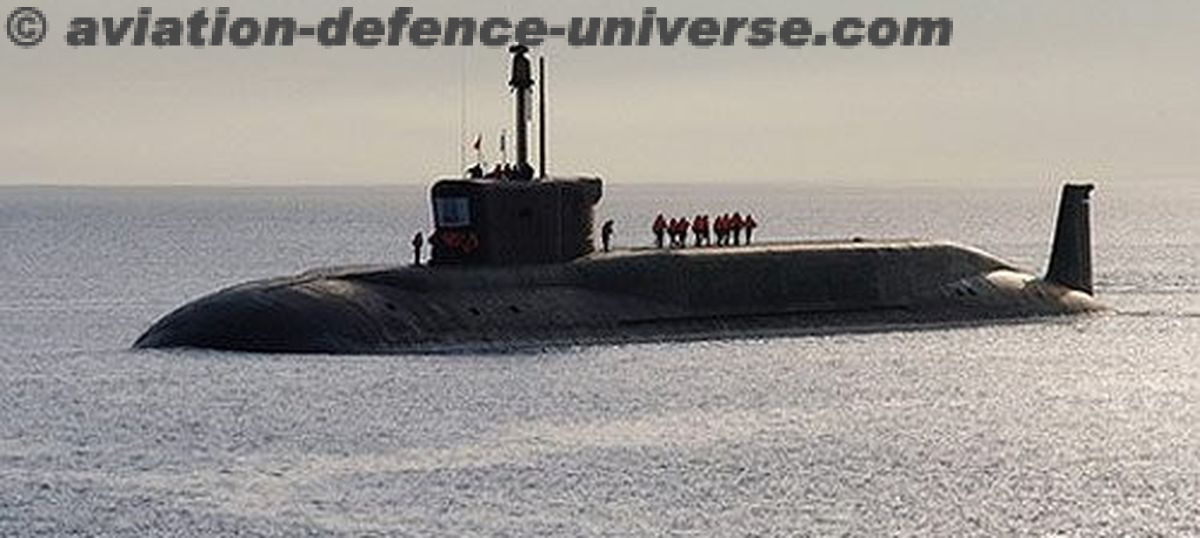 Cmde AJ Singh. There are three pillars of sea deterrence. First is range and capability of the SLBMs on board—the submarine must be able to strike intended targets without sailing into harm’s way. That’s where the progression from earlier systems like Sagarika to longer-range missiles such as K-4 and beyond becomes critical. Second is bastion strategy ideally your SSBN can remain in waters you control and still hold all relevant targets at risk. Third and most crucial is command-and-control and communications. The National Command Authority in Delhi must be able to reliably communicate with a submarine hundreds of miles away and hundreds of metres underwater, even if Delhi itself is under nuclear attack.
When Arihant went on her first deterrent patrol in 2018, she didn’t fire a weapon—that patrol was really about testing this command-and-control architecture. The crew was later felicitated by the Prime Minister, which tells you it was a successful proof of concept. So structurally, we’re in a good place; now it’s about ramping up numbers and missile capability.
ADU. You’ve been very vocal about the need for Indian SSNs. Why are nuclear attack submarines so vital for us?
Cmde AJ Singh. Because we are and must remain, a blue-water navy with carrier battle groups and an enormous area of responsibility across the Indian Ocean. Only SSNs—nuclear attack submarines—can keep pace with a carrier group, whether friendly or hostile. If, as is likely, China permanently positions a carrier battle group in the Indian Ocean along with SSNs, the only credible check on that is our own SSNs. China is expanding fast and plans to have a significant SSN fleet by 2030. Some of those boats will be in the Indian Ocean. If we rely only on surface and conventional assets, we risk our carrier movements and freedom of action being constrained by Chinese SSNs. We simply cannot afford to lose our combat edge in the Indian Ocean.
ADU. Where does India stand today on SSNs, and what should the target be?
Cmde AJ Singh. We previously had SSNs on lease from Russia—Chakra I and II, and there is talk of a third. But a leased boat is never truly your own. The real breakthrough was when the CCS approved construction of Indian SSNs. In my view, the Navy needs at least six SSNs. There seems to be tacit approval for that number, but the initial order is for two. My concern is that if you only order two, industry may not invest in the ecosystem needed to build and support such complex platforms. The government should signal clearly: “We intend to build six; we’re starting with two but more orders will follow.” That kind of long-term visibility is essential for serious industrial investment.
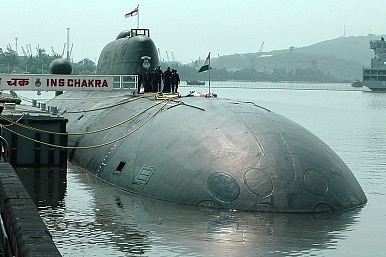 With six boats, you can realistically have two to three SSNs operational at any given time, factoring in refits and maintenance. That’s the minimum for a credible SSN posture in the Indian Ocean.
ADU. Coming to conventional submarines, the SSKs—how do you rate our position there?
Cmde AJ Singh. SSKs are the bread and butter of most navies. We currently have around 17 SSKs, which sounds impressive, but 11 are over 25 years old and 9 are over 30–35 years. They’ve been modernised and are in good fettle, but an old boat is still an old boat. There are limits to what you can retrofit and for how long it remains cost-effective.
SSKs are invaluable in littorals and shallow waters—the Arabian Sea, Bay of Bengal—where an SSN might be overkill. They excel at clandestine missions, ISR, mine-laying and coastal sea denial. That’s why we need both SSKs and SSNs.
ADU. There’s a lot of discussion on AIP and Project 75(I). How do you see that fitting in?
Cmde AJ Singh. Air-Independent Propulsion (AIP) is a game-changer for conventional submarines—longer underwater endurance, greater stealth. We’re finally developing an indigenous AIP that we plan to retrofit on the Kalvari-class (Scorpene) boats, which, ironically, were delivered without AIP. Once the indigenous system is ready—likely around 2028–30—retrofitting will significantly enhance their capability. But you can’t blindly retrofit AIP onto 35-year-old boats; you have to ask whether the cost, downtime and remaining service life justify it. That’s where a careful cost-benefit analysis comes in.
Project 75(I) is critical because it’s not just about another six submarines. The Navy is insisting on AIP and advanced technologies suitable for the 2030s, not 2015. Deep transfer of technology so future designs are Indian. Going forward, the government has clearly stated that no future conventional submarine design will come from abroad. Foreign partners will collaborate and assist, but the design and production ecosystem must become Indian. Work has already begun on the next indigenous class beyond 75(I), which is exactly how it should be.
ADU. How worried should we be about China’s submarine build-up and its support to Pakistan?
Cmde AJ Singh. We should be concerned and realistic. Chinese conventional submarines have inherent constraints in the Indian Ocean—distance from home ports, endurance, time on task. So China will lean heavily on SSNs in our waters. At the same time, they are arming Pakistan with eight AIP-equipped conventional submarines on top of its existing French boats.
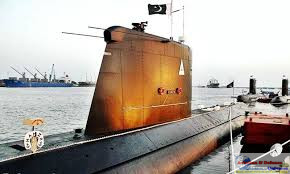
For a country the size of Pakistan, 11 submarines in the relatively confined Arabian Sea is a very potent capability. In a conflict, Pakistan’s navy will almost certainly try to contain the Indian Navy with its submarines, while China will use its SSNs and logistics nodes to sustain undersea presence.
What worries me even more is China’s logistics footprint—for example, the submarine base in Bangladesh and similar support facilities. That gives both Chinese and potentially Pakistani submarines rest, refit and reload options much closer to our eastern seaboard. It changes the geometry in the Bay of Bengal, which used to be effectively India’s lake.
ADU. Does that mean we need to rethink anti-submarine warfare (ASW) as well?
Cmde AJ Singh. We already are. For a long time, ASW was neglected, because it’s not as “sexy” as missiles and guns—nothing to show on television. But that mindset has changed. Our new surface combatants now come with a full ASW suite—towed array sonars, hull sonars, torpedoes, rocket launchers. We’re also building 16 ASW Shallow Water Craft (ASWSWC)—eight each at Kolkata and Cochin. These are small, quiet ships designed to protect harbours and littorals and hunt submarines in shallow waters where larger ships struggle. That will allow us to better secure Mumbai, Karwar, Kochi, Chennai, Vizag and other bases, and improve anti-submarine coverage in coastal belts.
So yes, we’re moving in the right direction on ASW, but the undersea contest is only going to intensify, especially once more Chinese SSNs come in.
ADU. You spoke about supply chains and industry. Can India really build a fully indigenous submarine ecosystem?
Cmde AJ Singh. We have to distinguish between indigenisation and Aatmanirbharta. Indigenisation is about how much is made in India; Aatmanirbharta is about self-reliance and self-sufficiency, including the ability to maintain and overhaul platforms without going back to the foreign OEM.
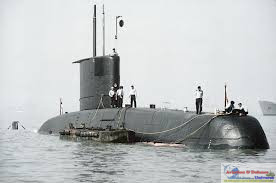 Our experience with German Type 209 submarines by HDW is a great example. In nearly 40 years, not one has gone back to Germany for refit or life extension. Everything has been done at Mazagon Dock, with perhaps a single German expert advising. That’s close to true Aatmanirbharta. But to build a truly indigenous supply chain, you need predictable long-term orders. No one will invest in submarine diesel engines or complex systems if they’re not sure whether submarines will be built consistently. We need a series-production mindset—one boat every 18–24 months for decades.
The encouraging part is what’s happening in the MSME sector. In places like Chennai, Hyderabad, Bengaluru, you see small firms doing cutting-edge R&D and manufacturing. Foreign OEMs are already looking at India as part of their global supply chains, especially as European capacities get saturated. If we give MSMEs the right policy support and visibility, India can genuinely become “Make in India, Make for the World.”
ADU. We’ve spoken a lot about platforms. Let’s talk about the people. What does it take to be a submariner?
Cmde AJ Singh. In almost every democracy, the submarine arm is voluntary—you can’t be forced into it. There has to be a spark: “I want to be part of this.” But wanting and actually living it are very different things. From day one at INS Satavahana, the message is clear: this arm demands extra effort. You must work harder, be more professional, stay absolutely calm under pressure and be completely committed. A submarine is a very small, closed world. Every single person, from the junior-most sailor to the commanding officer, has a critical role in safety and combat. One person’s mistake can take the whole boat down. Your weaknesses are exposed very quickly. Rank doesn’t protect you. If you can’t do your job under pressure, everyone knows.
ADU. In a world that’s permanently online, how do you attract young people to such a demanding life?
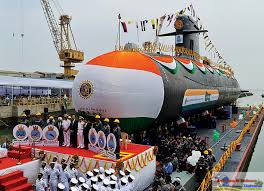 Cmde AJ Singh. That’s a big challenge globally. Abroad, navies are ordering submarines but struggling to crew them because the idea of being cut off from the world for months—no phone, no internet, no social media—is almost unthinkable for many young people. India has an advantage: we still have a large pool of motivated youth and strong institutional training like the NDA, which instils commitment, resilience and a sense of duty. Our submarine arm still gets volunteers and that’s very encouraging.
But we’re very clear with them: it’s a tough life and there is zero room for slackness. If you panic as a leader, the crew will lose confidence immediately. A submarine CO’s responsibility is absolute—in a crisis, everyone looks to him to bring the boat home. That’s not a role for someone who cracks under pressure.
ADU. Is there a structured process to ensure only the right people make it to command?
Cmde AJ Singh. Absolutely. There’s a medical and pressure-chamber test up front, but the real filtering is through rigorous professional courses and sea exams. At every career stage—watchkeeping, Principal Control Officer, Executive Officer and finally Command—you must qualify specific submarine courses, which include very tough sea checks. The Commanding Officer’s Qualifying Course (COQC) is famously brutal. Everybody who comes to it has 10–12 years of submarining and a successful stint as second-in-command. Yet the attrition can be 30–50%, with no second chance. If you don’t make it, your submarine career effectively ends. It’s similar to the British “Perisher” course. That’s how seriously we take command.
ADU. After 58 years of the submarine arm, with all the challenges and opportunities you’ve outlined, what is your overarching message?
Cmde AJ Singh. I’d say the Indian submarine arm is at a transformational cusp. Our SSBN programme is maturing, SSNs are finally on the table, SSK modernisation and 75(I) are moving, and our ASW and industrial ecosystems are improving. But this is precisely the moment when we cannot get complacent.
Technology is racing ahead—AIP, lithium-ion batteries, advanced stealth, tube-launched land-attack missiles, new materials—and we must keep pace. That means sometimes we must be pragmatic: take critical foreign technologies now, with a clear roadmap to indigenise and sustain them ourselves. Aatmanirbharta is not about refusing help; it’s about not being dependent in the long run.
If we maintain focus, build a stable production line, nurture MSMEs and private players alongside public yards, and continue to attract high-quality volunteers into the arm, India will not just keep its edge in the Indian Ocean—it will set the standard in the entire region for undersea capability.
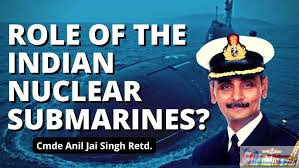
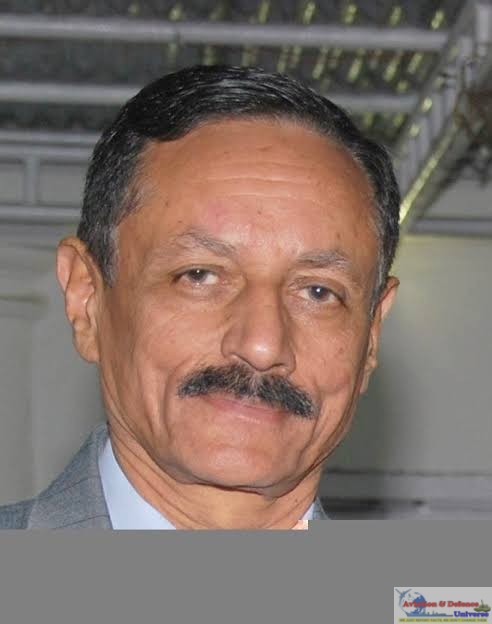
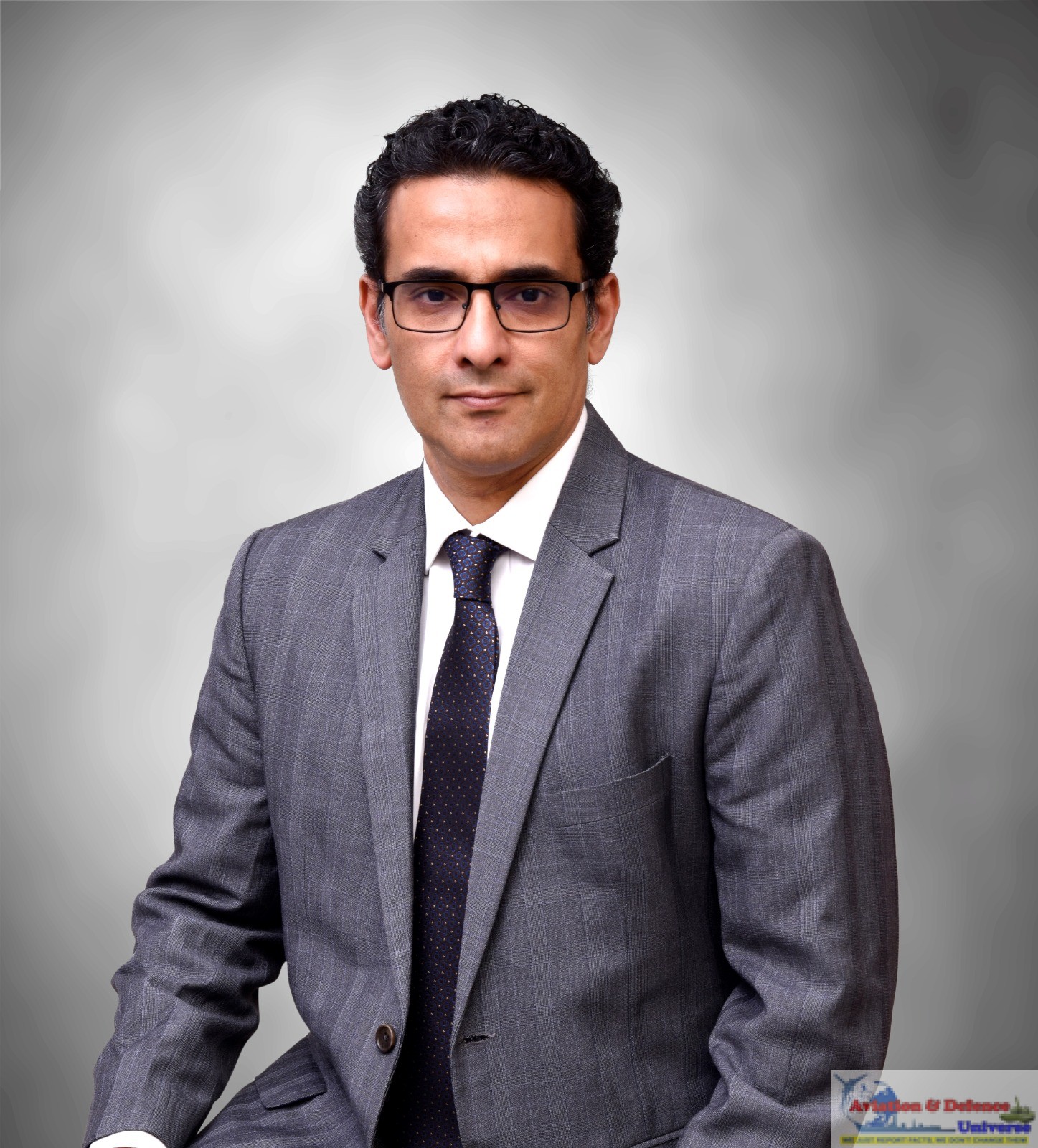
Cmde Anil Jai Singh (IN Retd.) is a distinguished Indian Navy submariner, veteran, and maritime expert known for commanding multiple submarines, specializing in Anti-Submarine Warfare (ASW) from the Soviet Union, and playing key roles in Naval Headquarters shaping India’s submarine plans, now contributing to defense discourse as a commentator and leader in maritime organizations like the Indian Maritime Foundation. He’s a prominent voice on Indian Navy’s submarine fleet, nuclear deterrence, and strategic planning.
 As Cmde AJ Singh makes clear, India’s submarine story is no longer just about platforms quietly patrolling the depths—it is about credible nuclear deterrence, blue-water reach, industrial transformation and human excellence. With SSBNs providing a survivable second-strike capability, the urgent push for SSNs to counter Chinese presence, and a new wave of conventional submarines under Project 75(I) and future indigenous designs, India is slowly but surely building a layered undersea posture.
Yet the veteran submariner underlines that numbers alone will not decide the future. The real test lies in consistent building, smarter procurement, robust command-and-control, realistic training and an empowered ecosystem of shipyards, private industry and MSMEs. Above all, it rests on the men who choose to serve below the surface—voluntarily stepping into a world of pressure, responsibility and silence. If India can align technology, industry and talent in the way Cmde Singh envisions, the submarine arm will continue to do what it has quietly done for 58 years: keep war at bay—and if war comes, tip the balance in India’s favour from beneath the waves.
As told to Sangeeta Saxena



































































-A4-Size-(2)_page-0001.jpg)