


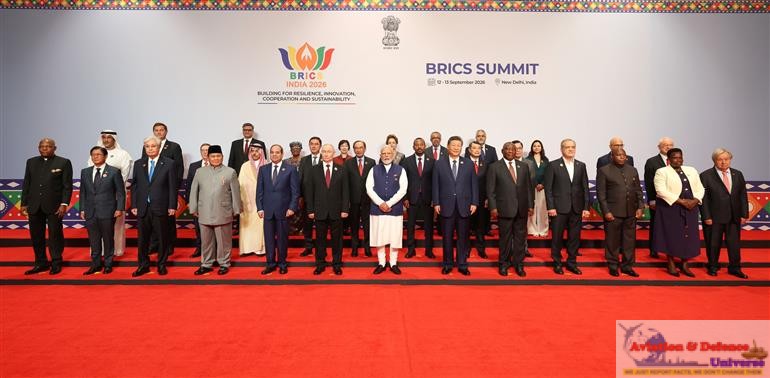
 18th BRICS Summit















- Defence Ministers of India & Australia talk to enhance ties
- Co-chair second India-Australia Defence Ministers’ Dialogue
- Emphasise on defence industrial collaboration & cooperation in futuristic technology research
- Affirm stronger regional cooperation for a free, peaceful & prosperous Indo-Pacific
By Sangeeta Saxena
New Delhi. 01 June 2026. India and Australia have emerged as two of the most important strategic partners in the Indo-Pacific region, driven by converging security interests, shared democratic values, and a common commitment to maintaining a free, open, and rules-based international order. What was once a relationship largely centred on trade, education, and people-to-people ties has evolved into a robust strategic partnership encompassing defence, maritime security, intelligence cooperation, critical technologies, and regional stability.
Over the past decade, geopolitical shifts in the Indo-Pacific, growing concerns over maritime security, and the increasing importance of resilient supply chains have accelerated defence engagement between New Delhi and Canberra. Today, India and Australia are not only bilateral partners but also key pillars of regional security frameworks such as the Quad.
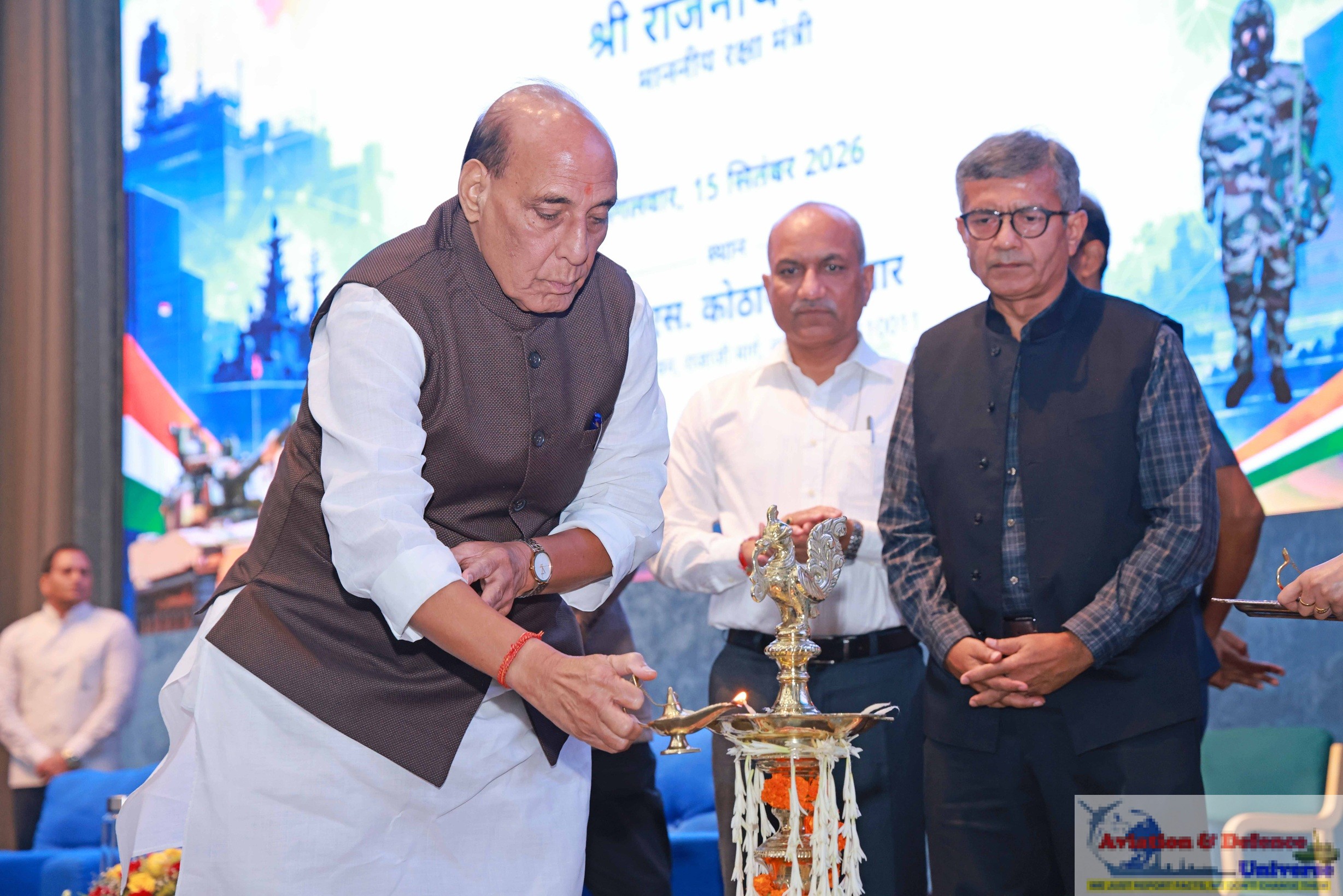
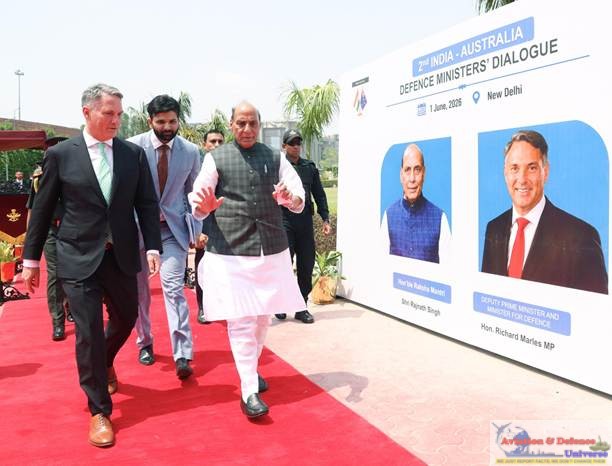
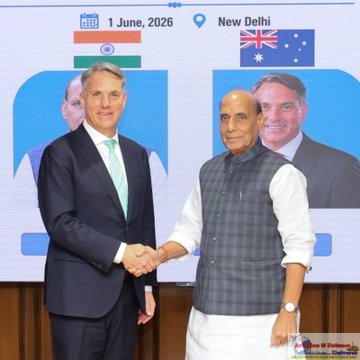
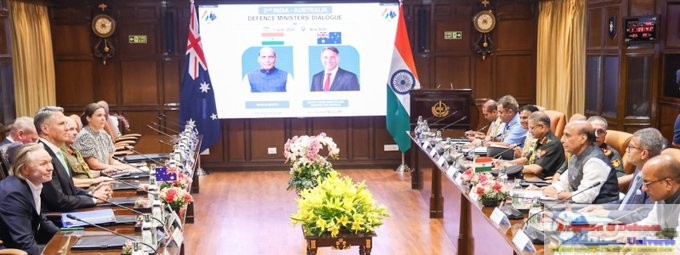
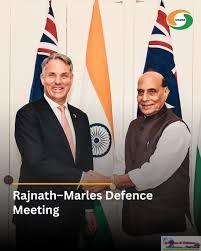
Today this relationship has taken another significant step in strengthening their strategic and defence partnership, with Defence Minister Rajnath Singh and Australian Deputy Prime Minister and Minister for Defence Richard Marles co-chairing the second India-Australia Defence Ministers’ Dialogue in New Delhi. The meeting highlighted the growing convergence between the two Indo-Pacific democracies and underscored their shared commitment to regional security, maritime cooperation, defence industrial collaboration, and Quad-led initiatives. The discussions reflected the remarkable transformation of bilateral defence ties from a modest engagement into one of the most dynamic strategic partnerships in the Indo-Pacific.
From strategic partnership to comprehensive security cooperation, the relationship received a major boost with the elevation of ties in 2020. Since then, defence cooperation has expanded rapidly through regular ministerial dialogues, military exercises, intelligence exchanges, and operational agreements. The signing of the Mutual Logistics Support Arrangement (MLSA) in 2020 marked a significant milestone, allowing the armed forces of both countries reciprocal access to military bases, logistics support, and replenishment facilities. This agreement has substantially improved interoperability and operational flexibility across the Indo-Pacific.
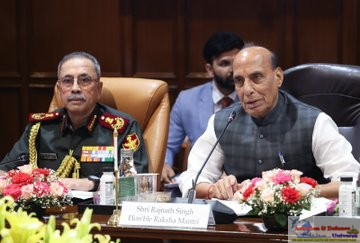 The two leaders welcomed the significant progress achieved since the inaugural dialogue held in October 2025 and reviewed the expanding scope of consultation and cooperation between the two countries. The Ministers advanced the vision laid out by their Prime Ministers for long-term collaboration aimed at enhancing collective strength, contributing to the security of both countries, and supporting regional peace and stability. They welcomed progress towards renewing and strengthening the Joint Declaration on Defence and Security Cooperation, signaling a new phase in bilateral strategic engagement. And this was the first official engagement of the Third Indian CDS Gen NS Raja Subramani.
Maritime security remains the centre of India–Australia defence cooperation. Both countries are major Indian Ocean powers whose economic prosperity depends heavily on secure sea lanes of communication. Concerns over freedom of navigation, maritime domain awareness, piracy, illegal fishing, and strategic competition have reinforced the need for closer naval collaboration. The Royal Australian Navy and the Indian Navy now conduct regular interactions, information-sharing initiatives, and coordinated maritime activities. Australia’s participation in Exercise Malabar alongside India, the United States, and Japan marked a significant turning point in regional maritime cooperation. These engagements have enhanced interoperability and contributed to collective efforts aimed at preserving stability across the Indo-Pacific.
It emerged as a major focus of the dialogue today. Both sides discussed advancements in bilateral maritime security cooperation and efforts to finalise the Joint Maritime Security Collaboration Roadmap. They agreed to advance collaborative maritime domain awareness activities through maritime patrol aircraft operations and explore opportunities to enhance undersea domain awareness capabilities. The Ministers also encouraged greater cooperation between the Indian Coast Guard and Australia’s Maritime Border Command.
Today, defence engagement spans the Army, Navy, and Air Force, reflecting a maturing relationship that increasingly focuses on practical cooperation rather than merely diplomatic dialogue. One of the clearest indicators of the strengthening relationship is the significant increase in high-level visits and defence delegations between the two countries. Over the past few years, defence ministers, service chiefs, senior military commanders, national security officials, and parliamentary delegations have regularly exchanged visits. These interactions have facilitated deeper strategic understanding and enabled the identification of new areas of cooperation.
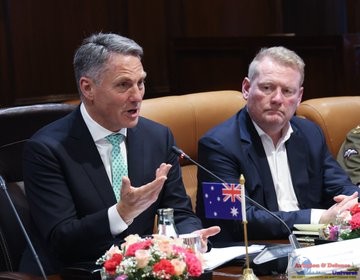 Australian defence leaders have increasingly participated in major Indian defence exhibitions and dialogues, while Indian military delegations have expanded their engagement with Australian counterparts in areas such as joint planning, military education, logistics, cyber security, and maritime operations. The growing frequency of these exchanges reflects the institutionalisation of defence cooperation and demonstrates the political commitment of both governments to sustaining long-term strategic engagement.
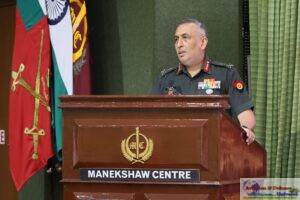
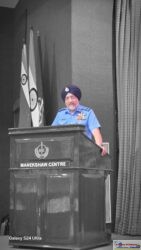
Manekshaw Centre in New Delhi on June 1, 2026 saw the two delegations reaffirming their shared commitment to a free, open, peaceful, stable, and prosperous Indo-Pacific. The Ministers stressed the importance of freedom of navigation and overflight. They reiterated their support for unimpeded trade and lawful uses of the sea in accordance with international law, particularly the United Nations Convention on the Law of the Sea (UNCLOS). As co-leads of the Indian Ocean Rim Association (IORA) Working Group on Maritime Safety and Security, India and Australia also announced plans to jointly host a Search and Rescue and tabletop exercise at the Maritime Rescue Coordination Centre in Chennai in June 2026. The initiative aims to strengthen maritime safety and security cooperation across the Indian Ocean Region.
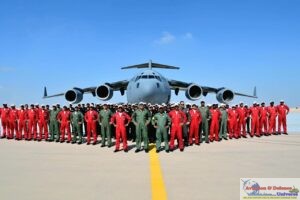
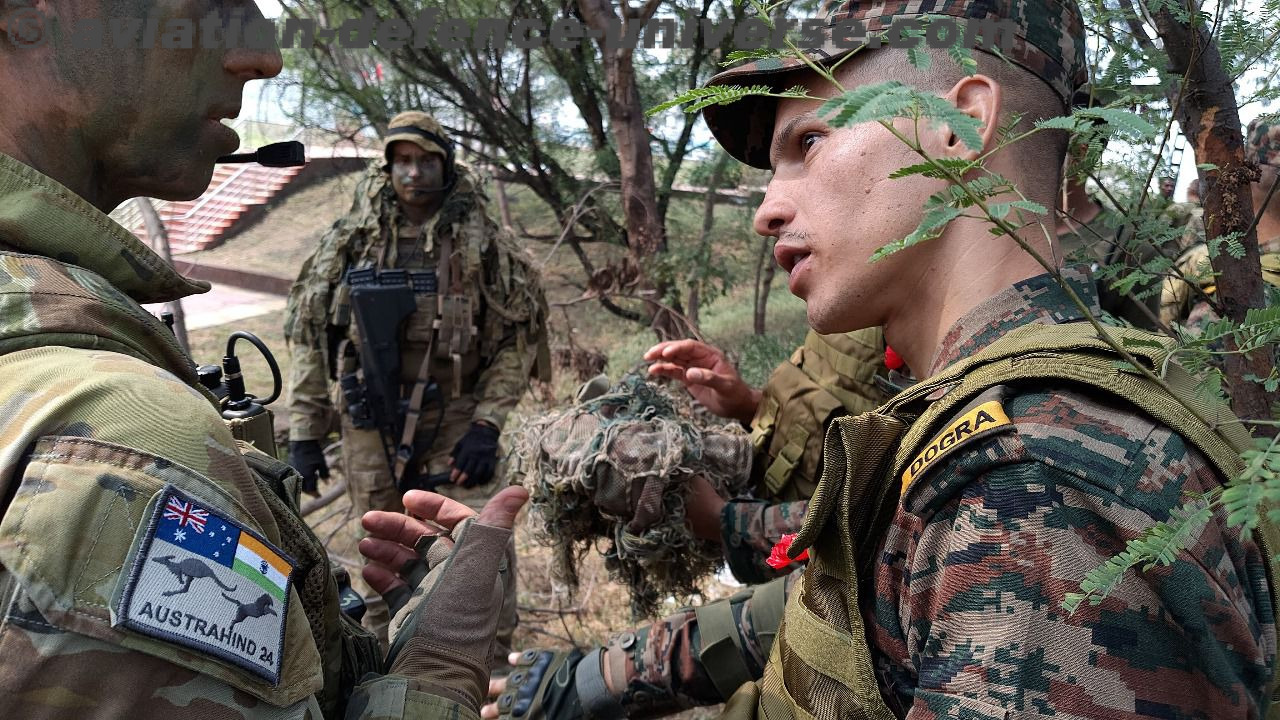
The two countries further agreed to explore arrangements to enhance procedural interoperability during exercises and operations, building on the 2020 Mutual Logistics Support Arrangement. They also committed to continuing aircraft deployments from each other’s territories to improve operational familiarity and readiness. The bilateral naval exercise AUSINDEX has evolved into a major platform for testing interoperability and strengthening operational coordination between the two navies. Air Force cooperation has expanded through participation in multinational exercises such as Pitch Black, hosted by Australia, while Army engagements have grown through Exercise AUSTRAHIND. These exercises increasingly involve complex scenarios including anti-submarine warfare, maritime surveillance, air combat operations, humanitarian assistance, disaster relief, and special forces cooperation. Such interactions provide valuable operational experience and help both countries prepare for emerging security challenges across the region.
In a significant development, the Ministers announced that India and Australia would begin developing a Memorandum of Understanding on the Provision of Defence Articles and Defence Services. The proposed agreement is expected to serve as the next major step in expanding bilateral defence industrial collaboration. Both leaders highlighted the strategic importance of defence industrial engagement and welcomed Australia’s first Defence Trade Mission to India and the Australia-India Defence Industry Roundtable held in October 2025. These initiatives were described as strong indicators of the growing depth of the bilateral defence industry relationship. The two sides also agreed to pursue additional exchanges through the Joint Working Group on Defence Industry, Research, and Materiel. Looking to the future, the Ministers expressed interest in expanding defence science and technology cooperation, particularly in emerging technology areas such as sensor technologies. Richard Marles also invited India to participate in the 2026 Australian Defence Science, Technology and Research Summit.
The next frontier of India–Australia defence relations lies in defence technology and industrial collaboration. India’s emphasis on Atmanirbhar Bharat and Australia’s focus on advanced defence innovation have created opportunities for cooperation in emerging technologies, autonomous systems, cyber security, artificial intelligence, quantum technologies, and undersea capabilities. Australian defence companies are increasingly exploring partnerships with Indian industry under the Make in India framework, while Indian firms are looking to leverage Australia’s expertise in advanced manufacturing, research, and critical minerals. Cooperation in critical minerals—including lithium, cobalt, and rare earth elements—also has important implications for defence production, energy security, and advanced technology supply chains.The strategic relationship is increasingly expanding beyond traditional defence cooperation.
 Space security, satellite communications, cyber resilience, and emerging technologies have become important areas of engagement. Both countries recognise that future security challenges will extend into cyberspace, outer space, and the electromagnetic spectrum. Collaborative efforts in these domains are expected to grow further as both nations seek to build resilient technological ecosystems capable of supporting national security objectives and economic development.
At the heart of the India–Australia partnership lies a shared vision for the Indo-Pacific. Both countries support a region where sovereignty is respected, international law is upheld, and disputes are resolved peacefully. They advocate for freedom of navigation, open commerce, and transparent governance while opposing coercive actions that undermine regional stability. This strategic convergence has transformed India and Australia into key stakeholders in shaping the future security architecture of the Indo-Pacific.
The dialogue highlighted the growing engagement between the armed forces of both nations. The Ministers expressed satisfaction with the expanding scope of bilateral and multilateral military exercises and welcomed India’s enhanced participation in Exercise Talisman Sabre 2027. They also welcomed Australia’s participation in India’s Exercise Milan in February 2026 and India’s participation in Australia’s Exercise Kakadu in March 2026. Both sides looked forward to participating in each other’s multinational air exercises in 2026, including operationalising the bilateral Implementing Arrangement on Air-to-Air Refuelling during Exercise Pitch Black.
The Ministers noted with satisfaction that military cooperation is expanding into new operational domains. They welcomed the evolution of Army Exercise Austrahind to focus on amphibious combat and littoral manoeuvre operations. Australia also welcomed India’s inaugural participation in Operation Render Safe 2026, while India welcomed Australia’s invitation to participate in the submarine rescue exercise Black Carillon.
In addition, both sides welcomed increased information-sharing between operational headquarters and looked forward to the inaugural Joint Staff Talks scheduled later this year. They acknowledged the importance of secure bilateral communications at the strategic, operational, and tactical levels and welcomed progress through dedicated subject-matter exchanges.
 On training cooperation, the Ministers encouraged officials to finalise arrangements for the deployment of an Indian visiting instructor to the Australian Defence College in 2028–2029, a move expected to strengthen professional military education, knowledge-sharing, and strategic alignment between the two countries.
India–Australia defence relations have undergone a remarkable transformation from limited engagement to a comprehensive strategic partnership. Increased military exercises, regular high-level visits, expanding defence-industrial cooperation, and active collaboration through the Quad have created a strong foundation for long-term security cooperation. As geopolitical competition intensifies and new security challenges emerge, the partnership between India and Australia is poised to play an increasingly important role in maintaining stability, promoting resilience, and safeguarding the rules-based order across the Indo-Pacific region. Together, the two democracies are not only strengthening bilateral ties but also contributing to a broader vision of regional security and global cooperation.
The Ministers welcomed the growing strategic convergence among Australia, India, Japan, and the United States under the Quad framework. They reaffirmed their commitment to enhancing collaboration on maritime domain awareness and increasing interoperability among Quad partners. Both leaders expressed strong support for the Quad Indo-Pacific Maritime Surveillance Collaboration initiative, which will initially be implemented in the Indian Ocean Region through subject matter expert exchanges and tabletop exercises.
 The two sides also welcomed India’s operationalisation of the Indian Ocean Region programme under the Quad Indo-Pacific Partnership for Maritime Domain Awareness through the Information Fusion Centre–Indian Ocean Region in Gurugram. Looking ahead, they agreed to work towards developing a Common Operational Picture across the Indo-Pacific by leveraging existing maritime domain awareness efforts under the Quad framework.
The second India-Australia Defence Ministers’ Dialogue demonstrated the rapid evolution of bilateral defence ties into a comprehensive strategic partnership spanning maritime security, defence industry collaboration, military interoperability, emerging technologies, and Quad-led regional initiatives. With growing defence exchanges, increasing participation in joint exercises, deeper industrial cooperation, and a shared commitment to a free and open Indo-Pacific, India and Australia are positioning themselves as key security partners in shaping the future regional order. The dialogue reinforced the determination of both countries to build stronger operational linkages and contribute collectively to peace, stability, and prosperity across the Indo-Pacific region.











































































-A4-Size-(2)_page-0001.jpg)