 18th BRICS Summit














- How Poland is Reshaping Europe’s Security Landscape—and Why India Should Care
By Theertha Panachoor
Hyderabad. 08 June 2026. For decades, India’s engagement with Europe has largely revolved around traditional centres of influence such as France, Germany and the United Kingdom. However, the geopolitical shifts triggered by the Russia-Ukraine conflict have transformed Europe’s strategic landscape, bringing new actors to the forefront. Among them, Poland has emerged as one of the continent’s most influential security and defence players, combining unprecedented military modernisation with a rapidly expanding defence-industrial base and growing influence within NATO.
As Warsaw strengthens its role in shaping European security and deepens its strategic partnerships, India has compelling reasons to pay closer attention. Poland’s experience in defence industrialisation, military preparedness and strategic foresight offers valuable lessons for India while opening new avenues for bilateral cooperation in defence, technology and manufacturing.

Also as Poland expands its military capabilities and influence within NATO, India may need to rethink how it views Europe’s strategic landscape. India has spent decades looking at Europe and seeing Paris, Berlin and London. That habit of mind was never irrational. Post-Cold War Europe organised itself around its western core and Indian diplomacy followed the logic of where power actually sat. France for defence cooperation, Germany for economic engagement and the United Kingdom for political and historical ties. Poland maintained strong bilateral relations with India, but it was rarely viewed as a country likely to shape Europe’s strategic direction.
From Warning to Influence
Russia’s invasion of Ukraine did not hand Poland its current strategic standing; rather, it validated arguments Warsaw had been making for decades to audiences that often preferred not to engage with them. As European governments reassessed long-held assumptions about security and NATO’s attention shifted eastward, Poland’s warnings about Russia began to look less like regional anxiety and more like strategic foresight. Many governments that once dismissed those concerns now pay far closer attention to Warsaw’s assessment of Moscow’s intentions.
That change in perception has carried practical consequences. As security returned to the centre of European politics, countries that had spent years treating defence as a primary concern found themselves with greater influence than before. Poland entered this period with a clear view of the threat environment, a strong commitment to NATO and a political consensus around military preparedness that many of its Western European partners were only beginning to rebuild. The result has been a steadily expanding role in discussions about European security, deterrence and defence industrial capacity. Poland is no longer simply reacting to changes in Europe’s security environment; it is increasingly helping shape the response.
The numbers help explain why. Poland spent an estimated 4.5% of GDP on defence in 2025, the highest share among NATO’s thirty-plus members. Its defence budget reached approximately $44 billion, placing it in the same tier as France and well ahead of most European peers. What makes those figures significant is how the money is being spent: more than half of Poland’s defence expenditure went to equipment procurement, a share unmatched anywhere in NATO. At a time when many European governments are still discussing military renewal, Poland is moving through it at speed. New tanks, artillery systems, combat aircraft and air-defence platforms are entering service as part of a rearmament effort that has few parallels in contemporary Europe. Poland is undertaking one of the most ambitious military modernisation programmes in the democratic world, with plans to move defence spending towards 4.8% of GDP in 2026 indicating that the effort is still expanding.
Buying Capability, Building Industry
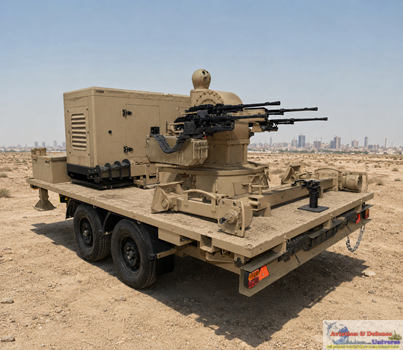
The clearest example is Poland’s defence-industrial partnership with South Korea. In 2022, Poland signed framework agreements covering up to 980 K2 tanks, 648 K9 self-propelled howitzers and 48 FA-50 combat aircraft. European manufacturers were carrying order backlogs that stretched delivery timelines well beyond what Poland’s security requirements could absorb. The continent’s defence industry had not been structured for this kind of demand, and Poland could not wait for it to restructure. South Korea could deliver. A follow-on K2 contract worth approximately $6.5 billion, signed in 2025, added assembly lines and technology transfer arrangements in Gliwice, ensuring that rearmament strengthens factories and supply chains as well as military capability. The American purchases run alongside: F-35s, Patriot air-defence batteries, Apache helicopters, Abrams tanks, HIMARS rocket artillery. Taken together, the acquisitions amount to one of the largest military build-ups underway anywhere in Europe. The equipment arriving in Polish service today would have been difficult to imagine a decade ago. If current delivery schedules are maintained, Poland will field more tanks than Germany, France, the United Kingdom and Italy combined.
 A country that can only purchase weapons remains dependent on whoever is prepared to sell them, on whatever terms that seller sets and withdraws. A country that can manufacture them has resolved a different and more durable problem. Every significant Polish contract signed in recent years carries the same underlying demand: produce some of this here, transfer the engineering knowledge, build the capacity to maintain what you bought without calling the original supplier. The 61 K2PL tanks to be assembled in Poland matter not only because they add to Poland’s military strength, but because they help build the industrial capacity behind it.
Lessons India Will Recognise
India will recognise the logic. Make in India and Atmanirbhar Bharat rest on the same idea: that defence spending should leave behind more than military capability alone. It should also create factories, skills and industrial capacity that remain long after a contract has been signed. What Poland offers is not a model to copy, but an experience worth studying. Over the past few years, Warsaw has moved rapidly from purchasing military equipment to building more of the industrial capacity behind it. Programmes such as Warmate show how procurement can be used to support production, skills and long-term industrial capability alongside military requirements. For India, the value of that experience extends well beyond any individual platform.
From Frontline State to Strategic Actor
Poland’s military build-up has been accompanied by a noticeable increase in its influence within Europe. Since 2022, Rzeszów-Jasionka has emerged as one of the principal gateways for Western military assistance entering Ukraine, placing Poland at the centre of the continent’s largest security crisis since the Cold War. The country has played a key role in supporting the flow of military equipment and humanitarian aid while also receiving millions of Ukrainian refugees and accelerating its own rearmament programme. These efforts have given Warsaw a more prominent voice in discussions on European security and defence policy. The war did not fundamentally alter Poland’s view of Russia. For decades, successive Polish governments had argued that Moscow represented a long-term security challenge for Europe. Russia’s invasion of Ukraine reinforced those concerns and created the political conditions to accelerate programmes that were already underway. As Poland’s military capabilities have expanded, so too has its influence within NATO and wider European security debates.
Why Poland Matters to India
Against that, India’s relative inattention to the bilateral relationship looks less like considered prioritisation and more like a structural gap in how the foreign policy establishment reads the European map. Poland is already India’s largest trading and investment partner across Central and Eastern Europe, a fact that tends to surprise those who have not examined the numbers recently. Bilateral trade grew from $1.95 billion in 2013 to $6.36 billion in 2025, according to figures from the Embassy of India in Warsaw. Indian investment exceeds $3 billion, concentrated in information technology, pharmaceuticals and manufacturing, with Indian technology firms employing roughly 10,000 professionals in the country. This is a relationship of genuine economic substance, built steadily over a decade largely without the diplomatic architecture that usually accompanies commercial ties of this depth.
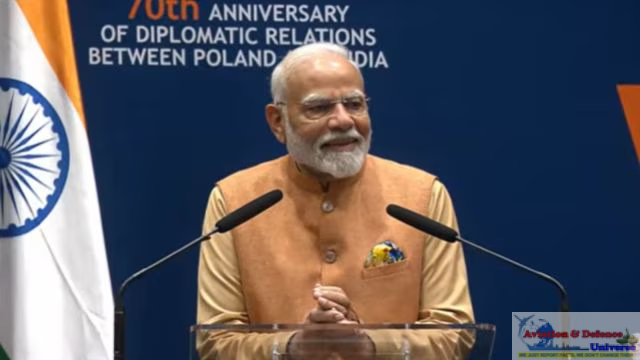
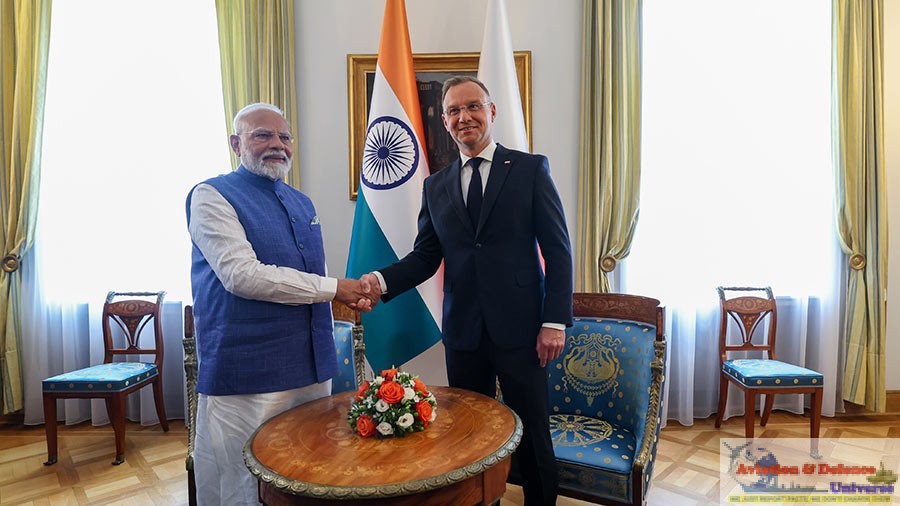 Narendra Modi’s visit to Warsaw in August 2024, the first by an Indian prime minister in 45 years, elevated bilateral ties to a Strategic Partnership and produced a five-year Action Plan covering security cooperation, defence, trade, energy, science and technology. For India, which is seeking to diversify defence partnerships and strengthen domestic manufacturing, Poland’s growing role within NATO’s industrial ecosystem adds practical relevance to the relationship. Its expanding defence links with American and South Korean manufacturers offer experience that extends beyond procurement into production, maintenance and industrial collaboration. The commercial relationship had been strengthening for years. The Strategic Partnership gave it political weight and reflected a broader recognition that Poland’s role in Europe had changed.
Beyond Procurement
Defence cooperation is where the relationship could acquire greater strategic significance. Poland’s relevance to India lies less in the equipment it can provide than in the experience it has accumulated over the past few years. Both countries have sought to turn defence spending into something larger than military capability alone. The objective has been to build factories, develop technical expertise and create industries capable of supporting armed forces over the long term. Poland has pursued that goal at remarkable speed. Programmes such as Warmate and the K2PL assembly lines in Gliwice reflect a broader effort to ensure that procurement strengthens domestic industry as well as military readiness. The tanks emerging from those facilities are only part of the story. The larger ambition is to ensure that more of the skills, production and maintenance behind them remain in Poland. For India, which continues to grapple with many of the same challenges, that experience may prove as valuable as any platform itself.
Europe’s New Centre of Gravity
Europe’s strategic weight has moved east, driven by geography, two years of war and a rearmament dynamic that will not reverse when the conflict in Ukraine eventually ends. The European map that shaped Indian diplomacy was drawn for a continent that has since been redrawn. India’s instinct to engage Europe through its established centres of gravity is not wrong. It is simply incomplete. Poland has earned a more serious place in that calculation by spending thirty years being right about the thing that turned out to matter most. The question is no longer whether Poland matters; it is whether India’s European strategy has fully caught up with that reality.
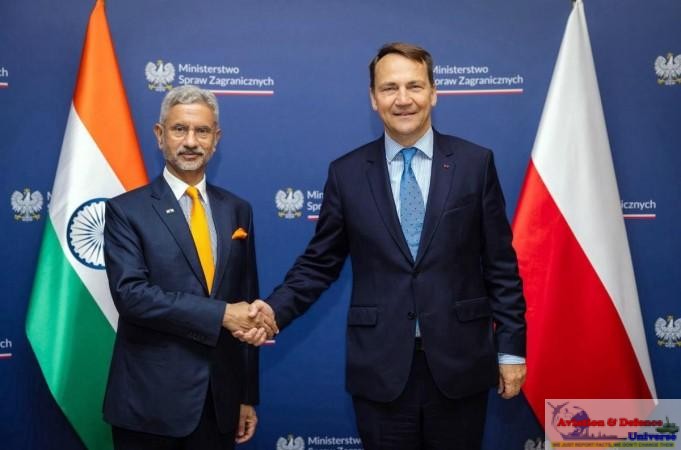 Poland’s transformation is not merely a story of increased defence spending or military acquisitions; it is a broader demonstration of how strategic vision, industrial capacity and geopolitical awareness can elevate a nation’s influence. As Europe’s security centre of gravity shifts eastward, Poland is increasingly shaping the continent’s defence agenda and emerging as a key voice within NATO. For India, which seeks stronger defence partnerships, greater self-reliance in manufacturing and a more nuanced engagement with Europe, Poland represents both a valuable partner and a case study in strategic adaptation. The challenge for New Delhi is not whether Poland deserves greater attention, but whether India’s European outlook evolves quickly enough to recognise the opportunities presented by Warsaw’s rise.
File Pics: Courtesy : X






































































-A4-Size-(2)_page-0001.jpg)