


 18th BRICS Summit















- Beyond the Drone: India Targets Indigenous Electronics, AI, Swarms & Advanced Manufacturing
- Drones, Robotics & Deep Tech Take Centre Stage in India’s Viksit Bharat Vision
- Ideas to Innovation, Enterprise to Capability
By Sangeeta Saxena
New Delhi. 01 August 2026. From the battlefields reshaped by unmanned systems to factories transformed by robotics and an economy increasingly powered by artificial intelligence, drones are no longer technologies of tomorrow—they are instruments of national power today. And India does not intend to merely participate in this technological transformation; it wants to help shape it.
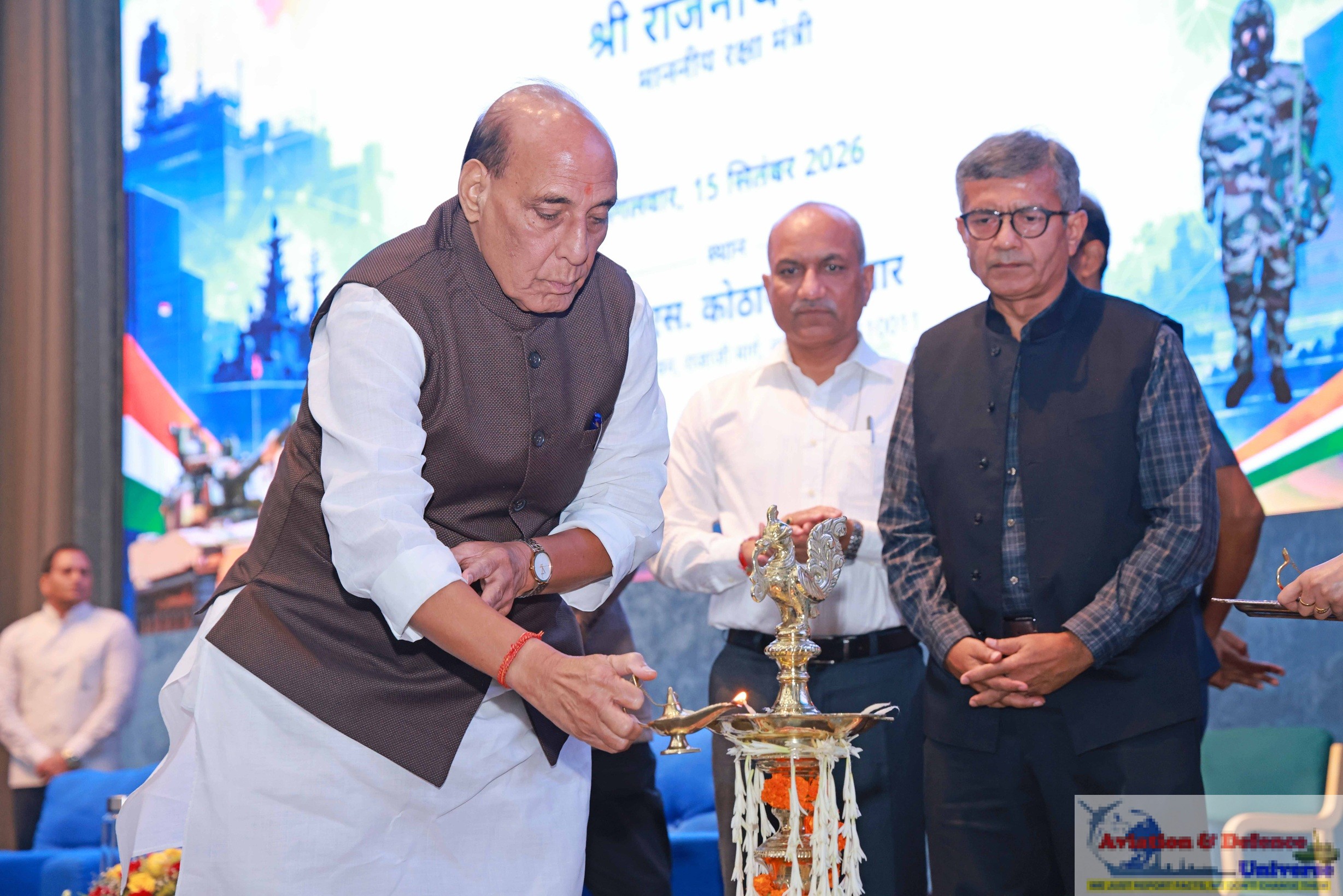
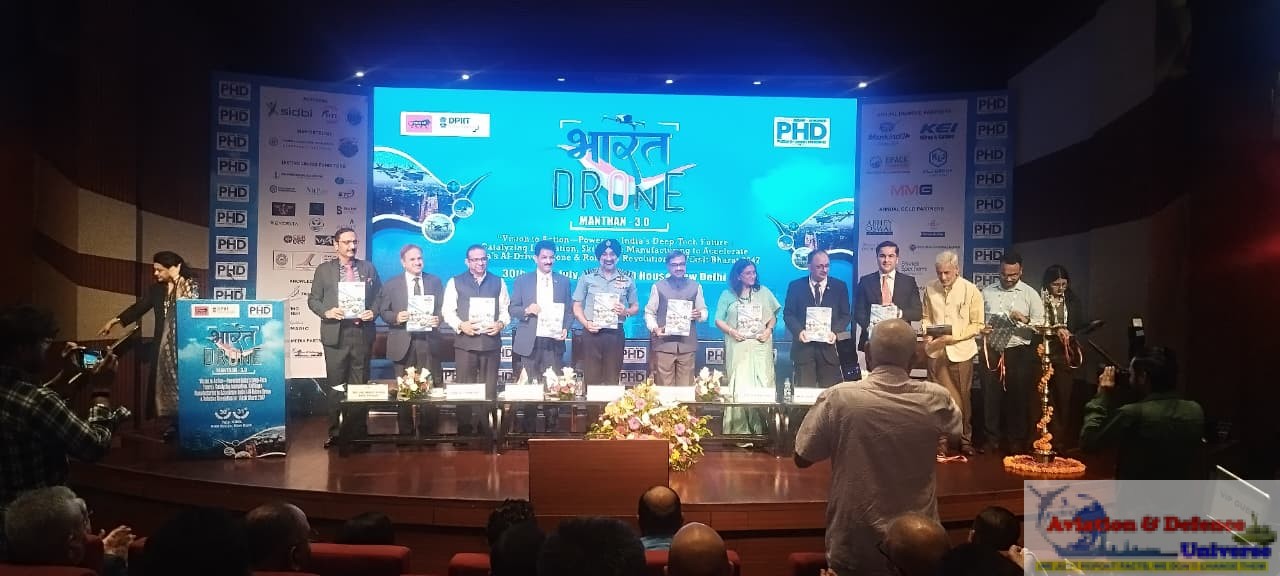
That ambition took centre stage at the inaugural session of Bharat Drone Manthan 3.0, organised by the PHD Chamber of Commerce and Industry (PHDCCI) around the theme “Bharat’s Drone & Robotics Vision – Advancing Towards Viksit Bharat.” Bringing together the Armed Forces, government, DRDO, industry, academia, startups and technology innovators, the session placed indigenisation, deep-tech innovation, artificial intelligence, advanced manufacturing, skilling and industry-academia collaboration at the heart of India’s ambition to emerge as a major global drone and robotics power.
Having evolved from an industry gathering in its inaugural edition in March 2024 into PHDCCI’s flagship platform for the drone and robotics ecosystem, Bharat Drone Manthan entered its third edition with a clear shift in emphasis—from vision to action. While Manthan 1.0 highlighted UTM, UAM and AAM systems and Manthan 2.0 strengthened the conversation around Viksit Bharat and government-industry collaboration, Manthan 3.0 placed the spotlight on AI-led innovation, skills and manufacturing as India targets a 25 per cent share of the global drone market by 2030.
Welcoming delegates, Dr Ranjit Mehta, CEO and Secretary General, PHDCCI, described drones as potentially one of the defining technologies of India’s development journey. Drawing parallels with technologies that transformed earlier eras, he observed that the steam engine powered the Industrial Revolution, the internet reshaped the digital age and artificial intelligence is transforming contemporary life.
For India, he argued, drones could become another such defining technology—not simply because of their ability to fly, but because of their potential to generate employment, drive innovation and contribute to national development. India’s rapidly expanding startup ecosystem, he said, demonstrated the country’s capacity for innovation. From around 400 registered startups when Startup India was launched in 2016, India today has more than 150,000 startups and over 150 unicorns. Against the backdrop of India’s economic growth and technological aspirations, Dr Mehta said these relatively small flying machines represented a much larger national vision—one capable of helping chart India’s journey towards Viksit Bharat 2047.The presence of Chief of the Air Staff Air Chief Marshal A.P. Singh, PVSM, AVSM, as Chief Guest also provided strong motivation to the startups and young innovators exhibiting their technologies at the event.
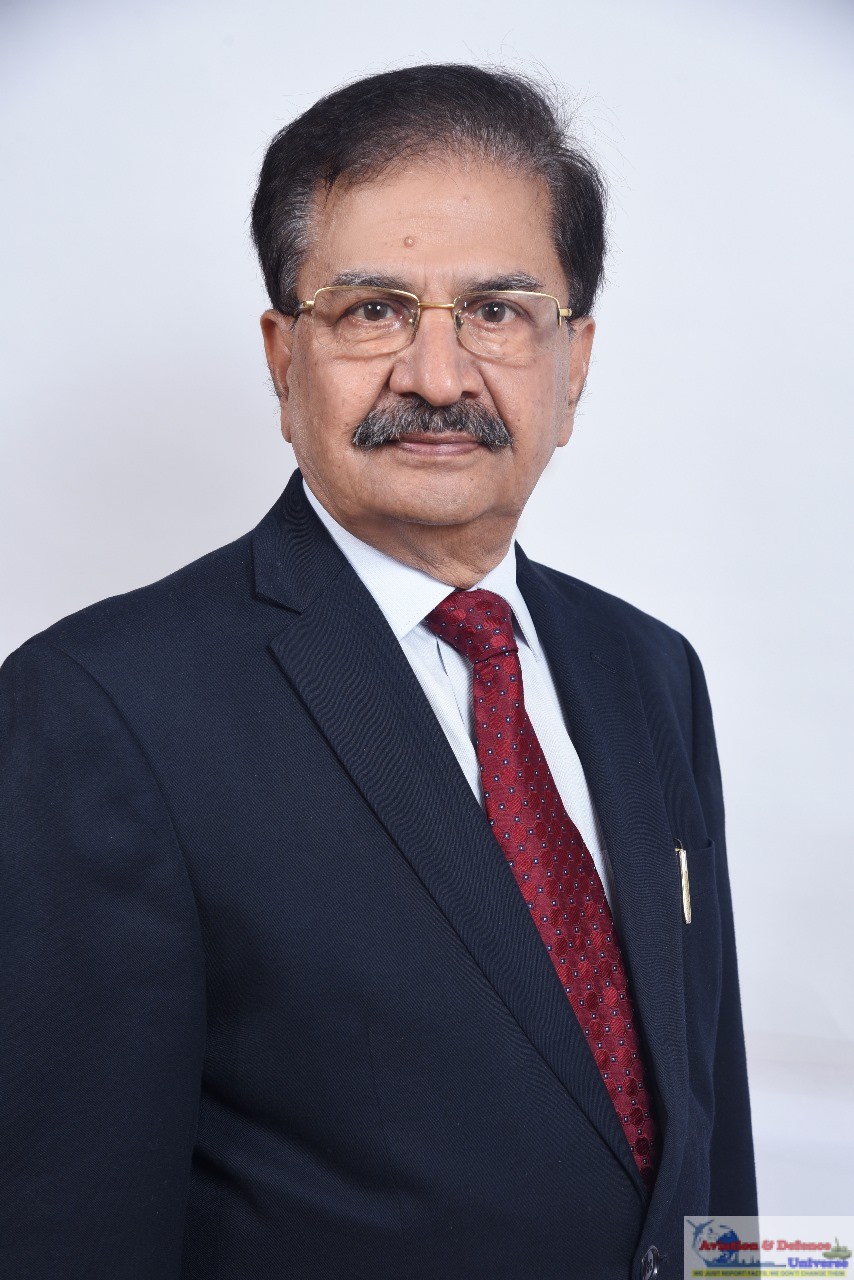
Sanjeev Edward, Chair, PHDCCI Civil Aviation Committee, described Bharat Drone Manthan 3.0 as a landmark initiative reflecting India’s growing ambition to become a global leader in drones, robotics, autonomous systems and deep-tech innovation. He stressed that the third edition had deliberately been conceptualised around the transition from “vision to action”, bringing together government, defence, industry and academia to build a globally competitive and self-reliant technology ecosystem.
Technology cycles are becoming shorter and innovation is transforming industries at unprecedented speed, he noted, making platforms such as Bharat Drone Manthan increasingly important in enabling industry to anticipate change rather than simply react to it. Edward placed drones within the broader framework of Viksit Bharat 2047. The vision, he said, was not merely about economic expansion but about positioning India as a leader in innovation, manufacturing, technology and human capital.
Drones, robotics, AI, autonomous systems and advanced mobility technologies would play a central role by strengthening national security, transforming industries, improving productivity and creating high-value employment. His message was succinct: nations mastering intelligent machines and autonomous systems today would define global competitiveness tomorrow.
He also acknowledged the contribution of the Armed Forces in embracing innovation, evaluating emerging technologies and collaborating with industry and startups, thereby helping shape India’s evolving drone ecosystem. Bharat Drone Manthan, he said, should therefore become more than a conference or exhibition—it should be a platform “where ideas evolve into innovation, where innovation into enterprise and enterprise into national capability.” “The future is not waiting for us. The future is being built by us here and now,” he emphasised.
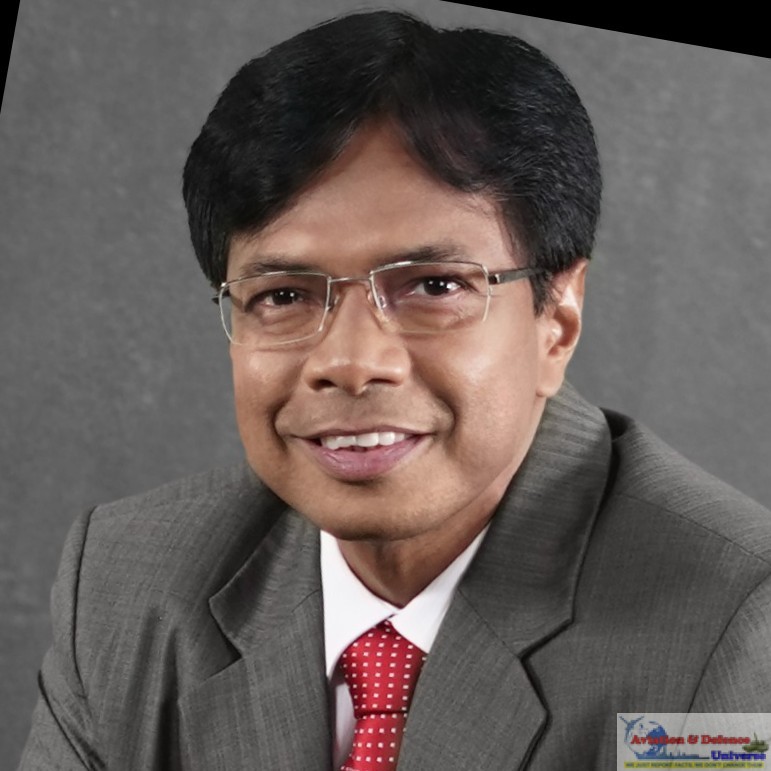
Delivering a special address, Dr Paneer Selvam Madan Gopal, CEO, MeitY Startup Hub, placed electronics manufacturing and startup-led innovation at the core of India’s drive towards self-reliance. Electronics, he explained, is increasingly embedded across economic and security sectors—from automobiles to warfare. Achieving Viksit Bharat by 2047 and accelerating Aatmanirbharta would therefore require India to develop capabilities spanning everything from basic printed circuit boards to advanced semiconductors.
For entrepreneurs, he argued, there had rarely been a better time to build technology companies in India. Startups today have access to mentoring, market access and financing, while around 17 to 18 government ministries have dedicated startup programmes. He particularly highlighted iDEX, describing it as a programme that had transformed the way startups could engage with and supply solutions to the Armed Forces.The ecosystem, he said, did not lack money or talent. What was required was greater concentration on clearly defined problem statements and the creation of fundamentally strong companies supported by sound technology and governance.
In the drone sector, the objective is particularly ambitious: import substitution and indigenous production of virtually every component. The endeavour, he said, was to ensure that almost every drone component was manufactured in India by Indian companies and startups. Government support was available for startups, SMEs and larger companies working across components, drones and counter-drone technologies.Such efforts would not merely strengthen self-reliance but also create opportunities for Indian youth in AI, manufacturing and deep technology. “Every conversation can spark an idea. And ideas can create impact,” he told the gathering.
Providing the DRDO perspective, Dr N. Ranjana, Outstanding Scientist and Director, Directorate of Futuristic Technology Management, DRDO, Ministry of Defence, highlighted the growing importance of drones and robotics in both warfare and civilian applications. Recent conflicts, she pointed out, had demonstrated how drones had become a mainstay of modern warfare, while robotics was increasingly transforming manufacturing and real-world operations.
Rapid advances in control systems, batteries, materials and associated technologies were simultaneously exciting and concerning for India’s technology community: exciting because India now possessed the opportunity to build these capabilities domestically, but concerning because the country could not afford to “miss the bus once again.” DRDO, she explained, was consequently investing substantially in deep technologies and the underlying capabilities required to power future drone systems.
One of the mechanisms created to bridge the innovation gap is the network of DRDO Industry Academia Centres of Excellence, established to bring academia, defence R&D and industry into a common ecosystem. The philosophy behind the initiative is straightforward: a technology remaining inside a laboratory, however sophisticated, has limited value unless it can ultimately be transformed into a usable product. Industry is therefore being brought into academic research programmes at an earlier stage so that promising technologies can move faster towards productisation.
Dr Ranjana outlined several technological areas being pursued through these collaborations. IIT Bombay, for instance, serves as a hub for work related to aero-engine technologies, including small turbofan and larger aero-engine capabilities. Academic centres are also developing simulation tools, aerodynamic analysis capabilities, aircraft structures and advanced manufacturing technologies that could support startups lacking access to expensive research infrastructure. Additive manufacturing, she observed, had become an important enabler for drone innovation because it allows ideas to be translated rapidly into physical designs. Advances in control laws and their flexibility were similarly expanding what unmanned systems could accomplish.
DRDO-supported research is also examining technologies beyond today’s mainstream drone market, including flapping-wing micro air vehicles, ornithopters, metamaterials and swarm technologies. Positioning, targeting, communications and swarm algorithms are among the underlying technologies being strengthened through these programmes. Industry and startups were encouraged to track technologies being offered through DRDO and academic institutions and step forward to take them towards commercial and operational products. But innovation alone, Dr Ranjana cautioned, would not be enough.
A critical challenge facing India’s technology ecosystem is crossing the difficult final stretch between creating a promising technology and converting it into a rugged, reliable and mass-producible product. This requires greater attention not merely to new ideas and prototypes but to execution, testing, manufacturability and operational usability. She also emphasised the need for concrete and detailed problem statements, arguing that clearly articulated requirements would generate better outcomes from government, academia and industry efforts. Testing infrastructure already available within academic institutions—including wind tunnels—could also be made more visible and accessible to startups and industry so that innovators know where they can validate their concepts and technologies. The underlying message was that India’s drone revolution cannot be built by one institution alone. Government support, DRDO research, academic innovation, startup agility, industrial scale and military operational experience must converge if India is to create a genuinely indigenous ecosystem.
The inaugural session of Bharat Drone Manthan 3.0 reflected an ecosystem that is beginning to move beyond celebrating drone innovation towards confronting the harder question of scale. India has startups, talent, government schemes, research institutions and growing demand; the next challenge is to connect them into an indigenous value chain capable of designing, testing, manufacturing and continuously upgrading world-class systems. From AI and autonomous systems to electronics, semiconductors, aero engines, advanced materials, additive manufacturing, swarm algorithms and counter-drone technologies, the ambition is increasingly about controlling the technologies beneath the drone rather than merely assembling the platform above them.
And perhaps that is where the real transition from vision to action lies. India’s goal is no longer simply to have a thriving drone industry. It is to create an ecosystem in which Indian ideas become Indian technologies, Indian technologies become scalable products and those products become national capabilities. If Bharat Drone Manthan 3.0 had one defining message, it was this: the race for technological leadership has already begun, and Viksit Bharat will have to innovate, manufacture and fly on indigenous wings.






































































-A4-Size-(2)_page-0001.jpg)