


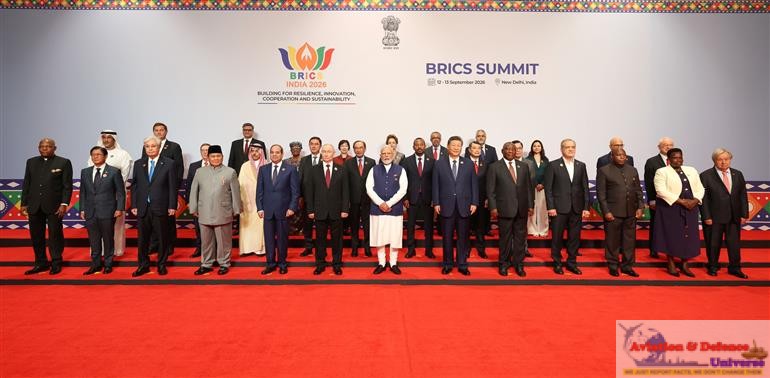
 18th BRICS Summit















- Opens Its Gates in 24 Hours
- Beyond the Exhibition Floor: Why Eurosatory Matters More Than Ever?
By Sangeeta Saxena
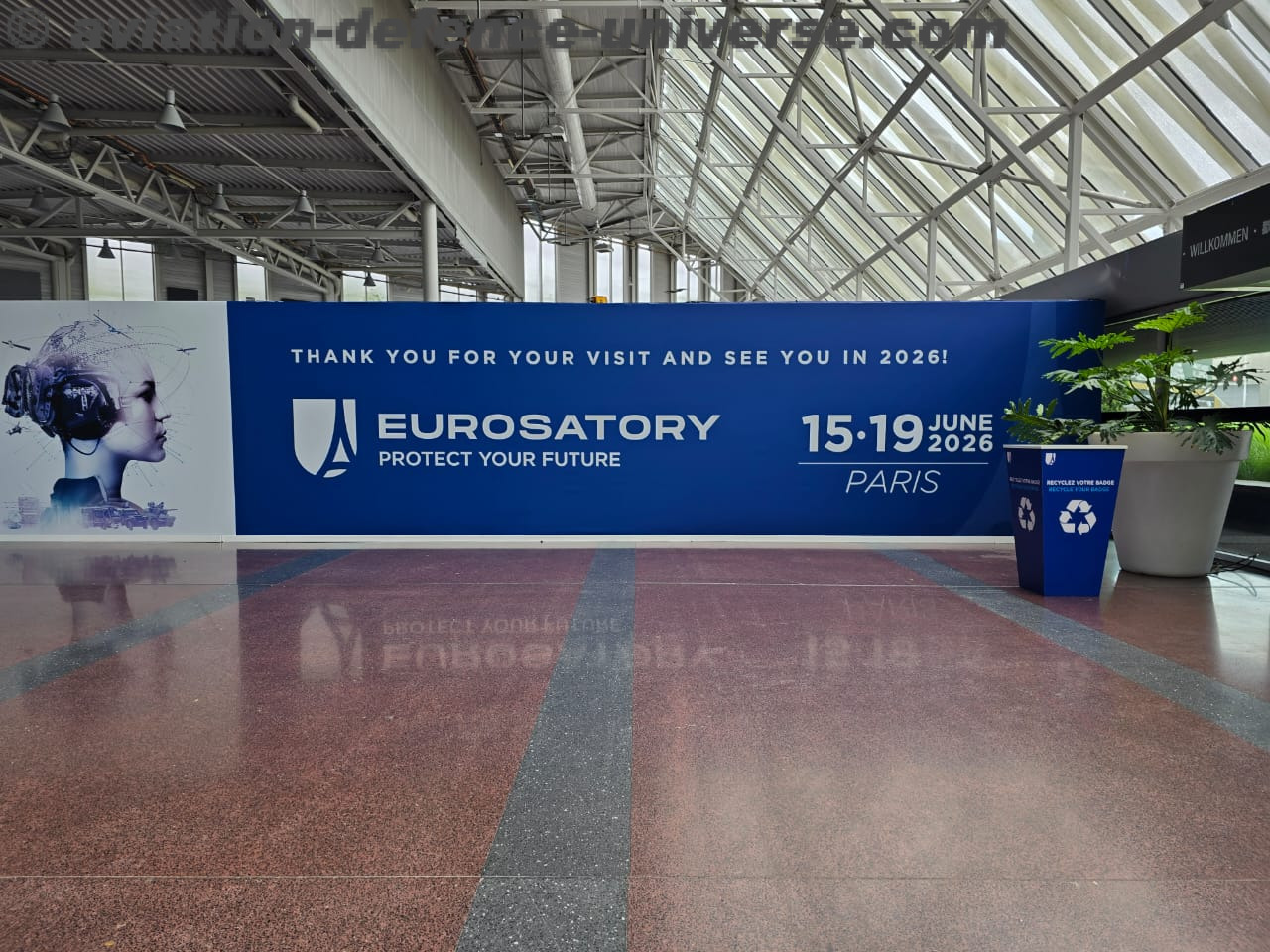
Paris. 14 June 2026. Paris is once again set to become the epicentre of the global defence and security ecosystem as Eurosatory 2026, the world’s leading defence and security exhibition, opens its doors in less than 24 hours at the Parc des Expositions de Paris-Nord Villepinte. Against the backdrop of an increasingly complex geopolitical environment marked by ongoing conflicts, evolving security threats and rapid technological disruption, this year’s edition assumes greater significance than ever before.
Since its inception in 1967, Eurosatory has evolved far beyond a traditional defence exhibition. Today, it stands as a premier global platform where governments, armed forces, industry leaders, policymakers, researchers and innovators converge to discuss the future of warfare, security and resilience. At a time when military modernisation, strategic autonomy and defence industrial partnerships are reshaping the international order, Eurosatory 2026 promises to offer a glimpse into the technologies and doctrines that will define the battlefields of tomorrow.
While Eurosatory’s historical roots lie in land and air-land systems, the exhibition has transformed itself into a comprehensive multi-domain platform encompassing the land, naval, air, space and cyber domains. The growing convergence of these domains reflects the changing character of warfare, where operations increasingly span physical and digital battlespaces.
France occupies a unique position in the global defence landscape as one of the few nations possessing full-spectrum military capabilities. A permanent member of the UN Security Council, a nuclear weapons state, and one of NATO’s leading military powers, France maintains strategic autonomy through an advanced indigenous defence industrial base. Home to global defence giants such as Dassault Aviation, Naval Group, Thales, Safran, MBDA and KNDS, France designs and manufactures everything from fighter aircraft and submarines to missiles, radars and space systems. Its armed forces maintain expeditionary capabilities across Europe, Africa and the Indo-Pacific, while Paris continues to champion the concept of European strategic autonomy. France’s role as host of Eurosatory further reinforces its status as a global convenor of defence diplomacy, technology and security dialogue. Eurosatory itself reflects France’s ambition to remain at the centre of global debates on defence, security and crisis management.
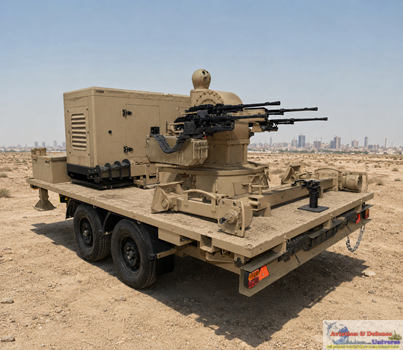
From advanced armoured vehicles and autonomous systems to satellite communications, cyber security solutions and AI-enabled command-and-control technologies, Eurosatory 2026 is expected to showcase the latest innovations driving modern military capability. The exhibition provides an unparalleled opportunity to witness how emerging technologies such as artificial intelligence, autonomous systems, quantum technologies and space-based assets are reshaping defence strategies worldwide. The emphasis on multi-domain operations has become particularly relevant as armed forces across the world seek integrated capabilities to address increasingly complex operational environments.
Eurosatory’s significance extends well beyond military hardware. Over the years, it has established itself as a key event for homeland security and crisis management professionals. Modern security challenges—from terrorism and cyberattacks to natural disasters, pandemics and critical infrastructure protection—require integrated responses involving both military and civil agencies. Reflecting this reality, exhibitors at Eurosatory present dual-use technologies serving both defence and civil security applications.
Solutions related to border management, smart cities, emergency response systems, public safety and critical infrastructure protection are expected to feature prominently during the event. This broad security focus underscores the increasingly blurred lines between defence and homeland security in the twenty-first century.
The 2026 edition comes at a time of profound strategic change. The Russia-Ukraine conflict continues to reshape European security architecture, tensions persist across the Indo-Pacific, cyber threats are growing in sophistication and climate-induced crises are increasingly impacting national resilience.
Russia remains effectively absent from Eurosatory due to European Union sanctions imposed following the invasion of Ukraine in 2022. Russian companies have not participated in recent editions, and the prevailing sanctions regime continues to make official Russian participation highly unlikely. Israel’s status, however, is more nuanced. Unlike Russia, Israeli firms have not been entirely banned from Eurosatory 2026. French authorities have restricted Israel’s official participation, disallowed a national pavilion and prohibited the display of offensive weapons systems such as missiles and loitering munitions. However, Israeli companies are reportedly still permitted to exhibit defensive systems, including missile defence and air defence technologies, subject to French government restrictions. The decision has generated controversy and criticism from Israel, which has described the measures as politically motivated.
The exhibition seeks not only to strengthen nations’ defence capabilities but also to support responsible innovation, technological advancement and international cooperation in addressing emerging global challenges. As countries accelerate military modernisation and invest in next-generation technologies, the exhibition serves as an important forum for strategic dialogue and industrial collaboration.
For India, Eurosatory 2026 presents a significant opportunity to showcase its growing defence industrial capabilities under the vision of Aatmanirbhar Bharat. Indian companies are expected to leverage the exhibition to expand international partnerships, explore export opportunities and demonstrate indigenous technologies across aerospace, defence electronics, unmanned systems and advanced manufacturing. With India’s defence exports reaching record levels and indigenous capabilities expanding rapidly, events such as Eurosatory offer a valuable platform for Indian industry to integrate into global supply chains and strengthen strategic partnerships with Europe and beyond. The exhibition also comes at a time when India is increasingly diversifying its defence partnerships and seeking deeper collaboration in areas such as co-development, co-production and technology transfer.
The ongoing Russia-Ukraine war and the wider conflict involving Israel, Iran and the United States have profoundly influenced the character of Eurosatory 2026. The war in Ukraine has accelerated European rearmament, driven unprecedented increases in defence spending and intensified demand for artillery, air defence, armoured vehicles, drones and ammunition. At the same time, the Israel-Iran confrontation and wider Middle East instability have reinforced the importance of missile defence, counter-drone technologies and integrated air defence systems. Consequently, this year’s exhibition is expected to feature a strong emphasis on lessons from real-world combat: autonomous systems, loitering munitions, AI-enabled command and control, electronic warfare, cyber defence and multi-domain operations. Eurosatory 2026 is therefore not merely a trade show but a reflection of a world in strategic transition, where contemporary conflicts are directly shaping procurement priorities, military doctrines and future technologies. The exhibition’s focus on “Defence, Security and Crisis Management” mirrors the increasingly blurred boundaries between conventional warfare, hybrid threats and homeland security challenges.
As the countdown begins for Eurosatory 2026, one thing is clear: the exhibition is no longer merely a showcase of military equipment. It is a barometer of global security trends, a marketplace of innovation and a forum where strategic partnerships are forged.
In an era defined by geopolitical competition, technological disruption and evolving security challenges, the conversations taking place over the coming days in Paris may well shape the future trajectory of defence and security worldwide. For the global defence community—and for India in particular—the stage is set in Paris. The world will be watching.
Eurosatory is far more than a showcase of military hardware and cutting-edge technologies—it is a reflection of the global security environment and a barometer of the strategic challenges shaping the world order. In an era marked by the return of inter-state conflicts, the rise of hybrid warfare, cyber threats, autonomous systems and geopolitical competition, the exhibition has evolved into a vital platform where nations, armed forces, industry leaders and policymakers come together to exchange ideas, forge partnerships and define the future of defence and security.
The lessons emerging from the battlefields of Ukraine and the Middle East are increasingly influencing procurement priorities, military doctrines and technological innovation, making Eurosatory a forum where operational experience meets industrial capability. Beyond contracts and exhibitions, the conversations held in Paris over the coming days may well determine how nations prepare for future conflicts, strengthen resilience and navigate an increasingly uncertain world. In that sense, Eurosatory matters today not merely because it displays the weapons of tomorrow, but because it shapes the strategic thinking that will govern their use.




















































-A4-Size-(2)_page-0001.jpg)