



 18th BRICS Summit



















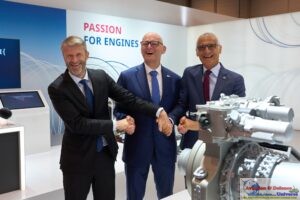 ILA BERLIN, 11 June, 2026: The European Commission has decided to support Safran Helicopter Engines, MTU Aero Engines and Avio Aero in their technological research project known as SHARP (Sovereign High performance Architecture for Rotorcraft Propulsion). This project, which aims to develop the scalable technological building blocks for a new state-of-art military helicopter engine, will be funded by the European Defence Fund (EDF) with a budget of around €25 million.
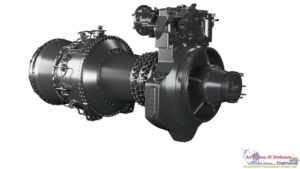
SHARP will involve a team of 25 partners from 12 European countries, including SMEs, universities and research institutes. By maturing key technologies, SHARP is paving the way for the ENGHE (European Next Generation Helicopter Engine). This next generation of advanced, cost effective, and sovereign helicopter engines aims to excel in the most demanding operational environments while simplifying maintenance.
The future ENGHE will feature breakthrough technologies that will considerably increase its efficiency while reducing its operating and maintenance costs. It will be particularly well suited to the next generation of military helicopters, which are expected to enter service in 2040, especially the ENGRT (European Next Generation Rotorcraft Technologies) and NGRC (Next Generation Rotorcraft Capability) projects. ENGHE’s exceptional characteristics will provide these future helicopters with enhanced capabilities, such as greater range and payload, higher speed, and increased availability.
Cédric Goubet, Safran Helicopter Engines CEO, said “By supporting SHARP, and more broadly our ENGHE engine project, Europe is showing its willingness to ensure self-reliance in sovereignty and technologies for tomorrow’s military helicopters. We thank the European Union and the EDF initiative, as well as the nations that support our project, for their confidence in our capability and commitment to stronger European defense capabilities.”
Dr. Ottmar Pfänder, Chief Program Officer of MTU Aero Engines, commented: “In light of a continuously aging European fleet of military helicopters the need is obvious: From 2040 onwards, a large proportion of these rotorcraft will have to be replaced. We joined forces across the continent to underline the importance of this technology program. It will further reinforce European sovereignty and strengthen the European supply chain.”
 Riccardo Procacci, CEO of Avio Aero, commented: “SHARP marks an important milestone in the journey toward Europe’s next-generation rotorcraft engine and reinforces the value of collaboration in developing sovereign, high-performance propulsion technologies. We are proud to partner with EURA on this initiative, contributing within a fully European framework while leveraging Avio Aero’s well-established expertise and know-how in helicopter propulsion.”
The SHARP project team is expected to be fully set up in the coming months. The project will be coordinated by the EURA (EUropean Military Rotorcraft Engine Alliance) joint venture, a 50/50 partnership between Safran Helicopter Engines and MTU Aero Engines. “We are ready to coordinate this multi-national and truly European team. We are all united by the will and the track record to provide our forces with most-modern technologies – while ensuring European sovereignty,” said Wolfgang Gärtner, CEO of EURA.
In Europe, there are approximately 1,800 transport and 600 combat helicopters with an average age of 20 years. In the 2040s, even rotorcraft that are still in production today will have been in service for over 50 years.


































































-A4-Size-(2)_page-0001.jpg)