


 18th BRICS Summit




















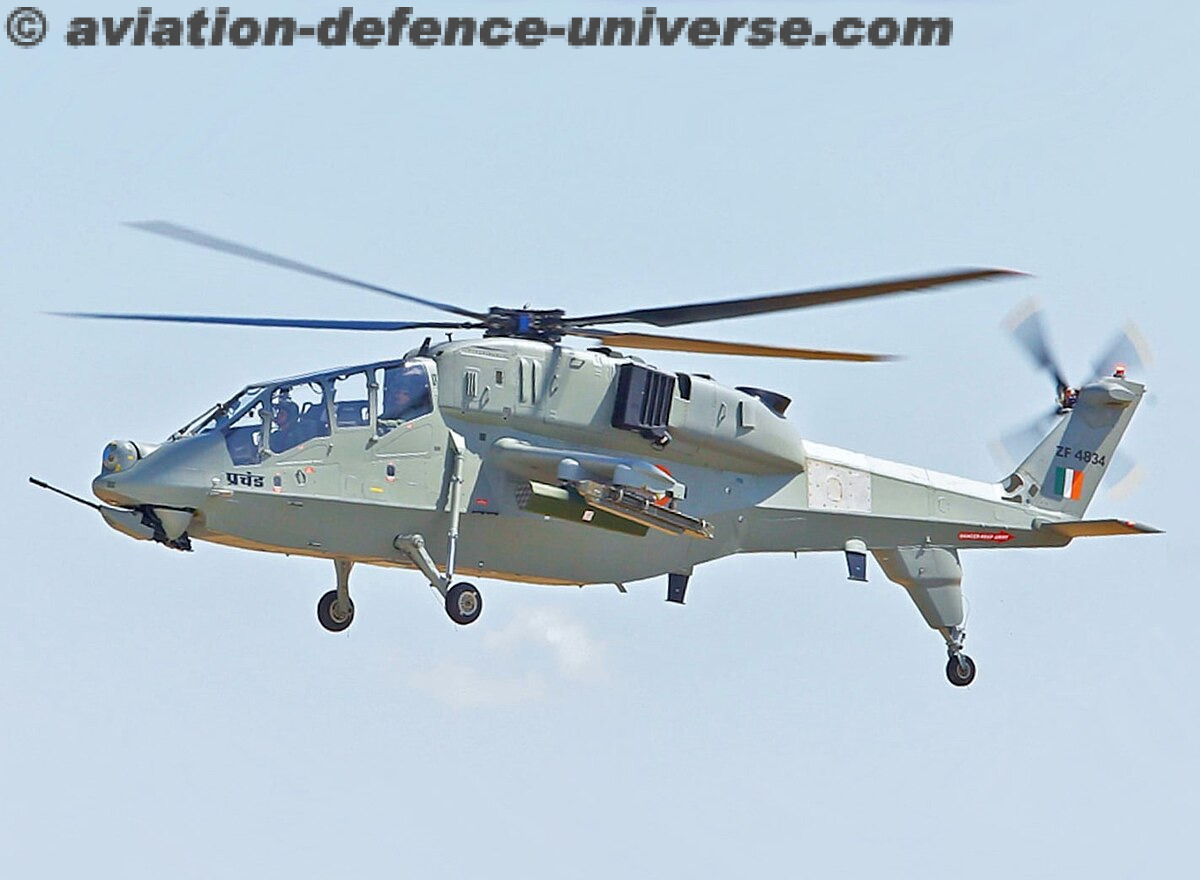
- Lets get to know it’s rivals Chinese Z 10 & Turkish T-129 ATAK
By Lt General Balli Pawar (Retd.)
 New Delhi. 14 January 2024. The first indigenously developed Light Combat Helicopter(LCH) now christened ‘Prachand’ was inducted into the Indian Military in Nov 2021 and since then 15 Prachand LCH’s have entered service -10 with the Airforce and 5 with the Army. In a major development the Government in Nov 2023 gave the approval for another 156 Prachand LCH’s to be inducted into the Army and Airforce in the proportion of 90 and 66 respectively, with the HAL taking on their manufacture and delivery. The Prachand LCH with its distinct capability to operate in extreme high altitude terrain like Siachen, will not only enhance the Indian Military’s combat power but give a boost to its capability for war fighting in high altitude areas, especially on our northern borders.
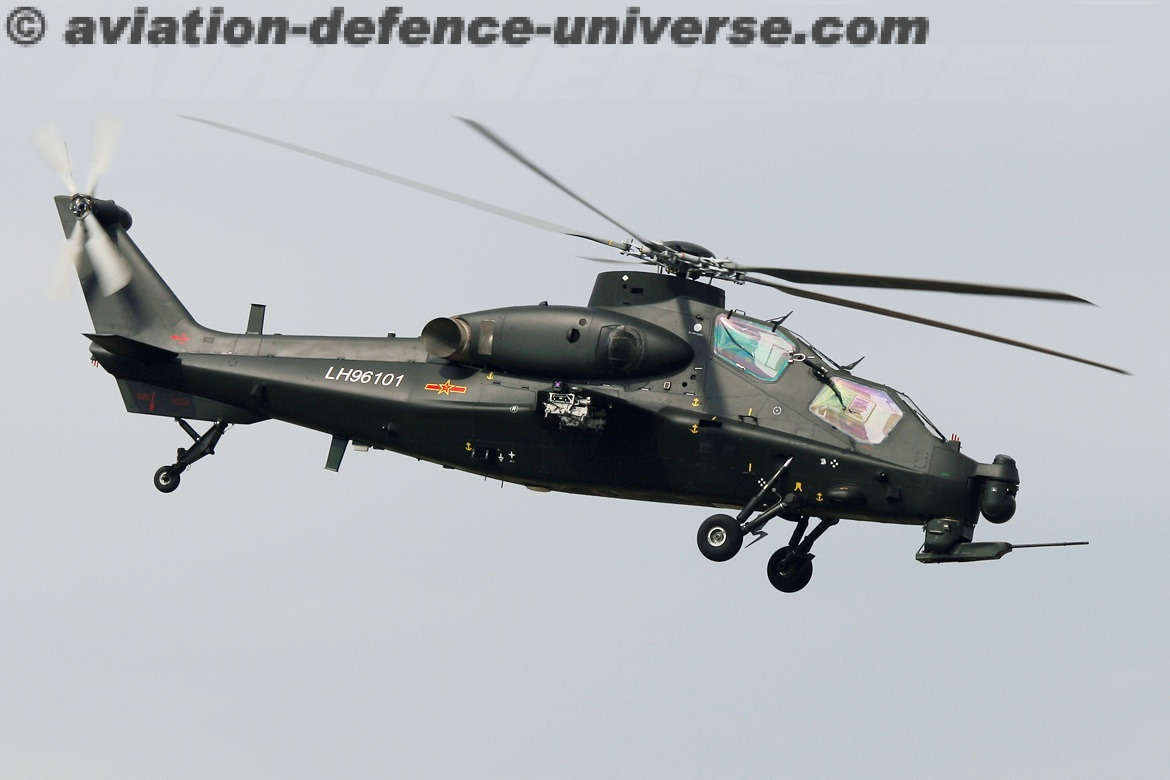
China has also developed its much touted state of art attack helicopter called the AH Z-10, which was displayed for the first time at China’s International Aviation and Aerospace Exhibition in Zhuhai in 2012, with stated high altitude capability. According to data available China has around 100 plus operational Z-10 attack helicopters with the People’s Liberation Army (PLA) and our neighbour Pakistan has also shown an interest in the same and in fact trial evaluated the helicopter for high altitude performance a few years back. Turkey’s T-129 ATAK attack helicopter also merits attention as our adversary Pakistan had already trial evaluated this attack helicopter as well and had signed a contract with Turkey in Jul 2018 for acquiring 30 x T-129 attack helicopters. This development took place due to the fact that the Chinese Z-10 had serious limitations in high altitude operations. However as per latest reports the Turkish deal has now been cancelled and the Pakistan Military is once again looking at the upgraded version of the Chinese AH Z-10 attack helicopter with a more powerful engine. The T-129 ATAK deal could not materialise as the export license needed from the America was not forthcoming, due to sanctions imposed on Turkey for purchasing the Russian S-400 Air Defence System. The American nod was required as the engine of T-129 ATAK is manufactured jointly by the British, Rolls Royce and American Honeywell – this gives the US the power to veto any prospective export sales. In view of the above it is worthwhile to at look at the attack helicopters in the same class and category held with China and Pakistan and analyse their capabilities Vis a vis the LCH.
ATTACK HELICOPERS STATUS – INDIA-CHINA -PAKISTAN
 While both China and India are the world’s largest military helicopter markets, they did not possess a suitable dedicated attack helicopter in their inventory till very recently. In the early seventies while the Indian Military had a limited number of Chetak helicopters armed with TOW anti- tank missiles, the Chinese in their modernisation thrust had procured eight French Gazelle helicopters equipped with HOT anti – tank guided missiles. Over the years the Chinese military has made deliberate and concerted efforts to acquire a state of art AH ex import. Their efforts to acquire the Italian A129 Mangusta and subsequently the American AH-1 Huey Cobra came to a naught, mainly due to sanctions by western nations. This led them in 2003 to finally embark on a development project for a combat helicopter of their own. The result is the development of the new Chinese AH Z-10.
The Indian Military on the other hand was able to replace its old and vintage Chetak armed helicopters with the Russian MI-25/MI-35AH acquired in the late eighties and early nineties to equip two Squadrons of the Indian air force. However, the Kargil conflict was the trigger for the development of a dedicated AH, capable of operating in the mountains, including high altitude due to the inability of the MI-25/MI-35 to operate in such an environment. Accordingly the Government approved the development of the Light combat Helicopter by the State owned HAL in 2006. Four prototypes of the LCH completed pre -induction trials and in Jan 2021 and the HAL declared the LCH ready for operational induction after completing all weapon integration tests. Subsequently the Defence Acquisition Council (DAC) as brought out earlier cleared the LSP of 15 LCH, ten for the air force and five for the army respectively which have since been inducted.
Pakistan has been operating the American Huey Cobras and the Russian Mi 25/Mi 35 attack helicopters which are old and vintage and have limited or no capability at high altitudes. Pakistan’s efforts to get latest version of Huey, the AH-IZ Viper from the Americans has not borne fruit and hence the deal with Turkey for 30 x T-129 ATAK attack helicopters, which now stands cancelled – Pakistan is once again falling back on the earlier rejected Chinese Z-10.
DESIGN & DEVELOPMENT
The LCH along with the Z-10 and T-129 ATAK are multirole combat helicopters with a stated capability to operate at high altitudes –an advantage over other attack helicopters in the world today.
Prachand LCH : The LCH is a derivative of the weaponised version of the HAL manufactured Dhruv helicopter ‘Rudra’, which is also operational and in service with the Indian Army and Airforce. While the Rudra basically is an armed helicopter, the LCH is a dedicated attack helicopter, capable of operating at high altitudes. The LCH has a maximum weight of 5.5 tonnes, and service ceiling of 6,500 meters (21300 feet). The design features a narrow fuselage with stealth profiling, armour protection and the helicopter is equipped to conduct day/night combat operations. The LCH has a two-crew tandem cockpit and is equipped with helmet-mounted targeting systems, electronic warfare systems and advanced weapon systems.
AH Z-10 : The development of the Z-10 began in the mid-1990s. Prototype of the Z-10 made its maiden flight in 2003. The Z-10 helicopter has a standard gunship configuration with a narrow fuselage and stepped tandem cockpits. The fuselage has sloped sides to reduce radar cross section. The Z-10 attack helicopter was developed by the Changhe Aircraft Industries Group (CHAIG) and China Helicopter Research and Development Institute (CHRDI) for the PLA. The helicopter is being manufactured by Changhe Aircraft Industries Corporation (CAIC). The first helicopter was delivered to the PLA in 2009. The Z-10 was displayed for the first time at the 9th China International Aviation and Aerospace Exhibition in Zhuhai in November 2012 – it weighs 5.5 ton and has a stated service ceiling of 6000 meters. It is believed that the design and development of the Z-10 has been secretly assisted by Russian Kamov helicopter design bureau.
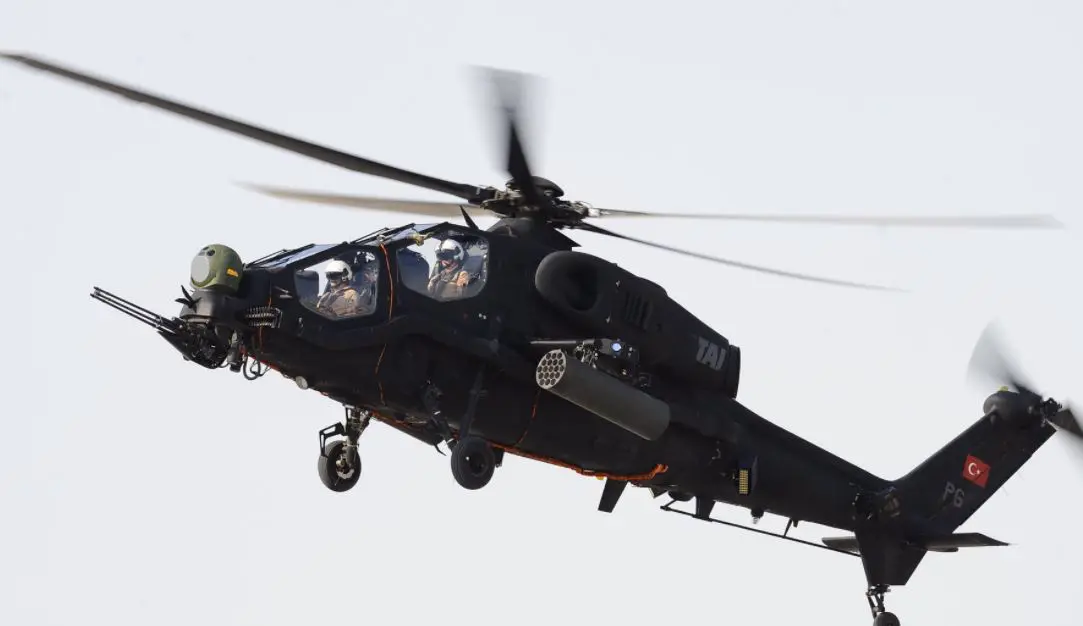 T-129 ATAK : The Turkish T-129 ATAK is a 5 Ton new generation, tandem seat, twin engine, multirole, all weather attack helicopter based on the famous Italian A-129 Mangusta attack helicopter, especially the airframe. Having acquired the license from Italian Agusta- Westland Company, Turkey has used its own high technology avionic systems, helmet mounted targeting systems, weapon systems, transmission and rotor blades. The T-129 programme commenced in 2007 and had its maiden flight in 2009. In May 2014 the first batch of nine T-129 AH were delivered to Turkish land forces. Presently the Turkish military is operating approximately 70-80 x T-129 ATAK helicopters and is looking at export of this machine in a big way. While a number of countries have shown interest Philippines is already operating the T-129 ATAK.
MAIN FEATURES
Power Plant
The LCH is powered by two Turbomeca Shakti turbo shaft engines (1430 shp each) driving a four blade main rotor and four blade tail rotor. In fact the Shakti engine has already been tested for its performance in high altitude operations and is being jointly developed by French Turbomeca and HAL. On the other hand numerous engines were used during the design and development of the Z-10, to include Canadian Pratt & Whitney PT6C-67C, Russian Klimov VK-2500 from Mi-17 and Ukrainian Motor-Sich TV3-117. However with Pratt & Whitney coming under adverse observation of US federal agencies regarding violation of arms export control act transfer regime, the Canadians withdrew from the Project. The Chinese thereafter with Russian and Ukrainian help, managed to develop their own engine WZ-9. Two of these engines producing 1350 shaft horse power each, presently power the Z-10 driving a five bladed main rotor and two bladed twin tail rotors. However, this engine has proven to be too weak for the 5.5 ton helicopter. Chinese claim to have developed a new more powerful engine recently called the WZ-9G, which they claim will give the Z-10 the requisite high altitude capability. The T-129 is powered by two LHTEC T800-4A turbo-shaft engines with each producing 1361 shaft horse power driving a five bladed main rotor and two bladed tail rotor – this engine is manufactured under license from Honeywell and Rolls-Royce. However, due to American sanctions on exports Turkey is also in the process of developing a new engine for the T-129 ATAK called TS-1400.
Cockpit and avionics
The three attack helicopters have a tandem seating glass cockpit with multifunction displays, a target 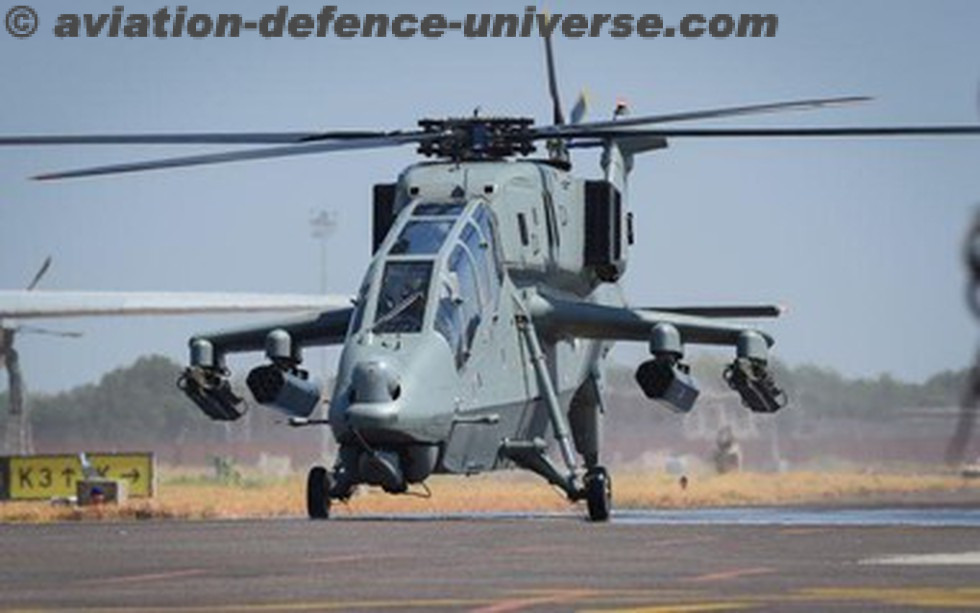 acquisition and designation system with FLIR, laser rangefinder and designator. The Z-10 however has a stepped tandem cockpit which accommodates a gunner in the front and pilot in the rear. The cockpits have varying degree of armour protection and bullet proof glass. The helicopters are also equipped with a helmet mounted sight, an electronic warfare suite with radar warning receiver, laser warning receiver and a missile approach warning system. The helicopters are fitted with a data link for network-centric operations facilitating the transfer of mission data to the other airborne platforms and ground stations operating in the network, facilitating force multiplication. The three helicopters are capable of operating in all weather and day/night environment.
Armaments and Weapons
Due to their modular design concept the LCH, Z-10 and the A-129 can be armed with a wide variety of weaponry. These could be in terms of machine guns, cannons, rockets and missiles both air to ground and air to air. While the calibre and make of the weapon systems and armaments could be different, all three helicopters are capable of carrying all or a combination of armaments and weapons based on the task and operational requirement. The defining feature is the capability of air combat and engagement of UAVs.
COMPARATIVE ANALYSIS
Over 100 plus Z-10 and approximately 80 x T-129 ATAK attack helicopters are already operational and in service with the PLA and the Turkish land forces respectively, whereas only 15 Prachand LCH are operational in the Indian Military. Going by the comparative analysis of the stated capabilities of the three attack helicopters as brought out earlier in the article, the basic configuration and key specifications are almost similar. Even the design features related to the cockpit, avionics, sensor suites and weapons /armament package are similar barring the different types/ origin of equipment being used, but the Prachand LCH has an edge in terms of embedded stealth features. The new engines developed for the Z-10 and the A-129 ATAK recently, are likely to give them enhanced weapon carriage and high altitude capability but their performance on the ground is not yet confirmed. The Prachand LCH on the other hand has engines which are tried and tested on other established platforms as well as the current platform for their high altitude capability.
The targeting systems in all the three AH are electo-optical which have similar capability, but if Millimetre Wave Radar(MMW) is installed on Z-10 and the T-129 as claimed, it will give a distinct edge for multiple targeting even in adverse weather conditions – however the MMW radar with the present technology needs a bigger platform like the Apache. This claim/development especially by the Chinese needs to be closely monitored. In the current analysis the T-129 ATAK certainly scores over both the Z-10 and the Prachand LCH being a variant of a time tested attack helicopter, the Italian A-129 Mangusta. The very fact that the Pak military chose this platform over the Z-10 further corroborates this thought process. On the other hand the Prachand LCH has just entered service and with another two to three years of its operations and exploitation, it could prove to be the most lethal and agile attack helicopter in high altitude operations, leaving other contenders way behind.
(Lt Gen BS Pawar is a Delhi based defence analyst, former Head of the Army Aviation Corps and Commandant School of Artillery. The views in the article are solely the author’s. He can be contacted at editor.adu@gmail.com.)






























































-A4-Size-(2)_page-0001.jpg)