



























- From Make in India to Own in Bharat: IPR Takes Centre Stage at HQ-IDS – CENJOWS Workshop
- Protect, Develop, Own: Intellectual Property as a Strategic Weapon for Defence Startups
- Defence Innovation Needs a Soul: Lalit Ambastha Explains the Power of Intellectual Property
By Sangeeta Saxena
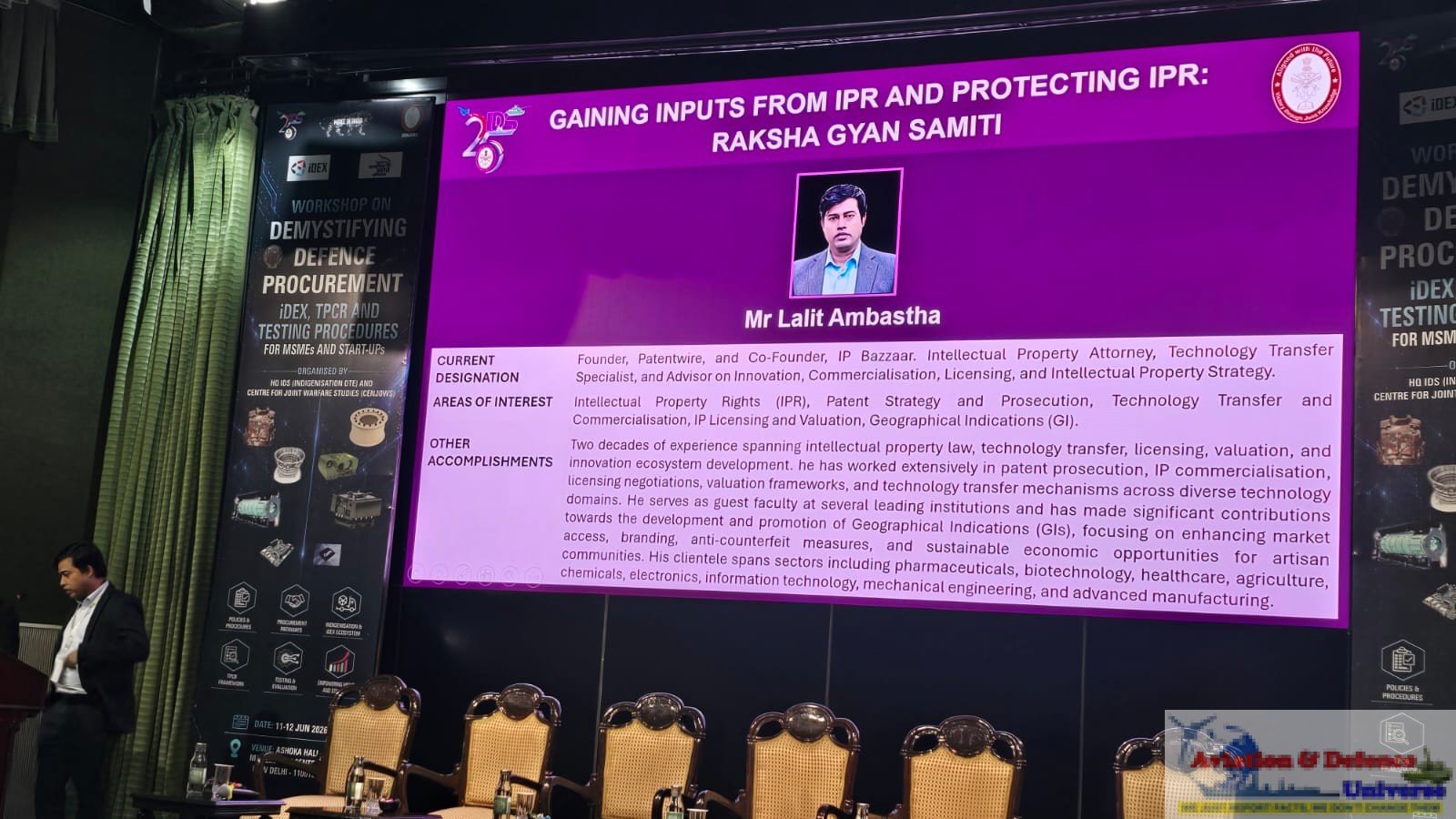
New Delhi. 11 June 2026. As the first day of the workshop “Demystifying Defence Procurement, iDEX, TPCR and Testing Procedures for MSMEs and Start-ups” drew to a close, the focus shifted from procurement procedures and testing protocols to an often overlooked but increasingly critical aspect of defence innovation—Intellectual Property Rights (IPR).
Delivering the final address of the day on “Gaining Inputs from IPR and Protecting IPR,” Lalit Ambastha, Founder of Patentwire and Co-Founder of IP Bazaar, challenged conventional thinking about patents and intellectual property, describing IP not merely as a legal tool but as the very foundation of business competitiveness, technological leadership and strategic sovereignty.
 Addressing an audience of startups, MSMEs, innovators and defence industry stakeholders, Ambastha argued that while the day’s discussions had focused on the operational aspects of defence business, intellectual property represented its true core. “Entire day we were talking about the body of the business. Now we will talk about the soul of the business. This is IP.” Ambastha began by highlighting how global technology leaders have built their dominance through intellectual property.
“When Apple launched the iPhone in 2007, they were continuously negating their own patents through research and development. They keep filing and filing again so that competitors cannot even think of entering those spaces.” He emphasised that modern corporate value is increasingly driven by intangible assets rather than physical infrastructure. “If you see the Fortune 500 companies, today nearly 90 per cent of their value is derived from intangible assets.”
According to him, many Indian companies continue to underestimate the strategic value of intellectual property. “In India, we largely believe in tangible assets. But globally, intellectual property is driving competitiveness.” Using General Electric as an example, he noted that visionary leadership has historically viewed innovation and intellectual property as inseparable. “It is all about leadership. It is all about vision.” Ambastha challenged the common belief that defence technologies should remain undisclosed and therefore should not be patented.
“Many times we say we are not filing because we are from defence. There are certain critical aspects and there is no need to file. Then why is Israel filing? Why is Russia filing? Why is the United States filing?” He argued that if a technology can be reverse-engineered, relying solely on secrecy is not a sustainable strategy. “If there is a possibility of reverse engineering, then there is no need to keep it as a trade secret. You have to file.”
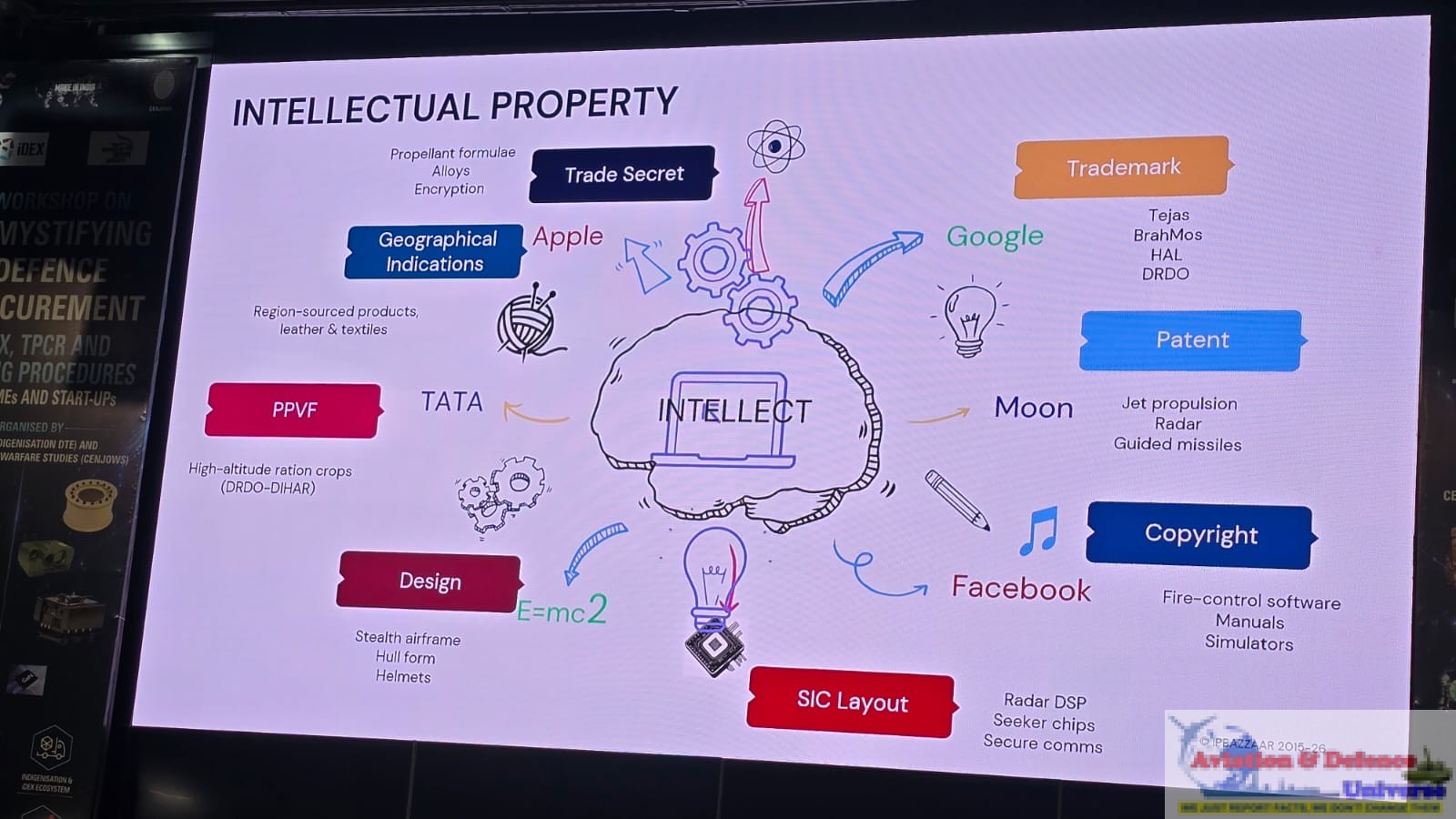 He cited Israel’s Iron Dome programme as an example. “They have filed more than 100 patent applications related to Iron Dome technology and these documents are available in the public domain.” According to Ambastha, filing patents creates legal protection while simultaneously contributing to technological advancement. “When we file a patent, we are actually providing the recipe of the technology.”
A major theme of the session was the underutilised value of patent databases as a source of technological intelligence. “Patent documents themselves are a goldmine. If I am stuck at a particular point, I can go and check how a US organisation has disclosed the technology and how they have evolved it. He explained that patent databases contain vast amounts of technical information that can accelerate innovation. You can download these patent documents and learn from them. This is not stealing. This is exactly how the patent system is designed to work.”
Ambastha urged startups and MSMEs to conduct IP analysis before embarking on expensive research and development programmes. “Most of your work may already be done. Before investing in R&D, examine the IP-based data available.” He noted that DRDO has already institutionalised this approach. “A policy decision has been taken in DRDO that IP examination will become a fundamental process before investing in R&D.”
One of the most striking observations made during the presentation was the extent to which foreign technologies remain available for legal adaptation and learning. “Germany files nearly 90,000 patent applications every year but files only around 1,000 in India.” He explained that when foreign companies choose not to extend patent protection into India, many technologies become legally accessible within the country. “If they have not filed in India and the timeline has lapsed, you are free to use that technology.” “You can copy every word and produce your product because they do not have rights in India.”
 He stressed that such utilisation remains entirely legal and ethical. “This is very ethical. This is as per law.” Throughout the session, Ambastha repeatedly emphasised that India’s ambitions must evolve beyond manufacturing. “This is not about Make in India. This is about Own in Bharat.” “How will you own? You will own only when you develop and when you protect.” He argued that true technological sovereignty requires ownership of intellectual property, not merely manufacturing capability. For defence innovators, this means building patent portfolios alongside products and platforms. Ambastha concluded by outlining what he called the “Innovation Mantra” for startups and MSMEs.
“First discover, then defend, then diversify and then evolve.” He encouraged innovators to undertake white-space analysis to identify unexplored technology areas and avoid direct collisions with existing patents. “You first discover whether there is a collision or whether there is a white space.” According to him, intellectual property should not be viewed as a legal formality but as a strategic business tool capable of shaping market positioning, valuation and growth.
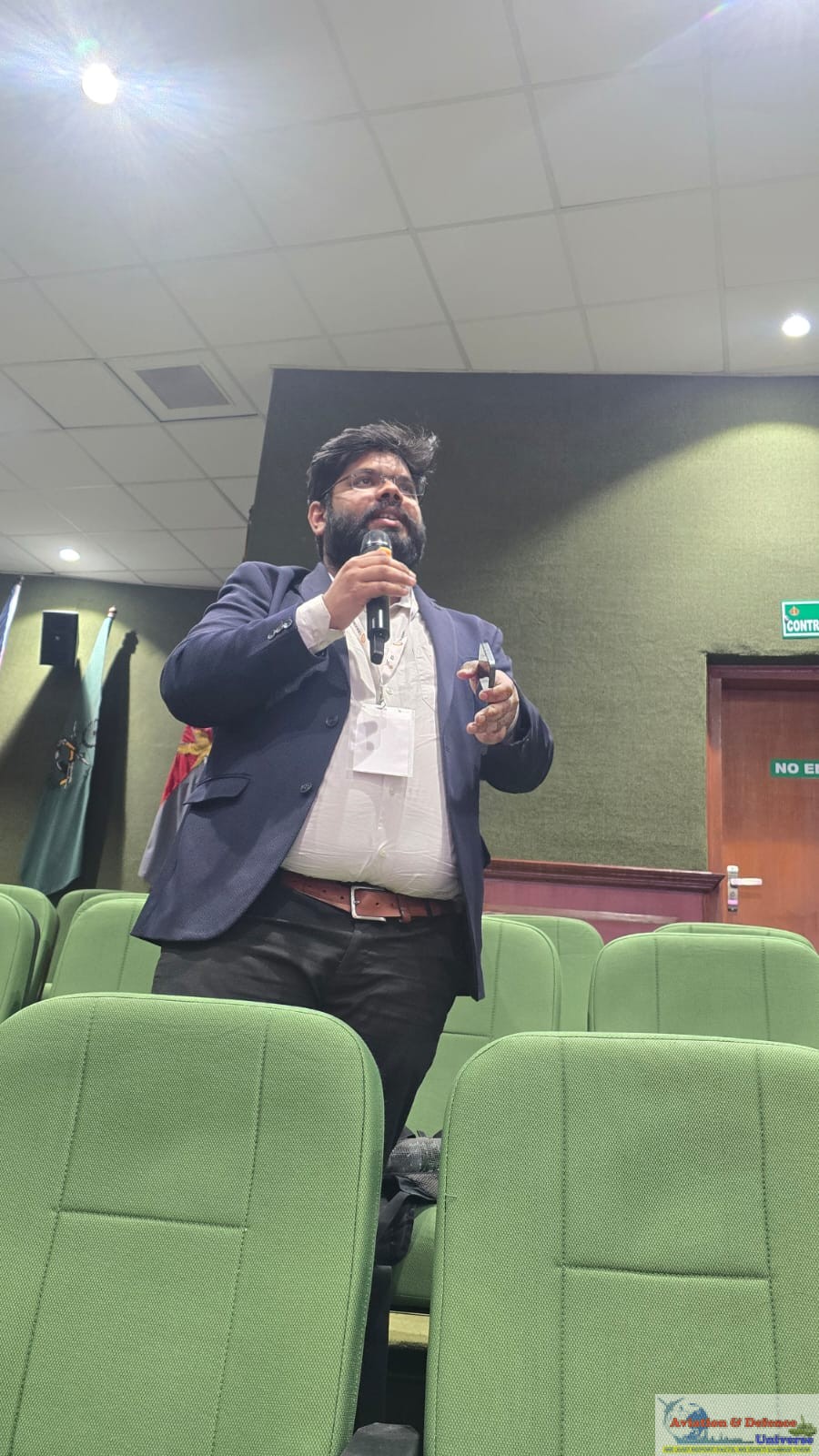 The interactive session that followed generated considerable interest among participants, particularly regarding the growing role of intellectual property within defence procurement. Responding to a question on whether patents could influence procurement decisions, Ambastha referred to emerging provisions within defence acquisition frameworks.”If two companies are competing and one has intellectual property while the other does not, the one possessing IP may receive preference.”
He further explained that ownership of IP strengthens claims of indigenous development and can support assertions regarding indigenous content. When asked about the risks posed by aggressive patent filing by foreign entities, Ambastha acknowledged the challenge. “The foreign players are filing and filing. That means they are locking the intellectual property space. This is one of the biggest threats.”
He cited China as an example of a nation that has aggressively leveraged patent filing as a strategic tool. “China changed after 2012. Today they are filing millions of patent applications.” He urged Indian startups to adopt a more proactive mindset towards intellectual property. “A startup must understand that patenting is not separate from business. Patenting leads to business.”
Lalit Ambastha’s session provided a fitting conclusion to the first day of the workshop by highlighting an often-overlooked dimension of defence innovation—intellectual property ownership. While discussions throughout the day focused on procurement, testing and funding, Ambastha argued that long-term technological sovereignty ultimately depends on the ability to create, protect and leverage intellectual property. His call to move beyond “Make in India” towards “Own in Bharat” resonated strongly with participants, reinforcing the idea that patents are not merely legal instruments but strategic assets capable of accelerating innovation, strengthening competitiveness and advancing India’s defence self-reliance ambitions. For startups and MSMEs seeking to play a meaningful role in the nation’s defence ecosystem, the message was clear: innovation without intellectual property protection is only half the journey.


















































































-A4-Size-(2)_page-0001.jpg)