















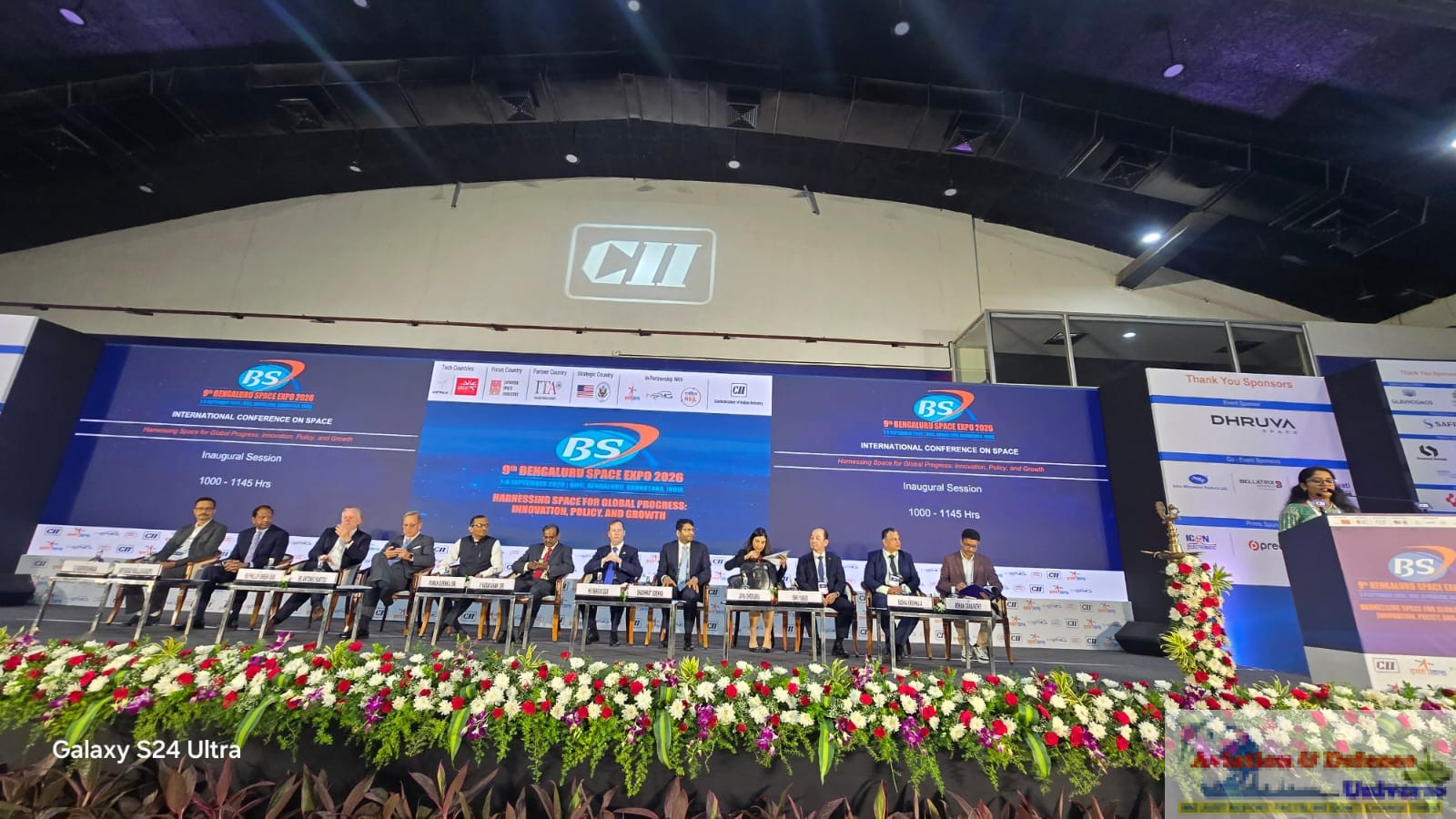
- Opens Its Space Doors to the World: Sets the Stage for a Full-Spectrum Space Economy
- From Launchpad to Marketplace: Atmanirbhar Bharat leads India’s Next Space Leap
- From MoUs to Missions: India Calls for a New Era of Global Space Partnerships
By Sangeeta Saxena
Bengaluru. 07 September 2026. From 450-plus startups and Vikram-1 to a $44-billion ambition, global partnerships and a future Indian presence on the Moon, Bengaluru Space Expo 2026 opened with one unmistakable message: India is no longer content merely to reach space—it wants to build, own, commercialise and export space capability. The sky, it seems, is no longer the limit for India—and at the inauguration of the 9th Bengaluru Space Expo (BSX) 2026 at the Bangalore International Exhibition Centre (BIEC), even that familiar phrase appeared inadequate.
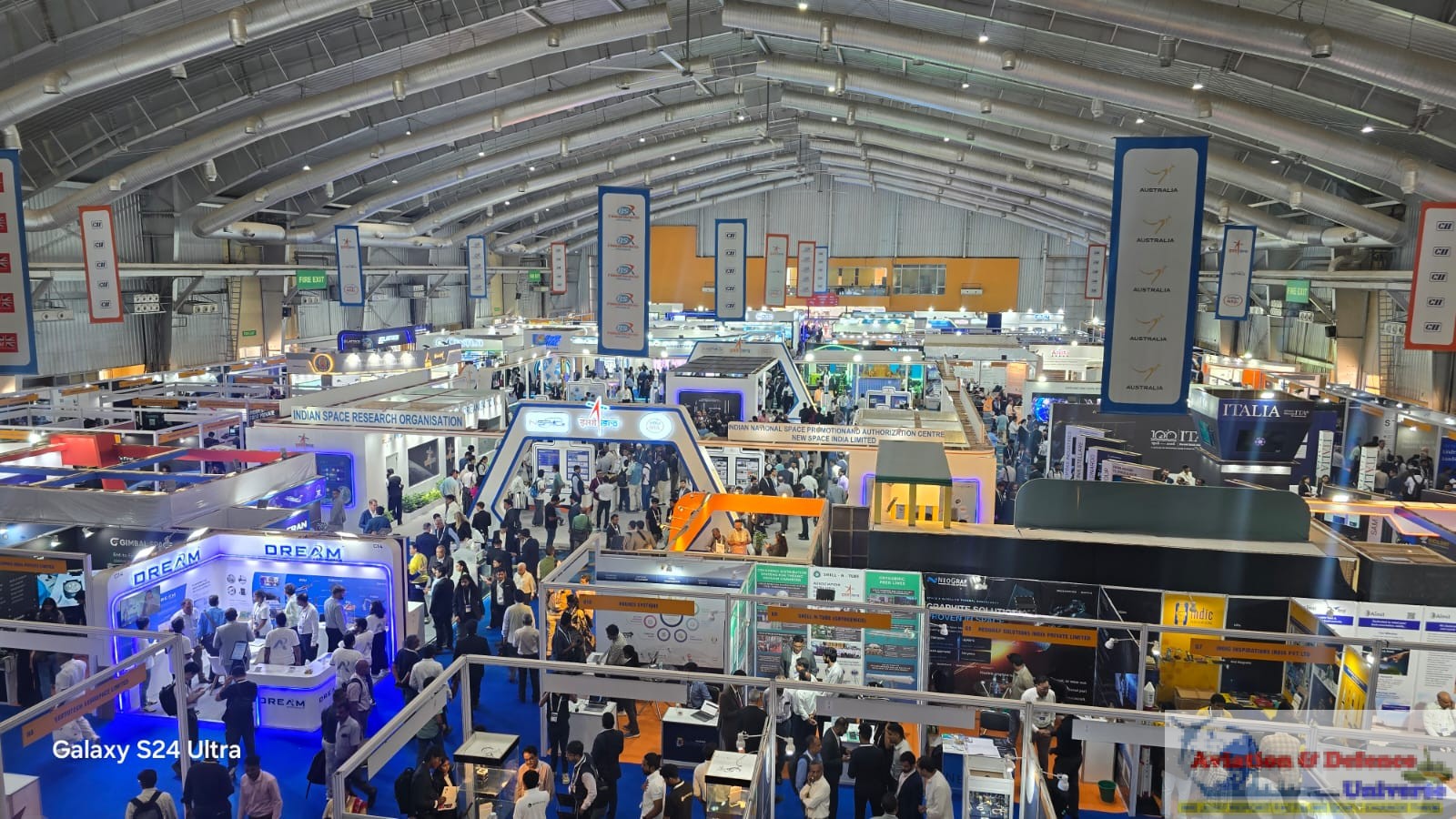 With hundreds of exhibitors, thousands of participants, an expanding private-space industry and delegations arriving from across the world, the inaugural session became a confident declaration of how dramatically India’s space story is changing. The conversation was no longer simply about rockets and satellites. It was about ownership of technology, private enterprise, commercial scale, global supply chains, international partnerships and converting India’s six decades of space capability into a full-fledged space economy.
The numbers themselves reflected that transformation. The gathering was told that India has grown from virtually a single space startup little more than a decade ago to more than 450 today, while private investment, technology transfers, international partnerships and commercial missions are accelerating. Dr Pawan Goenka noted that more than $160 million in private-sector investment had already come in this year.
And if there was one sentence that captured the mood at BIEC, it was this, “India is now building, for the 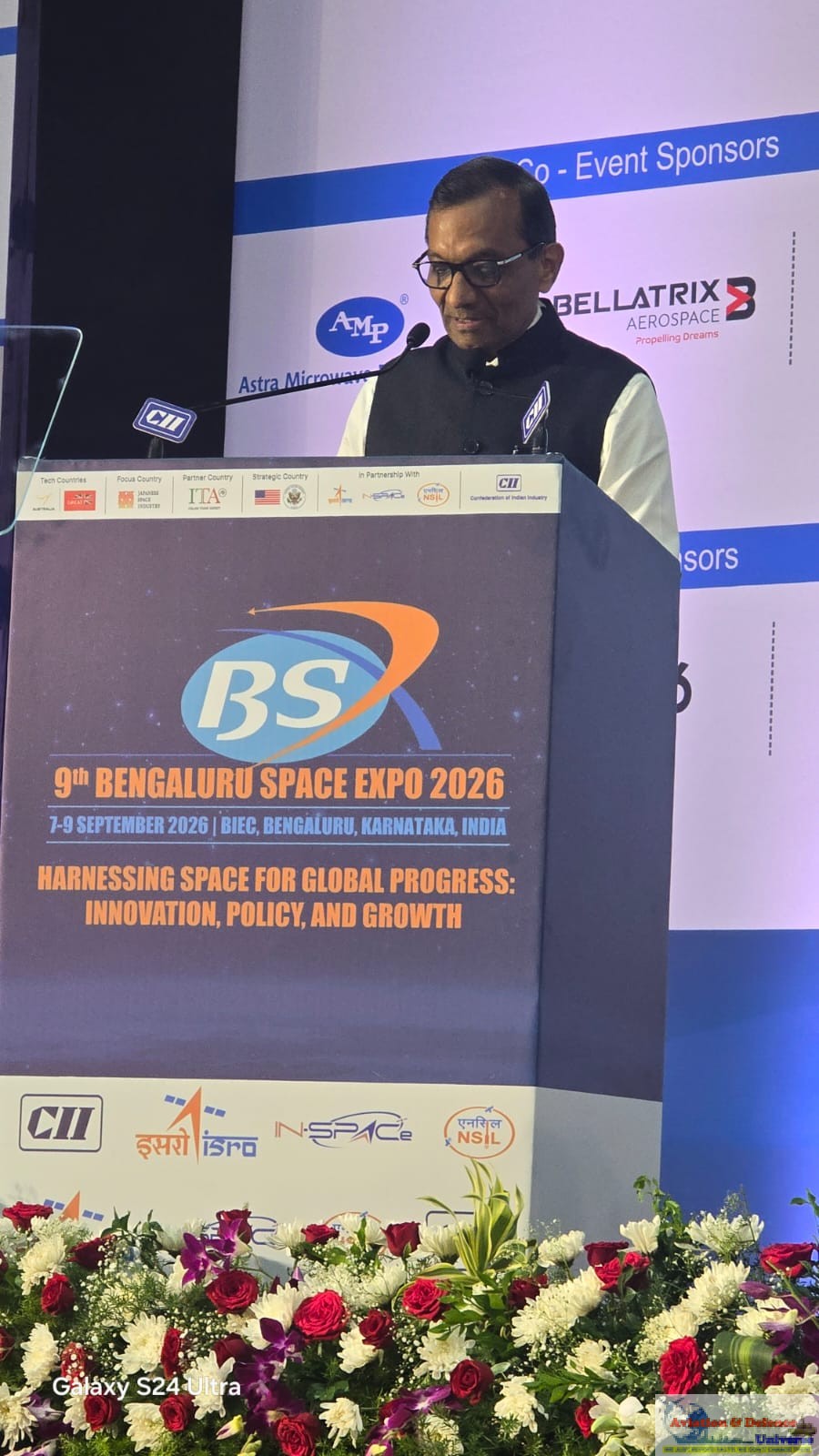 first time, a full-spectrum space economy.” BSX Gets Bigger — But Business, Not Size, Is the Goal. The opening welcome set the tone by celebrating India’s recent space achievements and acknowledging the scientists and engineers of ISRO with a standing ovation. But the larger message went beyond individual missions. India, the gathering was told, is moving from possessing space capability towards owning that capability—a transition being driven by ISRO alongside private launch companies, startups, industry, academia, investors and international partners. “India is no longer only participating in the global space sector, not just capability, but the ownership of capability.”
That, the speaker said, was “the real story of Indian space today.” BSX itself has become a reflection of this expanding ecosystem. The inaugural address cited 300-plus exhibitors, 120-plus speakers and around 15,000 delegates and visitors, describing the expo as having evolved into one of Asia’s major platforms for the space sector. But size alone, the gathering was reminded, was not the objective. “A conversation that started here, a partnership signed here, is worth far more than a speech given here.” The message was clear: use BSX not simply as a conference, but as a marketplace for ideas, investments, partnerships and business.
From One Startup to Hundreds: Indian Private Space Comes of Age
Giving the industry perspective, Rohan Ganapathy, Co-Chairman, CII National Committee on Space, captured the mood with a line that drew together both ambition and humour, “They say sky is the limit, but looking at this room, I think we have clearly decided to ignore that limit.” He described India as moving from a predominantly government-led ecosystem towards one that is increasingly private-sector driven, innovation-led and commercially oriented. The transformation is visible across the value chain—from launch vehicles and propulsion to satellites, Earth observation, communications, space situational awareness and downstream applications. Ganapathy pointed to the emergence of hundreds of space-tech startups and to the private sector moving beyond ideas and prototypes towards actual missions, products and businesses. The opportunity, he argued, is enormous. The global space economy, estimated at around $630 billion, could approach $1.8 trillion by 2035, while India’s space economy is seeking dramatic expansion during the coming decade.
But India must not settle for being an assembler.
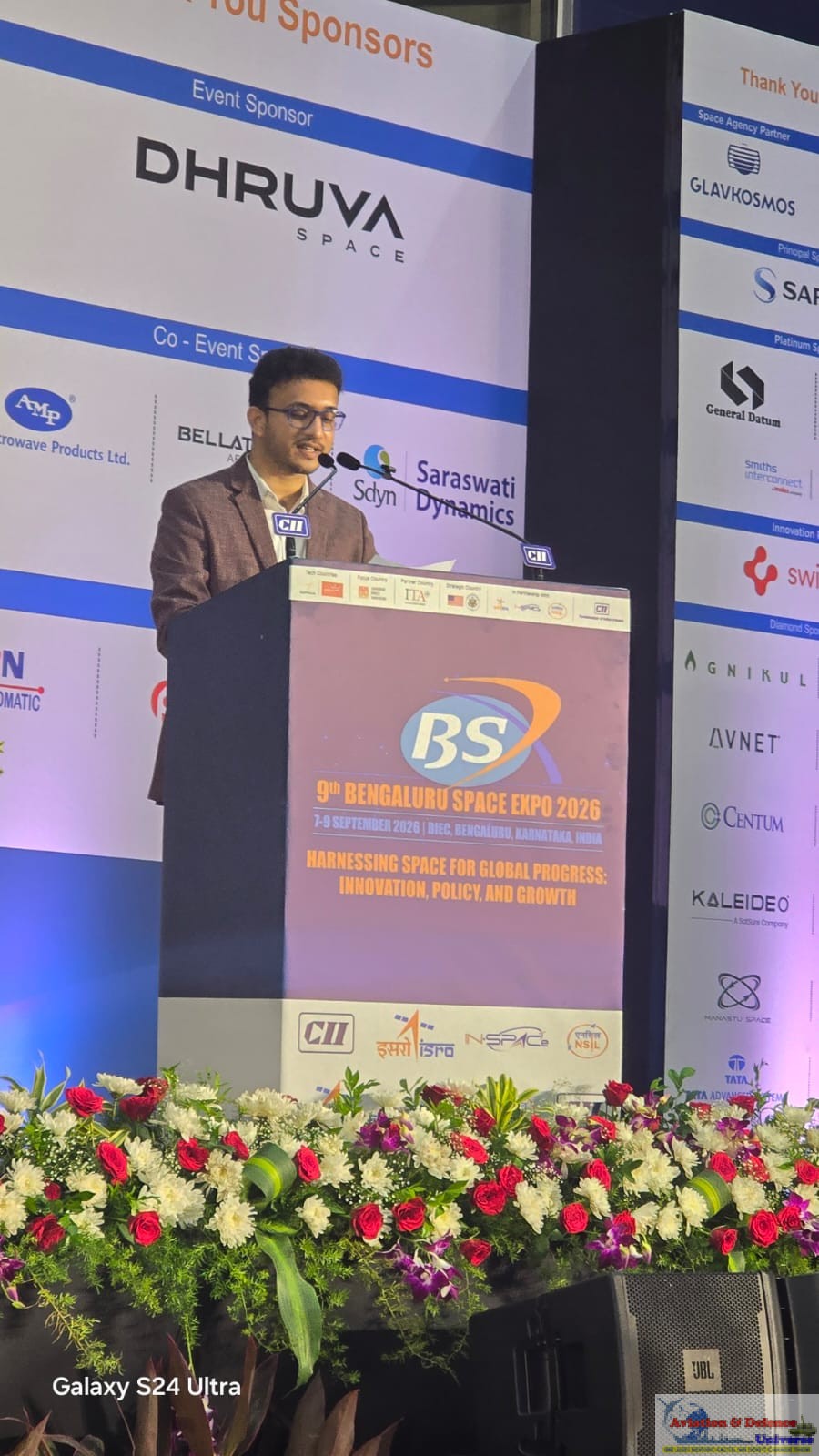 “We need to design, develop and manufacture more critical technologies in India and enable Indian companies to become technology owners, innovators and global suppliers rather than merely users or integrators of imported technologies, ” he stated.
Government-industry partnership would be central to that transition. Government could act as an anchor customer and market creator, while industry and startups contribute speed, innovation, investment and commercial execution. The ₹1,000-crore Space Sector Venture Capital Fund, he said, was an important step, but capital must eventually translate into products, missions, intellectual property, manufacturing capacity and globally competitive businesses. His vision extended well beyond India’s borders. “When you view the Earth from orbit, you do not see any land borders. So space, in the truest sense, is a global industry.”
ISRO’s Dr. V. Narayanan: India’s Space Future Will Be Built in Laboratories, Factories and Startups
Delivering the inaugural address at BSX 2026, Dr V. Narayanan, Secretary, Department of Space and Chairman, ISRO, placed collaboration at the heart of India’s next space leap. The Indian space programme, he said, was entering a new phase characterised by greater private-sector participation, ambitious national missions, rapid technological advancement and expanding international cooperation. Recalling Prime Minister Narendra Modi’s message that there should be no “space between space and the common man”, Narayanan stressed that the ultimate purpose of advanced space technology remained bringing its benefits to people in India and across the world.
India currently has only 56 space assets serving from space, while future requirements could demand 200 to 300 additional objects to be built and launched within six to seven years. “This cannot be done only by ISRO.” That single sentence encapsulated much of the philosophy behind India’s space-sector reforms. Narayanan said government institutions must create enabling policies; ISRO must develop advanced technologies and national capabilities while hand-holding startups and private companies; IN-SPACe must enable approvals; NSIL must support commercialisation; industry must invest in frontier areas; startups must innovate; academia must move beyond papers towards products; and investors must provide patient, long-term capital. He described it as a national effort, with the roughly 450 startups now working in the sector becoming an increasingly important part of India’s space ambitions.
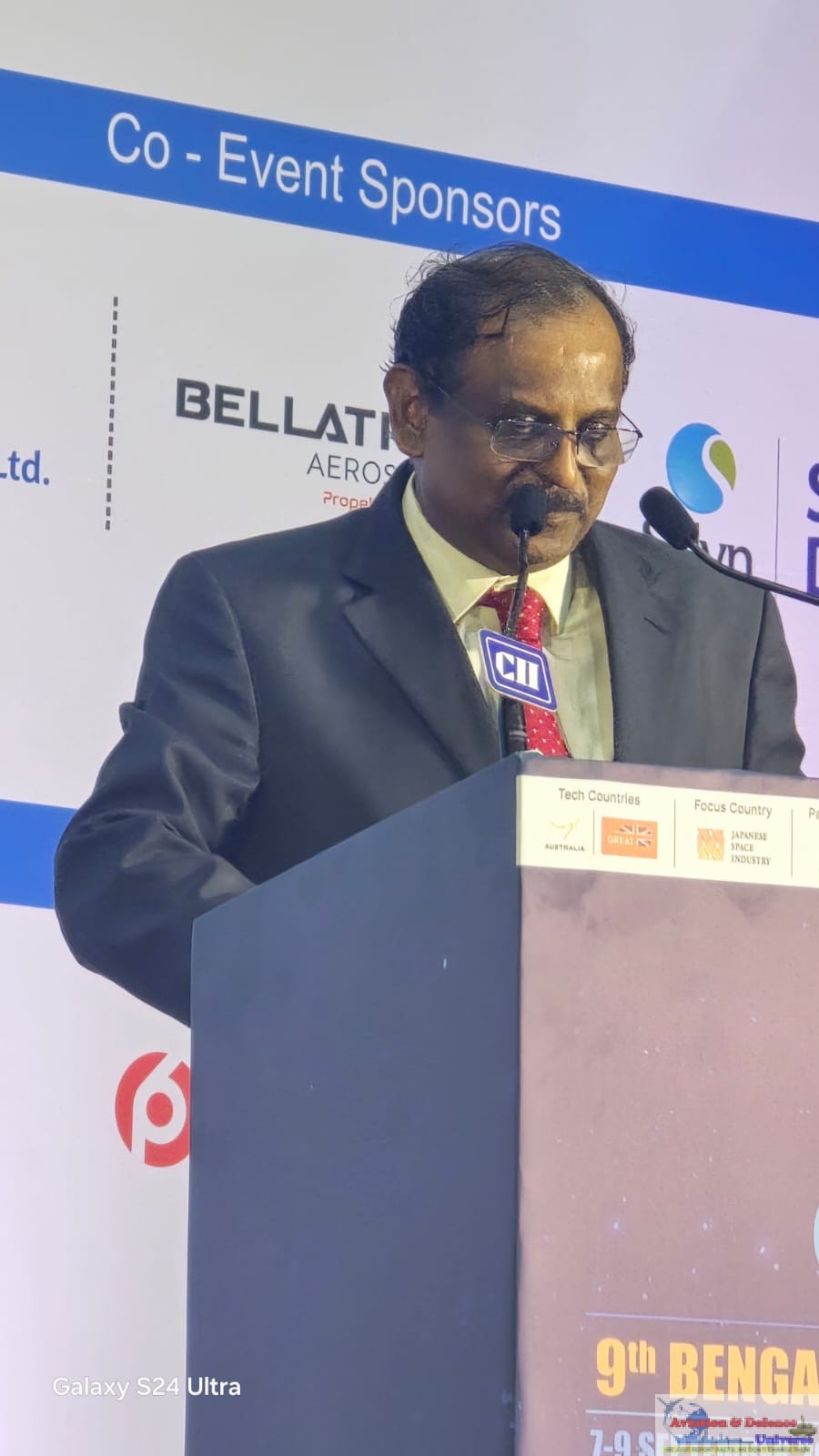 “The future of India’s space programme is not being built only in the laboratories. It is being built along with the laboratories, factories and our own industries, and in the ideas of our startups, in the ambition of our younger generation leaders, and in partnerships such as those being created here at the Bangalore Expo.” The statement captured the transformation running through BSX 2026: from a space programme centred overwhelmingly around a national agency to a national space ecosystem in which ISRO remains the technological backbone but industry, startups, academia and international partners increasingly become fellow travellers.
Narayanan put the scale of the challenge into perspective through his own career. When he joined ISRO in 1984, he recalled, India conducted roughly one launch in three years. That moved to one in two years and has now reached approximately one launch a month. But India’s future requirement is dramatically higher, “The need is something around 50 launches per year. So, we all have to work together.” And in that new ecosystem, he made clear, institutional hierarchy should give way to a shared mission. “Everybody is equal in this game. Let it be startup company, academia or industry, or ISRO or any space entity. Everybody is equal. Let us work together and grow together,” he said.
NSIL: Turn a National Space Programme into a National Space Economy
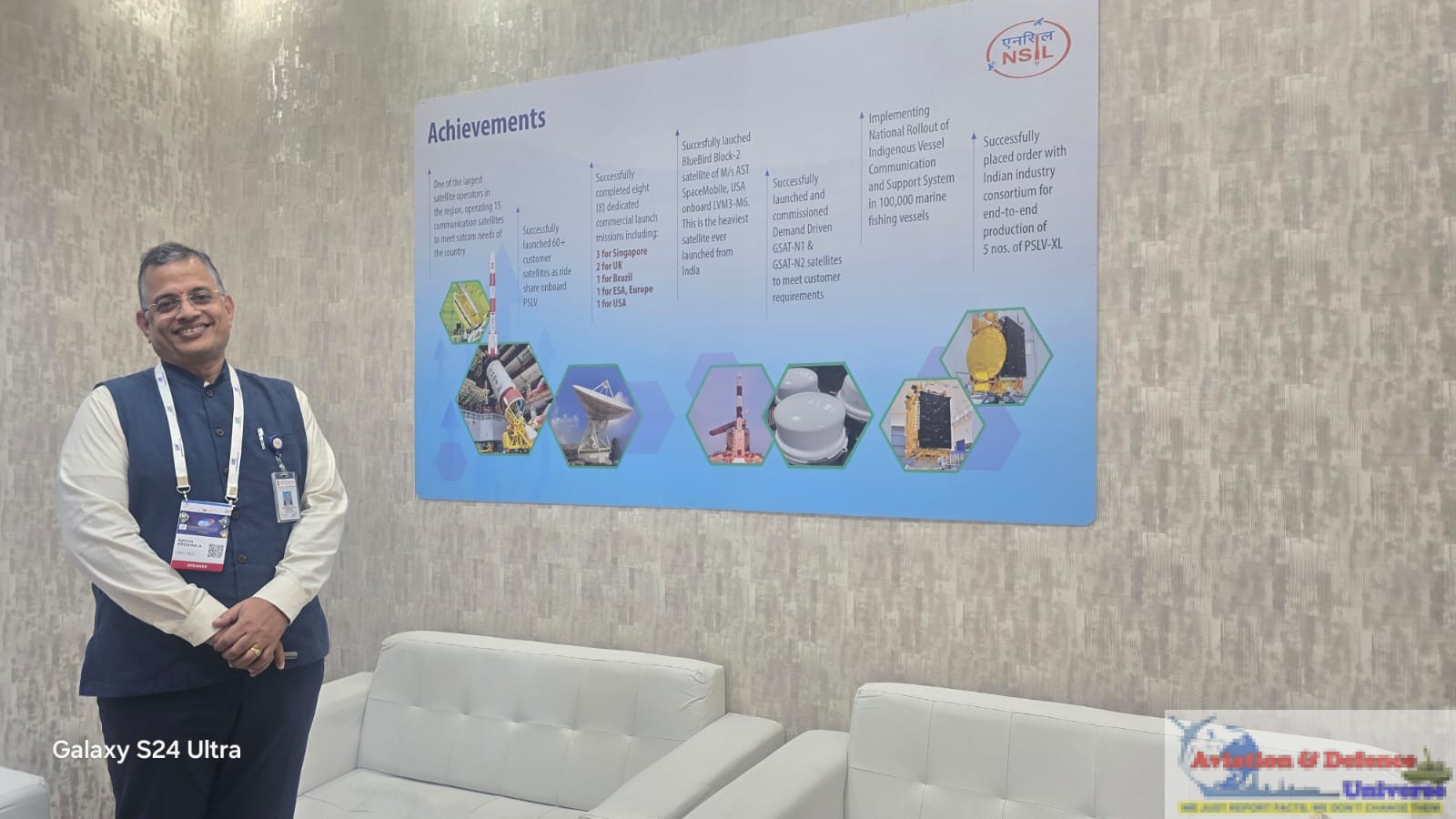
Radhakrishnan A, Chairman and Managing Director, NewSpace India Limited (NSIL), shifted the discussion from capability creation to commercialisation. Space, he said, is no longer merely about reaching orbit or exploring the scientific frontier. It has become essential infrastructure underpinning communications, navigation, weather forecasting, disaster management, agriculture, mining, national security and climate action.
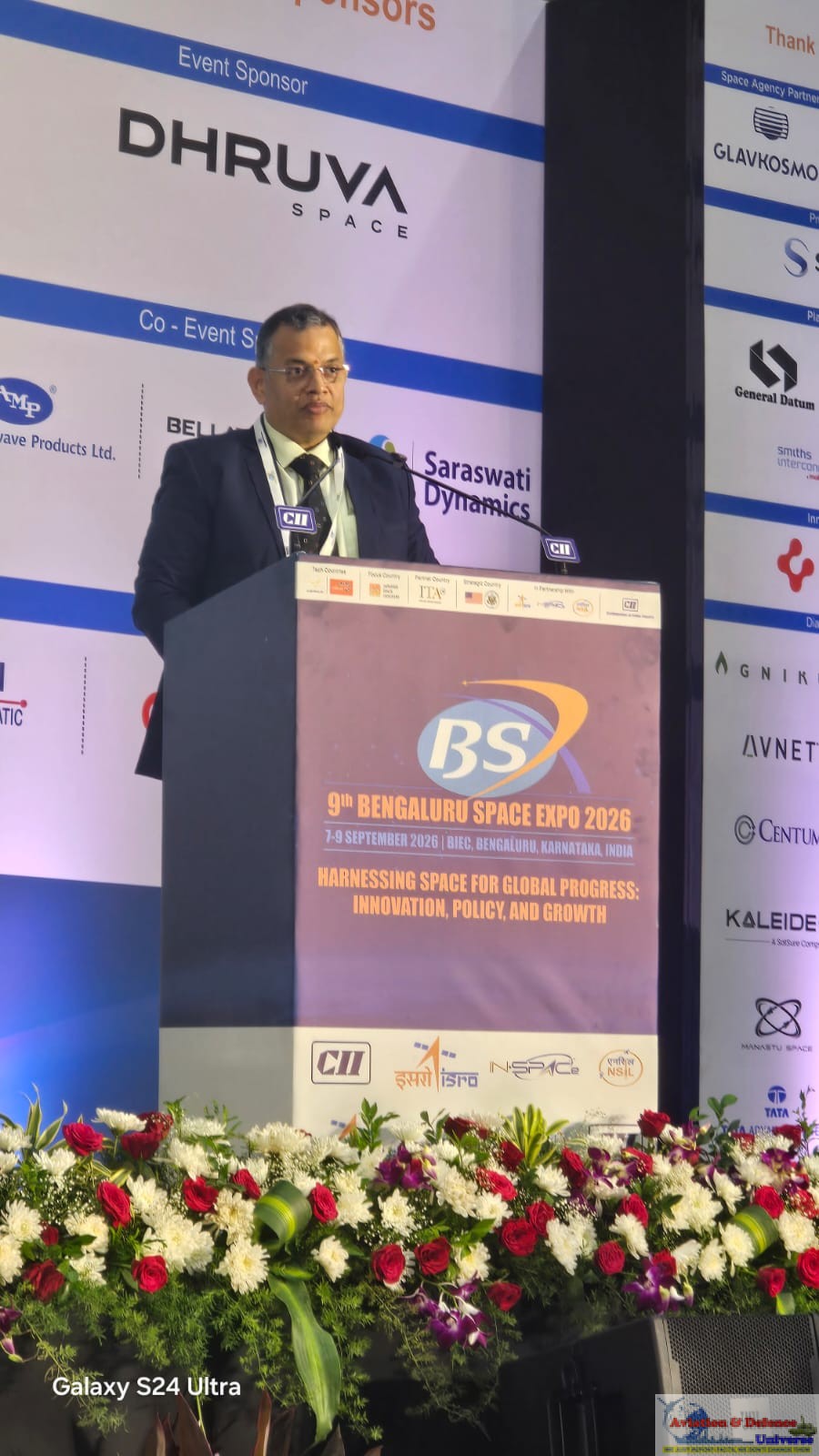 “The real question before us is therefore not what we can do in space, but how effectively we can translate our capabilities in space into value for society, industry and the global economy.” India, he said, is at an “exciting inflexion point.” The next stage requires moving from capability creation to capability scaling, from technology demonstration to sustained commercial deployment and from offshore success to global business.
He laid out a division of strengths within India’s emerging ecosystem: ISRO advancing technology, IN-SPACe creating the enabling framework, industry scaling manufacturing and services, startups bringing speed and disruption, academia expanding the knowledge base, and NSIL helping take capabilities to market.
His formulation was succinct, “This is how a National Space Programme becomes a National Space Economy.” And ultimately, he stressed, the success of space must be measured on Earth. Whether satellite technology assists a farmer, provides connectivity to a student, warns a community about extreme weather or helps businesses manage logistics, “the ultimate measure of success is the impact created on Earth.”
US-India: A ‘Dream Team’ for the New Space Race
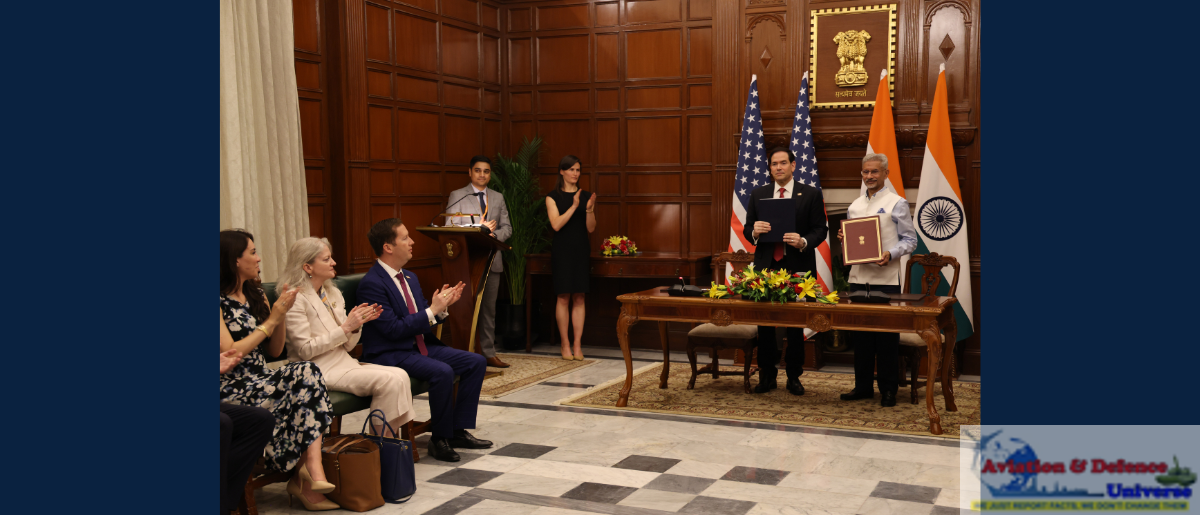
Ambassador of United States of America in India, Sergei Gor, framed space as both an economic engine and a strategic pillar of the India-US relationship and emphasized, “Space is no longer a luxury for national pride. Today, it is the engine of the 21st century global economy.”
He argued that the two countries bring complementary strengths to the table: the United States with private capital and mature commercial ecosystems, and India with engineering excellence, scientific talent and an increasingly fearless startup sector. “The resulting partnership creates a new dream team that can and will do wonders.”
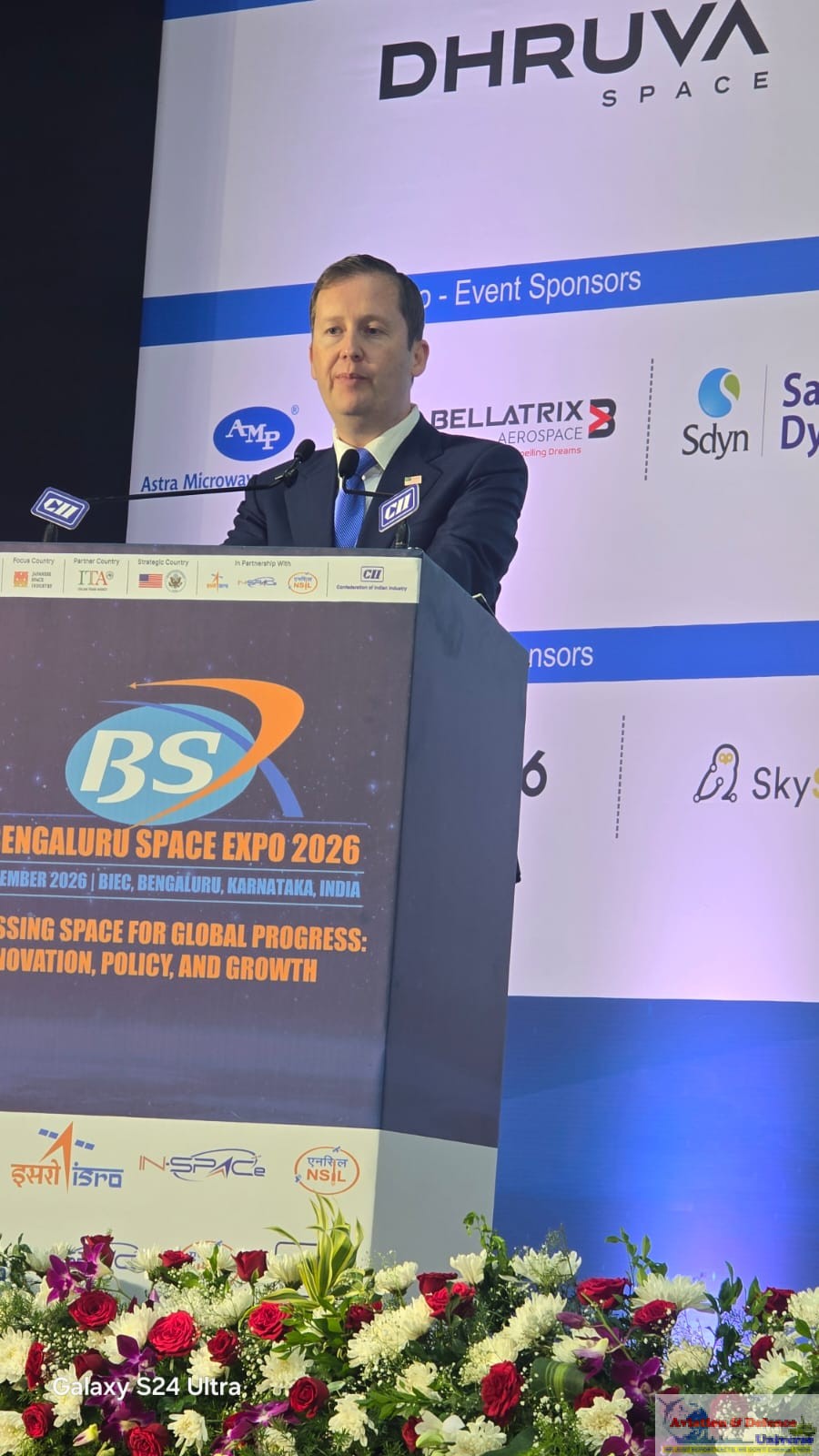 The address highlighted efforts to create a direct commercial corridor between American industry and Indian innovators, while pointing to growing cooperation in human spaceflight, interoperability, astronaut training and lunar exploration. The invitation to India could hardly have been clearer: “Make no mistake, we’re going back to the Moon, and we want India by our side on the lunar surface.”
Indian new space companies also received a direct message. The address named companies working across Earth observation, space situational awareness, propulsion and launch capabilities, including Skyroot, and declared, “To every Indian space entrepreneur in this room, the American market is open to you. Our investors are watching you. Our ecosystems welcome you.” The conclusion provided perhaps the morning’s most quotable formulation of India-US cooperation, “When the United States and India work together, we do not just practise addition. We practise multiplication.”And then he stated, “Not even the sky is the limit.”
Italy: India Is a Strategic Partner and a Global Space Power
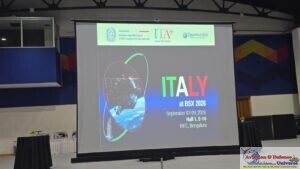
For Italian Ambassador Antonio Bartoli, space is no longer a peripheral element of India-Italy relations—it is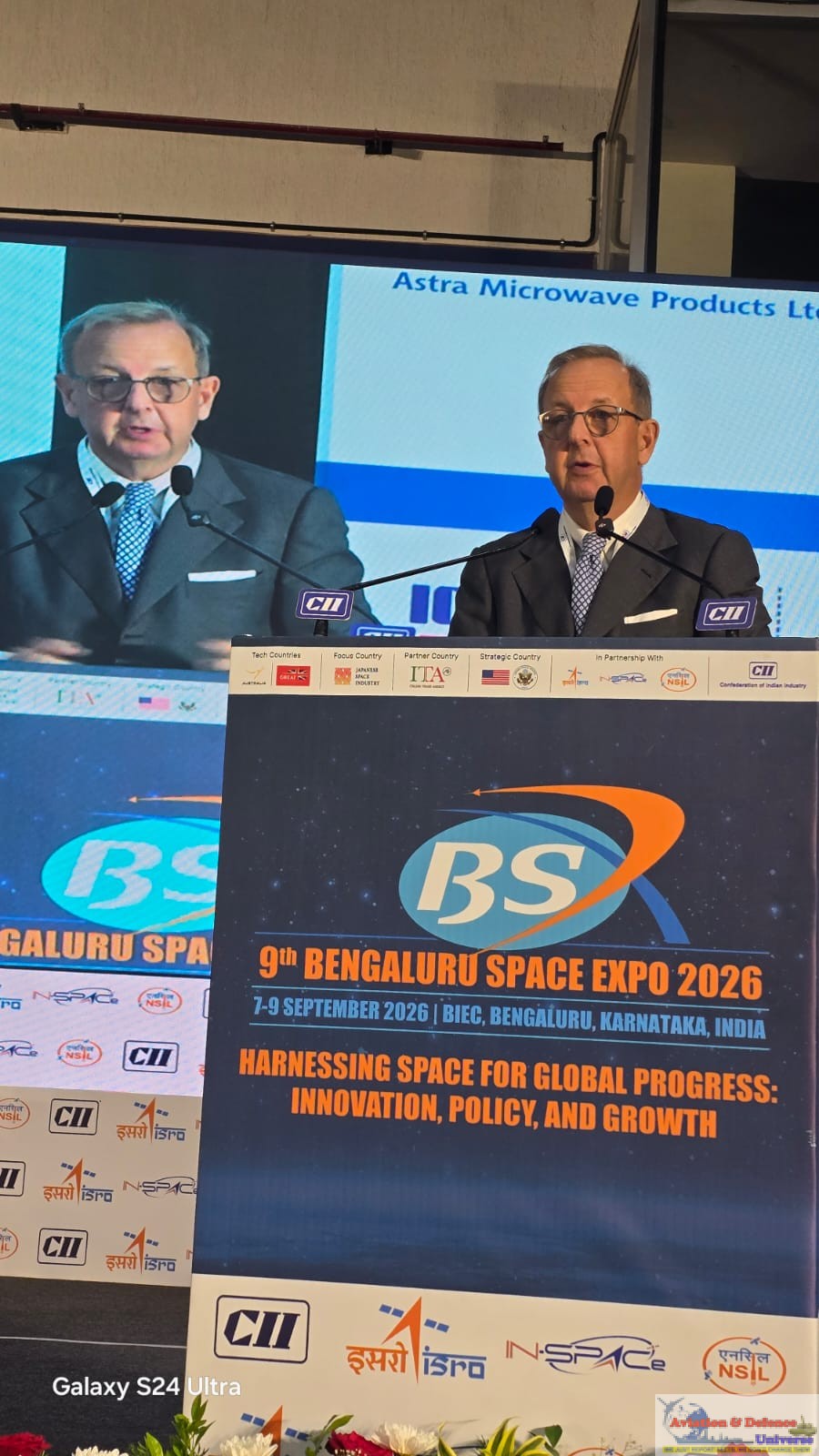 one of the pillars of the two countries’ Special Strategic Partnership. He identified cooperation across five broad areas: agency-to-agency engagement, scientific research, multilateral cooperation, business and the institutional framework supporting bilateral space ties. ISRO and the Italian Space Agency have worked together for more than 25 years, he said, with collaboration extending across Earth observation, exploration, heliophysics, satellite technologies and other applications. Commercial cooperation is also becoming increasingly ambitious. Italy, Bartoli said, wants B2B engagement to move beyond conventional commercial exchange towards joint innovation, co-design, co-development and joint ventures. And his assessment of India’s position was emphatic. “India is for us a strategic partner and a global space power.”
Italy itself brings a substantial space heritage and expertise in areas including radar, SAR and optical observation. Combining the complementary strengths of the two countries, Bartoli argued, could generate solutions not only for their own economies but for the international space ecosystem. “We are not here simply to showcase the excellence of the Italian Space Agency. We are here to build partnerships.” His concluding commitment was equally clear, “Italy is ready to work with India to build the next chapter of our space partnership.”
Australia–India Space Partnership: ‘Let’s Fly to the Moon Together’
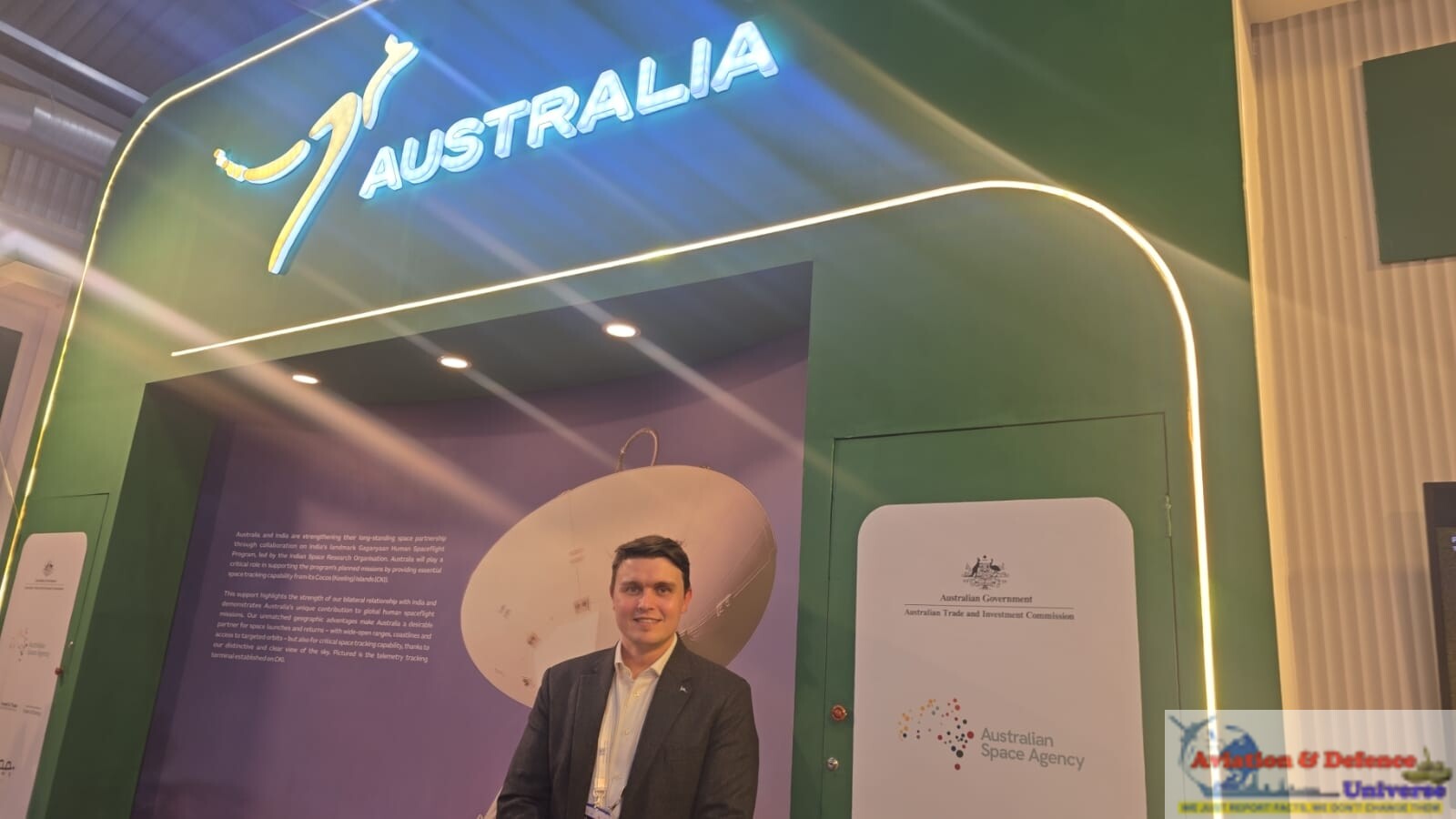
Australia brought a refreshingly different pitch to the inaugural session of BSX 2026—not an attempt to compete with the established heavyweights of space, but an offer to combine its distinctive strengths with India’s growing capabilities. H.E. Philip Green OAM, Australian High Commissioner to India, whose country returned to BSX as a Technology Country Partner, used humour, hard numbers and strategic messaging to make the case that Australia and India are emerging as natural partners in the new space economy.
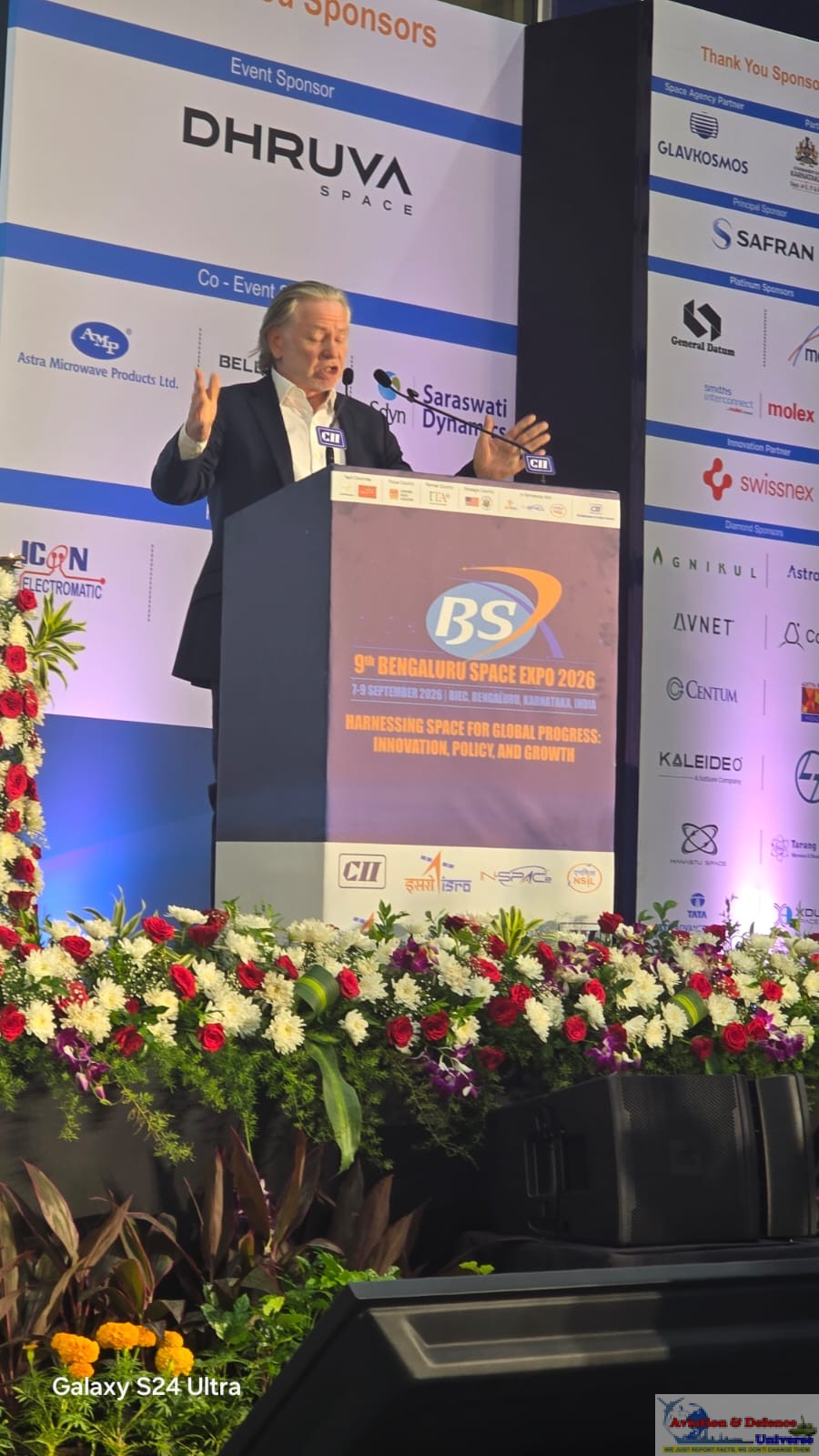 Green readily acknowledged the formidable space heritage represented on the inaugural stage. Italy, he quipped, could bring “the legacy of Galileo and Marconi”, while the United States came with NASA, Apollo and the Moon landing. “Australia doesn’t make these blockbuster claims,” he said. Instead, he offered delegates three reasons to engage with the Australian companies that had travelled to Bengaluru from Adelaide, Brisbane, Perth, Sydney, Melbourne and Canberra. The first was the growing strategic alignment between the Australian and Indian governments. Green said the two countries were aligned “as never before”, both bilaterally and through the Quad. He highlighted the newly announced Partnership for Cyber, Critical Technologies and Supply Chains (PACT), under which space is positioned not as a peripheral area, but as a core field for bilateral technology cooperation, industrial integration and regional security.
The second pillar of Green’s address was Australia’s direct support to India’s Gaganyaan human spaceflight programme. He announced that Australia had formally commissioned a dedicated space-tracking terminal on the Cocos (Keeling) Islands in the eastern Indian Ocean, strategically positioned to support Indian space missions. “When Indian-Australian astronauts orbit Earth aboard Gaganyaan, Australia will be holding the ground on them.”
The third reason was business. Australia arrived at BSX with a delegation of 30 companies, bringing capabilities across the mission lifecycle—from university-led research, satellite design and manufacturing to propulsion, launch, re-entry, Earth observation, analytics and in-space research. “Collectively our companies represent a space sector that takes ideas from a laboratory to orbit and beyond.”
UK Sees India as a Long-Term Space Partner
The international flavour of BSX was unmistakable, and the United Kingdom, participating as a technology country partner, placed commercial collaboration at the centre of its message.
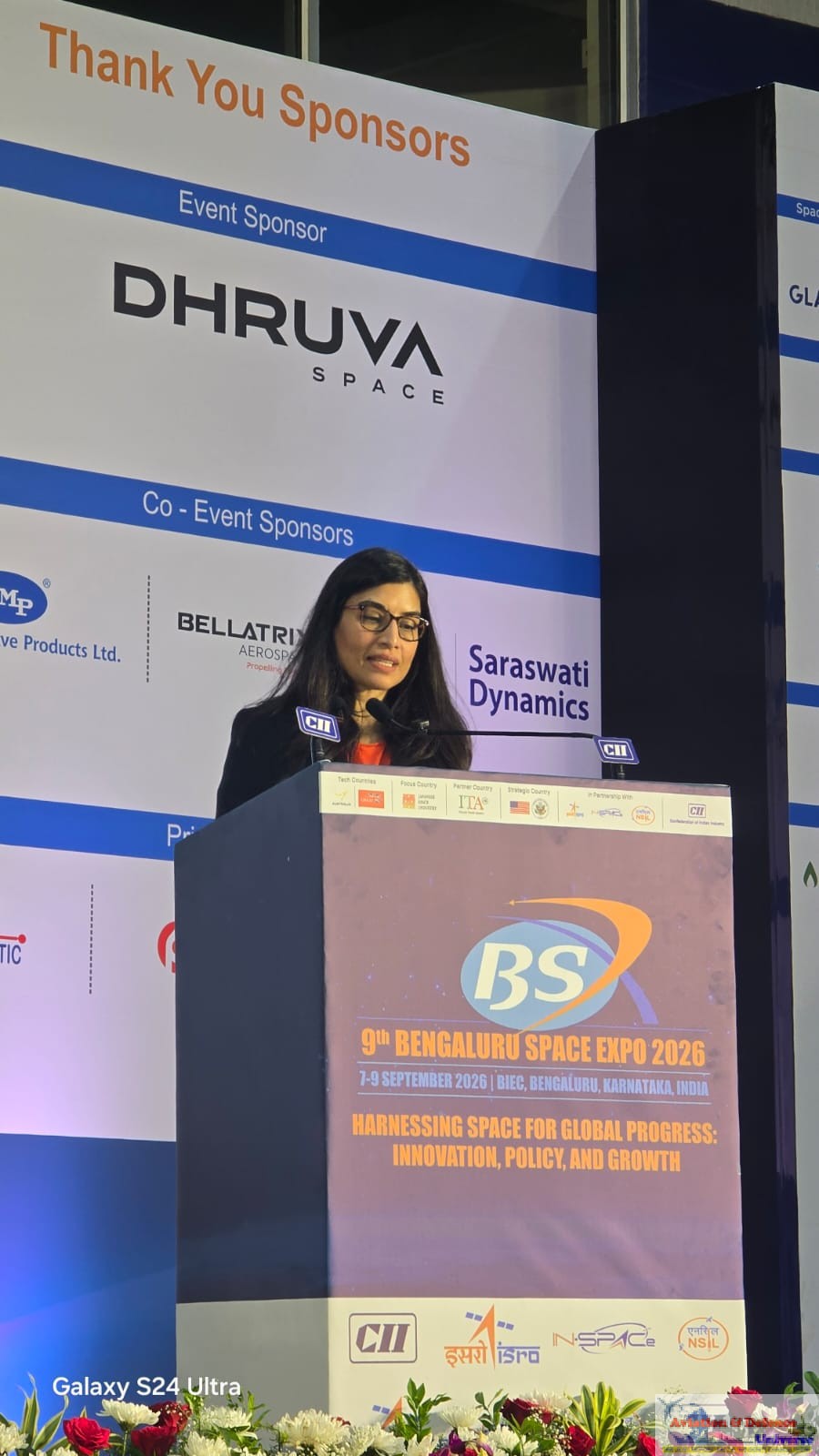 Jaya Choraria, Deputy Trade Commissioner for South Asia, British High Commission, described India’s progress as “truly remarkable”, pointing to landmark missions, launch capability, competitive private companies and the changing relationship between government and industry. “The rise of innovative space start-ups across flight, launch, propulsion, earth observation, analytics and space services is one of the most exciting developments we’re seeing anywhere in the world today.”
She linked space cooperation to the wider India-UK economic relationship and Vision 2035, arguing that the complementarities between the two countries created opportunities spanning advanced manufacturing, satellites, sustainability, Earth observation and downstream services. The British delegation, she emphasised, was in Bengaluru because UK companies viewed India as a long-term partner for innovation and growth. Her closing line neatly summed up the international theme running through BSX: “The history of space has been written by bold ambition. The future will be built through partnership.”
Japan and India Prepare to Go to the Moon Together
Japan arrived at BSX as the focus country, with JAXA Senior Vice President Yasuo Ishii leading a delegation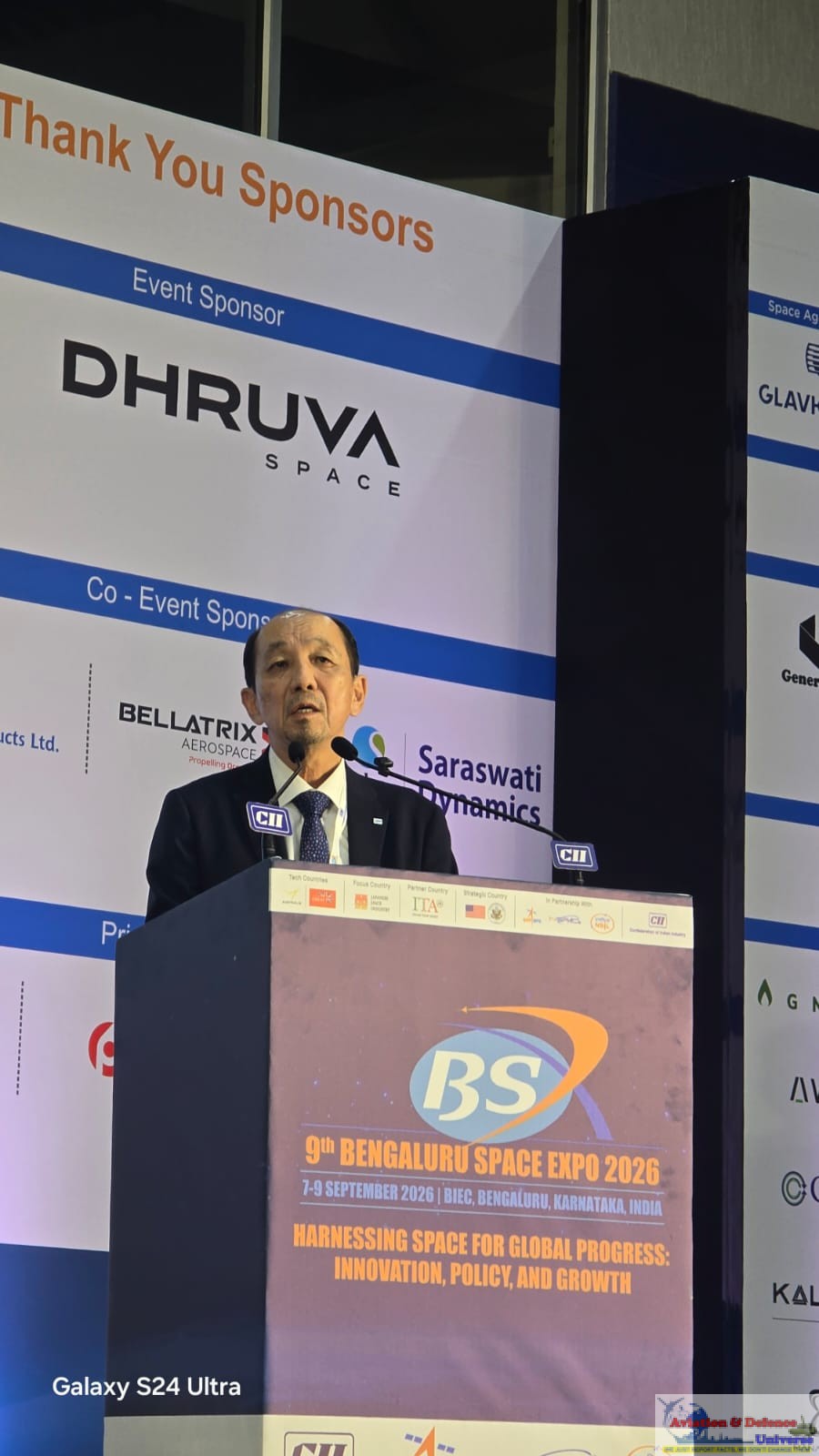 of more than 60 representatives from 25 Japanese organisations. Ishii outlined JAXA’s expanding responsibilities and Japan’s investment in its space ecosystem, including the Space Strategy Fund, through which the Japanese government is aiming to secure one trillion yen over ten years. But the highlight was the next phase of India-Japan lunar cooperation.
The two countries, he said, have agreed to go to the Moon together through the Lunar Polar Exploration (LUPEX) project, aimed at investigating water around the lunar south polar region. Japan is expected to provide launch capability and the rover, while ISRO will provide the lunar landing capability. “Then jointly we will go to the Moon.” The mission, according to Ishii’s address, is targeted for 2028.
He also pointed to growing Japanese industrial interest in India, particularly around Earth-observation data utilisation and supply chains, and raised the possibility of collaborative funding mechanisms. “I look forward to the collaboration between companies and breakthroughs that will emerge from BSX.”
Indian Industry Must Put Capital, Capacity and Ambition into Space
Representing the broader Indian industrial perspective, Sashwath Goenka argued that space can no longer be viewed as a specialised sector isolated from the rest of the economy. Satellite communications, navigation, Earth observation and geospatial technology are already creating applications across agriculture, telecommunications, logistics, infrastructure, energy, mining, insurance, fisheries and defence. “For Indian 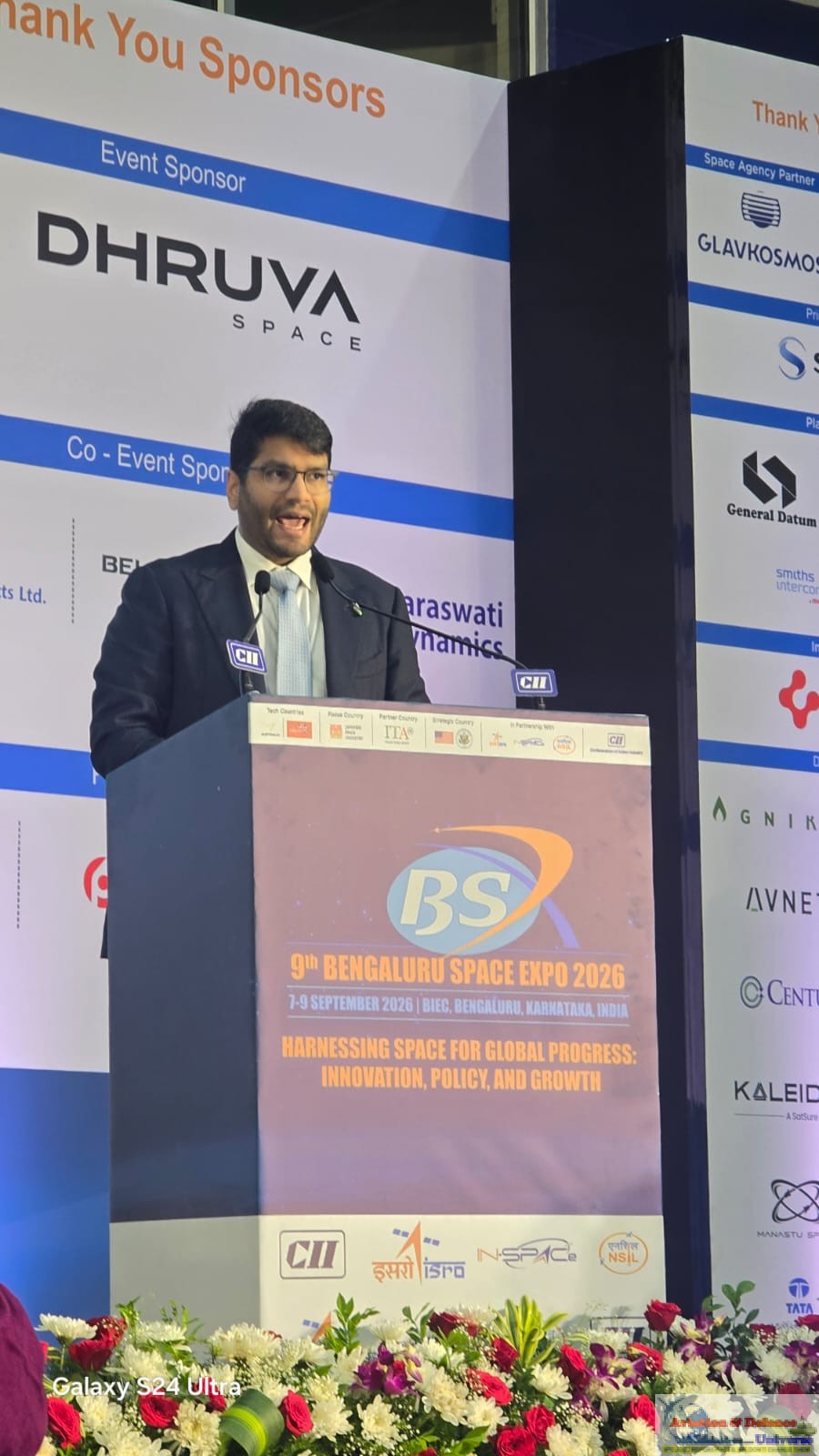 industry, the question therefore is no longer whether space will impact our businesses, but how quickly we can enhance the adoption of these technologies, invest in them and build new businesses around them.” The transformation will require large industry, MSMEs, startups, academia and government to work together. Established companies bring capital, manufacturing capacity, supply-chain access and global customers; startups bring innovation and agility. His ambition for Indian industry was unambiguous, “Whenever a satellite is built anywhere in the world, an Indian company should be part of that value chain.” And, “India must now respond with capital, with capacity and with ambition.”
Pawan Goenka: India Is Building for Scale
But it was Dr Pawan Goenka, Chairman, IN-SPACe, who pulled many of the threads of the inaugural session together into a single vision of India’s emerging space economy. Looking around a packed BIEC, Goenka marveled at the growth of the expo itself. “We have 300 exhibits, 15,000 participants. Unbelievable, unbelievable how far we have come in the last few years.” His next observation drew laughter but made the point, “Bengaluru will have to create a new expo now. This will not be large enough next time.” Goenka then turned to the transformation taking place outside the exhibition halls. India has gone from a tiny startup base to more than 450 space startups, he said, while this year’s private investment has already crossed $160 million. He singled out the journey from Vikram-S in November 2022 to Vikram-1 reaching orbit in July 2026, describing the latter as the first orbital-class rocket designed, built and flown by an Indian private company. But he stressed that the achievement was not simply a private-sector story. “That partnership is India’s real strength. The depth of a national space agency built over six decades, now working hand-in-hand with a young and ambitious private industry.” And then came the larger declaration, “ISRO and industry are rising together. This is the moment India is now building, for the first time, a full-spectrum space economy.”
50 Launches a Year Will Need Private Industry
Goenka said India’s space agency must increasingly be able to push the frontiers of science and technology while mature, repeatable manufacturing and operational activities move progressively towards industry. With the Prime Minister having set a target of 50 launches a year, Goenka argued that no single agency could—or should—achieve that scale alone. “Reaching it requires putting proven capability into many more hands. It calls for a strong private manufacturing and launch industry, working alongside ISRO.” He cited the transfer of the complete end-to-end SSLV technology to HAL, more than 110 technology-transfer agreements, and plans to make the new launch infrastructure at Kulasekarapattinam available to the private sector as evidence that “India is now building for scale.”
‘Innovate and Make in India for the World’
Goenka’s message to international delegates was equally significant. “India’s ambition is simple. Innovate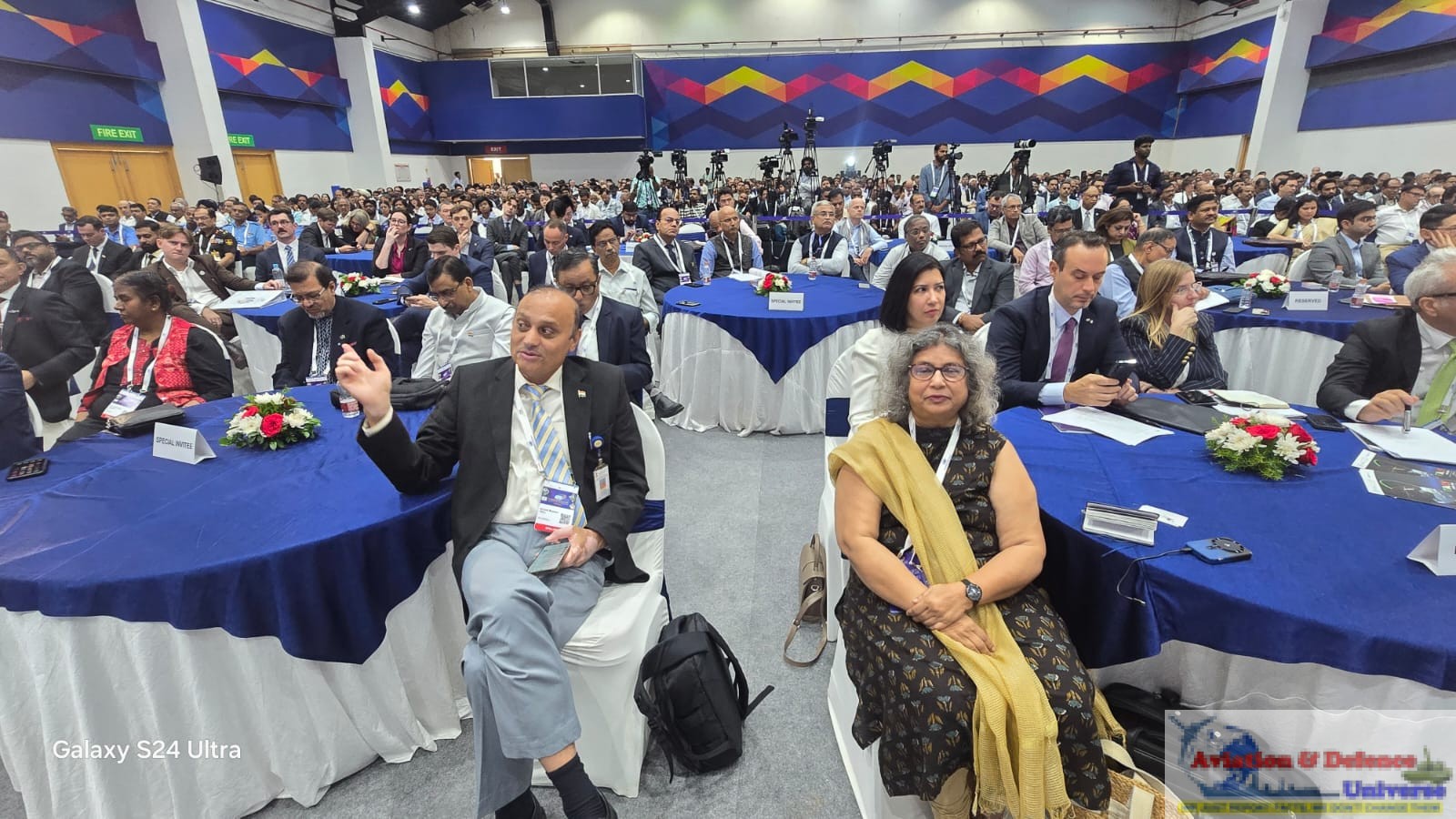 and make in India for the world. We are not building a closed ecosystem. We are building an open one.” India, he argued, offers a rare combination: the heritage and reliability of a national space programme developed over six decades alongside the agility and cost competitiveness of an emerging private industry. The country already has space relationships with more than 45 nations, more than 100 B2B collaborations have begun, and leading Indian startups are drawing a significant part of their order pipelines from international markets. His invitation was not for more ceremonial agreements. “Let us move from a memorandum to joint missions, from discussions to shared programmes. India wishes to grow with the world, not apart from it.”
Startups Have Proved They Can — Now the Question Is How Far
For India’s startups, Goenka had an especially punchy message, “You are no longer proving that you can. You have done that. You are now deciding how far.” For MSMEs and established ISRO vendors, he urged movement up the value chain—from components to subsystems and complete solutions capable of entering global supply chains. And for large Indian corporations, the message was equally direct, India’s ambition of building a roughly $44-billion space economy by 2033 cannot be delivered by ISRO and startups alone. It will need the scale, balance sheets, manufacturing depth and global reach of major industry. Goenka distilled the task ahead into six enablers: capability, capacity, capital, demand, an enabling policy environment and global partnerships.
But amid the rise of private enterprise, he also issued an important reminder to anyone who believed ISRO might become less relevant, “Think again.” With Chandrayaan, Gaganyaan, the future Indian space station, lunar ambitions, Venus and Mars missions, reusable launch systems and other programmes ahead, he said, “ISRO remains the backbone, the bedrock of it all.”
The Sky Is No Longer the Story
If the inaugural session of BSX 2026 proved anything, it was that India’s space conversation has fundamentally changed. Once, the question was whether India could reach space. It did. Then came the question of whether India could reach the Moon and Mars. It did. Today, the questions being asked at BIEC are very different: Can India build hundreds of space companies? Can its startups compete globally? Can its MSMEs enter international supply chains? Can Indian industry manufacture at scale? Can private rockets launch commercially and repeatedly? Can foreign companies manufacture, invest and co-develop from 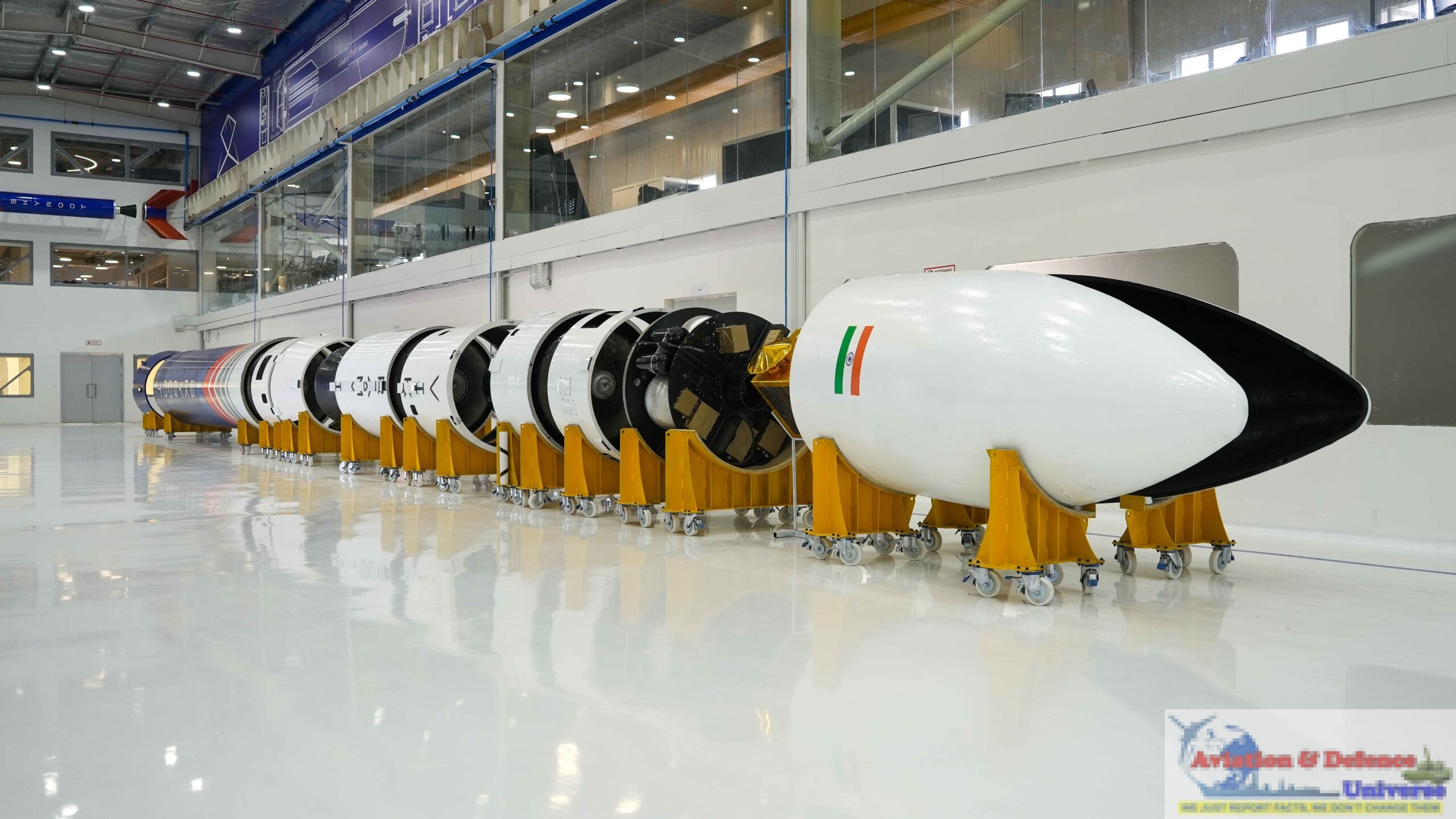 India? And can a national space programme become a national space economy? The inaugural session’s answer was an emphatic yes—but not by government, ISRO, industry, startups, academia or investors acting alone. The next Indian space story will have many authors. ISRO will push the technological frontier. IN-SPACe will enable. NSIL will commercialise. Industry will manufacture at scale. Startups will disrupt. Investors will fund risk. Academia will create knowledge and talent. And international partners will bring technology, markets and collaboration. As Pawan Goenka put it, “The whole moves only when we move as one.” That perhaps was the real takeaway from a packed inaugural morning at BIEC. BSX 2026 was not celebrating how far India has travelled in space. It was announcing how much further it intends to go.
And after listening to speakers talk of private rockets, 50 launches a year, a $44-billion space economy, global supply chains, international co-development and Indians walking on the Moon, the old cliché finally seemed ready for retirement. The sky is no longer India’s limit. It is increasingly becoming its marketplace.
















































































-A4-Size-(2)_page-0001.jpg)