


 18th BRICS Summit





















- SMPP: Building Indigenous Muscle for India’s Armed Forces
- Made in India, Built for Battle
- From Bullet-Resistant Jackets to the Unmanned Battlefield
By Sangeeta Saxena
New Delhi. 07 August 2026. From protecting the soldier with advanced body armour to giving the battlefield greater reach through drones, ammunition and emerging precision technologies, SMPP’s four-decade journey is also a story of how India’s private defence industry has come of age. Its delivery of 1,86,000 bullet-resistant jackets for the Indian Army established its ability to execute a critical defence requirement at scale, while its subsequent movement into jet-powered drones and next-generation battlefield systems signals a company determined not to remain confined to the technologies on which it built its reputation. At a time when conflicts around the world are demonstrating that wars are won not only by sophisticated platforms but by industrial capacity, resilient supply chains, ammunition availability, unmanned mass, technological adaptability and the ability to manufacture quickly at home, SMPP finds itself operating at the intersection of India’s twin ambitions—Aatmanirbhar Bharat and the emergence of the country as a serious global defence manufacturing hub.
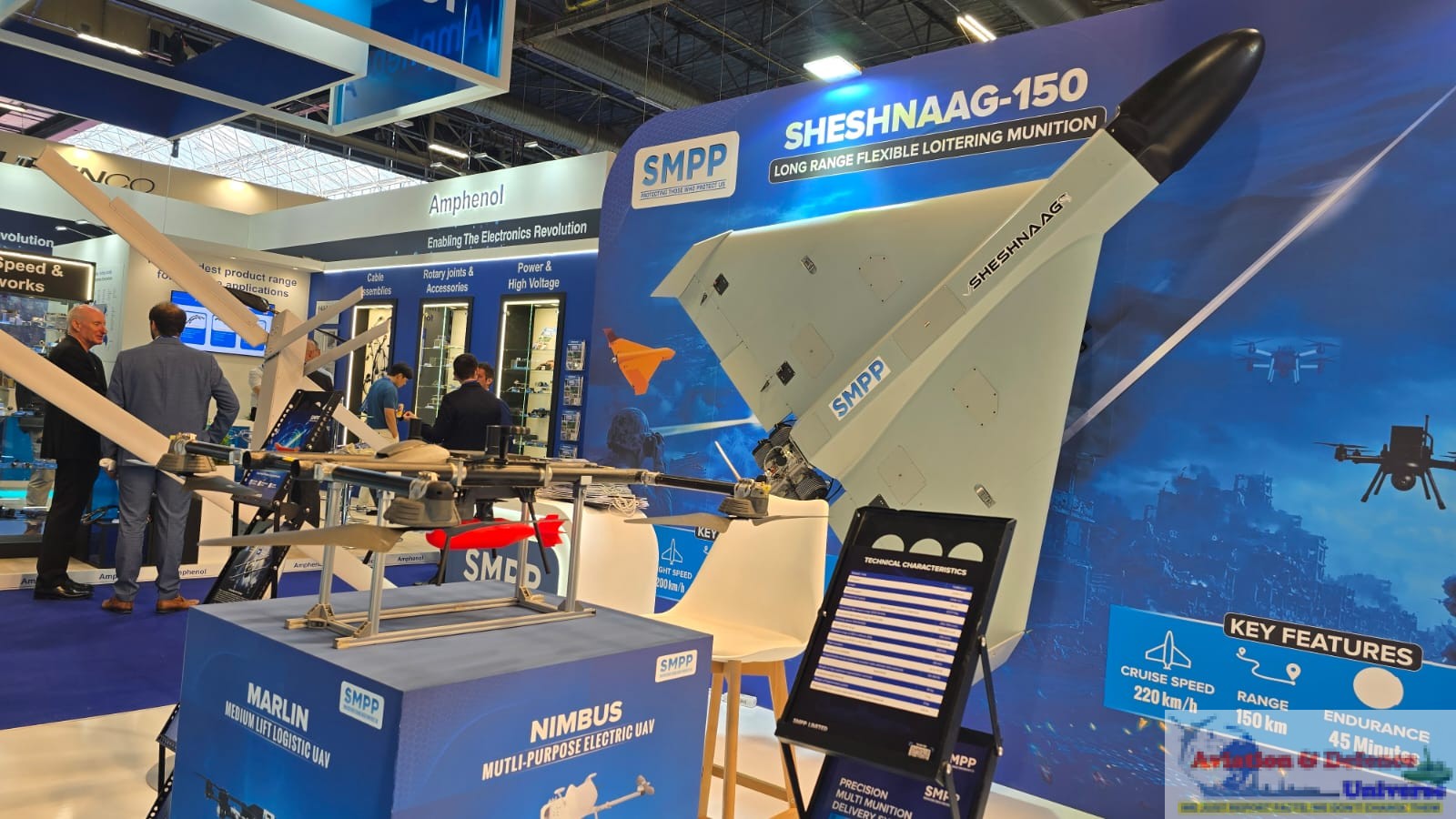
Over the years, SMPP has emerged as an important indigenous capability partner to the Indian Army, particularly through its contribution to soldier protection and, increasingly, unmanned and precision-strike technologies. One of the most visible milestones in this relationship was the company’s execution of the Army’s requirement for 1,86,000 bullet-resistant jackets, a programme that demonstrated not only indigenous technological capability but also the capacity of an Indian private-sector defence manufacturer to deliver equipment at considerable scale. SMPP’s association with the Army has since moved beyond protecting the soldier towards technologies designed for the rapidly changing battlefield. Its delivery of 100 operational jet-powered drones along with six training drones represents this transition from passive protection to unmanned operational capability. The company has stated that these systems demonstrated a range of around 180 kilometres and a CEP of less than five metres, including trials in environments involving jamming and spoofing. This progression—from body armour designed to improve a soldier’s survivability to unmanned systems intended to provide reach and precision—reflects the expanding role that indigenous private industry can play in supporting the Indian Army. As warfare becomes increasingly shaped by drones, electronic warfare, precision engagement and autonomous technologies, SMPP’s value lies not simply in supplying individual products, but in its ability to develop, manufacture and scale capabilities in India against evolving operational requirements. In that sense, the company’s journey also reflects the larger transformation sought under Aatmanirbhar Bharat: an Indian defence industry capable of moving from being an equipment supplier to becoming a long-term capability partner of the soldier and the Service.
For the Indian Air Force, SMPP’s expanding technology portfolio has potential relevance as warfare becomes increasingly dominated by unmanned systems, precision engagement, autonomous technologies and survivability against evolving threats. The company’s progression from ballistic protection into jet-powered drones, loitering munitions and other unmanned technologies places it within capability areas that are becoming increasingly important to air operations. Indigenous unmanned systems can complement manned aviation by undertaking surveillance, reconnaissance and selected high-risk missions without exposing aircrew, while loitering and precision-strike technologies can potentially extend the range of options available to commanders in contested environments. SMPP’s emphasis on developing systems capable of operating amid jamming and spoofing is particularly relevant to an era in which control of the electromagnetic spectrum is becoming inseparable from control of the air. Its experience in ballistic and composite protection can also have applications in protecting aviation-related platforms and critical assets. As the Indian Air Force accelerates its transition towards a more networked, technology-intensive and increasingly indigenous force, companies such as SMPP can contribute by developing scalable Indian solutions across protection, unmanned systems and precision technologies—strengthening domestic capability while reducing dependence on overseas supply chains.
For the Indian Navy, SMPP’s expanding capabilities in unmanned systems, loitering munitions, advanced composites and ballistic protection have potential relevance as naval warfare becomes increasingly distributed, autonomous and technology-intensive. The maritime battlespace is rapidly embracing unmanned platforms for surveillance, reconnaissance, targeting and missions in which exposing personnel or high-value platforms would carry unacceptable risk. SMPP’s growing focus on drones and autonomous technologies could therefore complement the Navy’s drive towards greater unmanned capability, particularly as future operations demand systems capable of functioning in electronically contested environments where jamming, spoofing and communications disruption are expected. Its experience in lightweight ballistic materials and composite protection also offers potential applications for naval and maritime platforms, critical installations and personnel protection. Loitering and precision-strike technologies, meanwhile, represent another area of potential relevance as navies seek greater reach and flexible engagement options from ships and shore-based formations. As the Indian Navy pursues Aatmanirbharta while building a networked, multi-domain force, SMPP’s transition from protection technologies towards autonomous and precision systems illustrates how indigenous private industry can contribute to the wider naval technology ecosystem. From protecting the sailor and maritime asset to developing the unmanned and precision capabilities of tomorrow, SMPP has the opportunity to extend its indigenous defence footprint from the battlefield to the battlespace at sea.
SMPP has steadily transformed itself into a growing and increasingly important participant in India’s private-sector defence manufacturing ecosystem. Its evolution reflects the larger journey of Indian defence industry itself—from import substitution and indigenous manufacturing to the development of sophisticated technologies intended to meet the changing operational requirements of the Armed Forces. Having established a strong foundation in ballistic protection and advanced materials, SMPP has progressively widened its ambitions towards ammunition, precision munitions, drones, loitering munitions, autonomous systems and other emerging defence technologies. Its execution of the Indian Army’s requirement for 1,86,000 bullet-resistant jackets demonstrated an ability to manufacture critical soldier-protection equipment at scale, while its reported delivery of 100 operational jet-powered drones and six training drones to the Indian Army represents its movement into a very different generation of battlefield capability. The significance of SMPP’s growth lies in this willingness to diversify from established product lines into technologies that are increasingly shaping contemporary warfare. At a time when recent conflicts have reinforced the importance of resilient domestic supply chains, adequate ammunition reserves, unmanned systems, electronic-warfare resilience and rapid production capacity, India needs private defence manufacturers capable not merely of supplying equipment but of investing in technology, creating indigenous intellectual property and scaling production when required. SMPP’s expanding portfolio and pursuit of international technology partnerships therefore place it within this broader national transformation. As India moves from Make in India towards the more ambitious objective of Make in India, Make for the World, SMPP’s four-decade journey illustrates how an indigenous enterprise can grow from a specialised manufacturer into a diversified defence company seeking to contribute across protection, firepower and autonomous warfare. Its next challenge—and opportunity—is to translate that widening technological footprint into sustained capabilities for India’s Armed Forces and a competitive presence in global defence markets.
Today, the company’s strategy rests on three broad pillars: consolidating its position in advanced ballistic protection, developing capabilities in ammunition and precision munitions, and selectively expanding into drones, loitering munitions, autonomous systems and integrated battlefield solutions. SMPP’s evolution reflects the transformation of an Indian private-sector manufacturer from import substitution to indigenous capability creation, from ballistic protection to firepower, and from conventional defence products to autonomous and unmanned warfare. Its established strength in soldier protection, expanding ambitions in ammunition and precision munitions, and entry into drones and loitering systems give the company a footprint across some of the most consequential capability areas confronting modern armed forces. For the Indian Army, its contribution has already included large-scale body armour production and unmanned systems; its wider technology portfolio also holds relevance for an increasingly networked and technology-driven Indian Air Force and Navy. The challenge ahead will be to convert diversification into sustained technological depth, scalable manufacturing and internationally competitive products. But after four decades of evolution, SMPP’s trajectory carries a larger message for India’s defence-industrial ambitions: self-reliance is ultimately built not through one platform or one programme, but through Indian companies willing to invest, innovate, manufacture and keep moving up the technology ladder. From protecting the soldier of today to developing systems for the battlefield of tomorrow, SMPP is seeking to be one of them.
















































































-A4-Size-(2)_page-0001.jpg)